Global Vegetable Market Outlook to 2030
Region:Global
Author(s):Rebecca
Product Code:KROD-030
Region:Global
Author(s):Rebecca
Product Code:KROD-030
June 2025
80
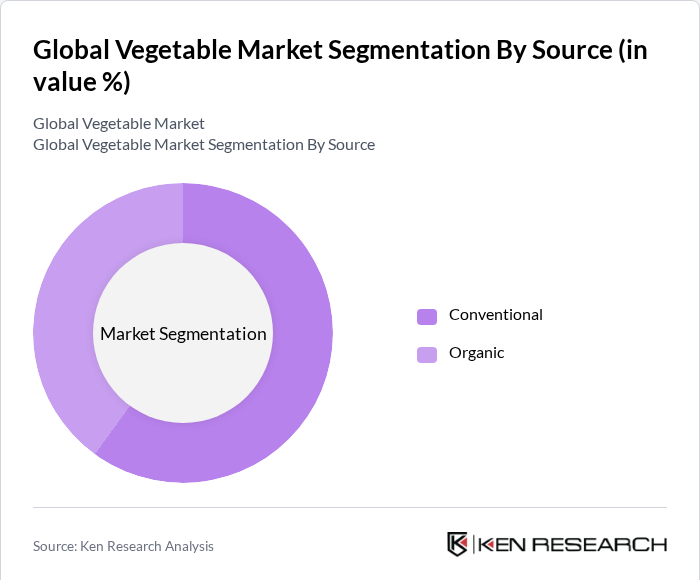
By Source: The vegetable market is segmented into conventional and organic sources. The organic segment is gaining traction due to increasing consumer awareness of health and environmental sustainability. Organic vegetables are perceived as healthier and more nutritious, leading to a growing preference among health-conscious consumers, especially in urban areas where consumers are willing to pay a premium. Demand for organic vegetables is expected to continue rising as more consumers seek out sustainable and chemical-free options.
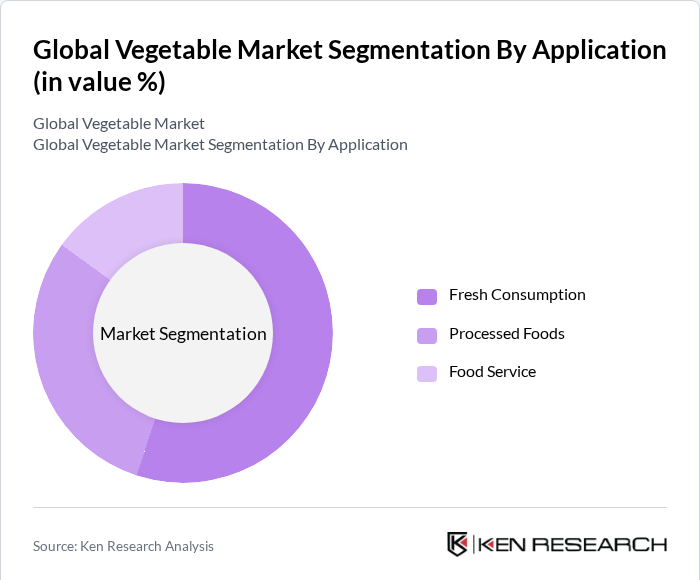
By Application: The vegetable market is categorized into fresh consumption, processed foods, and food service. The fresh consumption segment dominates the market, driven by the increasing trend of healthy eating and demand for fresh produce in households. Consumers are increasingly opting for fresh vegetables over processed options, as they are perceived to be healthier and more flavorful. This shift is supported by the rise of farmers' markets, local produce initiatives, and the farm-to-table movement, which promote the consumption of fresh, locally sourced vegetables.
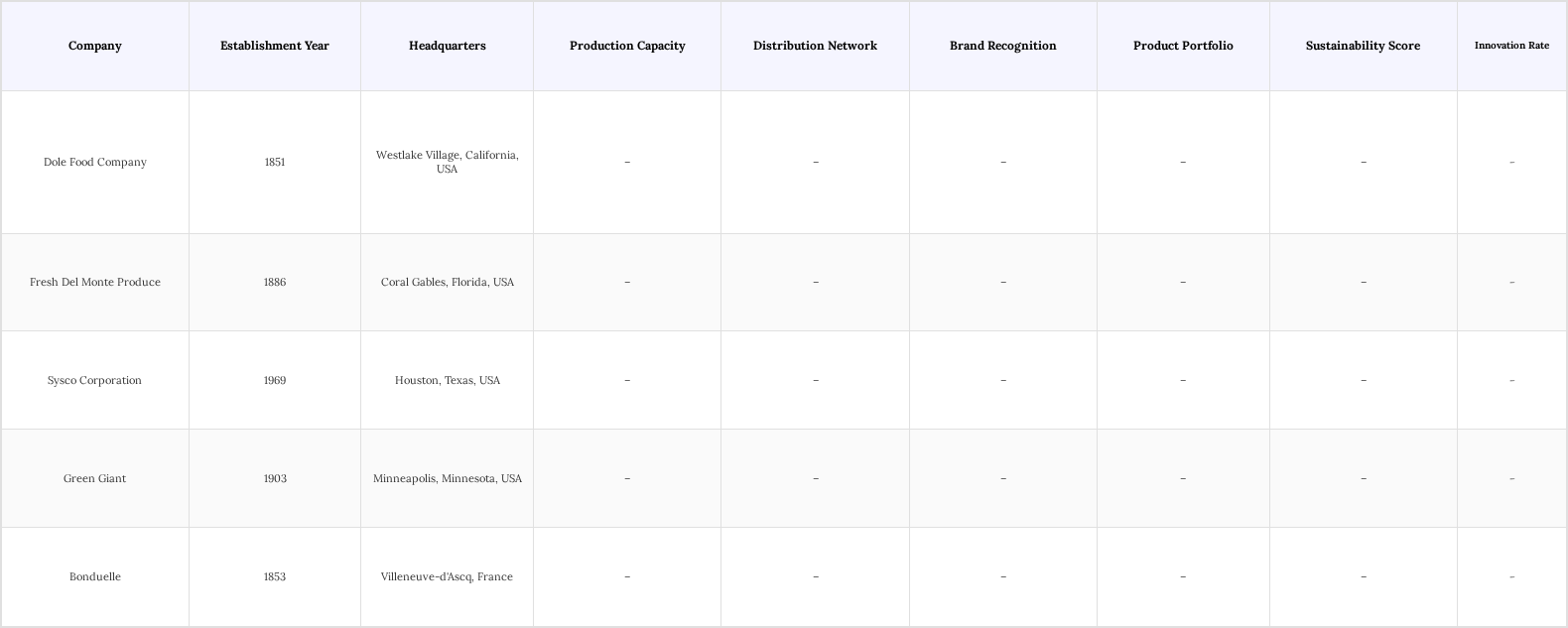
The Global Vegetable Market is characterized by a competitive landscape with several key players, including Dole Food Company, Fresh Del Monte Produce, and Sysco Corporation. These companies are known for their extensive distribution networks and strong brand recognition, enabling them to maintain a significant presence in the market. Competition is driven by factors such as product innovation, sustainability practices, and the ability to meet changing consumer preferences.
The future of the vegetable market appears promising, driven by increasing consumer demand for fresh and organic produce. As health trends continue to evolve, the market is expected to adapt with innovative farming techniques and enhanced distribution methods. The rise of urban farming and sustainable practices will likely play a crucial role in meeting this demand. Additionally, the integration of technology in agriculture is anticipated to improve yield efficiency, ensuring a steady supply of vegetables to consumers in the coming years.
| By Source |
Conventional Organic |
| By Application |
Fresh Consumption Processed Foods Food Service |
| By Distribution Channel |
Supermarkets/Hypermarkets Online Retail Convenience Stores Direct Sales |
| By Region |
North America Europe Asia-Pacific Latin America Middle East & Africa |
| By Vegetable Type |
Leafy Greens Root Vegetables Fruits and Pods Cruciferous Vegetables |
| By Packaging Type |
Plastic Bags Boxes Bulk Packaging |
1.1. Definition and Scope
1.2. Market Taxonomy
1.3. Market Growth Rate
1.4. Market Segmentation Overview
2.1. Historical Market Size
2.2. Year-On-Year Growth Analysis
2.3. Key Market Developments and Milestones
3.1. Growth Drivers
3.1.1. Increasing Health Consciousness Among Consumers
3.1.2. Rising Demand for Organic Vegetables
3.1.3. Expansion of Distribution Channels
3.2. Market Challenges
3.2.1. Fluctuations in Weather Conditions
3.2.2. Supply Chain Disruptions
3.2.3. Competition from Processed Food Products
3.3. Opportunities
3.3.1. Growth in Plant-Based Diet Trends
3.3.2. Technological Advancements in Agriculture
3.3.3. Expansion into Emerging Markets
3.4. Trends
3.4.1. Increasing Popularity of Urban Farming
3.4.2. Adoption of Sustainable Farming Practices
3.4.3. Rise of E-commerce in Vegetable Sales
3.5. Government Regulation
3.5.1. Food Safety Standards and Regulations
3.5.2. Environmental Protection Policies
3.5.3. Subsidies for Organic Farming
3.5.4. Import and Export Regulations
3.6. SWOT Analysis
3.7. Stake Ecosystem
3.8. Porter’s Five Forces
3.9. Competition Ecosystem
4.1. By Source
4.1.1. Conventional
4.1.2. Organic
4.2. By Application
4.2.1. Fresh Consumption
4.2.2. Processed Foods
4.2.3. Food Service
4.3. By Distribution Channel
4.3.1. Supermarkets/Hypermarkets
4.3.2. Online Retail
4.3.3. Convenience Stores
4.3.4. Direct Sales
4.4. By Region
4.4.1. North America
4.4.2. Europe
4.4.3. Asia-Pacific
4.4.4. Latin America
4.4.5. Middle East & Africa
4.5. By Vegetable Type
4.5.1. Leafy Greens
4.5.2. Root Vegetables
4.5.3. Fruits and Pods
4.5.4. Cruciferous Vegetables
4.6. By Packaging Type
4.6.1. Plastic Bags
4.6.2. Boxes
4.6.3. Bulk Packaging
5.1. Detailed Profiles of Major Companies
5.1.1. Dole Food Company
5.1.2. Fresh Del Monte Produce
5.1.3. Sysco Corporation
5.1.4. Green Giant
5.1.5. Bonduelle
5.1.6. VeggieVibe Inc.
5.1.7. Harvest Harmony Foods
5.1.8. Purely Produce Co.
5.1.9. Global Greens Collective
5.1.10. Nature's Bounty Vegetables
5.2. Cross Comparison Parameters
5.2.1. Market Share Analysis
5.2.2. Revenue Growth Rate
5.2.3. Product Portfolio Diversity
5.2.4. Geographic Presence
5.2.5. Customer Satisfaction Ratings
5.2.6. Innovation Index
5.2.7. Supply Chain Efficiency
5.2.8. Sustainability Practices
6.1. Environmental Standards
6.2. Compliance Requirements
6.3. Certification Processes
7.1. Future Market Size Projections
7.2. Key Factors Driving Future Market Growth
8.1. By Source
8.1.1. Conventional
8.1.2. Organic
8.2. By Application
8.2.1. Fresh Consumption
8.2.2. Processed Foods
8.2.3. Food Service
8.3. By Distribution Channel
8.3.1. Supermarkets/Hypermarkets
8.3.2. Online Retail
8.3.3. Convenience Stores
8.3.4. Direct Sales
8.4. By Region
8.4.1. North America
8.4.2. Europe
8.4.3. Asia-Pacific
8.4.4. Latin America
8.4.5. Middle East & Africa
8.5. By Vegetable Type
8.5.1. Leafy Greens
8.5.2. Root Vegetables
8.5.3. Fruits and Pods
8.5.4. Cruciferous Vegetables
8.6. By Packaging Type
8.6.1. Plastic Bags
8.6.2. Boxes
8.6.3. Bulk Packaging
9.1. TAM/SAM/SOM Analysis
9.2. Customer Cohort Analysis
9.3. Marketing Initiatives
9.4. White Space Opportunity Analysis
The initial phase involves mapping out the key players and stakeholders in the Global Vegetable Market. This step relies on extensive desk research, utilizing secondary data sources and proprietary databases to gather relevant industry information. The primary goal is to pinpoint and define the essential variables that drive market trends and dynamics.
In this phase, we will gather and analyze historical data related to the Global Vegetable Market. This includes evaluating market penetration rates, the distribution of marketplaces, and revenue generation patterns. Additionally, we will assess service quality metrics to ensure the reliability and accuracy of the revenue estimates derived from the analysis.
Market hypotheses will be formulated and validated through structured interviews with industry experts from various sectors. These consultations will provide critical operational and financial insights, helping to refine and substantiate the market data. Engaging with practitioners will enhance the credibility of the findings.
The final phase involves direct engagement with multiple stakeholders, including manufacturers and distributors, to gather in-depth insights into product segments, sales performance, and consumer preferences. This interaction will validate and enrich the data collected, ensuring a comprehensive and accurate analysis of the Global Vegetable Market.
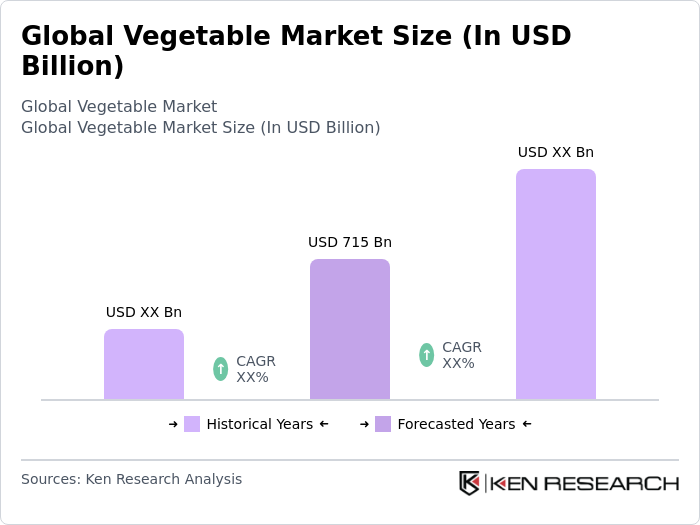
The Global Vegetable Market is valued at USD 715 billion, driven by factors such as increasing demand, technological advancements, and supportive government initiatives.
Key challenges in the Global Vegetable Market include intense competition, regulatory complexities, and infrastructure limitations affecting market dynamics.
Major players in the Global Vegetable Market include Dole Food Company, Fresh Del Monte Produce, Sysco Corporation, Green Giant, Bonduelle, among others.
The primary growth drivers for the Global Vegetable Market are increasing consumer demand, favorable policies, innovation, and substantial investment inflows.

What makes us stand out is that our consultants follows Robust, Refine and Result (RRR) methodology. i.e. Robust for clear definitions, approaches and sanity checking, Refine for differentiating respondents facts and opinions and Result for presenting data with story

We have set a benchmark in the industry by offering our clients with syndicated and customized market research reports featuring coverage of entire market as well as meticulous research and analyst insights.

While we don't replace traditional research, we flip the method upside down. Our dual approach of Top Bottom & Bottom Top ensures quality deliverable by not just verifying company fundamentals but also looking at the sector and macroeconomic factors.

With one step in the future, our research team constantly tries to show you the bigger picture. We help with some of the tough questions you may encounter along the way: How is the industry positioned? Best marketing channel? KPI's of competitors? By aligning every element, we help maximize success.

Our report gives you instant access to the answers and sources that other companies might choose to hide. We elaborate each steps of research methodology we have used and showcase you the sample size to earn your trust.

If you need any support, we are here! We pride ourselves on universe strength, data quality, and quick, friendly, and professional service.