
Global Vehicle Security System Market Outlook to 2030
Region:Global
Author(s):Vijay Kumar
Product Code:KROD7768
Region:Global
Author(s):Vijay Kumar
Product Code:KROD7768
November 2024
92
Listen to the audio summary
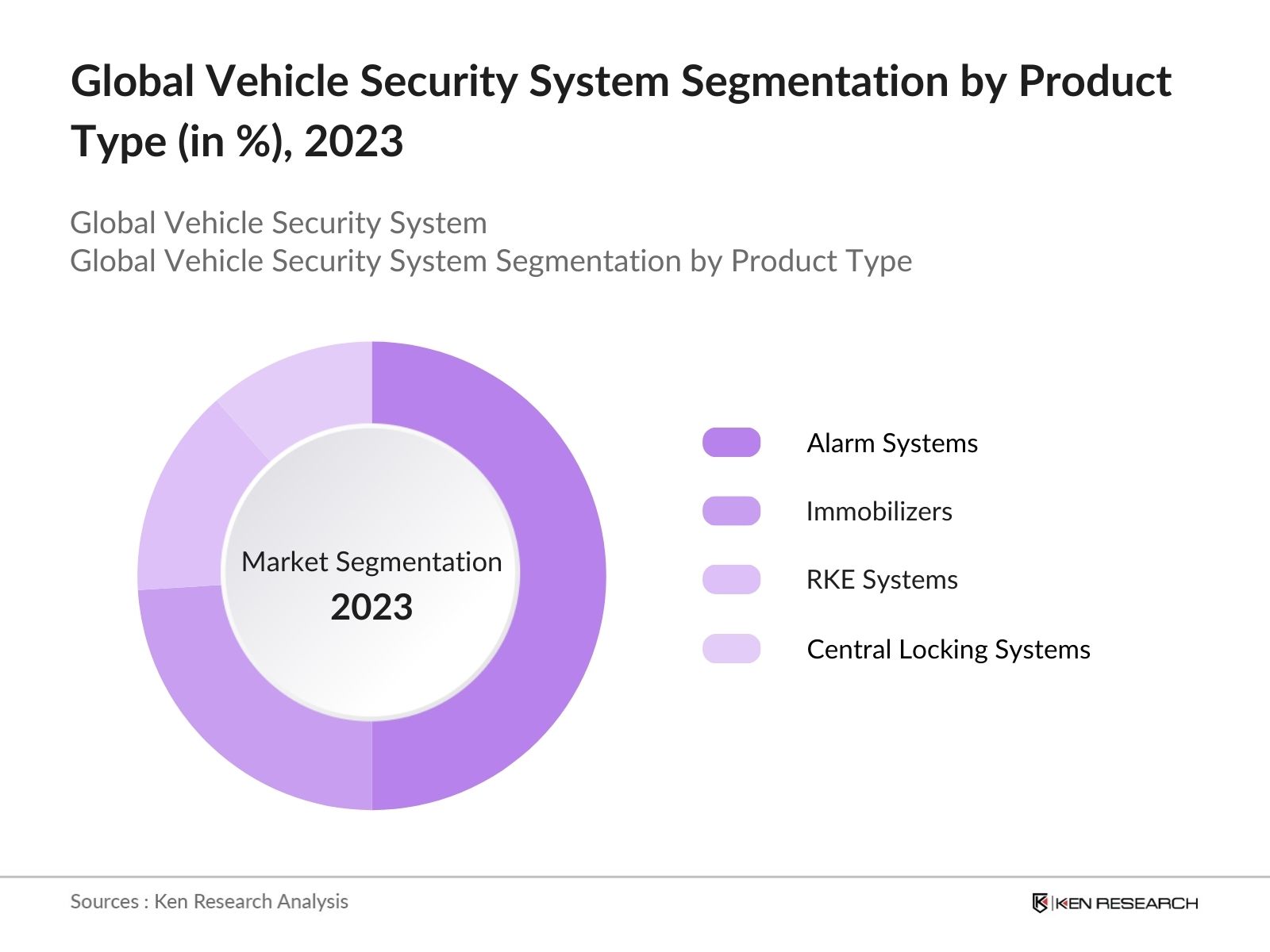
By Product Type: The Global Vehicle Security System market is segmented by product type into alarm systems, immobilizers, remote keyless entry (RKE) systems, central locking systems, and GPS tracking systems. Alarm systems currently dominate this segment, primarily due to their widespread use in passenger vehicles. They are cost-effective and provide an essential layer of protection, alerting owners during any unauthorized access attempts.
By Technology: The market is segmented by technology into RFID, GPS/GNSS, ultrasonic and radar sensors, and biometric systems. RFID technology holds a dominant share in this segment due to its cost-effectiveness and wide applicability in vehicle immobilization and access control systems. It is widely adopted in both passenger and commercial vehicles, offering a high level of reliability for vehicle owners. RFID technology is favored by manufacturers due to its simplicity in implementation and minimal maintenance requirements.
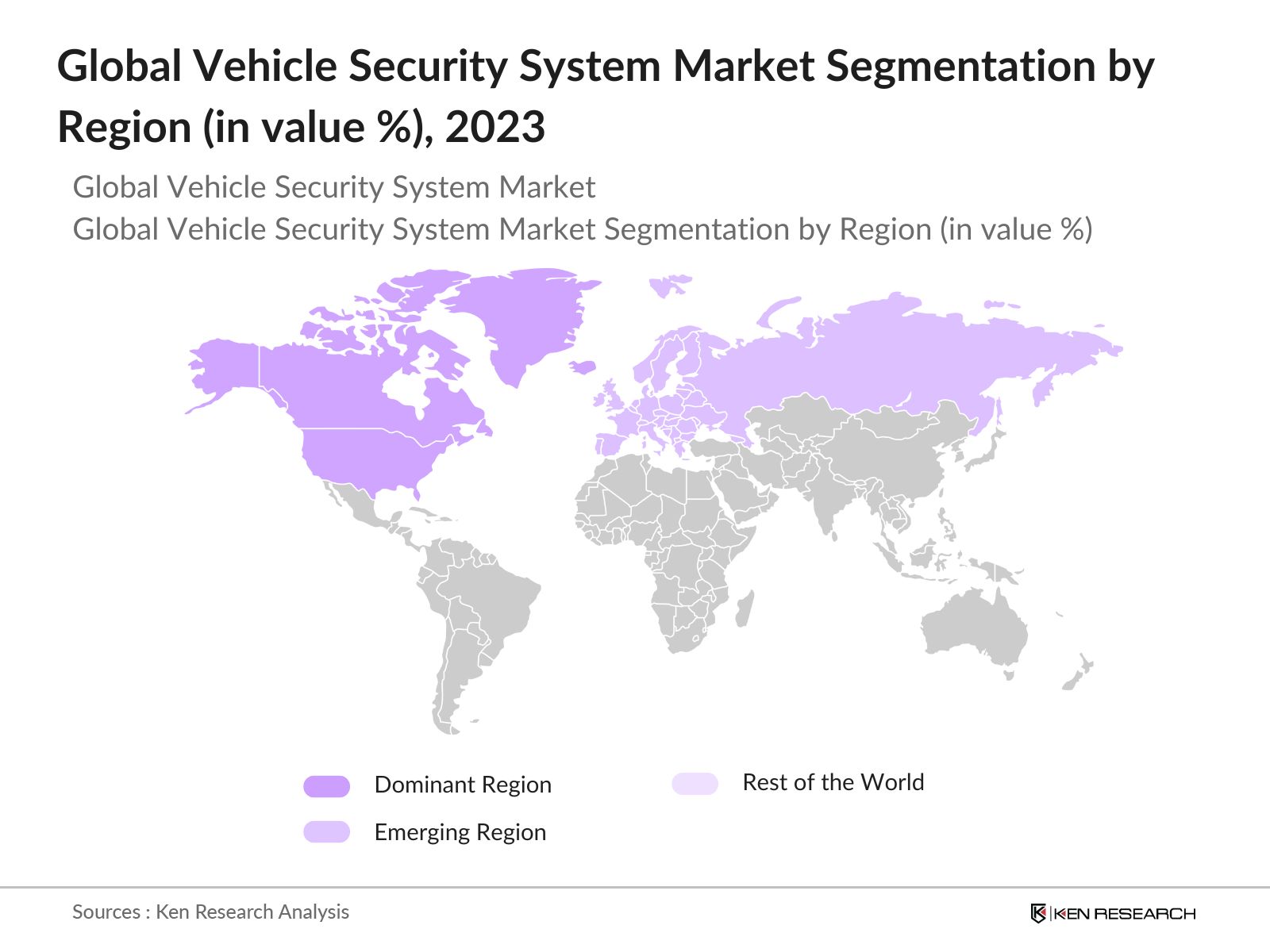
By Region: Regionally, the market is segmented into North America, Europe, Asia-Pacific, Latin America, and the Middle East & Africa. North America leads this segment, driven by government regulations mandating vehicle security systems and the presence of a large number of high-end vehicles that require advanced security solutions. The market in this region is highly mature, with significant investments in research and development by leading automotive companies to improve vehicle safety features.
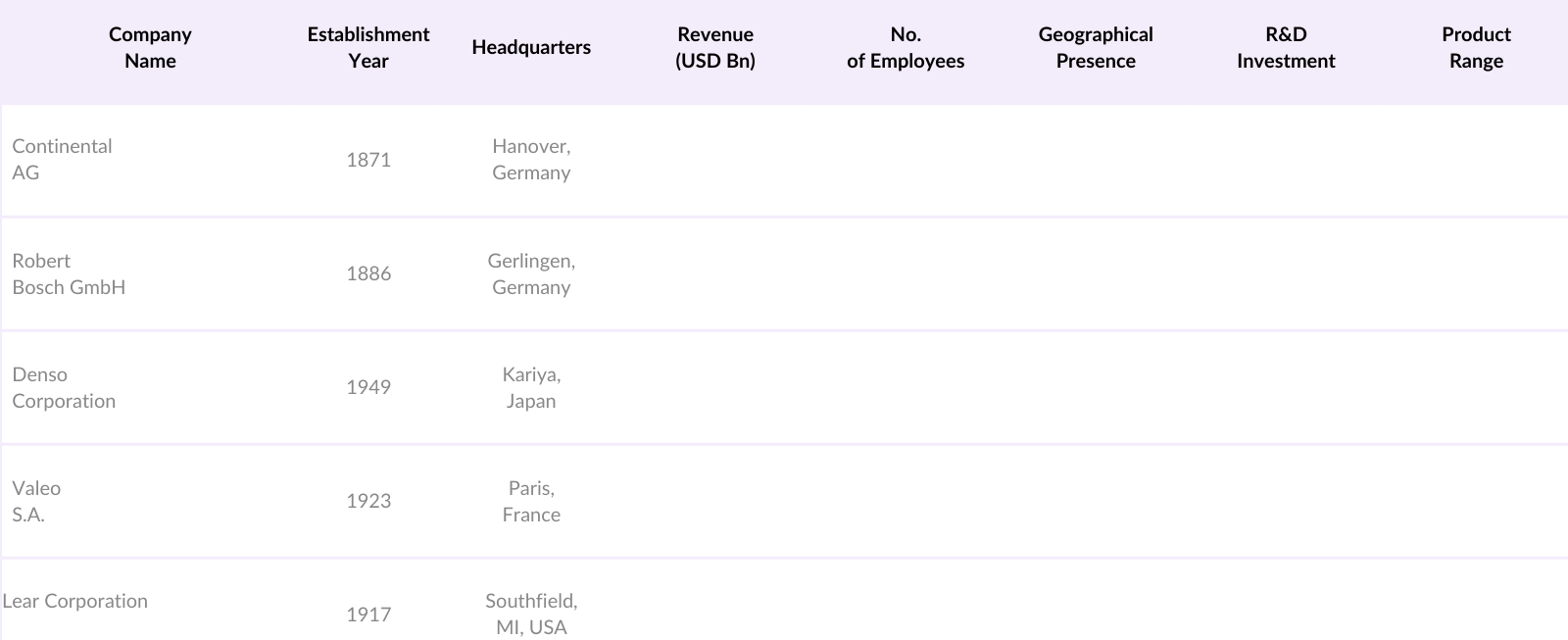
The Global Vehicle Security System market is characterized by the presence of several key players. These companies are involved in product innovation, mergers, and acquisitions, and strategic partnerships to enhance their market share. The vehicle security system market is dominated by several major players, including Continental AG, Robert Bosch GmbH, and Denso Corporation.
Over the next five years, the Global Vehicle Security System market is expected to show substantial growth, driven by the increasing adoption of electric vehicles (EVs), advancements in AI-based security technologies, and growing demand for smart and connected vehicles. The integration of vehicle security systems with telematics, biometric authentication, and blockchain technologies will play a key role in shaping the market's future.
|
Product Type |
Alarm Systems Immobilizers RKE Systems Central Locking Systems GPS Tracking Systems |
|
Technology |
RFID, GPS/GNSS Ultrasonic and Radar Sensors Biometric Systems |
|
Vehicle Type |
Passenger Vehicles Commercial Vehicles Heavy-Duty Vehicles |
|
Application |
OEMs Aftermarket |
|
Region |
North America Europe Asia-Pacific Latin America Middle East & Africa |
1.1 Definition and Scope
1.2 Market Taxonomy
1.3 Market Growth Rate
1.4 Market Segmentation Overview
2.1 Historical Market Size
2.2 Year-On-Year Growth Analysis
2.3 Key Market Developments and Milestones
3.1 Growth Drivers
3.1.1 Increasing Vehicle Theft Rates
3.1.2 Technological Advancements (Telematics, Biometrics, AI-based Solutions)
3.1.3 Government Mandates on Vehicle Security Systems
3.1.4 Rising Adoption of Connected Vehicles
3.2 Market Challenges
3.2.1 High Installation and Maintenance Costs
3.2.2 Complex Integration with Legacy Vehicles
3.2.3 Cybersecurity Concerns
3.3 Opportunities
3.3.1 Expansion of Electric Vehicles and Autonomous Vehicles
3.3.2 Integration of IoT in Vehicle Security Systems
3.3.3 Growth in Aftermarket Solutions
3.3.4 Collaboration between OEMs and Technology Providers
3.4 Trends
3.4.1 Adoption of Biometric Authentication in Vehicles
3.4.2 Rise of Smart Keys and Remote Control Systems
3.4.3 Increasing Use of Blockchain in Vehicle Security
3.4.4 Advanced Driver Assistance Systems (ADAS) Integration
3.5 Government Regulation
3.5.1 National and International Vehicle Security Regulations
3.5.2 Regulations on Anti-Theft Devices and Security Systems
3.5.3 Impact of Data Privacy Laws on Vehicle Security Solutions
3.6 SWOT Analysis
3.7 Stakeholder Ecosystem
3.8 Porters Five Forces
3.9 Competition Ecosystem
4.1 By Product Type (In Value %)
4.1.1 Alarm Systems
4.1.2 Immobilizers
4.1.3 Remote Keyless Entry (RKE) Systems
4.1.4 Central Locking Systems
4.1.5 GPS Tracking Systems
4.2 By Technology (In Value %)
4.2.1 RFID (Radio-Frequency Identification)
4.2.2 GPS/GNSS (Global Navigation Satellite System)
4.2.3 Ultrasonic and Radar Sensors
4.2.4 Biometric Systems
4.3 By Vehicle Type (In Value %)
4.3.1 Passenger Vehicles
4.3.2 Commercial Vehicles
4.3.3 Heavy-Duty Vehicles
4.4 By Application (In Value %)
4.4.1 OEMs (Original Equipment Manufacturers)
4.4.2 Aftermarket
4.5 By Region (In Value %)
4.5.1 North America
4.5.2 Europe
4.5.3 Asia-Pacific
4.5.4 Latin America
4.5.5 Middle East & Africa
5.1 Detailed Profiles of Major Companies
5.1.1 Continental AG
5.1.2 Robert Bosch GmbH
5.1.3 Denso Corporation
5.1.4 Valeo S.A.
5.1.5 Lear Corporation
5.1.6 Hella KGaA Hueck & Co.
5.1.7 Delphi Automotive LLP
5.1.8 ZF Friedrichshafen AG
5.1.9 Mitsubishi Electric Corporation
5.1.10 Tokai Rika Co., Ltd.
5.1.11 Johnson Electric Holdings Limited
5.1.12 Autoliv Inc.
5.1.13 NXP Semiconductors
5.1.14 Alps Alpine Co., Ltd.
5.1.15 Viper Security
5.2 Cross Comparison Parameters (Revenue, Headquarters, Product Innovation, Market Position, Technology Focus, Employee Count, Geographic Presence, R&D Investment)
5.3 Market Share Analysis
5.4 Strategic Initiatives
5.5 Mergers and Acquisitions
5.6 Investment Analysis
5.7 Venture Capital Funding
5.8 Government Grants
5.9 Private Equity Investments
6.1 Security Standards and Protocols
6.2 Compliance Requirements for OEMs and Aftermarket
6.3 Certification Processes and Penalties
7.1 Future Market Size Projections
7.2 Key Factors Driving Future Market Growth
8.1 By Product Type (In Value %)
8.2 By Technology (In Value %)
8.3 By Vehicle Type (In Value %)
8.4 By Application (In Value %)
8.5 By Region (In Value %)
9.1 TAM/SAM/SOM Analysis
9.2 Customer Cohort Analysis
9.3 Market Entry Strategies
9.4 White Space Opportunity Analysis
The initial phase of the research involves constructing a detailed ecosystem map of all major stakeholders within the Global Vehicle Security System Market. This is done through extensive desk research, leveraging both secondary and proprietary databases to gather industry insights. The goal is to identify the critical variables influencing the market, such as technology adoption, vehicle sales, and regulatory frameworks.
Historical data is then analyzed, covering market penetration and the growth of vehicle security systems. This phase includes an evaluation of the revenue generated by security systems across various segments and regions, ensuring the reliability of the estimates provided.
Hypotheses are validated through expert consultations with automotive manufacturers and technology providers. These interviews provide operational insights into the vehicle security system market, helping to refine the market models.
The final phase consolidates insights from both the primary and secondary research. We engage with key industry players to verify the market data, focusing on specific product segments, sales performance, and technological innovations. This ensures that our analysis is comprehensive and accurate.
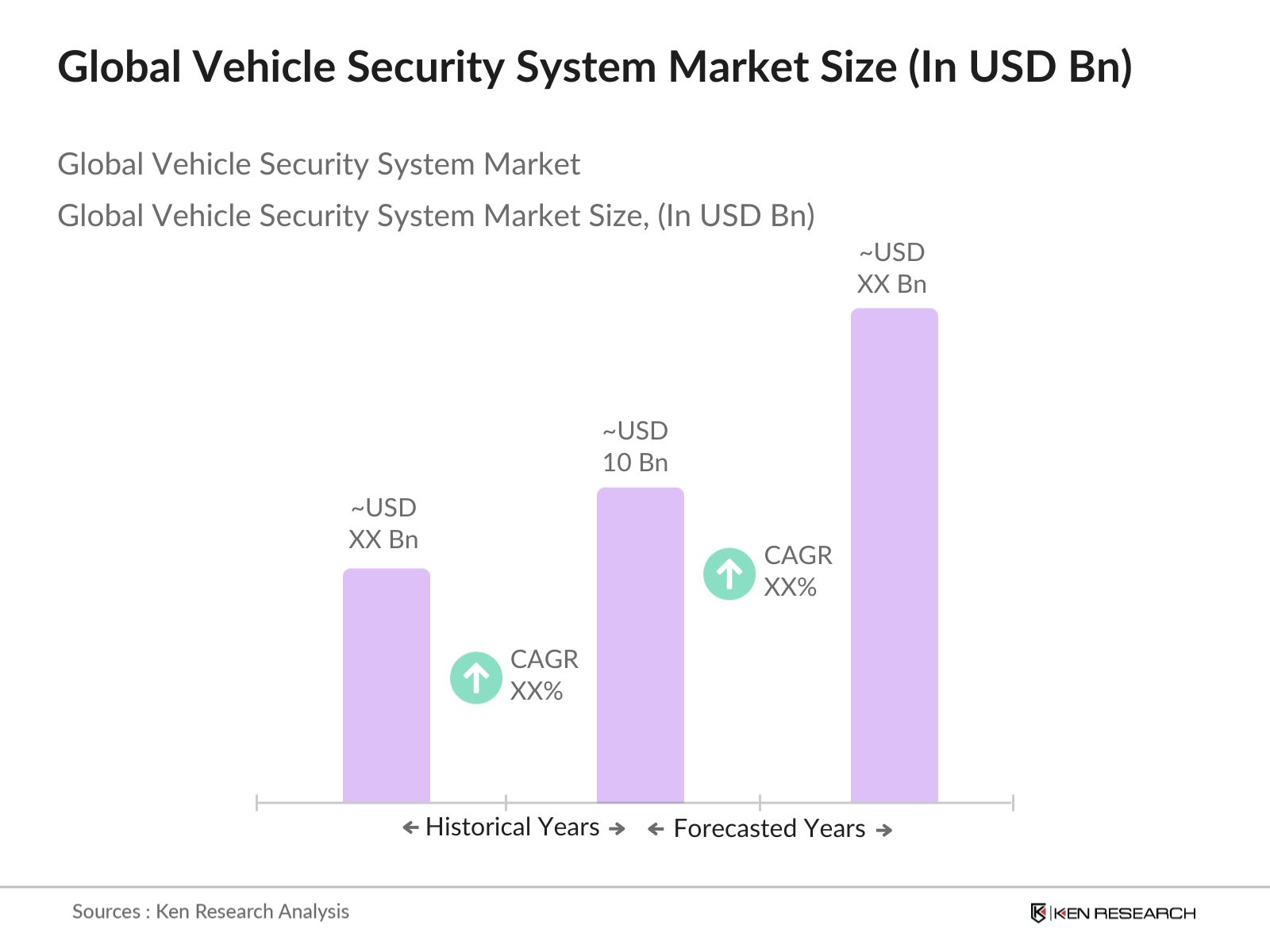
The Global Vehicle Security System market is valued at USD 10 billion, based on a five-year historical analysis. This market is primarily driven by the growing incidence of vehicle thefts and the rising adoption of advanced security technologies such as telematics, GPS tracking systems, and biometric vehicle access.
Challenges include high installation costs, technical complexities in integrating security systems with older vehicles, and concerns about the cybersecurity vulnerabilities of connected vehicles.
Key players include Continental AG, Robert Bosch GmbH, Denso Corporation, Valeo S.A., and Lear Corporation, all of which have a strong global presence and innovative product offerings.
The market is driven by rising vehicle theft rates, advancements in security technology, and government mandates on vehicle safety. Increased demand for electric and connected vehicles also boosts growth.

What makes us stand out is that our consultants follows Robust, Refine and Result (RRR) methodology. i.e. Robust for clear definitions, approaches and sanity checking, Refine for differentiating respondents facts and opinions and Result for presenting data with story

We have set a benchmark in the industry by offering our clients with syndicated and customized market research reports featuring coverage of entire market as well as meticulous research and analyst insights.

While we don't replace traditional research, we flip the method upside down. Our dual approach of Top Bottom & Bottom Top ensures quality deliverable by not just verifying company fundamentals but also looking at the sector and macroeconomic factors.

With one step in the future, our research team constantly tries to show you the bigger picture. We help with some of the tough questions you may encounter along the way: How is the industry positioned? Best marketing channel? KPI's of competitors? By aligning every element, we help maximize success.

Our report gives you instant access to the answers and sources that other companies might choose to hide. We elaborate each steps of research methodology we have used and showcase you the sample size to earn your trust.

If you need any support, we are here! We pride ourselves on universe strength, data quality, and quick, friendly, and professional service.