
Global Vertical Farming Market Outlook to 2030
Region:Global
Author(s):Ananiya Bansal
Product Code:KENGR027
Region:Global
Author(s):Ananiya Bansal
Product Code:KENGR027
October 2024
88
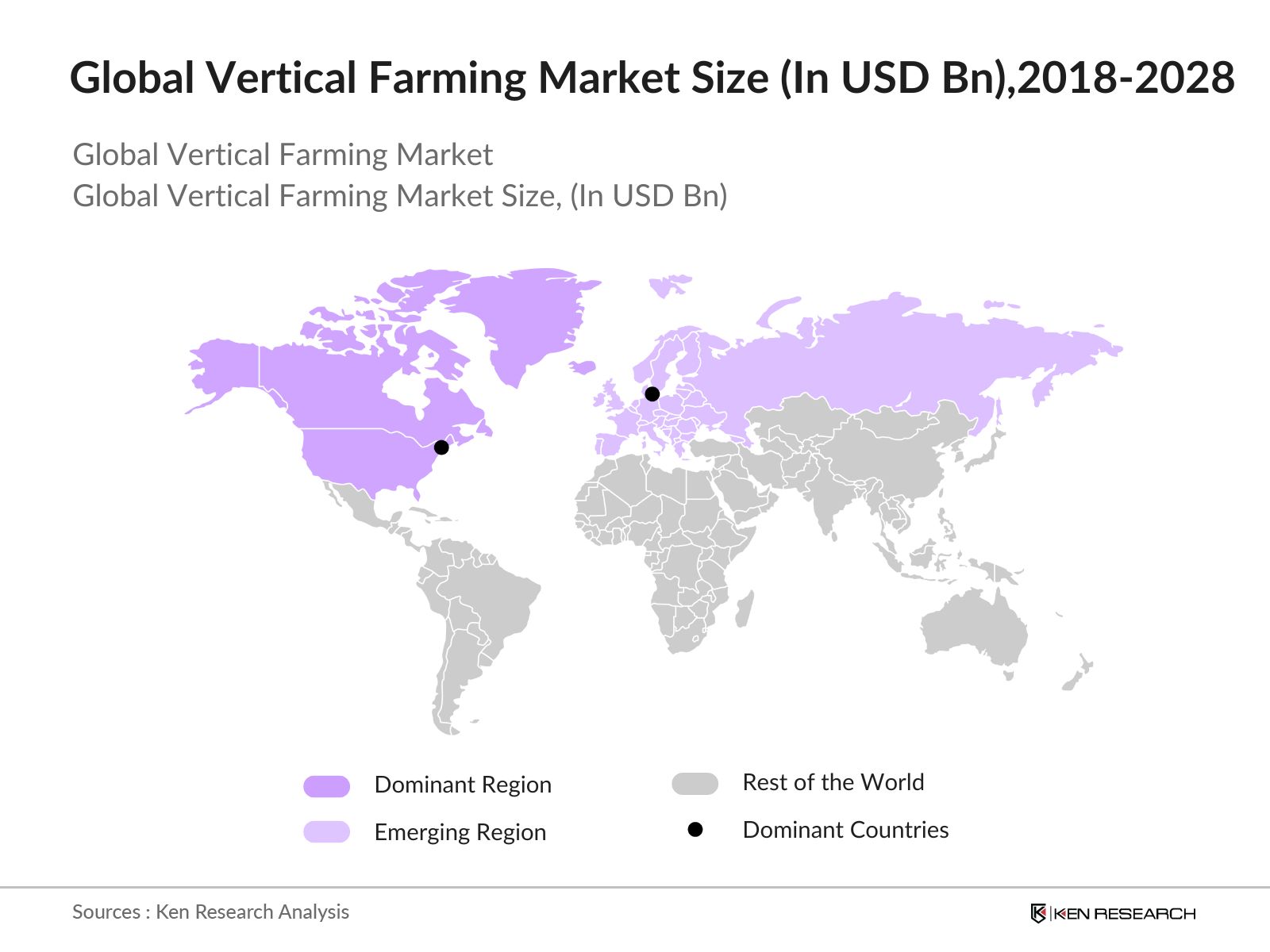
The Global Vertical Farming Market can be segmented based on several factors:
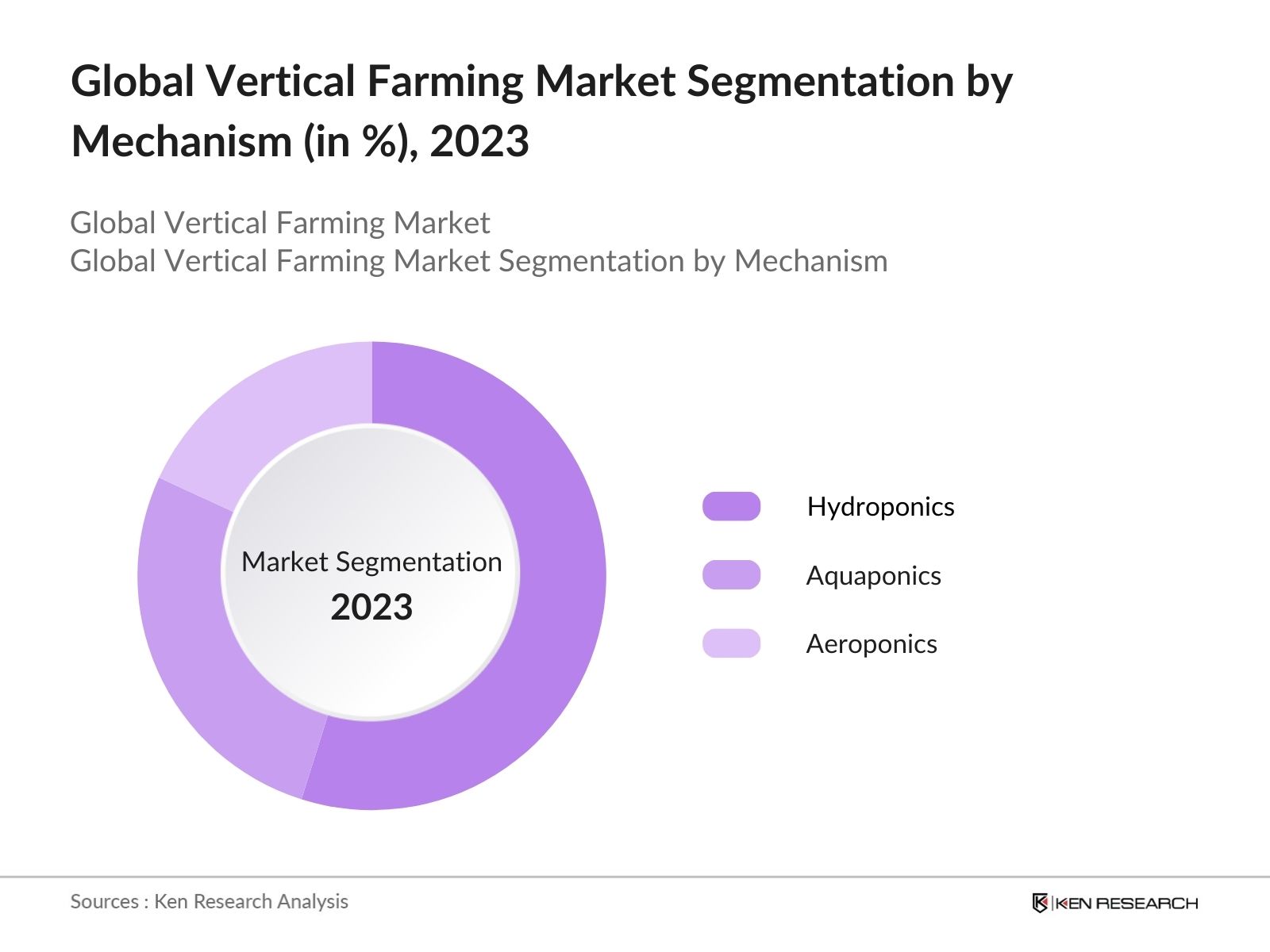
By Mechanism: Global Vertical Farming Market is segmented by mechanism into Hydroponics, Aquaponics and Aeroponic. In 2023, market is dominated by hydroponics sub-segment, which holds the largest share by value. Hydroponics allows for precise control over the growing environment, including temperature, humidity, light, and nutrients. This leads to higher quality and more consistent crops.
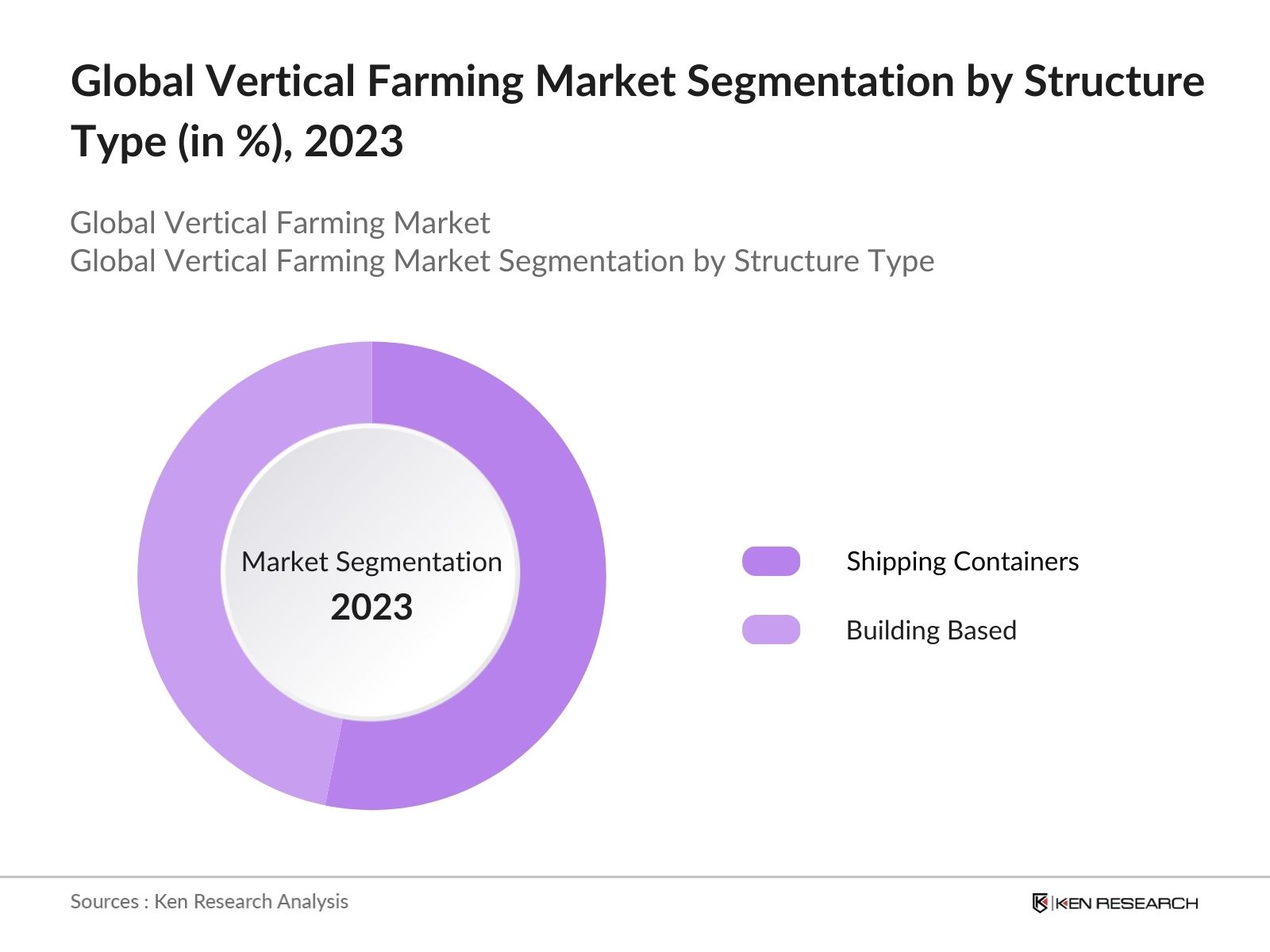
By Structure Type: Global Vertical Farming Market is segmented by structure type into shipping containers & building based. In 2023, the market segmentation by raw materials shows shipping containers as the dominant sub-segment in terms of value. Shipping containers are widely available and relatively inexpensive, making them a cost-effective option for setting up vertical farms. The modular nature of containers allows for scalable operations, enabling farms to start small and expand as needed.
By Type of Green Produce: Global Vertical Farming is segmented by green produce is into Leafy Green, Herbs and Fruits & Vegetables. In 2023, leafy green produce dominated by value. Leafy greens dominate due to their fast growth cycle, high demand, and suitability for vertical farming environments, offering efficient space utilization and quick turnover for urban markets.
|
Global Vertical Farming Market Cross Comparison (Equipment) |
||
|
Name of Company |
Headquarter |
Establishment Year/Vintage |
|
Signify (Philips Lighting) |
Eindhoven, Netherlands |
1891 |
|
Heliospectra |
Gothenburg, Sweden |
2006 |
|
Pipp Horticulture |
Walker, Michigan, USA |
1981 |
|
ams-OSRAM AG |
Unterpremsttten, Austria |
1981 |
|
Dantherm Group |
Skive, Denmark |
1954 |
|
Inecta |
New York,USA |
2000 |
|
Global Vertical Farming Cross Comparison (Crop Produce) |
||
|
Name of Company |
Headquarter |
Establishment Year/Vintage |
|
Aerofarm |
Danville, Virginia, USA |
2004 |
|
Plenty |
San Francisco, California, USA |
2013 |
|
Bowery Farming |
New York, USA |
2015 |
|
Kalera |
Aurora, Colorado, USA |
2010 |
|
Infarm |
Berlin, Germany |
2013 |
|
Bright Farms |
Irvington, New York, USA |
2011 |
|
Spread |
Kyoto, Japan |
2006 |
Global Vertical Farming Market Growth Drivers:
Global Vertical Farming Market Challenges:
Global Vertical Farming Future Market Outlook
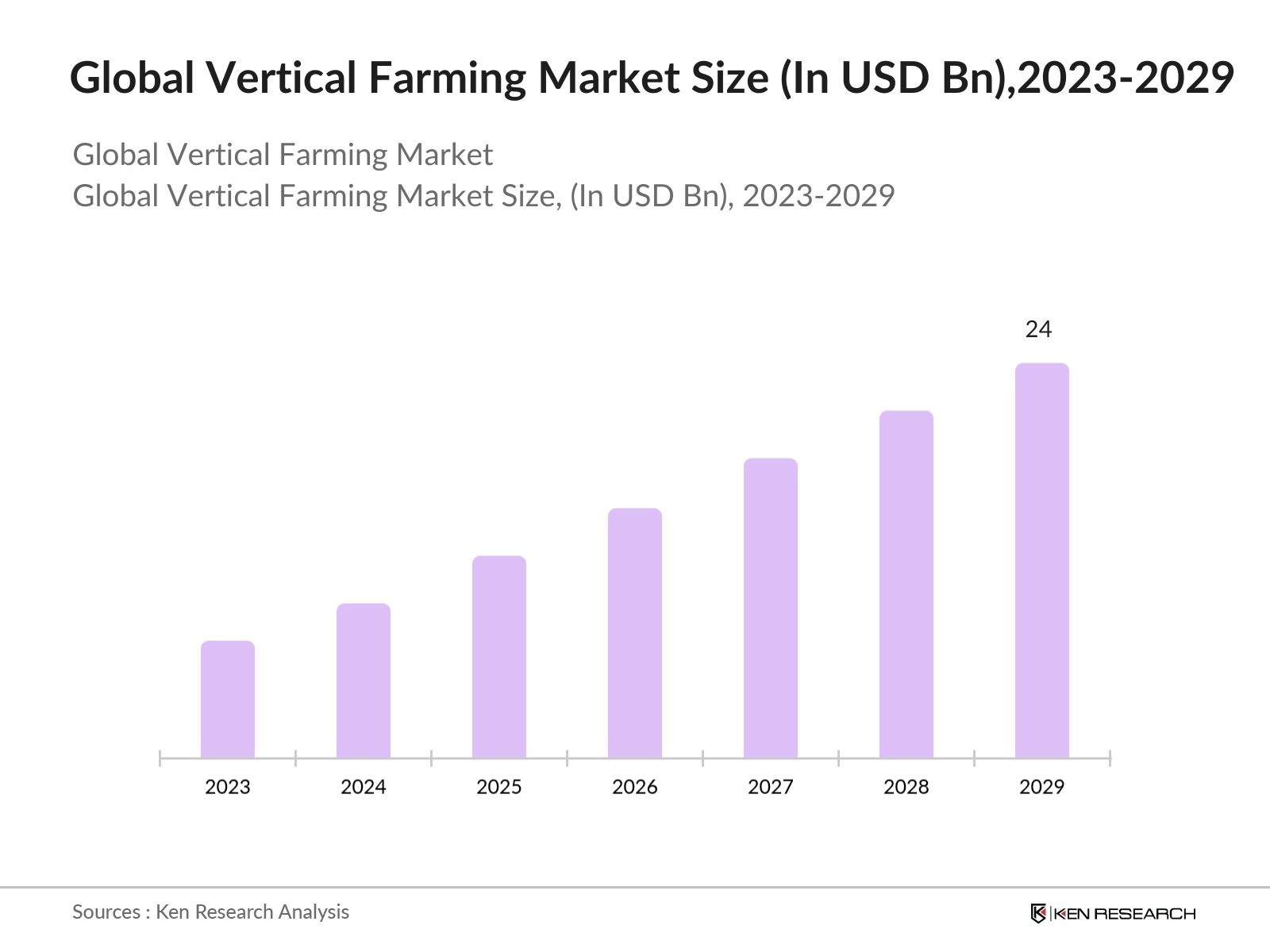
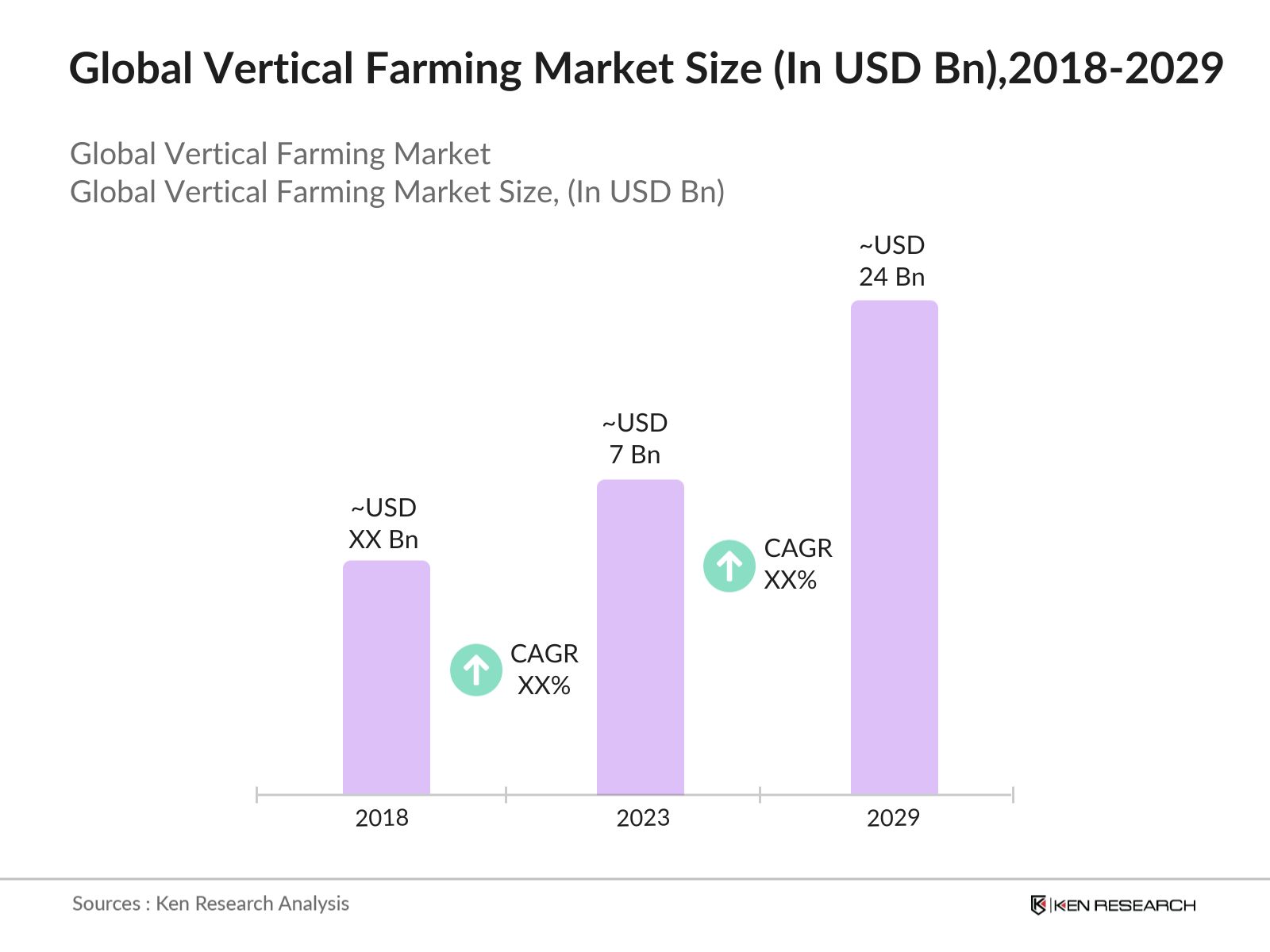
By 2029, the vertical farming market is projected to reach USD 24 billion. future growth is expected to be driven by advancements in automation, AI, and IoT technologies, which will enhance efficiency and yield. Additionally, increasing investments in vertical farming by both private and public sectors, particularly in urban areas, will further propel market growth.
Future Market Trends
|
By Region |
North America Europe APAC Latin America MEA |
|
By Mechanism |
Hydroponics Aquaponics Aeroponics |
|
By Structure Type |
Shipping Containers Building based |
|
By Type of Equipment |
Lighting Devices Irrigation & Fertigation Systems and Crop Inputs Material Handling Structures Sensing Devices Climate Control Devices Software & Platforms |
|
By Type of Crop Produce |
Leafy Green Herbs Fruits & Vegetables |
1.1 Global Agricultural Technology Market
1.2 Global Vertical Farming Market
2.1 Overview of Global Economics
2.2 Overview of Global Agricultural Technology Industry
2.3 Global Agricultural Technology (Precision Agriculture, Hydroponics, Drones & Robotics) Sales
3.1 Global Vertical Farming Market Ecosystem
3.2 Global Vertical Farming Market Value Chain
5.1 Global Vertical Farming Market Segmentation by Region (in value %), 20182-23
5.2 Global Vertical Farming Market Segmentation by Product Components (in value%), 2018-2023
5.3 Global Vertical Farming Market Segmentation by Mechanism (in value %), 2018-2023
5.4 Global Vertical Farming Market Segmentation by Structure Based (in value %), 2018-2023
5.5 Global Vertical Farming Market Segmentation by Crops (in value %), 2018-2023
6.1Global Vertical Farming Market Competition Overview
6.2Global Vertical Farming Market Share
6.3Global Vertical Farming Market Cross Comparison
6.4Global Vertical Farming Market Case Studies
7.1 Global Vertical Farming Market Growth Drivers
7.2 Global Vertical Farming Market Challenges
7.3 Global Vertical Farming Market Trends
7.4 Global Vertical Farming Market Positioning Matrixes
9.1 Global Vertical Farming Future Market Segmentation by Region (in value %), 2023-2029
9.2 Global Vertical Farming Future Market Segmentation by Product Components (in value%), 2023-2029
9.3 Global Vertical Farming Future Market Segmentation by Mechanism (in value %), 2023-2029
9.4 Global Vertical Farming Future Market Segmentation by Structure Based (in value %), 2023-2029
9.5 Global Vertical Farming Future Market Segmentation by Crops (in value %), 2023-2029
The research team initially formulated a hypothesis regarding the Vertical Farming market by analyzing prevailing industry elements sourced from company reports, magazines, journals, online articles, governmental bodies, and industry reports. We leveraged both public and proprietary databases to accurately define market segments and gather relevant data points.
We conducted interviews with company management (including C-level executives, Directors, Country Heads, Product Heads, Heads of Sales, Business Development Executives, and Operations Supervisors) using Computer Assisted Telephonic Interviews (CATIs). These interviews were aimed at gathering insights on the market and verifying the initial hypothesis proposed by our team.
The market size for the Vertical Farming sector was determined through a comprehensive bottom-to-top analysis. This involved identifying major market participants, analyzing their revenue streams, sales data for various battery types, price points, and their overall contribution to the market. The compiled market size data was then cross-verified with multiple secondary sources to ensure accuracy.
The future projections were made by identifying key macro and industry-specific factors such as technological advancements, the number of operating enterprises, small and medium-sized enterprises (SMEs), and large conglomerates. These insights were combined with expert opinions to develop forecasts for the Vertical Farming market. The final analysis and interpretations were conducted by our team, which is proficient in utilizing modern digital communication tools for market analysis.
Global Vertical Farming market reached USD 7 billion in 2023. The growth is primarily driven by increasing demand for fresh, locally produced, and pesticide-free food, coupled with advancements in technology.
Challenges of Global Vertical Farming Market include high initial investments, energy management, dearth of crop diversity & problems associated with pest infestations. These factors hinder the smooth growth and expansion of the market.
Major players in Global Vertical Farming Market include Signify, Heliospectra, Pipp Horticulture among others. These companies are leading the market with innovative farming techniques and substantial investments in R&D.
Global Vertical Farming is propelled by factors such as decreasing availability of land for agriculture, technological innovation and evolving landscape for cannabis legalization. These drivers are crucial for the continuous growth and adoption of vertical farming.

What makes us stand out is that our consultants follows Robust, Refine and Result (RRR) methodology. i.e. Robust for clear definitions, approaches and sanity checking, Refine for differentiating respondents facts and opinions and Result for presenting data with story

We have set a benchmark in the industry by offering our clients with syndicated and customized market research reports featuring coverage of entire market as well as meticulous research and analyst insights.

While we don't replace traditional research, we flip the method upside down. Our dual approach of Top Bottom & Bottom Top ensures quality deliverable by not just verifying company fundamentals but also looking at the sector and macroeconomic factors.

With one step in the future, our research team constantly tries to show you the bigger picture. We help with some of the tough questions you may encounter along the way: How is the industry positioned? Best marketing channel? KPI's of competitors? By aligning every element, we help maximize success.

Our report gives you instant access to the answers and sources that other companies might choose to hide. We elaborate each steps of research methodology we have used and showcase you the sample size to earn your trust.

If you need any support, we are here! We pride ourselves on universe strength, data quality, and quick, friendly, and professional service.