
Global Veterinary Dermatology Drugs Market Outlook 2030
Region:Global
Author(s):Shivani Mehra
Product Code:KROD5133
Region:Global
Author(s):Shivani Mehra
Product Code:KROD5133
December 2024
82
Listen to the audio summary
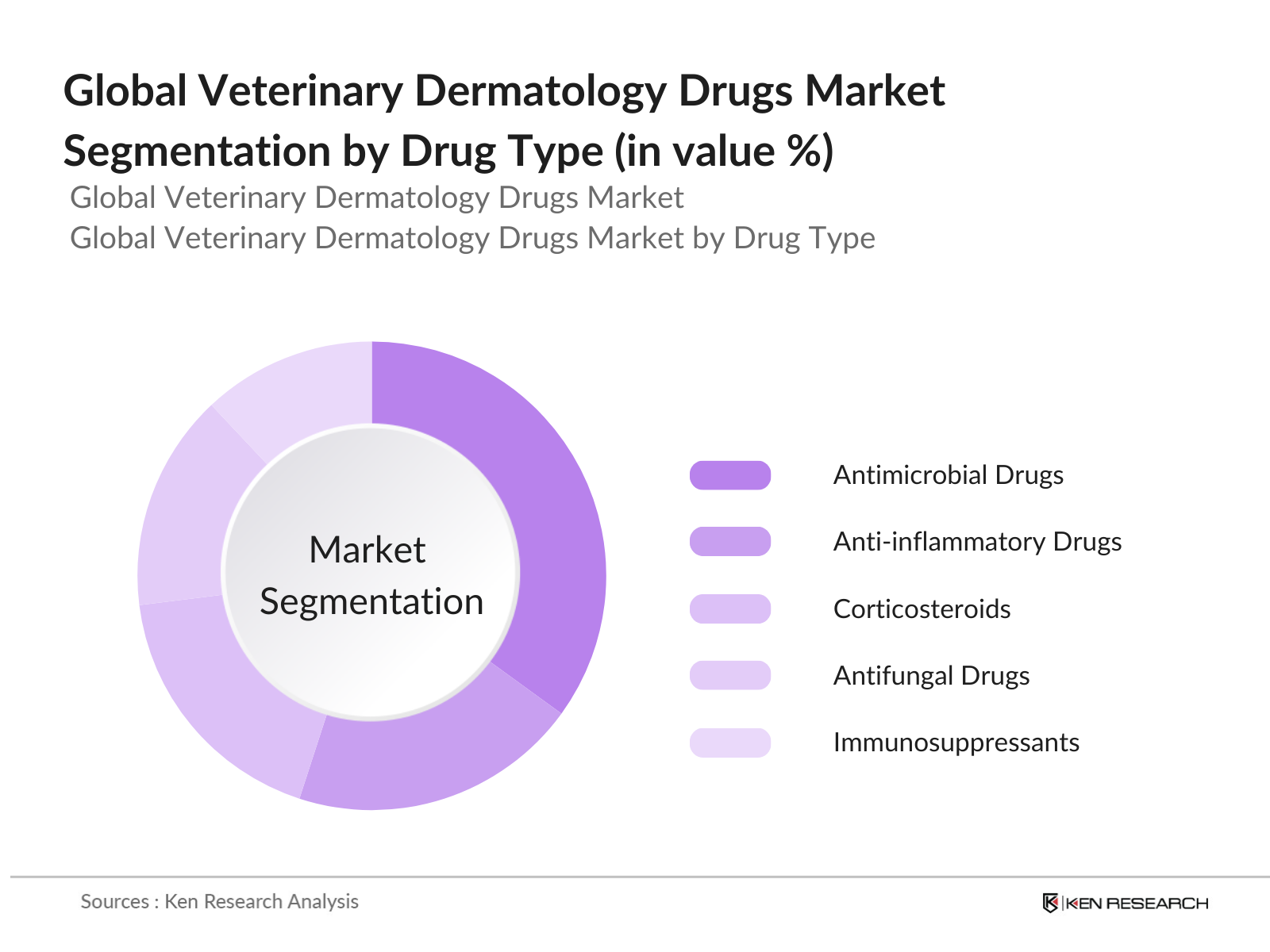
By Drug Type: The veterinary dermatology drugs market is segmented into antifungal drugs, anti-inflammatory drugs, antimicrobial drugs, corticosteroids, and immunosuppressants. Among these, antimicrobial drugs dominate due to their widespread use in treating bacterial infections, which are common among animals. The increasing incidence of bacterial skin infections such as pyoderma has further fueled the demand for antimicrobial treatments. Corticosteroids and anti-inflammatory drugs follow, used to manage inflammation and allergic reactions, with corticosteroids being especially popular due to their rapid efficacy in providing relief.
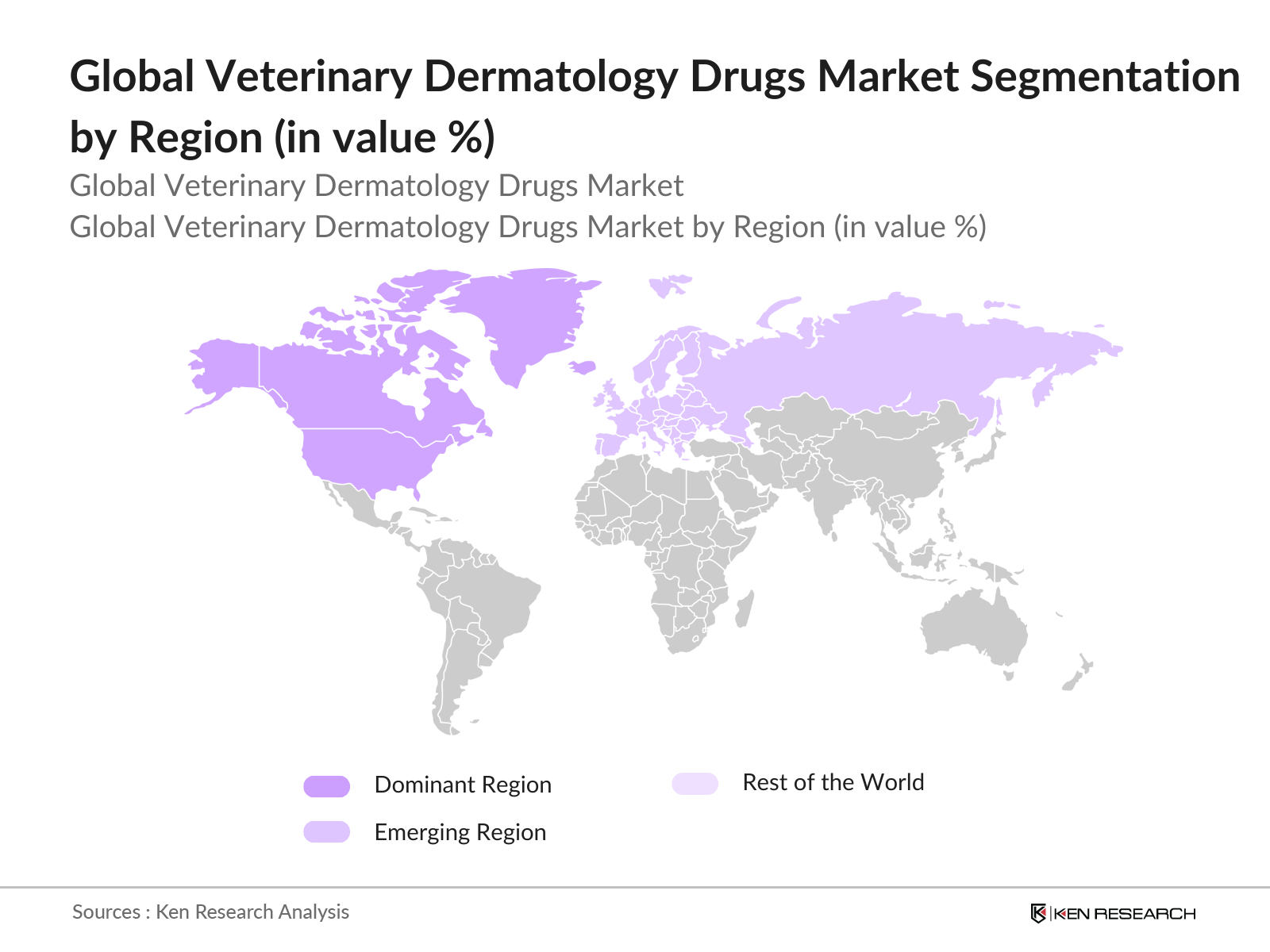
By Region: The veterinary dermatology drugs market is segmented into North America, Europe, Asia-Pacific, Latin America, and Middle East & Africa. North America leads the market due to high pet ownership rates and well-established veterinary healthcare infrastructure. Europe follows closely, supported by growing demand for advanced dermatological treatments in companion animals. Asia-Pacific, particularly countries like Japan and China, is witnessing significant growth driven by increasing disposable incomes and a growing awareness of pet health.
The global veterinary dermatology drugs market is dominated by a few key players that focus on research and development, innovation in drug formulations, and strategic collaborations. Companies like Zoetis and Elanco are leading the market through product innovation and expanding their product portfolios.
|
Company |
Establishment Year |
Headquarters |
No. of Employees |
Revenue (USD Bn) |
R&D Investment (USD Mn) |
Regional Presence |
Strategic Collaborations |
Key Patents Held |
Market Share (%) |
|
Zoetis Inc. |
1952 |
New Jersey, USA |
|||||||
|
Elanco Animal Health |
1954 |
Indiana, USA |
|||||||
|
Virbac |
1968 |
Carros, France |
|||||||
|
Merck Animal Health |
1891 |
New Jersey, USA |
|||||||
|
Boehringer Ingelheim |
1885 |
Ingelheim, Germany |
Market Growth Drivers
Market Challenges:
The veterinary dermatology drugs market is projected to experience strong growth over the next five years. The increasing focus on animal welfare, coupled with growing investments in veterinary healthcare infrastructure, will drive market expansion. Advancements in drug formulations, particularly the development of biologics, and rising awareness among pet owners regarding the importance of skin health in animals are expected to be major contributors to future market growth. In addition, the Asia-Pacific region is anticipated to become a key market as pet adoption rates rise, and veterinary healthcare standards improve.
Market Opportunities:
|
By Drug Type |
Antifungal Drugs Anti-inflammatory Drugs Antimicrobial Drugs Corticosteroids Immunosuppressants |
|
By Application |
Skin Allergies Parasitic Infections Bacterial Infections Fungal Infections Autoimmune Disorders |
|
By Route of Administration |
Oral Topical Injectable |
|
By Animal Type |
Dogs Cats Horses Others |
|
By Region |
North-East Midwest West Coast Southern States |
1.1. Definition and Scope
1.2. Market Taxonomy
1.3. Market Growth Rate
1.4. Market Segmentation Overview
2.1. Historical Market Size
2.2. Year-On-Year Growth Analysis
2.3. Key Market Developments and Milestones
3.1. Growth Drivers
3.1.1. Increasing Pet Ownership
3.1.2. Rise in Skin Allergies and Infections in Animals
3.1.3. Advancements in Veterinary Dermatology
3.1.4. Increasing Spending on Pet Healthcare
3.2. Market Challenges
3.2.1. High Costs of Dermatology Drugs
3.2.2. Stringent Regulatory Approvals
3.2.3. Limited Awareness Among Pet Owners in Emerging Markets
3.3. Opportunities
3.3.1. Growth in Emerging Markets (Asia-Pacific)
3.3.2. Development of Organic and Natural Dermatology Drugs
3.3.3. Online Platforms for Drug Sales
3.4. Trends
3.4.1. Development of Combination Therapies
3.4.2. Use of Biologics in Dermatology
3.4.3. Growing Focus on Sustainable Drug Production
3.5. Government Regulations
3.5.1. Regulatory Landscape by Region
3.5.2. FDA and EMA Guidelines
3.5.3. Animal Welfare and Drug Compliance
3.6. SWOT Analysis
3.7. Porters Five Forces Analysis
3.8. Competition Ecosystem
4.1. By Drug Type (In Value %)
4.1.1. Antifungal Drugs
4.1.2. Anti-inflammatory Drugs
4.1.3. Antimicrobial Drugs
4.1.4. Corticosteroids
4.1.5. Immunosuppressants
4.2. By Application (In Value %)
4.2.1. Skin Allergies
4.2.2. Parasitic Infections
4.2.3. Bacterial Infections
4.2.4. Fungal Infections
4.2.5. Autoimmune Disorders
4.3. By Route of Administration (In Value %)
4.3.1. Oral
4.3.2. Topical
4.3.3. Injectable
4.4. By Animal Type (In Value %)
4.4.1. Dogs
4.4.2. Cats
4.4.3. Horses
4.4.4. Others
4.5. By Distribution Channel (In Value %)
4.5.1. Veterinary Clinics
4.5.2. Retail Pharmacies
4.5.3. Online Pharmacies
4.5.4. Veterinary Hospitals
5.1. Detailed Profiles of Major Companies
5.1.1. Zoetis Inc.
5.1.2. Elanco Animal Health
5.1.3. Virbac
5.1.4. Merck Animal Health
5.1.5. Vetoquinol
5.1.6. Ceva Animal Health
5.1.7. Boehringer Ingelheim
5.1.8. Dechra Pharmaceuticals
5.1.9. Bayer Animal Health
5.1.10. Norbrook Laboratories
5.1.11. IDEXX Laboratories
5.1.12. Bimeda Inc.
5.1.13. Orion Corporation
5.1.14. Zoopharm
5.1.15. Novartis Animal Health
5.2. Cross Comparison Parameters
5.2.1. Market Share (%)
5.2.2. Revenue (USD Bn)
5.2.3. Product Launches
5.2.4. R&D Investment (USD Mn)
5.2.5. No. of Employees
5.2.6. Regional Presence
5.2.7. Key Patents Held
5.2.8. Strategic Collaborations
5.3. Market Share Analysis
5.4. Strategic Initiatives
5.5. Mergers and Acquisitions
5.6. Investment Analysis
5.7. Venture Capital Funding
5.8. Government Grants
5.9. Private Equity Investments
6.1. Compliance Requirements by Region
6.2. Certification Processes
6.3. Import and Export Regulations
7.1. Future Market Size Projections
7.2. Key Factors Driving Future Market Growth
8.1. By Drug Type (In Value %)
8.2. By Application (In Value %)
8.3. By Route of Administration (In Value %)
8.4. By Animal Type (In Value %)
8.5. By Distribution Channel (In Value %)
9.1. TAM/SAM/SOM Analysis
9.2. Customer Cohort Analysis
9.3. Marketing Initiatives
9.4. White Space Opportunity Analysis
Disclaimer Contact UsIn this step, the key variables that influence the global veterinary dermatology drugs market are identified through extensive desk research and secondary databases. This process allows for a comprehensive understanding of market dynamics, such as drug type, application, and region.
In this phase, historical data from 2018 to 2023 is compiled and analyzed to assess market penetration and growth trends. This involves a thorough evaluation of market segmentation and key revenue drivers, including consumer behavior and spending patterns.
Industry experts and stakeholders are consulted through telephonic interviews and online surveys. These interactions provide insights into current market trends, challenges, and opportunities, which are then used to validate the market hypothesis.
The final step involves synthesizing all the gathered data and presenting it in the form of detailed market reports. The data is further verified through multiple sources, including government reports and financial statistics from major players in the veterinary dermatology drugs market.
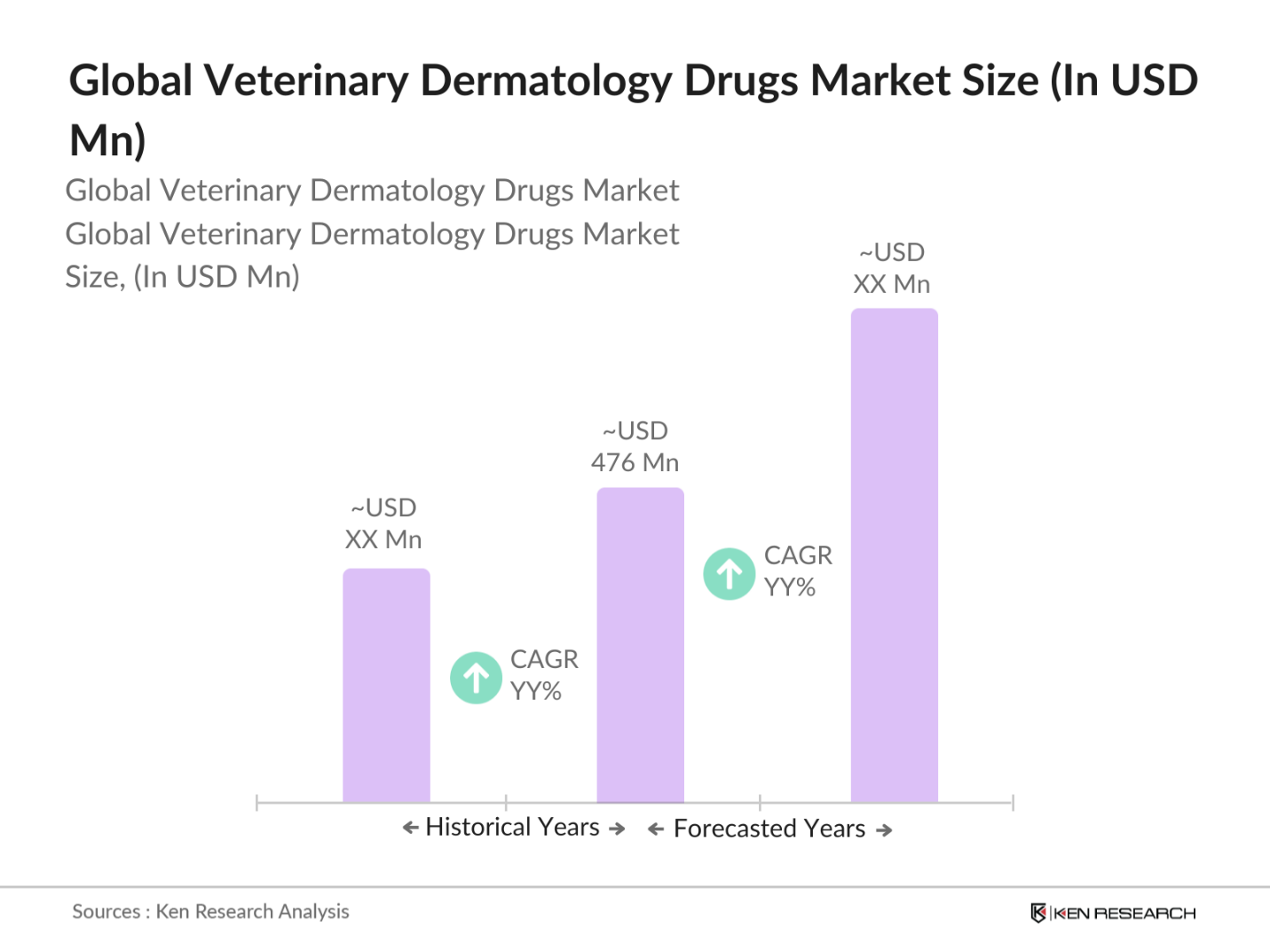
The global veterinary dermatology drugs market was valued at USD 476 million, driven by increasing demand for skin treatments in pets and innovations in dermatological drug formulations.
Challenges include stringent regulatory approvals, high costs associated with drug development, and limited awareness of dermatological issues in animals in some regions.
Key players include Zoetis Inc., Elanco Animal Health, Virbac, Merck Animal Health, and Boehringer Ingelheim, among others. These companies dominate through extensive product portfolios and innovative drug formulations.
Growth drivers include increasing pet ownership, rising awareness about animal skin health, advancements in dermatology drugs, and growing disposable incomes, particularly in developing regions.

What makes us stand out is that our consultants follows Robust, Refine and Result (RRR) methodology. i.e. Robust for clear definitions, approaches and sanity checking, Refine for differentiating respondents facts and opinions and Result for presenting data with story

We have set a benchmark in the industry by offering our clients with syndicated and customized market research reports featuring coverage of entire market as well as meticulous research and analyst insights.

While we don't replace traditional research, we flip the method upside down. Our dual approach of Top Bottom & Bottom Top ensures quality deliverable by not just verifying company fundamentals but also looking at the sector and macroeconomic factors.

With one step in the future, our research team constantly tries to show you the bigger picture. We help with some of the tough questions you may encounter along the way: How is the industry positioned? Best marketing channel? KPI's of competitors? By aligning every element, we help maximize success.

Our report gives you instant access to the answers and sources that other companies might choose to hide. We elaborate each steps of research methodology we have used and showcase you the sample size to earn your trust.

If you need any support, we are here! We pride ourselves on universe strength, data quality, and quick, friendly, and professional service.