
Global Voyage Management System Market Outlook to 2030
Region:Global
Author(s):Mukul
Product Code:KROD7788
Region:Global
Author(s):Mukul
Product Code:KROD7788
October 2024
85
The competitive landscape of the voyage management system market is shaped by the presence of major players such as Kongsberg Gruppen ASA, Wrtsil Oyj, and DNV GL. These companies are key contributors to the global market due to their extensive portfolios of integrated voyage management solutions, partnerships with leading maritime operators, and robust R&D capabilities. The market also sees contributions from regional players such as Marorka, focusing on local fleets and compliance needs.
|
Company |
Establishment Year |
Headquarters |
R&D Investment |
Number of Vessels Served |
Global Presence |
Key Partnerships |
Recent Acquisitions |
Number of Employees |
Revenue (USD Bn) |
|
Kongsberg Gruppen ASA |
1814 |
Norway |
|||||||
|
Wrtsil Oyj |
1834 |
Finland |
|||||||
|
DNV GL |
1864 |
Norway |
|||||||
|
StormGeo AS |
1997 |
Norway |
|||||||
|
Marorka |
2002 |
Iceland |
Growth Drivers
Market Restraints
Over the next five years, the global voyage management system market is expected to witness steady growth, driven by the increasing adoption of digital solutions for maritime operations and compliance with international environmental standards. The integration of AI, Big Data, and IoT in fleet management is expected to enhance the efficiency and transparency of shipping operations. Furthermore, growing investments in smart ports and green shipping initiatives will further propel the demand for voyage management systems.
Market Opportunities
|
By Solution Type |
Route Planning and Optimization Systems |
|
Fleet and Asset Tracking Solutions |
|
|
Fuel Management Systems |
|
|
Vessel Performance Monitoring |
|
|
By Application |
Commercial Shipping |
|
Passenger Transport |
|
|
Offshore Industry |
|
|
Defense and Government Fleets |
|
|
By Deployment Mode |
Cloud-Based Systems |
|
On-Premises Solutions |
|
|
By End User |
Shipping Companies |
|
Logistics Providers |
|
|
Maritime Agencies |
|
|
Port Operators |
|
|
By Region |
North America |
|
Europe |
|
|
Asia-Pacific |
|
|
Middle East & Africa |
|
|
Latin America |
1.1. Definition and Scope
1.2. Market Taxonomy
1.3. Market Growth Rate
1.4. Market Segmentation Overview
2.1. Historical Market Size
2.2. Year-On-Year Growth Analysis
2.3. Key Market Developments and Milestones
3.1. Growth Drivers (Maritime Industry Digitization, Fuel Optimization, Route Planning Efficiency, Regulatory Compliance, Sustainability Goals, Fleet Management, Reduction of Greenhouse Gas Emissions)
3.1.1. Growth in Global Trade
3.1.2. Increased Focus on Sustainability
3.1.3. Digitalization of Fleet Operations
3.1.4. Optimization of Fuel Costs
3.2. Market Challenges (High Implementation Costs, Data Security, Interoperability Issues, Dependence on Satellite Connectivity)
3.2.1. Cost of Technology Implementation
3.2.2. Limited Infrastructure in Developing Regions
3.2.3. Cybersecurity Risks
3.2.4. Data Privacy and Compliance Regulations
3.3. Opportunities (Adoption of AI and Machine Learning, Integration with IoT, Emerging Markets, Collaboration between Ports and Shipping Lines)
3.3.1. AI and Automation Integration
3.3.2. Emerging Markets Expansion
3.3.3. Partnerships with Maritime Institutes
3.4. Trends (Advanced Predictive Analytics, Cloud-Based Solutions, Blockchain for Voyage Contracts, Real-Time Tracking Systems)
3.4.1. Cloud Integration in Voyage Management
3.4.2. IoT in Fleet Monitoring
3.4.3. Blockchain for Smart Contracts
3.4.4. Real-Time Route Optimization
3.5. Government Regulation (IMO 2020, MARPOL, SOLAS, Data Protection and Security Regulations, Carbon Emission Monitoring)
3.5.1. IMO 2020 Sulphur Cap Regulations
3.5.2. Carbon Emission Tracking
3.5.3. MARPOL Compliance
3.5.4. National Maritime Strategies
3.6. SWOT Analysis
3.7. Stakeholder Ecosystem
3.8. Porters Five Forces
3.9. Competition Ecosystem
4.1. By Solution Type (In Value %)
4.1.1. Route Planning and Optimization Systems
4.1.2. Fleet and Asset Tracking Solutions
4.1.3. Fuel Management Systems
4.1.4. Vessel Performance Monitoring
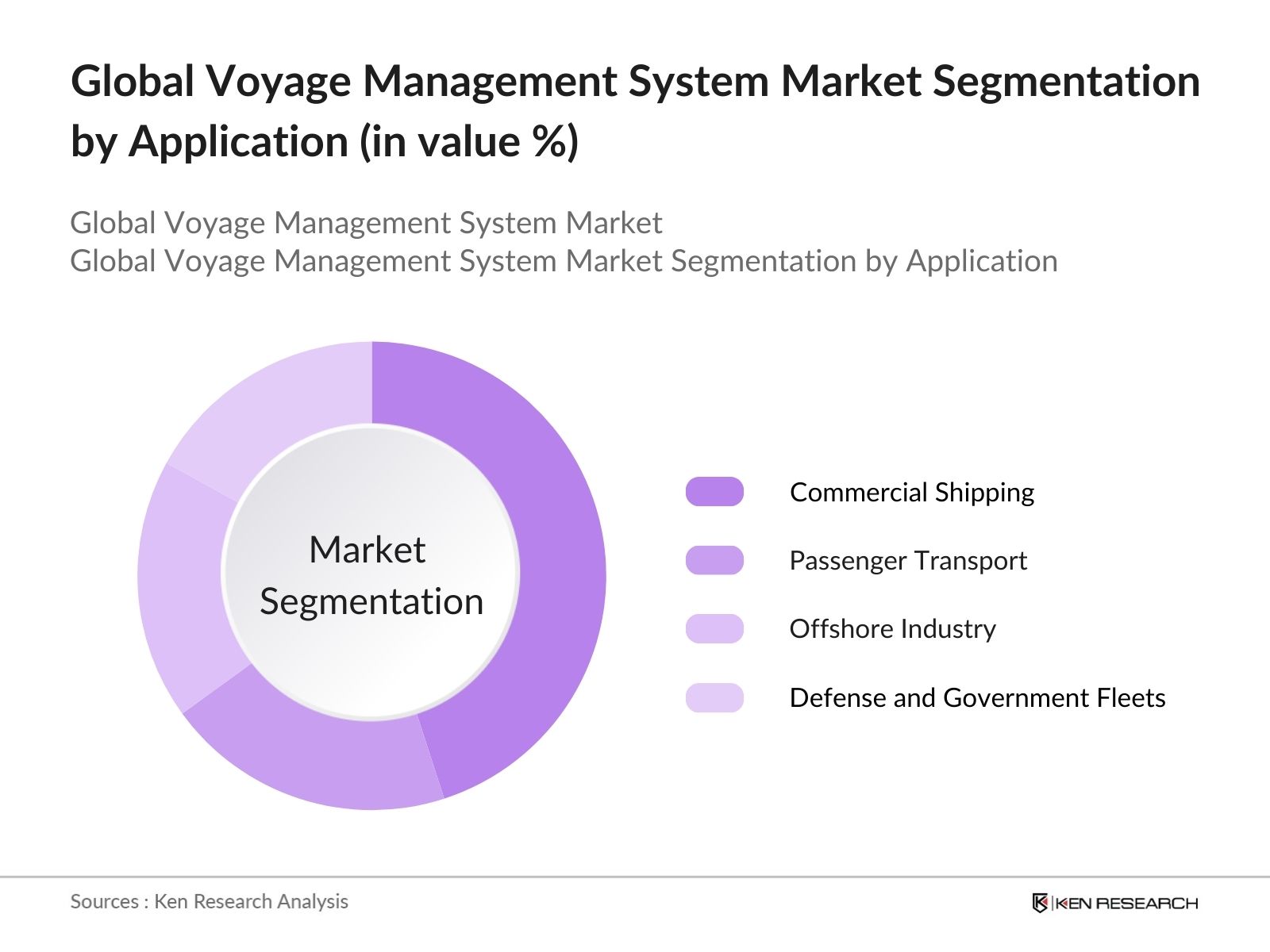
4.2. By Application (In Value %)
4.2.1. Commercial Shipping
4.2.2. Passenger Transport
4.2.3. Offshore Industry
4.2.4. Defense and Government Fleets
4.3. By Deployment Mode (In Value %)
4.3.1. Cloud-Based Systems
4.3.2. On-Premises Solutions
4.4. By End User (In Value %)
4.4.1. Shipping Companies
4.4.2. Logistics Providers
4.4.3. Maritime Agencies
4.4.4. Port Operators
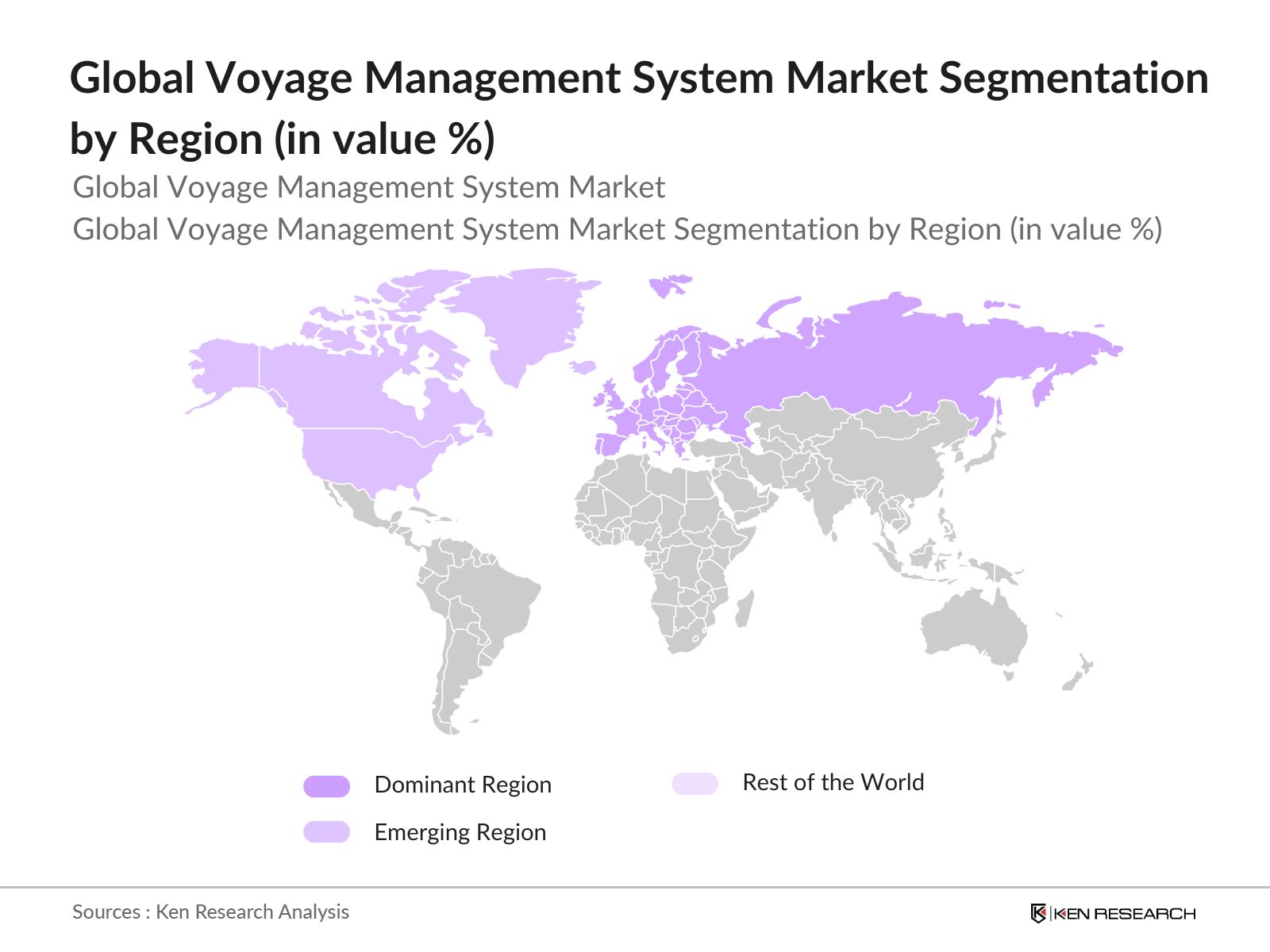
4.5. By Region (In Value %)
4.5.1. North America
4.5.2. Europe
4.5.3. Asia-Pacific
4.5.4. Middle East & Africa
4.5.5. Latin America
5.1 Detailed Profiles of Major Companies
5.1.1. Kongsberg Gruppen ASA
5.1.2. Wrtsil Oyj
5.1.3. DNV GL
5.1.4. StormGeo AS
5.1.5. BMT Group
5.1.6. ABB Ltd.
5.1.7. Marorka
5.1.8. Nautical Control Solutions LP
5.1.9. Furuno Electric Co. Ltd.
5.1.10. L3Harris Technologies, Inc.
5.1.11. Veson Nautical
5.1.12. Inmarsat Plc
5.1.13. METIS Cyberspace Technology SA
5.1.14. Navis (A part of Cargotec)
5.1.15. ZeroNorth
5.2 Cross Comparison Parameters (Headquarters, Revenue, Inception Year, R&D Investment, Key Patents, Number of Vessels Served, Market Penetration, Global Footprint)
5.3 Market Share Analysis
5.4 Strategic Initiatives
5.5 Mergers and Acquisitions
5.6 Investment Analysis
5.7 Venture Capital Funding
5.8 Government Grants
5.9 Private Equity Investments
6.1. Maritime Security Standards
6.2. IMO Compliance Guidelines
6.3. Data Protection and Cybersecurity Standards
6.4. Environmental Regulations
6.5. Emission Reduction Protocols
7.1. Future Market Size Projections
7.2. Key Factors Driving Future Market Growth
8.1. By Solution Type (In Value %)
8.2. By Application (In Value %)
8.3. By Deployment Mode (In Value %)
8.4. By End User (In Value %)
8.5. By Region (In Value %)
9.1. TAM/SAM/SOM Analysis
9.2. Customer Cohort Analysis
9.3. Marketing Initiatives
9.4. White Space Opportunity Analysis
The initial stage involves identifying the major factors influencing the global voyage management system market. This is done through extensive desk research, leveraging both secondary and proprietary databases to collect industry-specific data.
Historical data pertaining to the voyage management system market is collected and analyzed, including metrics such as the number of ships using digital voyage systems, market penetration rates, and the relationship between regulatory compliance and system adoption.
Market hypotheses are developed and validated through consultations with industry experts. These consultations provide first-hand insights into market trends, challenges, and growth opportunities, enriching the research process.
A bottom-up approach is employed to validate market data. This involves direct communication with key market players, including ship operators and system providers, ensuring that the final report is comprehensive and accurate.
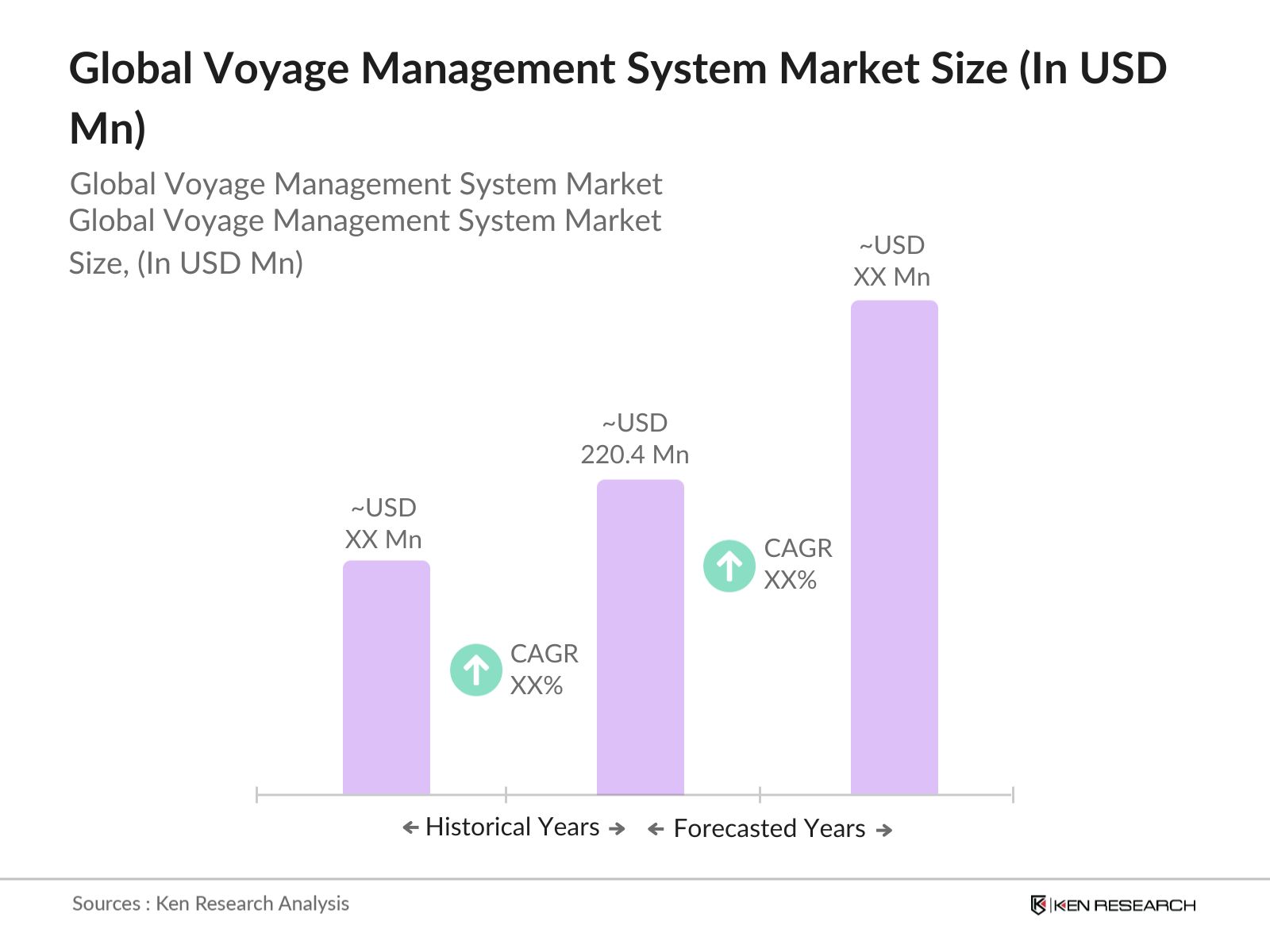
The global voyage management system market was valued at USD 220.4 million based on a five-year historical analysis, driven by the increased adoption of digital maritime solutions for route optimization, fleet tracking, and fuel management.
Key challenges include high implementation costs, limited infrastructure in emerging markets, and cybersecurity threats that could impact the integrity of digital voyage management solutions.
The major players in the market include Kongsberg Gruppen ASA, Wrtsil Oyj, DNV GL, StormGeo AS, and Marorka, who dominate the market due to their advanced technology portfolios and strategic partnerships.
Growth is driven by increasing digitization in the maritime sector, the need for route optimization to reduce fuel costs, and stringent environmental regulations that require greater operational transparency and compliance.

What makes us stand out is that our consultants follows Robust, Refine and Result (RRR) methodology. i.e. Robust for clear definitions, approaches and sanity checking, Refine for differentiating respondents facts and opinions and Result for presenting data with story

We have set a benchmark in the industry by offering our clients with syndicated and customized market research reports featuring coverage of entire market as well as meticulous research and analyst insights.

While we don't replace traditional research, we flip the method upside down. Our dual approach of Top Bottom & Bottom Top ensures quality deliverable by not just verifying company fundamentals but also looking at the sector and macroeconomic factors.

With one step in the future, our research team constantly tries to show you the bigger picture. We help with some of the tough questions you may encounter along the way: How is the industry positioned? Best marketing channel? KPI's of competitors? By aligning every element, we help maximize success.

Our report gives you instant access to the answers and sources that other companies might choose to hide. We elaborate each steps of research methodology we have used and showcase you the sample size to earn your trust.

If you need any support, we are here! We pride ourselves on universe strength, data quality, and quick, friendly, and professional service.