















Global VR Headsets Market Outlook to 2030
Region:Global
Author(s):Mukul
Product Code:KROD8012
October 2024
86
About the Report
Global VR Headsets Market Overview
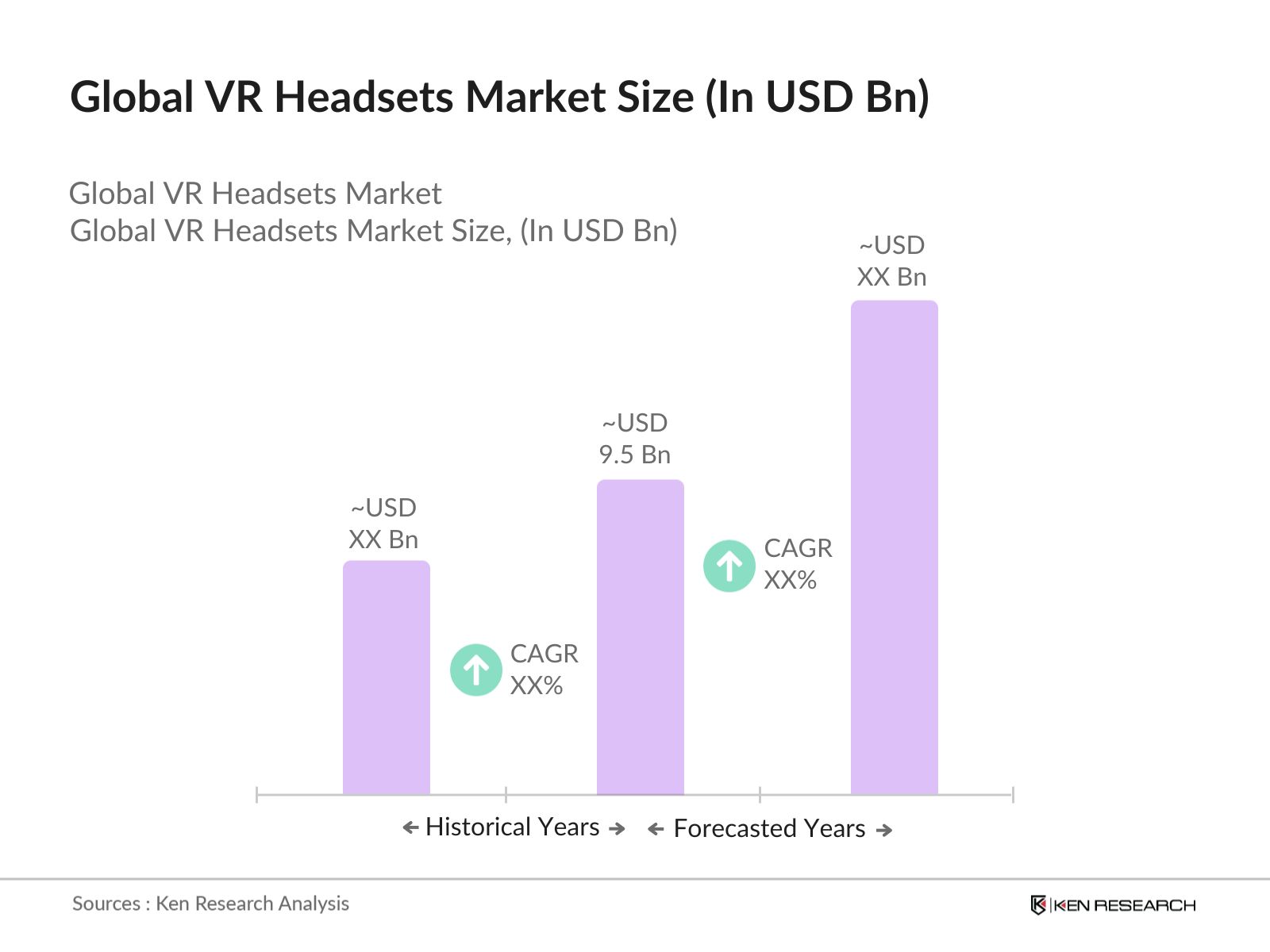
- The global Virtual Reality (VR) headsets market is valued at USD 9.5 billion, based on a comprehensive five-year historical analysis. The market is driven by increasing demand for immersive experiences across various sectors, including gaming, education, and healthcare. The proliferation of 5G technology and advancements in VR hardware such as lighter, more affordable headsets, combined with the growing adoption of VR platforms in entertainment and corporate training, continue to fuel market expansion.
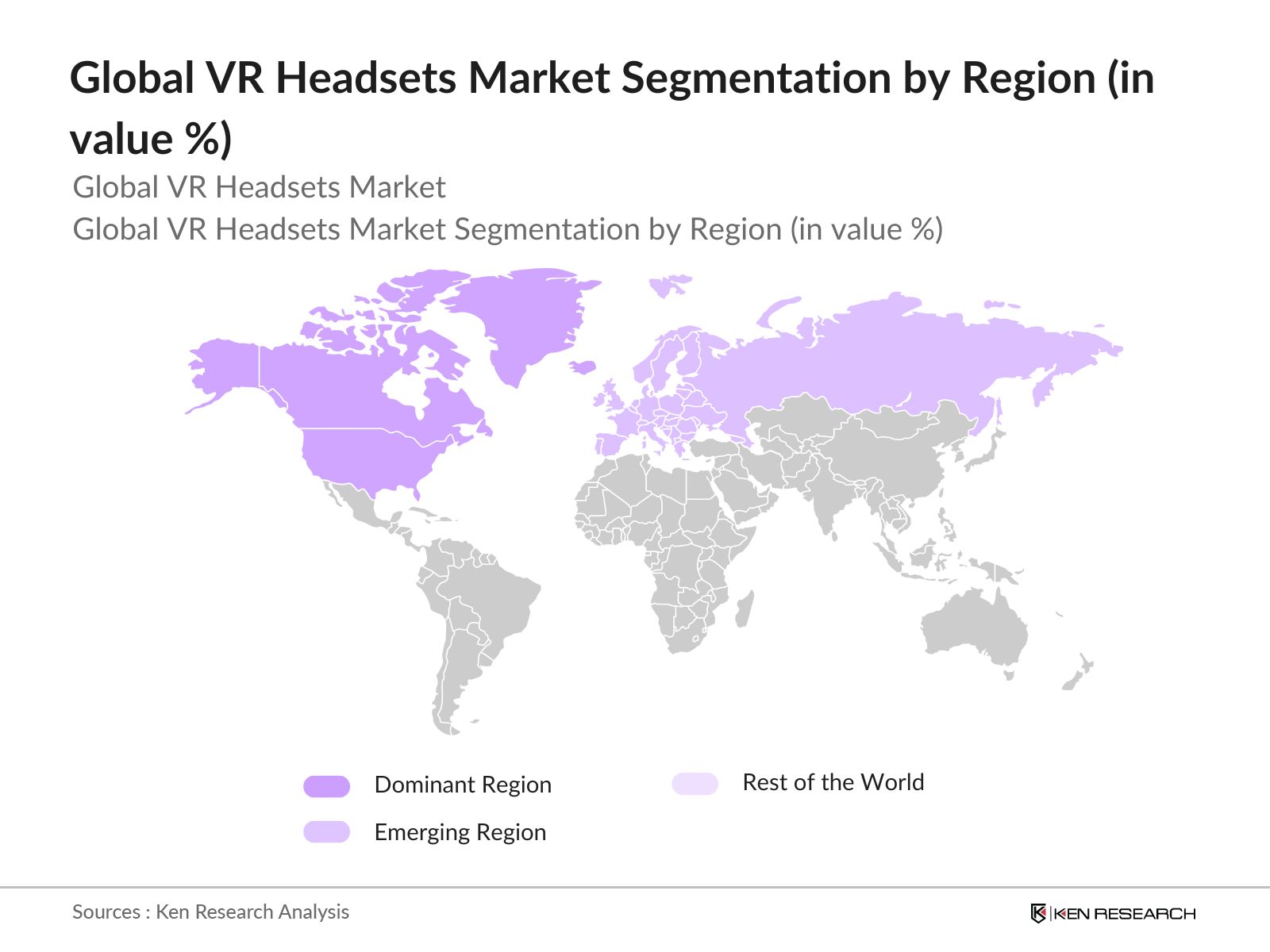
- The global VR headsets market is dominated by regions such as North America and Asia-Pacific, with the U.S., China, and Japan taking the lead. North America's dominance stems from robust technological infrastructure, high disposable income, and a strong gaming culture. Meanwhile, Asia-Pacific's leadership is driven by manufacturing prowess, heavy investments in VR technology by companies such as Sony and HTC, and a rising middle class demanding immersive entertainment and education solutions.
- Governments are increasingly focusing on content moderation and age-appropriate usage for VR headsets. In 2023, the United States passed laws requiring parental controls on all consumer VR devices, particularly those intended for children. The World Bank notes that the global digital economy is subject to more stringent content moderation policies, with VR headsets now included under the same regulations as social media platforms. These measures ensure that VR content is monitored to prevent exposure to inappropriate or harmful material, especially for younger users.
Global VR Headsets Market Segmentation
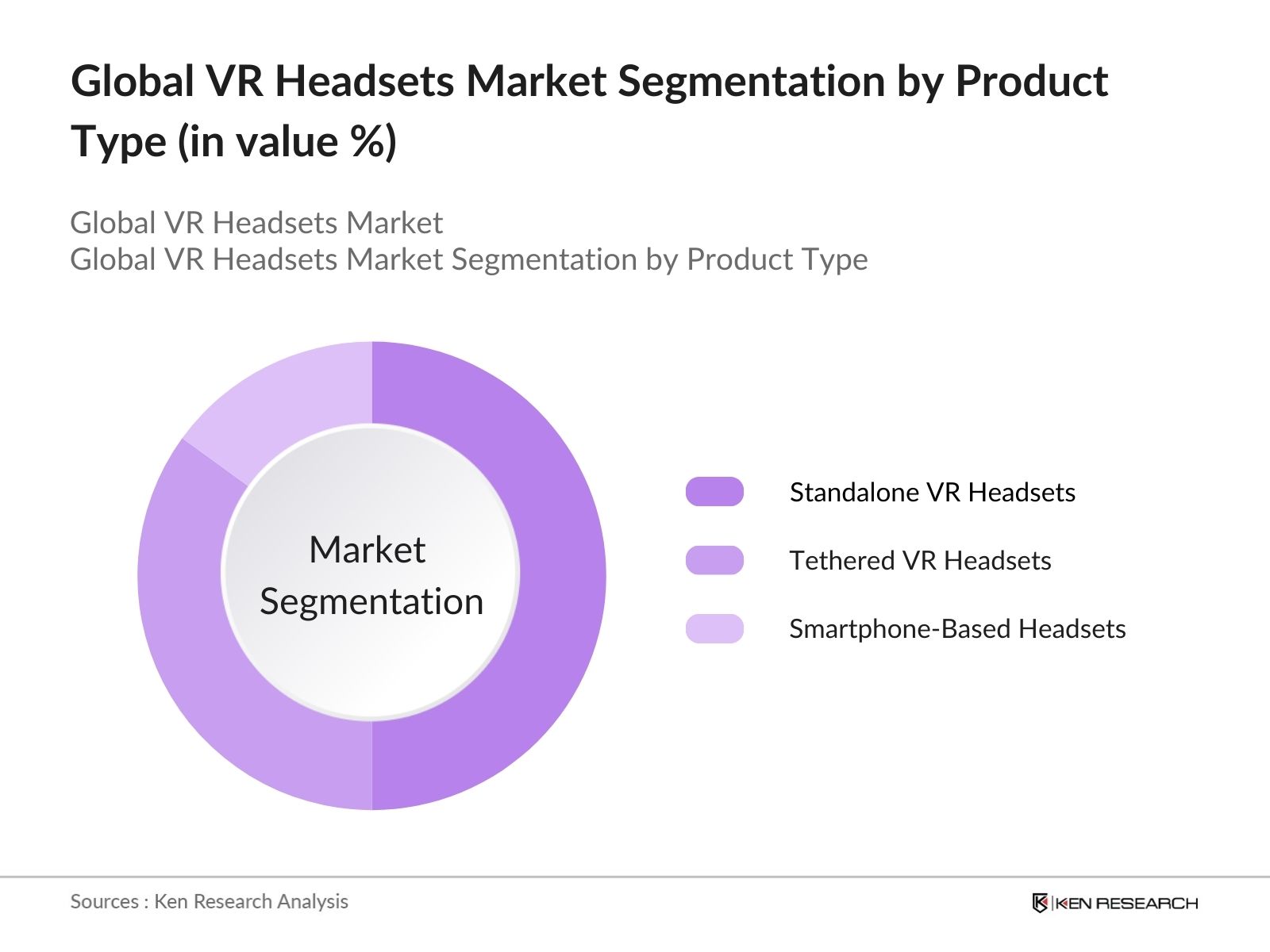
- By Product Type: The global VR headsets market is segmented by product type into tethered VR headsets, standalone VR headsets, and smartphone-based VR headsets. Recently, standalone VR headsets have gained a dominant market share due to their convenience and ease of use without external hardware. Consumers increasingly favor these headsets for gaming, entertainment, and virtual experiences without the complexity of tethered systems. Brands like Oculus and Pico Interactive have driven the growth of this segment, focusing on enhanced user experiences with improved resolution and longer battery life.
- By Region: The global VR headsets market is segmented into North America, Europe, Asia-Pacific, Latin America, and Middle East & Africa. North America, driven by the U.S., holds the largest market share due to strong technological infrastructure, high VR adoption in gaming, and significant investments in enterprise VR solutions. Asia-Pacific follows closely, driven by China's manufacturing capability and investments in VR hardware and software. The presence of leading VR companies in the region and increasing consumer demand for advanced technologies have solidified Asia-Pacific as a significant market player.
- By Application: The VR headset market is segmented by application into gaming & entertainment, healthcare & medical training, education & training, and retail & e-commerce. Gaming and entertainment dominate the market, with the proliferation of VR gaming platforms and immersive media experiences. VR gaming has achieved high popularity, supported by advancements in graphics, haptic feedback, and increased availability of VR content. Companies such as Sony (PlayStation VR) and Valve (Steam VR) have revolutionized the market by continuously offering new content and experiences, cementing the gaming segment's dominance.
Global VR Headsets Market Competitive Landscape
The VR headset market is dominated by both established tech giants and emerging innovators. Key players such as Oculus, Sony, HTC, and Microsoft continue to lead the market through innovation in hardware and software integration, as well as substantial investment in the gaming and enterprise sectors. New entrants such as Pico Interactive and Pimax are focusing on developing affordable solutions, capturing segments of the consumer market in emerging economies. The market is characterized by continuous product innovation and the exploration of VR applications beyond gaming, such as virtual commerce, real estate, and healthcare training.
|
Company Name |
Established |
Headquarters |
R&D Investments |
Product Offerings |
Technological Advancements |
Partnerships |
VR Content Library |
Market Share |
User Base |
|
Oculus (Meta Platforms) |
2012 |
Menlo Park, U.S. |
|||||||
|
Sony Corporation |
1946 |
Tokyo, Japan |
|||||||
|
HTC Corporation |
1997 |
New Taipei, Taiwan |
|||||||
|
Valve Corporation |
1996 |
Bellevue, U.S. |
|||||||
|
Microsoft Corporation |
1975 |
Redmond, U.S. |
Global VR Headsets Industry Analysis
Growth Drivers
- Rising Demand for Immersive Gaming Experiences: The global VR headset market is being driven by the growing demand for immersive gaming experiences. The gaming industry saw a revenue surge of $192 billion in 2022, with VR gaming accounting for an increasing share of this total. In 2024, over 50 million VR headsets are being used globally, driven by high consumer demand for games that simulate real-world environments. Immersive technologies in gaming are being fueled by growing disposable incomes, especially in regions like North America and Europe, where the average household income increased by 4% in 2023.
- Increasing Adoption in Training and Education: The educational sector has witnessed increased adoption of VR headsets for simulations and virtual classrooms. As of 2023, over 15,000 institutions worldwide are using VR technology to enhance learning experiences. The World Bank notes that spending on digital educational tools has reached $350 billion globally, with VR training systems being a key contributor. For example, technical universities and medical schools have implemented VR simulation to improve student engagement and training outcomes. Government support for educational digitization, especially in high-income countries, continues to increase, resulting in wider VR usage.
- Expansion of the Metaverse Ecosystem: The development of the metaverse ecosystem has led to increased demand for VR headsets as a core access device. In 2023, the metaverse was valued at over $22 billion, according to industry estimates, with millions of users joining platforms like Horizon Worlds and Decentraland. The World Bank projects that the global digital economy, which includes immersive experiences such as the metaverse, will account for nearly 8% of global GDP in 2024. VR headsets have become a crucial tool for individuals and companies seeking to engage with virtual worlds.
Market Restraints
- Lack of Content Diversity: Although the VR hardware market is advancing, content diversity remains an issue, with only about 2,000 high-quality VR games and applications available as of 2024. This limits user engagement across various sectors such as education and entertainment. World Bank data shows that content development has lagged behind hardware improvements, with only 20% of VR users in 2023 citing satisfaction with the variety of available content. Content creators are largely focusing on gaming, leaving sectors like education and healthcare underserved.
- Latency and Motion Sickness Issues: Latency and motion sickness continue to challenge the VR experience. Studies in 2023 showed that about 30% of VR users report motion sickness during prolonged use. This issue is exacerbated by latency problems in VR systems, with average latency rates hovering around 20 milliseconds, significantly affecting the user experience. According to the World Bank, investments in high-speed internet infrastructure have reached $20 billion in 2023, yet many regions, especially rural areas, still face internet limitations that worsen VR latency issues.
Global VR Headsets Market Future Outlook
Over the next five years, the global VR headset market is expected to experience significant growth driven by technological advancements, expanding applications across various industries, and increasing consumer demand for immersive entertainment. The integration of AI in VR experiences, along with the development of 5G networks, will further accelerate the market's expansion. Moreover, growing use cases in industries such as healthcare, retail, and education will continue to broaden the market's potential, solidifying VR as a transformative technology in both the consumer and enterprise sectors.
Market Opportunities
- Growth in Enterprise Applications: Enterprise applications present vast opportunities for VR adoption. By 2023, over 5,000 hospitals globally had adopted VR for training and therapy, with VR usage in healthcare showing a noticeable improvement in patient outcomes. Similarly, the real estate sector has embraced VR for virtual property tours, leading to increased sales efficiency. The World Bank highlights that enterprise sectors have invested $30 billion in immersive technologies, showing a growing trend in VR adoption beyond entertainment and gaming. The manufacturing sector has also integrated VR for simulation training, reducing errors by up to 40
- Integration with Artificial Intelligence and Machine Learning: The integration of VR headsets with artificial intelligence (AI) and machine learning (ML) offers significant growth potential. In 2024, over 25% of VR systems now incorporate AI/ML algorithms to enhance user experiences through real-time analytics and adaptive environments. The World Bank notes that AI/ML investments reached $150 billion in 2023, and VR systems are leveraging this to improve areas like healthcare diagnosis and automated training systems. The synergy between AI and VR has also improved system efficiency, reducing latency issues and enabling more personalized user interactions
Scope of the Report
|
By Product Type |
- Tethered VR Headsets |
|
- Standalone VR Headsets |
|
|
- Smartphone-Based VR Headsets |
|
|
By Application |
- Gaming & Entertainment |
|
- Healthcare & Medical Training |
|
|
- Education & Training |
|
|
- Retail & E-commerce |
|
|
By Technology |
- Optical Tracking |
|
- Inside-out Tracking |
|
|
- Outside-in Tracking |
|
|
By End-User |
- Consumers |
|
- Enterprises |
|
|
- Government & Defense |
|
|
By Region |
- North America |
|
- Europe |
|
|
- Asia-Pacific |
|
|
- Latin America |
|
|
- Middle East & Africa |
Products
Key Target Audience
VR Hardware Manufacturers
Software Developers and Content Creators
Gaming and Entertainment Companies
Healthcare Providers and Training Institutions
Retailers and E-commerce Platforms
Investors and Venture Capitalist Firms
Government and Regulatory Bodies (U.S. Federal Trade Commission, European Data Protection Supervisor)
Educational Institutions
Companies
Players Mentioned in the Report:
Oculus (Meta Platforms Inc.)
HTC Corporation
Sony Corporation
Valve Corporation
Microsoft Corporation
Samsung Electronics Co., Ltd.
Google LLC
Pimax Technology Co., Ltd.
Lenovo Group Ltd.
HP Inc.
Qualcomm Incorporated
Varjo Technologies Oy
Pico Interactive (ByteDance)
Magic Leap, Inc.
Avegant Corporation
Table of Contents
1. Global VR Headsets Market Overview
1.1. Definition and Scope
1.2. Market Taxonomy
1.3. Market Growth Rate
1.4. Market Segmentation Overview
2. Global VR Headsets Market Size (In USD Bn)
2.1. Historical Market Size
2.2. Year-on-Year Growth Analysis
2.3. Key Market Developments and Milestones
3. Global VR Headsets Market Analysis
3.1. Growth Drivers
3.1.1. Rising Demand for Immersive Gaming Experiences
3.1.2. Increasing Adoption in Training and Education (Training Simulations, VR Classrooms)
3.1.3. Expansion of the Metaverse Ecosystem
3.1.4. Technological Advancements in Hardware and Software (Haptics, 8K Resolution)
3.2. Market Challenges
3.2.1. High Initial Setup Costs
3.2.2. Lack of Content Diversity
3.2.3. Latency and Motion Sickness Issues
3.3. Opportunities
3.3.1. Growth in Enterprise Applications (Healthcare, Real Estate, Manufacturing)
3.3.2. Integration with Artificial Intelligence and Machine Learning
3.3.3. Surge in E-Commerce Virtual Shopping Experiences
3.4. Trends
3.4.1. Wireless and Standalone VR Headsets
3.4.2. Cloud-Based VR Gaming Platforms
3.4.3. Increased Focus on Lightweight and Ergonomic Design
3.5. Government Regulations
3.5.1. Safety Standards for Immersive Technologies
3.5.2. Data Privacy and User Consent Regulations
3.5.3. Content Moderation and Age-Appropriate Usage
3.6. SWOT Analysis
3.7. Stakeholder Ecosystem (Manufacturers, Content Creators, Software Developers, Distributors)
3.8. Porters Five Forces Analysis
3.9. Competition Ecosystem
4. Global VR Headsets Market Segmentation
4.1. By Product Type (In Value %)
4.1.1. Tethered VR Headsets
4.1.2. Standalone VR Headsets
4.1.3. Smartphone-Based VR Headsets
4.2. By Application (In Value %)
4.2.1. Gaming & Entertainment
4.2.2. Healthcare & Medical Training
4.2.3. Education & Training
4.2.4. Retail & E-commerce
4.3. By Technology (In Value %)
4.3.1. Optical Tracking
4.3.2. Inside-out Tracking
4.3.3. Outside-in Tracking
4.4. By End-User (In Value %)
4.4.1. Consumers
4.4.2. Enterprises
4.4.3. Government & Defense
4.5. By Region (In Value %)
4.5.1. North America
4.5.2. Europe
4.5.3. Asia-Pacific
4.5.4. Latin America
4.5.5. Middle East & Africa
5. Global VR Headsets Market Competitive Analysis
5.1. Detailed Profiles of Major Competitors
5.1.1. Oculus (Meta Platforms Inc.)
5.1.2. HTC Corporation
5.1.3. Sony Corporation
5.1.4. Valve Corporation
5.1.5. Microsoft Corporation
5.1.6. Samsung Electronics Co., Ltd.
5.1.7. Google LLC
5.1.8. Pimax Technology Co., Ltd.
5.1.9. Lenovo Group Ltd.
5.1.10. HP Inc.
5.1.11. Qualcomm Incorporated
5.1.12. Varjo Technologies Oy
5.1.13. Pico Interactive (ByteDance)
5.1.14. Magic Leap, Inc.
5.1.15. Avegant Corporation
5.2. Cross Comparison Parameters (Headquarters, Product Offering, Technology Adoption, R&D Investments, Partnerships, VR Content Library Size, Consumer Market Share, Enterprise Market Share)
5.3. Market Share Analysis
5.4. Strategic Initiatives
5.5. Mergers and Acquisitions
5.6. Investment Analysis
5.7. Venture Capital Funding
5.8. Government Grants
5.9. Private Equity Investments
6. Global VR Headsets Market Regulatory Framework
6.1. Compliance Requirements for Safety and Health
6.2. Data Protection and Privacy Laws
6.3. Licensing and Certification for VR Software
7. Global VR Headsets Future Market Size (In USD Bn)
7.1. Future Market Size Projections
7.2. Key Factors Driving Future Market Growth
8. Global VR Headsets Future Market Segmentation
8.1. By Product Type (In Value %)
8.2. By Application (In Value %)
8.3. By Technology (In Value %)
8.4. By End-User (In Value %)
8.5. By Region (In Value %)
9. Global VR Headsets Market Analysts Recommendations
9.1. TAM/SAM/SOM Analysis
9.2. Customer Cohort Analysis
9.3. Marketing Initiatives
9.4. White Space Opportunity Analysis
Research Methodology
Step 1: Identification of Key Variables
In this step, the VR headset market's stakeholder ecosystem is mapped, identifying key players such as hardware manufacturers, software developers, content creators, and distribution channels. This involves comprehensive secondary research from proprietary databases and credible industry sources.
Step 2: Market Analysis and Construction
Historical data is collected and analyzed, focusing on key market trends, industry developments, and revenue generation in the VR headsets market. The analysis includes consumer adoption rates, market penetration by product type, and the growth of the enterprise VR segment.
Step 3: Hypothesis Validation and Expert Consultation
Primary research is conducted with industry experts through interviews and surveys, validating hypotheses regarding market drivers, challenges, and opportunities. These insights provide operational data critical for understanding market dynamics.
Step 4: Research Synthesis and Final Output
The data is synthesized to produce a comprehensive market analysis, integrating insights from both top-down and bottom-up approaches. This phase ensures a detailed, accurate understanding of the VR headsets market, validated by industry players.
Frequently Asked Questions
1. How big is the Global VR Headsets Market?
The global VR headsets market is valued at USD 9.5 billion, driven by strong demand across gaming, healthcare, and education sectors.
2. What are the challenges in the Global VR Headsets Market?
Challenges include high production costs, limited content diversity, and user concerns such as motion sickness and comfort during prolonged usage.
3. Who are the major players in the Global VR Headsets Market?
Major players include Oculus (Meta Platforms Inc.), Sony Corporation, HTC Corporation, Valve Corporation, and Microsoft Corporation.
4. What are the growth drivers of the Global VR Headsets Market?
Key growth drivers include the increasing demand for immersive gaming experiences, advancements in VR hardware, and expanding enterprise applications across industries such as healthcare and retail.
Why Buy From Us?

What makes us stand out is that our consultants follows Robust, Refine and Result (RRR) methodology. i.e. Robust for clear definitions, approaches and sanity checking, Refine for differentiating respondents facts and opinions and Result for presenting data with story

We have set a benchmark in the industry by offering our clients with syndicated and customized market research reports featuring coverage of entire market as well as meticulous research and analyst insights.

While we don't replace traditional research, we flip the method upside down. Our dual approach of Top Bottom & Bottom Top ensures quality deliverable by not just verifying company fundamentals but also looking at the sector and macroeconomic factors.

With one step in the future, our research team constantly tries to show you the bigger picture. We help with some of the tough questions you may encounter along the way: How is the industry positioned? Best marketing channel? KPI's of competitors? By aligning every element, we help maximize success.

Our report gives you instant access to the answers and sources that other companies might choose to hide. We elaborate each steps of research methodology we have used and showcase you the sample size to earn your trust.

If you need any support, we are here! We pride ourselves on universe strength, data quality, and quick, friendly, and professional service.