















Global Wearable Electronics Market Outlook to 2030
Region:Global
Author(s):Abhinav kumar
Product Code:KROD2069
December 2024
92
About the Report
Global Wearable Electronics Market Overview
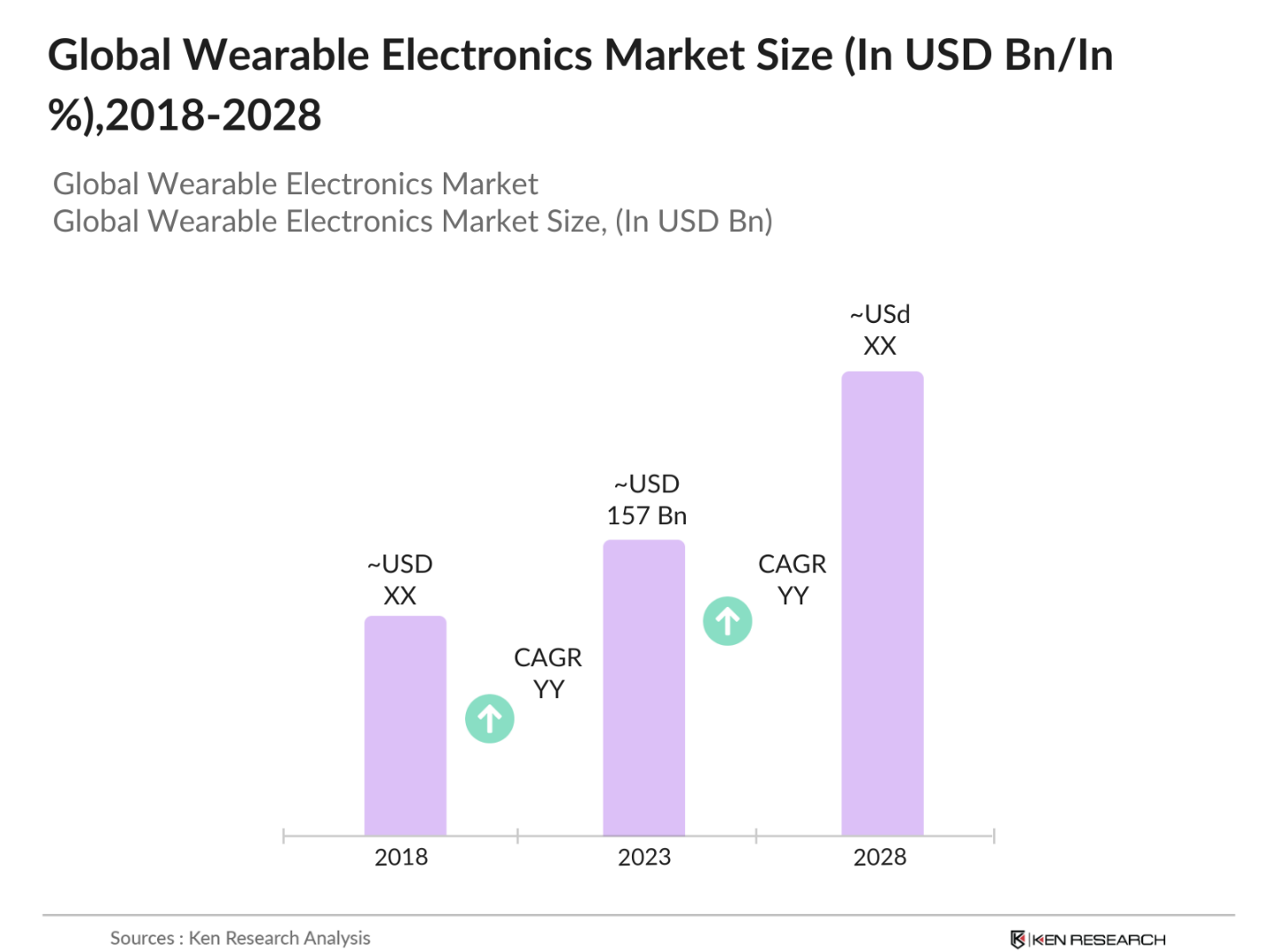
- The global wearable electronics market was valued at USD 157 billion in 2023. The market's growth is driven by the increasing integration of health-monitoring features, AI, and real-time tracking capabilities into wearable devices such as smartwatches, fitness trackers, and medical wearables. The proliferation of 5G networks and the rising demand for remote health monitoring have further fueled market expansion.
- Major players in the global wearable electronics market include Apple Inc., Samsung Electronics, Huawei Technologies, Garmin Ltd., and Fitbit (Google). These companies lead the market by developing advanced wearables that cater to diverse consumer needs, from fitness tracking to medical diagnostics. With continuous R&D investment, these companies are further pushing the boundaries of wearable technology.
- In 2024, Samsung launched the Galaxy Ring, Galaxy Watch7, and Galaxy Watch Ultra, which are set to enhance the company's wearables portfolio with advanced health features. This deviceis designed to provide comprehensive health monitoring, particularly when paired with other Samsung devices.
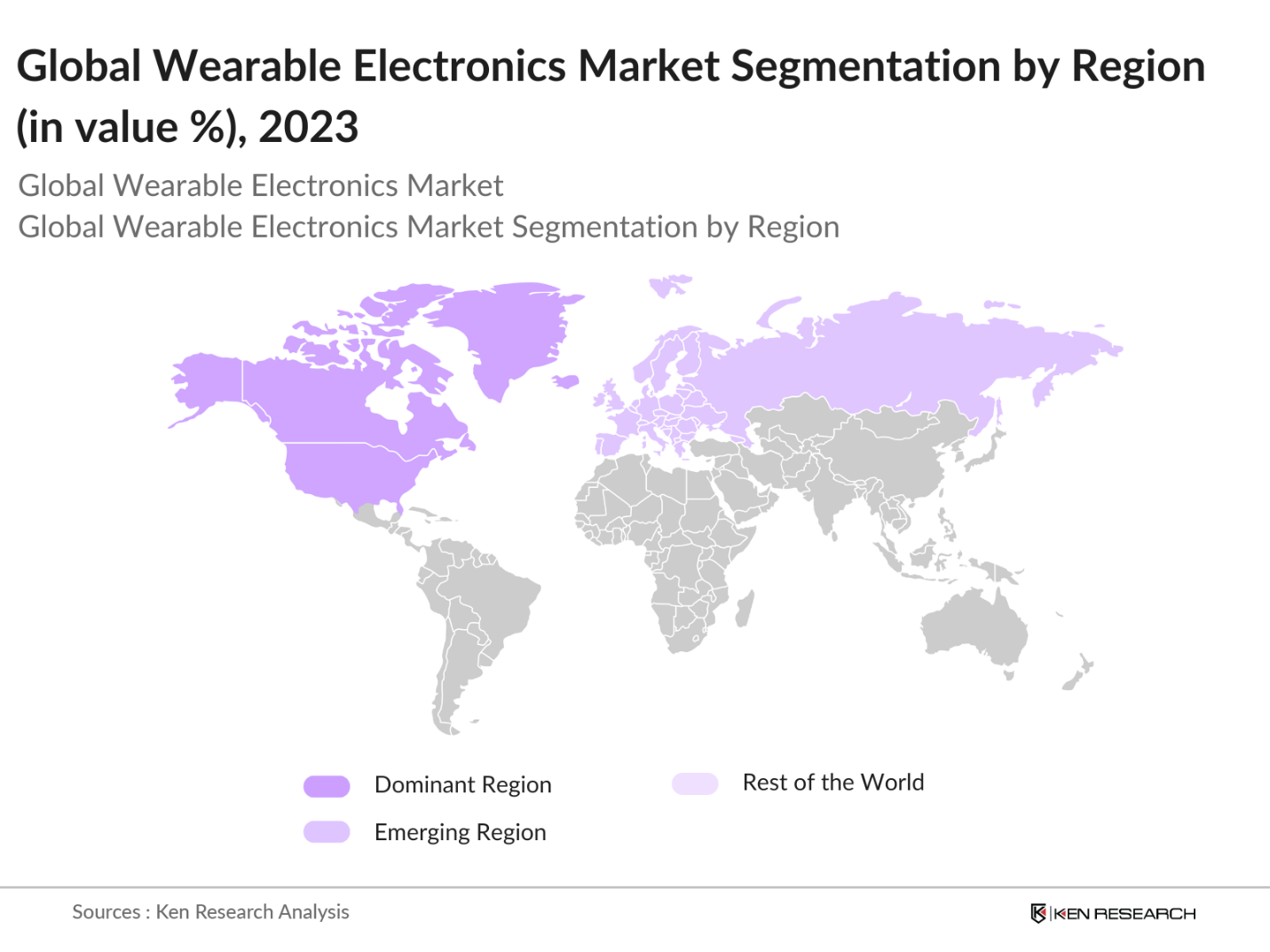
- North America dominated the global wearable electronics market in 2023, driven by high consumer demand, advanced technological infrastructure, and regulatory support for medical wearables. The U.S. market remains the leader due to widespread adoption of connected health technologies and the dominance of leading brands such as Apple and Fitbit.
Global Wearable Electronics Market Segmentation
The global wearable electronics market is segmented by region, product type, and end-use.
By Region: The global wearable electronics market is segmented into North America, Europe, Asia-Pacific (APAC), Latin America, and the Middle East & Africa (MEA). In 2023, North America held the largest market share due to advanced health infrastructure and strong consumer demand for wearable technology.
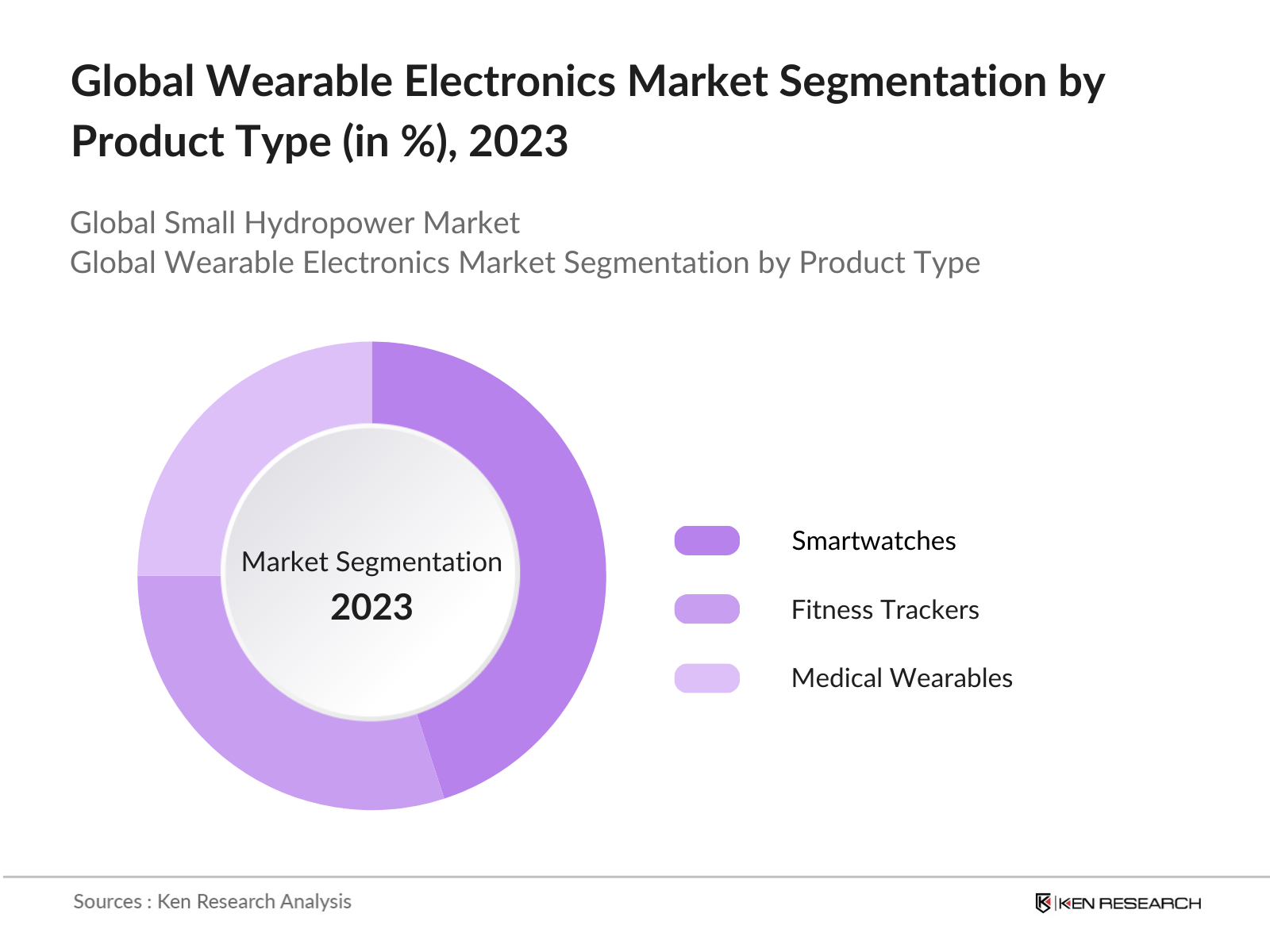
By Product Type: The market is segmented into smartwatches, fitness trackers, and medical wearables. In 2023, smartwatches held the largest market share due to their multifunctionality and health monitoring capabilities, including ECG and oxygen saturation tracking. Apple and Samsung are major players in this segment.
By End-Use: The market is segmented into healthcare, sports and fitness, and consumer electronics. In 2023, the healthcare sector had the largest share, with wearables being integrated into patient monitoring and telemedicine applications. Companies like Garmin and Fitbit have developed wearables specifically targeting health-conscious consumers.
Global Wearable Electronics Market Competitive Landscape
|
Company Name |
Establishment Year |
Headquarters |
|
Apple Inc. |
1976 |
Cupertino, USA |
|
Samsung Electronics |
1969 |
Suwon, South Korea |
|
Huawei Technologies |
1987 |
Shenzhen, China |
|
Garmin Ltd. |
1989 |
Olathe, USA |
|
Fitbit (Google) |
2007 |
San Francisco, USA |
- Apple Inc.: In September 2024, Apple launched the Apple Watch Series 9 with a focus on health and fitness tracking. The new watch features an improved heart rate sensor, ECG app, and blood oxygen monitoring. It also includes advanced workout tracking for a wider range of activities. The Apple Watch Series 9 aims to solidify Apple's position as a leader in the smartwatch market.
- Garmin Ltd.: In 2023, Garmin expanded its range of wearables with the Garmin Fenix 7, focusing on sports performance and outdoor activities. The devices GPS accuracy and integration of biometric sensors have made it a popular choice among athletes and outdoor enthusiasts.
Global Wearable Electronics Market Analysis
Global Wearable Electronics Market Growth Drivers:
- Integration of Wearables in Healthcare: In 2022 alone, over 320 million wearable health devices are forecasted to ship worldwide and grow to 440 million by 2024a CAGR of 17%. The demand for wearables in healthcare has grown significantly. These devices are used for continuous patient monitoring and management of chronic diseases such as diabetes and cardiovascular conditions.
- Proliferation of 5G Networks: In 2023, According to the GSMA Intelligence report, as of Q4 2022, there were around 1.3 billion 5G connections globally. This technological boost has accelerated the demand for wearables in remote patient monitoring and fitness tracking.
- Rising Consumer Adoption for Fitness and Sports Wearables: In 2023, fitness and sports wearables experienced significant consumer demand, particularly in North America, where 38 million smartwatches and fitness trackers were sold. Devices like Garmins Fenix series have been crucial in the sports sector, offering advanced GPS and biometric tracking.
Global Wearable Electronics Market Challenges:
- Data Privacy and Security: Wearable electronics collect vast amounts of sensitive data, which has raised privacy concerns. In 2023, there were numerous cases of data breaches involving health wearables, highlighting the need for stronger data protection regulations.
- Supply Chain Disruptions: The global semiconductor shortage in 2023 affected the production of wearable electronics, leading to delays in product launches. Major players such as Samsung and Huawei faced reduced shipments due to the lack of key components.
Global Wearable Electronics Market Government Initiatives:
- FDA Approval of Wearable Medical Devices (USA): In 2023, the U.S. Food and Drug Administration (FDA) approved a new wave of wearable medical devices, including smartwatches and fitness trackers with advanced ECG and blood oxygen monitoring capabilities. This regulatory support has enhanced consumer confidence and accelerated the integration of wearables into the U.S. healthcare system.
- Chinas AI-Powered Wearable Initiative (2023-2025): In 2023, the Chinese government launched the AI Wearables Initiative, which promotes the integration of artificial intelligence (AI) in wearable devices, focusing on healthcare and sports applications. This initiative aims to advance AI-powered diagnostic tools integrated into wearables.
Global Wearable Electronics Market Future Outlook
The global wearable electronics market is expected to witness significant growth through 2028, driven by advancements in AI, health diagnostics, and connectivity. The increasing role of wearables in healthcare and industrial sectors will continue to push the boundaries of wearable technology.
Global Wearable Electronics Market Future Market Trends
- AI Integration for Health Diagnostics: By 2028, AI-powered wearables are expected to play a pivotal role in early disease detection and preventive healthcare. Wearables will integrate AI algorithms to provide real-time health insights, enabling users to monitor their health with higher precision.
- Growth in Industrial Wearables: By 2028, Wearable devices will see increased adoption in the industrial sector, especially for worker safety and productivity. Industries such as construction and manufacturing will utilize smart helmets and AR glasses to monitor worker health and safety.
Scope of the Report
|
By Product Type |
Smartwatches Fitness Trackers Medical Wearables |
|
By End-Use |
Healthcare Sports and Fitness Consumer Electronics |
|
By Application |
Health Monitoring Fitness Tracking Infotainment |
|
By Connectivity |
Bluetooth LTE Wi-Fi |
|
By Region |
North America Europe Asia-Pacific (APAC) Middle East & Africa (MEA) Latin America |
Products
Key Target Audience Organizations and Entities Who Can Benefit by Subscribing to This Report:
Investment and venture capitalist firms
Government and regulatory bodies (FDA,EMA)
Technology companies
Wearable Device Industries
Healthcare companies
Fitness and sports companies
Consumer electronics companies
Telecommunications industries
Time Period Captured in the Report
Historical Period: 2018-2023
Base Year: 2023
Forecast Period: 2023-2028
Companies
Players Mentioned in the Report:
Apple Inc.
Samsung Electronics
Huawei Technologies
Garmin Ltd.
Fitbit (Google)
Xiaomi Corporation
Sony Corporation
Fossil Group
LG Electronics
Polar Electro
Table of Contents
1. Global Wearable Electronics Market Overview
1.1. Definition and Scope
1.2. Market Taxonomy
1.3. Market Growth Rate
1.4. Market Segmentation Overview
2. Global Wearable Electronics Market Size (in USD Bn), 2018-2023
2.1. Historical Market Size
2.2. Year-on-Year Growth Analysis
2.3. Key Market Developments and Milestones
3. Global Wearable Electronics Market Analysis
3.1. Growth Drivers
3.1.1. Integration of Wearables in Healthcare
3.1.2. Proliferation of 5G Networks
3.1.3. Rising Consumer Adoption of Fitness and Sports Wearables
3.2. Challenges
3.2.1. Data Privacy and Security
3.2.2. Battery Life Limitations
3.2.3. Supply Chain Disruptions
3.3. Opportunities
3.3.1. Technological Advancements in Wearable Electronics
3.3.2. Expansion into Healthcare Applications
3.3.3. Integration of AI and Machine Learning in Wearables
3.4. Trends
3.4.1. AI-Driven Wearables
3.4.2. Solar-Powered Wearables
3.4.3. Use of Smart Textiles in Wearable Electronics
3.5. Government Initiatives
3.5.1. FDA Approval of Wearable Medical Devices (USA)
3.5.2. Chinas AI Wearable Initiative
3.5.3. EUs Horizon 2023 Funding for Wearables
3.6. SWOT Analysis
3.7. Stakeholder Ecosystem
3.8. Competition Ecosystem
4. Global Wearable Electronics Market Segmentation, 2023
4.1. By Product Type (in Value %)
4.1.1. Smartwatches
4.1.2. Fitness Trackers
4.1.3. Medical Wearables
4.2. By End-Use (in Value %)
4.2.1. Healthcare
4.2.2. Sports and Fitness
4.2.3. Consumer Electronics
4.3. By Application (in Value %)
4.3.1. Health Monitoring
4.3.2. Fitness Tracking
4.3.3. Infotainment
4.4. By Connectivity (in Value %)
4.4.1. Bluetooth
4.4.2. LTE
4.4.3. Wi-Fi
4.5. By Region (in Value %)
4.5.1. North America
4.5.2. Europe
4.5.3. Asia-Pacific (APAC)
4.5.4. Latin America
4.5.5. Middle East & Africa (MEA)
5. Global Wearable Electronics Market Cross Comparison
5.1. Detailed Profiles of Major Companies
5.1.1. Apple Inc.
5.1.2. Samsung Electronics
5.1.3. Huawei Technologies
5.1.4. Garmin Ltd.
5.1.5. Fitbit (Google)
5.1.6. Xiaomi Corporation
5.1.7. Sony Corporation
5.1.8. LG Electronics
5.1.9. Fossil Group
5.2. Cross Comparison Parameters (No. of Employees, Headquarters, Inception Year, Revenue)
6. Global Wearable Electronics Market Competitive Landscape
6.1. Market Share Analysis
6.2. Strategic Initiatives
6.3. Mergers and Acquisitions
6.4. Investment Analysis
6.4.1. Venture Capital Funding
6.4.2. Government Grants
6.4.3. Private Equity Investments
7. Global Wearable Electronics Market Regulatory Framework
7.1. Data Protection Standards
7.2. Compliance Requirements
7.3. Certification Processes
8. Global Wearable Electronics Market Future Market Size (in USD Bn), 2023-2028
8.1. Future Market Size Projections
8.2. Key Factors Driving Future Market Growth
9. Global Wearable Electronics Market Future Market Segmentation, 2028
9.1. By Product Type (in Value %)
9.2. By End-Use (in Value %)
9.3. By Application (in Value %)
9.4. By Connectivity (in Value %)
9.5. By Region (in Value %)
10. Global Wearable Electronics Market Analysts Recommendations
10.1. TAM/SAM/SOM Analysis
10.2. Customer Cohort Analysis
10.3. Marketing Initiatives
10.4. White Space Opportunity Analysis
Disclaimer
Contact Us
Research Methodology
Step: 1 Identifying Key Variables
Ecosystem creation for all the major entities and referring to multiple secondary and proprietary databases to perform desk research around the Market to collate Market-level information.
Step: 2 Market Building
Collating statistics on the global wearable electronics market over the years, and analyzing the penetration of Marketplaces as well as the ratio of service providers to compute the revenue generated for the market. We will also review service quality statistics to understand the revenue generated which can ensure accuracy behind the data points shared.
Step: 3 Validating and Finalizing
Building Market hypotheses and conducting CATIs with Market experts belonging to different companies to validate statistics and seek operational and financial information from company representatives.
Step: 4 Research Output
Our team will approach multiple wearable electronics companies to understand the nature of service segments, consumer preferences, and other parameters. This supports validating statistics derived through a bottom-to-top approach from these wearable electronics companies, ensuring accuracy and reliability in the report.
Frequently Asked Questions
01 How big is the Global Wearable Electronics Market?
The global wearable electronics market was valued at USD 64.36 billion in 2023, driven by advancements in health monitoring technology, increasing consumer interest in fitness tracking, and the rise of connected devices. Major players like Apple, Samsung, and Huawei dominate this space.
02 What are the challenges in the Global Wearable Electronics Market?
Challenges in the global wearable electronics market include privacy and data security concerns, limited battery life in wearable devices, and global semiconductor shortages. These factors hinder the wider adoption of wearables, especially in healthcare and industrial applications.
03 Who are the major players in the Global Wearable Electronics Market?
Key players in the global wearable electronics market include Apple Inc., Samsung Electronics, Huawei Technologies, Garmin Ltd., and Fitbit. These companies lead due to their continuous innovation in health and fitness devices and strong brand recognition.
04 What are the growth drivers of the Global Wearable Electronics Market?
Growth in the global wearable electronics market is driven by increasing adoption of wearable health devices, the expansion of 5G connectivity, and rising demand for fitness trackers. These factors contribute to higher consumer interest in health monitoring and preventive care.
Why Buy From Us?

What makes us stand out is that our consultants follows Robust, Refine and Result (RRR) methodology. i.e. Robust for clear definitions, approaches and sanity checking, Refine for differentiating respondents facts and opinions and Result for presenting data with story

We have set a benchmark in the industry by offering our clients with syndicated and customized market research reports featuring coverage of entire market as well as meticulous research and analyst insights.

While we don't replace traditional research, we flip the method upside down. Our dual approach of Top Bottom & Bottom Top ensures quality deliverable by not just verifying company fundamentals but also looking at the sector and macroeconomic factors.

With one step in the future, our research team constantly tries to show you the bigger picture. We help with some of the tough questions you may encounter along the way: How is the industry positioned? Best marketing channel? KPI's of competitors? By aligning every element, we help maximize success.

Our report gives you instant access to the answers and sources that other companies might choose to hide. We elaborate each steps of research methodology we have used and showcase you the sample size to earn your trust.

If you need any support, we are here! We pride ourselves on universe strength, data quality, and quick, friendly, and professional service.