
Global Wearable Gaming Technology Market Outlook to 2030
Region:Global
Author(s):Yogita Sahu
Product Code:KROD11109
Region:Global
Author(s):Yogita Sahu
Product Code:KROD11109
November 2024
85
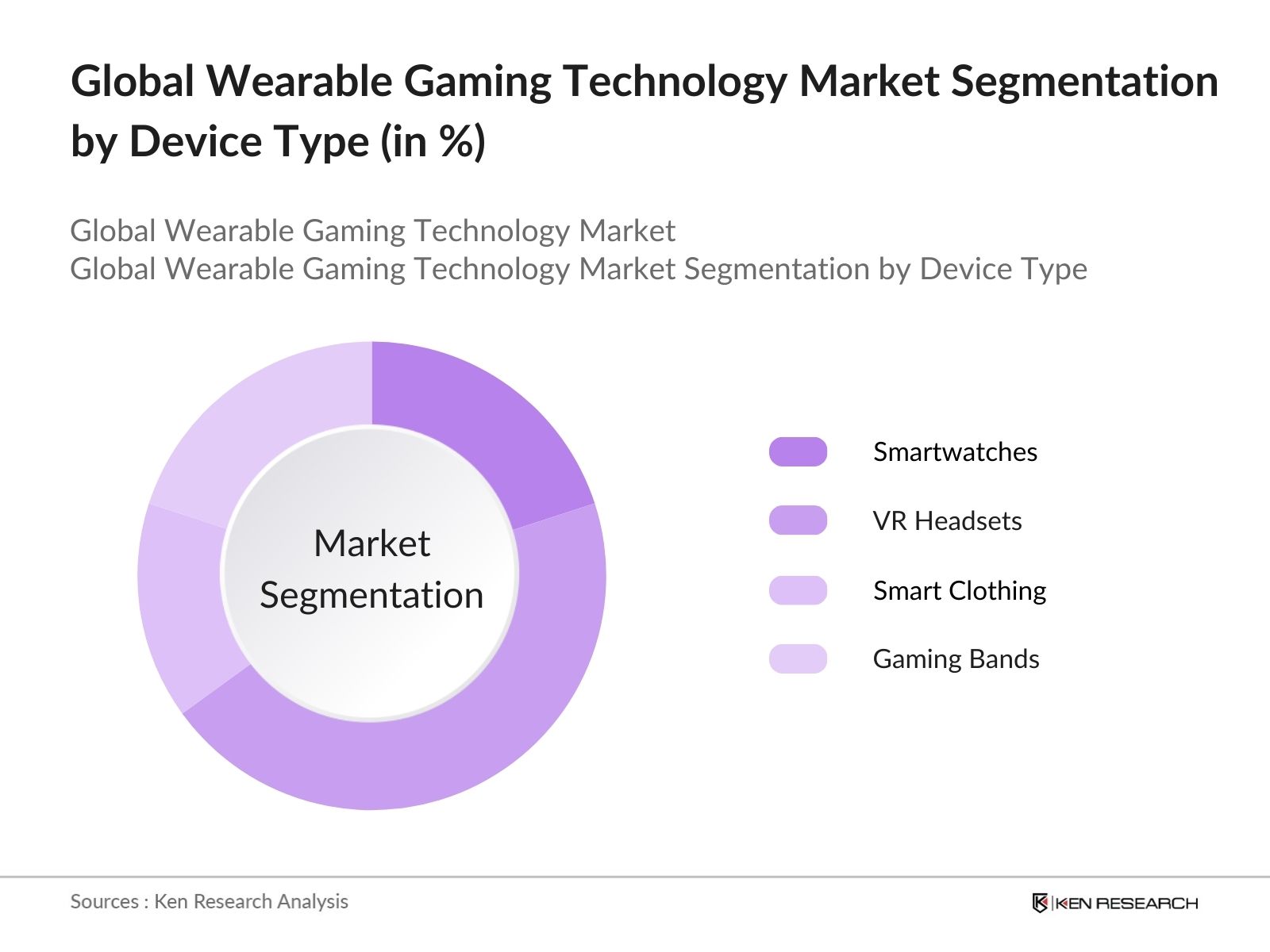
By Device Type: The market is segmented by device type into smartwatches, VR headsets, smart clothing, and gaming bands. Recently, VR headsets have emerged as the dominant segment within device types due to their capability to provide an immersive gaming experience through 3D visuals and motion-tracking technology. Brands such as Oculus VR and HTC have played a significant role in popularizing VR headsets, catering to both hardcore and casual gamers. VR headsets compatibility with popular gaming platforms and their expanding library of games further drive this segments popularity.
By Technology Type: The market is segmented by technology type into haptic technology, AR/VR technology, gesture recognition, and motion tracking. AR/VR technology leads this segment, largely due to its role in creating immersive experiences that transform conventional gameplay into interactive environments. Companies like Sony, with its PlayStation VR, and Metas Oculus, have invested heavily in AR/VR, bringing innovations that heighten engagement. The demand for enhanced visuals and motion-sensitive gameplay is particularly strong among the gaming community, making AR/VR technology the most influential in wearable gaming.
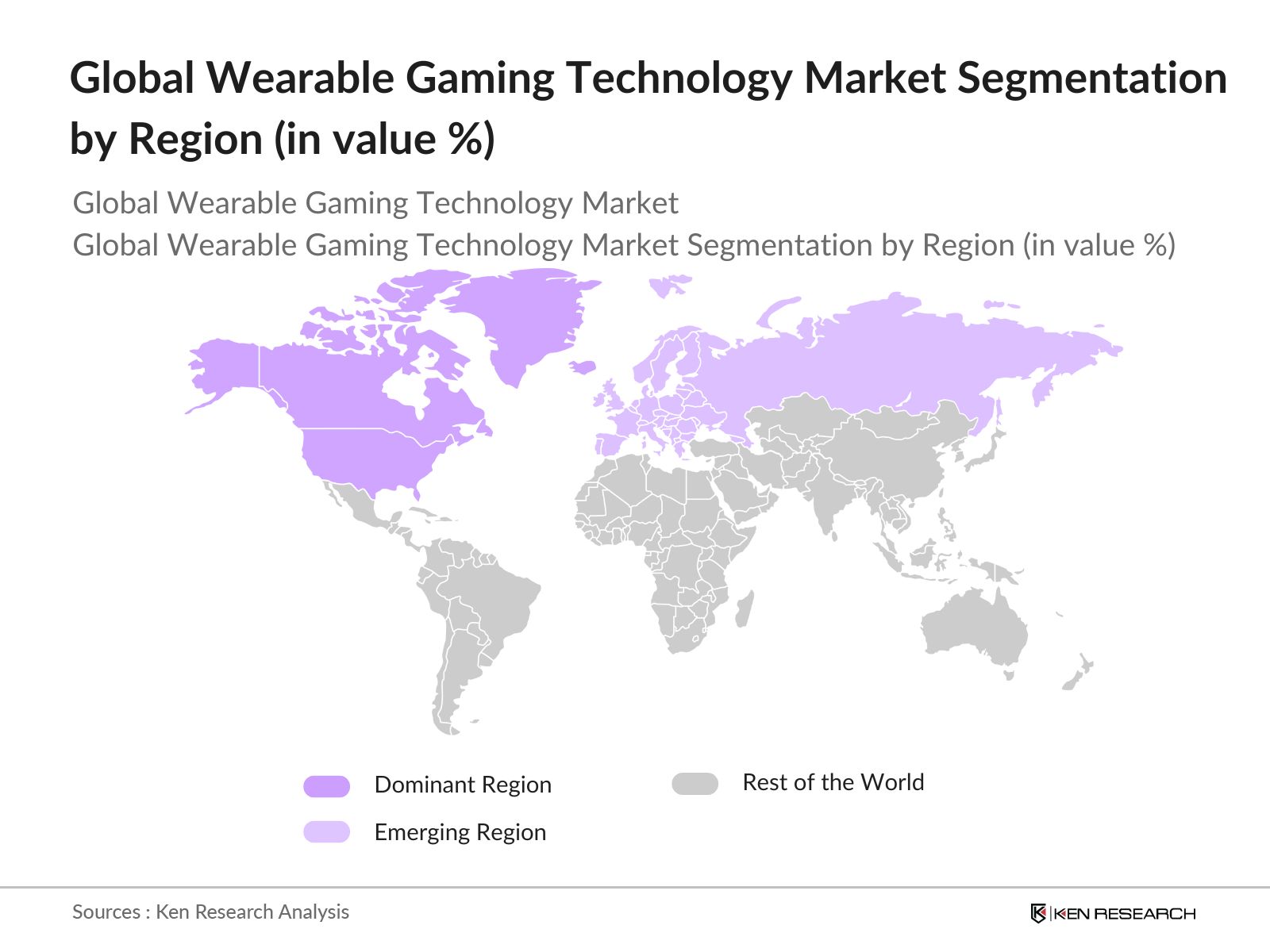
By Region: The market is segmented into North America, Europe, Asia-Pacific, Latin America, and the Middle East & Africa. North America holds a leading position in the market, supported by strong investments in gaming technology and high consumer demand. The regions gaming industry is known for its tech adoption, driven by prominent game studios and tech companies based in the United States and Canada. Furthermore, North Americas market is buoyed by high consumer spending on entertainment technology, making it a favorable environment for wearable gaming technology.
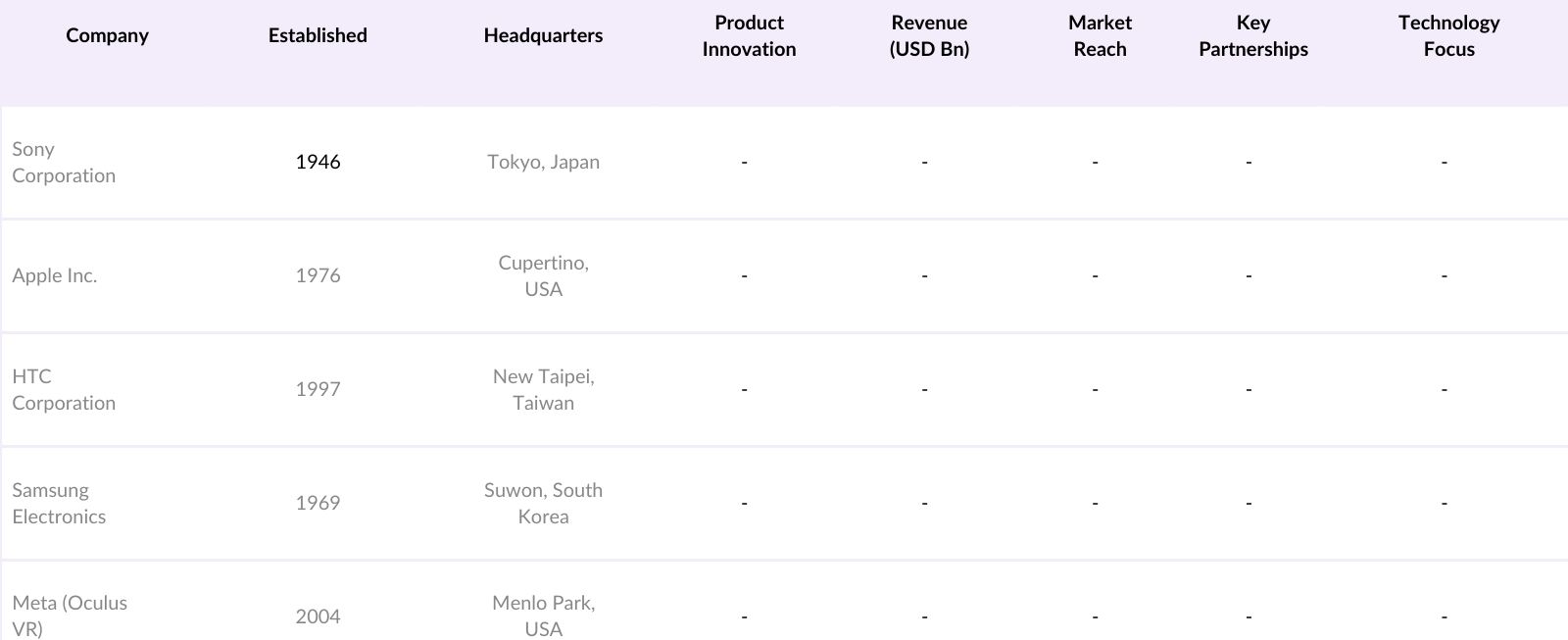
The market is dominated by major players who bring unique technological advancements and have secured market influence through innovation and strategic partnerships. These companies maintain a competitive edge by investing in research and development, which enables them to refine immersive experiences in wearable gaming devices.
Over the coming years, the wearable gaming technology industry is anticipated to experience rapid growth driven by technological innovations, rising consumer demand for immersive experiences, and expanding applications of wearable gaming beyond traditional gaming.
|
Device Type |
Smartwatches VR Headsets Smart Clothing Gaming Bands |
|
Technology Type |
Haptic Technology AR/VR Technology Gesture Recognition Motion Tracking |
|
End-User Demographic |
Hardcore Gamers Casual Gamers Fitness Enthusiasts |
|
Platform |
Android iOS Cross-Platform |
|
Region |
North America Europe Asia-Pacific Latin America Middle East & Africa |
1.1. Definition and Scope
1.2. Market Taxonomy
1.3. Market Growth Rate
1.4. Market Segmentation Overview
2.1. Historical Market Size
2.2. Year-On-Year Growth Analysis
2.3. Key Market Developments and Milestones
3.1. Growth Drivers
3.1.1. Integration of Haptics and Motion Sensors
3.1.2. Advancements in Augmented Reality (AR) and Virtual Reality (VR)
3.1.3. Rising Adoption of Gamified Fitness Solutions
3.1.4. Enhanced Gaming Experience Demand
3.2. Market Challenges
3.2.1. High Device Costs
3.2.2. Battery Life and Performance Limitations
3.2.3. Privacy and Data Security Concerns
3.3. Opportunities
3.3.1. Growth in E-Sports Industry
3.3.2. Cross-Industry Collaborations with Healthcare
3.3.3. Expansion into Emerging Markets
3.4. Trends
3.4.1. Integration of Biometric and Health Tracking
3.4.2. Wearables for Immersive Storytelling
3.4.3. Gamification in Personal Fitness Programs
3.5. Government Regulations
3.5.1. Consumer Privacy Protection Acts
3.5.2. Standards for Wearable Health Data
3.5.3. Cybersecurity and Data Encryption Standards
3.6. SWOT Analysis
3.7. Value Chain Analysis
3.8. Porters Five Forces
3.9. Competitive Ecosystem
4.1. By Device Type (In Value %)
4.1.1. Smartwatches
4.1.2. VR Headsets
4.1.3. Smart Clothing
4.1.4. Gaming Bands
4.2. By Technology Type (In Value %)
4.2.1. Haptic Technology
4.2.2. AR/VR Technology
4.2.3. Gesture Recognition
4.2.4. Motion Tracking
4.3. By End-User Demographic (In Value %)
4.3.1. Hardcore Gamers
4.3.2. Casual Gamers
4.3.3. Fitness Enthusiasts
4.4. By Platform (In Value %)
4.4.1. Android
4.4.2. iOS
4.4.3. Cross-Platform
4.5. By Region (In Value %)
4.5.1. North America
4.5.2. Europe
4.5.3. Asia-Pacific
4.5.4. Latin America
4.5.5. Middle East & Africa
5.1. Detailed Profiles of Major Companies
5.1.1. Sony Corporation
5.1.2. Apple Inc.
5.1.3. HTC Corporation
5.1.4. Samsung Electronics
5.1.5. Microsoft Corporation
5.1.6. Razer Inc.
5.1.7. Google LLC
5.1.8. Oculus VR (Meta Platforms, Inc.)
5.1.9. Magic Leap, Inc.
5.1.10. Garmin Ltd.
5.1.11. Xiaomi Corporation
5.1.12. Fitbit (Google LLC)
5.1.13. BANDAI NAMCO Entertainment Inc.
5.1.14. Vuzix Corporation
5.1.15. LG Electronics Inc.
5.2. Cross Comparison Parameters (Product Portfolio, AR/VR Technology Integration, Market Reach, R&D Investment, Innovation Rate, Consumer Engagement Strategies, Brand Equity, Partnerships)
5.3. Market Share Analysis
5.4. Strategic Initiatives
5.5. Mergers and Acquisitions
5.6. Investment Analysis
5.7. Venture Capital Funding
5.8. Private Equity Investments
6.1. Consumer Health and Safety Standards
6.2. Data Privacy Regulations
6.3. Cybersecurity Compliance
6.4. Industry Certification Standards
7.1. Future Market Size Projections
7.2. Key Factors Driving Future Market Growth
8.1. By Device Type (In Value %)
8.2. By Technology Type (In Value %)
8.3. By End-User Demographic (In Value %)
8.4. By Platform (In Value %)
8.5. By Region (In Value %)
9.1. Total Addressable Market Analysis
9.2. Target Market Segmentation and Prioritization
9.3. Strategic Marketing Initiatives
9.4. White Space Opportunity Analysis
Disclaimer Contact Us
In the initial phase, we map the ecosystem, considering all stakeholders within the wearable gaming technology market. Extensive secondary research and proprietary databases are utilized to capture comprehensive data on industry-level metrics, key companies, and consumer dynamics.
This phase involves compiling historical data and assessing market penetration rates across various sub-segments. Revenue estimations are evaluated alongside gaming service usage statistics to validate reliability and accuracy.
Market assumptions are validated through interviews with industry experts, allowing for real-time insights into the wearable gaming technology ecosystem. These insights strengthen the data accuracy and ensure alignment with current market trends.
The final step includes synthesizing data collected from wearable technology manufacturers, enhancing the validity of the report. This step provides a refined and accurate analysis, supporting insights on emerging trends and consumer preferences within the market.
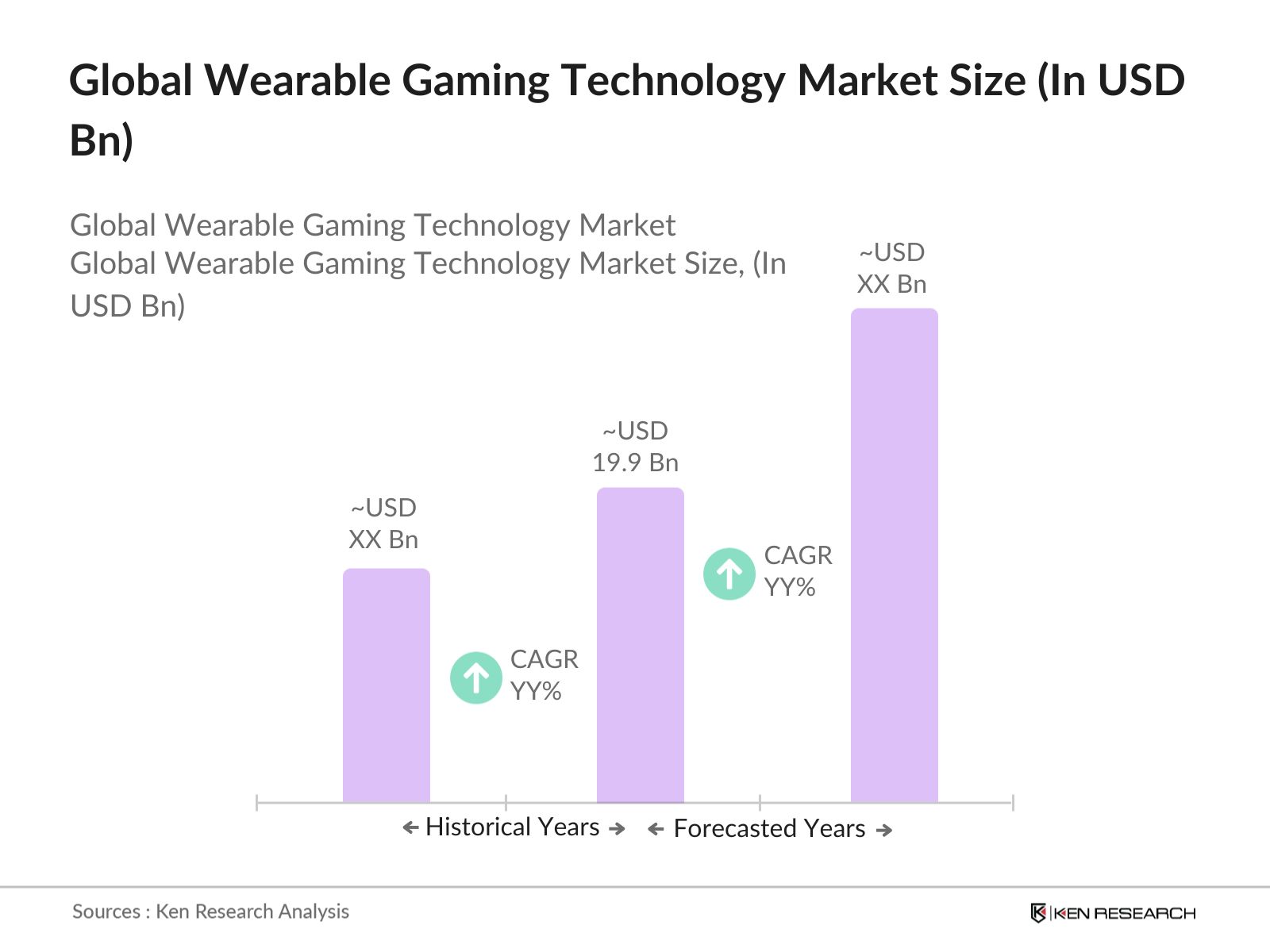
The global wearable gaming technology market is valued at USD 19.9 billion, driven by increasing consumer interest in immersive and interactive gaming experiences powered by wearable devices.
Challenges in this global wearable gaming technology market include high device costs, limited battery life, and privacy concerns. Moreover, the industry faces challenges in integrating advanced features while maintaining affordable pricing for mass-market consumers.
Major players in the global wearable gaming technology market include Sony Corporation, Apple Inc., HTC Corporation, Samsung Electronics, and Meta (Oculus VR). These companies lead due to their technological innovations, brand equity, and extensive distribution networks.
The global wearable gaming technology market is driven by advancements in AR/VR and haptic feedback technology, combined with increasing consumer demand for interactive and engaging gaming experiences. The integration of wearable gaming with fitness applications further boosts its appeal.

What makes us stand out is that our consultants follows Robust, Refine and Result (RRR) methodology. i.e. Robust for clear definitions, approaches and sanity checking, Refine for differentiating respondents facts and opinions and Result for presenting data with story

We have set a benchmark in the industry by offering our clients with syndicated and customized market research reports featuring coverage of entire market as well as meticulous research and analyst insights.

While we don't replace traditional research, we flip the method upside down. Our dual approach of Top Bottom & Bottom Top ensures quality deliverable by not just verifying company fundamentals but also looking at the sector and macroeconomic factors.

With one step in the future, our research team constantly tries to show you the bigger picture. We help with some of the tough questions you may encounter along the way: How is the industry positioned? Best marketing channel? KPI's of competitors? By aligning every element, we help maximize success.

Our report gives you instant access to the answers and sources that other companies might choose to hide. We elaborate each steps of research methodology we have used and showcase you the sample size to earn your trust.

If you need any support, we are here! We pride ourselves on universe strength, data quality, and quick, friendly, and professional service.