















Global Wine Market Outlook to 2029
Region:Global
Author(s):Dev
Product Code:KROD-053
June 2025
90
About the Report
Global Wine Market Overview
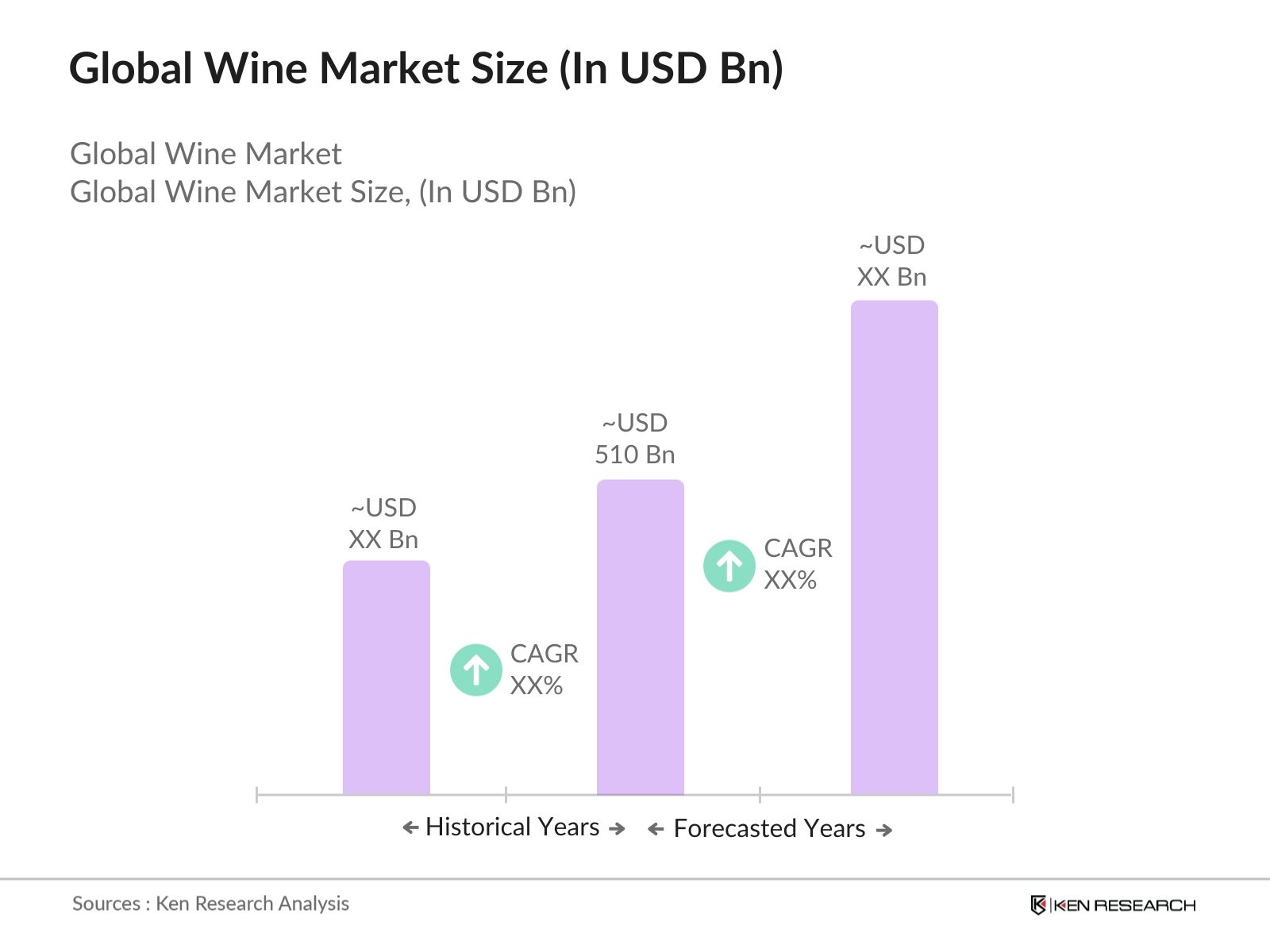
- The Global Wine Market was valued at USD 510 billion, based on a five-year historical analysis. This growth is primarily driven by increasing consumer demand for premium wines, the rise of wine tourism, and the expanding e-commerce sector, which has made wine more accessible to a broader audience. Additionally, the growing trend of wine consumption among millennials has significantly contributed to market expansion.
- Countries such as France, Italy, and Spain dominate the Global Wine Market due to their rich viticultural heritage, favorable climates for grape cultivation, and established wine production techniques. These nations are renowned for their high-quality wines and have a strong global presence, making them key players in the international wine trade.
- In 2023, the European Union implemented regulations aimed at promoting sustainable viticulture practices. This initiative includes guidelines for reducing pesticide use and enhancing biodiversity in vineyards, which are expected to improve the environmental impact of wine production and align with global sustainability goals.
Global Wine Market Segmentation
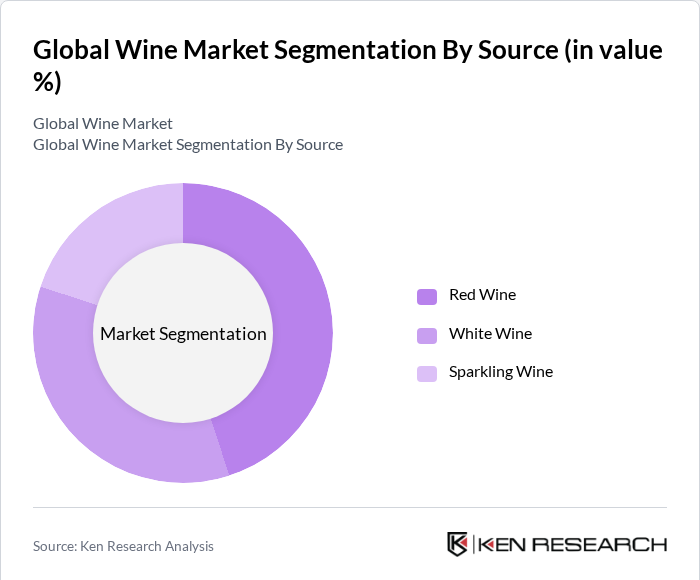
By Source: The Global Wine Market can be segmented based on the source of the wine, which includes sub-segments such as red wine, white wine, and sparkling wine. Among these, red wine dominates the market due to its popularity and perceived health benefits, such as antioxidants. The increasing trend of pairing red wine with various cuisines has further solidified its position as a consumer favorite. Additionally, the rise of wine education and tasting events has contributed to the growing appreciation for red wine, making it a staple in many households.
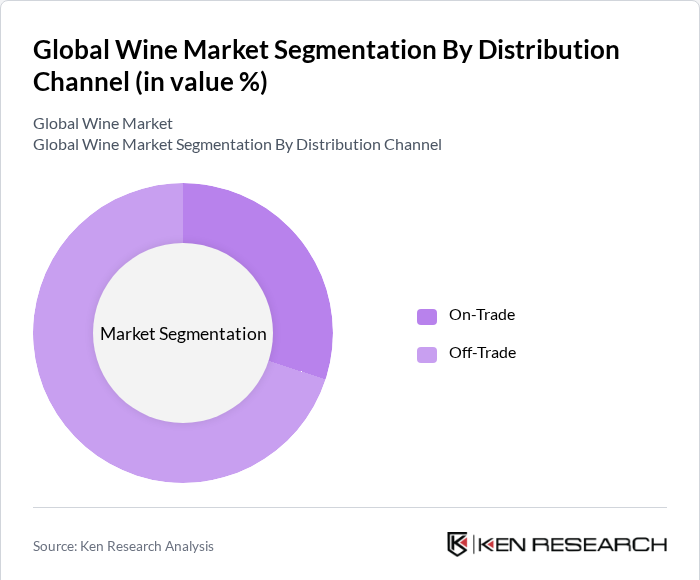
By Distribution Channel: The market can also be segmented by distribution channels, which include on-trade (restaurants, bars) and off-trade (retail stores, e-commerce). The off-trade segment is currently leading the market, driven by the convenience of online shopping and the increasing number of wine retail outlets. The COVID-19 pandemic accelerated the shift towards e-commerce, as consumers sought safe and convenient ways to purchase wine. This trend is expected to continue as more consumers become accustomed to online shopping for their wine needs.
Global Wine Market Competitive Landscape
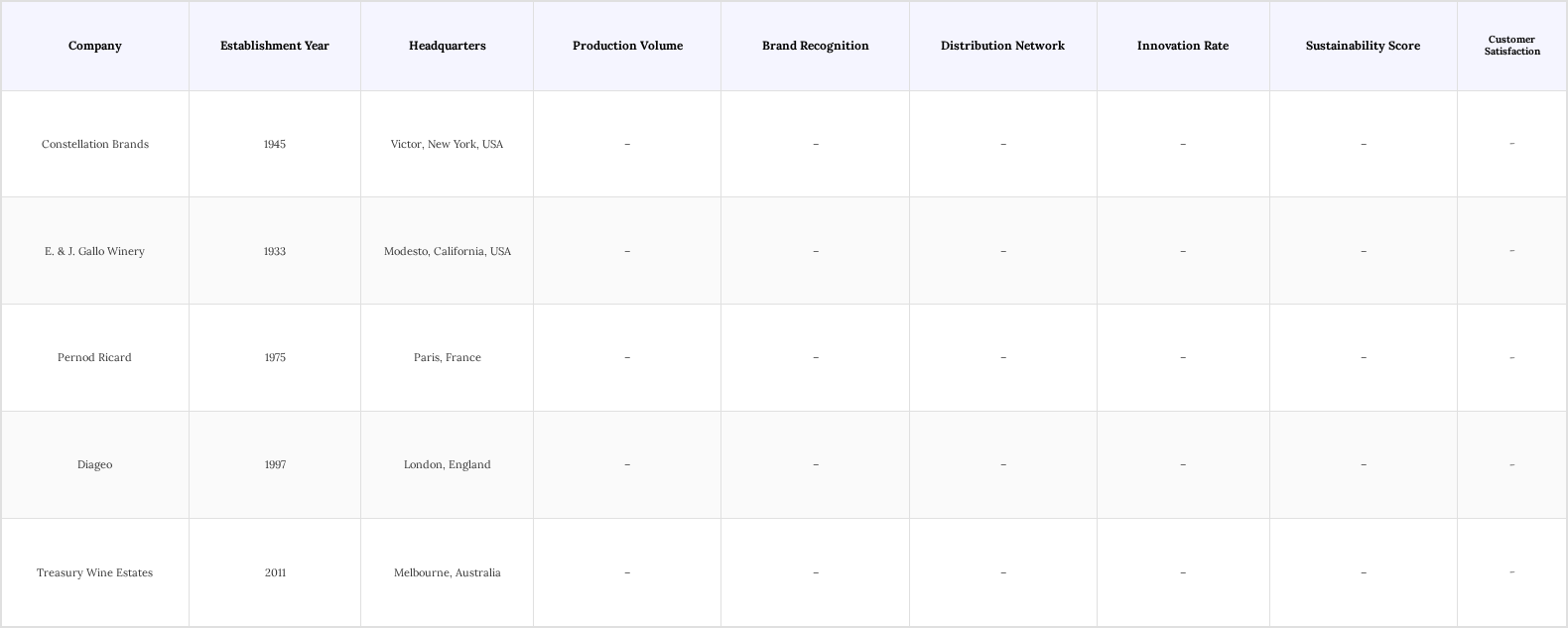
The Global Wine Market is characterized by a competitive landscape with several key players, including Constellation Brands, E. & J. Gallo Winery, and Pernod Ricard. These companies dominate the market through extensive product portfolios, strong brand recognition, and innovative marketing strategies. The market is also witnessing an increase in mergers and acquisitions as companies seek to expand their market presence and enhance their product offerings.
Global Wine Market Industry Analysis
Growth Drivers
- Increasing Consumer Preference for Premium Wines: The rising consumer preference for premium wines is driven by affluent buyers seeking high-quality products, with a notable increase in sales of wines priced above USD 15 per bottle. This shift reflects a broader trend toward prioritizing quality over quantity, supported by growing interest in artisanal wines, sustainable and organic production, and wine tourism. Younger consumers in emerging markets are increasingly exploring sophisticated wine varieties, while digital channels like e-commerce and online subscriptions are expanding access and personalization.
- Growth of Wine Tourism and Experiences: Wine tourism has become a major growth driver, contributing significantly to local economies through increased wine sales and related activities. Regions like Napa Valley and Bordeaux attract millions of visitors annually, who spend on wine tastings, vineyard tours, festivals, lodging, and gastronomy. Over 70% of wine tourists purchase wine during visits, and many extend their trips to explore surrounding areas, boosting hospitality and service sectors. Millennials, who prioritize personalized and authentic experiences, are a key demographic, with 43% visiting multiple wineries annually.
- Rising Health Consciousness and Moderate Consumption Trends: A growing awareness of health benefits associated with moderate wine consumption has positively influenced market dynamics. Studies indicate that moderate wine drinkers, particularly those consuming red wine, may experience cardiovascular benefits. This trend has led to a substantial increase in sales of organic and low-alcohol wines, appealing to health-conscious consumers who seek quality without compromising their wellness goals.
Market Challenges
- Regulatory Hurdles and Compliance Issues: The wine industry faces a complex web of regulatory challenges that affect both production and distribution. Navigating varying regulations across regions can be especially burdensome for small and medium-sized enterprises. Stringent labeling and documentation requirements—particularly in regions like the European Union—can increase operational costs and delay market entry, posing a significant barrier to growth and efficiency.
- Competition from Alternative Alcoholic Beverages: The rise of alternative alcoholic beverages such as craft beers, ready-to-drink cocktails, and premium spirits is reshaping consumer preferences. These options are increasingly popular among younger demographics seeking variety and innovation. This evolving demand landscape presents a challenge for traditional wine producers, who must adapt their product offerings and marketing strategies to remain relevant and competitive in a diversifying market.
Global Wine Market Future Outlook
The future of the wine market appears promising, driven by evolving consumer preferences and innovative marketing strategies. As younger generations, particularly Millennials and Generation Z, continue to embrace wine culture, the demand for unique and sustainable wine experiences is expected to rise. Additionally, advancements in technology and e-commerce will facilitate greater accessibility, allowing consumers to explore diverse wine selections from around the world, thereby enhancing market growth potential.
Market Opportunities
- Expansion into Emerging Markets: Emerging markets, particularly in Asia-Pacific, offer significant growth opportunities for wine producers due to rising disposable incomes and a growing middle class. Countries like China and India are witnessing increased wine consumption driven by urbanization, changing lifestyles, and greater exposure to global wine culture. Consumers in these regions increasingly view wine as a symbol of sophistication and status, favoring premium and imported varieties.
- Innovations in Wine Production and Packaging: Innovations in sustainable wine production and eco-friendly packaging are reshaping the industry, appealing to environmentally conscious consumers. Producers are adopting practices such as organic and biodynamic viticulture, water-efficient irrigation, and renewable energy use to reduce environmental impact. Packaging innovations include lightweight glass bottles, recyclable materials, and alternative formats like boxed wine and cans, which reduce carbon footprints and waste.
Scope of the Report
| By Source |
Red Wine White Wine Sparkling Wine |
| By Distribution Channel |
On-Trade Off-Trade |
| By Region |
North America Europe Asia-Pacific Latin America Middle East & Africa |
| By Price Range |
Premium Mid-Range Economy |
| By Consumer Age Group |
Millennials Generation X Baby Boomers |
Products
Key Target Audience
Investors and Venture Capitalist Firms
Government and Regulatory Bodies (e.g., Food and Drug Administration, Alcohol and Tobacco Tax and Trade Bureau)
Manufacturers and Producers
Distributors and Retailers
Importers and Exporters
Hospitality and Restaurant Chains
Wine Tourism Operators
Packaging and Labeling Companies
Companies
Players Mentioned in the Report:
Constellation Brands
E. & J. Gallo Winery
Pernod Ricard
Diageo
Treasury Wine Estates
Vintage Vines International
TerraVino Global
Noble Grapes Co.
Global Cellars Group
WineSphere Enterprises
Table of Contents
1. Global Wine Market Overview
1.1. Definition and Scope
1.2. Market Taxonomy
1.3. Market Growth Rate
1.4. Market Segmentation Overview
2. Global Wine Market Size (In USD Bn)
2.1. Historical Market Size
2.2. Year-On-Year Growth Analysis
2.3. Key Market Developments and Milestones
3. Global Wine Market Analysis
3.1. Growth Drivers
3.1.1. Increasing consumer preference for premium wines
3.1.2. Growth of wine tourism and experiences
3.1.3. Rising health consciousness and moderate consumption trends
3.2. Market Challenges
3.2.1. Regulatory hurdles and compliance issues
3.2.2. Competition from alternative alcoholic beverages
3.2.3. Climate change impacting grape production
3.3. Opportunities
3.3.1. Expansion into emerging markets
3.3.2. Innovations in wine production and packaging
3.3.3. Growth of e-commerce and online wine sales
3.4. Trends
3.4.1. Increasing popularity of organic and biodynamic wines
3.4.2. Rise of low-alcohol and alcohol-free wine options
3.4.3. Enhanced focus on sustainability and eco-friendly practices
3.5. Government Regulation
3.5.1. Import/export regulations affecting trade
3.5.2. Labeling requirements for wine products
3.5.3. Taxation policies impacting pricing strategies
3.5.4. Health and safety standards for production and distribution
3.6. SWOT Analysis
3.7. Stake Ecosystem
3.8. Porter’s Five Forces
3.9. Competition Ecosystem
4. Global Wine Market Segmentation
4.1. By Source
4.1.1. Red Wine
4.1.2. White Wine
4.1.3. Sparkling Wine
4.2. By Distribution Channel
4.2.1. On-Trade
4.2.2. Off-Trade
4.3. By Region
4.3.1. North America
4.3.2. Europe
4.3.3. Asia-Pacific
4.3.4. Latin America
4.3.5. Middle East & Africa
4.4. By Price Range
4.4.1. Premium
4.4.2. Mid-Range
4.4.3. Economy
4.5. By Consumer Age Group
4.5.1. Millennials
4.5.2. Generation X
4.5.3. Baby Boomers
5. Global Wine Market Competitive Analysis
5.1. Detailed Profiles of Major Companies
5.1.1. Constellation Brands
5.1.2. E. & J. Gallo Winery
5.1.3. Pernod Ricard
5.1.4. Diageo
5.1.5. Treasury Wine Estates
5.1.6. Vintage Vines International
5.1.7. TerraVino Global
5.1.8. Noble Grapes Co.
5.1.9. Global Cellars Group
5.1.10. WineSphere Enterprises
5.2. Cross Comparison Parameters
5.2.1. Market Share Analysis
5.2.2. Revenue Growth Rate
5.2.3. Product Portfolio Diversity
5.2.4. Geographic Presence
5.2.5. Brand Recognition and Loyalty
5.2.6. Innovation and R&D Investment
5.2.7. Customer Satisfaction Ratings
5.2.8. Sustainability Practices
6. Global Wine Market Regulatory Framework
6.1. Environmental Standards
6.2. Compliance Requirements
6.3. Certification Processes
7. Global Wine Market Future Market Size (In USD Bn)
7.1. Future Market Size Projections
7.2. Key Factors Driving Future Market Growth
8. Global Wine Market Future Market Segmentation
8.1. By Source
8.1.1. Red Wine
8.1.2. White Wine
8.1.3. Sparkling Wine
8.2. By Distribution Channel
8.2.1. On-Trade
8.2.2. Off-Trade
8.3. By Region
8.3.1. North America
8.3.2. Europe
8.3.3. Asia-Pacific
8.3.4. Latin America
8.3.5. Middle East & Africa
8.4. By Price Range
8.4.1. Premium
8.4.2. Mid-Range
8.4.3. Economy
8.5. By Consumer Age Group
8.5.1. Millennials
8.5.2. Generation X
8.5.3. Baby Boomers
9. Global Wine Market Analysts’ Recommendations
9.1. TAM/SAM/SOM Analysis
9.2. Customer Cohort Analysis
9.3. Marketing Initiatives
9.4. White Space Opportunity Analysis
Research Methodology
Step 1: Identification of Key Variables
The initial phase involves constructing an ecosystem map encompassing all major stakeholders within the Global Wine Market. This step is underpinned by extensive desk research, utilizing a combination of secondary and proprietary databases to gather comprehensive industry-level information. The primary objective is to identify and define the critical variables that influence market dynamics.
Step 2: Market Analysis and Construction
In this phase, we will compile and analyze historical data pertaining to the Global Wine Market. This includes assessing market penetration, the ratio of marketplaces to service providers, and the resultant revenue generation. Furthermore, an evaluation of service quality statistics will be conducted to ensure the reliability and accuracy of the revenue estimates.
Step 3: Hypothesis Validation and Expert Consultation
Market hypotheses will be developed and subsequently validated through computer-assisted telephone interviews (CATIs) with industry experts representing a diverse array of companies. These consultations will provide valuable operational and financial insights directly from industry practitioners, which will be instrumental in refining and corroborating the market data.
Step 4: Research Synthesis and Final Output
The final phase involves direct engagement with multiple manufacturers to acquire detailed insights into product segments, sales performance, consumer preferences, and other pertinent factors. This interaction will serve to verify and complement the statistics derived from the bottom-up approach, thereby ensuring a comprehensive, accurate, and validated analysis of the Global Wine Market.
Frequently Asked Questions
01. How big is the Global Wine Market?
The Global Wine Market is valued at USD 510 billion, driven by factors such as increasing demand, technological advancements, and supportive government initiatives.
02. What are the key challenges in the Global Wine Market?
Key challenges in the Global Wine Market include intense competition, regulatory complexities, and infrastructure limitations affecting market dynamics.
03. Who are the major players in the Global Wine Market?
Major players in the Global Wine Market include Constellation Brands, E. & J. Gallo Winery, Pernod Ricard, Diageo, Treasury Wine Estates, among others.
04. What are the growth drivers for the Global Wine Market?
The primary growth drivers for the Global Wine Market are increasing consumer demand, favorable policies, innovation, and substantial investment inflows.
Why Buy From Us?

What makes us stand out is that our consultants follows Robust, Refine and Result (RRR) methodology. i.e. Robust for clear definitions, approaches and sanity checking, Refine for differentiating respondents facts and opinions and Result for presenting data with story

We have set a benchmark in the industry by offering our clients with syndicated and customized market research reports featuring coverage of entire market as well as meticulous research and analyst insights.

While we don't replace traditional research, we flip the method upside down. Our dual approach of Top Bottom & Bottom Top ensures quality deliverable by not just verifying company fundamentals but also looking at the sector and macroeconomic factors.

With one step in the future, our research team constantly tries to show you the bigger picture. We help with some of the tough questions you may encounter along the way: How is the industry positioned? Best marketing channel? KPI's of competitors? By aligning every element, we help maximize success.

Our report gives you instant access to the answers and sources that other companies might choose to hide. We elaborate each steps of research methodology we have used and showcase you the sample size to earn your trust.

If you need any support, we are here! We pride ourselves on universe strength, data quality, and quick, friendly, and professional service.