















India Adaptogenic Mushroom Market Outlook to 2030
Region:Asia
Author(s):Shubham Kashyap
Product Code:KROD9508
December 2024
95
About the Report
India Adaptogenic Mushroom Market Overview
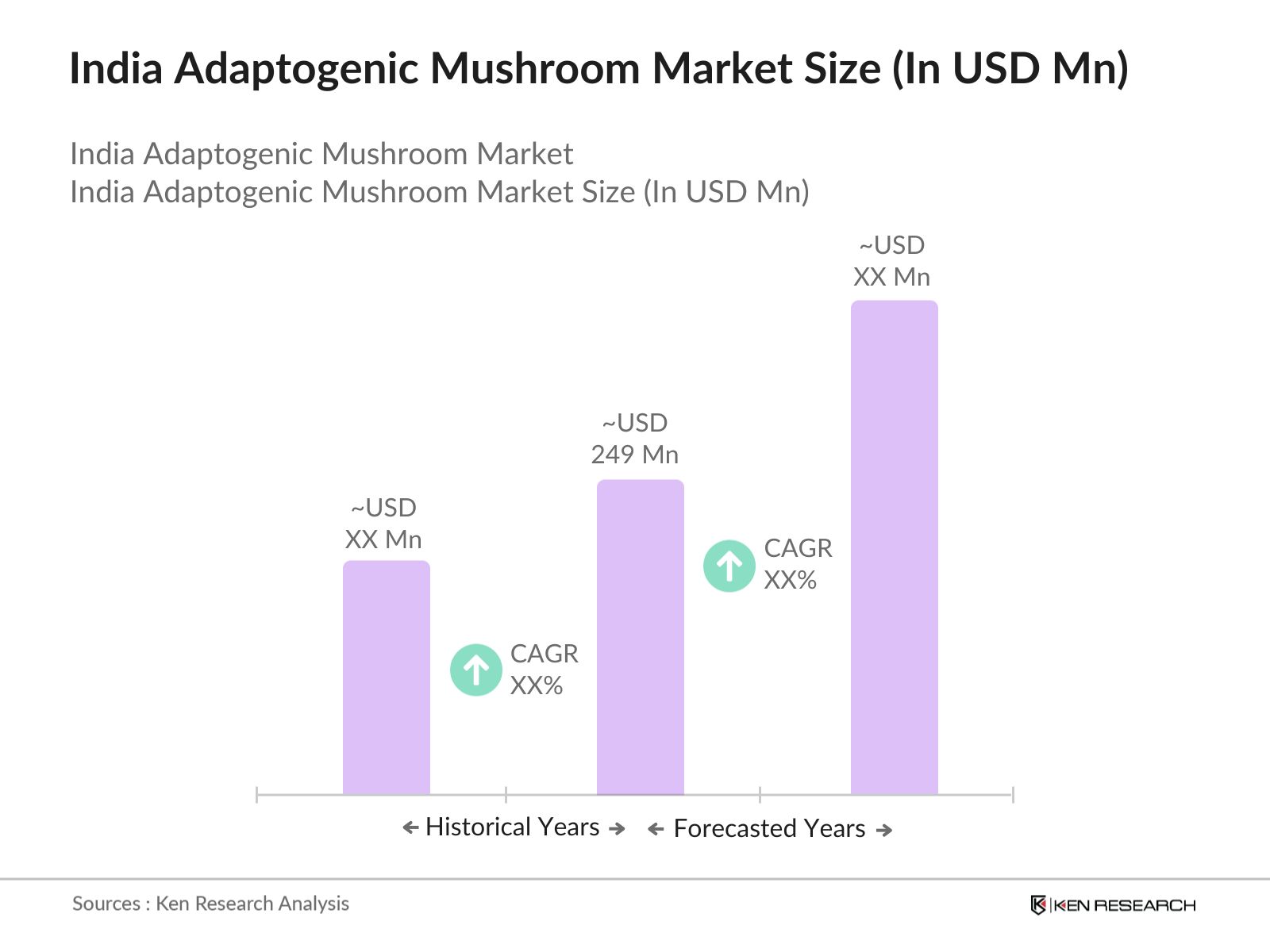
- The India Adaptogenic Mushroom market is valued at USD 249 million, primarily driven by the rising demand for natural health supplements and the growing awareness of the medicinal benefits of adaptogenic mushrooms. Factors such as increasing consumer inclination towards holistic wellness, the integration of these mushrooms into functional foods and beverages, and advancements in extraction technologies significantly contribute to market growth. Moreover, the expanding nutraceutical and wellness industries are bolstering the demand for adaptogenic mushrooms, reinforcing India's position as a growing market for these products.
- Major demand centers for adaptogenic mushrooms in India include metropolitan cities like Mumbai, Delhi, Bangalore, and Hyderabad. These cities dominate due to higher health consciousness, greater disposable incomes, and a robust presence of health food retailers and wellness centers. The urban population in these areas is more inclined towards adopting natural health supplements and is influenced by global wellness trends, which further stimulates the market growth of adaptogenic mushrooms in the region.
- The Food Safety and Standards Authority of India (FSSAI) has issued specific guidelines for herbal supplements, categorizing adaptogenic mushrooms under the nutraceuticals and dietary supplements framework. In 2023, FSSAI implemented additional quality checks for adaptogens, mandating clear labeling on usage and benefits. These guidelines ensure consumer safety but also pose compliance requirements for manufacturers. These regulatory measures create an environment for safe consumption, contributing to consumer confidence.
India Adaptogenic Mushroom Market Segmentation
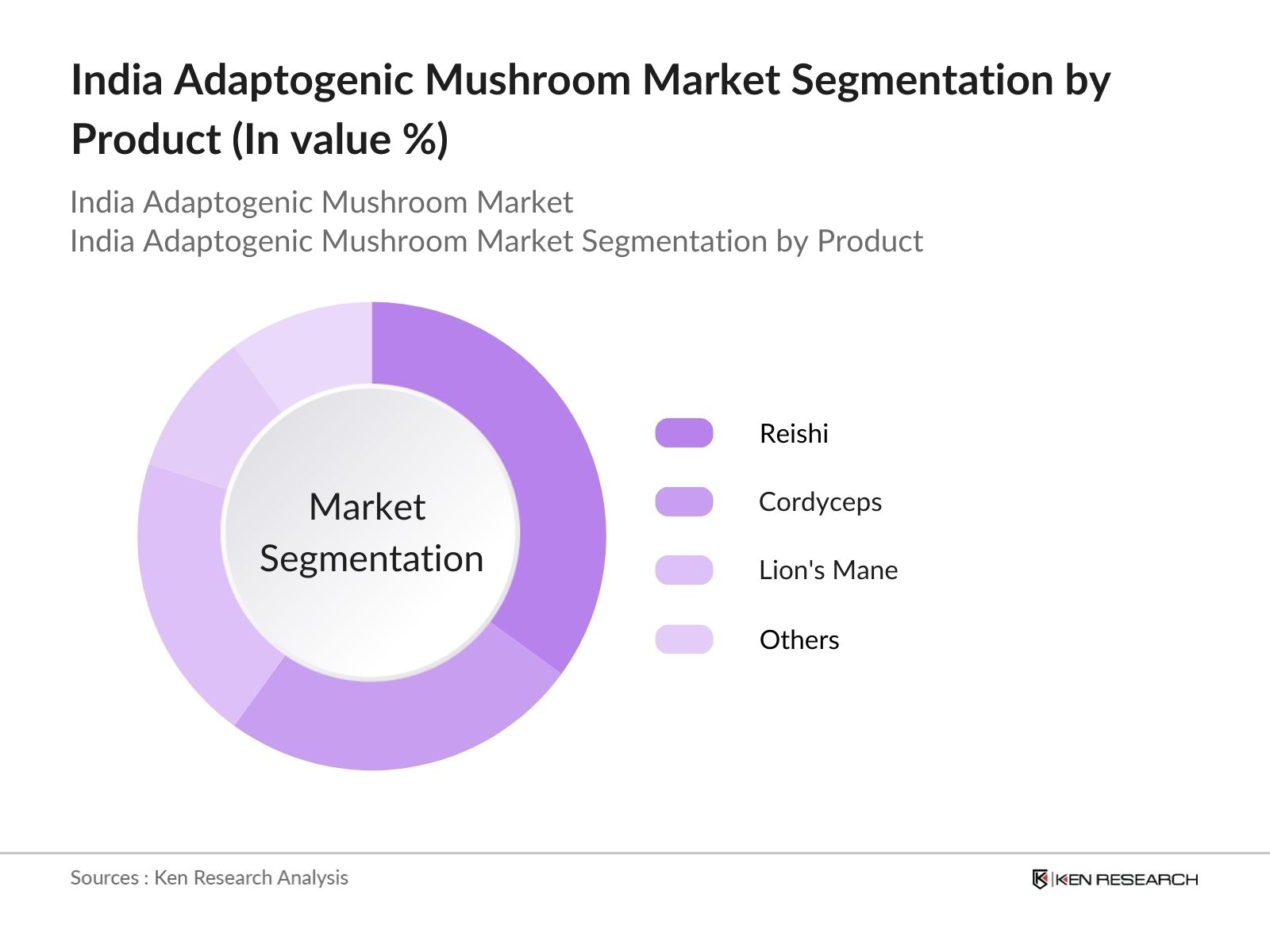
- By Product Type: The market is segmented by product type into Reishi, Cordyceps, Lion's Mane, and Others. Recently, Reishi mushrooms have a dominant market share in India under the segmentation by product type. This is due to their renowned health benefits, including immune system support and stress reduction, which resonate with the increasing health concerns of consumers. The traditional use of Reishi in Ayurvedic practices and its availability in various forms like powders, capsules, and teas contribute to its leading position in the market.
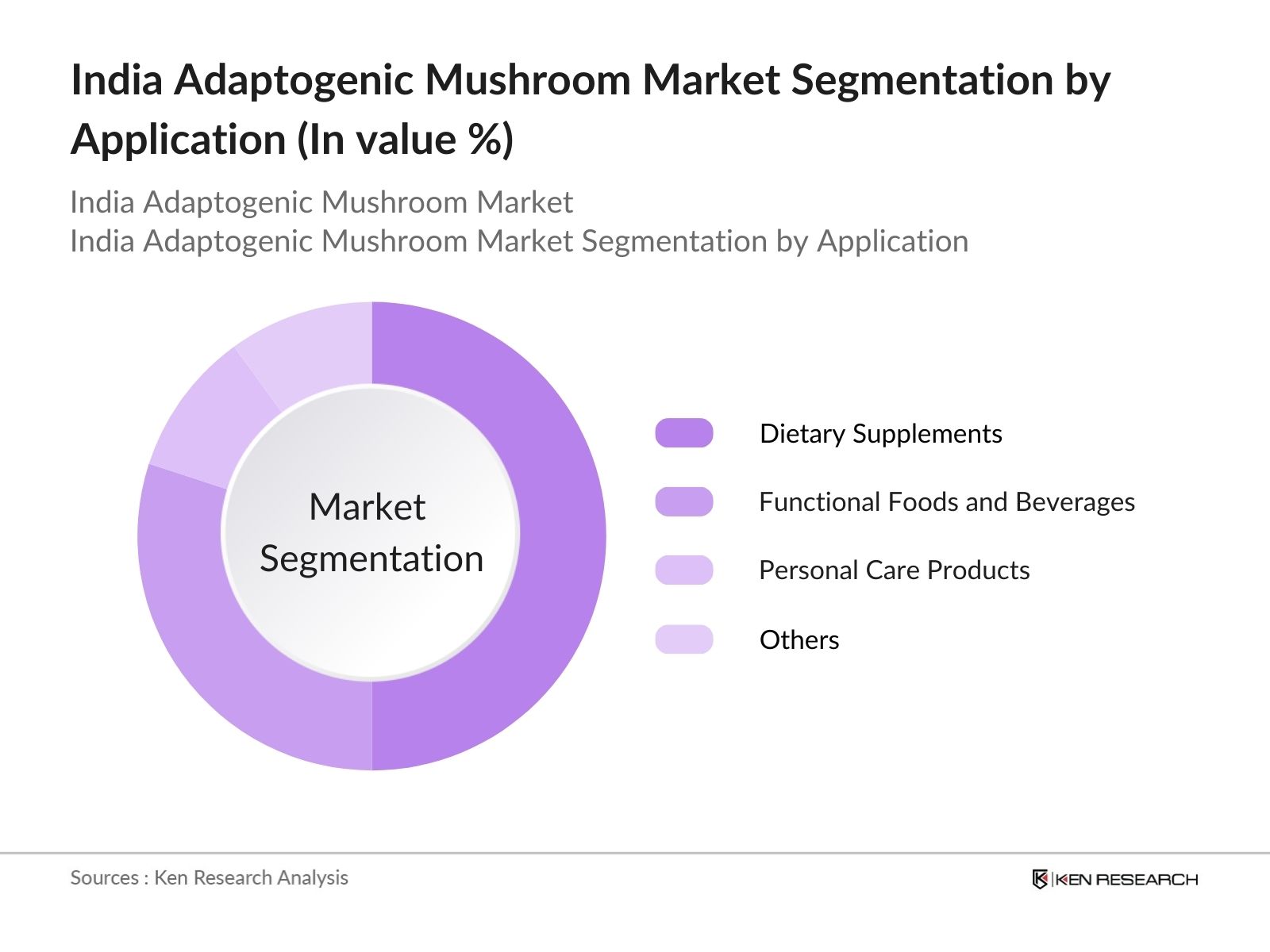
- By Application: The market is segmented by application into Dietary Supplements, Functional Foods and Beverages, Personal Care Products, and Others. The Dietary Supplements segment holds the largest market share, driven by the increasing consumer focus on health and wellness. The convenience and efficacy of consuming adaptogenic mushrooms in supplement form, coupled with the rising popularity of natural remedies, contribute to the dominance of this segment.
India Adaptogenic Mushroom Market Competitive Landscape
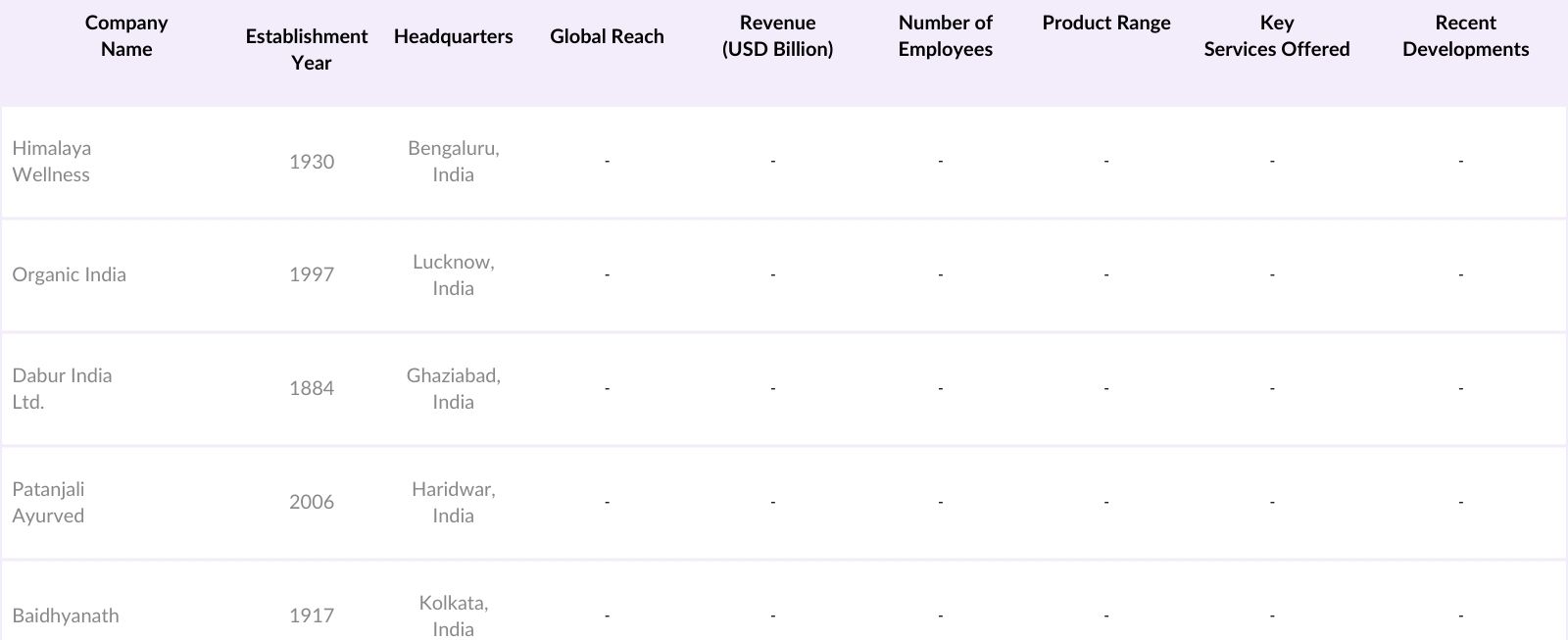
The India Adaptogenic Mushroom market is characterized by a competitive landscape dominated by key players such as Himalaya Wellness, Organic India, and Dabur India Ltd. These companies leverage their strong brand recognition, extensive distribution networks, and continuous investment in product innovation to maintain their leadership positions in the market.
India Adaptogenic Mushroom Market Analysis
Growth Drivers
- Rising Health Consciousness: The Indian population is experiencing a significant shift towards health awareness, with 225 million adults suffering from diabetes and over 350 million cases of hypertension as of 2024. This awareness has increased interest in adaptogenic mushrooms, known for their potential health benefits, such as improving immunity and managing stress. These mushrooms are often rich in polysaccharides and beta-glucans, which are noted for their adaptogenic properties and can be used as a natural supplement for managing stress-related illnesses. Adaptogenic mushrooms like Reishi and Cordyceps are aligning with this trend as they fit well into the preventive healthcare mindset.
- Increasing Demand for Natural Supplements: With India's nutraceutical market seeing an uptick, adaptogenic mushrooms are gaining popularity as natural supplements, particularly in urban areas. In 2024, the demand for natural and plant-based supplements rose by around 30 million users in metro cities, indicating a robust preference for non-synthetic alternatives. This rise is partly due to an increase in chronic conditions, with lifestyle diseases accounting for over 60% of all deaths in India. Adaptogenic mushrooms provide an alternative to synthetic pharmaceuticals, helping to regulate bodily functions naturally.
- Expansion of Functional Foods and Beverages: The Indian functional foods sector is growing, largely due to heightened demand for wellness products among health-conscious consumers (IMF). Adaptogenic mushrooms are now being incorporated into a variety of foods and beverages, enhancing the functional food market by providing natural health benefits. This trend is also driven by the popularity of superfoods in urban centers where consumers actively seek foods that offer health advantages beyond basic nutrition. Functional mushroom beverages, especially teas and coffees, are increasingly available in urban markets.
Challenges
- Limited Consumer Awareness: While urban consumers in India are gradually becoming familiar with adaptogenic mushrooms, rural awareness remains low. The primary challenge lies in educating consumers about the specific health benefits of these fungi, especially in non-metro regions where traditional vegetables and grains dominate the diet. This gap in awareness poses a challenge for the adaptogenic mushroom market's expansion into these areas. Increasing outreach and education in these regions could be essential for market growth.
- Supply Chain Constraints: India's agricultural supply chain faces challenges that impact the distribution of adaptogenic mushrooms, including infrastructure limitations and high transportation costs. Mushrooms, being highly perishable, require specialized storage conditions. These supply chain constraints often lead to increased wastage, limiting the potential for scaling the adaptogenic mushroom market effectively. Investment in cold chain infrastructure and logistics could help alleviate these issues.
India Adaptogenic Mushroom Market Future Outlook
Over the next five years, the India Adaptogenic Mushroom market is expected to show significant growth driven by increasing health consciousness, advancements in product formulations, and expanding ecommerce platforms. The government's support for traditional medicine and Ayurveda is also anticipated to bolster market growth, as consumers continue to embrace natural and holistic wellness solutions.
Future Market Opportunities
- Technological Advancements in Cultivation: Advancements in mushroom cultivation technology, such as controlled-environment agriculture, have enabled higher yields and quality of adaptogenic mushrooms in India. The Indian Council of Agricultural Research (ICAR) reports that controlled cultivation can boost mushroom yields substantially compared to traditional methods, making it feasible to meet the rising demand efficiently. These technological improvements also allow cultivators to meet specific standards required for medicinal-grade adaptogens, making Indian-grown mushrooms competitive on a global scale.
- Expansion into Urban Markets: Indias urban population has surged, with approximately 35% residing in cities as of 2024, creating an opportunity to introduce adaptogenic mushrooms to health-conscious urban consumers. Rising disposable income levels, averaging around INR 200,000 annually in metro areas, increase the capacity for spending on wellness products, including adaptogenic supplements (World Bank). Targeting urban markets can enable rapid growth and facilitate the establishment of adaptogenic mushroom products in the mainstream consumer base.
Scope of the Report
|
By Product Type |
Reishi |
|
By Application |
Immunity Boosters |
|
By Form |
Fresh/Whole |
|
By Distribution Channel |
Online Retail |
|
By Region |
North |
Products
Key Target Audience
Herbal Supplement Manufacturers
Nutraceutical Companies
Health and Wellness Retailers
Ecommerce Platforms
Government and Regulatory Bodies (e.g., FSSAI)
Investors and Venture Capitalist Firms
Banks and Financial Institutions
Research and Development Organizations
Companies
Players Mentioned in the Report
Himalaya Wellness
Dabur India Ltd.
Patanjali Ayurved
Organic India
Baidhyanath
Zandu Realty Ltd.
Charak Pharma Pvt. Ltd.
Hamdard Laboratories
Emami Ltd.
Vicco Laboratories
Kerala Ayurveda Ltd.
Jiva Ayurveda
Maharishi Ayurveda
Aimil Pharmaceuticals
Sandu Pharmaceuticals Ltd.
Table of Contents
1. India Adaptogenic Mushroom Market Overview
1.1 India Adaptogenic Mushroom Market Definition and Scope
1.2 India Adaptogenic Mushroom Market Taxonomy
1.3 India Adaptogenic Mushroom Market Growth Rate
1.4 India Adaptogenic Mushroom Market Segmentation Overview
1.5 India Adaptogenic Mushroom Market Size (In USD Million), 2018-2023
1.6 India Adaptogenic Mushroom Market Historical Market Size
1.7 India Adaptogenic Mushroom Market Year-On-Year Growth Analysis
1.8 India Adaptogenic Mushroom Market Key Developments and Milestones
2. India Adaptogenic Mushroom Market Analysis
2.1 India Adaptogenic Mushroom Market Growth Drivers
2.1.1 Rising Health Consciousness
2.1.2 Increasing Demand for Natural Supplements
2.1.3 Expansion of Functional Foods and Beverages
2.1.4 Traditional Usage in Ayurvedic Medicine
2.2 India Adaptogenic Mushroom Market Challenges
2.2.1 Limited Consumer Awareness
2.2.2 Supply Chain Constraints
2.2.3 Regulatory Hurdles
2.3 India Adaptogenic Mushroom Market Opportunities
2.3.1 Technological Advancements in Cultivation
2.3.2 Expansion into Urban Markets
2.3.3 Collaborations with Nutraceutical Companies
2.4 India Adaptogenic Mushroom Market Trends
2.4.1 Incorporation in Wellness Products
2.4.2 Online Retail Growth
2.4.3 Emergence of Mushroom-Based Beverages
2.5 India Adaptogenic Mushroom Market Government Regulations
2.5.1 FSSAI Guidelines on Herbal Supplements
2.5.2 Import and Export Policies
2.5.3 Quality Standards and Certifications
2.6 India Adaptogenic Mushroom Market SWOT Analysis
2.7 India Adaptogenic Mushroom Market Stakeholder Ecosystem
2.8 India Adaptogenic Mushroom Market Porter’s Five Forces Analysis
3. India Adaptogenic Mushroom Market Competitive Landscape
3.1 India Adaptogenic Mushroom Market Detailed Profiles of Major Companies
3.1.1 Himalaya Wellness
3.1.2 Dabur India Ltd.
3.1.3 Patanjali Ayurved
3.1.4 Organic India
3.1.5 Baidyanath
3.1.6 Zandu Realty Ltd.
3.1.7 Charak Pharma Pvt. Ltd.
3.1.8 Hamdard Laboratories
3.1.9 Emami Ltd.
3.1.10 Vicco Laboratories
3.1.11 Kerala Ayurveda Ltd.
3.1.12 Jiva Ayurveda
3.1.13 Maharishi Ayurveda
3.1.14 Aimil Pharmaceuticals
3.1.15 Sandu Pharmaceuticals Ltd.
3.2 India Adaptogenic Mushroom Market Cross-Comparison (no. of employees, headquarters location, year of establishment, revenue, product portfolio, market share, distribution network, R&D investment)
4. India Adaptogenic Mushroom Market Segmentation, 2023
4.1 India Adaptogenic Mushroom Market Segmentation by Product Type (in value %), 2023
4.1.1 Reishi
4.1.2 Chaga
4.1.3 Turkey Tail
4.1.4 Lion's Mane
4.1.5 Cordyceps
4.2 India Adaptogenic Mushroom Market Segmentation by Application (in value %), 2023
4.2.1 Immunity Boosters
4.2.2 Stress and Anxiety Relief
4.2.3 Cognitive and Mental Health Support
4.2.4 Insomnia Treatment
4.2.5 Others
4.3 India Adaptogenic Mushroom Market Segmentation by Form (in value %), 2023
4.3.1 Fresh/Whole
4.3.2 Dried
4.3.3 Processed
4.4 India Adaptogenic Mushroom Market Segmentation by Distribution Channel (in value %), 2023
4.4.1 Online Retail
4.4.2 Offline Retail
4.5 India Adaptogenic Mushroom Market Segmentation by Region (in value %), 2023
4.5.1 North
4.5.2 South
4.5.3 East
4.5.4 West
5. India Adaptogenic Mushroom Market Future Size (In USD Million), 2023-2028
6. India Adaptogenic Mushroom Market Future Segmentation, 2028
6.1 India Adaptogenic Mushroom Market Future Segmentation by Product Type (in value %), 2028
6.2 India Adaptogenic Mushroom Market Future Segmentation by Application (in value %), 2028
6.3 India Adaptogenic Mushroom Market Future Segmentation by Form (in value %), 2028
6.4 India Adaptogenic Mushroom Market Future Segmentation by Distribution Channel (in value %), 2028
6.5 India Adaptogenic Mushroom Market Future Segmentation by Region (in value %), 2028
7. India Adaptogenic Mushroom Market Analysts’ Recommendations
7.1 India Adaptogenic Mushroom Market TAM/SAM/SOM Analysis
7.2 India Adaptogenic Mushroom Market Customer Cohort Analysis
7.3 India Adaptogenic Mushroom Market Marketing Initiatives
7.4 India Adaptogenic Mushroom Market White Space Opportunity Analysis
Disclaimer Contact Us
Research Methodology
Step 1: Identification of Key Variables
The initial phase involves constructing an ecosystem map encompassing all major stakeholders within the India Adaptogenic Mushroom Market. This step is underpinned by extensive desk research, utilizing a combination of secondary and proprietary databases to gather comprehensive industry level information. The primary objective is to identify and define the critical variables that influence market dynamics.
Step 2: Market Analysis and Construction
In this phase, we compile and analyze historical data pertaining to the India Adaptogenic Mushroom Market. This includes assessing market penetration, the ratio of marketplaces to service providers, and the resultant revenue generation. Furthermore, an evaluation of service quality statistics is conducted to ensure the reliability and accuracy of the revenue estimates.
Step 3: Hypothesis Validation and Expert Consultation
Market hypotheses are developed and subsequently validated through computer assisted telephone interviews (CATIs) with industry experts representing a diverse array of companies. These consultations provide valuable operational and financial insights directly from industry practitioners, which are instrumental in refining and corroborating the market data.
Step 4: Research Synthesis and Final Output
The final phase involves direct engagement with multiple adaptogenic mushroom manufacturers to acquire detailed insights into product segments, sales performance, consumer preferences, and other pertinent factors. This interaction serves to verify and complement the statistics derived from the bottomup approach, thereby ensuring a comprehensive, accurate, and validated analysis of the India Adaptogenic Mushroom Market.
Frequently Asked Questions
How big is the India Adaptogenic Mushroom Market?
The India Adaptogenic Mushroom Market is valued at USD 249 million, driven by increasing consumer awareness of health benefits and a shift towards natural supplements.
What are the challenges in the India Adaptogenic Mushroom Market?
Challenges in the India Adaptogenic Mushroom Market include supply chain constraints, limited consumer awareness in rural areas, and regulatory compliance issues that may impede market growth.
Who are the major players in the India Adaptogenic Mushroom Market?
Key players in the India Adaptogenic Mushroom Market include Himalaya Wellness, Dabur India Ltd., Patanjali Ayurved, Organic India, and Baidhyanath. These companies dominate due to their strong brand presence and extensive distribution networks.
What are the growth drivers of the India Adaptogenic Mushroom Market?
The India Adaptogenic Mushroom Market is propelled by increasing consumer awareness, expansion of the nutraceutical industry, and government support for traditional medicine.
Why Buy From Us?

What makes us stand out is that our consultants follows Robust, Refine and Result (RRR) methodology. i.e. Robust for clear definitions, approaches and sanity checking, Refine for differentiating respondents facts and opinions and Result for presenting data with story

We have set a benchmark in the industry by offering our clients with syndicated and customized market research reports featuring coverage of entire market as well as meticulous research and analyst insights.

While we don't replace traditional research, we flip the method upside down. Our dual approach of Top Bottom & Bottom Top ensures quality deliverable by not just verifying company fundamentals but also looking at the sector and macroeconomic factors.

With one step in the future, our research team constantly tries to show you the bigger picture. We help with some of the tough questions you may encounter along the way: How is the industry positioned? Best marketing channel? KPI's of competitors? By aligning every element, we help maximize success.

Our report gives you instant access to the answers and sources that other companies might choose to hide. We elaborate each steps of research methodology we have used and showcase you the sample size to earn your trust.

If you need any support, we are here! We pride ourselves on universe strength, data quality, and quick, friendly, and professional service.