
India Aluminum Market Outlook to 2030
Region:India
Author(s):Yogita Sahu
Product Code:KROD4776
Region:India
Author(s):Yogita Sahu
Product Code:KROD4776
October 2024
91
By Product Type: The market is segmented by product type into primary aluminum, secondary/recycled aluminum, aluminum alloys, rolled aluminum products, and extruded aluminum products. Primary aluminum, produced directly from bauxite ore, has a dominant market share due to its essential role in industrial applications such as automotive and aerospace. Primary aluminums purity and strength make it indispensable in high-performance applications where reliability and structural integrity are crucial.

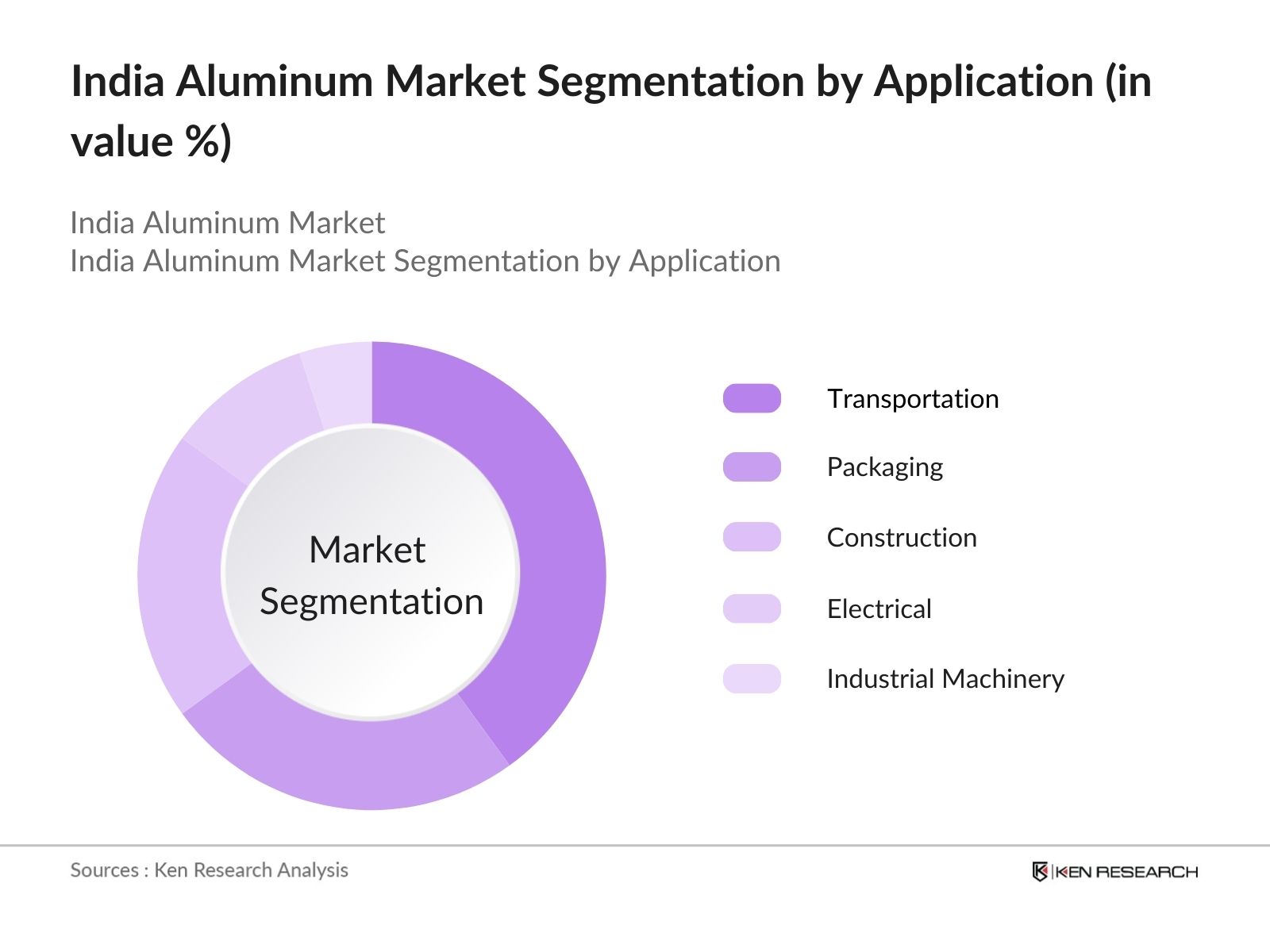
By Application: The market is also segmented by application into transportation, packaging, construction, electrical, and industrial machinery. The transportation segment holds the largest market share, driven by the increasing demand for lightweight vehicles, including electric vehicles (EVs) that rely heavily on aluminum for battery casings and other components. Additionally, aluminum's strength-to-weight ratio makes it an ideal material for aerospace and railways, contributing to its dominance in the transportation sector.
The market is characterized by the presence of a few key players, both domestic and international. Companies such as Hindalco Industries, Vedanta Ltd., and National Aluminium Company (NALCO) dominate the market due to their large production capacities and extensive distribution networks. These players are strategically located near bauxite reserves, ensuring a stable raw material supply.
|
Company Name |
Establishment Year |
Headquarters |
Production Capacity |
Market Share |
Raw Material Sources |
Technological Capabilities |
Global Presence |
Sustainability Initiatives |
Key Clients |
|
Hindalco Industries |
1958 |
Mumbai, India |
|||||||
|
Vedanta Ltd. |
1976 |
Mumbai, India |
|||||||
|
National Aluminium (NALCO) |
1981 |
Bhubaneswar, India |
|||||||
|
Alcoa Corporation |
1888 |
Pittsburgh, USA |
|||||||
|
Rio Tinto |
1873 |
London, UK |
The India Aluminum industry is expected to witness robust growth over the next few years, driven by multiple factors. Increasing investment in infrastructure projects, such as the development of smart cities and expansion of public transportation systems, will significantly boost the demand for aluminum in the construction and transportation sectors.
|
Product Type |
Primary Aluminum |
|
Secondary/Recycled Aluminum |
|
|
Aluminum Alloys |
|
|
Rolled Aluminum Products (Sheets, Plates) |
|
|
Extruded Aluminum Products (Bars, Rods) |
|
|
Application |
Transportation (Automotive, Aerospace) |
|
Packaging (Cans, Foils) |
|
|
Construction (Building Materials) |
|
|
Electrical (Transmission Lines) |
|
|
Industrial Machinery |
|
|
End-User Industry |
Automotive |
|
Aerospace |
|
|
Building and Construction |
|
|
Packaging and Consumer Goods |
|
|
Electrical and Electronics |
|
|
Process Type |
Smelting |
|
Casting |
|
|
Rolling |
|
|
Extrusion |
|
|
Recycling |
|
|
Region |
North India |
|
South India |
|
|
West India |
|
|
East India |
1.1. Definition and Scope
1.2. Market Taxonomy
1.3. Market Growth Rate (Production Volumes, Exports, Imports, Domestic Consumption)
1.4. Market Segmentation Overview
2.1. Historical Market Size (Production Capacity, Revenue, Trade Volumes)
2.2. Year-On-Year Growth Analysis (Domestic Demand, Price Trends, Raw Material Supply Chain)
2.3. Key Market Developments and Milestones (New Production Facilities, Smelting and Refining Capacity Enhancements, Export Agreements)
3.1. Growth Drivers
3.1.1. Government Infrastructure Initiatives (Make in India, Smart Cities)
3.1.2. Expansion in Aerospace and Automotive Industries (Lightweight Materials Adoption)
3.1.3. Rise in Renewable Energy Installations (Solar and Wind Energy Equipment)
3.1.4. Growth in Packaging and Consumer Durables (Aluminum Cans, Foils)
3.2. Market Challenges
3.2.1. Volatility in Raw Material Prices (Bauxite and Alumina)
3.2.2. Environmental Regulations (Carbon Emissions Control, Waste Management)
3.2.3. High Energy Consumption in Production (Electricity Prices, Smelting Processes)
3.2.4. Competition from Global Producers (China, Middle East Exporters)
3.3. Opportunities
3.3.1. Growth in Recycling Capabilities (Circular Economy, Scrap Metal Usage)
3.3.2. Expansion in Electric Vehicles (EV Battery Enclosures, Lightweighting)
3.3.3. Increased Use of Aluminum in Construction (Skyscrapers, Bridges, Green Buildings)
3.3.4. Technological Advancements in Smelting and Casting (Energy Efficiency, Low Carbon Production)
3.4. Trends
3.4.1. Adoption of Low Carbon Aluminum (Decarbonization, EPD Certifications)
3.4.2. Digitalization in Production Processes (AI, IoT in Smelting and Casting)
3.4.3. Shifts in Global Trade Dynamics (Tariffs, Bilateral Agreements)
3.4.4. Expansion in Secondary Aluminum Market (Recycling Plants, Scrap Metal Export/Import)
3.5. Government Regulations
3.5.1. Import and Export Duties on Aluminum
3.5.2. Environmental Norms and Compliance (Air and Water Pollution Control)
3.5.3. Tax Incentives for Green Production Technologies
3.5.4. Public-Private Partnerships in Infrastructure Projects (Aluminum Usage in Railways, Roads)
3.6. SWOT Analysis
3.7. Stakeholder Ecosystem (Aluminum Producers, Government Entities, Raw Material Suppliers)
3.8. Porters Five Forces
3.9. Competition Ecosystem
4.1. By Product Type (In Value %)
4.1.1. Primary Aluminum
4.1.2. Secondary/Recycled Aluminum
4.1.3. Aluminum Alloys
4.1.4. Rolled Aluminum Products (Sheets, Plates, Foils)
4.1.5. Extruded Aluminum Products (Bars, Rods, Tubes)
4.2. By Application (In Value %)
4.2.1. Transportation (Automotive, Aerospace, Railways)
4.2.2. Packaging (Cans, Foils, Wrappers)
4.2.3. Construction (Building Materials, Windows, Doors)
4.2.4. Electrical (Transmission Lines, Conductors)
4.2.5. Industrial Machinery and Equipment
4.3. By End-User Industry (In Value %)
4.3.1. Automotive
4.3.2. Aerospace
4.3.3. Building and Construction
4.3.4. Packaging and Consumer Goods
4.3.5. Electrical and Electronics
4.4. By Process Type (In Value %)
4.4.1. Smelting
4.4.2. Casting
4.4.3. Rolling
4.4.4. Extrusion
4.4.5. Recycling
4.5. By Region (In Value %)
4.5.1. North India
4.5.2. South India
4.5.3. West India
4.5.4. East India
5.1. Detailed Profiles of Major Companies
5.1.1. Vedanta Ltd.
5.1.2. National Aluminium Company (NALCO)
5.1.3. Hindalco Industries Ltd.
5.1.4. Bharat Aluminium Company (BALCO)
5.1.5. Jindal Aluminium Ltd.
5.1.6. Century Aluminum Co.
5.1.7. Rio Tinto
5.1.8. Alcoa Corporation
5.1.9. Emirates Global Aluminium (EGA)
5.1.10. Norsk Hydro ASA
5.1.11. RUSAL
5.1.12. Aluminium Bahrain (Alba)
5.1.13. China Hongqiao Group
5.1.14. China Zhongwang Holdings
5.1.15. Kaiser Aluminum
5.2. Cross Comparison Parameters
5.3. Market Share Analysis
5.4. Strategic Initiatives
5.5. Mergers and Acquisitions
5.6. Investment Analysis
5.7. Venture Capital Funding
5.8. Government Grants
5.9. Private Equity Investments
6.1. Industry Standards
6.2. Compliance Requirements
6.3. Certification Processes
7.1. Future Market Size Projections
7.2. Key Factors Driving Future Market
8.1. By Product Type (In Value %)
8.2. By Application (In Value %)
8.3. By Process Type (In Value %)
8.4. By End-User Industry (In Value %)
8.5. By Region (In Value %)
9.1. TAM/SAM/SOM Analysis
9.2. Customer Cohort Analysis
9.3. Marketing Initiatives
9.4. White Space Opportunity Analysis
The first phase involved mapping all major stakeholders in the India Aluminum Market. Secondary data sources, including proprietary databases, government publications, and industry reports, were utilized to define key market variables such as production volumes, capacity, and end-user segments.
Historical data on aluminum consumption, production, and trade were gathered from credible sources like government records and industry associations. The ratio of primary to recycled aluminum, along with the key application segments, was analyzed to construct market models and estimate future trends.
Market assumptions were validated through consultations with industry experts, including executives from leading aluminum manufacturers. These interviews provided insights into market drivers, challenges, and the competitive landscape.
The final output was prepared after cross-verifying primary and secondary data sources. The research synthesis involved detailed segmentation analysis, competitive benchmarking, and the construction of a comprehensive future market outlook, ensuring a robust and accurate report.
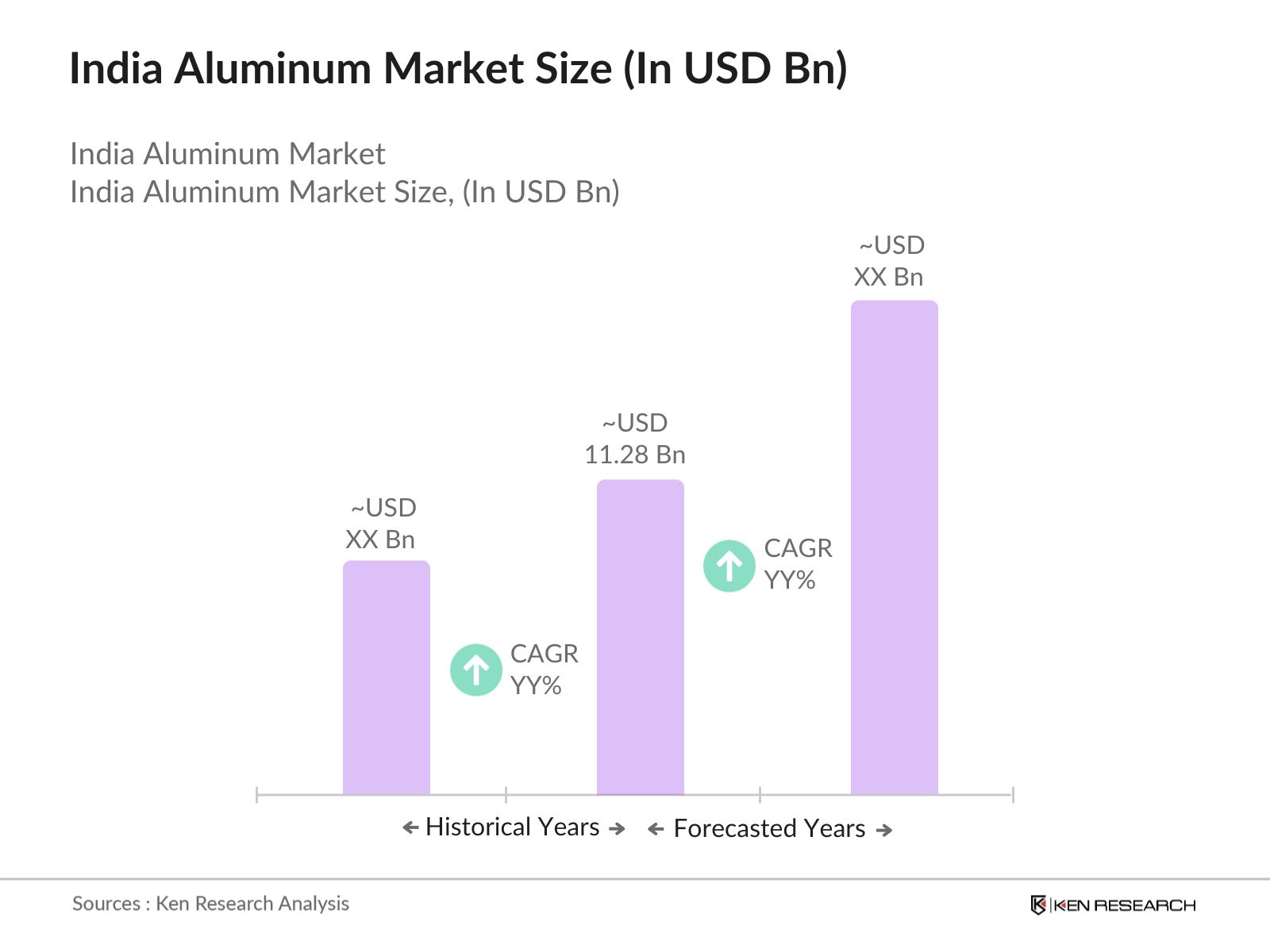
The India Aluminum Market is valued at USD 11.28 billion, driven by strong demand from the construction, automotive, and packaging sectors. Key factors include the rising use of lightweight materials in transportation and infrastructure development.
Challenges in the India Aluminum Market include the volatility in raw material prices, environmental regulations on production processes, and the high energy consumption in aluminum smelting. The market also faces competition from global producers like China and the Middle East.
The major players in the India Aluminum Market include Hindalco Industries, Vedanta Ltd., National Aluminium Company (NALCO), and global giants like Alcoa and Rio Tinto. These companies dominate due to their extensive production capacities and established distribution networks.
Key growth drivers in the India Aluminum Market include the increasing adoption of aluminum in electric vehicles, renewable energy installations, and government initiatives promoting infrastructure development. The rise in recycling initiatives also supports the market's growth.
The India Aluminum Market is expected to experience significant growth driven by the expansion of the electric vehicle segment, increased government investment in infrastructure, and advancements in aluminum recycling technologies.

What makes us stand out is that our consultants follows Robust, Refine and Result (RRR) methodology. i.e. Robust for clear definitions, approaches and sanity checking, Refine for differentiating respondents facts and opinions and Result for presenting data with story

We have set a benchmark in the industry by offering our clients with syndicated and customized market research reports featuring coverage of entire market as well as meticulous research and analyst insights.

While we don't replace traditional research, we flip the method upside down. Our dual approach of Top Bottom & Bottom Top ensures quality deliverable by not just verifying company fundamentals but also looking at the sector and macroeconomic factors.

With one step in the future, our research team constantly tries to show you the bigger picture. We help with some of the tough questions you may encounter along the way: How is the industry positioned? Best marketing channel? KPI's of competitors? By aligning every element, we help maximize success.

Our report gives you instant access to the answers and sources that other companies might choose to hide. We elaborate each steps of research methodology we have used and showcase you the sample size to earn your trust.

If you need any support, we are here! We pride ourselves on universe strength, data quality, and quick, friendly, and professional service.