















India Anti-Counterfeit Pharmaceutical Packaging Market Outlook to 2030
Region:Asia
Author(s):Yogita Sahu
Product Code:KROD2897
October 2024
94
About the Report
India Anti-Counterfeit Pharmaceutical Market Overview
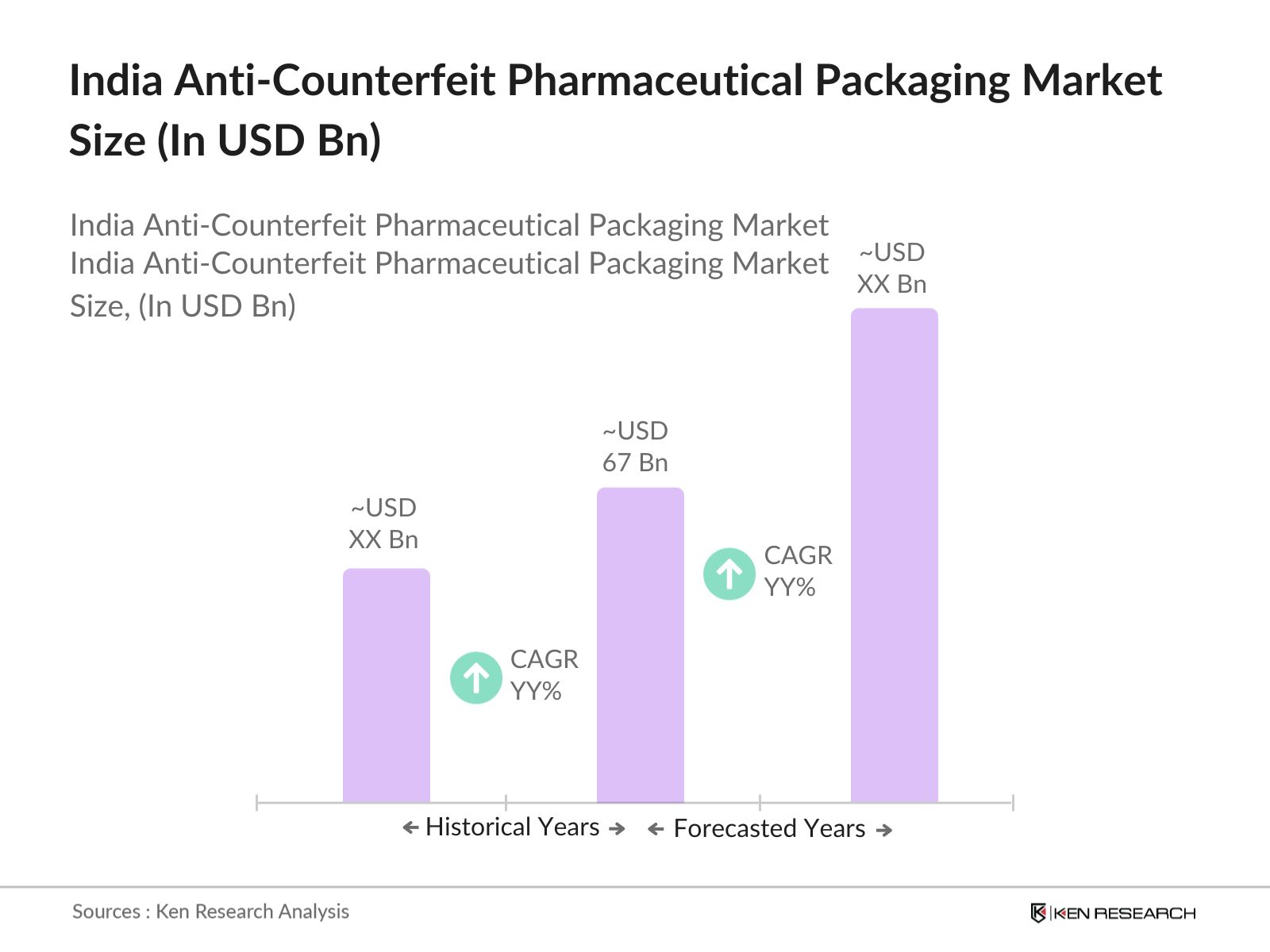
- The India anti-counterfeit pharmaceutical packaging market is valued at USD 67 billion, based on a five-year historical analysis. This market is driven by stringent government regulations aimed at curbing the distribution of counterfeit medicines and the increasing consumer demand for secure pharmaceutical products.
- Delhi and Mumbai are the dominant cities within the anti-counterfeit pharmaceutical packaging market in India due to their roles as key pharmaceutical manufacturing hubs. These cities house several large-scale pharmaceutical companies, which rely on advanced packaging technologies to ensure the authenticity of their products.
- The Indian government amended the Drugs and Cosmetics Act in 2022 to include stricter penalties for counterfeit drug manufacturers. The move is part of the governments broader initiative to curb the circulation of counterfeit medicines and incentivize companies to adopt anti-counterfeit solutions.
India Anti-Counterfeit Pharmaceutical Market Segmentation
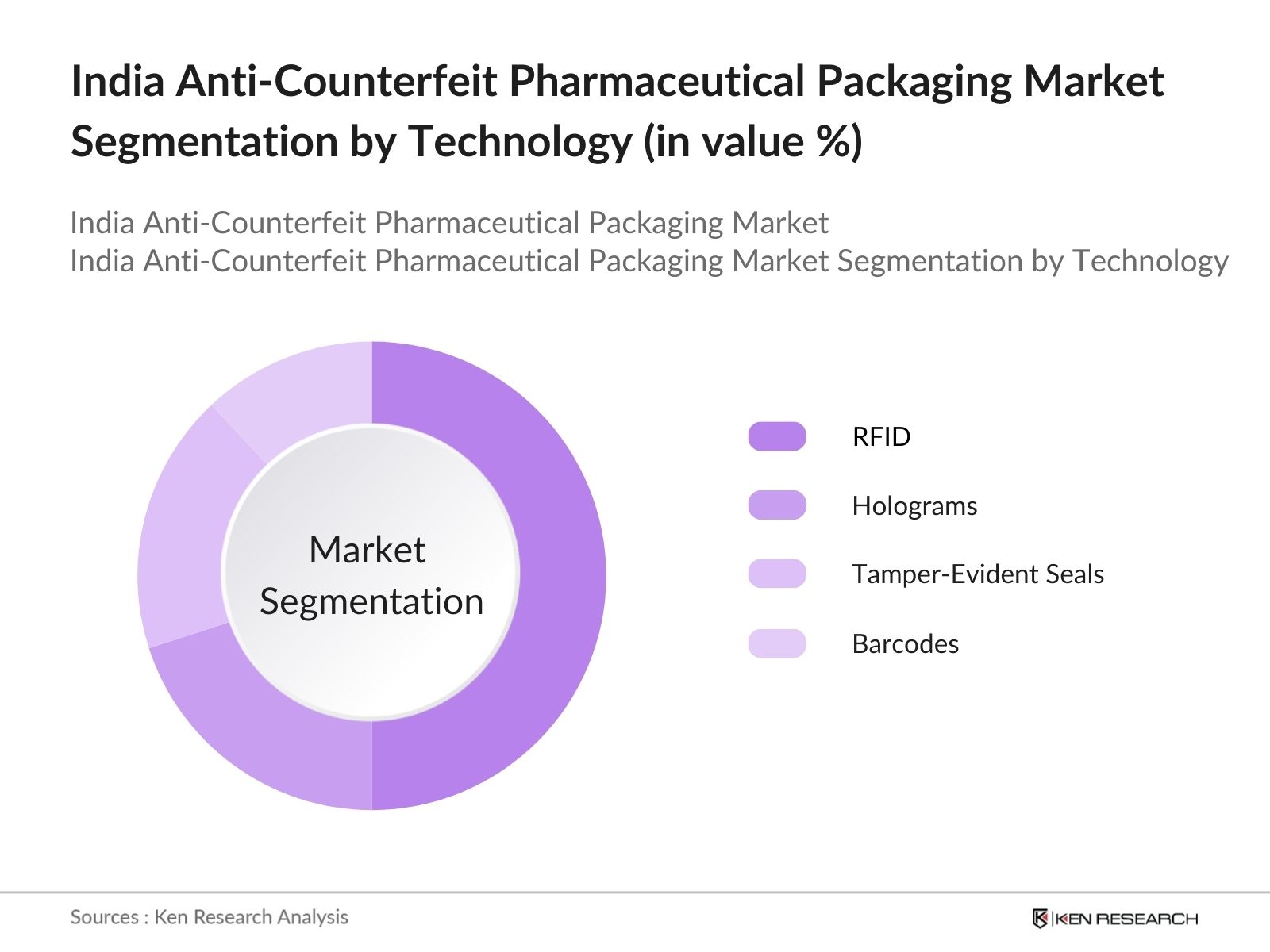
- By Technology: The market is segmented by technology into RFID, holograms, tamper-evident seals, and barcodes. RFID technology has gained a dominant market share under the segmentation by technology. This is largely due to its ability to provide real-time tracking and verification across the supply chain, reducing the risk of counterfeiting.
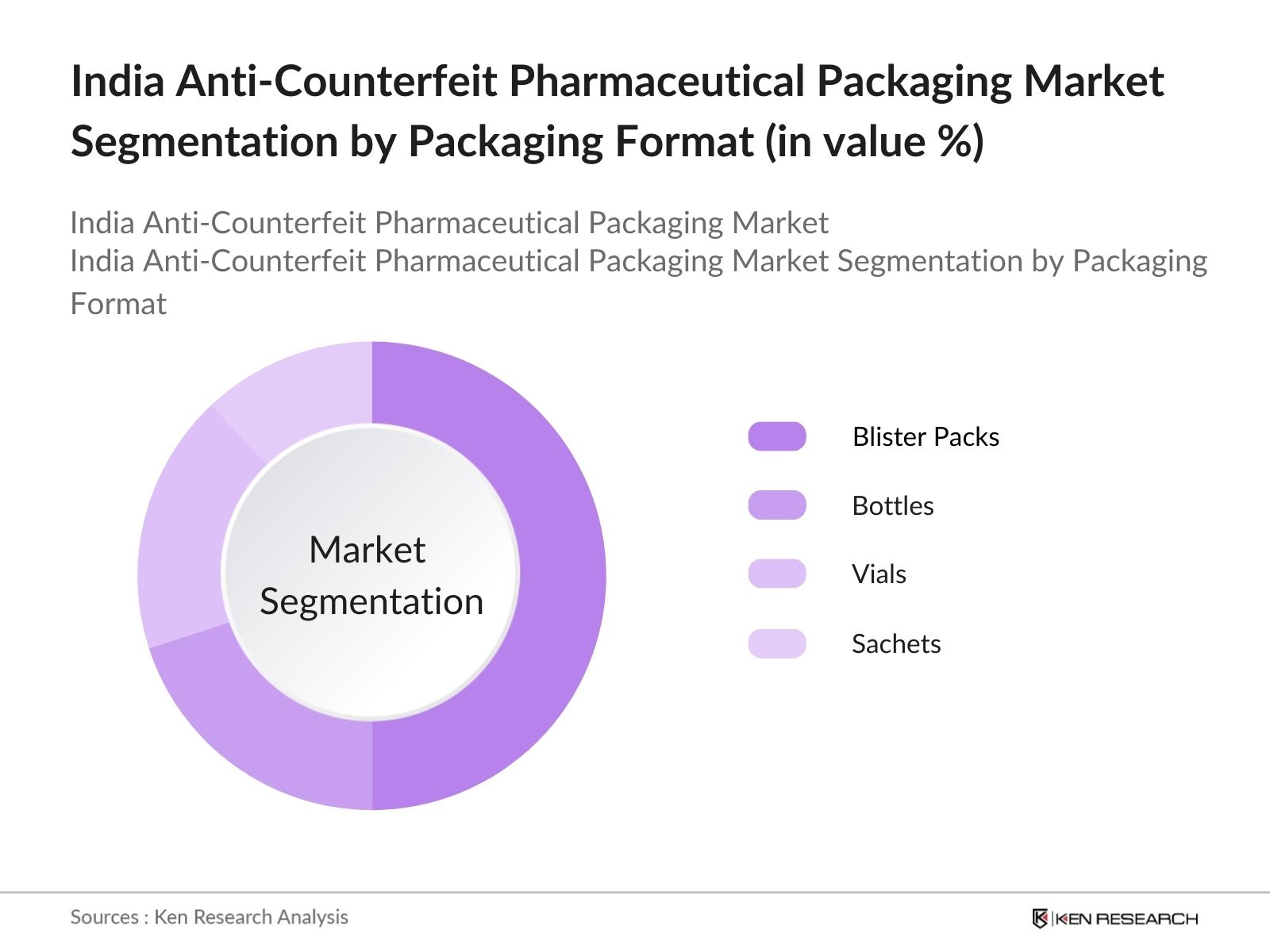
- By Packaging Format: The market in India is also segmented by packaging format into blister packs, bottles, vials, and sachets. Blister packs hold the largest market share, primarily due to their widespread use in pharmaceutical packaging and their ability to provide both tamper evidence and product protection. Blister packs offer superior visibility and security features, making it easier for manufacturers and consumers to detect tampering.
India Anti-Counterfeit Pharmaceutical Market Competitive Landscape
The market is characterized by the presence of several key players who drive innovation and competition. The market is dominated by large corporations that specialize in secure packaging technologies, along with smaller regional players offering niche solutions.
|
Company Name |
Establishment Year |
Headquarters |
|
3M Company |
1902 |
Minnesota, USA |
|
Amcor Limited |
1860 |
Zurich, Switzerland |
|
DuPont De Nemours, Inc. |
1802 |
Delaware, USA |
|
Avery Dennison Corporation |
1935 |
California, USA |
|
Authentix Inc. |
2003 |
Texas, USA |
India Anti-Counterfeit Pharmaceutical Market Analysis
Market Growth Drivers
- Stringent Regulatory Measures: Indias Central Drugs Standard Control Organization (CDSCO) has been actively strengthening its regulatory oversight on pharmaceutical products. In 2023, the government mandated QR codes and barcodes on all medicines, allowing for easy authentication. This step was part of a broader effort to ensure the integrity of the pharmaceutical supply chain.
- Rise in Counterfeit Drug Incidents India's pharmaceutical industry is grappling with the growing challenge of counterfeit drugs. As per a report by the Ministry of Commerce, over 15% of medicines in circulation are counterfeit, leading to health risks. The Indian pharmaceutical market, being one of the largest globally, faces increasing pressure to implement anti-counterfeiting technologies.
- Expanding Pharmaceutical Exports: Indias pharmaceutical export sector has seen robust growth, driven by demand from Africa, Southeast Asia, and the Middle East. In 2023, pharmaceutical exports from India have increased, with authorities emphasizing the importance of anti-counterfeiting measures to maintain quality standards in overseas markets. Countries importing Indian pharmaceuticals are demanding better product tracking systems to ensure the authenticity of imported drugs.
Market Restraints
- Fragmented Supply Chain: Indias pharmaceutical supply chain is highly fragmented, with over 10,000 manufacturers and 60,000 distributors, making it difficult to establish uniform anti-counterfeiting protocols. The lack of standardization across the supply chain poses challenges to monitoring and verifying products at every stage.
- Limited Awareness Among Rural Consumers: Rural regions in India, where over 600 million people reside, often lack awareness of counterfeit drug risks. This creates a challenge in ensuring the widespread adoption of anti-counterfeit measures, as rural consumers may not prioritize or have access to drug authentication technologies.
India Anti-Counterfeit Pharmaceutical Market Future Outlook
Over the next five years, the India Anti-Counterfeit Pharmaceutical Packaging industry is expected to show growth, driven by stringent regulatory frameworks, advancements in anti-counterfeit technologies, and rising consumer awareness. As counterfeit pharmaceutical products continue to threaten public health and safety, there will be an increasing focus on ensuring the authenticity and security of packaging solutions.
Future Market Opportunities
- Widespread Adoption of Blockchain Technology: Over the next five years, blockchain technology is expected to become a standard tool in the fight against counterfeit pharmaceuticals in India. By 2029, nearly all major pharmaceutical companies are projected to adopt blockchain for supply chain transparency, allowing real-time tracking of drug shipments.
- Increased Focus on Smart Packaging: By 2029, smart packaging solutions incorporating RFID, QR codes, and digital tags will become ubiquitous across Indias pharmaceutical sector. Smart packaging will enhance consumer confidence by allowing instant verification of a products authenticity. Over the next five years, major pharmaceutical companies are expected to invest heavily in developing tamper-evident packaging and digital verification tools that consumers can easily.
Scope of the Report
|
By Technology |
RFID Holograms Tamper Evident Seals Barcodes |
|
By Packaging Format |
Blister Packs Bottles Vials Sachets |
|
By Material Type |
Plastic Paperboard Glass Aluminum Foil |
|
By Application |
Prescription Drugs Over-the-Counter Drugs Biopharmaceuticals |
|
By End-User |
Pharmaceutical Manufacturers Hospitals and Clinics Pharmacies Online Pharmacies |
|
By Region |
North East West South |
Products
Key Target Audience Organizations and Entities Who Can Benefit by Subscribing This Report:
Pharmaceutical Manufacturers
Government and Regulatory Bodies (Central Drugs Standard Control Organization, Ministry of Health and Family Welfare)
Anti-Counterfeiting Solution Providers
Logistics and Supply Chain Companies
Investment and Venture Capital Firms
Hospitals and Healthcare Compaines
Companies
Players Mentioned in the Report:
3M Company
Amcor Limited
DuPont De Nemours, Inc.
Avery Dennison Corporation
Authentix Inc.
SICPA Holdings
Zebra Technologies
Sealed Air Corporation
Essentra PLC
SATO Holdings Corporation
UPM Raflatac
CCL Industries Inc.
OpSec Security
AlpVision
DuPont Authentication Solutions
Table of Contents
India Anti-Counterfeit Pharmaceutical Packaging Market Overview
1.1. Definition and Scope
1.2. Market Taxonomy
1.3. Market Growth Rate
1.4. Market Segmentation Overview
India Anti-Counterfeit Pharmaceutical Packaging Market Size (In USD Bn)
2.1. Historical Market Size
2.2. Year-On-Year Growth Analysis
2.3. Key Market Developments and Milestones
India Anti-Counterfeit Pharmaceutical Packaging Market Analysis
3.1. Growth Drivers
3.1.1. Increasing Incidents of Drug Counterfeiting
3.1.2. Stringent Government Regulations
3.1.3. Growing Consumer Awareness for Product Authentication
3.1.4. Rising Demand for Track & Trace Solutions
3.2. Market Challenges
3.2.1. High Implementation Costs of Anti-Counterfeit Solutions
3.2.2. Technological Complexity and Integration
3.2.3. Lack of Standardization in Anti-Counterfeit Packaging
3.3. Opportunities
3.3.1. Expansion of Online Pharmaceutical Sales
3.3.2. Adoption of Blockchain in Supply Chain Transparency
3.3.3. Government Support and Initiatives in Counterfeit Reduction
3.4. Trends
3.4.1. Integration of RFID and QR Code Technologies
3.4.2. Adoption of Tamper-Evident Packaging
3.4.3. Growing Demand for Biopharmaceutical Packaging with Authentication Features
3.5. Government Regulations
3.5.1. Drugs and Cosmetics Act Regulations on Counterfeit Prevention
3.5.2. Central Drugs Standard Control Organization (CDSCO) Guidelines
3.5.3. Pharmaceutical Serialisation Requirements
3.5.4. Track and Trace Regulations for Exports
3.6. SWOT Analysis
3.7. Stake Ecosystem
3.8. Porters Five Forces
3.9. Competition Ecosystem
India Anti-Counterfeit Pharmaceutical Packaging Market Segmentation
4.1. By Technology (In Value %)
4.1.1. RFID
4.1.2. Holograms
4.1.3. Tamper Evident Seals
4.1.4. Barcodes
4.2. By Packaging Format (In Value %)
4.2.1. Blister Packs
4.2.2. Bottles
4.2.3. Vials
4.2.4. Sachets
4.3. By Material Type (In Value %)
4.3.1. Plastic
4.3.2. Paperboard
4.3.3. Glass
4.3.4. Aluminum Foil
4.4. By Application (In Value %)
4.4.1. Prescription Drugs
4.4.2. Over-the-Counter Drugs
4.4.3. Biopharmaceuticals
4.5. By End-User (In Value %)
4.5.1. Pharmaceutical Manufacturers
4.5.2. Hospitals and Clinics
4.5.3. Pharmacies
4.5.4. Online Pharmacies
4.6. By Region (In Value %)
4.6.1. North
4.6.2. East
4.6.3. West
4.6.4. South
India Anti-Counterfeit Pharmaceutical Packaging Market Competitive Analysis
5.1 Detailed Profiles of Major Companies
5.1.1. 3M Company
5.1.2. Avery Dennison Corporation
5.1.3. Authentix Inc.
5.1.4. CCL Industries Inc.
5.1.5. Zebra Technologies
5.1.6. Amcor Limited
5.1.7. DuPont De Nemours, Inc.
5.1.8. SICPA Holdings
5.1.9. Essentra PLC
5.1.10. SATO Holdings Corporation
5.1.11. UPM Raflatac
5.1.12. OpSec Security
5.1.13. AlpVision
5.1.14. Avery Dennison
5.1.15. Sealed Air Corporation
5.2 Cross Comparison Parameters (Revenue, R&D Investment, Technology Portfolio, Product Innovation, Manufacturing Capacity, Regional Presence, Strategic Partnerships, Sustainability Efforts)
5.3 Market Share Analysis
5.4 Strategic Initiatives
5.5 Mergers and Acquisitions
5.6 Investment Analysis
5.7 Venture Capital Funding
5.8 Government Grants
5.9 Private Equity Investments
India Anti-Counterfeit Pharmaceutical Packaging Market Regulatory Framework
6.1. Regulatory Compliance for Pharmaceutical Packaging
6.2. Certification and Standards (ISO, ASTM)
6.3. Packaging Waste and Environmental Standards
India Anti-Counterfeit Pharmaceutical Packaging Future Market Size (In USD Bn)
7.1. Future Market Size Projections
7.2. Key Factors Driving Future Market Growth
India Anti-Counterfeit Pharmaceutical Packaging Future Market Segmentation
8.1. By Technology (In Value %)
8.2. By Packaging Format (In Value %)
8.3. By Material Type (In Value %)
8.4. By Application (In Value %)
8.5. By End-User (In Value %)
8.6. By Region (In Value %)
India Anti-Counterfeit Pharmaceutical Packaging Market Analysts Recommendations
9.1. TAM/SAM/SOM Analysis
9.2. Customer Cohort Analysis
9.3. White Space Opportunity Analysis
9.4. Strategic Marketing Initiatives
Disclaimer Contact UsResearch Methodology
Step 1: Identification of Key Variables
The initial step involves identifying the key variables influencing the India Anti-Counterfeit Pharmaceutical Packaging Market. This includes extensive desk research, gathering data from government agencies, industry reports, and proprietary databases, to ensure a comprehensive understanding of market dynamics.
Step 2: Market Analysis and Construction
Historical market data is analyzed to construct the growth trajectory of the market. This phase assesses market penetration rates, packaging solutions adoption, and anti-counterfeiting technologies, drawing on data from multiple sources.
Step 3: Hypothesis Validation and Expert Consultation
Market hypotheses are developed and validated through interviews with industry experts. These insights are critical for confirming market trends, growth drivers, and future outlooks, providing both operational and strategic information.
Step 4: Research Synthesis and Final Output
In this step, detailed insights from manufacturers, suppliers, and government bodies are synthesized to form the final report. The bottom-up approach is employed to validate and corroborate data, ensuring accuracy and reliability.
Frequently Asked Questions
01. How big is the India Anti-Counterfeit Pharmaceutical Packaging Market?
The India Anti-Counterfeit Pharmaceutical Packaging market is valued at USD 67 billion, driven by stringent government regulations and the growing demand for secure pharmaceutical products.
02. What are the challenges in the India Anti-Counterfeit Pharmaceutical Packaging Market?
Challenges in the India Anti-Counterfeit Pharmaceutical Packaging market include the high implementation costs of anti-counterfeit technologies, lack of standardization across the industry, and technological complexity in integrating solutions into the supply chain.
03. Who are the major players in the India Anti-Counterfeit Pharmaceutical Packaging Market?
Major players in the India Anti-Counterfeit Pharmaceutical Packaging market include 3M Company, Amcor Limited, DuPont De Nemours, Inc., Avery Dennison Corporation, and Authentix Inc., dominating due to their technological advancements and strong market presence.
04. What are the growth drivers of the India Anti-Counterfeit Pharmaceutical Packaging Market?
Growth in the India Anti-Counterfeit Pharmaceutical Packaging market is driven by increasing incidences of drug counterfeiting, strict government regulations, rising consumer awareness, and the adoption of advanced packaging technologies like RFID and QR codes.
05. What technologies are used in the India Anti-Counterfeit Pharmaceutical Packaging Market?
Key technologies in the India Anti-Counterfeit Pharmaceutical Packaging market include RFID, holograms, tamper-evident seals, and barcodes, all of which enhance the security of pharmaceutical products by making it harder for counterfeiters to replicate.
Why Buy From Us?

What makes us stand out is that our consultants follows Robust, Refine and Result (RRR) methodology. i.e. Robust for clear definitions, approaches and sanity checking, Refine for differentiating respondents facts and opinions and Result for presenting data with story

We have set a benchmark in the industry by offering our clients with syndicated and customized market research reports featuring coverage of entire market as well as meticulous research and analyst insights.

While we don't replace traditional research, we flip the method upside down. Our dual approach of Top Bottom & Bottom Top ensures quality deliverable by not just verifying company fundamentals but also looking at the sector and macroeconomic factors.

With one step in the future, our research team constantly tries to show you the bigger picture. We help with some of the tough questions you may encounter along the way: How is the industry positioned? Best marketing channel? KPI's of competitors? By aligning every element, we help maximize success.

Our report gives you instant access to the answers and sources that other companies might choose to hide. We elaborate each steps of research methodology we have used and showcase you the sample size to earn your trust.

If you need any support, we are here! We pride ourselves on universe strength, data quality, and quick, friendly, and professional service.