















India Bitumen Market Outlook to 2030
Region:Asia
Author(s):Samanyu
Product Code:KROD4147
November 2024
90
About the Report
India Bitumen Market Overview
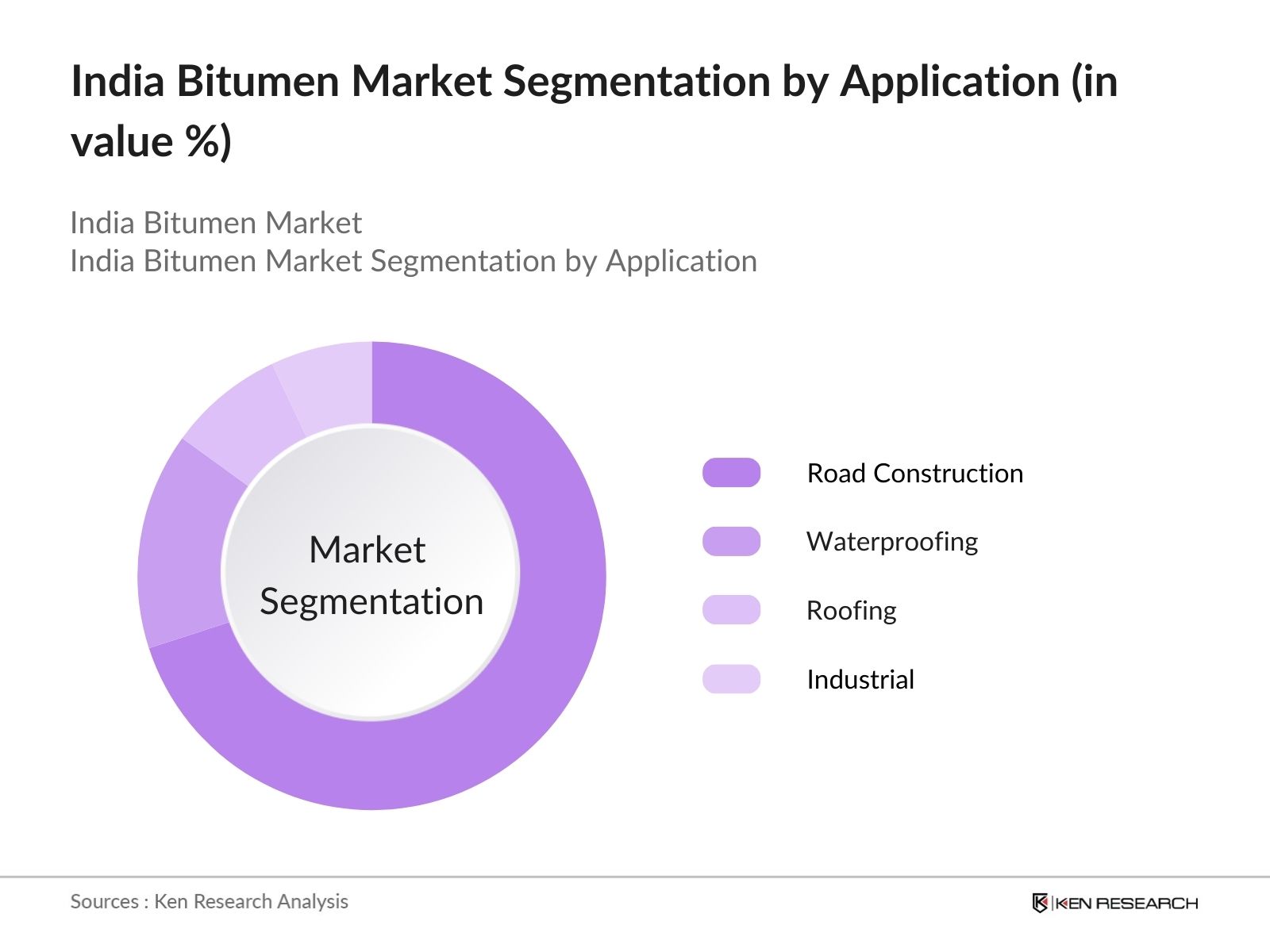
- The India Bitumen Market, driven by increasing infrastructure projects, particularly in road construction, is currently valued at USD 4.5 Bn. The demand for bitumen is driven by the rapid urbanization and expansion of the countrys road network under government initiatives like the Bharatmala Project and Smart Cities Mission. The road construction segment, accounting for over 70% of the market consumption, is expected to sustain growth, backed by continuous investments in national and state highways, expressways, and rural roads.
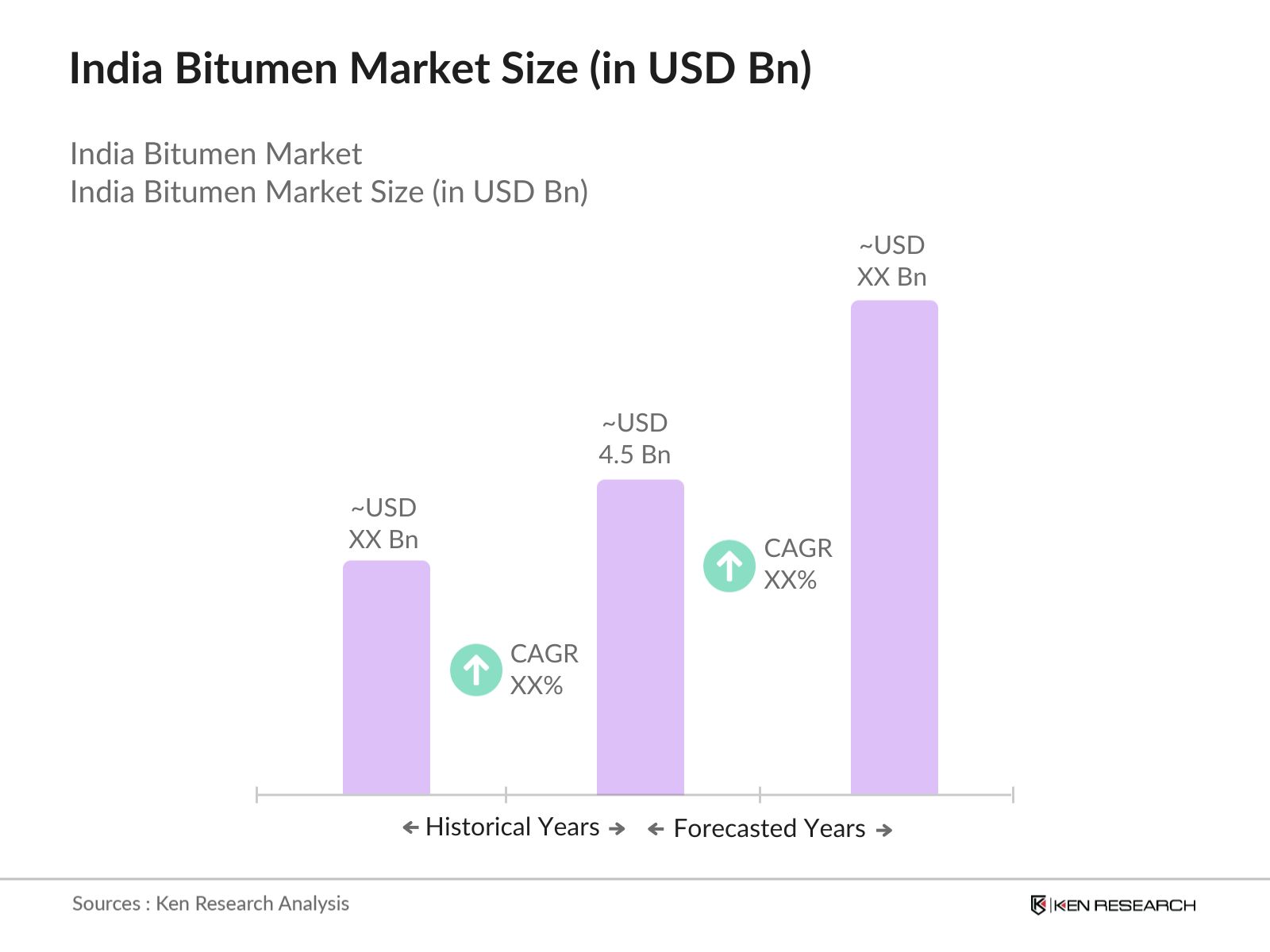
- Market is dominated by key regions such as Northern and Western India, driven by higher industrialization, urbanization, and the concentration of major construction activities. States like Maharashtra, Uttar Pradesh, and Gujarat are leading due to their large-scale road development projects and the presence of key industrial hubs. These regions benefit from better access to crude oil refineries, ensuring a steady supply of bitumen. Additionally, growing investment in rural infrastructure in Northern India further contributes to market dominance.
- The trend of adopting green bitumen technologies, including bio-bitumen and recycled bitumen, is growing in India. Bio-bitumen, made from renewable materials, aligns with Indias push towards sustainability. Indias bio-bitumen production has gained traction, especially in projects where eco-friendly construction is prioritized. Recycled bitumen, which reuses old asphalt, is also becoming popular in road repairs and maintenance, reducing raw material costs and environmental impact. Several state governments have mandated the use of recycled materials in road construction, further promoting the adoption of green technologies in the bitumen industry.
India Bitumen Market Segmentation
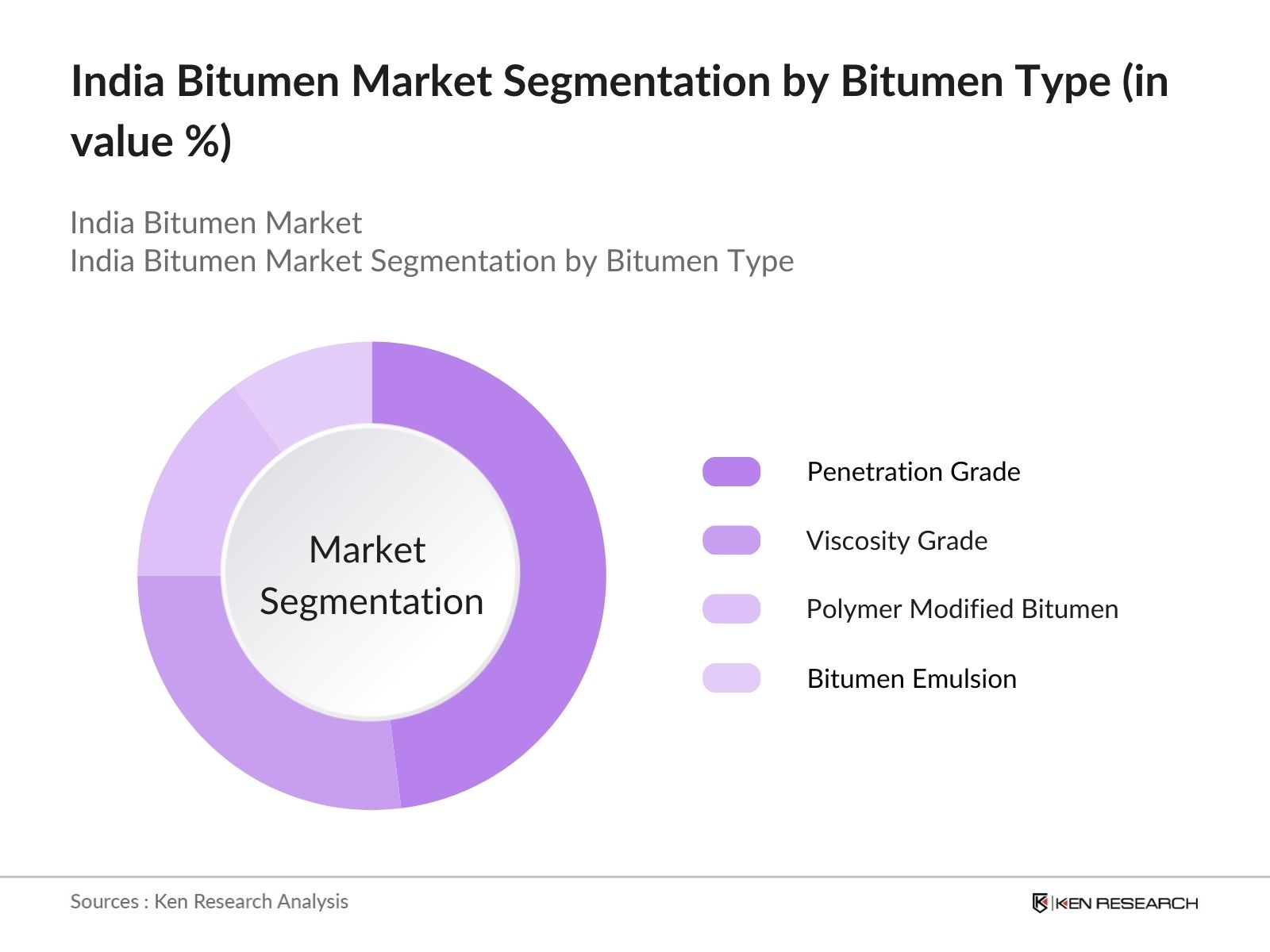
By Bitumen Type: The market is segmented by product type into penetration grade bitumen, viscosity grade bitumen, polymer-modified bitumen (PMB), and bitumen emulsion. Among these, penetration grade bitumen dominates the market, as it is primarily used in road construction due to its favorable properties in hot climates, making it well-suited for Indian road conditions. Government-led infrastructure projects, particularly highway constructions and rural road upgrades, have driven demand for penetration-grade bitumen over the years.
By Application: The market is also segmented by application into road construction, waterproofing, roofing, and industrial applications. Road construction has consistently held the largest share of the bitumen market in India. This is due to the government's heavy focus on improving road connectivity, coupled with ongoing and planned projects under the Bharatmala Pariyojana. The growing investment in road infrastructure, both in urban and rural areas, continues to support the dominant position of this sub-segment in the bitumen market.
India Bitumen Market Competitive Landscape
The India bitumen market is characterized by the dominance of a few large players, which include state-owned oil companies and a few private firms. These companies control bitumen production through their refinery operations. The market is highly concentrated in terms of production, with Indian Oil Corporation, Bharat Petroleum, and Hindustan Petroleum being the leading suppliers due to their extensive refining capacities and strong distribution networks across the country. These companies have established a significant presence through their ability to meet the bulk demand from large-scale infrastructure projects and through consistent innovations in bitumen technology, including polymer-modified bitumen and bitumen emulsions.
|
Company Name |
Establishment Year |
Headquarters |
Revenue (2023) |
Employees |
Production Capacity (MT) |
Key Projects |
Key Projects |
Technology Adoption |
|
Indian Oil Corporation (IOC) |
1959 |
New Delhi, India |
||||||
|
Bharat Petroleum Corporation Ltd. |
1952 |
Mumbai, India |
||||||
|
Hindustan Petroleum Corporation |
1974 |
Mumbai, India |
||||||
|
Shell Bitumen India |
1919 |
Bangalore, India |
||||||
|
Tiki Tar Industries |
1964 |
Mumbai, India |
India Bitumen Industry Analysis
Growth Drivers
- Infrastructure Development: India is heavily investing in infrastructure development, making it a key driver for the bitumen market. The government has allocated $110 billion for the Bharatmala Pariyojana, aimed at constructing 83,677 km of new highways across the country. Additionally, the government has targeted building 100 airports by 2024 under the UDAN scheme, bolstering airport infrastructure. The expansion of seaports under the Sagarmala project, with investments of over $30 billion, further boosts demand for bitumen, as road networks and port-related facilities increasingly rely on durable bituminous material for construction.
- Increasing Urbanization: India's urbanization rate is accelerating, with over 35% of the population now living in urban areas as of 2024. The country's urban population is expected to reach nearly 600 million by 2030. This rapid urban growth fuels demand for residential and commercial real estate, driving infrastructure development, including roads, parking lots, and building waterproofing, which are major consumers of bitumen. Furthermore, the construction of smart cities, under the Smart Cities Mission with a $7.5 billion investment, directly stimulates demand for bitumen products used in urban development projects across India.
- Smart Cities Mission and Bharatmala Project: Government initiatives such as the Smart Cities Mission and Bharatmala Project are critical in shaping the bitumen market. The Smart Cities Mission involves a $7.5 billion investment across 100 cities to improve infrastructure, including road networks, while Bharatmala focuses on highway development. These programs have significantly increased demand for bitumen products in road construction and maintenance. Additionally, India has committed to constructing over 60,000 km of highways by 2025, solidifying the governments role in fostering the bitumen market. These initiatives also align with the push for sustainable infrastructure, further emphasizing bitumen's relevance.
Market Challenges
- Volatility in Crude Oil Prices: Bitumen is derived from crude oil, and fluctuations in crude oil prices directly impact bitumen production costs. As of 2024, crude oil prices have been volatile, ranging between $70 and $90 per barrel, causing price uncertainty for bitumen manufacturers. India's reliance on crude oil imports, which stood at 4.7 million barrels per day in 2022, exacerbates the situation, affecting bitumen production and pricing. The volatility impacts construction costs, delaying infrastructure projects and curbing demand for bitumen, as contractors seek alternative, cost-effective materials.
- Environmental Regulations: India's focus on reducing carbon emissions and meeting sustainability targets, in line with the Paris Agreement, has introduced stricter environmental regulations on industries, including bitumen production. The government has set a target to cut emissions by 45% by 2030, and bitumen, being a by-product of petroleum, is scrutinized for its carbon footprint. Environmental regulations, such as the Environment Protection Rules, require bitumen producers to adopt cleaner production technologies. This has led to an increase in production costs and the need for technological upgrades in manufacturing facilities, posing a challenge to market growth.
India Bitumen Market Future Outlook
Over the next five years, the India Bitumen Market is expected to experience growth, driven by a strong focus on infrastructure development, urbanization, and government policies favoring road connectivity. The rapid expansion of national highways, the introduction of sustainable bitumen products like polymer-modified bitumen (PMB), and cold mix asphalt technology are expected to revolutionize the market. Further, growing exports to neighboring countries such as Nepal, Sri Lanka, and Bangladesh will provide additional growth opportunities for market players.
Future Market Opportunities
- Development of High-Performance Bitumen Products: There is a rising opportunity for high-performance bitumen products like Polymer Modified Bitumen (PMB) and emulsion-based bitumen in India. PMB is increasingly being used in highways due to its superior performance in extreme weather conditions, offering greater durability. Emulsion-based bitumen, which reduces environmental impact during road construction, is also gaining traction. India is witnessing the construction of approximately 13,000 km of roads annually under the Bharatmala project, which presents an opportunity for the use of these advanced bitumen products. The focus on quality and long-lasting roads supports this shift towards high-performance bitumen.
- Rising Demand in Rural Areas: Rural development in India, driven by government schemes like Pradhan Mantri Gram Sadak Yojana (PMGSY), offers significant growth opportunities for the bitumen market. The program has already led to the construction of over 600,000 km of rural roads. Tier 2 and 3 cities are also witnessing rapid infrastructure expansion, with plans to enhance connectivity and boost economic growth. This rise in rural road construction and urban expansion in smaller cities creates a substantial demand for bitumen, especially for low-cost, efficient road-building solutions.
Scope of the Report
|
By Bitumen Type |
Penetration Grade Viscosity Grade Polymer Modified Emulsion Bitumen |
|
By Application |
Road Construction Waterproofing Roofing Industrial |
|
By End-User |
Government and Infrastructure Private Construction Industrial Sector |
|
By Technology |
Hot Mix Asphalt Cold Mix Asphalt Recycled Asphalt |
|
By Region |
North South East West |
Products
Key Target Audience
Infrastructure Developers
Government Bodies (Indian Road Congress, NHAI)
Construction Companies
Bitumen Manufacturers
Raw Material Suppliers
Investments and Venture Capitalist Firms
Distributors and Resellers
Banks and Financial Institutes
Government and Regulatory Agencies (Ministry of Road Transport and Highways)
Companies
Major Players
Indian Oil Corporation Limited
Bharat Petroleum Corporation Limited
Hindustan Petroleum Corporation Limited
Shell Bitumen India
Tiki Tar Industries
Savita Oil Technologies Ltd.
Total S.A.
HPCL Mittal Energy Ltd.
Agarwal Industrial Corporation Ltd.
Phoenix Oil Products Ltd.
Gaurav Bitumen Industries Pvt. Ltd.
Polyglass Bitumen
Petronas Lubricants International
ExxonMobil Bitumen India Pvt. Ltd.
Juno Bitumix Pvt. Ltd.
Table of Contents
1. India Bitumen Market Overview
1.1. Definition and Scope (Types of Bitumen, Application Areas, Key End-Users)
1.2. Market Taxonomy (Bitumen Type, Penetration Grades, Viscosity Grades, Application, Region)
1.3. Market Growth Rate (CAGR, Volume in Kilotons, Market Value in USD Mn)
1.4. Market Segmentation Overview (Segments Based on Bitumen Type, Application, and Region)
2. India Bitumen Market Size (In USD Bn)
2.1. Historical Market Size (Revenue and Volume by Year, Segment-Wise Breakdown)
2.2. Year-On-Year Growth Analysis (Percentage Growth, YoY Market Expansion)
2.3. Key Market Developments and Milestones (Key Infrastructure Projects, Technological Advancements, Government Initiatives)
3. India Bitumen Market Analysis
3.1. Growth Drivers
3.1.1. Infrastructure Development (Roadways, Airports, Ports)
3.1.2. Increasing Urbanization (Rising Demand for Residential and Commercial Spaces)
3.1.3. Government Initiatives (Smart Cities Mission, Bharatmala Project)
3.1.4. Technological Advancements in Production and Usage
3.2. Restraints
3.2.1. Volatility in Crude Oil Prices (Impact on Bitumen Production Costs)
3.2.2. Environmental Regulations (Carbon Emissions, Sustainability Concerns)
3.2.3. Competition from Alternative Materials (Concrete Roads, Polymer Modified Bitumen)
3.3. Opportunities
3.3.1. Development of High-Performance Bitumen Products (Polymer Modified, Emulsion-Based)
3.3.2. Rising Demand in Rural Areas (New Road Constructions, Expansion in Tier 2 and 3 Cities)
3.3.3. Export Potential to Neighboring Countries (Sri Lanka, Bangladesh, Nepal)
3.4. Trends
3.4.1. Green Bitumen Production Technologies (Bio-Bitumen, Recycled Bitumen)
3.4.2. Growing Use of Bitumen in Waterproofing and Roofing Applications
3.4.3. Adoption of Cold Mix Asphalt Technology
3.5. Government Regulation
3.5.1. Indian Road Congress (IRC) Guidelines for Bitumen Usage
3.5.2. National Highway Authority of India (NHAI) Specifications
3.5.3. Environment Protection Rules
3.6. SWOT Analysis (Strengths, Weaknesses, Opportunities, Threats)
3.7. Stake Ecosystem (Suppliers, Manufacturers, Contractors, Government Bodies)
3.8. Porters Five Forces (Bargaining Power of Suppliers, Buyers, Threat of Substitutes, New Entrants, Industry Rivalry)
3.9. Competition Ecosystem (Bitumen Suppliers, Manufacturers, Contractors, Government Projects)
4. India Bitumen Market Segmentation
4.1. By Bitumen Type (In Value % and Volume %)
4.1.1. Penetration Grade Bitumen
4.1.2. Viscosity Grade Bitumen
4.1.3. Polymer Modified Bitumen
4.1.4. Emulsion Bitumen
4.2. By Application (In Value % and Volume %)
4.2.1. Road Construction
4.2.2. Waterproofing
4.2.3. Roofing
4.2.4. Industrial
4.3. By End-User (In Value %)
4.3.1. Government and Infrastructure Projects
4.3.2. Private Construction Firms
4.3.3. Industrial Sector
4.4. By Region (In Value %)
4.4.1. North
4.4.2. South
4.4.3. East
4.4.4. West
4.5. By Technology (In Value % and Volume %)
4.5.1. Hot Mix Asphalt
4.5.2. Cold Mix Asphalt
4.5.3. Recycled Asphalt
5. India Bitumen Market Competitive Analysis
5.1. Detailed Profiles of Major Competitors 5.1.1. Indian Oil Corporation Limited
5.1.2. Bharat Petroleum Corporation Limited (BPCL)
5.1.3. Hindustan Petroleum Corporation Limited (HPCL)
5.1.4. Shell Bitumen India
5.1.5. Tiki Tar Industries
5.1.6. Total S.A.
5.1.7. Oil and Natural Gas Corporation (ONGC)
5.1.8. Savita Oil Technologies Ltd.
5.1.9. HPCL Mittal Energy Ltd.
5.1.10. Agarwal Industrial Corporation Ltd.
5.1.11. Juno Bitumix Pvt. Ltd.
5.1.12. Gaurav Bitumen Industries Pvt. Ltd.
5.1.13. Phoenix Oil Products Ltd.
5.1.14. Polyglass Bitumen
5.1.15. Petronas Lubricants International
5.2. Cross Comparison Parameters (No. of Employees, Headquarters, Inception Year, Revenue, Market Share, Production Capacity)
5.3. Market Share Analysis (Top Competitors by Market Share, Market Penetration)
5.4. Strategic Initiatives (Partnerships, New Technology Development, Market Expansion Strategies)
5.5. Mergers and Acquisitions (Key Deals, Impact on Market Dynamics)
5.6. Investment Analysis (Foreign Direct Investments, Domestic Investments)
5.7. Venture Capital Funding (Key Investors, Notable Investments in Innovative Technologies)
5.8. Government Grants and Funding Programs
5.9. Private Equity Investments (Recent Investments, Key Players)
6. India Bitumen Market Regulatory Framework
6.1. Bureau of Indian Standards (BIS) Specifications for Bitumen
6.2. Indian Road Congress (IRC) Standards and Guidelines
6.3. Environmental Compliance Requirements (Pollution Control, Emissions Reduction)
6.4. Certification Processes (Quality Standards, Safety Certifications)
7. India Bitumen Market Future Projections (In USD Bn)
7.1. Future Market Size Projections (Revenue, Volume, Growth Rate)
7.2. Key Factors Driving Future Market Growth (Urbanization, Infrastructure
Development, Green Technologies)
8. India Bitumen Market Future Segmentation
8.1. By Bitumen Type (In Value % and Volume %)
8.2. By Application (In Value % and Volume %)
8.3. By End-User (In Value %)
8.4. By Technology (In Value % and Volume %)
8.5. By Region (In Value %)
9. India Bitumen Market Analysts Recommendations
9.1. TAM/SAM/SOM Analysis (Total Addressable Market, Serviceable Available Market, Serviceable Obtainable Market)
9.2. Customer Cohort Analysis (Key Customer Segments, Purchasing Patterns)
9.3. Marketing Initiatives (Targeted Marketing, Pricing Strategies, Distribution Channels)
9.4. White Space Opportunity Analysis (Emerging Markets, Underpenetrated Regions)
Disclaimer Contact UsResearch Methodology
Step 1: Identification of Key Variables
In the initial stage, we mapped out the entire India Bitumen Market ecosystem, including all major players and stakeholders. Our research leveraged proprietary databases and secondary sources to identify key variables such as production capacities, demand trends, and growth drivers.
Step 2: Market Analysis and Construction
In this phase, we analyzed historical data on market performance, covering key metrics like market size, demand and supply patterns, and pricing structures. We also assessed the penetration of bitumen products across various application areas such as road construction, roofing, and industrial uses.
Step 3: Hypothesis Validation and Expert Consultation
To validate our findings, we conducted interviews with industry experts from the leading bitumen manufacturers, infrastructure developers, and government bodies. These consultations provided insights into ongoing market trends and helped verify key assumptions.
Step 4: Research Synthesis and Final Output
Finally, all data was synthesized and cross-checked against insights from primary and secondary sources. This process ensured that the final report presents a comprehensive view of the market dynamics, accurate forecasts, and actionable recommendations for industry stakeholders.
Frequently Asked Questions
01. How big is the India Bitumen Market?
The India Bitumen Market is valued at USD 4.5 billion, driven by ongoing infrastructure projects and government investments in road construction and urban development.
02. What are the key challenges in the India Bitumen Market?
The India Bitumen Market faces challenges such as fluctuating crude oil prices, which impact the cost of bitumen production, and increasing environmental regulations aimed at reducing carbon emissions from bitumen processing.
03. Who are the major players in the India Bitumen Market?
Key players in India Bitumen Market include Indian Oil Corporation, Bharat Petroleum, Hindustan Petroleum, Shell Bitumen India, and Tiki Tar Industries, all of which dominate through their extensive refining capabilities and strong distribution networks.
04. What are the growth drivers of the India Bitumen Market?
Growth in India Bitumen Market is propelled by large-scale government projects such as the Bharatmala Pariyojana and the development of smart cities, coupled with increasing demand for urban and rural road construction.
Why Buy From Us?

What makes us stand out is that our consultants follows Robust, Refine and Result (RRR) methodology. i.e. Robust for clear definitions, approaches and sanity checking, Refine for differentiating respondents facts and opinions and Result for presenting data with story

We have set a benchmark in the industry by offering our clients with syndicated and customized market research reports featuring coverage of entire market as well as meticulous research and analyst insights.

While we don't replace traditional research, we flip the method upside down. Our dual approach of Top Bottom & Bottom Top ensures quality deliverable by not just verifying company fundamentals but also looking at the sector and macroeconomic factors.

With one step in the future, our research team constantly tries to show you the bigger picture. We help with some of the tough questions you may encounter along the way: How is the industry positioned? Best marketing channel? KPI's of competitors? By aligning every element, we help maximize success.

Our report gives you instant access to the answers and sources that other companies might choose to hide. We elaborate each steps of research methodology we have used and showcase you the sample size to earn your trust.

If you need any support, we are here! We pride ourselves on universe strength, data quality, and quick, friendly, and professional service.