
India Cabin Interior Market Outlook to 2030
Region:India
Author(s):Ananya Singh
Product Code:KROD8818
Region:India
Author(s):Ananya Singh
Product Code:KROD8818
October 2024
94
By Product Type: The India Cabin Interior Market is segmented by product type into seating systems, cabin lighting, in-flight entertainment systems, galley equipment, and lavatory systems. Among these, seating systems dominate the market due to their direct impact on passenger comfort and increasing airline investments in ergonomic designs to optimize space. Leading companies like RECARO Aircraft Seating and Safran have introduced innovative lightweight seat designs that enhance passenger comfort without compromising on cabin space. This has positioned seating systems as a crucial area of focus for airlines aiming to improve customer satisfaction.

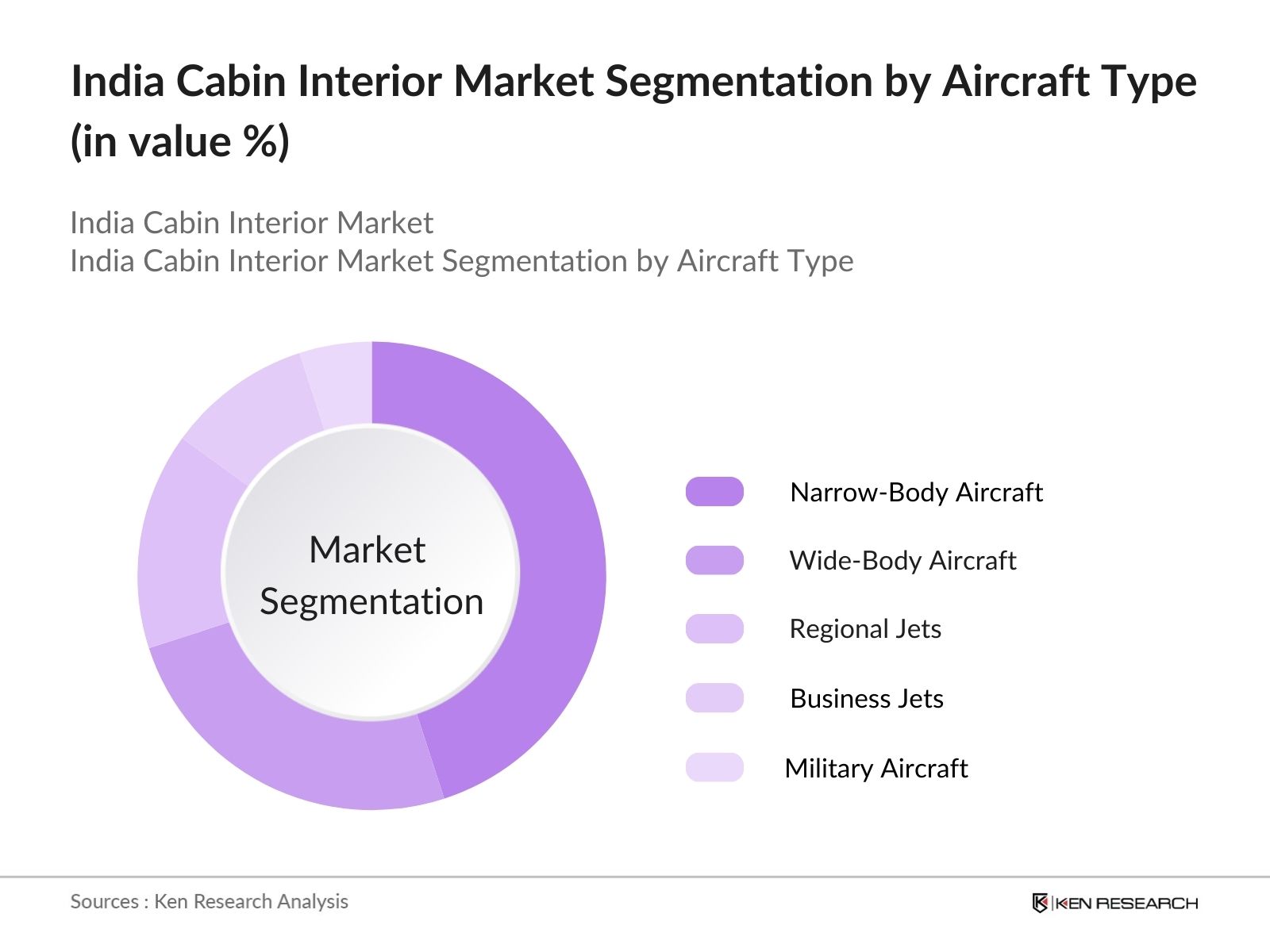
By Aircraft Type: The India Cabin Interior Market is segmented by aircraft type into narrow-body aircraft, wide-body aircraft, regional jets, business jets, and military aircraft. Narrow-body aircraft hold the largest market share due to the increasing demand for short-haul domestic flights and cost efficiency for airlines. Airlines such as IndiGo and SpiceJet primarily operate narrow-body fleets, making them the largest consumers of cabin interiors tailored for narrow-body aircraft. As these aircraft serve high-frequency domestic routes, the demand for durable and comfortable interiors continues to grow.
The India Cabin Interior Market is characterized by a competitive landscape dominated by a few key players. Leading global manufacturers have established strong footholds in India, supplying products to both commercial airlines and aircraft OEMs. These companies focus on offering innovative solutions that improve fuel efficiency, reduce overall aircraft weight, and enhance passenger experience.
|
Company Name |
Establishment Year |
Headquarters |
No. of Employees |
Revenue (2023) |
Product Portfolio |
Innovation Focus |
Key Clients |
|
Jamco Corporation |
1955 |
Tokyo, Japan |
|||||
|
Safran S.A. |
1905 |
Paris, France |
|||||
|
RECARO Aircraft Seating |
1906 |
Stuttgart, Germany |
|||||
|
Collins Aerospace |
2018 |
Charlotte, USA |
|||||
|
Diehl Stiftung & Co. KG |
1902 |
Nrnberg, Germany |
Market Growth Drivers
Market Challenges
Over the next five years, the India Cabin Interior Market is expected to experience robust growth due to increased investments in aviation infrastructure and fleet expansions. The governments initiatives to boost regional connectivity through the UDAN scheme, combined with rising air passenger traffic, are expected to create significant opportunities for cabin interior suppliers. Airlines are focusing on upgrading interiors to offer premium experiences even in economy classes, driving demand for advanced seating systems, smart cabin solutions, and innovative lighting systems.
The integration of sustainable materials, such as lightweight composites, and the growing adoption of IoT-enabled smart cabins are also anticipated to fuel market growth. This trend aligns with global efforts to improve energy efficiency and reduce the environmental impact of aviation.
Future Market Opportunities
|
Product Type |
Seating Systems |
|
Aircraft Type |
Narrow-body Aircraft |
|
End-User |
Airlines |
|
Material Type |
Composites |
|
Region |
North |
1.1. Definition and Scope
1.2. Market Taxonomy
1.3. Market Growth Rate
1.4. Market Segmentation Overview
2.1. Historical Market Size
2.2. Year-On-Year Growth Analysis
2.3. Key Market Developments and Milestones
3.1. Growth Drivers
3.1.1. Increased Air Passenger Traffic
3.1.2. Aircraft Deliveries
3.1.3. Airline Fleet Expansion
3.1.4. Growth in Commercial Aviation
3.2. Restraints
3.2.1. High Initial Investment Costs
3.2.2. Regulatory Compliance Costs
3.2.3. Volatility in Raw Material Prices
3.3. Opportunities
3.3.1. Advancement in Lightweight Cabin Materials
3.3.2. Emerging Markets in India
3.3.3. Expansion in Low-Cost Carriers
3.3.4. Customizable Cabin Designs
3.4. Trends
3.4.1. Adoption of Smart Cabins
3.4.2. Personalized In-Flight Entertainment
3.4.3. Use of Sustainable Materials
3.4.4. Integration with IoT
3.5. Government Regulations
3.5.1. Civil Aviation Authority Regulations
3.5.2. Safety Standards
3.5.3. Environmental Compliance
3.5.4. Aircraft Certification Requirements
3.6. SWOT Analysis
3.7. Stakeholder Ecosystem
3.8. Porters Five Forces
3.9. Competition Ecosystem
4.1. By Product Type (In Value %)
4.1.1. Seating Systems
4.1.2. Cabin Lighting
4.1.3. In-Flight Entertainment Systems
4.1.4. Galley Equipment
4.1.5. Lavatory Systems
4.2. By Aircraft Type (In Value %)
4.2.1. Narrow-body Aircraft
4.2.2. Wide-body Aircraft
4.2.3. Regional Jets
4.2.4. Business Jets
4.2.5. Military Aircraft
4.3. By End-User (In Value %)
4.3.1. Airlines
4.3.2. OEMs
4.3.3. MRO Providers
4.4. By Material Type (In Value %)
4.4.1. Composites
4.4.2. Metals
4.4.3. Plastics
4.4.4. Textiles
4.5. By Region (In Value %)
4.5.1. North
4.5.2. South
4.5.3. West
4.5.4. East
(No. of Employees, Headquarters, Inception Year, Revenue, Product Specialization, Customer Base)
6.1. Aviation Safety Standards
6.2. Environmental Compliance
6.3. Aircraft Certification Processes
6.4. Civil Aviation Authority Directives
7.1. Market Size Projections
7.2. Key Growth Drivers
7.3. Technological Advancements
8.1. By Product Type (In Value %)
8.2. By Aircraft Type (In Value %)
8.3. By End-User (In Value %)
8.4. By Material Type (In Value %)
8.5. By Region (In Value %)
9.1. TAM/SAM/SOM Analysis
9.2. Customer Cohort Analysis
9.3. Strategic Marketing Initiatives
9.4. White Space Opportunity Analysis
Disclaimer
Contact Us
The first step involves mapping out the entire ecosystem of stakeholders within the India Cabin Interior Market. This process relies heavily on desk research and analysis of secondary and proprietary databases, focusing on variables such as market size, segmentation, and key drivers.
In this phase, historical data regarding market penetration, supplier dynamics, and revenue generation in the India Cabin Interior Market is compiled and analyzed. The resulting data sets provide the foundation for understanding the current market environment and its future trajectory.
Market hypotheses will be validated through consultations with industry experts using computer-assisted telephone interviews (CATIs). These experts will provide valuable insights into operational strategies, technology adoption, and future market trends.
The final step involves integrating the validated data with market insights derived from airline operators, component suppliers, and OEMs. This synthesis ensures the accuracy and comprehensiveness of the final market report.
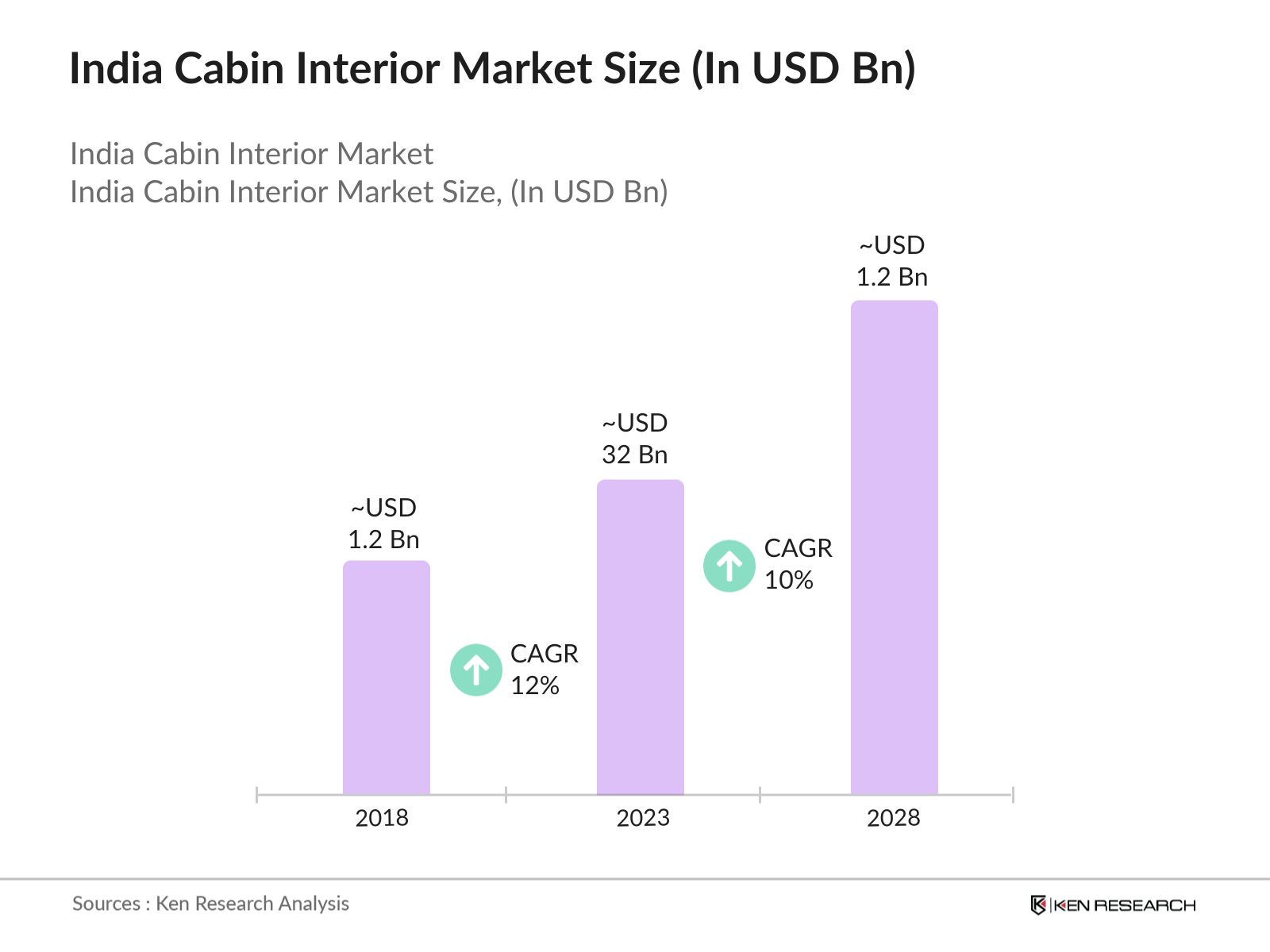
The India Cabin Interior Market was valued at INR 32 billion, driven by the expansion of airline fleets, increased air traffic, and rising demand for comfortable and innovative cabin interiors.
Challenges include fluctuating raw material prices, regulatory hurdles, and high initial investments required for cabin upgrades. Additionally, the market is heavily dependent on the overall health of the aviation industry.
Key players in the market include Jamco Corporation, Safran S.A., RECARO Aircraft Seating, Collins Aerospace, and Diehl Stiftung & Co. KG. These companies have a strong presence due to their innovative product portfolios and extensive industry experience.
The market is driven by increasing air passenger traffic, government initiatives to improve aviation infrastructure, and airline investments in upgrading cabin interiors to enhance passenger experience.

What makes us stand out is that our consultants follows Robust, Refine and Result (RRR) methodology. i.e. Robust for clear definitions, approaches and sanity checking, Refine for differentiating respondents facts and opinions and Result for presenting data with story

We have set a benchmark in the industry by offering our clients with syndicated and customized market research reports featuring coverage of entire market as well as meticulous research and analyst insights.

While we don't replace traditional research, we flip the method upside down. Our dual approach of Top Bottom & Bottom Top ensures quality deliverable by not just verifying company fundamentals but also looking at the sector and macroeconomic factors.

With one step in the future, our research team constantly tries to show you the bigger picture. We help with some of the tough questions you may encounter along the way: How is the industry positioned? Best marketing channel? KPI's of competitors? By aligning every element, we help maximize success.

Our report gives you instant access to the answers and sources that other companies might choose to hide. We elaborate each steps of research methodology we have used and showcase you the sample size to earn your trust.

If you need any support, we are here! We pride ourselves on universe strength, data quality, and quick, friendly, and professional service.