
India Crane Market Outlook to 2030
Region:India
Author(s):Vijay Kumar
Product Code:KROD6355
Region:India
Author(s):Vijay Kumar
Product Code:KROD6355
November 2024
96
Listen to the audio summary
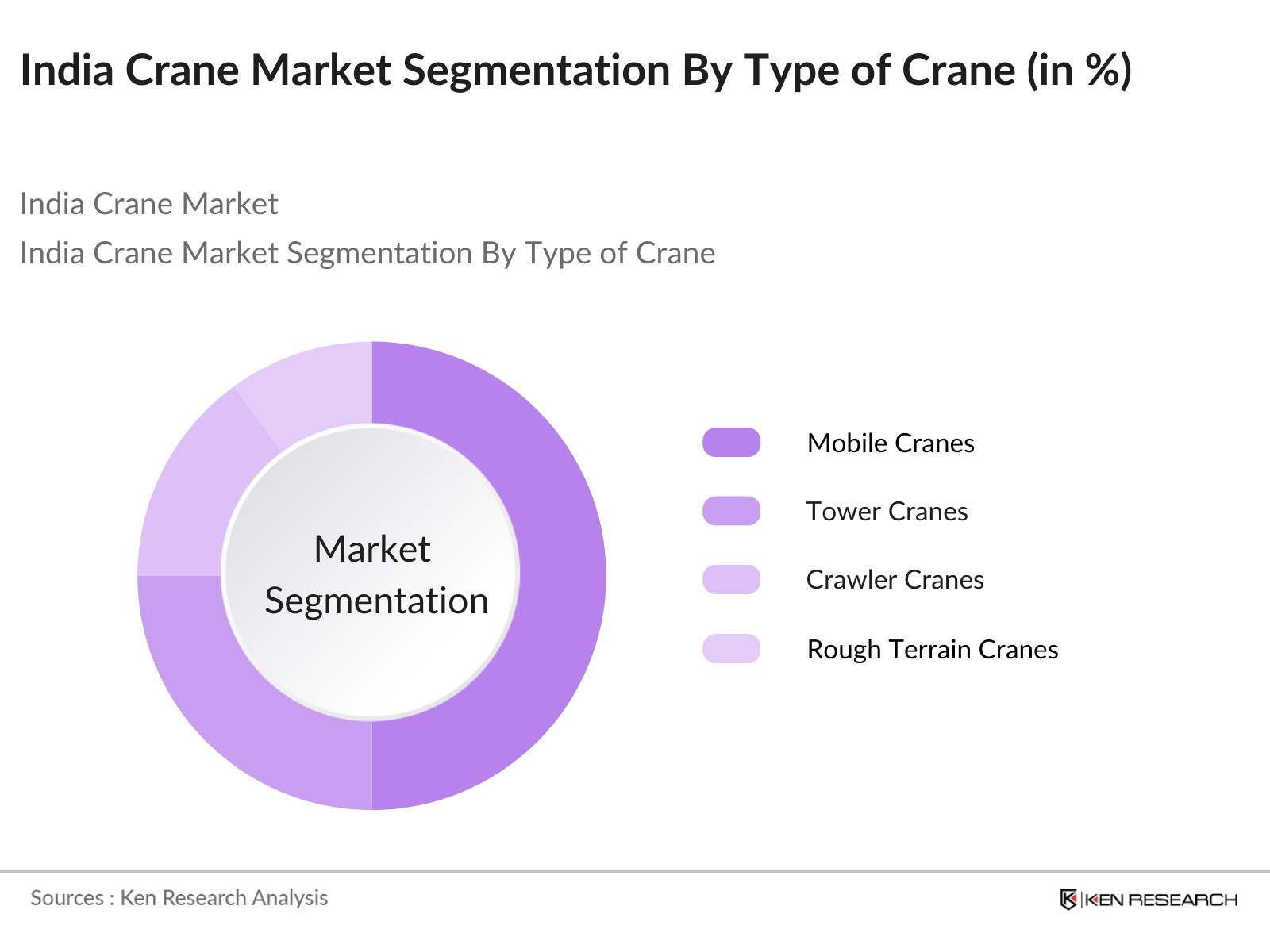
By Type of Crane: The India crane market is segmented by type of crane into mobile cranes, tower cranes, crawler cranes, rough terrain cranes, and all-terrain cranes. Among these, mobile cranes dominate the market due to their versatility, ease of transportation, and widespread use across construction, logistics, and infrastructure projects.
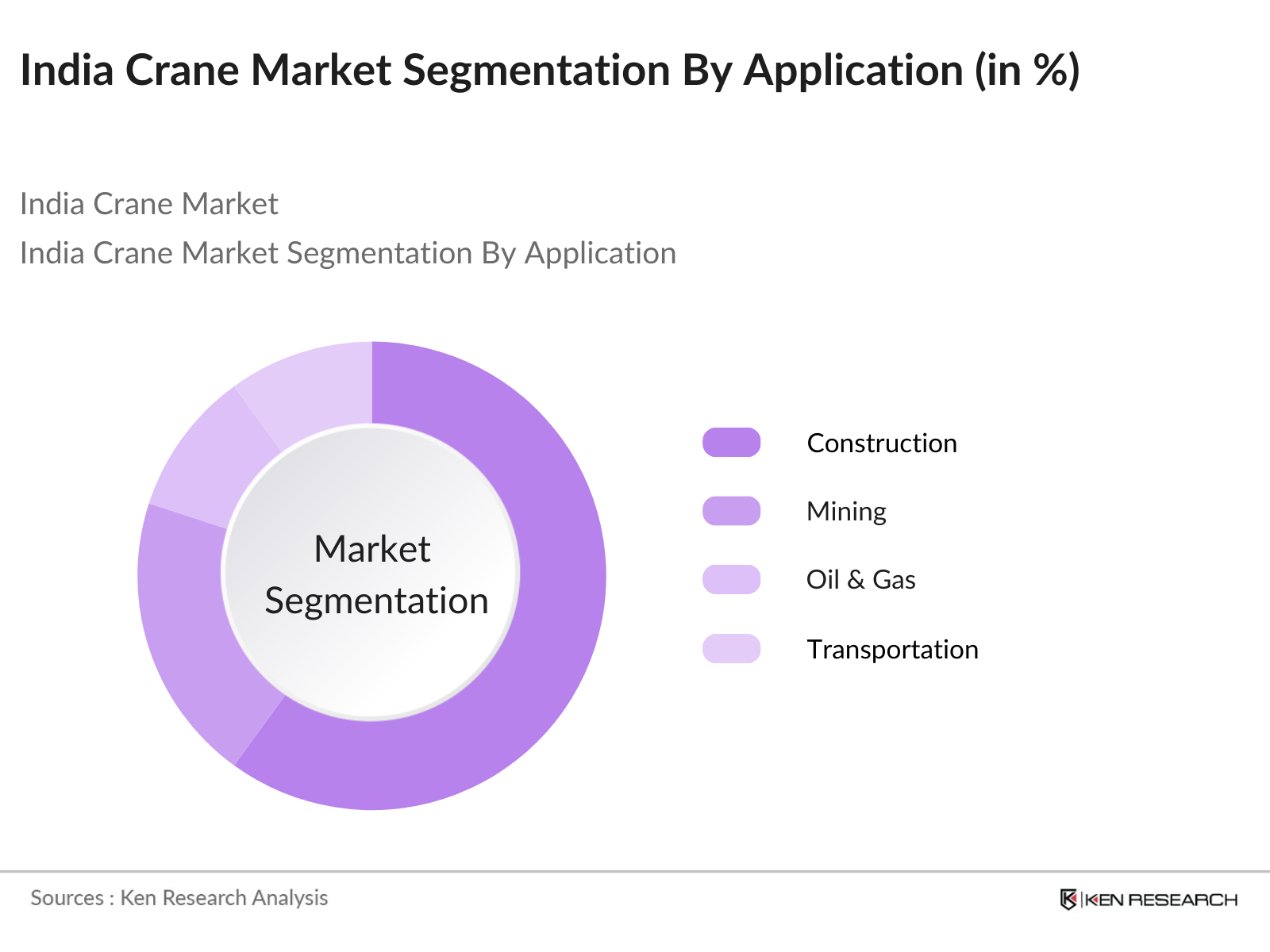
By Application: The crane market in India is also segmented by application into construction, mining, oil & gas, transportation, and utilities & infrastructure. The construction sector is the largest application segment, driven by ongoing infrastructure projects such as the development of highways, bridges, and residential complexes. The increased focus on urbanization and housing projects, along with government programs like Housing for All, has significantly increased the demand for cranes in construction.
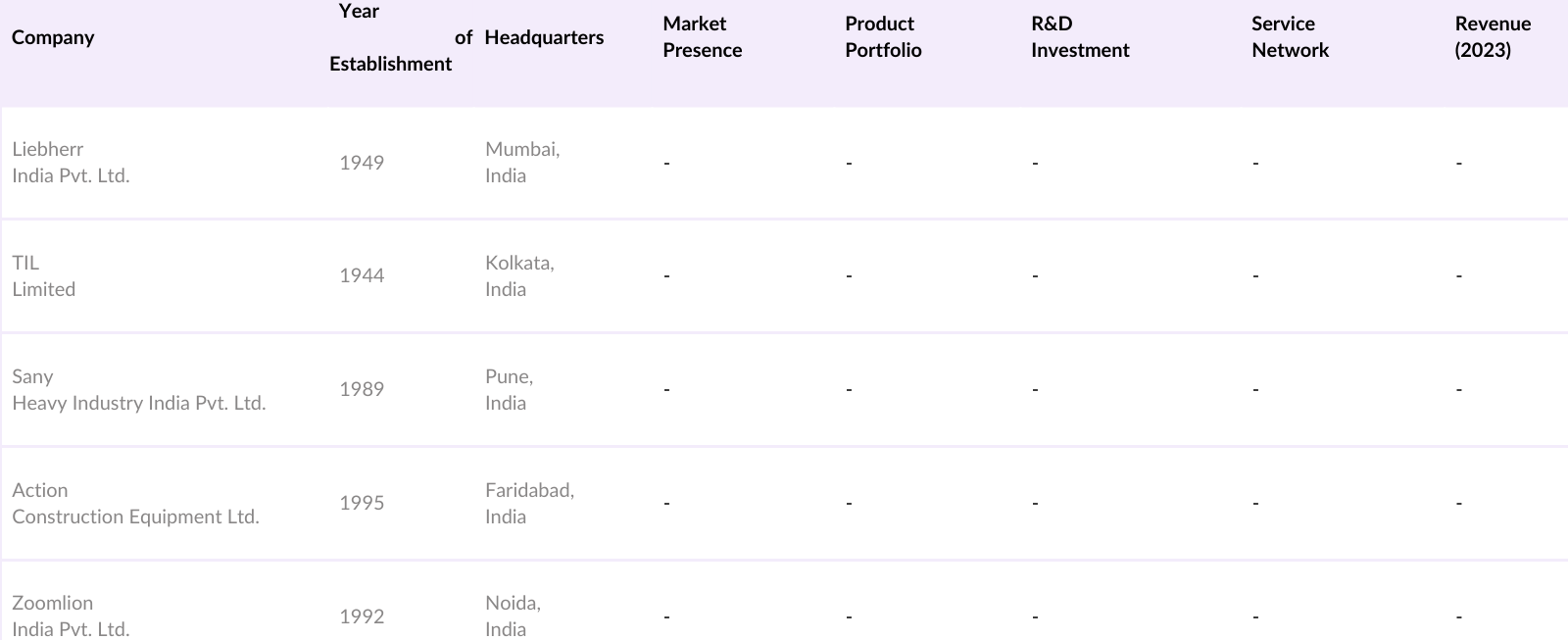
The India crane market is dominated by several key players who have established themselves with strong brand equity, expansive distribution networks, and technological innovations. The competitive landscape is characterized by both local and international companies, many of which have made strategic investments to capture larger market shares. These companies offer a broad portfolio of cranes catering to various industries, including construction, mining, and utilities.
The India crane market is expected to experience significant growth over the next five years, driven by ongoing infrastructure developments, the expansion of the construction sector, and increasing government initiatives aimed at modernizing the countrys transportation and urban infrastructure. Furthermore, advancements in crane technologies such as automation, hybrid engines, and the integration of IoT solutions for predictive maintenance will further enhance operational efficiency and reduce costs, making cranes an essential component in upcoming projects across various industries.
|
By Type of Crane |
Mobile Cranes Tower Cranes Crawler Cranes Rough Terrain Cranes All-Terrain Cranes |
|
By Application |
Construction Mining Oil & Gas Transportation Utilities & Infrastructure |
|
By Capacity |
Upto 20 Tons 20 to 100 Tons 100 to 200 Tons Above 200 Tons |
|
By Operation Type |
Manual Cranes Semi-Automated Cranes Fully Automated Cranes |
|
By Region |
North India South India East India West India |
1.1. Definition and Scope
1.2. Market Taxonomy
1.3. Market Growth Rate
1.4. Market Segmentation Overview
2.1. Historical Market Size
2.2. Year-On-Year Growth Analysis
2.3. Key Market Developments and Milestones
3.1. Growth Drivers
3.1.1. Infrastructure Development (Government Investments, Smart Cities)
3.1.2. Expansion in Construction Sector (Housing, Commercial, Industrial Projects)
3.1.3. Rise in Demand for Heavy Machinery (Industrial Expansion, Warehousing Growth)
3.1.4. Government Policies (Make in India, National Infrastructure Pipeline)
3.2. Market Challenges
3.2.1. High Initial Costs of Cranes (CapEx, Maintenance)
3.2.2. Fluctuations in Steel Prices (Raw Material Costs, Supply Chain)
3.2.3. Shortage of Skilled Operators (Training, Certification)
3.3. Opportunities
3.3.1. Technological Advancements (Automation, Remote Monitoring)
3.3.2. Growing Leasing and Rental Markets (Cost-Effectiveness, Short-Term Projects)
3.3.3. Market Penetration in Tier II & III Cities (Urbanization, Industrial Expansion)
3.4. Trends
3.4.1. Electrification and Hybrid Cranes (Sustainability, Energy Efficiency)
3.4.2. Integration of IoT and AI (Predictive Maintenance, Operational Efficiency)
3.4.3. Expansion of Crane Rental Services (Short-Term Demand, Flexible Solutions)
3.5. Government Regulations
3.5.1. Construction Safety Standards (BIS, OSHA Compliance)
3.5.2. Heavy Equipment Import & Export Policies (Customs Duties, Trade Regulations)
3.5.3. Environmental Regulations (Emission Norms, Sustainability Initiatives)
3.6. SWOT Analysis
3.7. Stakeholder Ecosystem
3.8. Porters Five Forces Analysis
3.9. Competition Ecosystem
4.1. By Type of Crane (In Value %) 4.1.1. Mobile Cranes
4.1.2. Tower Cranes
4.1.3. Crawler Cranes
4.1.4. Rough Terrain Cranes
4.1.5. All-Terrain Cranes
4.2. By Application (In Value %) 4.2.1. Construction
4.2.2. Mining
4.2.3. Oil & Gas
4.2.4. Transportation
4.2.5. Utilities & Infrastructure
4.3. By Capacity (In Value %) 4.3.1. Upto 20 Tons
4.3.2. 20 to 100 Tons
4.3.3. 100 to 200 Tons
4.3.4. Above 200 Tons
4.4. By Operation Type (In Value %) 4.4.1. Manual Cranes
4.4.2. Semi-Automated Cranes
4.4.3. Fully Automated Cranes
4.5. By Region (In Value %) 4.5.1. North India
4.5.2. South India
4.5.3. East India
4.5.4. West India
5.1. Detailed Profiles of Major Companies
5.1.1. Liebherr India Pvt. Ltd.
5.1.2. TIL Limited
5.1.3. Sany Heavy Industry India Pvt. Ltd.
5.1.4. Action Construction Equipment Ltd.
5.1.5. Manitowoc Cranes India Pvt. Ltd.
5.1.6. Zoomlion India Pvt. Ltd.
5.1.7. Terex Corporation India
5.1.8. Konecranes India Pvt. Ltd.
5.1.9. Kobelco Cranes India Pvt. Ltd.
5.1.10. Escorts Construction Equipment
5.1.11. ElectroMech Material Handling Systems
5.1.12. ACE Cranes & Equipment
5.1.13. Hitachi Construction Machinery India
5.1.14. Bharat Earth Movers Limited (BEML)
5.1.15. Caterpillar India Pvt. Ltd.
5.2. Cross Comparison Parameters (Annual Revenue, Market Share, Regional Presence, No. of Employees, Production Capacity, Distribution Network, Service Contracts, R&D Investment)
5.3. Market Share Analysis
5.4. Strategic Initiatives
5.5. Mergers & Acquisitions
5.6. Investment Analysis
5.7. Venture Capital Funding
5.8. Government Grants
5.9. Private Equity Investments
6.1. Safety & Compliance Standards
6.2. Import/Export Licensing
6.3. Certification & Licensing for Operators
6.4. Environmental & Sustainability Regulations
7.1. Future Market Size Projections
7.2. Key Factors Driving Future Market Growth
8.1. By Type of Crane (In Value %)
8.2. By Application (In Value %)
8.3. By Capacity (In Value %)
8.4. By Operation Type (In Value %)
8.5. By Region (In Value %)
9.1. Total Addressable Market (TAM), Serviceable Available Market (SAM), Serviceable Obtainable Market (SOM) Analysis
9.2. Customer Cohort Analysis
9.3. Marketing Strategies
9.4. White Space Opportunity Analysis
This initial phase involves a comprehensive analysis of the Indian crane market's key variables, which include industry size, growth drivers, technological trends, and competitive dynamics. We gather secondary data from credible sources, industry reports, and government databases to identify market-specific trends.
In this step, historical data regarding crane usage in India, industry revenue trends, and demand drivers are analyzed. The data helps us estimate the market size and assess future growth potential by segmenting the market based on the type of crane, application, and region.
We consult with industry experts, crane manufacturers, and major construction firms through interviews to validate our market hypotheses. This step includes cross-checking industry insights to ensure accuracy and reliability in data interpretation.
This phase involves synthesizing all collected data into a cohesive market report, verifying findings through a bottom-up approach to ensure accuracy. We present insights into market size, competitive landscape, future outlook, and key growth drivers.
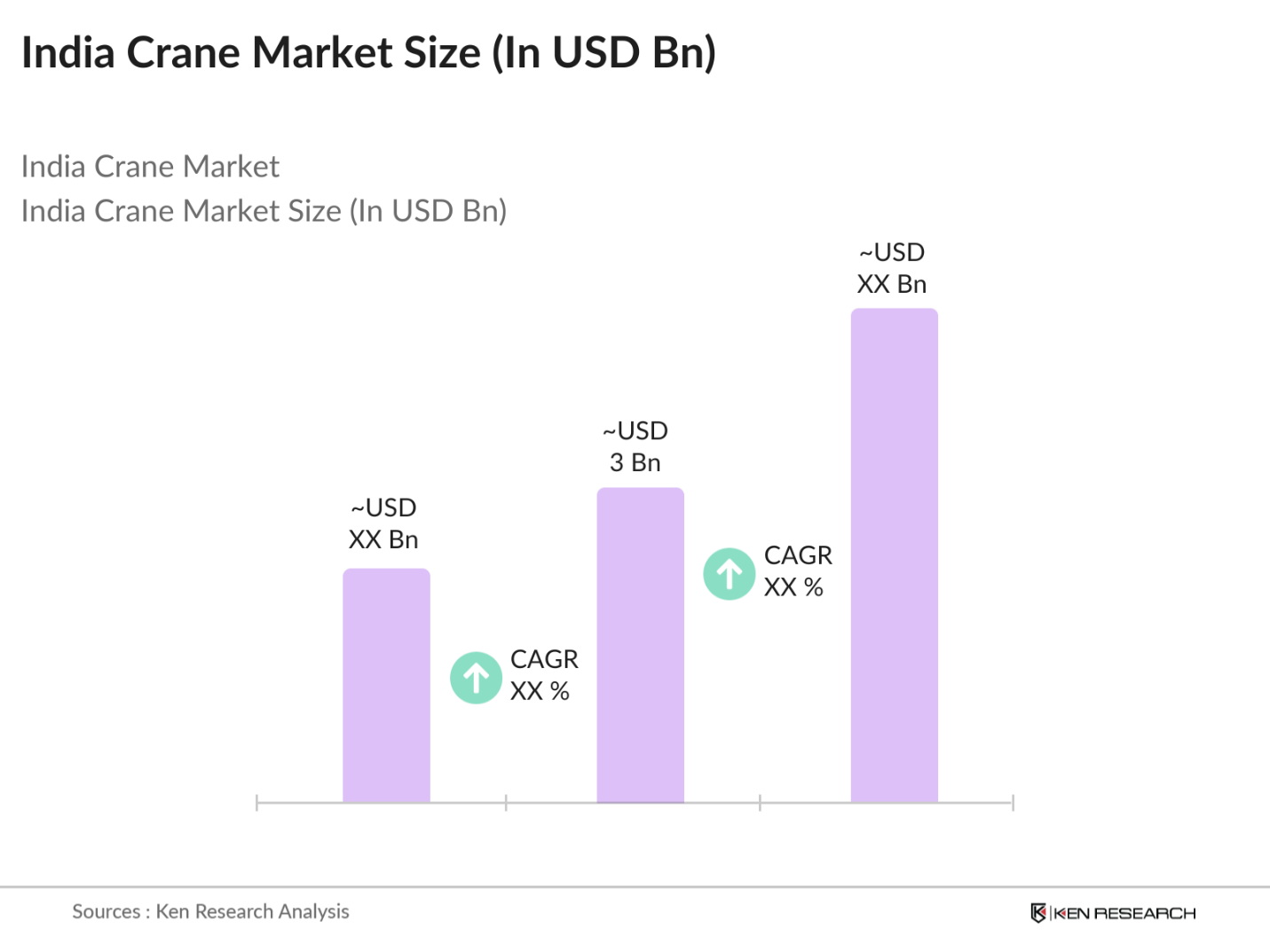
The India crane market is valued at USD 3 billion, based on a five-year historical analysis. This market is primarily driven by infrastructure projects, including the expansion of highways, bridges, and urban real estate developments.
Key challenges in the India crane market include fluctuating steel prices, high initial investment costs, and a shortage of skilled crane operators, which limit the adoption of advanced crane technologies.
Major players include Liebherr India Pvt. Ltd., TIL Limited, Sany Heavy Industry India Pvt. Ltd., Action Construction Equipment Ltd., and Zoomlion India Pvt. Ltd. These companies dominate due to their strong presence in both local and global markets, along with their wide product offerings.
Growth drivers include rapid urbanization, government initiatives such as the National Infrastructure Pipeline, and the increasing use of advanced technologies in crane manufacturing, such as automation and hybrid engines.

What makes us stand out is that our consultants follows Robust, Refine and Result (RRR) methodology. i.e. Robust for clear definitions, approaches and sanity checking, Refine for differentiating respondents facts and opinions and Result for presenting data with story

We have set a benchmark in the industry by offering our clients with syndicated and customized market research reports featuring coverage of entire market as well as meticulous research and analyst insights.

While we don't replace traditional research, we flip the method upside down. Our dual approach of Top Bottom & Bottom Top ensures quality deliverable by not just verifying company fundamentals but also looking at the sector and macroeconomic factors.

With one step in the future, our research team constantly tries to show you the bigger picture. We help with some of the tough questions you may encounter along the way: How is the industry positioned? Best marketing channel? KPI's of competitors? By aligning every element, we help maximize success.

Our report gives you instant access to the answers and sources that other companies might choose to hide. We elaborate each steps of research methodology we have used and showcase you the sample size to earn your trust.

If you need any support, we are here! We pride ourselves on universe strength, data quality, and quick, friendly, and professional service.