
India Crop Protection Chemicals Market Outlook to 2030
Region:India
Author(s):Sanjeev
Product Code:KROD3775
Region:India
Author(s):Sanjeev
Product Code:KROD3775
November 2024
90
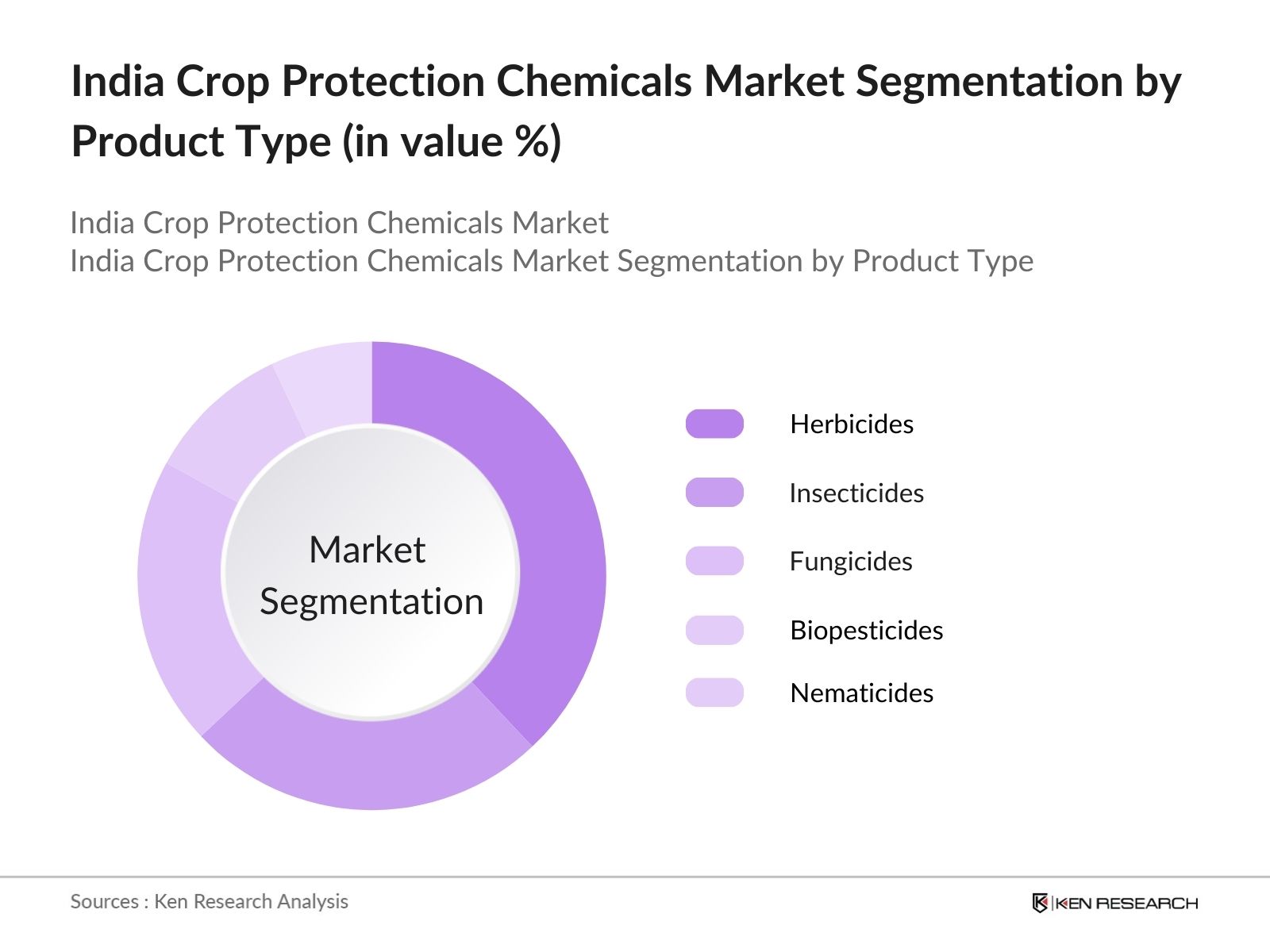
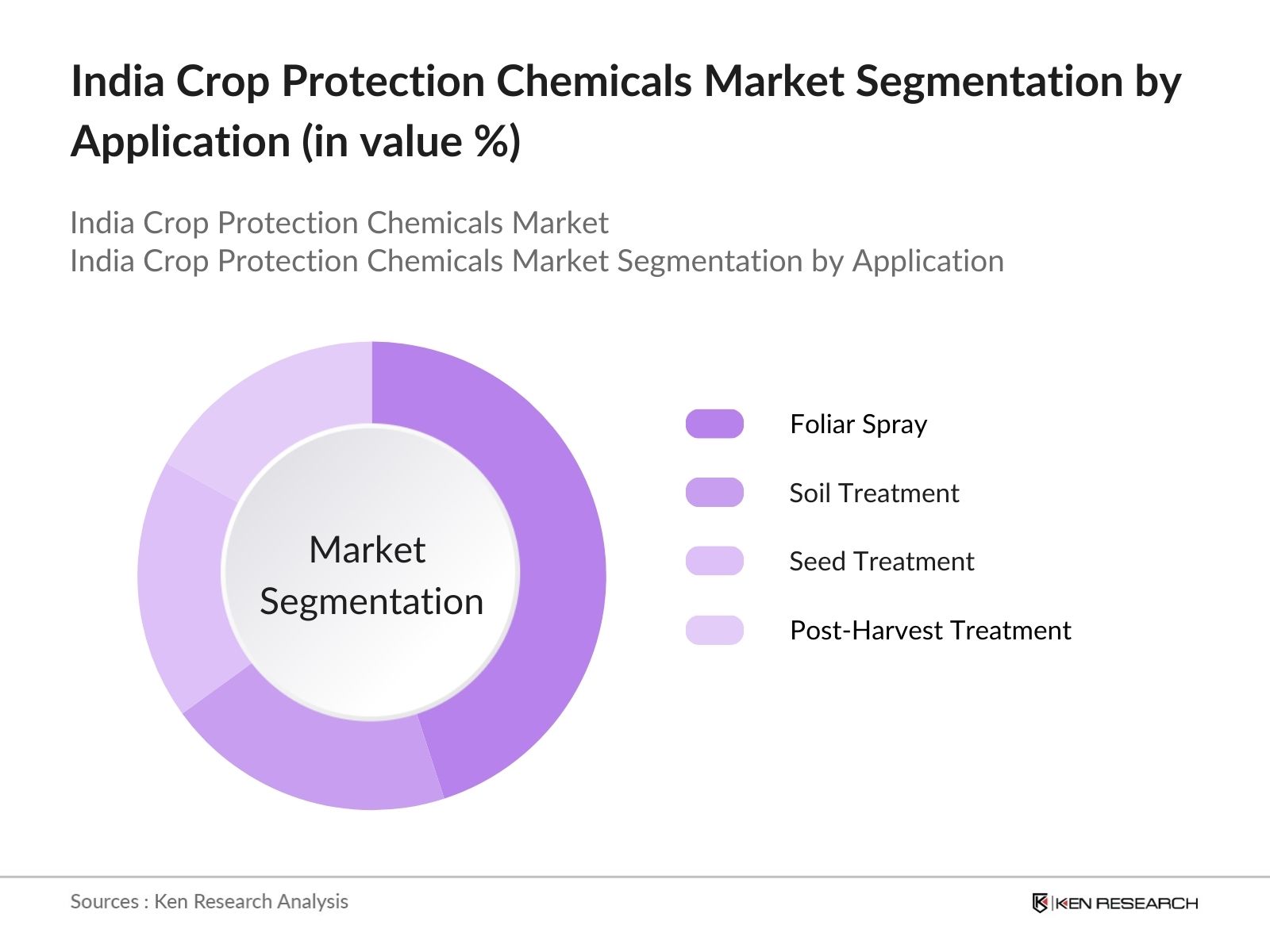
The India Crop Protection Chemicals market is segmented by product type and by mode of application.
The India Crop Protection Chemicals market is dominated by both domestic and multinational players, reflecting a consolidation of market power among a few major companies. These firms benefit from strong distribution networks, extensive product portfolios, and continuous investment in R&D to develop eco-friendly solutions. Key competitors are leveraging government support for sustainable agriculture to maintain their competitive edge.
|
Company |
Established |
Headquarters |
Product Range |
Revenue (2023) |
No. of Employees |
|
UPL Limited |
1969 |
Mumbai, India |
|||
|
Bayer CropScience Ltd |
1863 |
Leverkusen, Germany |
|||
|
Syngenta India |
2000 |
Basel, Switzerland |
|||
|
BASF India |
1865 |
Ludwigshafen, Germany |
|||
|
PI Industries |
1947 |
Udaipur, India |
Over the next five years, the India Crop Protection Chemicals market is expected to experience steady growth, driven by increased demand for sustainable agricultural practices and higher food production needs. Government regulations supporting eco-friendly products and the growing adoption of biopesticides will also play a pivotal role in market expansion. Technological innovations such as precision farming and digital agriculture are set to redefine pest control methods, ensuring better crop yields and resource optimization for farmers across the country.
|
Herbicides Insecticides Fungicides Bio-Pesticides Nematicides |
|
|
By Distribution Channel |
Liquid Formulation Solid Formulation |
|
By Application |
Cereals and Grains Fruits and Vegetables Pulses and Oilseeds Commercial Crops |
|
By Consumer Group |
Foliar Spray Soil Treatment Seed Treatment Post-Harvest Treatment |
|
By Region |
North East West South |
1.1. Definition and Scope
1.2. Market Taxonomy
1.3. Market Growth Rate
1.4. Market Segmentation Overview
2.1. Historical Market Size
2.2. Year-On-Year Growth Analysis
2.3. Key Market Developments and Milestones
3.1. Growth Drivers
3.1.1. Rising Demand for Food Security
3.1.2. Increasing Adoption of Sustainable Farming Practices
3.1.3. Government Initiatives and Subsidies for Farmers
3.1.4. Growth in Agrochemical Exports
3.2. Market Challenges
3.2.1. Stringent Regulatory Policies and Environmental Concerns
3.2.2. Resistance Development in Pests
3.2.3. High Costs of Research and Development
3.3. Opportunities
3.3.1. Adoption of Bio-based Crop Protection Solutions
3.3.2. Growing Demand for Integrated Pest Management (IPM) Solutions
3.3.3. Expansion in Untapped Rural Markets
3.4. Trends
3.4.1. Shift Toward Organic Crop Protection Solutions
3.4.2. Technological Innovations in Application Methods
3.4.3. Rise in Precision Farming Techniques
3.5. Government Regulations
3.5.1. Pesticide Management Bill
3.5.2. Crop Insurance Schemes and Subsidies
3.5.3. Ban on Harmful Chemicals and Shifts to Eco-Friendly Alternatives
3.6. SWOT Analysis
3.7. Stakeholder Ecosystem
3.8. Porters Five Forces
3.9. Competition Ecosystem
4.1. By Product Type (In Value %)
4.1.1. Herbicides
4.1.2. Insecticides
4.1.3. Fungicides
4.1.4. Bio-Pesticides
4.1.5. Nematicides
4.2. By Formulation (In Value %)
4.2.1. Liquid Formulation
4.2.2. Solid Formulation
4.3. By Crop Type (In Value %)
4.3.1. Cereals and Grains
4.3.2. Fruits and Vegetables
4.3.3. Pulses and Oilseeds
4.3.4. Commercial Crops
4.4. By Mode of Application (In Value %)
4.4.1. Foliar Spray
4.4.2. Soil Treatment
4.4.3. Seed Treatment
4.4.4. Post-Harvest Treatment
4.5. By Region (In Value %)
4.5.1. North India
4.5.2. South India
4.5.3. East India
4.5.4. West India
5.1. Detailed Profiles of Major Competitors
5.1.1. UPL Limited
5.1.2. Bayer CropScience Limited
5.1.3. Syngenta India
5.1.4. BASF India
5.1.5. PI Industries
5.1.6. Rallis India Limited
5.1.7. Adama India
5.1.8. Sumitomo Chemical India Pvt Ltd
5.1.9. Dhanuka Agritech Ltd
5.1.10. Excel Crop Care Ltd
5.1.11. NACL Industries Ltd
5.1.12. Insecticides India Ltd
5.1.13. Corteva Agriscience India Pvt Ltd
5.1.14. Gharda Chemicals
5.1.15. FMC India Pvt Ltd
5.2. Cross Comparison Parameters (R&D Investment, Market Share, Manufacturing Capacity, Geographic Reach, Product Portfolio, Environmental Sustainability Initiatives, Distribution Network, Digital Agriculture Solutions)
5.3. Market Share Analysis
5.4. Strategic Initiatives
5.5. Mergers And Acquisitions
5.6. Investment Analysis
5.7. Venture Capital Funding
5.8. Government Grants
5.9. Private Equity Investments
6.1. Compliance Requirements
6.2. Certification Processes
6.3. Environmental Standards
7.1. Future Market Size Projections
7.2. Key Factors Driving Future Market Growth
8.1. By Product Type (In Value %)
8.2. By Formulation (In Value %)
8.3. By Crop Type (In Value %)
8.4. By Mode of Application (In Value %)
8.5. By Region (In Value %)
9.1. TAM/SAM/SOM Analysis
9.2. Customer Cohort Analysis
9.3. Marketing Initiatives
9.4. White Space Opportunity Analysis
The initial phase of research involves mapping out the entire ecosystem of stakeholders within the India Crop Protection Chemicals market. By conducting extensive desk research, using proprietary databases, and analyzing government reports, key variables such as product innovation, regulatory frameworks, and end-user behaviors are identified.
This stage includes compiling historical data and trends within the crop protection chemicals sector. Key factors analyzed include the application rates of chemicals, agricultural yield improvements, and regional crop protection dynamics. Quantitative data from agricultural reports is integrated to refine market estimations.
Industry-specific hypotheses, particularly around product adoption and geographic influence, are validated through consultations with crop scientists, industry experts, and agrochemical company executives. These insights ensure the reliability and accuracy of the market forecasts.
The final phase integrates data obtained from market participants and secondary sources, including product trends, regional analysis, and expert consultations. This step ensures a comprehensive and well-rounded perspective on the India Crop Protection Chemicals market, resulting in a thoroughly vetted report.
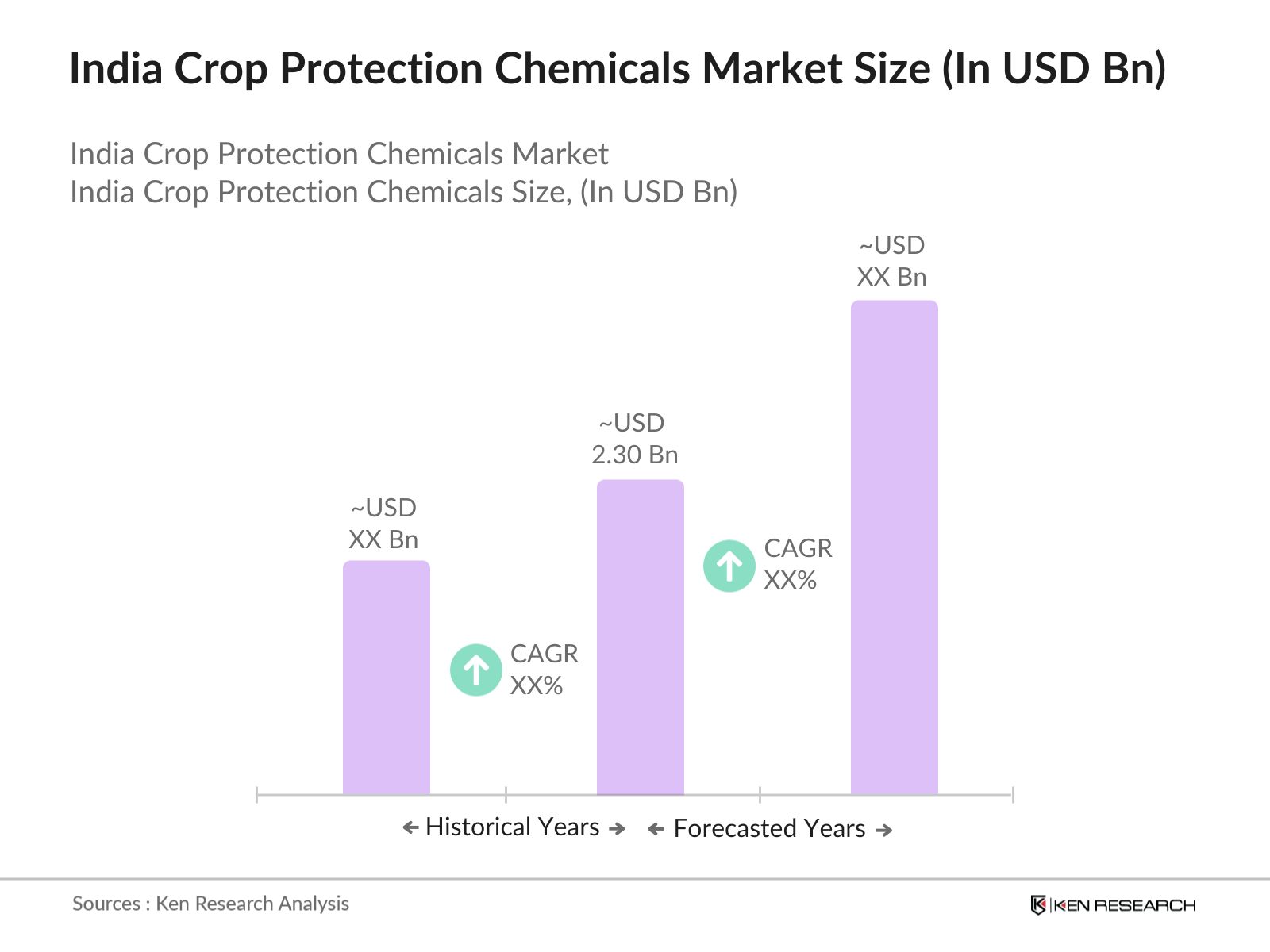
The India Crop Protection Chemicals market is valued at INR 2.30 billion, driven by the need for higher agricultural productivity and government support for modern farming techniques.
Challenges in India Crop Protection Chemicals market include stringent regulatory policies, the rising threat of pest resistance, and the high costs associated with R&D in developing sustainable crop protection products.
Key players in the India Crop Protection Chemicals market include UPL Limited, Bayer CropScience, Syngenta India, and BASF India, among others, with dominance due to their extensive product portfolios and strong distribution networks.
The India Crop Protection Chemicals market is propelled by the need for food security, advancements in agrochemical technology, and government initiatives aimed at improving agricultural productivity and promoting sustainable farming.
Key trends in India Crop Protection Chemicals market include a shift towards biopesticides, increased adoption of precision farming techniques, and innovations in eco-friendly chemical formulations aimed at minimizing environmental impact.

What makes us stand out is that our consultants follows Robust, Refine and Result (RRR) methodology. i.e. Robust for clear definitions, approaches and sanity checking, Refine for differentiating respondents facts and opinions and Result for presenting data with story

We have set a benchmark in the industry by offering our clients with syndicated and customized market research reports featuring coverage of entire market as well as meticulous research and analyst insights.

While we don't replace traditional research, we flip the method upside down. Our dual approach of Top Bottom & Bottom Top ensures quality deliverable by not just verifying company fundamentals but also looking at the sector and macroeconomic factors.

With one step in the future, our research team constantly tries to show you the bigger picture. We help with some of the tough questions you may encounter along the way: How is the industry positioned? Best marketing channel? KPI's of competitors? By aligning every element, we help maximize success.

Our report gives you instant access to the answers and sources that other companies might choose to hide. We elaborate each steps of research methodology we have used and showcase you the sample size to earn your trust.

If you need any support, we are here! We pride ourselves on universe strength, data quality, and quick, friendly, and professional service.