
India Cryogenic Tanker Market Outlook to 2030
Region:Asia
Author(s):Shubham
Product Code:KROD2789
October 2024
87
About the Report
India Cryogenic Tanker Market Overview
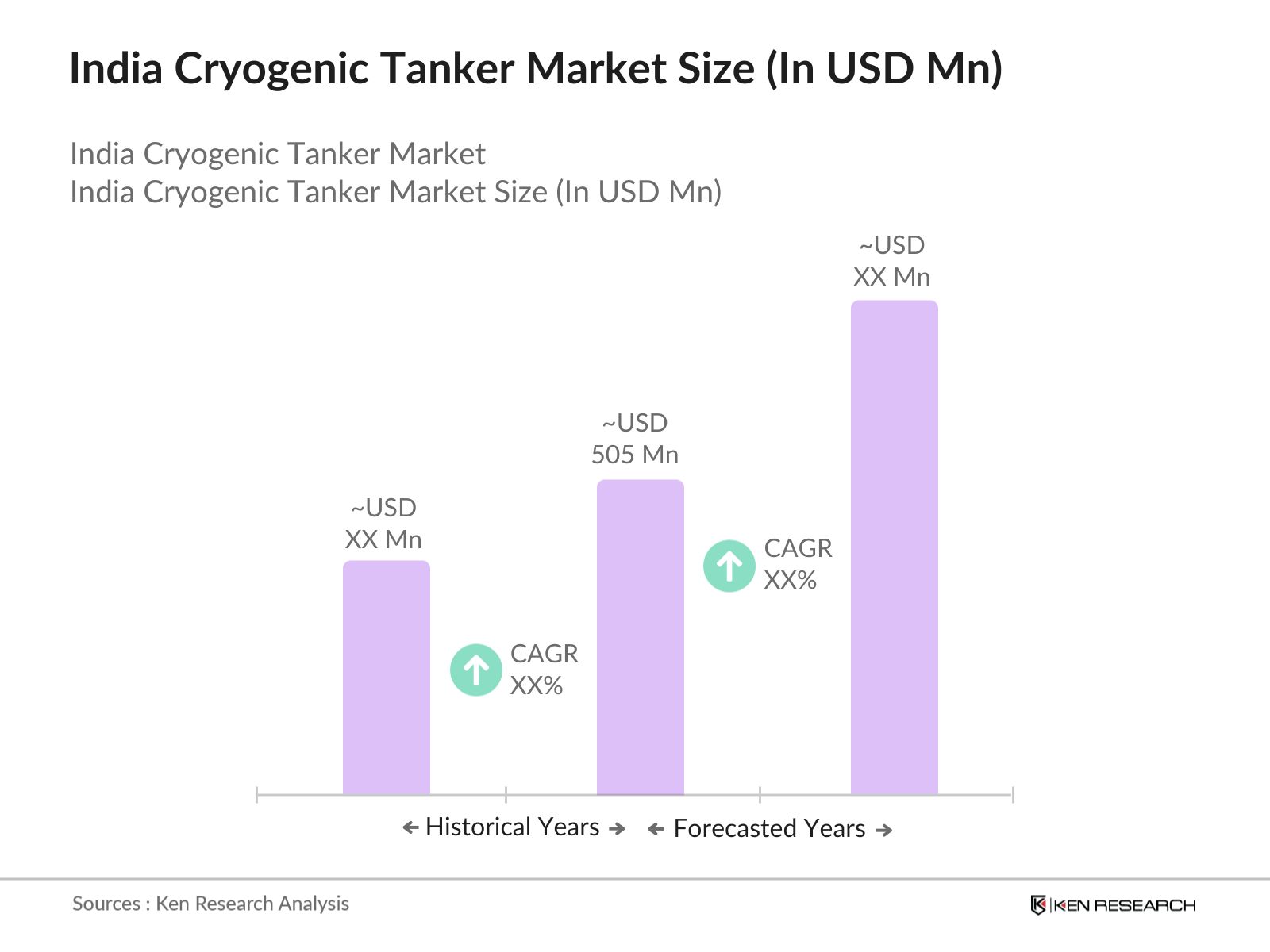
- The India Cryogenic Tanker market is estimated to be valued at USD 505 million based on a five-year historical analysis. This market growth is largely driven by the increasing demand for the transportation of liquefied gases such as liquid nitrogen, liquid oxygen, and liquid natural gas (LNG) for various industrial applications. Cryogenic tankers play a crucial role in safely transporting these gases at extremely low temperatures. Growth in sectors like healthcare, chemicals, and energy is further fueling market expansion.
- Major urban centers such as Mumbai, Delhi, and Bengaluru are experiencing high demand due to their industrial growth, advanced healthcare facilities, and emerging energy infrastructure. Additionally, these cities serve as logistical hubs, providing easy access to industrial corridors where cryogenic tankers are required for the efficient transport of liquefied gases. Rural demand is also on the rise, particularly for LNG and medical oxygen, driven by infrastructure development and healthcare initiatives in less urbanized regions.
- Government policies aimed at strengthening India's energy security and improving healthcare infrastructure have also been instrumental in shaping the market. The National Gas Grid expansion and various incentives for cleaner energy alternatives have significantly contributed to the adoption of LNG, thus driving the demand for cryogenic tankers. Furthermore, during the COVID-19 pandemic, the Indian government implemented strategic measures to ensure the smooth supply of medical oxygen, further bolstering the demand for cryogenic tankers in the healthcare sector.
India Cryogenic Tanker Market Segmentation
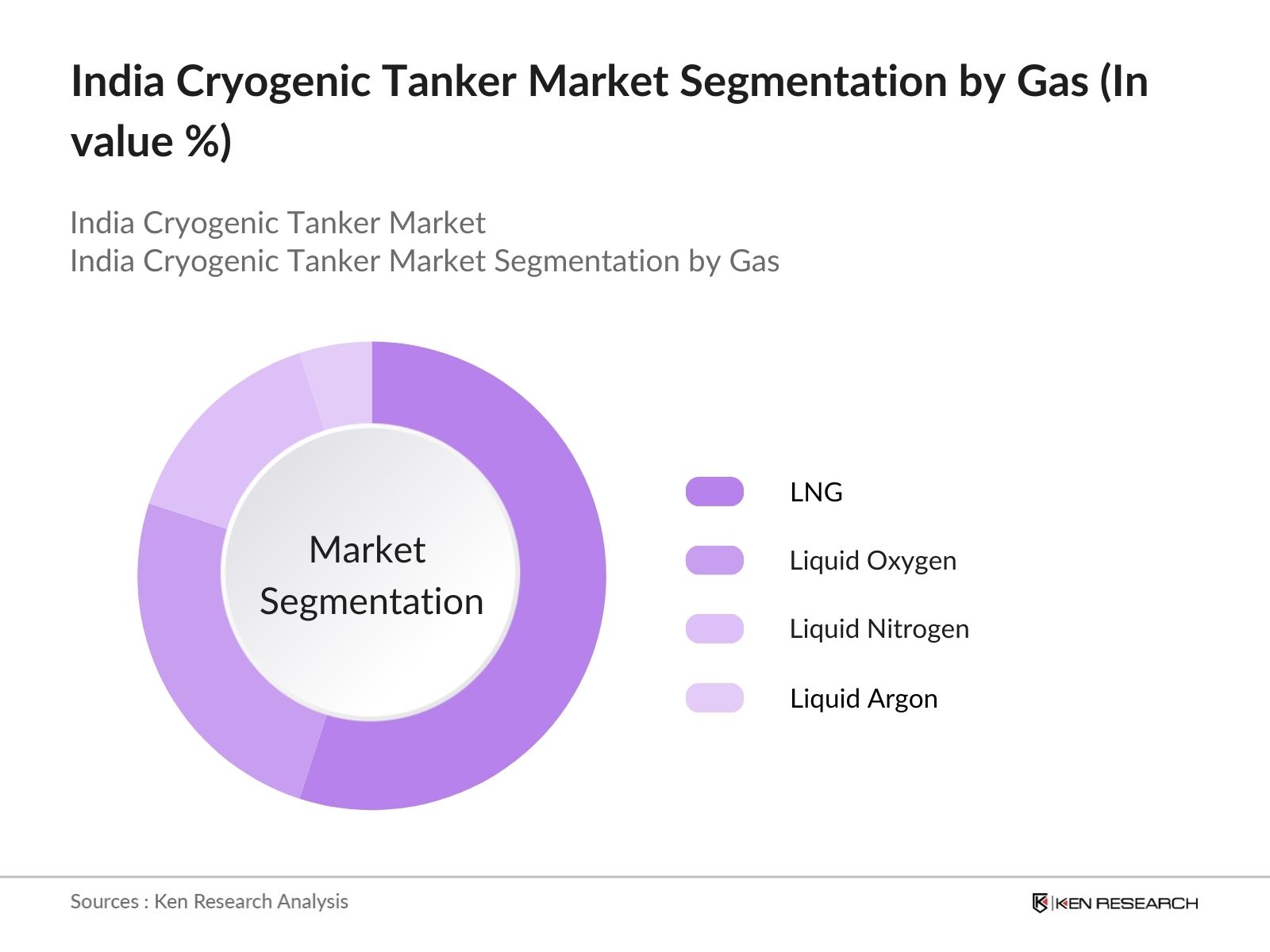
- By Gas Type: The market is segmented by gas type into liquid nitrogen, liquid oxygen, liquid argon, liquefied natural gas (LNG). LNG dominates the market share due to its growing application in the energy sector and the increasing shift towards cleaner fuel alternatives. Liquid oxygen holds significant demand in the healthcare sector, particularly for medical purposes. Liquid nitrogen is widely used in industrial processes such as food freezing and electronics manufacturing, contributing to steady market growth.
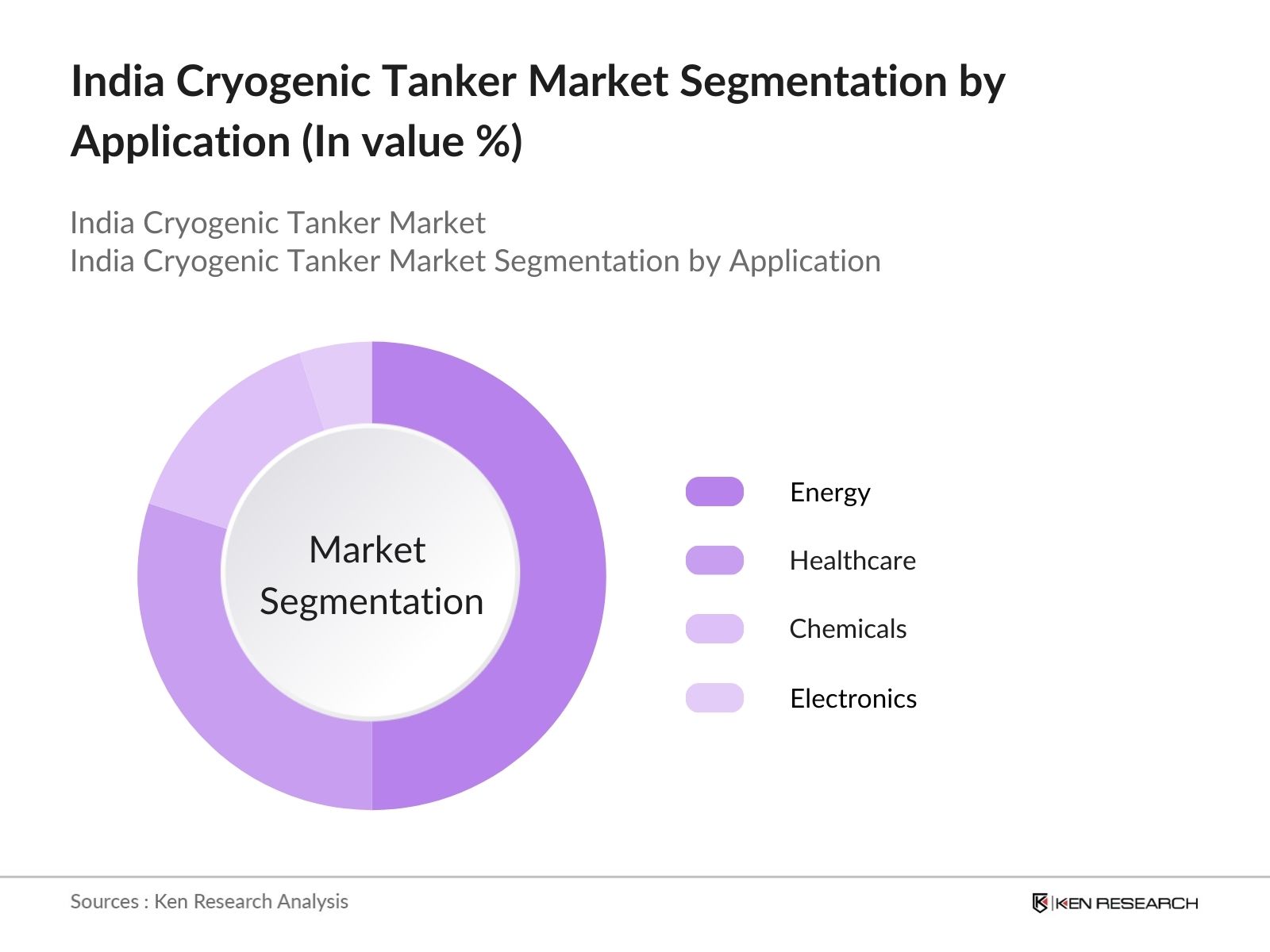
- By Application: The market is segmented by application into healthcare, energy, chemicals, and electronics. The energy sector holds the largest share of the market due to the increasing demand for LNG as a clean fuel. With the growing implementation of LNG-powered infrastructure, such as energy plants and transportation systems, the energy sector continues to propel demand for cryogenic tankers. Additionally, the healthcare sector is experiencing rising demand for liquid oxygen, particularly in medical settings, further bolstering the market.
India Cryogenic Tanker Market Competitive Landscape
The India Cryogenic Tanker market is highly competitive, with both domestic and international players striving to maintain a strong foothold through innovative technologies, pricing strategies, and long-term contracts with key industries. Major players like INOX India, Praxair India, Linde India, and Everest Kanto Cylinders dominate the market due to their extensive product portfolios, strong distribution networks, and robust partnerships with leading industries.
|
Company Name |
Establishment Year |
Headquarters |
Revenue (2023) |
Employees |
Key Product |
R&D Investment |
Key Clients |
Partnerships |
|
INOX India |
1963 |
India |
||||||
|
Praxair India |
1907 |
USA |
||||||
|
Linde India |
1879 |
Germany |
||||||
|
Everest Kanto |
1978 |
India |
||||||
|
Air Liquide India |
1902 |
France |
India Cryogenic Tanker Industry Analysis
Growth Drivers
- Expansion of the LNG Market: Indias Liquefied Natural Gas (LNG) consumption has seen significant growth, with LNG imports in 2024 exceeding 31 million tons. This rise is driven by the expansion of industrial sectors requiring LNG, such as steel, cement, and petrochemicals. LNG is also increasingly used in transportation, replacing traditional fuels to reduce emissions. The governments initiative to boost the countrys energy security has led to the construction of more LNG terminals, enhancing the demand for cryogenic tankers that can safely transport LNG across long distances. Source: Ministry of Petroleum and Natural Gas, India
- Increasing Demand for Medical Oxygen: The healthcare sector has seen a drastic increase in the demand for medical oxygen, particularly during and after the COVID-19 pandemic. India's current annual consumption of medical oxygen stands at 1,250-1,300 tonnes per day (tpd), a significant rise from pre-pandemic levels of 6,900 MT. This surge is driven by the need for medical oxygen in hospitals, which necessitates safe transportation in cryogenic tankers. Increased government focus on improving healthcare infrastructure and oxygen availability is expected to further stimulate demand for cryogenic tankers in the medical sector.
- Rising Industrialization (Chemical industry, electronics manufacturing): Indias industrial output in 2024 is reflecting the rapid growth in the chemical and electronics sectors. Industries such as chemicals, which use cryogenic gases like nitrogen and argon, require specialized cryogenic tankers for transportation. Moreover, the electronics manufacturing sector has expanded due to the Make in India initiative, necessitating cryogenic gases for processes like semiconductor manufacturing. As industrialization continues, the demand for cryogenic tankers will increase, supporting the transportation of these gases for industrial use.
Market Challenges:
- High Initial Costs: The cost of cryogenic tankers remains a challenge due to the specialized materials and technologies required for manufacturing. These tankers require specific designs and materials to safely transport cryogenic gases at extremely low temperatures, which results in high production costs. This poses a significant financial barrier, particularly for small-scale logistics and transport companies. Additionally, building cryogenic storage infrastructure is capital-intensive, as specialized storage tanks are needed to safely store LNG and other gases. The high initial investment and ongoing maintenance costs continue to hinder widespread adoption, slowing down the markets growth trajectory.
- Logistics and Safety Concerns: Cryogenic gases are hazardous, requiring strict compliance with safety regulations for their transport and storage. The Indian government enforces stringent safety guidelines under the Gas Cylinder Rules, 2016, and PESO (Petroleum and Explosives Safety Organisation) mandates, which companies must adhere to when transporting cryogenic gases like LNG or oxygen. Failure to comply with these safety protocols can result in operational shutdowns or penalties. This regulatory environment adds complexity to logistics, making compliance a significant challenge for companies involved in cryogenic transport.
India Cryogenic Tanker Market Future Outlook
The India Cryogenic Tanker market is expected to experience substantial growth over the next five years, driven by government initiatives, rising industrial applications, and the increasing adoption of cleaner energy alternatives such as LNG. The healthcare sector is also expected to play a crucial role, with a sustained demand for medical oxygen and other gases. As India continues its focus on energy security and industrial growth, the demand for cryogenic tankers will rise correspondingly.
Future Market Opportunities
- Technological Advancements in Smart cryogenic tankers and monitoring systems: Technological advancements in cryogenic tankers, such as the integration of smart sensors and IoT-based monitoring systems, are providing significant growth opportunities. These technologies allow real-time monitoring of temperature, pressure, and gas levels, improving operational efficiency and safety. For instance, IoT-enabled cryogenic tankers reduce operational risks by sending alerts in case of any deviation in storage conditions. Such advancements are becoming increasingly popular, helping logistics companies manage their fleets better and ensure safer transportation of cryogenic gases.
Increasing LNG Use in Domestic Energy Solutions: LNG is gaining traction as a cleaner alternative to traditional fuels in both residential and commercial applications. The Indian governments push towards cleaner energy, coupled with the growing number of households switching to gas-based energy solutions, has resulted in a notable increase in LNG consumption. For instance, more than 10 million households have adopted gas-based energy solutions, boosting the need for efficient LNG transportation. Cryogenic tankers play a crucial role in delivering LNG to residential and commercial sectors, presenting a lucrative opportunity for market players.
Scope of the Report
|
By Gas |
Liquid Nitrogen Liquid Oxygen Liquefied Natural Gas (LNG) Liquid Argon Other Gases |
|
By Application |
Healthcare Energy Chemicals Electronics Others |
|
By Mode of Transportation |
Roadways Railways Waterways |
|
By Tanker |
Stationary Cryogenic Tanks Semi-Trailer Cryogenic Tankers Microbulk Tankers |
|
By End-User |
Industrial Commercial Residential |
Products
Key Target Audience
Cryogenic Tanker Manufacturers
Energy and Gas Companies
Healthcare and Medical Facilities
Chemical Industry Stakeholders
Electronics Manufacturers
Logistics and Transportation Providers
Banks and Financial Institutes
Government and Regulatory Bodies (Ministry of Petroleum and Natural Gas, Ministry of Health and Family Welfare)
Investment and Venture Capitalist Firms
Companies
Major Players in India Cryogenic Tanker Market
-
INOX India
Praxair India
Linde India
Everest Kanto Cylinders
Air Liquide India
Chart Industries
Cryolor Asia Pacific
Universal Industrial Gases
VRV Cryogenic
Mahanagar Gas
Bharat Tanks & Vessels
Hampson Industries
BOC India
Taylor-Wharton
Air Products
Table of Contents
1. India Cryogenic Tanker Market Overview
1.1. Definition and Scope
1.2. Market Taxonomy
1.3. Market Growth Rate
1.4. Market Segmentation Overview
2. India Cryogenic Tanker Market Size (In USD Bn)
2.1. Historical Market Size
2.2. Year-On-Year Growth Analysis
2.3. Key Market Developments and Milestones
3. India Cryogenic Tanker Market Analysis
3.1. Growth Drivers
3.1.1. Expansion of the LNG Market (LNG transportation, industrial use)
3.1.2. Increasing Demand for Medical Oxygen (Healthcare sector, COVID-19 impact)
3.1.3. Rising Industrialization (Chemical industry, electronics manufacturing)
3.1.4. Government Initiatives (National Gas Grid, energy security policies)
3.2. Market Challenges
3.2.1. High Capital Investment (Tanker costs, storage infrastructure)
3.2.2. Safety Regulations (Compliance with safety protocols for cryogenic gases)
3.2.3. Logistics and Transportation Challenges (Long-distance transportation, infrastructure)
3.3. Opportunities
3.3.1. Technological Advancements (Smart cryogenic tankers, monitoring systems)
3.3.2. Increasing LNG Use in Domestic Energy Solutions (Residential and commercial applications)
3.3.3. Strategic Partnerships and Collaborations (Joint ventures, public-private partnerships)
3.4. Trends
3.4.1. Integration of IoT in Cryogenic Transport (IoT-enabled tankers, real-time monitoring)
3.4.2. Adoption of LNG as an Alternative Fuel (Cleaner energy solutions, environmental sustainability)
3.4.3. Growth in Specialized Cryogenic Transport (Microbulk solutions, semi-trailer tankers)
3.5. Government Regulations
3.5.1. National Gas Grid Expansion (Increased LNG transport demand)
3.5.2. Safety and Compliance Standards (Cryogenic safety regulations, handling protocols)
3.5.3. Energy Security Policies (LNG adoption, healthcare infrastructure development)
3.6. SWOT Analysis
3.7. Stakeholder Ecosystem
3.8. Porters Five Forces
3.9. Competition Ecosystem
4. India Cryogenic Tanker Market Segmentation
4.1. By Gas Type (In Value %)
4.2. By Application (In Value %)
4.3. By Mode of Transportation (In Value %)
4.4. By Tanker Type (In Value %)
4.5. By End-User (In Value %)
5. India Cryogenic Tanker Market Competitive Analysis
5.1. Detailed Profiles of Major Companies
5.1.1. INOX India
5.1.2. Praxair India
5.1.3. Linde India
5.1.4. Everest Kanto Cylinders
5.1.5. Cryolor Asia Pacific
5.1.6. Chart Industries
5.1.7. Air Liquide India
5.1.8. VRV Cryogenic
5.1.9. Mahanagar Gas
5.1.10. Air Products
5.1.11. Taylor-Wharton
5.1.12. BOC India
5.1.13. Universal Industrial Gases
5.1.14. Hampson Industries
5.1.15. Bharat Tanks & Vessels
5.2. Cross Comparison Parameters (No. of Employees, Headquarters, Revenue, Product Offerings, R&D Focus, Strategic Partnerships, Market Presence, Certifications)
5.3. Market Share Analysis
5.4. Strategic Initiatives
5.5. Mergers and Acquisitions
5.6. Investment Analysis
5.7. Venture Capital Funding
5.8. Government Grants
5.9. Private Equity Investments
6. India Cryogenic Tanker Market Regulatory Framework
6.1. Gas Transportation Regulations
6.2. Cryogenic Safety Standards
6.3. Certification and Compliance Processes
7. India Cryogenic Tanker Future Market Size (In USD Bn)
7.1. Future Market Size Projections
7.2. Key Factors Driving Future Market Growth
8. India Cryogenic Tanker Future Market Segmentation
8.1. By Gas Type (In Value %)
8.2. By Application (In Value %)
8.3. By Mode of Transportation (In Value %)
8.4. By Tanker Type (In Value %)
8.5. By End-User (In Value %)
9. India Cryogenic Tanker Market Analysts Recommendations
9.1. TAM/SAM/SOM Analysis
9.2. Customer Cohort Analysis
9.3. Market Expansion Opportunities
9.4. White Space Opportunity Analysis
Research Methodology
Step 1: Identification of Key Variables
The first phase involves creating a comprehensive ecosystem map, identifying all key stakeholders in the India Cryogenic Tanker Market. Extensive desk research is conducted using secondary sources and proprietary databases to gather critical market data. The focus here is to define the key variables driving market growth and shaping competitive dynamics.
Step 2: Market Analysis and Construction
This phase involves the compilation and analysis of historical market data, including production volumes, revenue generation, and market penetration in key sectors like healthcare and energy. The quality-of-service providers and tanker systems are evaluated to ensure that revenue estimates are accurate and reliable.
Step 3: Hypothesis Validation and Expert Consultation
Hypotheses around market growth, competitive dynamics, and technological advancements are tested through consultations with industry experts. Computer-assisted telephone interviews (CATIs) with professionals in cryogenic gas companies provide real-time insights that are crucial for validating market data.
Step 4: Research Synthesis and Final Output
The final stage of the research involves interacting directly with cryogenic tanker manufacturers and stakeholders. This step is essential for verifying and refining the data gathered through earlier phases. The resulting insights help provide a detailed, validated analysis of the India Cryogenic Tanker Market.
Frequently Asked Questions
01. How big is the India Cryogenic Tanker Market?
The India Cryogenic Tanker market was valued at USD 505 million, driven by the increasing demand for LNG and medical oxygen across key industries like healthcare and energy.
02. What are the challenges in the India Cryogenic Tanker Market?
Challenges in India Cryogenic Tanker market include high capital investment in cryogenic infrastructure, stringent safety regulations, and logistical hurdles in transporting liquefied gases over long distances.
03. Who are the major players in the India Cryogenic Tanker Market?
Major players in India Cryogenic Tanker market include INOX India, Praxair India, Linde India, Everest Kanto Cylinders, and Air Liquide India, all of which dominate through extensive product portfolios and strategic partnerships.
04. What are the growth drivers of the India Cryogenic Tanker Market?
Key growth in India Cryogenic Tanker market drivers include the rising demand for LNG as a cleaner fuel, expanding healthcare infrastructure, and the Indian governments focus on energy security and industrialization.
Why Buy From Us?

What makes us stand out is that our consultants follows Robust, Refine and Result (RRR) methodology. i.e. Robust for clear definitions, approaches and sanity checking, Refine for differentiating respondents facts and opinions and Result for presenting data with story

We have set a benchmark in the industry by offering our clients with syndicated and customized market research reports featuring coverage of entire market as well as meticulous research and analyst insights.

While we don't replace traditional research, we flip the method upside down. Our dual approach of Top Bottom & Bottom Top ensures quality deliverable by not just verifying company fundamentals but also looking at the sector and macroeconomic factors.

With one step in the future, our research team constantly tries to show you the bigger picture. We help with some of the tough questions you may encounter along the way: How is the industry positioned? Best marketing channel? KPI's of competitors? By aligning every element, we help maximize success.

Our report gives you instant access to the answers and sources that other companies might choose to hide. We elaborate each steps of research methodology we have used and showcase you the sample size to earn your trust.

If you need any support, we are here! We pride ourselves on universe strength, data quality, and quick, friendly, and professional service.