
India Data Center Storage Market Outlook to 2030
Region:Asia
Author(s):Abhinav kumar
Product Code:KROD4820
December 2024
89
About the Report
India Data Center Storage Market Overview
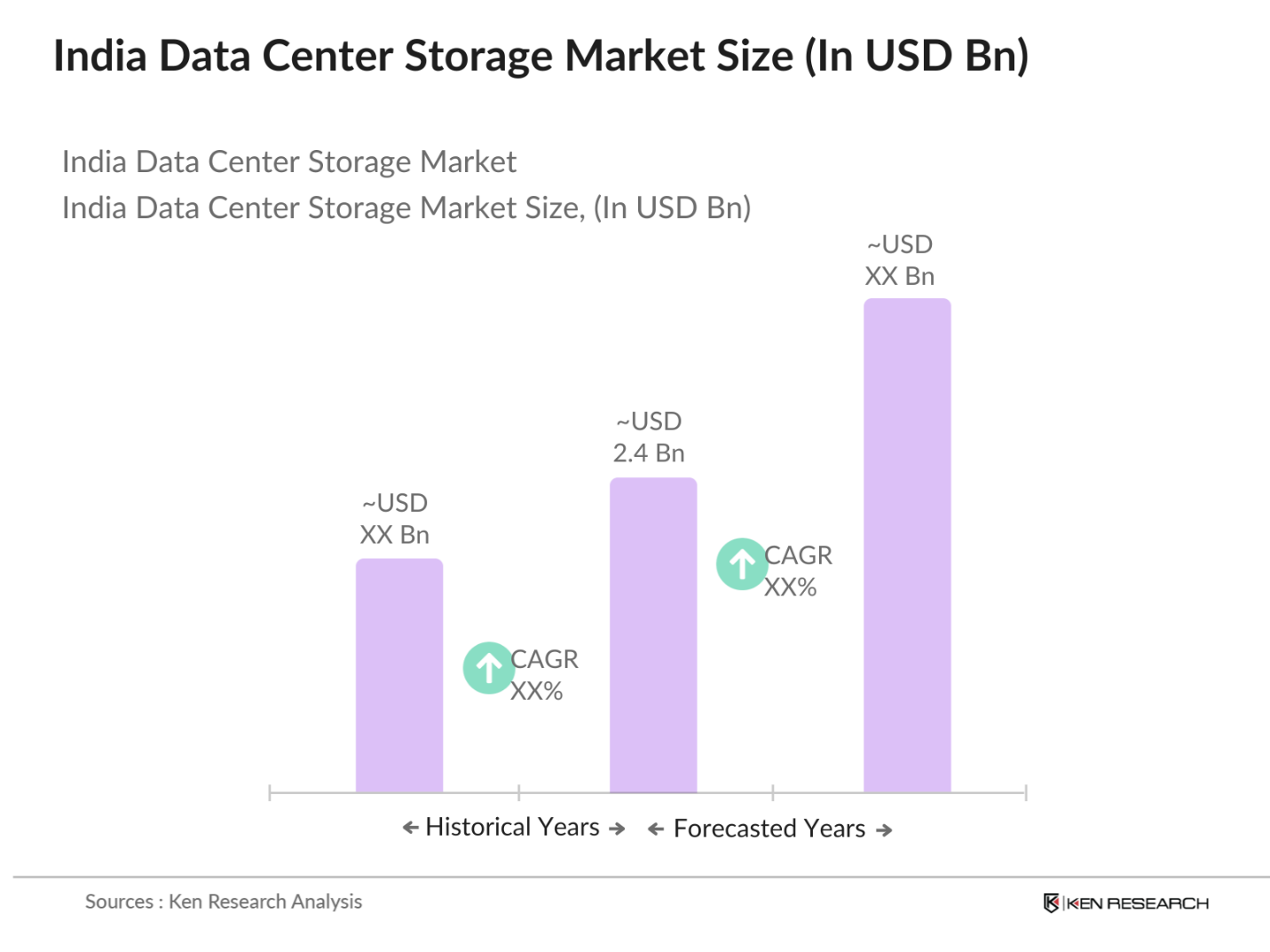
- The India data center storage market is valued at USD 2.4 billion, based on a five-year historical analysis. The growth of this market is primarily driven by the increasing adoption of cloud computing services, the rising data consumption due to the growing e-commerce and streaming platforms, and government initiatives promoting digitalization. Additionally, the shift toward data-driven industries like financial services, telecom, and healthcare further boosts demand for advanced storage solutions.
- Indias data center storage market is largely dominated by major metropolitan regions like Bengaluru, Mumbai, and Hyderabad, which are home to hyperscale data centers, colocation facilities, and key IT industry players. These cities benefit from well-developed digital infrastructure, strategic geographic locations, and proximity to global cloud service providers. This concentration of digital ecosystems fosters strong investment and deployment of cutting-edge storage technologies.
- Data localization policies in India are reshaping the data storage landscape, mandating that certain data types be stored within the country's borders. As of 2023, the Indian government has enacted regulations requiring financial and sensitive personal data to remain domestically stored. This move is intended to enhance data sovereignty and security, ensuring compliance with global standards. Companies must adapt their data storage strategies to comply with these regulations, driving investments in local data centers and storage solutions to align with governmental requirements and protect consumer data.
India Data Center Storage Market Segmentation
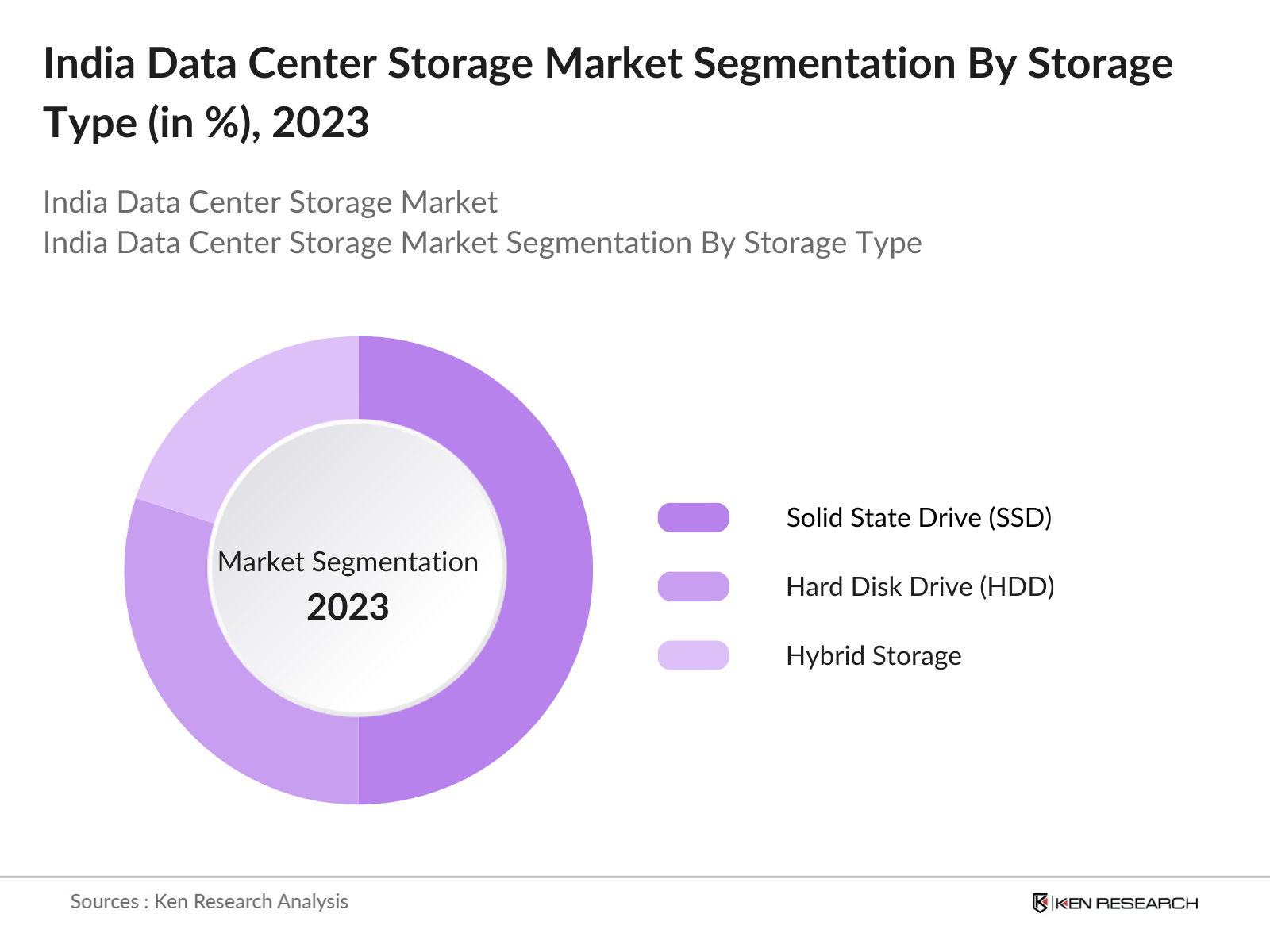
By Storage Type: Indias data center storage market is segmented by storage type into Hard Disk Drives (HDD), Solid State Drives (SSD), and Hybrid Storage Solutions. Solid State Drives (SSD) have a dominant market share under the storage type segment, driven by their superior speed, durability, and energy efficiency compared to traditional HDDs. With the increasing need for real-time data processing and analytics, SSDs are being widely adopted in hyperscale data centers and mission-critical applications, particularly in industries such as finance and telecommunications.
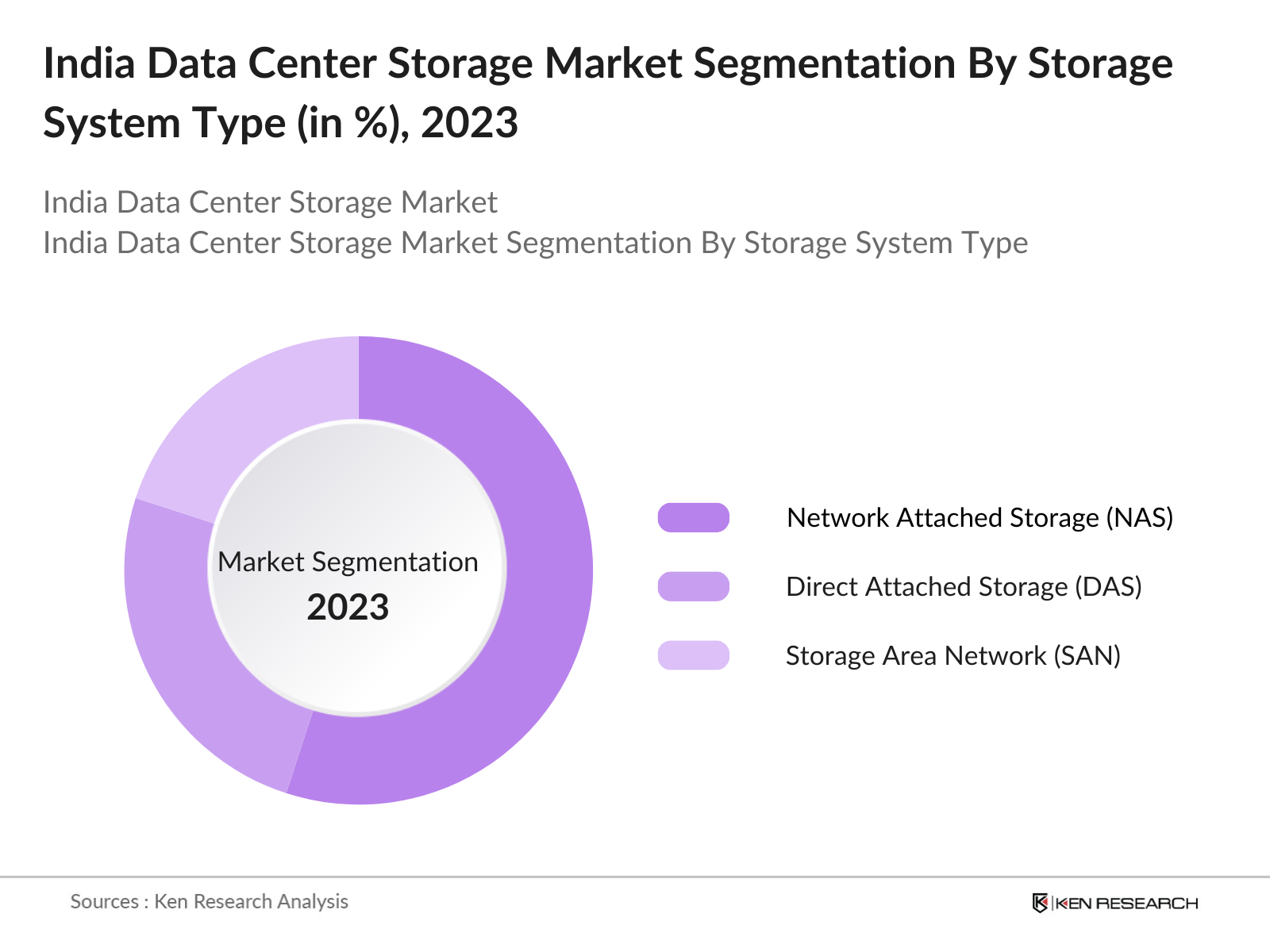
By Storage System: Indias data center storage market is segmented by storage systems into Direct Attached Storage (DAS), Network Attached Storage (NAS), and Storage Area Network (SAN). Network Attached Storage (NAS) leads the storage system segment in market share. The reason for its dominance is its simplicity, scalability, and ability to provide efficient file-based data storage to multiple clients over a network. NAS is especially popular among businesses with high-volume, unstructured data storage requirements, such as media and entertainment, and healthcare industries.
India Data Center Storage Market Competitive Landscape
The India data center storage market is dominated by major global and local players, leading to a competitive and consolidated landscape. The presence of leading technology firms such as Dell Technologies and IBM is reinforced by their extensive product offerings, customer relationships, and significant investments in R&D for advanced storage technologies. Domestic players also leverage their understanding of regional demands and offer cost-effective solutions.
|
Company Name |
Establishment Year |
Headquarters |
Storage Solutions |
Data Center Services |
Technology Innovation |
Customer Base |
Revenue |
Global Footprint |
|
Dell Technologies |
1984 |
USA |
_ |
_ |
_ |
_ |
_ |
_ |
|
Hewlett Packard Enterprise (HPE) |
2015 |
USA |
_ |
_ |
_ |
_ |
_ |
_ |
|
IBM Corporation |
1911 |
USA |
_ |
_ |
_ |
_ |
_ |
_ |
|
NetApp Inc. |
1992 |
USA |
_ |
_ |
_ |
_ |
_ |
_ |
|
Hitachi Vantara |
1910 |
Japan |
_ |
_ |
_ |
_ |
_ |
_ |
India Data Center Storage Industry Analysis
Growth Drivers
- Rising Demand for Cloud Storage Solutions: The increasing reliance on cloud storage solutions is a significant growth driver for the India data center storage market. As of 2023, the cloud storage market in India reached a valuation of approximately $2.3 billion, fueled by businesses' shift towards cloud-based services. This trend is further supported by the Indian government's Digital India initiative, aiming to improve connectivity and promote online services, which has seen a 65% increase in digital transactions, amounting to over 7 billion transactions in 2022 alone. This rising demand showcases a clear shift towards cloud solutions across various sectors.
- Increasing Digitalization Across Sectors: The surge in digitalization across various sectors significantly contributes to the growth of the data center storage market in India. In 2022, India's digital economy was valued at around $450 billion, projected to reach $1 trillion by 2025. With sectors such as healthcare, education, and finance increasingly adopting digital solutions, the need for reliable data storage is paramount. Notably, India's internet user base reached 600 million in 2023, representing a 50% increase since 2020, further intensifying the demand for efficient data storage solutions.
- Government Initiatives in Digital Infrastructure: Government initiatives play a pivotal role in enhancing digital infrastructure, which directly impacts the data center storage market. The Indian government has allocated $1.5 billion for digital infrastructure development under the National Digital Communication Policy (NDCP) 2022. Additionally, initiatives such as the PM Gati Shakti plan emphasize the importance of seamless digital infrastructure across sectors, leading to enhanced connectivity and data management capabilities. This investment in digital infrastructure is expected to bolster the growth of data centers and associated storage solutions.
Market Challenges
- High Initial Investment and Operational Costs: High initial investment and operational costs pose significant challenges to the growth of the India data center storage market. As of 2023, setting up a data center in India can cost anywhere between $7 million to $20 million, depending on the facility's scale and technology. Moreover, operational costs are further compounded by energy expenditures, which account for nearly 30% of total data center operational costs. With electricity tariffs averaging 7 per kWh, data centers face mounting pressure to manage costs while meeting escalating demands.
- Data Security and Privacy Concerns: Data security and privacy concerns remain prominent challenges for the data center storage market in India. In 2022, India witnessed over 12,000 data breaches, with over 9 million records exposed. This alarming statistic underscores the vulnerability of data centers to cyber threats. Additionally, the implementation of the Personal Data Protection Bill (PDPB) in India will impose stringent compliance requirements, which may lead to increased operational complexities and costs for data center operators. This evolving regulatory landscape heightens the need for advanced security measures in data storage.
India Data Center Storage Market Future Outlook
Over the next five years, the India data center storage market is expected to show significant growth, driven by continuous investments in digital infrastructure, the rapid rise of cloud computing, and increasing data localization regulations. Additionally, the growing adoption of AI, IoT, and machine learning technologies will require more advanced, high-speed storage solutions, further propelling market growth. Hyperscale data centers, edge computing, and sustainable energy practices will also shape the markets future.
Opportunities
- Adoption of Hyper-Converged Infrastructure: The current trend toward hyper-converged infrastructure (HCI) presents significant growth opportunities for the India data center storage market. In 2023, the HCI market in India is projected to reach $600 million, driven by the need for simplified IT management and improved scalability. HCI solutions combine storage, computing, and networking into a single system, offering cost-effective and efficient solutions for businesses. This integration supports organizations in managing their data more effectively, fostering further investments in data storage solutions that align with modern IT requirements.
- Expansion of Edge Computing Solutions: The expansion of edge computing solutions is a critical opportunity for the data center storage market in India. By 2023, the edge computing market in India is estimated to reach $1.3 billion, reflecting the growing need for localized data processing to enhance operational efficiency. Edge computing reduces latency and improves data handling capabilities, especially in sectors like manufacturing and telecommunications. As businesses continue to leverage IoT devices, the demand for efficient storage solutions at the edge will escalate, presenting a lucrative opportunity for data center operators to innovate and expand their services.
Scope of the Report
By Storage Type |
Hard Disk Drive (HDD)Solid State Drive (SSD)Hybrid Storage Solutions |
By Storage System |
Direct Attached Storage (DAS)Network Attached Storage (NAS)Storage Area Network (SAN) |
By Data Center Type |
Enterprise Data CentersHyperscale Data CentersColocation D ata Centers |
By Vertical |
BFSIIT & TelecomHealthcareRetail & E-commerceGovernment |
By Region |
North IndiaSouth IndiaEast IndiaWest India |
Products
Key Target Audience Organizations and Entities Who Can Benefit by Subscribing This Report:
Data Center Companies
Cloud Service Companies
Telecom and IT Enterprises Idustries
Financial Institutions and Banks
Healthcare and Pharmaceutical Companies
E-commerce Companies
Investor and Venture Capitalist Firms
Government and Regulatory Bodies (Ministry of Electronics and Information Technology, TRAI)
Companies
Players Mentioned in the Report
Dell Technologies
Hewlett Packard Enterprise (HPE)
IBM Corporation
NetApp Inc.
Hitachi Vantara
Cisco Systems Inc.
Pure Storage
Huawei Technologies Co. Ltd.
Fujitsu Limited
Western Digital Corporation
Table of Contents
1. India Data Center Storage Market Overview
1.1. Definition and Scope
1.2. Market Taxonomy
1.3. Market Growth Rate
1.4. Market Segmentation Overview
2. India Data Center Storage Market Size (In USD Bn)
2.1. Historical Market Size
2.2. Year-on-Year Growth Analysis
2.3. Key Market Developments and Milestones
3. India Data Center Storage Market Analysis
3.1. Growth Drivers
3.1.1. Rising Demand for Cloud Storage Solutions
3.1.2. Increasing Digitalization Across Sectors
3.1.3. Government Initiatives in Digital Infrastructure
3.1.4. Growth in Data Generation from E-commerce and OTT Platforms
3.2. Market Challenges
3.2.1. High Initial Investment and Operational Costs
3.2.2. Data Security and Privacy Concerns
3.2.3. Energy Efficiency and Sustainability Concerns
3.3. Opportunities
3.3.1. Adoption of Hyper-Converged Infrastructure
3.3.2. Expansion of Edge Computing Solutions
3.3.3. Integration of AI and Machine Learning in Data Centers
3.4. Trends
3.4.1. Shift Toward Software-Defined Storage Solutions
3.4.2. Growing Importance of Green Data Centers
3.4.3. Increased Adoption of NVMe Storage Technology
3.5. Government Regulations
3.5.1. Data Localization Policies
3.5.2. Cybersecurity Frameworks and Compliance Requirements
3.5.3. Incentives for Infrastructure Development
3.6. SWOT Analysis
3.6.1. Strengths
3.6.2. Weaknesses
3.6.3. Opportunities
3.6.4. Threats
3.7. Stake Ecosystem
3.8. Porters Five Forces
3.9. Competition Ecosystem
4. India Data Center Storage Market Segmentation
4.1. By Storage Type (In Value %)
4.1.1. Hard Disk Drive (HDD)
4.1.2. Solid State Drive (SSD)
4.1.3. Hybrid Storage Solutions
4.2. By Storage System (In Value %)
4.2.1. Direct Attached Storage (DAS)
4.2.2. Network Attached Storage (NAS)
4.2.3. Storage Area Network (SAN)
4.3. By Data Center Type (In Value %)
4.3.1. Enterprise Data Centers
4.3.2. Hyperscale Data Centers
4.3.3. Colocation Data Centers
4.4. By Vertical (In Value %)
4.4.1. BFSI
4.4.2. IT & Telecom
4.4.3. Healthcare
4.4.4. Retail & E-commerce
4.4.5. Government
4.5. By Region (In Value %)
4.5.1. North India
4.5.2. South India
4.5.3. East India
4.5.4. West India
5. India Data Center Storage Market Competitive Analysis
5.1. Detailed Profiles of Major Competitors
5.1.1. Dell Technologies
5.1.2. Hewlett Packard Enterprise (HPE)
5.1.3. IBM Corporation
5.1.4. NetApp Inc.
5.1.5. Hitachi Vantara
5.1.6. Cisco Systems Inc.
5.1.7. Pure Storage
5.1.8. Huawei Technologies Co. Ltd.
5.1.9. Fujitsu Limited
5.1.10. Western Digital Corporation
5.1.11. Seagate Technology
5.1.12. Lenovo Group Limited
5.1.13. Quantum Corporation
5.1.14. Inspur Systems
5.1.15. Micron Technology Inc.
5.2. Cross Comparison Parameters (Revenue, Number of Employees, Data Center Footprint, Product Portfolio, Technological Innovation, Partnerships, Market Share, Customer Base)
5.3. Market Share Analysis
5.4. Strategic Initiatives
5.5. Mergers and Acquisitions
5.6. Investment Analysis
5.7. Venture Capital Funding
5.8. Government Grants
5.9. Private Equity Investments
6. India Data Center Storage Market Regulatory Framework
6.1. Data Center Infrastructure Policies
6.2. Data Protection and Privacy Regulations
6.3. Certification Processes
7. India Data Center Storage Future Market Size (In USD Bn)
7.1. Future Market Size Projections
7.2. Key Factors Driving Future Market Growth
8. India Data Center Storage Future Market Segmentation
8.1. By Storage Type (In Value %)
8.2. By Storage System (In Value %)
8.3. By Data Center Type (In Value %)
8.4. By Vertical (In Value %)
8.5. By Region (In Value %)
9. India Data Center Storage Market Analysts Recommendations
9.1. TAM/SAM/SOM Analysis
9.2. Customer Cohort Analysis
9.3. Marketing Initiatives
9.4. White Space Opportunity Analysis
Research Methodology
Step 1: Identification of Key Variables
The initial step focuses on mapping the data center ecosystem in India, identifying key stakeholders such as storage hardware manufacturers, cloud service providers, and data center operators. Data collection from proprietary databases and secondary research supports the identification of critical market dynamics.
Step 2: Market Analysis and Construction
This phase involves analyzing historical data to establish growth trends and market penetration levels. Further, we assess the impact of storage technologies like SSDs, NAS, and cloud-based storage systems on the market's revenue generation.
Step 3: Hypothesis Validation and Expert Consultation
Industry experts, including storage solution architects and data center operators, are consulted to validate market assumptions. Expert feedback on storage infrastructure advancements and deployment trends helps refine our hypotheses.
Step 4: Research Synthesis and Final Output
Finally, insights gathered from experts and market data are synthesized to create the final report. The combination of quantitative and qualitative data ensures a comprehensive analysis of the India data center storage market.
Frequently Asked Questions
01. How big is the India data center storage market?
The India data center storage market was valued at USD 2.4 billion and is driven by growing data consumption, cloud adoption, and digital transformation initiatives.
02. What are the challenges in the India data center storage market?
Challenges include high operational costs, data security risks, and compliance with data localization policies, all of which impact the deployment of storage systems.
03. Who are the major players in the India data center storage market?
Key players include Dell Technologies, Hewlett Packard Enterprise (HPE), IBM Corporation, NetApp Inc., and Hitachi Vantara, all of which hold substantial influence due to their technological advancements and customer base.
04. What are the growth drivers of the India data center storage market?
Growth is driven by the rapid adoption of cloud services, increasing data generation, and the governments focus on digitalization across industries like finance, healthcare, and e-commerce.
Why Buy From Us?

What makes us stand out is that our consultants follows Robust, Refine and Result (RRR) methodology. i.e. Robust for clear definitions, approaches and sanity checking, Refine for differentiating respondents facts and opinions and Result for presenting data with story

We have set a benchmark in the industry by offering our clients with syndicated and customized market research reports featuring coverage of entire market as well as meticulous research and analyst insights.

While we don't replace traditional research, we flip the method upside down. Our dual approach of Top Bottom & Bottom Top ensures quality deliverable by not just verifying company fundamentals but also looking at the sector and macroeconomic factors.

With one step in the future, our research team constantly tries to show you the bigger picture. We help with some of the tough questions you may encounter along the way: How is the industry positioned? Best marketing channel? KPI's of competitors? By aligning every element, we help maximize success.

Our report gives you instant access to the answers and sources that other companies might choose to hide. We elaborate each steps of research methodology we have used and showcase you the sample size to earn your trust.

If you need any support, we are here! We pride ourselves on universe strength, data quality, and quick, friendly, and professional service.