
India Electric Car Market Outlook 2030
Region:Global
Author(s):Shivani Mehra
Product Code:KROD11148
Region:Global
Author(s):Shivani Mehra
Product Code:KROD11148
December 2024
99
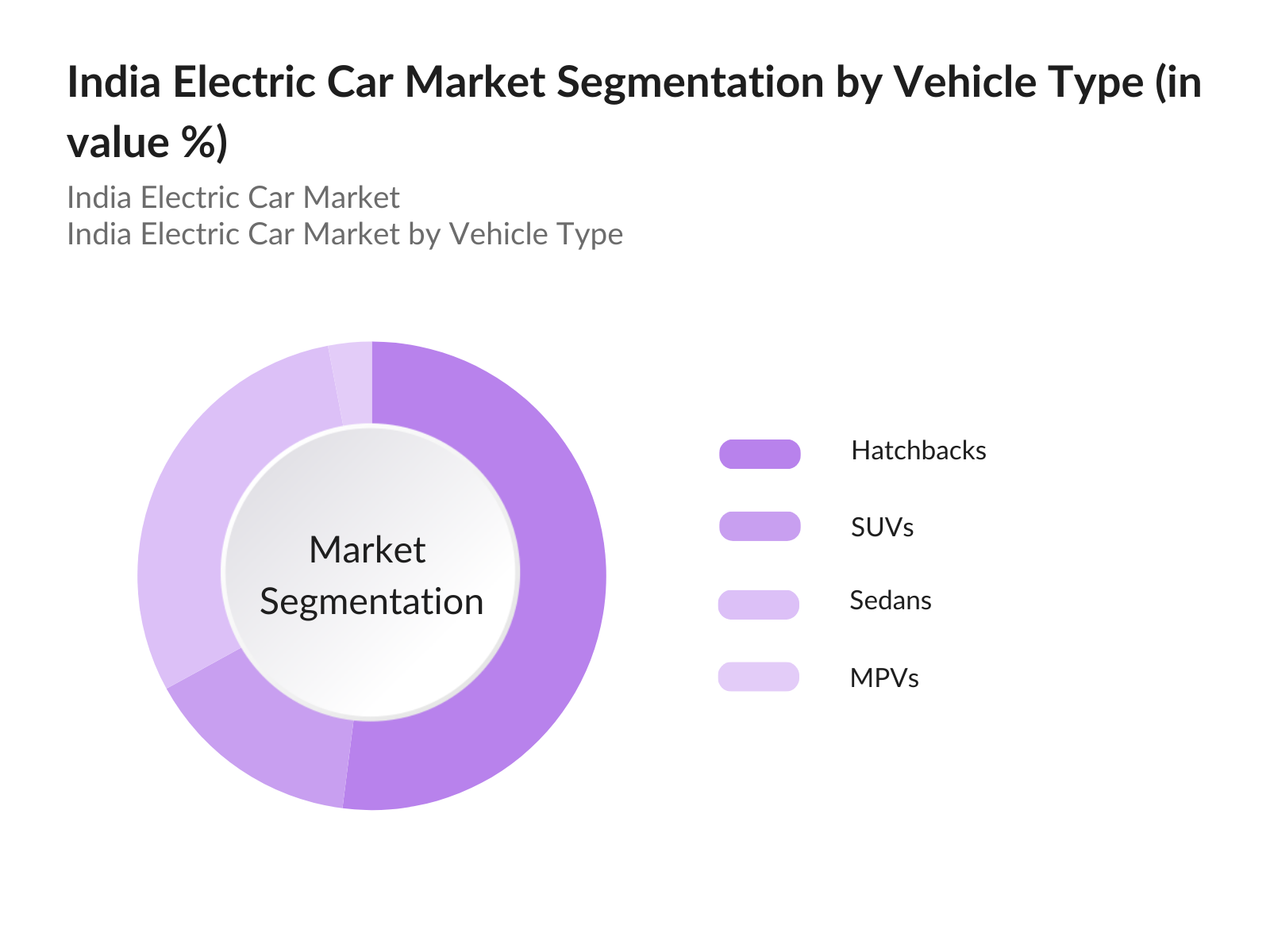
By Vehicle Type: The Indian electric car market is segmented by vehicle type into hatchbacks, sedans, SUVs, and MPVs. Currently, hatchbacks dominate this segment, with their compact size, affordability, and suitability for city commutes making them highly popular among urban consumers. Brands like Tata Motors and Mahindra have made strong strides with models like the Tata Nexon EV and Mahindra eVerito. SUVs are also gaining traction, especially among younger, high-income consumers, who prefer these models for their spacious design and off-road capabilities.
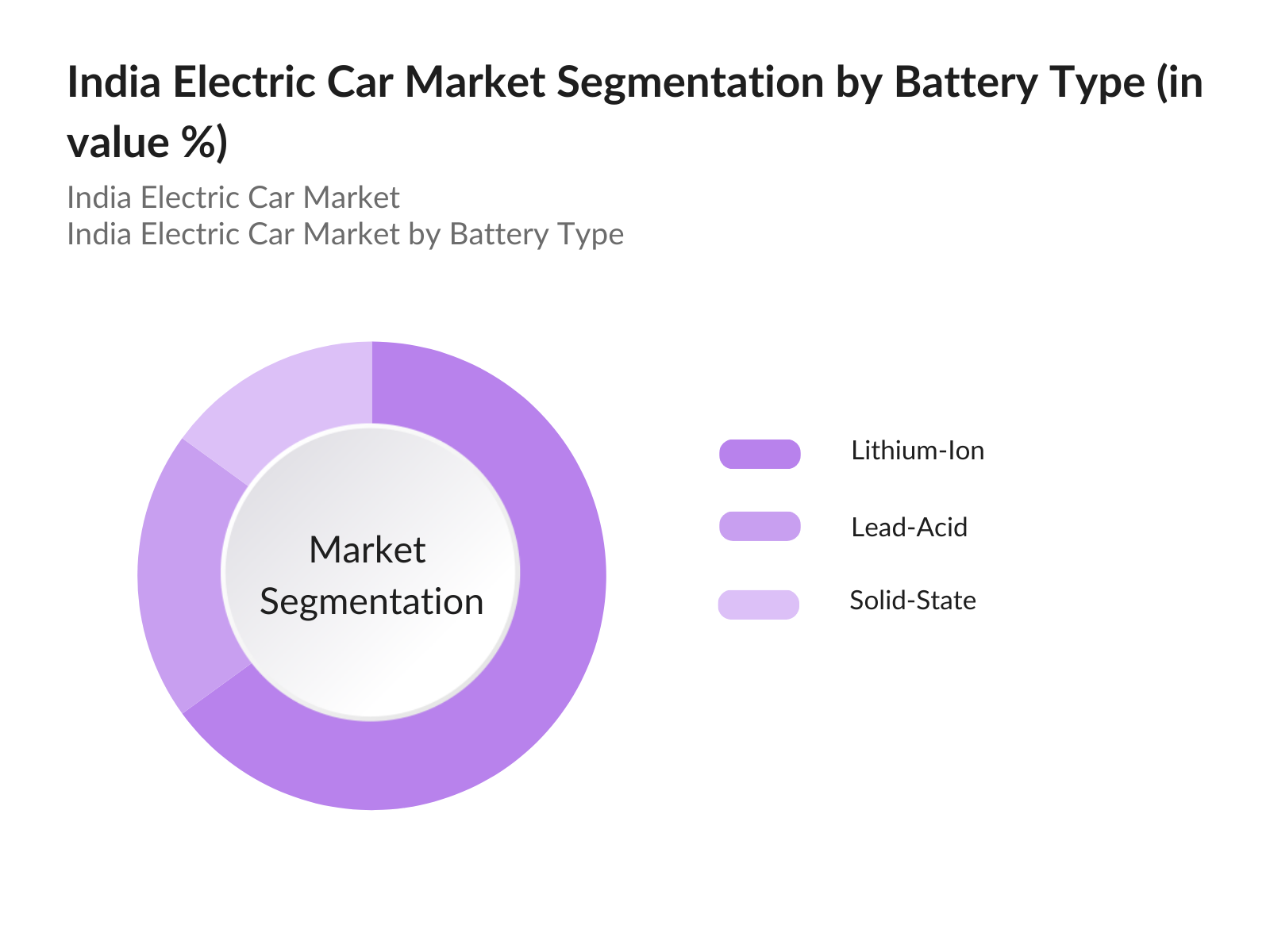
By Battery Type: The electric car market in India is also segmented by battery type, including lithium-ion, lead-acid, and solid-state batteries. Lithium-ion batteries hold the dominant share due to their high energy density, longer lifespan, and lower charging time compared to other battery types. This preference is further backed by government incentives for lithium-ion battery manufacturing and usage, which align with sustainability goals. Solid-state batteries, while still emerging, are expected to rise in popularity as technological advances reduce production costs.
The India electric car market features both established automotive players and newer EV-specific manufacturers, creating a competitive environment. Leading brands like Tata Motors and Hyundai leverage robust distribution networks, R&D in battery technologies, and strategic partnerships to maintain their market positions. International players like MG Motor and Volvo also contribute to competition, introducing advanced EV models tailored for the Indian market.
|
Company |
Established |
Headquarters |
Market Presence |
Key Product Line |
Battery Technology |
Strategic Partnerships |
R&D Focus |
Sustainability Initiatives |
|
Tata Motors |
1945 |
Mumbai, India |
Nationwide |
- |
- |
- |
- |
- |
|
Mahindra & Mahindra |
1945 |
Mumbai, India |
Pan-India |
- |
- |
- |
- |
- |
|
MG Motor India |
2017 |
Gurgaon, India |
Major cities |
- |
- |
- |
- |
- |
|
Hyundai Motor India |
1996 |
Chennai, India |
Urban areas |
- |
- |
- |
- |
- |
|
Ather Energy |
2013 |
Bangalore, India |
Select markets |
- |
- |
- |
- |
- |
Market Growth Drivers
Market Challenges:
The Indian electric car market is poised for rapid expansion over the next five years, driven by continuous government support, advancements in EV battery technology, and the rising consumer demand for eco-friendly vehicles. As the cost of EV ownership declines, aided by battery price reductions and enhanced charging infrastructure, the market will likely see increased adoption rates across various consumer demographics. Strategic investments by domestic and international players further indicate a strong future for EV growth in India.
Market Opportunities:
|
By Vehicle Type |
Hatchbacks Sedans SUVs MPVs |
|
By Technology |
Battery Electric Vehicles PHEVs HEVs |
|
By Battery Type |
Lithium-Ion Lead-Acid Solid-State |
|
By Charging Type |
Normal Charging Fast Charging |
|
By Region |
North-East Midwest West Coast Southern States |
1.1 Definition and Scope
1.2 Market Taxonomy
1.3 Market Dynamics
1.4 Overview of Key Government Initiatives (e.g., FAME II, State-Specific EV Policies)
2.1 Historical Market Size
2.2 Year-On-Year Growth Analysis
2.3 Impact of Economic and Policy Shifts
3.1 Growth Drivers
- Environmental Policies (e.g., Emissions Regulations, BS VI Standards)
- Technological Advancements (Battery Tech, Vehicle Autonomy)
- Incentives and Subsidies (e.g., FAME Scheme, Tax Breaks)
3.2 Market Challenges
- High Initial Costs (Battery and Component Pricing)
- Infrastructure Constraints (Charging Stations and Standardization)
- Consumer Adoption Barriers (Range Anxiety, Cost Consciousness)
3.3 Opportunities
- Local Manufacturing and Partnerships
- Expansion in Rural and Tier-II Cities
- Rise of Shared Mobility Platforms
3.4 Market Trends
- Shift to BEVs and High-Range EV Models
- Integration with IoT and Smart Vehicle Systems
- Increasing Investment in Public Charging Infrastructure
4.1 By Vehicle Type (Hatchbacks, Sedans, SUVs, MPVs)
4.2 By Technology (Battery Electric Vehicles, Plug-in Hybrid Vehicles, Hybrid Electric Vehicles)
4.3 By Battery Type (Lithium-Ion, Lead-Acid, Solid-State)
4.4 By Charging Type (Normal Charging, Fast Charging)
4.5 By Region (North, South, East, West, including top EV-adopting states like Maharashtra, Delhi, Karnataka)
5.1 Profiles of Major Competitors
- Tata Motors
- Hyundai Motor India
- Mahindra & Mahindra
- Maruti Suzuki
- MG Motor India
- Toyota Kirloskar Motor
- BYD India
- Hero Electric
- Volvo Car Corporation
- Honda Motor Co. Ltd
- TVS Motor Company
- Ultraviolette Automotive Pvt Ltd
- Kia India Pvt Ltd
- Ather Energy Pvt Ltd
- Bajaj Auto Ltd
5.2 Cross-Comparison Parameters (Market Share, Regional Presence, Product Range, Revenue, Production Facilities, Technological Expertise, R&D Investments, Partnerships)
5.3 Strategic Initiatives and Investments
5.4 Mergers and Acquisitions
5.5 Key Partnerships and Collaborations
6.1 Overview of National Policies (e.g., EV Incentives, GST Rates)
6.2 Regional and State-Specific Policies
6.3 Certification and Compliance Requirements
7.1 Projected Market Growth
7.2 Key Drivers of Future Demand
8.1 By Vehicle Type
8.2 By Technology
8.3 By Battery Type
8.4 By Charging Type
8.5 By Region
9.1 TAM/SAM/SOM Analysis
9.2 Go-to-Market Strategies
9.3 Key Investment Areas
Disclaimer Contact UsThe initial phase involves constructing an ecosystem map of key stakeholders within the Indian electric car market. This process is backed by secondary research, using credible sources to gather data on market dynamics and key growth drivers.
In this phase, historical data and metrics for EV penetration and adoption trends are analyzed. This includes reviewing policies, infrastructural investments, and state-by-state EV adoption rates to validate revenue estimates.
Market hypotheses are developed and tested through in-depth interviews with industry experts. These consultations offer insights into operational and financial trends, supporting data validation.
The final step synthesizes findings from various data points, including industry metrics and expert feedback, to deliver a comprehensive analysis. This ensures the reports conclusions are well-rounded, data-driven, and aligned with industry trends.
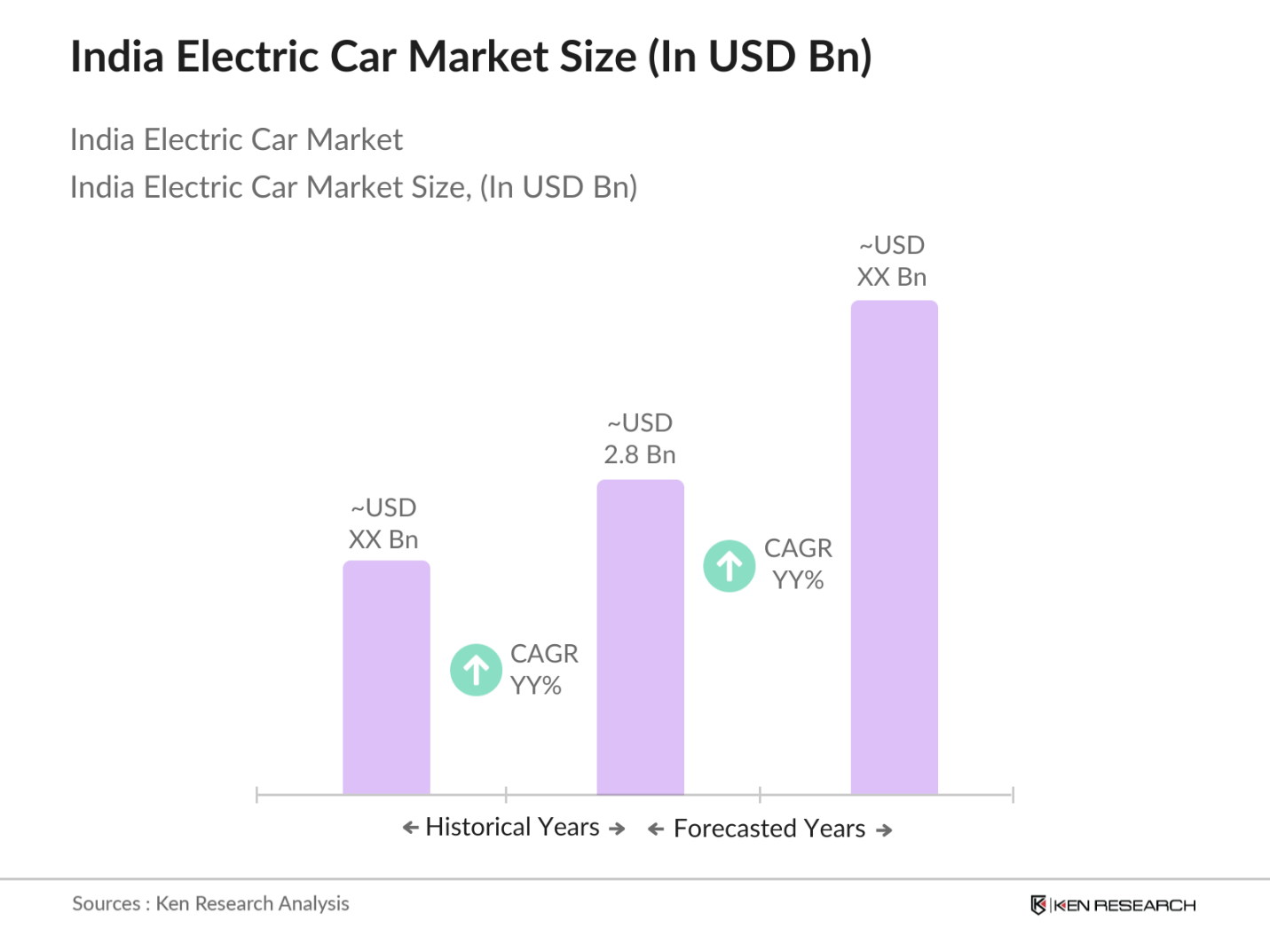
The India electric car market is valued at approximately USD 2.8 billion, supported by strong government policies like the FAME II scheme and consumer shifts towards sustainable mobility solutions.
Challenges include high battery costs, limited charging infrastructure, and consumer concerns over range anxiety, which hinder widespread EV adoption in India.
Key players include Tata Motors, Mahindra & Mahindra, MG Motor India, and Hyundai Motor India, which lead through innovations in battery technology and consumer-friendly EV models.
Government incentives, increased consumer interest in eco-friendly vehicles, and rising fuel prices are primary growth drivers, prompting shifts to electric cars.

What makes us stand out is that our consultants follows Robust, Refine and Result (RRR) methodology. i.e. Robust for clear definitions, approaches and sanity checking, Refine for differentiating respondents facts and opinions and Result for presenting data with story

We have set a benchmark in the industry by offering our clients with syndicated and customized market research reports featuring coverage of entire market as well as meticulous research and analyst insights.

While we don't replace traditional research, we flip the method upside down. Our dual approach of Top Bottom & Bottom Top ensures quality deliverable by not just verifying company fundamentals but also looking at the sector and macroeconomic factors.

With one step in the future, our research team constantly tries to show you the bigger picture. We help with some of the tough questions you may encounter along the way: How is the industry positioned? Best marketing channel? KPI's of competitors? By aligning every element, we help maximize success.

Our report gives you instant access to the answers and sources that other companies might choose to hide. We elaborate each steps of research methodology we have used and showcase you the sample size to earn your trust.

If you need any support, we are here! We pride ourselves on universe strength, data quality, and quick, friendly, and professional service.