
India Electric Rickshaw Market Outlook to 2030
Region:Asia
Author(s):Shreya Garg
Product Code:KROD10086
November 2024
82
About the Report
India Electric Rickshaw Market Overview
- The India Electric Rickshaw market is valued at USD 1.1 billion, driven by rapid urbanization, government subsidies, and the rising demand for affordable, sustainable transportation solutions. The market has been influenced by policies such as the FAME-II scheme and increasing environmental concerns. This segment has seen strong growth due to its cost-effectiveness and ease of use, primarily for last-mile connectivity and short-distance transportation.
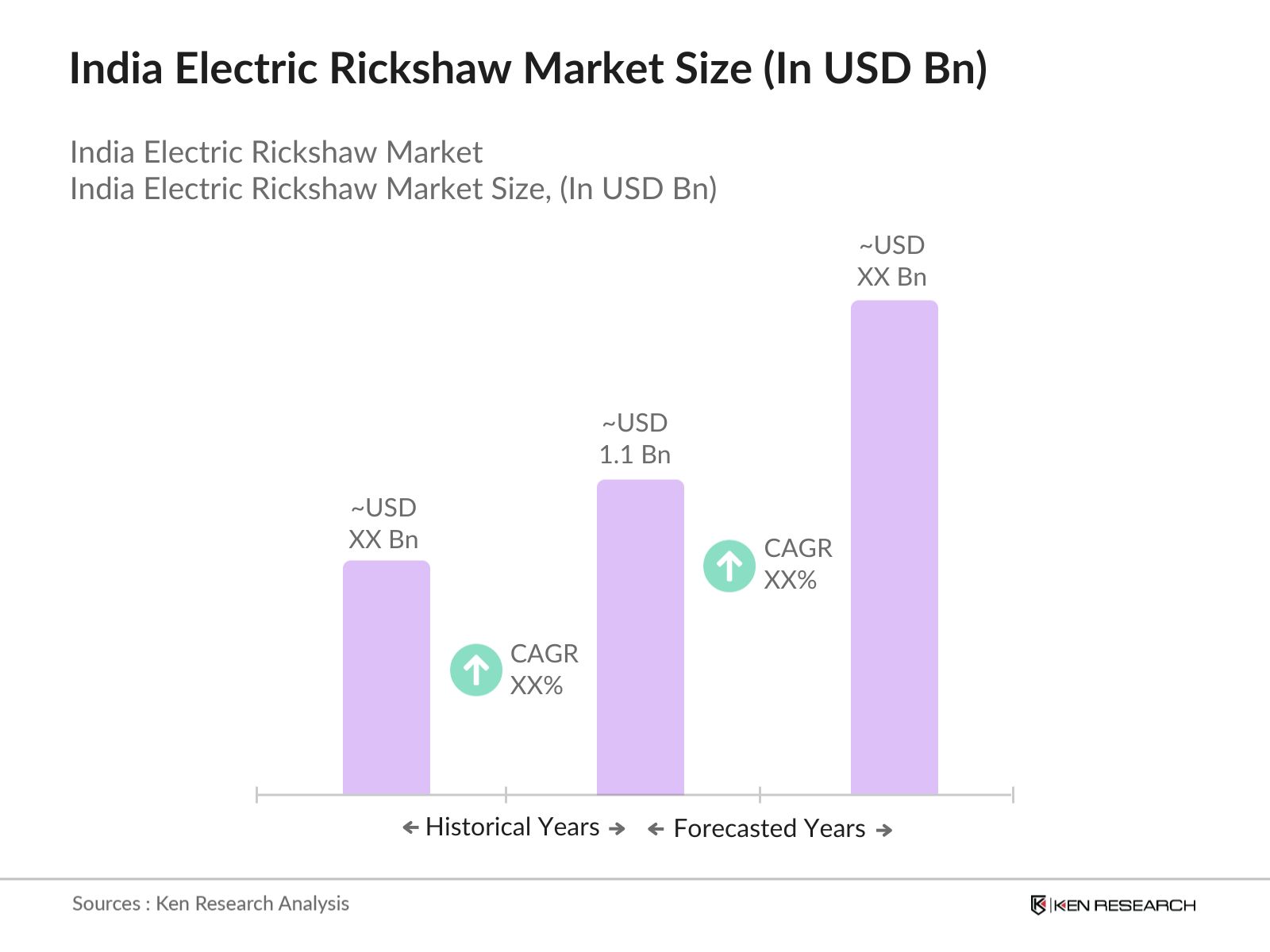
- New Delhi, Uttar Pradesh, and West Bengal dominate the electric rickshaw market in India due to their dense population, high demand for public transportation, and strong government support. These regions benefit from policies that encourage the adoption of electric vehicles, as well as the availability of charging infrastructure and financial incentives for buyers. The high population density in these areas further accelerates the need for affordable, sustainable transportation.
- The FAME-II schemes, launched by the Ministry of Heavy Industries, continues to be a significant catalyst for electric rickshaw adoption. As of 2023, the government has disbursed over INR 2,500 crore in subsidies for electric vehicle purchases, with electric rickshaws being one of the main beneficiaries. The scheme provides subsidies of up to INR 50,000 per vehicle and covers both buyers and manufacturers. This financial support has directly contributed to the rise in electric rickshaw numbers, particularly in urban areas.
India Electric Rickshaw Market Segmentation
By Vehicle Type: The market is segmented by vehicle type into Passenger Electric Rickshaw and Cargo Electric Rickshaw. Passenger electric rickshaws dominate the market, primarily because of their widespread use in urban and semi-urban areas for last-mile connectivity. The demand for these vehicles is high due to the increasing population in cities, where affordable and environmentally friendly transportation solutions are required. Additionally, the government's push for public transportation electrification further contributes to the dominance of this segment. 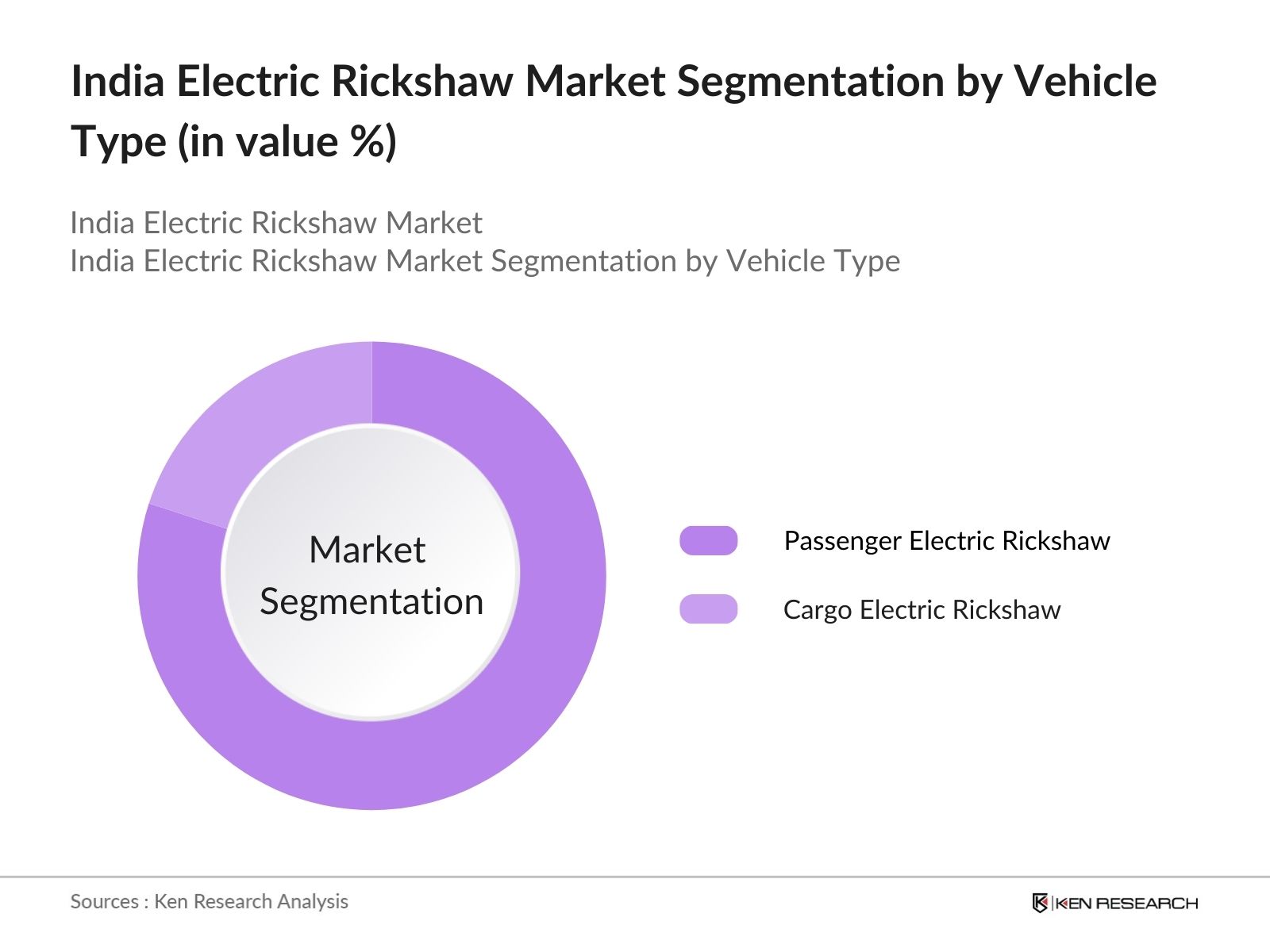
By Battery Type: The market is segmented by battery type into Lead-Acid Batteries and Lithium-Ion Batteries. Lead-acid batteries hold a larger share due to their lower cost and widespread availability, especially in rural and semi-urban regions. Despite lithium-ion batteries offering better efficiency and a longer lifespan, the higher initial cost limits their adoption. However, with the anticipated decrease in lithium-ion battery prices, this segment may see an increase in market share in the coming years. 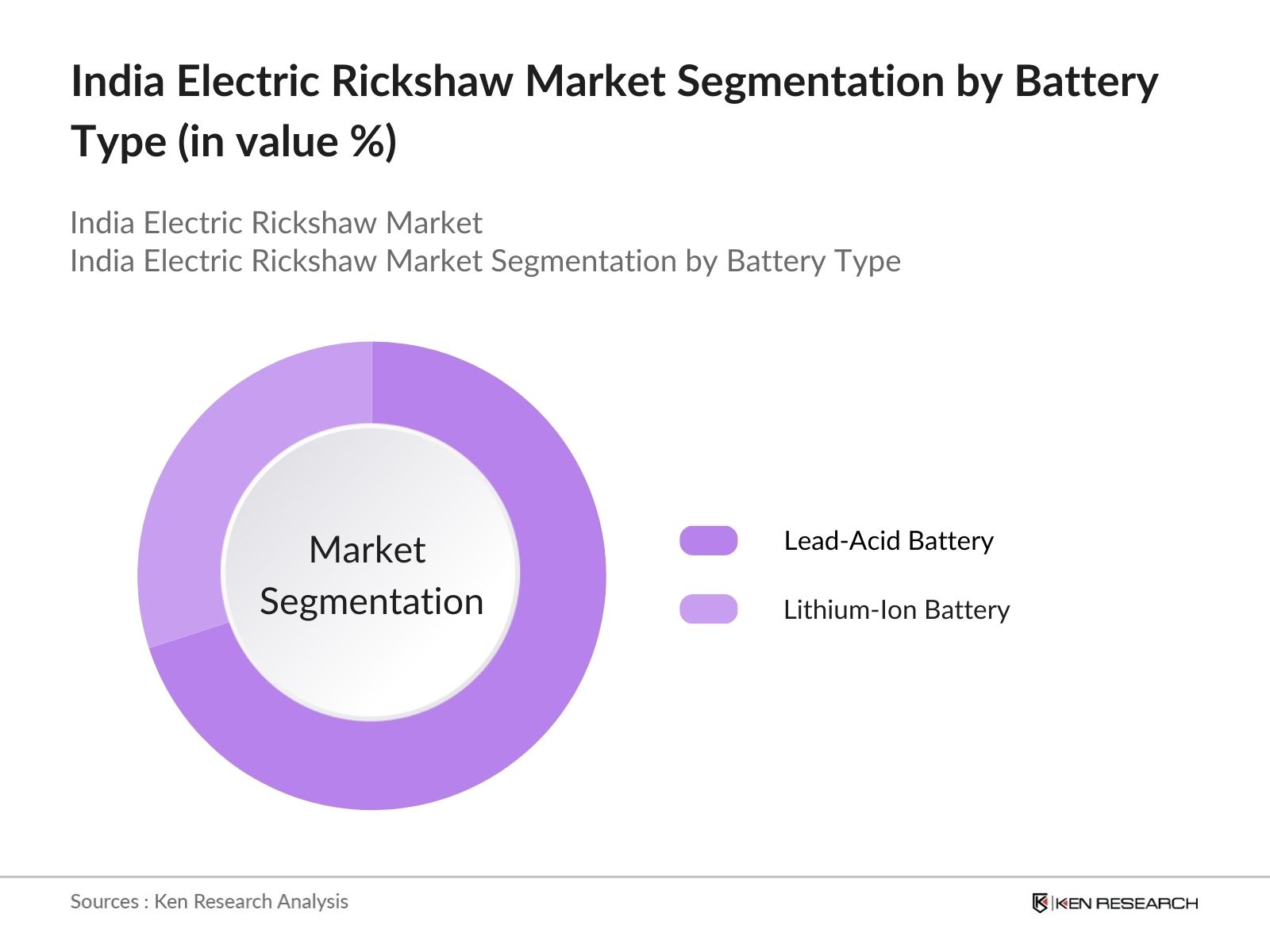
India Electric Rickshaw Market Competitive Landscape
The India Electric Rickshaw market is characterized by intense competition among several established local and regional players. The market is dominated by both legacy automakers and new entrants who have recognized the growing demand for sustainable, cost-effective public transportation. Companies are focusing on expanding their product portfolio and enhancing battery technologies to gain a competitive edge.
|
Company Name |
Established Year |
Headquarters |
Battery Type Used |
Revenue (2023, INR) |
Production Capacity |
R&D Spending |
EV Models |
Dealer Network |
OEM Partnerships |
|
Kinetic Green Energy & Power |
2011 |
Pune |
|||||||
|
Mahindra Electric Mobility Ltd. |
1995 |
Bangalore |
|||||||
|
Hero Electric Vehicles Pvt. Ltd. |
2007 |
New Delhi |
|||||||
|
Lohia Auto Industries |
2008 |
Noida |
|||||||
|
Saera Electric Auto Pvt. Ltd. |
2011 |
New Delhi |
India Electric Rickshaw Industry Analysis
Growth Drivers
- Government Subsidies: The Indian governments Faster Adoption and Manufacturing of Hybrid and Electric Vehicles (FAME) scheme provides substantial financial incentives for electric rickshaw manufacturers and buyers. The FAME-II schemes, which began in 2019 and was extended until 2024, allocated INR 10,000 crore for electric vehicle adoption. Over 5 lakh electric vehicles, including rickshaws, were subsidized as of 2023, making this a critical driver of growth. The subsidy for electric rickshaws is up to INR 50,000 per vehicle, encouraging faster adoption. Additionally, tax exemptions such as the reduction of GST to 5% on EVs further promote affordability.
- Urban Mobility Trends: Urban mobility in India is witnessing a shift, with increased demand for last-mile connectivity solutions. Electric rickshaws have become the preferred choice for urban transport due to their ability to navigate congested city spaces. According to the Ministry of Housing and Urban Affairs, nearly 30 million daily commuters in Tier-1 cities rely on electric rickshaws for short distances in 2023. These vehicles offer a flexible and efficient mode of transportation, further supported by initiatives like the Smart Cities Mission, which has prioritized the development of sustainable urban mobility solutions.
- Environmental Awareness: The push for electric vehicles, including electric rickshaws, is part of Indias effort to reduce carbon emissions. The Central Pollution Control Board (CPCB) reported that switching to electric rickshaws could save over 0.25 metric tons of carbon dioxide emissions per vehicle annually. By 2023, over 1 million electric rickshaws were operational, significantly contributing to better air quality in urban areas. Delhi alone experienced a 6% drop in particulate matter levels (PM10 and PM2.5) between 2022 and 2023, with electric rickshaws playing a role in this reduction.
Market Challenges
- Charging Infrastructure Deficiencies: One of the major obstacles to the widespread adoption of electric rickshaws is the lack of adequate charging infrastructure. India currently has fewer than 1,500 public charging stations as of 2023, which is insufficient for the growing number of EVs on the road, including electric rickshaws. According to the Ministry of Heavy Industries, 1.2 million electric vehicles were sold in India in 2022, but the charging infrastructure remains heavily skewed towards urban areas, leaving Tier-2 and Tier-3 cities underserved.
- Battery Recycling Issues: As the number of electric rickshaws grows, so does the issue of battery disposal and recycling. India lacks an established framework for lithium-ion battery recycling, leading to potential environmental hazards. The Ministry of Environment, Forest and Climate Change reported that over 3,000 metric tons of lithium-ion batteries reached their end of life in 2022, with most of them improperly disposed of. This poses a significant environmental risk, as harmful chemicals can leach into the soil and water systems.
India Electric Rickshaw Market Future Outlook
Over the next five years, the India Electric Rickshaw market is expected to experience significant growth, driven by ongoing government support, advancements in battery technology, and the increasing demand for environmentally sustainable and cost-efficient transport solutions. The market is also likely to benefit from improved charging infrastructure, further reduction in battery costs, and the growing penetration of electric rickshaws in tier-2 and tier-3 cities. The shift from lead-acid to lithium-ion batteries, while currently slow due to cost, is projected to accelerate as the latter becomes more affordable.
Future Market Opportunities
- Expansion in Tier-2 and Tier-3 Cities: Electric rickshaws have significant growth potential in Tier-2 and Tier-3 cities, where public transport options remain limited. In 2023, nearly 60% of Indias population lived in non-metropolitan areas, many of which lack reliable public transportation. The Ministry of Rural Development reported that in Tier-2 cities like Patna and Surat, electric rickshaws accounted for less than 10% of urban transport in 2023, indicating vast untapped potential. Government initiatives such as the Pradhan Mantri Awas Yojana aim to increase urban mobility in these regions, creating opportunities for electric rickshaw adoption.
- Lithium-Ion Battery Adoption: The adoption of lithium-ion batteries is expected to accelerate, offering longer battery life and reduced charging times compared to lead-acid batteries. In 2023, lithium-ion batteries powered approximately 25% of electric rickshaws in India. The Ministry of New and Renewable Energy reported a 15% increase in lithium-ion battery production capacity in 2022, signaling the growing prominence of this technology in the electric rickshaw market. This transition to more efficient batteries will drive operational efficiency and appeal to a broader consumer base.
Scope of the Report
|
Vehicle Type |
Passenger Electric Rickshaw Cargo Electric Rickshaw |
|
Battery Type |
Lead-Acid Battery Lithium-Ion Battery |
|
Power Capacity |
Less than 1000W 1000W to 1500W Greater than 1500W |
|
Application |
Passenger Transport Freight Transport |
|
Region |
North India South India East India West India |
Products
Key Target Audience
Electric Rickshaw Manufacturers
Battery Manufacturers
Charging Infrastructure Providers
Fleet Operators
Government and Regulatory Bodies (Ministry of Heavy Industries, Ministry of Road Transport & Highways)
Investor and Venture Capitalist Firms
Automobile Dealerships
Electric Vehicle Associations (Society of Indian Automobile Manufacturers, Electric Vehicle Manufacturers Association)
Companies
Major Players
Kinetic Green Energy & Power Solutions Ltd.
Mahindra Electric Mobility Ltd.
Hero Electric Vehicles Pvt. Ltd.
Lohia Auto Industries
Saera Electric Auto Pvt. Ltd.
Atul Auto Ltd.
Piaggio Vehicles Pvt. Ltd.
Gayam Motor Works
Terra Motors Corporation
Jezza Motors
YC Electric Vehicle
GreenRick Pvt. Ltd.
Thukral Electric Bikes Pvt. Ltd.
Udaan E Rickshaw
Pace Electric Vehicles Pvt. Ltd.
Table of Contents
India Electric Rickshaw Market Overview
1.1. Definition and Scope
1.2. Market Taxonomy
1.3. Industry Growth Rate (Electric Vehicle Market Growth, Penetration Rate, Regional Dynamics)
1.4. Market Segmentation Overview (Vehicle Type, Battery Type, Power Capacity, Application, Region)
India Electric Rickshaw Market Size (In INR Bn)
2.1. Historical Market Size (Revenue Analysis, Growth Trajectories)
2.2. Year-On-Year Growth Analysis (Fleet Expansion, Urban Adoption)
2.3. Key Market Developments and Milestones (Government Incentives, OEM Strategies, Technological Integration)
India Electric Rickshaw Market Analysis
3.1. Growth Drivers
3.1.1. Government Subsidies (FAME Scheme, Tax Exemptions)
3.1.2. Urban Mobility Trends (Increasing Demand for Last-Mile Connectivity)
3.1.3. Environmental Awareness (Reduction in Carbon Footprint, Air Quality Improvement)
3.1.4. Cost-Effectiveness (Lower Operating Costs, Battery Cost Decline)
3.2. Market Challenges
3.2.1. Charging Infrastructure Deficiencies (Charging Station Shortages)
3.2.2. Battery Recycling Issues (Environmental Concerns)
3.2.3. Regulatory Uncertainties (State-Level Regulations)
3.3. Opportunities
3.3.1. Expansion in Tier-2 and Tier-3 Cities
3.3.2. Lithium-Ion Battery Adoption
3.3.3. Electric Rickshaw Leasing Market
3.4. Trends
3.4.1. Integration of Smart Features (Telematics, GPS Tracking)
3.4.2. Fleet Electrification Programs (Corporate Initiatives, Shared Mobility)
3.4.3. Increasing Preference for Lithium-Ion Batteries
3.5. Government Regulation
3.5.1. FAME-II Scheme (Subsidies, Eligibility Criteria)
3.5.2. Regional EV Policies (State-Specific Incentives, Infrastructure Development)
3.5.3. Emission Norms and Compliance (Pollution Control Mandates)
3.5.4. GST Reduction on EVs
3.6. SWOT Analysis (Strengths, Weaknesses, Opportunities, Threats)
3.7. Stake Ecosystem (Manufacturers, Component Suppliers, Aftermarket Players)
3.8. Porters Five Forces (Competitive Rivalry, Supplier Power, Buyer Power, Threat of Substitutes, Barriers to Entry)
3.9. Competition Ecosystem (Major Manufacturers, Regional Dominance)
India Electric Rickshaw Market Segmentation
4.1. By Vehicle Type (In Value %)
4.1.1. Passenger Electric Rickshaw
4.1.2. Cargo Electric Rickshaw
4.2. By Battery Type (In Value %)
4.2.1. Lead-Acid Battery
4.2.2. Lithium-Ion Battery
4.3. By Power Capacity (In Value %)
4.3.1. Less than 1000W
4.3.2. 1000W to 1500W
4.3.3. Greater than 1500W
4.4. By Application (In Value %)
4.4.1. Passenger Transport
4.4.2. Freight Transport
4.5. By Region (In Value %)
4.5.1. North India
4.5.2. South India
4.5.3. East India
4.5.4. West India
India Electric Rickshaw Market Competitive Analysis
5.1 Detailed Profiles of Major Companies (In Value %: Revenue, Market Share, Geographical Presence)
5.1.1. Kinetic Green Energy & Power Solutions Ltd.
5.1.2. Mahindra Electric Mobility Ltd.
5.1.3. Lohia Auto Industries
5.1.4. Hero Electric Vehicles Pvt. Ltd.
5.1.5. Saera Electric Auto Pvt. Ltd.
5.1.6. Atul Auto Ltd.
5.1.7. Piaggio Vehicles Pvt. Ltd.
5.1.8. Gayam Motor Works
5.1.9. Terra Motors Corporation
5.1.10. Jezza Motors
5.1.11. YC Electric Vehicle
5.1.12. GreenRick Pvt. Ltd.
5.1.13. Thukral Electric Bikes Pvt. Ltd.
5.1.14. Udaan E Rickshaw
5.1.15. Pace Electric Vehicles Pvt. Ltd.
5.2 Cross Comparison Parameters (Product Offerings, Battery Types Used, Charging Solutions, After-Sales Services, Geographical Coverage, Dealer Network, Price Ranges, Fleet Size)
5.3 Market Share Analysis
5.4 Strategic Initiatives (Partnerships, Expansions, New Product Launches)
5.5 Mergers and Acquisitions
5.6 Investment Analysis (Venture Capital, Private Equity, Government Grants)
India Electric Rickshaw Market Regulatory Framework
6.1. EV Manufacturing Standards (AIS-123 Norms, CMVR)
6.2. Safety and Compliance Requirements (Crash Test Standards, Electrical Safety)
6.3. Certification Processes (Approval Process for New Models)
India Electric Rickshaw Future Market Size (In INR Bn)
7.1. Future Market Size Projections
7.2. Key Factors Driving Future Market Growth
India Electric Rickshaw Future Market Segmentation
8.1. By Vehicle Type (In Value %)
8.2. By Battery Type (In Value %)
8.3. By Power Capacity (In Value %)
8.4. By Application (In Value %)
8.5. By Region (In Value %)
India Electric Rickshaw Market Analysts' Recommendations
9.1. TAM/SAM/SOM Analysis
9.2. Customer Cohort Analysis (Buyer Preferences, Fleet Operators)
9.3. Marketing Initiatives (Awareness Campaigns, B2B Partnerships)
9.4. White Space Opportunity Analysis
Research Methodology
Step 1: Identification of Key Variables
The first step involves creating an in-depth market ecosystem map that highlights all the stakeholders involved in the India Electric Rickshaw Market. We conduct desk research from secondary databases and proprietary sources to define the key market dynamics, including regulatory impacts, technological advancements, and infrastructure developments.
Step 2: Market Analysis and Construction
In this phase, historical data on the India Electric Rickshaw Market is gathered and analyzed to evaluate growth trends and the development of infrastructure such as charging stations. A detailed analysis of vehicle adoption rates and key cost drivers, such as battery technology, is also conducted.
Step 3: Hypothesis Validation and Expert Consultation
We validate our hypotheses by interviewing industry experts from leading electric rickshaw manufacturers and fleet operators. This phase also involves consultations with regulatory bodies to understand the impact of government policies on market growth.
Step 4: Research Synthesis and Final Output
In the final phase, we synthesize data obtained from various industry participants, ensuring that the research is both accurate and comprehensive. This data is used to provide a reliable and detailed market forecast, grounded in validated bottom-up approaches and expert inputs.
Frequently Asked Questions
01. How big is the India Electric Rickshaw Market?
The India Electric Rickshaw market is valued at INR 1.1 billion, driven by increasing demand for last-mile connectivity, government incentives, and the rapid urbanization of major cities.
02. What are the challenges in the India Electric Rickshaw Market?
The main challenges in the India Electric Rickshaw market include insufficient charging infrastructure, high dependency on lead-acid batteries, and the relatively high upfront cost of lithium-ion battery-powered rickshaws.
03. Who are the major players in the India Electric Rickshaw Market?
Key players in the India Electric Rickshaw market include Kinetic Green Energy, Mahindra Electric, Hero Electric, Lohia Auto Industries, and Saera Electric, all of which dominate due to their established distribution networks and product variety.
04. What are the growth drivers of the India Electric Rickshaw Market?
The India Electric Rickshaw market is driven by government policies such as the FAME-II scheme, increasing urbanization, cost-effective mobility solutions, and rising consumer awareness of environmental sustainability.
05. What opportunities exist in the India Electric Rickshaw Market?
Opportunities in the India Electric Rickshaw market include expansion into tier-2 and tier-3 cities, adoption of lithium-ion batteries, and potential collaborations between OEMs and charging infrastructure providers to enhance market penetration.
Why Buy From Us?

What makes us stand out is that our consultants follows Robust, Refine and Result (RRR) methodology. i.e. Robust for clear definitions, approaches and sanity checking, Refine for differentiating respondents facts and opinions and Result for presenting data with story

We have set a benchmark in the industry by offering our clients with syndicated and customized market research reports featuring coverage of entire market as well as meticulous research and analyst insights.

While we don't replace traditional research, we flip the method upside down. Our dual approach of Top Bottom & Bottom Top ensures quality deliverable by not just verifying company fundamentals but also looking at the sector and macroeconomic factors.

With one step in the future, our research team constantly tries to show you the bigger picture. We help with some of the tough questions you may encounter along the way: How is the industry positioned? Best marketing channel? KPI's of competitors? By aligning every element, we help maximize success.

Our report gives you instant access to the answers and sources that other companies might choose to hide. We elaborate each steps of research methodology we have used and showcase you the sample size to earn your trust.

If you need any support, we are here! We pride ourselves on universe strength, data quality, and quick, friendly, and professional service.