
India Fabric Processing Market Outlook to 2029
Region:India
Author(s):Shashank Kashyap
Product Code:KR1513
Region:India
Author(s):Shashank Kashyap
Product Code:KR1513
July 2025
90
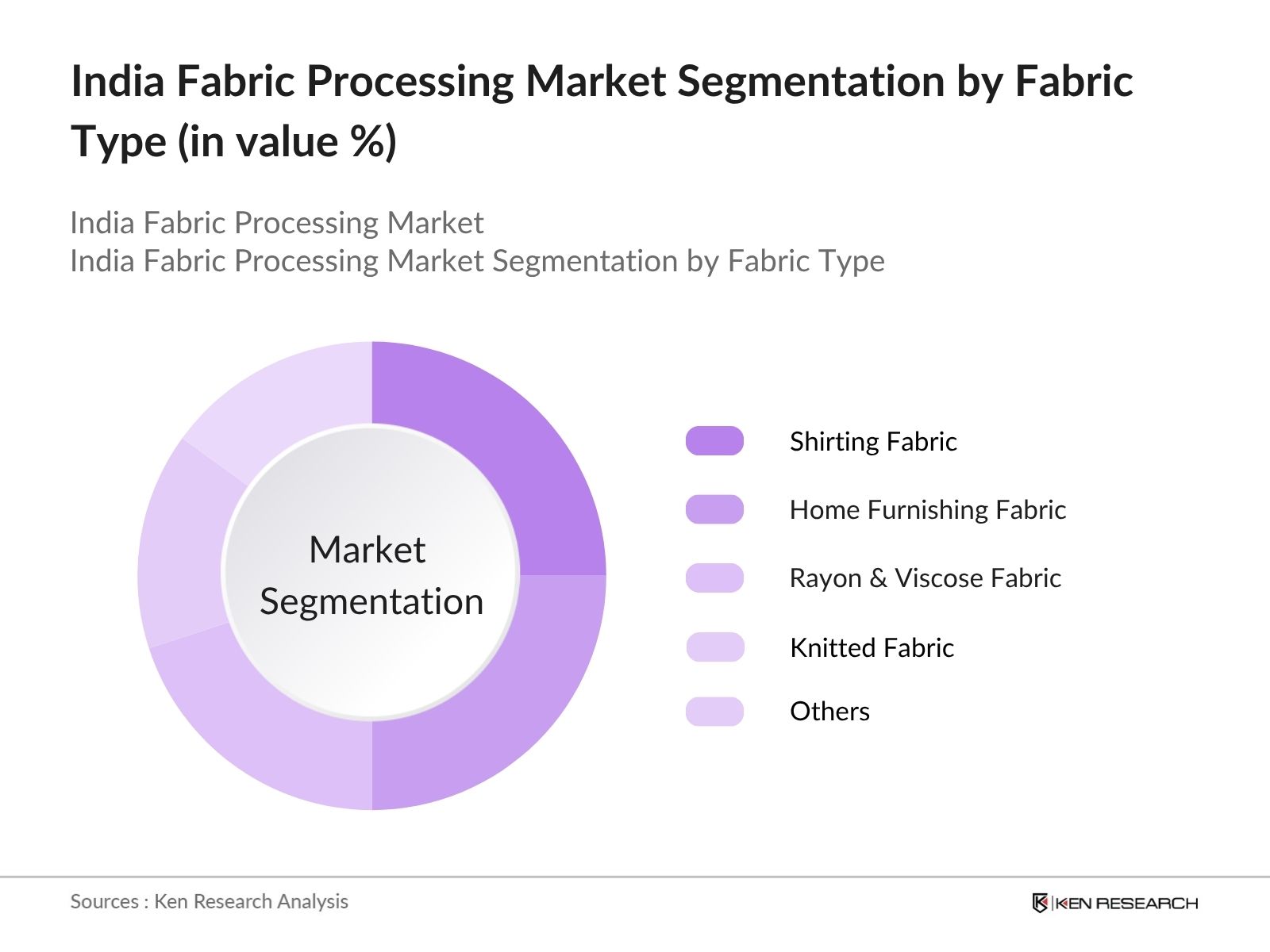
By Fabric Type: The market is segmented by fabric type into Shirting Fabric, Home Furnishing Fabric, Rayon & Viscose Fabric, Others (Technical Fibers, Denim etc.), and Knitted Fabric. Shirting Fabric leads the market, supported by strong demand from the formal and casual apparel segment, especially in menswear, and increasing focus on comfort, style, and versatility. Home Furnishing Fabric follows, driven by growth in the interior décor, real estate, and hospitality sectors.
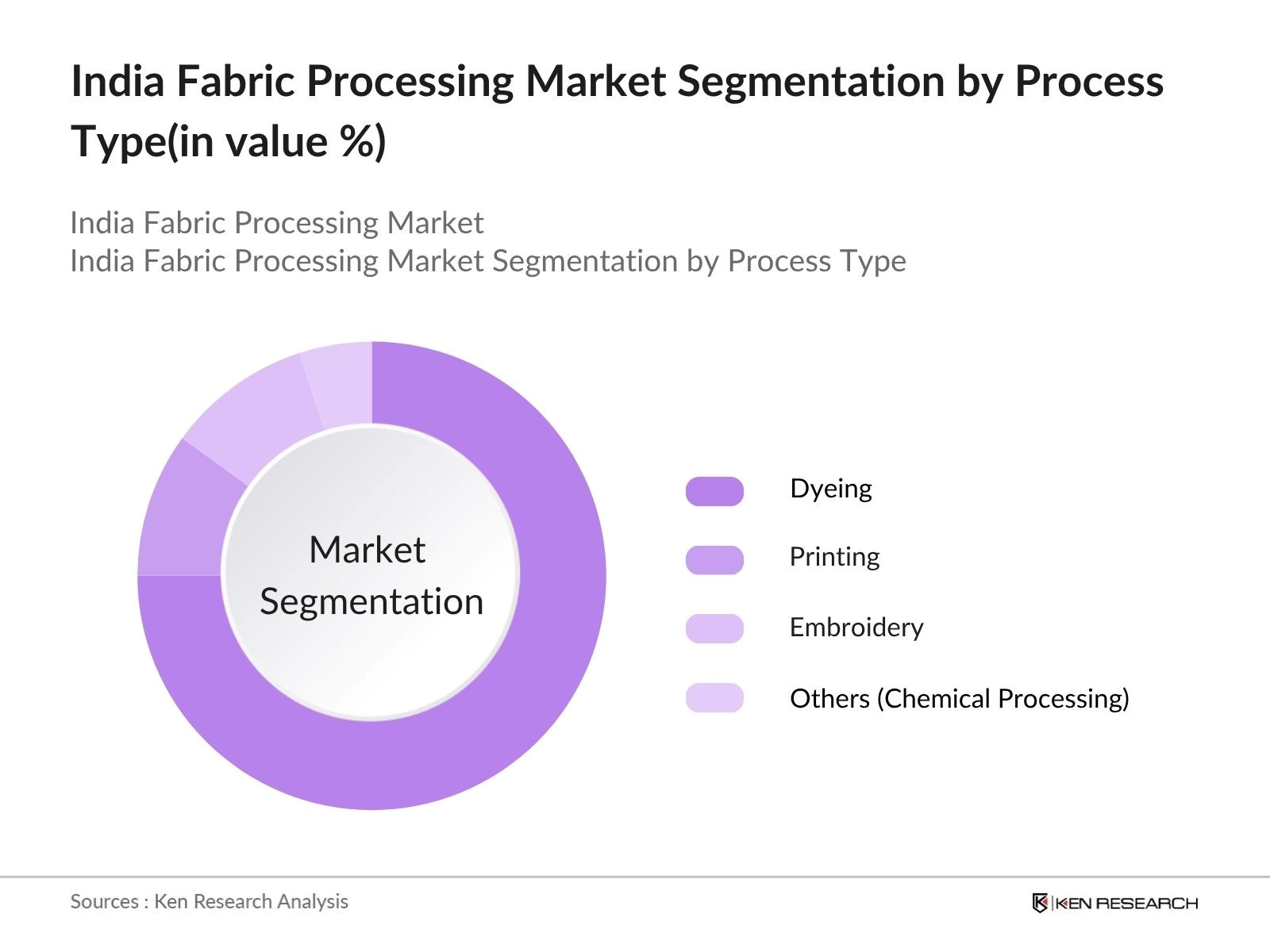
By Process Type: The market is segmented by process type into Dyeing, Printing, Embroidery, and Others (Chemical Processing). Dyeing dominates the fabric processing market, driven by its essential role in textile finishing and the growing demand for vibrant, durable colors across both apparel and industrial textiles. Printing follows closely, fueled by fashion innovation and the rise of digital textile printing for short-run and customized production.
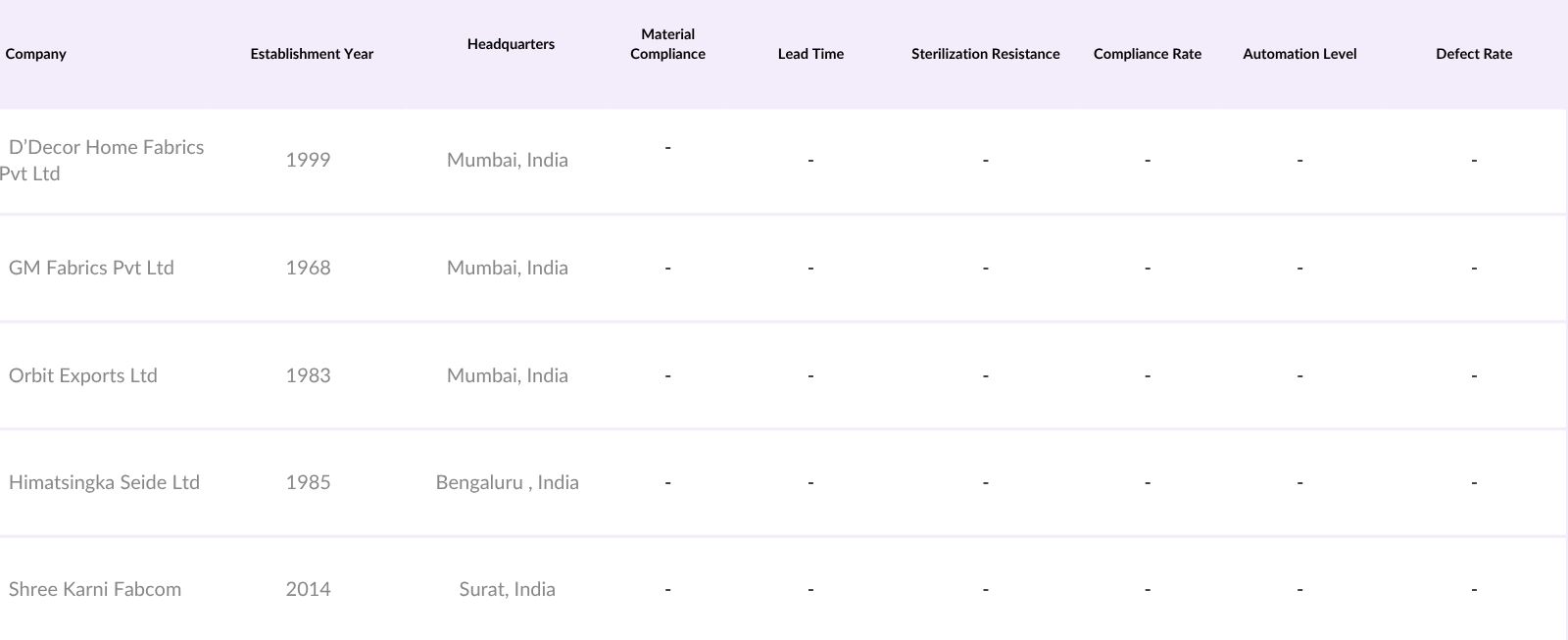
The India Fabric Processing Market is characterized by a competitive landscape with several key players, including D’Decor Home Fabrics Pvt Ltd., GM Fabrics Pvt Ltd, and Orbit Exports Ltd. These companies are known for their extensive product portfolios and strong market presence. The market is moderately concentrated, with a mix of large-scale manufacturers and small to medium enterprises contributing to the overall dynamics.
The future of the India fabric processing market appears promising, driven by technological innovations and a shift towards sustainability. As consumer preferences evolve, companies are likely to invest more in eco-friendly practices and digital technologies. The anticipated growth in online retail channels will further enhance market accessibility, allowing manufacturers to reach a broader audience. Additionally, collaborations with fashion brands for unique designs will likely foster creativity and innovation, positioning the industry for robust growth in the coming years.
| By Process Type |
Dyeing Printing Embroidery Others (Chemical Processing) |
| By Fabric Type |
Shirting Fabric Home Furnishing Fabric Rayon & Viscose Fabric Others (Technical Fibers, Denim etc.) |
| By Region |
North East Central West South |
1.1. Global Macroeconomic Scenario
1.2. Indian Economic Outlook
2.1. Indian Home Textile Industry Taxonomy
2.2. India’s Home Textile Industry Overview and Size, FY20–FY25 & FY25–FY31F
2.3. Market Genesis of Fabrics and Upholstery in India
2.4. Size of India’s Fabric Processing for The Domestic Home Textile Market.
3.1. Textile Industry Value Chain
3.2. Product Flow For Fabric Processing
3.3. Business Model Comparison: Fully Integrated vs Asset-Light Textile Manufacturers
4.1. India’s Domestic Fabric Processing Market Size and Segmentation, FY20–FY25 & FY25–FY31F
5.1. Curtain Market Regional Clusters in India
5.2. Market Trends and Developments
5.3. Market Challenges and Threats
5.4. Regulatory Landscape
6.1. Key Factors Shaping Competition in the Sector
6.2. Ecosystem of Entities Present in the Sector
6.3. Cross-Comparison of Peers in the India Fabric Processing Market
8.1. Market Definitions
8.2. Abbreviations
8.3. Market Sizing and Modeling
Consolidated Research Approach
Limitations
The initial phase involves constructing an ecosystem map encompassing all major stakeholders within the India Fabric Processing Market. This step is underpinned by extensive desk research, utilizing a combination of secondary and proprietary databases to gather comprehensive industry-level information. The primary objective is to identify and define the critical variables that influence market dynamics.
In this phase, we will compile and analyze historical data pertaining to the India Fabric Processing Market. This includes assessing market penetration, the ratio of marketplaces to service providers, and the resultant revenue generation. Furthermore, an evaluation of service quality statistics will be conducted to ensure the reliability and accuracy of the revenue estimates.
Market hypotheses will be developed and subsequently validated through computer-assisted telephone interviews (CATIs) with industry experts representing a diverse array of companies. These consultations will provide valuable operational and financial insights directly from industry practitioners, which will be instrumental in refining and corroborating the market data.
The final phase involves direct engagement with multiple manufacturers to acquire detailed insights into product segments, sales performance, consumer preferences, and other pertinent factors. This interaction will serve to verify and complement the statistics derived from the bottom-up approach, thereby ensuring a comprehensive, accurate, and validated analysis of the India Fabric Processing Market.
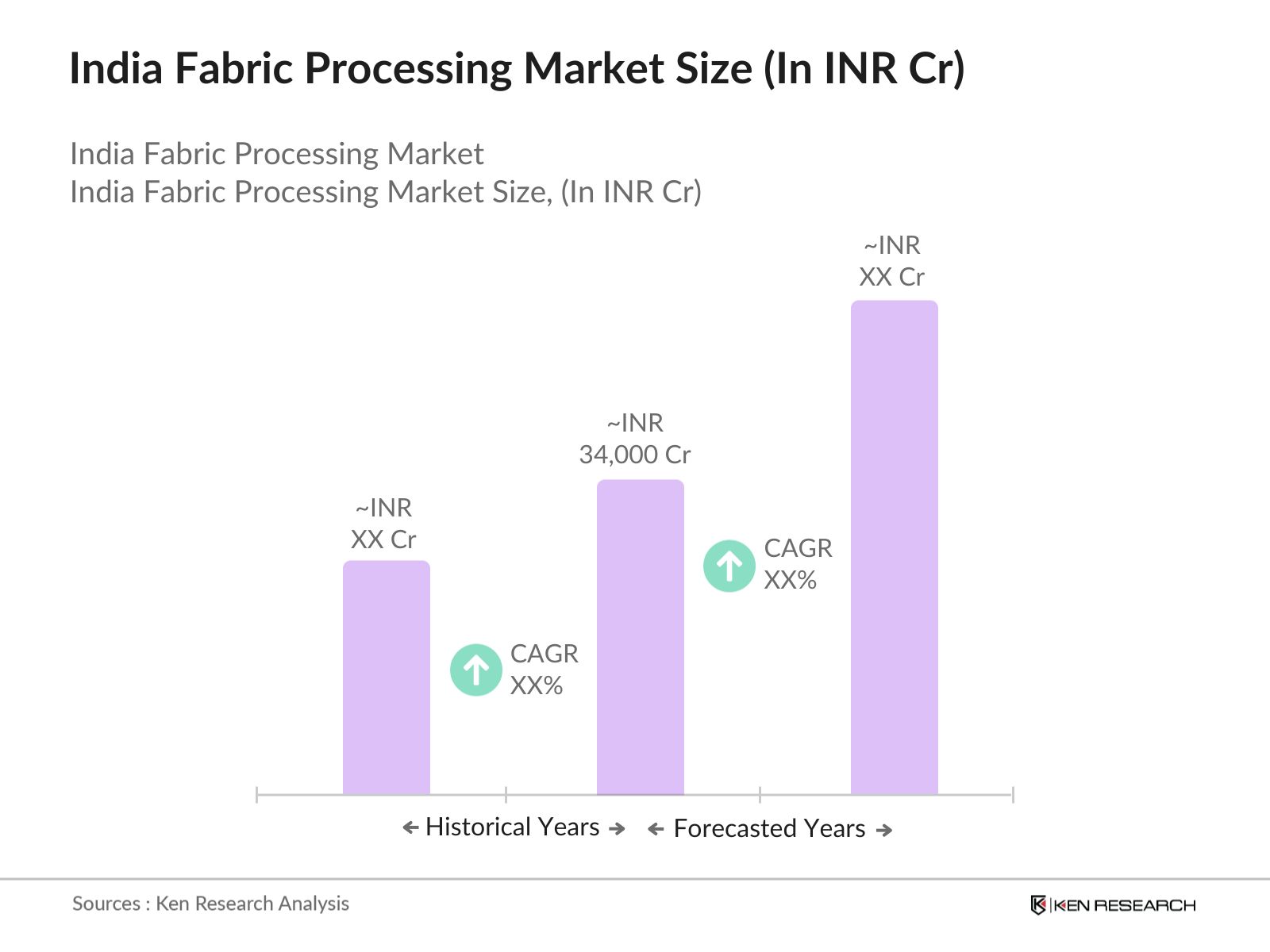
The India Fabric Processing Market is valued at approximately INR 34,000 crore, reflecting significant growth driven by increasing demand for processed fabrics across various sectors, including apparel, home textiles, and industrial applications.
Key growth drivers include rising disposable incomes, urbanization, evolving consumer preferences for high-quality and sustainable fabrics, and the rapid expansion of e-commerce, supported by government incentives aimed at boosting domestic manufacturing.
Surat, Ahmedabad, and Tirupur are major hubs in the India Fabric Processing Market. Surat specializes in synthetic textiles, Ahmedabad is known for cotton processing, and Tirupur is recognized for its knitwear manufacturing capabilities.
Implemented in 2023, the PLI scheme aims to enhance domestic manufacturing and exports in the textile sector by providing financial incentives to companies that improve production capabilities and adopt sustainable practices, fostering growth and innovation.
The market is primarily segmented into natural and synthetic fibers, with synthetic fibers leading due to their versatility, durability, and cost-effectiveness, aligning with the fast fashion trend and demand for innovative textiles.
The primary applications include apparel, home textiles, and industrial textiles. The apparel segment is the largest contributor, driven by consumer demand for trendy clothing and the growth of online retail channels.
Challenges include intense competition from low-cost imports, particularly from countries like China and Bangladesh, and rising compliance costs due to stringent environmental regulations, which can strain the financial resources of smaller firms.
The future outlook is promising, with anticipated growth driven by technological innovations, a shift towards sustainability, and the expansion of online retail channels, allowing manufacturers to reach a broader audience effectively.
The trend towards sustainable fabrics is significant, with a projected market for sustainable textiles expected to reach 1,500 crores, reflecting a 20% increase, as consumers increasingly prefer brands that prioritize eco-friendly practices.
Technological advancements enhance efficiency and quality in fabric processing. Investments in automation and smart technologies are expected to exceed 700 crores, improving operational efficiency by 25% and reducing waste in production processes.
Key players include Arvind Limited, Vardhman Textiles, Welspun India, and Raymond Limited, among others. These companies are recognized for their extensive product portfolios and strong market presence in the fabric processing sector.
Opportunities include expansion into emerging markets, adoption of automation and smart technologies, and increasing consumer preference for eco-friendly products, which can enhance competitive advantage and market share for fabric processors.
The fabric processing market segments by end-user into apparel, home textiles, technical textiles, and others. The apparel segment is the largest, driven by rising consumer demand for fashionable and premium clothing options.
Sustainability practices include eco-friendly processing methods, waterless dyeing technologies, and the use of recycled fabrics. These practices are increasingly influencing consumer choices and are essential for compliance with environmental regulations.
The rapid expansion of e-commerce significantly impacts the fabric processing market by enhancing accessibility for manufacturers and consumers, facilitating the growth of online retail channels, and driving demand for diverse fabric products.

What makes us stand out is that our consultants follows Robust, Refine and Result (RRR) methodology. i.e. Robust for clear definitions, approaches and sanity checking, Refine for differentiating respondents facts and opinions and Result for presenting data with story

We have set a benchmark in the industry by offering our clients with syndicated and customized market research reports featuring coverage of entire market as well as meticulous research and analyst insights.

While we don't replace traditional research, we flip the method upside down. Our dual approach of Top Bottom & Bottom Top ensures quality deliverable by not just verifying company fundamentals but also looking at the sector and macroeconomic factors.

With one step in the future, our research team constantly tries to show you the bigger picture. We help with some of the tough questions you may encounter along the way: How is the industry positioned? Best marketing channel? KPI's of competitors? By aligning every element, we help maximize success.

Our report gives you instant access to the answers and sources that other companies might choose to hide. We elaborate each steps of research methodology we have used and showcase you the sample size to earn your trust.

If you need any support, we are here! We pride ourselves on universe strength, data quality, and quick, friendly, and professional service.