
India Facial Recognition Software Market Outlook to 2030
Region:India
Author(s):Meenakshi Bisht
Product Code:KROD6910
Region:India
Author(s):Meenakshi Bisht
Product Code:KROD6910
December 2024
96
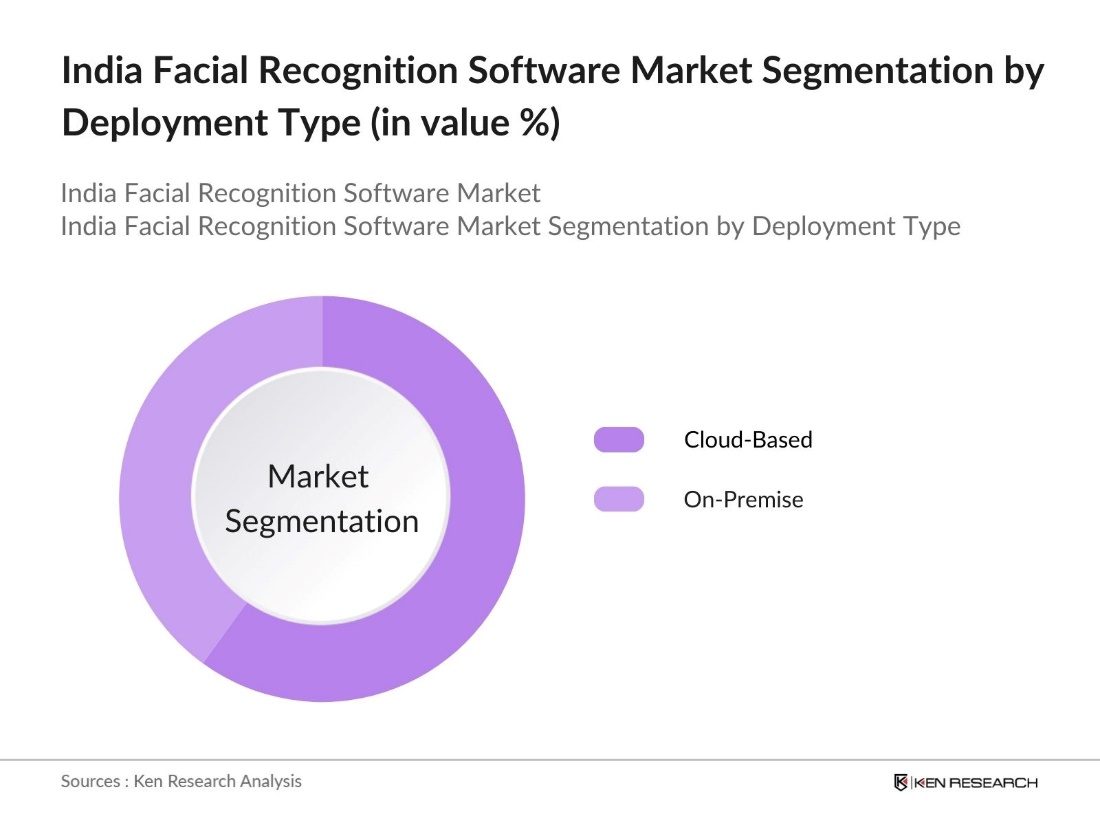
By Deployment Type: Indias facial recognition software market is segmented by deployment type into on-premise and cloud-based solutions. Recently, cloud-based solutions have gained dominance in the market, driven by the rising demand for scalability, flexibility, and remote accessibility. Companies in India are increasingly preferring cloud-based deployment as it reduces infrastructure costs and ensures faster implementation. The growing number of startups and SMEs also favor cloud-based systems due to their cost-efficiency and ease of integration.
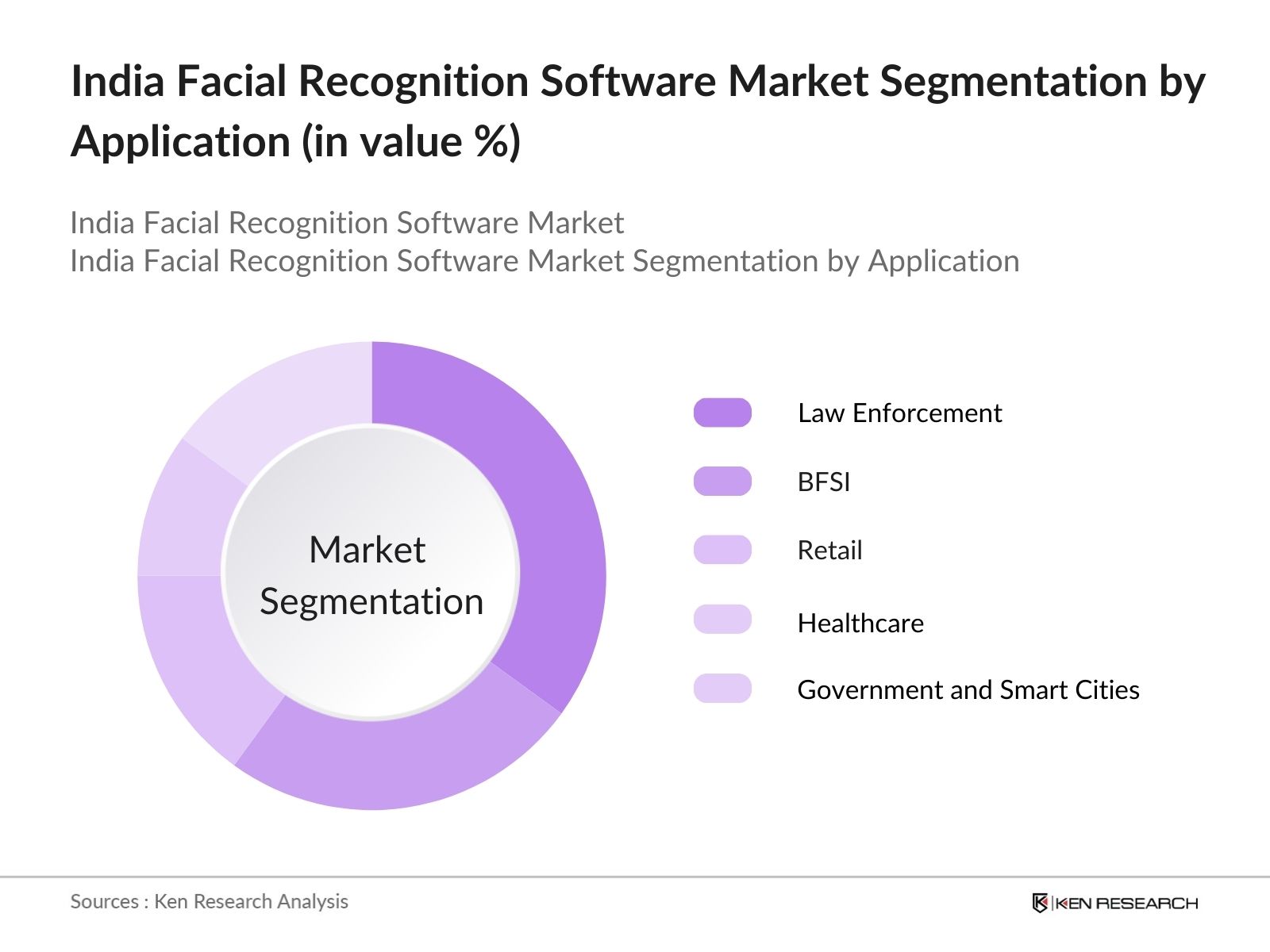
By Application: The market is also segmented by application into law enforcement, banking, financial services, and insurance (BFSI), retail, healthcare, and government and smart cities. Among these, the law enforcement segment dominates the market. This is largely due to the increasing government focus on public security and surveillance, particularly in large cities where maintaining public safety is a priority. Biometric facial recognition is increasingly used for criminal investigations, border control, and national identification programs, contributing to the dominance of this segment.
The India facial recognition software market is dominated by several major players that have established a strong presence through technological advancements, strategic partnerships, and government collaborations. The competitive landscape is shaped by both global giants and domestic players, who are actively working on enhancing the accuracy, speed, and usability of facial recognition technologies.
|
Company |
Year Established |
Headquarters |
Market Share |
R&D Spending |
Key Clients |
Key Products |
Partnership Ecosystem |
|
NEC Corporation |
1899 |
Japan |
|||||
|
FaceFirst |
2007 |
USA |
|||||
|
Cognitec Systems |
2002 |
Germany |
|||||
|
Idemia |
2007 |
France |
|||||
|
Herta Security |
2010 |
Spain |
The India facial recognition software market is set to experience significant growth in the coming years, driven by continuous advancements in AI technologies, growing demand for biometric authentication, and government-led initiatives aimed at enhancing public safety. The ongoing digital transformation in sectors such as banking, healthcare, and retail is expected to further increase the adoption of facial recognition systems, while the expansion of smart cities will also fuel market growth.
|
Deployment Type |
On-Premise Cloud-Based |
|
Application |
Law Enforcement BFSI Healthcare Retail Government and Smart Cities |
|
Technology |
2D Facial Recognition 3D Facial Recognition Facial Analytics |
|
End-User Industry |
Government and Public Sector Enterprise Sector Education Consumer Electronics |
|
Region |
North South East West |
1.1. Definition and Scope
1.2. Market Taxonomy
1.3. Market Growth Rate
1.4. Market Segmentation Overview
2.1. Historical Market Size
2.2. Year-On-Year Growth Analysis
2.3. Key Market Developments and Milestones
3.1. Growth Drivers
3.1.1. Adoption in Public Security (Key Market: Law Enforcement)
3.1.2. Expansion in Retail and Banking Sectors
3.1.3. Increasing Government Investments in AI and Surveillance
3.1.4. Growing Use in Smart Cities
3.2. Market Challenges
3.2.1. Privacy Concerns (GDPR, Local Regulations)
3.2.2. High Implementation Costs for SMEs
3.2.3. Technological Limitations in Accuracy (Biometric Matching Algorithms)
3.3. Opportunities
3.3.1. Integration with Cloud-Based Solutions (Cloud, SaaS)
3.3.2. Emerging Demand for Contactless Solutions (Healthcare, Airports)
3.3.3. Partnerships Between Private Sector and Government
3.4. Trends
3.4.1. Shift Towards 3D Recognition Technologies
3.4.2. Increasing Use in Mobile Payment Systems
3.4.3. Adoption of Multi-Factor Authentication
3.5. Government Regulations
3.5.1. Data Protection and Privacy Laws (Personal Data Protection Bill, IT Act)
3.5.2. Regulatory Standards for Biometric Authentication
3.5.3. Surveillance Regulations in Smart Cities
3.6. SWOT Analysis
3.7. Stake Ecosystem
3.8. Porters Five Forces
3.9. Competition Ecosystem
4.1. By Deployment Type (In Value %)
4.1.1. On-Premise
4.1.2. Cloud-Based
4.2. By Application (In Value %)
4.2.1. Law Enforcement
4.2.2. Banking, Financial Services, and Insurance (BFSI)
4.2.3. Healthcare
4.2.4. Retail
4.2.5. Government and Smart Cities
4.3. By Technology (In Value %)
4.3.1. 2D Facial Recognition
4.3.2. 3D Facial Recognition
4.3.3. Facial Analytics
4.4. By End-User Industry (In Value %)
4.4.1. Government and Public Sector
4.4.2. Enterprise Sector
4.4.3. Education
4.4.4. Consumer Electronics
4.5. By Region (In Value %)
4.5.1. North India
4.5.2. South India
4.5.3. East India
4.5.4. West India
5.1. Detailed Profiles of Major Competitors
5.1.1. NEC Corporation
5.1.2. Ayonix Corporation
5.1.3. FaceFirst
5.1.4. Cognitec Systems GmbH
5.1.5. Herta Security
5.1.6. Tech5
5.1.7. Idemia
5.1.8. Gemalto
5.1.9. AnyVision
5.1.10. Face++
5.1.11. Innovatrics
5.1.12. iProov
5.1.13. Aware Inc.
5.1.14. Daon
5.1.15. TrueFace
5.2. Cross Comparison Parameters (Revenue, Headquarters, R&D Spending, Market Share, No. of Employees, Partnership Ecosystem, Key Products, Major Clients)
5.3. Market Share Analysis
5.4. Strategic Initiatives
5.5. Mergers And Acquisitions
5.6. Investment Analysis
5.7. Venture Capital Funding
5.8. Government Grants
5.9. Private Equity Investments
6.1. Data Protection and Privacy Laws
6.2. Biometric Authentication Standards
6.3. Certification Processes
7.1. Future Market Size Projections
7.2. Key Factors Driving Future Market Growth
8.1. By Deployment Type (In Value %)
8.2. By Application (In Value %)
8.3. By Technology (In Value %)
8.4. By End-User Industry (In Value %)
8.5. By Region (In Value %)
9.1. TAM/SAM/SOM Analysis
9.2. Customer Cohort Analysis
9.3. Marketing Initiatives
9.4. White Space Opportunity Analysis
Disclaimer Contact UsIn this initial phase, we developed an ecosystem map to include all major stakeholders of the India facial recognition software market. Our focus was on identifying the key factors that drive adoption in sectors like law enforcement and BFSI.
We compiled historical data and analyzed the market penetration of facial recognition software across different sectors, assessing revenue contributions and technology adoption levels in public and private sectors.
Market hypotheses were validated through interviews with industry experts and representatives from companies operating within this space. This step ensured that our revenue estimates and market growth assumptions were reliable.
Our final output was synthesized by cross-verifying data from both primary and secondary sources, including face-to-face consultations with facial recognition software providers, ensuring the accuracy of market segmentation, growth drivers, and competitive analysis.
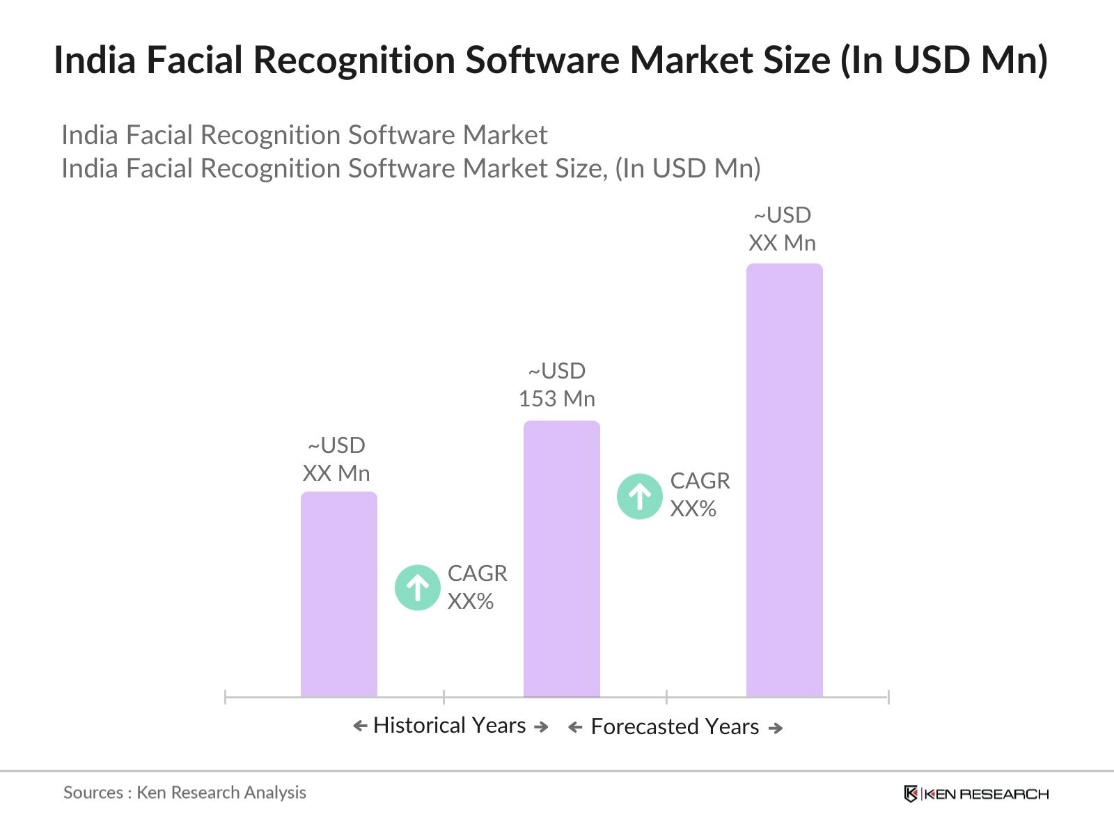
The India Facial Recognition Software Market is valued at USD 153 million, driven by the growing need for biometric identification in law enforcement and public safety sectors, as well as increased adoption in banking and retail sectors.
Key challenges in India Facial Recognition Software Market include privacy concerns, high implementation costs for smaller enterprises, and regulatory scrutiny, especially around the use of personal data for facial recognition.
The major players in India Facial Recognition Software Market include NEC Corporation, Cognitec Systems, Herta Security, Tech5, and Idemia, who dominate due to their technological innovations, strong R&D investments, and government collaborations.
The India Facial Recognition Software Market growth is primarily driven by government initiatives like smart city projects, increasing security concerns, and the growing use of biometric systems in BFSI and healthcare sectors for enhanced security and authentication.

What makes us stand out is that our consultants follows Robust, Refine and Result (RRR) methodology. i.e. Robust for clear definitions, approaches and sanity checking, Refine for differentiating respondents facts and opinions and Result for presenting data with story

We have set a benchmark in the industry by offering our clients with syndicated and customized market research reports featuring coverage of entire market as well as meticulous research and analyst insights.

While we don't replace traditional research, we flip the method upside down. Our dual approach of Top Bottom & Bottom Top ensures quality deliverable by not just verifying company fundamentals but also looking at the sector and macroeconomic factors.

With one step in the future, our research team constantly tries to show you the bigger picture. We help with some of the tough questions you may encounter along the way: How is the industry positioned? Best marketing channel? KPI's of competitors? By aligning every element, we help maximize success.

Our report gives you instant access to the answers and sources that other companies might choose to hide. We elaborate each steps of research methodology we have used and showcase you the sample size to earn your trust.

If you need any support, we are here! We pride ourselves on universe strength, data quality, and quick, friendly, and professional service.