
India Flame-Retardant Market Outlook to 2030
Region:Asia
Author(s):Shreya Garg
Product Code:KROD5294
December 2024
92
About the Report
India Flame-Retardant Market Overview
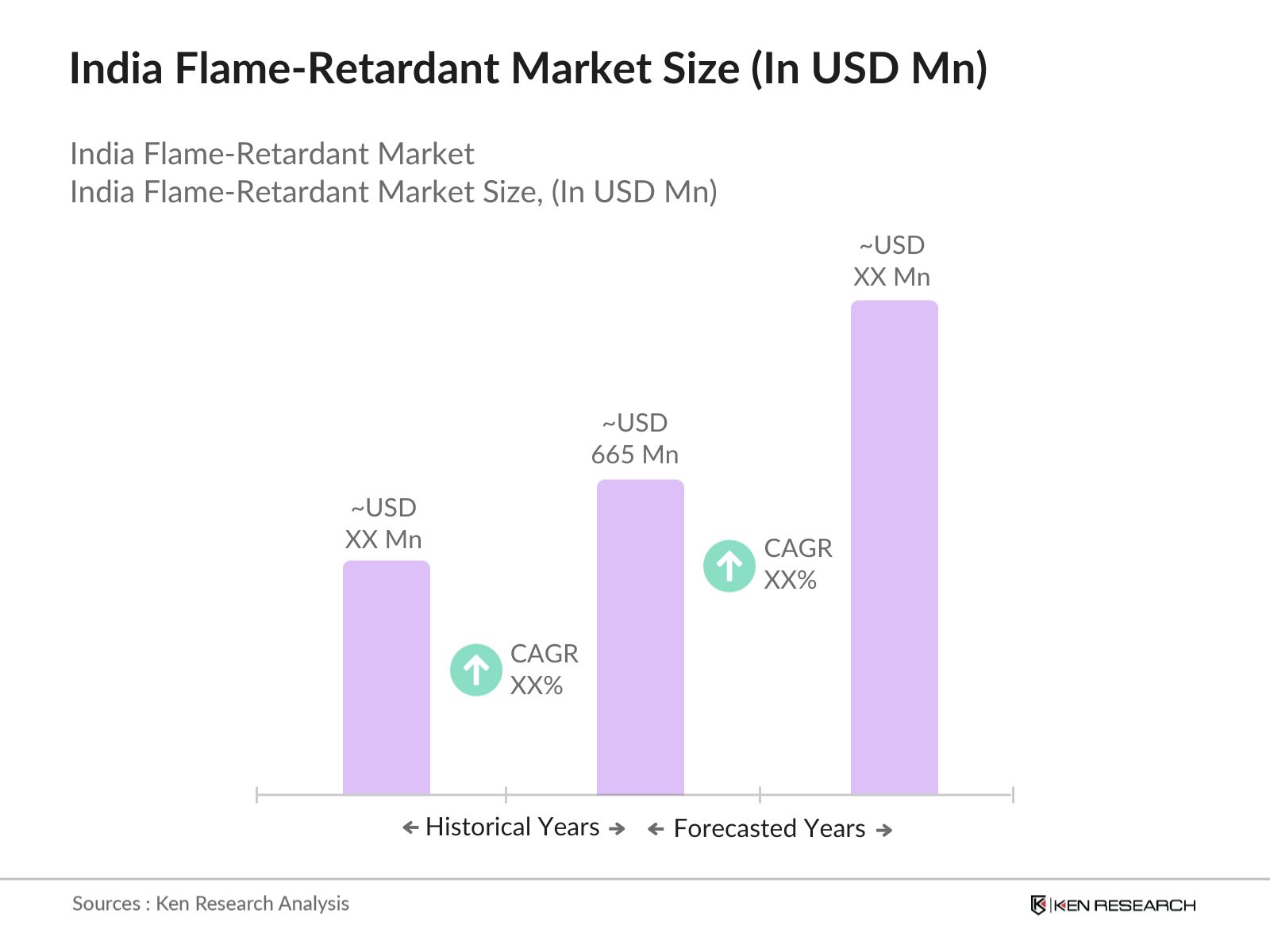
- The India Flame-Retardant market has shown significant growth in recent years. According to industry sources, the market reached a valuation of USD 665 million, driven by growing demand across construction, automotive, and electronics sectors. The push for enhanced fire safety regulations, particularly in urban construction and infrastructural projects, is one of the key growth drivers. These regulations require the use of flame retardants in building materials, furniture, and electrical wiring. As cities continue to expand and urban infrastructure develops, the demand for flame retardants is expected to rise further.
- The dominant regions within Indias Flame-Retardant market are Maharashtra, Tamil Nadu, and Gujarat. These states house key industrial hubs and manufacturing facilities that drive demand for flame retardants, particularly in the automotive, electronics, and construction sectors. Maharashtra, with its strong industrial base, is particularly dominant due to high demand for Flame-Retardant materials in both domestic manufacturing and export-oriented industries.
- In 2024, the Indian government, through the Food Safety and Standards Authority of India (FSSAI), will introduce stricter regulations on the allowable caffeine content in energy drinks. This initiative is aimed at ensuring consumer safety and mitigating health risks associated with excessive caffeine consumption.
India Flame-Retardant Market Segmentation
By Type: Indias Flame-Retardant market is segmented by type into brominated flame retardants, phosphorus-based flame retardants, nitrogen-based flame retardants, halogen-free flame retardants, and other organic flame retardants. Brominated flame retardants currently hold a dominant position within this segment due to their widespread usage in the electronics and automotive sectors. Their effectiveness at lower concentrations, especially in protecting circuit boards and other sensitive electronic components, has contributed to their dominance. However, the market is slowly shifting towards halogen-free alternatives due to growing environmental and health concerns surrounding brominated compounds.

By Application: The Flame-Retardant market in India is also segmented by application, including construction, electronics, automotive, textiles, and other end-use sectors. The construction sector is the largest consumer of flame retardants, driven by increased urbanization, stringent fire safety regulations, and growing investments in commercial and residential projects. Flame retardants are heavily utilized in building materials like insulation, cables, and coatings to meet national fire safety standards. The expansion of smart city initiatives further propels the demand for flame retardants in construction materials.

India Flame-Retardant Market Competitive Landscape
The India Flame-Retardant market is characterized by the presence of both international and domestic players. Several large corporations dominate the space with comprehensive product portfolios and established distribution networks. The market has seen increased consolidation in recent years, with key companies expanding their operations through acquisitions and partnerships to tap into the growing demand for eco-friendly and halogen-free flame retardants.
|
Company |
Established |
Headquarters |
Product Portfolio |
Manufacturing Locations |
R&D Investments |
Sustainability Initiatives |
Revenue (INR Bn) |
Patents Held |
|
BASF SE |
1865 |
Germany |
||||||
|
Clariant AG |
1886 |
Switzerland |
||||||
|
Albemarle Corporation |
1994 |
USA |
||||||
|
ICL Group |
1968 |
Israel |
||||||
|
LANXESS AG |
2004 |
Germany |
India Flame-Retardant Market Analysis
Growth Drivers
- Regulatory Push for Fire Safety Standards: India's government has implemented stricter fire safety standards, especially in critical sectors like construction and manufacturing. The National Building Code of India (NBC) and Fire & Life Safety Regulations have been instrumental in mandating the use of flame retardants in materials for construction and industrial applications. Compliance with these standards has driven the adoption of flame retardants across industries. According to recent regulations, over 1.5 million residential and commercial buildings were required to upgrade their fire safety equipment by 2024, further boosting demand.
- Expansion of Automotive & Electronics Industries: With India emerging as a global hub for automotive manufacturing and electronics, the demand for Flame-Retardant materials has significantly increased. The Indian automotive industry, which produced over 4 million vehicles in 2023, is integrating flame retardants to ensure compliance with international safety norms. Similarly, the booming electronics sector, which saw the production of nearly 250 million units in 2023, requires flame retardants for device casings, circuit boards, and cables, ensuring fire safety in mass-produced consumer electronics.
- Rising Demand in Construction (Infrastructure Development): The Indian governments investment in infrastructure development, including initiatives such as Smart Cities and affordable housing schemes, has led to a surge in construction activities. With over 80 cities under development in the Smart Cities initiative, the use of Flame-Retardant materials in infrastructure projects, including high-rise buildings and transportation hubs, is essential for fire safety. The construction sector's demand for Flame-Retardant materials is projected to reach unprecedented levels, driven by the need for safer materials in large-scale urban projects.
Market Challenges
- Health and Environmental Concerns: The use of flame retardants, especially brominated and chlorinated types, has raised significant health and environmental concerns. Certain compounds have been linked to adverse health effects, such as endocrine disruption, which has led to growing opposition from environmental groups. The Government of India has been increasingly scrutinizing the use of toxic flame retardants, resulting in stricter regulations aimed at reducing hazardous emissions. Over 100,000 tons of toxic flame retardants are still in use annually, creating a challenge for sustainability.
- Raw Material Price Volatility: The flame-retardant industry heavily depends on petrochemicals for the production of brominated and phosphorus-based retardants. The fluctuations in global crude oil prices have directly impacted the cost structure of raw materials in the Indian flame-retardant market. For example, in 2023, the price of key petrochemicals saw an increase of 15% due to geopolitical tensions, adding pressure on local manufacturers and reducing profitability in certain segments.
Future Outlook
Over the next five years, the India Flame-Retardant market is projected to witness substantial growth. This expansion will be driven by increasing government regulations on fire safety, especially in the construction and automotive industries. The development of non-toxic, halogen-free flame retardants is anticipated to gain momentum, as consumers and manufacturers alike focus on sustainability and reducing environmental impact. Furthermore, ongoing investments in smart city infrastructure and the rise of electric vehicles will create new opportunities for Flame-Retardant applications in both traditional and emerging sectors.
Opportunities
- Development of Non-Toxic and Eco-Friendly Alternatives: With increasing concerns over the toxicity of traditional flame retardants, the development of non-toxic and eco-friendly alternatives has emerged as a major opportunity. Indian manufacturers are focusing on producing bio-based flame retardants that comply with stringent environmental regulations. The demand for non-toxic flame retardants is expected to surge, especially in sensitive industries like baby products and food packaging, with potential demand reaching 500,000 tons by 2025.
- Strategic Partnerships Between Polymer Manufacturers and Flame-Retardant Producers: Indian flame-retardant producers are increasingly entering into strategic partnerships with polymer manufacturers to develop integrated solutions. These partnerships aim to create high-performance, flame-retardant polymers that meet the specific safety requirements of industries like automotive, construction, and electronics. With over 20 significant partnerships announced in 2023 alone, these collaborations have the potential to transform the market landscape by driving innovation and reducing production costs.
Scope of the Report
|
By Type |
Brominated Flame Retardants Phosphorus-Based Flame Retardants Nitrogen-Based Flame Retardants Halogen-Free Flame Retardants Other Organic Flame Retardants |
|
By Application |
Construction, Electronics & Electrical Devices Automotive & Transportation Textiles Other End-Use Sectors |
|
By Industry Use Case |
Fireproof Coatings Polyurethane Foam Plastics & Polymers Rubber & Elastomers Fabrics & Textiles |
|
By End-User |
Residential Commercial Industrial |
|
By Region |
Northern India Southern India Western India Eastern India Central India |
Products
Key Target Audience
Manufacturers of Polymer Materials
Construction Companies
Automotive Manufacturers
Electronics & Electrical Device Manufacturers
Textile Manufacturers
Government and Regulatory Bodies (Bureau of Indian Standards, Ministry of Environment, Forest and Climate Change)
Investors and Venture Capitalist Firms
Research & Development Institutions for Fire Safety Technologies
Companies
Major Players
BASF SE
Clariant AG
Albemarle Corporation
ICL Group
LANXESS AG
J.M. Huber Corporation
Akzo Nobel N.V.
Thor Group
DuPont de Nemours, Inc.
Dover Chemical Corporation
Table of Contents
1. India Flame-Retardant Market Overview
1.1. Definition and Scope
1.2. Market Taxonomy
1.3. Flame-Retardant Chemical Types
1.4. End-Use Industries Overview
2. India Flame-Retardant Market Size (In INR Bn)
2.1. Historical Market Size
2.2. Growth Analysis (Y-o-Y)
2.3. Key Developments and Milestones
3. India Flame-Retardant Market Analysis
3.1. Growth Drivers
Regulatory Push for Fire Safety Standards (National Building Code, Fire & Life Safety Regulations)
Expansion of Automotive & Electronics Industries
Rising Demand in Construction (Infrastructure Development)
Technological Advancements in Polymer Additives
3.2. Market Challenges
Health and Environmental Concerns (Toxicity and Sustainability Issues)
Raw Material Price Volatility (Petrochemical Dependencies)
Trade Barriers and Import Dependency
Competitive Pricing Pressures (Low-Cost Imports)
3.3. Opportunities
Development of Non-Toxic and Eco-Friendly Alternatives
Strategic Partnerships Between Polymer Manufacturers and Flame-Retardant Producers
Increased R&D Investments in Nano Flame Retardants
Growth in Flame-Retardant Applications for Lithium-Ion Batteries
3.4. Market Trends
Rise in Demand for Halogen-Free Flame Retardants
Flame Retardants in Sustainable Construction
Integration of Flame Retardants in Smart Textile Materials
Growing Use of Flame Retardants in Automotive Lightweight Materials
3.5. Government Regulations
National Fire Safety Codes
REACH (Registration, Evaluation, Authorisation and Restriction of Chemicals) Compliance
Bureau of Indian Standards (BIS) Certifications
Environmental Impact Guidelines for Flame-Retardant Disposal
3.6. SWOT Analysis
3.7. Supply Chain Analysis
3.8. Porter's Five Forces Analysis
3.9. Competitive Ecosystem Overview
4. India Flame-Retardant Market Segmentation
4.1. By Type (In Value %)
Brominated Flame Retardants
Phosphorus-Based Flame Retardants
Nitrogen-Based Flame Retardants
Halogen-Free Flame Retardants
Other Organic Flame Retardants
4.2. By Application (In Value %)
Construction
Electronics & Electrical Devices
Automotive & Transportation
Textiles
Other End-Use Sectors
4.3. By Industry Use Case (In Value %)
Fireproof Coatings
Polyurethane Foam
Plastics & Polymers
Rubber & Elastomers
Fabrics & Textiles
4.4. By End-User (In Value %)
Residential
Commercial
Industrial
4.5. By Region (In Value %)
Northern India
Southern India
Western India
Eastern India
Central India
5. India Flame-Retardant Market Competitive Analysis
5.1 Detailed Profiles of Major Companies
5.1.1. BASF SE
5.1.2. Clariant AG
5.1.3. Albemarle Corporation
5.1.4. ICL Group
5.1.5. LANXESS AG
5.1.6. Nabaltec AG
5.1.7. J.M. Huber Corporation
5.1.8. Akzo Nobel N.V.
5.1.9. DuPont de Nemours, Inc.
5.1.10. Thor Group
5.1.11. Italmatch Chemicals
5.1.12. Dover Chemical Corporation
5.1.13. MPI Chemie B.V.
5.1.14. Chase Corporation
5.1.15. Solaris ChemTech
5.2 Cross-Comparison Parameters (Revenue, Product Portfolio, No. of Employees, Manufacturing Locations, Patents Held, R&D Investments, Headquarters, Sustainability Initiatives)
5.3. Market Share Analysis
5.4. Strategic Initiatives
5.5. Mergers and Acquisitions
5.6. Investment Analysis
5.7. Government Funding & Incentives
6. India Flame-Retardant Market Regulatory Framework
6.1. Fire Safety Standards and Guidelines
6.2. Compliance with Environmental Safety Norms
6.3. Labeling and Certification Processes
6.4. Regulations on Flame-Retardant Waste Disposal
7. India Flame-Retardant Future Market Size (In INR Bn)
7.1. Projections for Market Growth
7.2. Factors Contributing to Future Growth
8. India Flame-Retardant Future Market Segmentation
8.1. By Type (In Value %)
8.2. By Application (In Value %)
8.3. By Industry Use Case (In Value %)
8.4. By End-User (In Value %)
8.5. By Region (In Value %)
9. India Flame-Retardant Market Analysts Recommendations
9.1. TAM/SAM/SOM Analysis
9.2. Product Innovation Roadmap
9.3. Go-to-Market Strategy
9.4. White Space Opportunity Identification
Disclaimer Contact UsResearch Methodology
Step 1: Identification of Key Variables
The research began with constructing an ecosystem map that included major stakeholders in the India Flame-Retardant Market. Extensive secondary research was conducted using proprietary databases and public reports to identify the critical factors driving market growth and challenges.
Step 2: Market Analysis and Construction
Historical data from Flame-Retardant suppliers and end-user industries was compiled and analyzed. This included revenue data and market penetration statistics across key industries such as construction, automotive, and electronics, to estimate overall market performance.
Step 3: Hypothesis Validation and Expert Consultation
Interviews were conducted with key industry stakeholders, including manufacturers and suppliers of flame retardants. These discussions helped refine our hypotheses and validated assumptions around growth drivers, technological advancements, and regulatory impacts on the market.
Step 4: Research Synthesis and Final Output
The final phase involved synthesizing the research findings and combining them with expert insights from industry stakeholders. This helped finalize a comprehensive and validated market report that captures key market trends, competitive dynamics, and future outlook.
Frequently Asked Questions
01 How big is the India Flame-Retardant Market?
The India Flame-Retardant market is valued at USD 665 Million, driven by demand across multiple industries such as construction, automotive, and electronics.
02 What are the major challenges in the India Flame-Retardant Market?
Key challenges include the environmental concerns associated with certain types of flame retardants, fluctuating raw material prices, and compliance with stringent safety regulations.
03 Who are the major players in the India Flame-Retardant Market?
Some of the key players in the India Flame-Retardant market include BASF SE, Clariant AG, Albemarle Corporation, ICL Group, and LANXESS AG.
04 What are the growth drivers of the India Flame-Retardant Market?
The market is primarily driven by increasing fire safety regulations, rising infrastructure projects, and advancements in fireproof materials for automotive and electronic applications.
Why Buy From Us?

What makes us stand out is that our consultants follows Robust, Refine and Result (RRR) methodology. i.e. Robust for clear definitions, approaches and sanity checking, Refine for differentiating respondents facts and opinions and Result for presenting data with story

We have set a benchmark in the industry by offering our clients with syndicated and customized market research reports featuring coverage of entire market as well as meticulous research and analyst insights.

While we don't replace traditional research, we flip the method upside down. Our dual approach of Top Bottom & Bottom Top ensures quality deliverable by not just verifying company fundamentals but also looking at the sector and macroeconomic factors.

With one step in the future, our research team constantly tries to show you the bigger picture. We help with some of the tough questions you may encounter along the way: How is the industry positioned? Best marketing channel? KPI's of competitors? By aligning every element, we help maximize success.

Our report gives you instant access to the answers and sources that other companies might choose to hide. We elaborate each steps of research methodology we have used and showcase you the sample size to earn your trust.

If you need any support, we are here! We pride ourselves on universe strength, data quality, and quick, friendly, and professional service.