
India Flex Fuel Vehicle Market Outlook to 2030
Region:India
Author(s):Shreya
Product Code:KROD6933
Region:India
Author(s):Shreya
Product Code:KROD6933
December 2024
81
By Vehicle Type: The market is segmented by vehicle type into passenger vehicles, commercial vehicles, two-wheelers, three-wheelers, and heavy-duty vehicles. Passenger vehicles hold a dominant market share within this segment, as the increasing consumer inclination towards eco-friendly personal transportation solutions is rising. Additionally, regulatory support in urban areas for alternative fuel vehicles has encouraged both manufacturers and consumers to lean toward Flex Fuel options in the passenger vehicle category, strengthening the segment's market position. 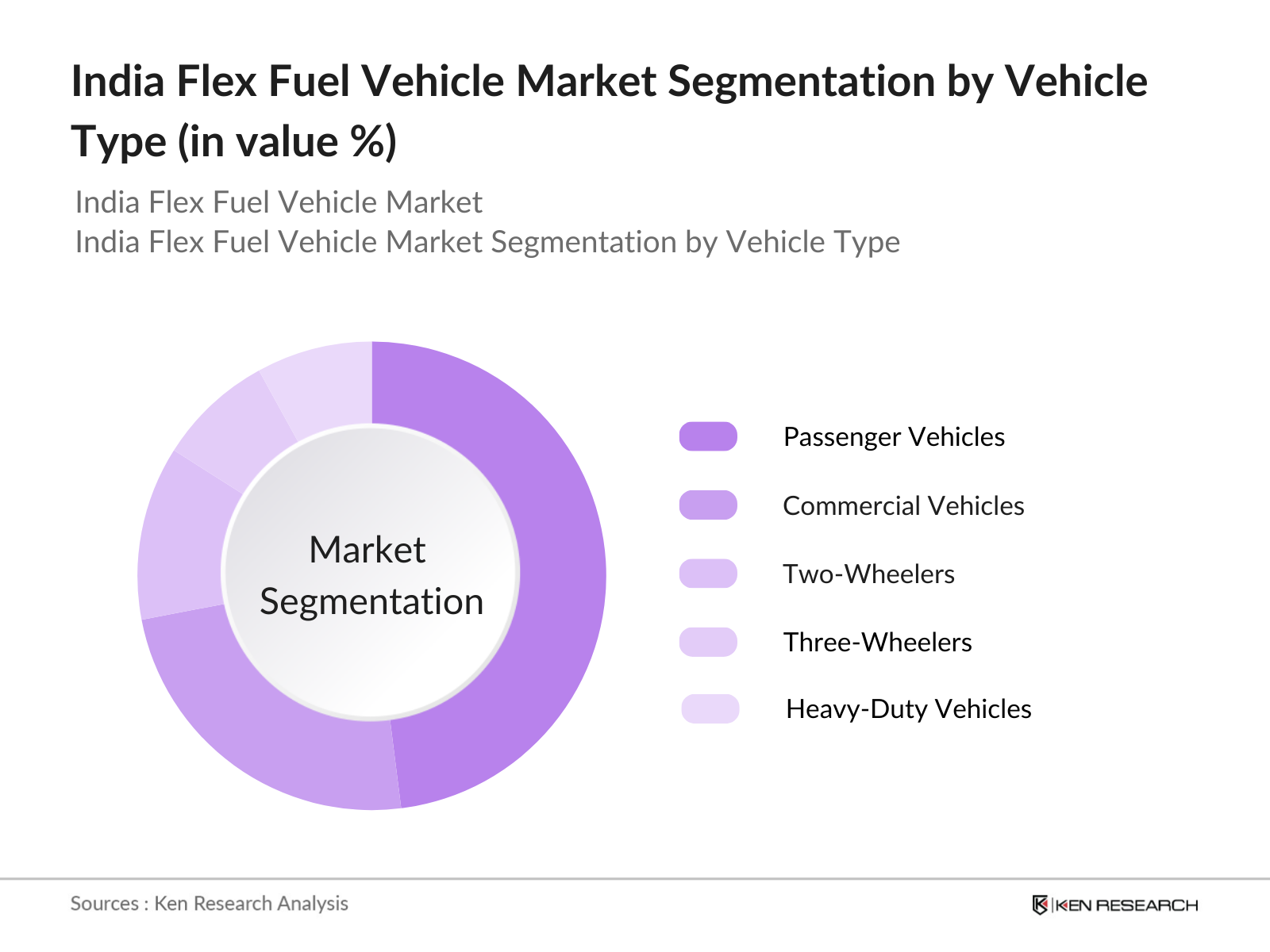
By Fuel Blend Type: The market is further segmented by fuel blend type into E10, E20, E85, and E100. E10 blend vehicles lead the market share due to the current infrastructure supporting this lower ethanol blend, making it easily accessible to the public. The compatibility of E10 with existing fuel station setups, along with favorable government policies, has propelled its use, making it the preferred blend in the market. The gradual adaptation of higher ethanol blends like E20 is underway as infrastructure and policies evolve to support these options. 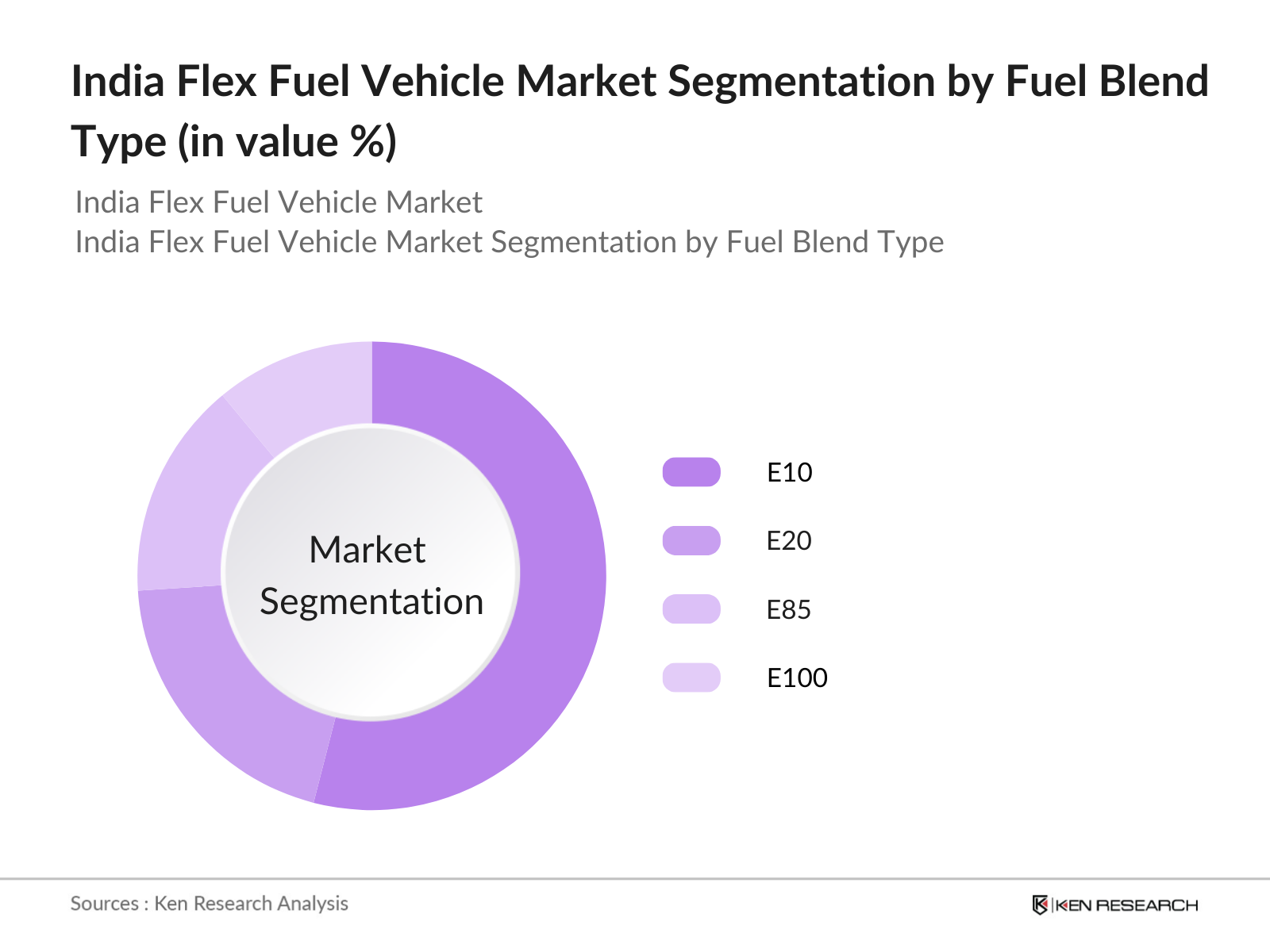
The India Flex Fuel Vehicle Market is characterized by the presence of both established automotive brands and specialized players, creating a competitive and consolidated landscape. The market is dominated by companies like Maruti Suzuki, Tata Motors, and Mahindra & Mahindra, which benefit from strong R&D capabilities, extensive distribution networks, and government-backed initiatives promoting fuel flexibility. International companies like Toyota and Honda are also active in this market, attracted by India's regulatory push towards ethanol-based solutions. 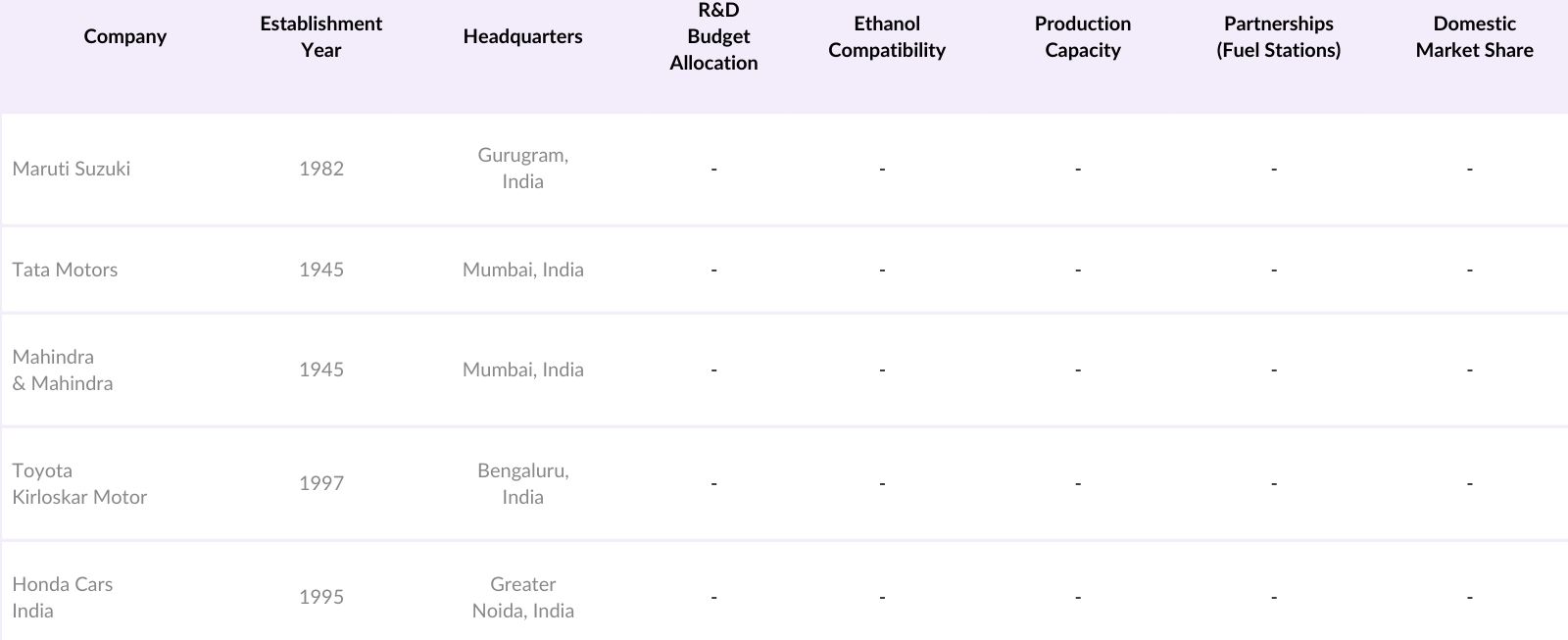
Over the next five years, the India Flex Fuel Vehicle Market is expected to witness significant growth as government mandates for ethanol blending increase and infrastructure expands. Demand for Flex Fuel vehicles will likely rise as consumer awareness of environmental sustainability and cost-effective fuel alternatives grows. Ongoing developments in Flex Fuel-compatible engine technologies and partnerships with fuel providers are anticipated to enhance the market's adaptability and scalability.
|
By Fuel Type |
- E20 (20% Ethanol) |
|
- E85 (85% Ethanol) |
|
|
- Other Blends (Custom Blends) |
|
|
By Vehicle Type |
- Passenger Vehicles |
|
- Light Commercial Vehicles (LCVs) |
|
|
- Heavy Commercial Vehicles (HCVs) |
|
|
- Utility Vehicles (SUVs, MUVs) |
|
|
By Engine Type |
- Spark-Ignition Engines |
|
- Compression-Ignition Engines |
|
|
- Hybrid Engines |
|
|
By Distribution Channel |
- OEM Sales |
|
- Aftermarket Retrofit |
|
|
By Region |
- North |
|
- South |
|
|
- East |
|
|
- West |
1.1. Definition and Scope
1.2. Market Taxonomy
1.3. Flex Fuel Technology Overview
1.4. Market Segmentation Overview
2.1. Historical Market Size
2.2. Year-On-Year Growth Analysis
2.3. Key Market Developments and Milestones
3.1. Growth Drivers
3.1.1. Government Initiatives and Subsidies (Fuel Diversification Policies)
3.1.2. Rising Environmental Awareness (Vehiclebon Footprint Reduction)
3.1.3. Cost Savings (Fuel Efficiency Benefits)
3.1.4. Increasing Vehicle Adoption (Automotive Sector Growth)
3.2. Market Challenges
3.2.1. High Manufacturing and Conversion Costs (Infrastructure and Materials)
3.2.2. Limited Availability of Flex Fuel Stations (Refueling Network Constraints)
3.2.3. Consumer Awareness and Education (Public Perception)
3.2.4. Technological Limitations (Performance at Various Ethanol Blends)
3.3. Opportunities
3.3.1. Expansion of E20 and E85 Infrastructure (Fuel Network Development)
3.3.2. Partnerships with Oil and Gas Companies (Fuel Supply Agreements)
3.3.3. Growth in Rural Demand (Alternate Fuel Accessibility)
3.4. Trends
3.4.1. Adoption of Hybrid Flex Fuel Models (Technology Integration)
3.4.2. Increased Investment in R&D (Innovation in Engine Technology)
3.4.3. Government Regulatory Push (Emission Standards)
3.4.4. Rise in Public-Private Partnerships (Automotive Collaboration)
3.5. Government Regulations
3.5.1. National Biofuel Policy
3.5.2. Emission Standards and Compliance
3.5.3. Flex Fuel Incentives and Subsidies
3.5.4. Import Tariffs and Duties on Ethanol
3.6. SWOT Analysis
3.7. Value Chain and Stakeholder Ecosystem
3.8. Porters Five Forces Analysis
3.9. Competitive Ecosystem
4.1. By Vehicle Type (In Value %)
4.1.1. Passenger Vehicles
4.1.2. Commercial Vehicles
4.1.3. Two-Wheelers
4.1.4. Three-Wheelers
4.1.5. Heavy-Duty Vehicles
4.2. By Fuel Blend Type (In Value %)
4.2.1. E10
4.2.2. E20
4.2.3. E85
4.2.4. E100
4.3. By End-User Segment (In Value %)
4.3.1. Individual Consumers
4.3.2. Fleet Operators
4.3.3. Government Agencies
4.3.4. Commercial Enterprises
4.4. By Distribution Channel (In Value %)
4.4.1. OEMs
4.4.2. Aftermarket
4.4.3. Dealerships
4.5. By Region (In Value %)
4.5.1. North
4.5.2. South
4.5.3. East
4.5.4. West
5.1. Detailed Profiles of Major Companies
5.1.1. Tata Motors
5.1.2. Maruti Suzuki India Ltd.
5.1.3. Mahindra & Mahindra Ltd.
5.1.4. Toyota Kirloskar Motor Pvt. Ltd.
5.1.5. Honda Vehicles India Ltd.
5.1.6. Ford India Private Limited
5.1.7. Hyundai Motor India Ltd.
5.1.8. Bajaj Auto Ltd.
5.1.9. Hero MotoCorp Ltd.
5.1.10. Ashok Leyland Ltd.
5.1.11. General Motors India
5.1.12. Suzuki Motor Corporation
5.1.13. Eicher Motors Ltd.
5.1.14. Yamaha Motor India Pvt. Ltd.
5.1.15. Renault India Pvt. Ltd.
5.2. Cross-Comparison Parameters (Revenue, Manufacturing Base, Ethanol Compatibility, Innovation Score, Product Range, Distribution Network, Market Share, Employee Base)
5.3. Market Share Analysis
5.4. Strategic Initiatives
5.5. Mergers and Acquisitions
5.6. Investment Analysis
5.7. Venture Capital Funding
5.8. Private Equity Investments
6.1. National Flex Fuel Standards and Guidelines
6.2. Certification and Compliance Requirements
6.3. Ethanol Blending Mandates
6.4. Taxation Policies and Exemptions
7.1. Future Market Size Projections
7.2. Key Factors Driving Future Growth
8.1. By Vehicle Type (In Value %)
8.2. By Fuel Blend Type (In Value %)
8.3. By End-User Segment (In Value %)
8.4. By Distribution Channel (In Value %)
8.5. By Region (In Value %)
9.1. Total Addressable Market (TAM), Serviceable Available Market (SAM), Serviceable Obtainable Market (SOM) Analysis
9.2. Customer Behavior and Cohort Analysis
9.3. Suggested Marketing Strategies
9.4. White Space Analysis and Growth Opportunities
Disclaimer Contact Us
This phase involves mapping out key stakeholders across the India Flex Fuel Vehicle Market, with in-depth research on the automotive ecosystem. The goal is to identify critical market drivers, constraints, and trends.
We analyze historical data to evaluate Flex Fuel market growth. This stage includes examining market adoption levels, and blending ratios of Flex Fuel vehicles in India to provide accurate revenue and market size estimates.
Market assumptions are verified through telephonic interviews with industry experts from various automotive companies. Insights are gathered on Flex Fuel vehicle demand, fuel compatibility, and market trends.
We engage directly with vehicle manufacturers to gather information on sales performance, product segments, and consumer preferences. This synthesis refines the bottom-up market size estimations and ensures comprehensive, validated analysis.
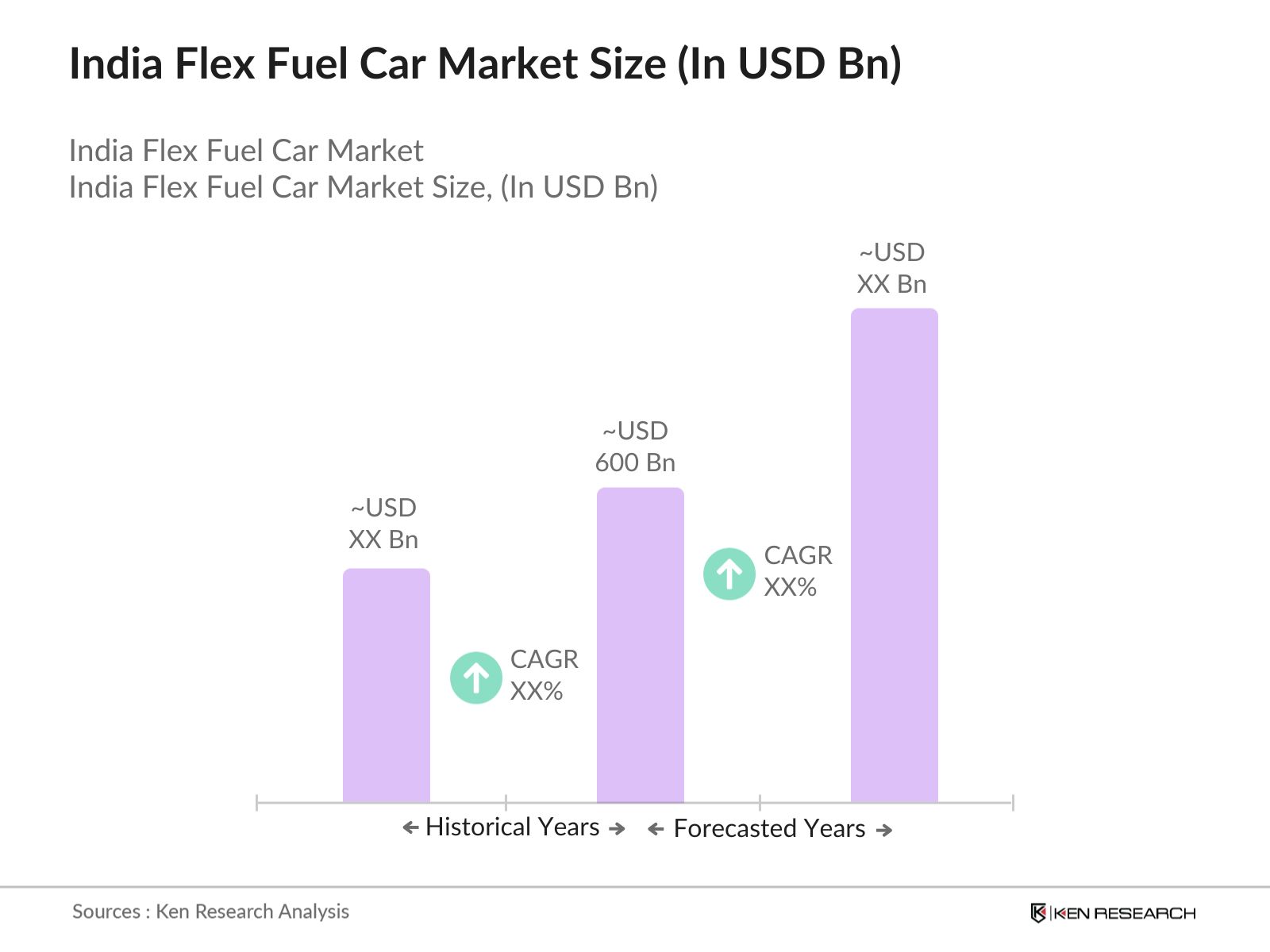
The India Flex Fuel Vehicle Market was valued at USD 600 billion, driven by growing awareness of alternative fuel benefits, government policies, and advancements in Flex Fuel technology.
Key challenges in the India Flex Fuel Vehicle Market include high production costs, limited refueling infrastructure for higher ethanol blends, and the need for greater consumer awareness regarding Flex Fuel technology.
Leading companies in the India Flex Fuel Vehicle Market include Maruti Suzuki, Tata Motors, Mahindra & Mahindra, Toyota Kirloskar Motor, and Honda Vehicles India, benefiting from strong market positions and government-backed incentives.
Growth in the India Flex Fuel Vehicle Market is primarily driven by the Indian governments policies on ethanol blending, increasing environmental concerns, and demand for cost-efficient transportation options.
The passenger vehicle segment dominates the India Flex Fuel Vehicle Market due to high consumer preference for personal eco-friendly transport solutions, supported by incentives for alternative fuel vehicles.

What makes us stand out is that our consultants follows Robust, Refine and Result (RRR) methodology. i.e. Robust for clear definitions, approaches and sanity checking, Refine for differentiating respondents facts and opinions and Result for presenting data with story

We have set a benchmark in the industry by offering our clients with syndicated and customized market research reports featuring coverage of entire market as well as meticulous research and analyst insights.

While we don't replace traditional research, we flip the method upside down. Our dual approach of Top Bottom & Bottom Top ensures quality deliverable by not just verifying company fundamentals but also looking at the sector and macroeconomic factors.

With one step in the future, our research team constantly tries to show you the bigger picture. We help with some of the tough questions you may encounter along the way: How is the industry positioned? Best marketing channel? KPI's of competitors? By aligning every element, we help maximize success.

Our report gives you instant access to the answers and sources that other companies might choose to hide. We elaborate each steps of research methodology we have used and showcase you the sample size to earn your trust.

If you need any support, we are here! We pride ourselves on universe strength, data quality, and quick, friendly, and professional service.