















India Flexfuel Cars Market Outlook to 2030
Region:Asia
Author(s):Yogita Sahu
Product Code:KROD8114
December 2024
87
About the Report
India Flexfuel Cars Market Overview
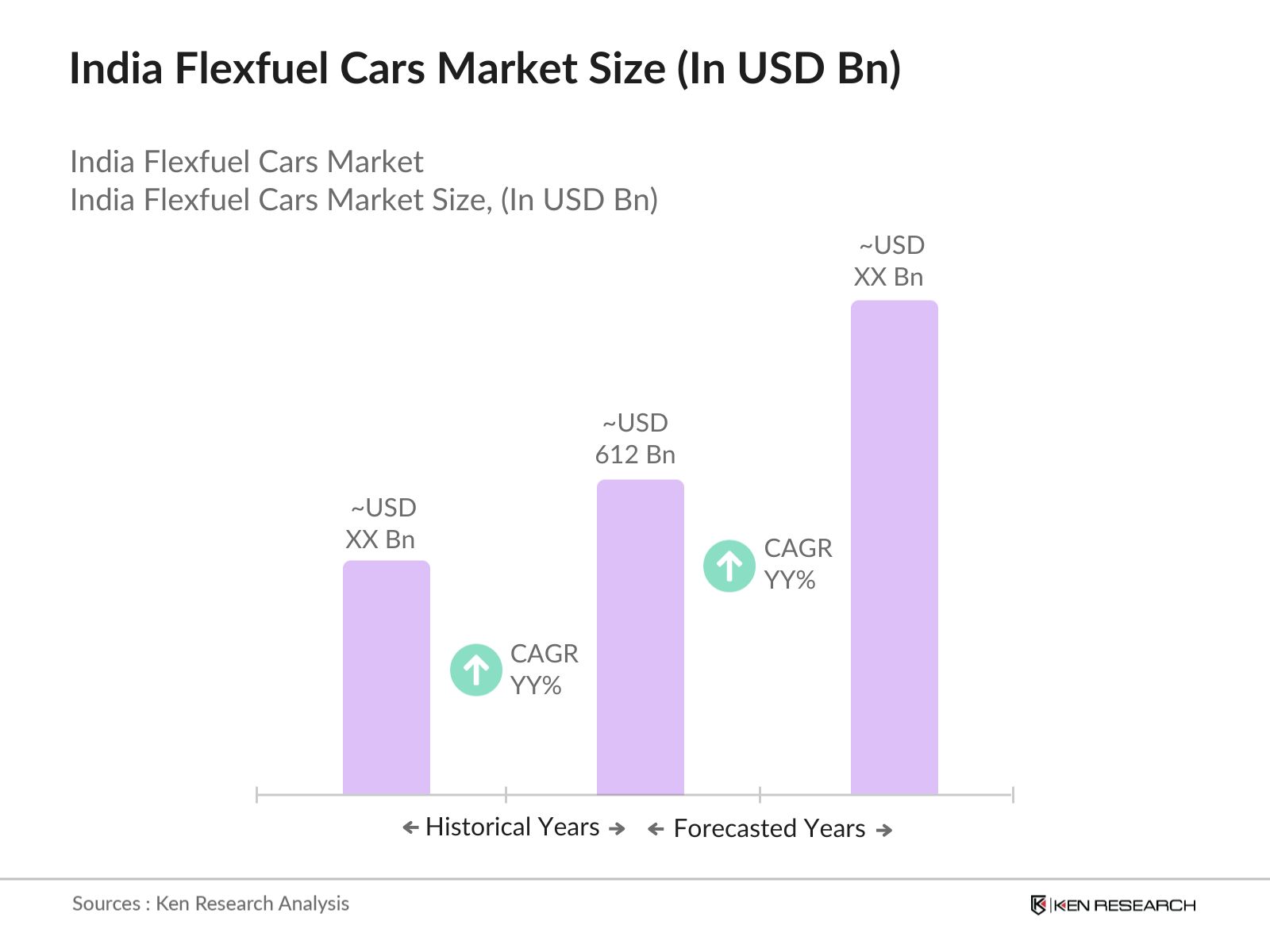
- The India Flexfuel Cars market is valued at USD 612 billion, based on a comprehensive five-year historical analysis. The market's growth is driven by various factors, including government initiatives aimed at promoting ethanol-blended fuels and reducing reliance on fossil fuels. The increased availability of ethanol and the government's target to achieve 20% ethanol blending across the country is accelerating the adoption of flexfuel vehicles.
- The Western region of India, particularly Maharashtra and Gujarat, plays a pivotal role in the Flexfuel Cars market. Maharashtra's leadership in ethanol production, supported by its sugarcane agriculture, enables a smoother transition to ethanol-based vehicles. Furthermore, urban centers like Mumbai and Pune contribute significantly due to their early adoption of sustainable technologies and the state's proactive efforts to promote ethanol fuel infrastructure.
- The Indian government revised the National Biofuel Policy in 2023, setting a target of 20% ethanol blending (E20) in petrol by 2025, five years ahead of the original schedule. This policy includes incentives for ethanol producers and mandates for oil marketing companies to source ethanol domestically. The government also offers interest subvention schemes for sugar mills to build ethanol distillation capacities, which is projected to increase ethanol production by 4 billion liters in the next three years.
India Flexfuel Cars Market Segmentation
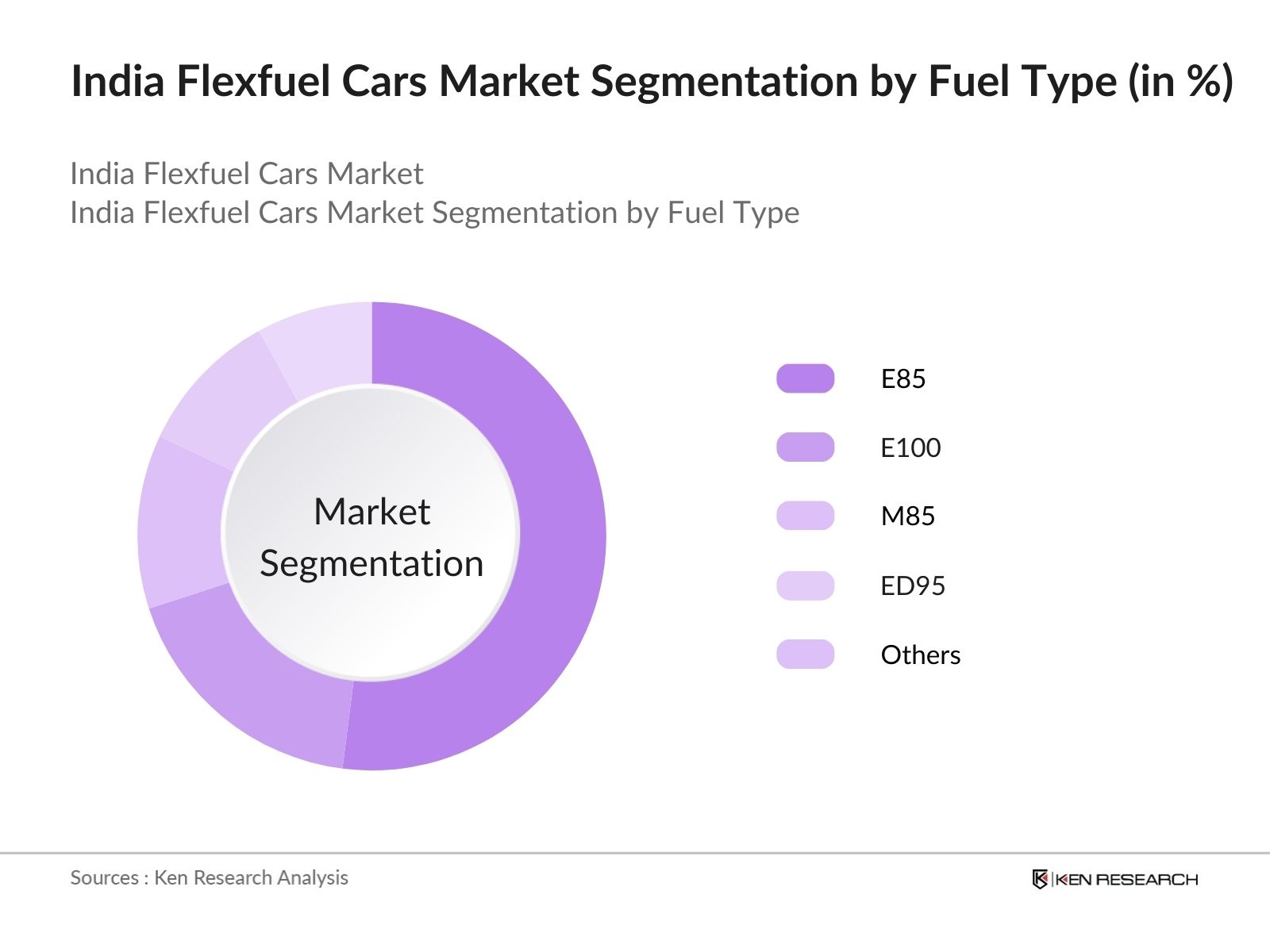
By Fuel Type: The market is segmented by fuel type into E85, E100, M85, ED95, and others. E85, which refers to a fuel blend of 85% ethanol and 15% gasoline, has a dominant market share in the fuel type segment. This is primarily due to the increased availability of ethanol-blended fuels and the cost savings for consumers using E85, as ethanol tends to be cheaper than traditional gasoline.
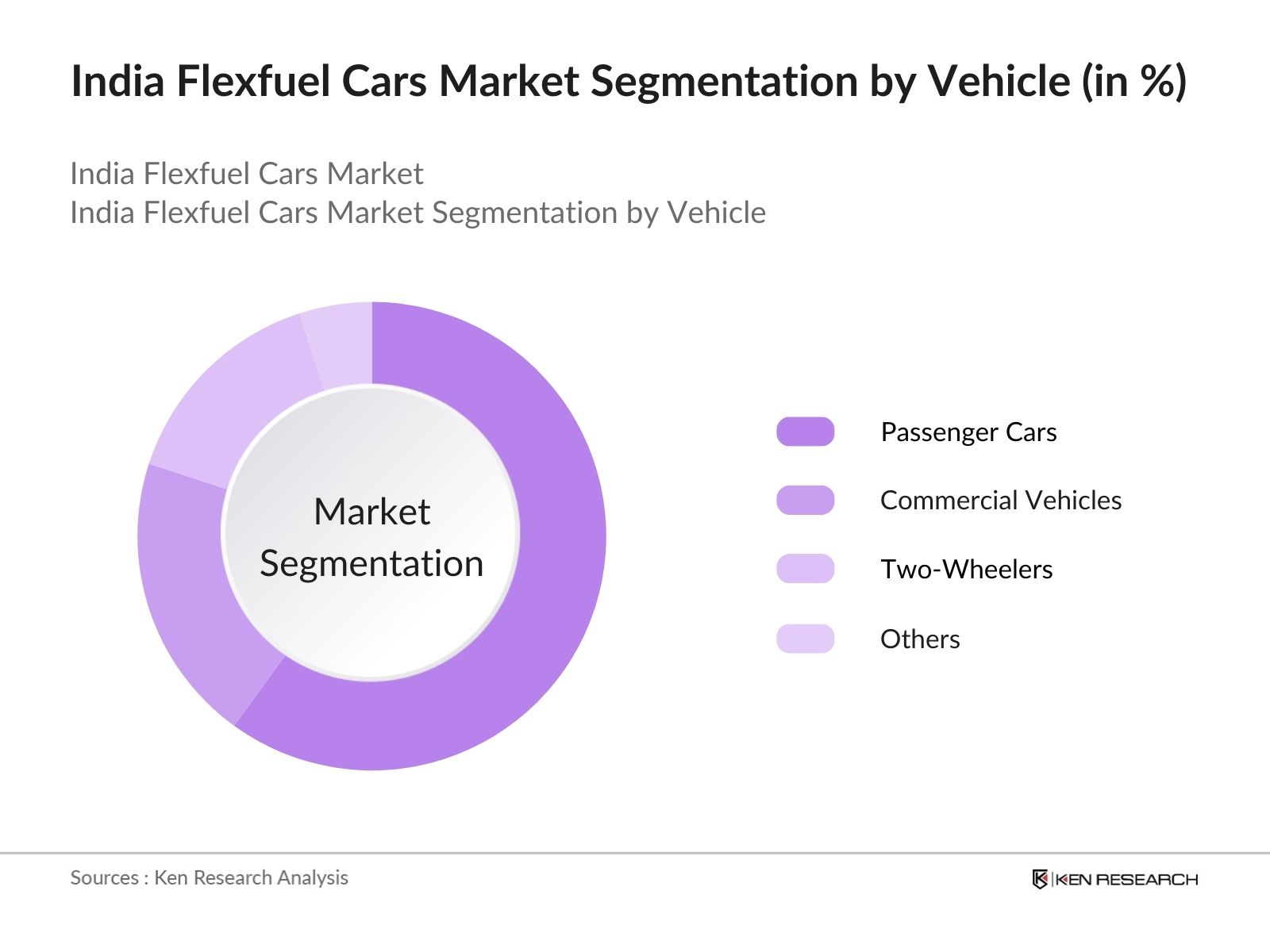
By Vehicle Type: The market is also segmented by vehicle type into passenger cars, commercial vehicles, two-wheelers, and others. Passenger cars hold the dominant share due to the rising demand for personal vehicles and the government's incentives for ethanol-compatible cars. Consumers are gradually shifting towards more eco-friendly alternatives, especially with the increasing awareness about the benefits of flexfuel vehicles in terms of reduced emissions.
India Flexfuel Cars Market Competitive Landscape
The market is highly competitive, with several major players operating in the sector. The competitive landscape is dominated by both domestic and international automakers that are focusing on product innovation, strategic partnerships, and R&D investment to capture market share.
|
Company |
Year Established |
Headquarters |
Employees |
R&D Spending |
Market Presence (Regions) |
Number of Models |
Fuel Type Variants |
Strategic Partnerships |
Revenue (USD Bn) |
|
Maruti Suzuki |
1981 |
New Delhi, India |
|||||||
|
Hyundai Motors |
1967 |
Seoul, South Korea |
|||||||
|
Tata Motors |
1945 |
Mumbai, India |
|||||||
|
Mahindra & Mahindra |
1945 |
Mumbai, India |
|||||||
|
Toyota Motor Corporation |
1937 |
Toyota City, Japan |
India Flexfuel Cars Market Analysis
Market Growth Drivers
- Increase in Ethanol Production Capacity in India: The Indian government has expanded ethanol production to support its National Biofuel Policy 2018. Ethanol production reached approximately 5.5 billion liters in 2023, with a planned increase to 7.5 billion liters by 2025 to meet the 20% ethanol-blending target. This increase in ethanol supply will help boost the demand for flex-fuel cars as they are compatible with higher ethanol blends.
- Rising Demand for Alternative Fuel Vehicles: The demand for alternative fuel vehicles, including flex-fuel cars, is growing due to high fuel prices and environmental concerns. In 2023, petrol and diesel prices exceeded INR 100 per liter in major cities, making ethanol-blended fuel a cheaper alternative for consumers. Flex-fuel vehicles provide the flexibility to switch between gasoline and ethanol, leading to increased consumer adoption.
- Supportive Government Policies: The Indian government's policies, including the Faster Adoption and Manufacturing of Hybrid and Electric Vehicles (FAME) scheme and various tax exemptions on biofuels, are promoting the adoption of flex-fuel vehicles. Under the FAME II scheme, the government allocated INR 10,000 crore to promote alternative fuel vehicles.
Market Challenges
- Uncertainty in Ethanol Supply Chain: Despite the government's aggressive push for ethanol production, concerns about the sustainability of the supply chain persist. Ethanol production is highly dependent on agricultural outputs like sugarcane and corn, which are subject to seasonal fluctuations and climate-related challenges.
- Consumer Skepticism and Limited Awareness: Despite the potential benefits of flex-fuel vehicles, a portion of Indian consumers remains unaware or skeptical of their advantages. According to a 2024 survey conducted by a government agency, 40% of vehicle owners were unaware of the benefits of using ethanol-blended fuel.
India Flexfuel Cars Market Future Outlook
Over the next five years, the India Flexfuel Cars industry is expected to show growth driven by continuous government support for ethanol blending, advancements in flexfuel technologies, and rising consumer demand for sustainable transportation options.
Future Market Opportunities
- Expansion of Ethanol Infrastructure Across India: Over the next five years, India is expected to expand its ethanol infrastructure, with the number of ethanol-refueling stations anticipated to double by 2028. The Indian government is working on setting up ethanol dispensing stations in over 300 Tier-2 and Tier-3 cities by 2025.
- R&D in Second-Generation Ethanol Production: India is projected to invest heavily in research and development for second-generation (2G) ethanol production over the next five years. The government has allocated INR 4,000 crore to set up 2G ethanol plants that use agricultural residue as feedstock.
Scope of the Report
|
Fuel Type |
E85 E100 M85 ED95 Others |
|
Vehicle Type |
Passenger Cars Commercial Vehicles Two-Wheelers Others |
|
Technology |
Engine Design Fuel Injection System Flexible Fuel Sensors Fuel Tank & Delivery Module Others |
|
Distribution Channel |
OEMs Aftermarket |
|
Region |
North East West South |
Products
Key Target Audience Organizations and Entities Who Can Benefit by Subscribing This Report:
Government and Regulatory Bodies (Ministry of Petroleum and Natural Gas, Ministry of Road Transport & Highways)
Automobile Manufacturers
Fuel Distribution Companies
Ethanol Producers
Electric Vehicle and Hybrid Vehicle Companies
Investor and Venture Capitalist Firms
Renewable Energy Firms
Companies
Players Mentioned in the Report:
Maruti Suzuki
Hyundai Motors
Tata Motors
Mahindra & Mahindra
Toyota Motor Corporation
Honda Motor Company
Ford Motor Company
Nissan Motor Company
Renault S.A.
Volkswagen AG
Table of Contents
India Flexfuel Cars Market Overview
1.1 Definition and Scope
1.2 Market Taxonomy
1.3 Market Growth Rate
1.4 Market Segmentation Overview
India Flexfuel Cars Market Size (in USD Bn)
2.1 Historical Market Size
2.2 Year-On-Year Growth Analysis
2.3 Key Market Developments and Milestones
India Flexfuel Cars Market Analysis
3.1 Growth Drivers
3.1.1 Government Policies and Ethanol Blending Programs
3.1.2 Cost Benefits for Consumers
3.1.3 Transition to Sustainable Mobility
3.1.4 Export Potential to Emerging Markets
3.2 Market Challenges
3.2.1 Low Consumer Awareness
3.2.2 High Vehicle Costs (due to fuel system modifications)
3.2.3 Underdeveloped Infrastructure for Ethanol Distribution
3.2.4 Limited Availability of Ethanol-Compatible Pumps
3.3 Opportunities
3.3.1 Rural Market Growth Potential (Agriculture Sector Focus)
3.3.2 Leadership in Flexfuel Technology in Emerging Markets
3.3.3 Partnerships with Oil Companies for Infrastructure Expansion
3.3.4 Research and Development Investments in Flexfuel Vehicles
3.4 Trends
3.4.1 Shift Towards Two-Wheeler Flexfuel Models
3.4.2 Aftermarket Flexfuel Conversion Kits
3.4.3 Rise in Shared Mobility and Ride-Hailing Fleets
3.4.4 Integration of Battery-Electric Flexfuel Hybrids
3.5 Government Regulations
3.5.1 Ethanol Blending Targets (E20 by 2025)
3.5.2 Bharat Stage VI Emission Norms
3.5.3 Incentives for Flexfuel-Compatible Vehicles
3.5.4 Policies Encouraging Ethanol Production
3.6 SWOT Analysis
3.7 Stakeholder Ecosystem
3.8 Porters Five Forces
3.9 Competition Ecosystem
India Flexfuel Cars Market Segmentation
4.1 By Fuel Type (In Value %)
4.1.1 E85
4.1.2 E100
4.1.3 M85
4.1.4 ED95
4.1.5 Others
4.2 By Vehicle Type (In Value %)
4.2.1 Passenger Cars
4.2.2 Commercial Vehicles
4.2.3 Two-Wheelers
4.2.4 Others
4.3 By Technology (In Value %)
4.3.1 Engine Design
4.3.2 Fuel Injection System
4.3.3 Flexible Fuel Sensors
4.3.4 Fuel Tank & Delivery Module
4.3.5 Others
4.4 By Distribution Channel (In Value %)
4.4.1 OEMs
4.4.2 Aftermarket
4.5 By Region (In Value %)
4.5.1 North
4.5.2 East
4.5.3 West
4.5.4 South
India Flexfuel Cars Market Competitive Analysis
5.1 Detailed Profiles of Major Companies
5.1.1 Maruti Suzuki
5.1.2 Hyundai
5.1.3 Tata Motors
5.1.4 Mahindra & Mahindra
5.1.5 Toyota
5.1.6 Honda
5.1.7 Ford
5.1.8 Volkswagen
5.1.9 Nissan
5.1.10 Renault
5.1.11 TVS
5.1.12 Hero MotoCorp
5.1.13 Bajaj Auto
5.1.14 Skoda
5.1.15 Kia Motors
5.2 Cross Comparison Parameters (Number of Employees, Revenue, Headquarters, Years of Operation, Regional Presence, Product Portfolio, Market Share)
5.3 Market Share Analysis
5.4 Strategic Initiatives (Partnerships, New Product Launches, Collaborations)
5.5 Mergers and Acquisitions
5.6 Investment Analysis
5.7 Government Grants and Incentives
India Flexfuel Cars Market Regulatory Framework
6.1 Ethanol Blending Policies
6.2 Compliance with Bharat Stage VI Standards
6.3 Certification Processes for Flexfuel Vehicles
India Flexfuel Cars Future Market Size (in USD Bn)
7.1 Future Market Size Projections
7.2 Key Factors Driving Future Market Growth
India Flexfuel Cars Future Market Segmentation
8.1 By Fuel Type (In Value %)
8.2 By Vehicle Type (In Value %)
8.3 By Technology (In Value %)
8.4 By Distribution Channel (In Value %)
8.5 By Region (In Value %)
India Flexfuel Cars Market Analysts Recommendations
9.1 TAM/SAM/SOM Analysis
9.2 Customer Cohort Analysis
9.3 Marketing Initiatives
9.4 White Space Opportunity Analysis
Disclaimer Contact UsResearch Methodology
Step 1: Identification of Key Variables
The first step involves identifying key variables such as fuel availability, regulatory policies, and consumer adoption rates that influence the India Flexfuel Cars market. This is done through extensive desk research and data collection from government bodies and industry sources.
Step 2: Market Analysis and Construction
Next, we compile historical data on fuel blending, vehicle sales, and government policies to build the market forecast. This includes analyzing vehicle registration data and ethanol fuel sales to gauge market dynamics.
Step 3: Hypothesis Validation and Expert Consultation
Market hypotheses are validated through interviews with industry experts from automakers, ethanol producers, and policy makers. These interviews provide insights into market trends and the future outlook for flexfuel vehicles.
Step 4: Research Synthesis and Final Output
The final stage consolidates all data into a coherent analysis, focusing on growth drivers, challenges, and future opportunities. This step also includes cross-verifying the data from secondary sources with insights from industry stakeholders.
Frequently Asked Questions
How big is the India Flexfuel Cars Market?
The India Flexfuel Cars market is valued at USD 612 billion, with growth driven by the governments ethanol blending programs and consumer demand for more sustainable transportation options.
What are the challenges in the India Flexfuel Cars Market?
Challenges in the India Flexfuel Cars market include low consumer awareness, underdeveloped ethanol infrastructure, and the high cost of flexfuel-compatible vehicles. These factors limit the adoption of flexfuel vehicles across the country.
Who are the major players in the India Flexfuel Cars Market?
Major players in the India Flexfuel Cars market include Maruti Suzuki, Hyundai Motors, Tata Motors, Mahindra & Mahindra, and Toyota, among others. These companies lead the market through product innovation and government partnerships.
What are the growth drivers of the India Flexfuel Cars Market?
The India Flexfuel Cars market is driven by government policies promoting ethanol use, cost benefits of ethanol as compared to gasoline, and increasing environmental consciousness among consumers, especially in urban areas.
Which regions dominate the India Flexfuel Cars Market?
The Western and Southern regions of India, particularly Maharashtra and Karnataka, dominate the flexfuel market due to high ethanol production and proactive government support for ethanol-based transportation solutions.
Why Buy From Us?

What makes us stand out is that our consultants follows Robust, Refine and Result (RRR) methodology. i.e. Robust for clear definitions, approaches and sanity checking, Refine for differentiating respondents facts and opinions and Result for presenting data with story

We have set a benchmark in the industry by offering our clients with syndicated and customized market research reports featuring coverage of entire market as well as meticulous research and analyst insights.

While we don't replace traditional research, we flip the method upside down. Our dual approach of Top Bottom & Bottom Top ensures quality deliverable by not just verifying company fundamentals but also looking at the sector and macroeconomic factors.

With one step in the future, our research team constantly tries to show you the bigger picture. We help with some of the tough questions you may encounter along the way: How is the industry positioned? Best marketing channel? KPI's of competitors? By aligning every element, we help maximize success.

Our report gives you instant access to the answers and sources that other companies might choose to hide. We elaborate each steps of research methodology we have used and showcase you the sample size to earn your trust.

If you need any support, we are here! We pride ourselves on universe strength, data quality, and quick, friendly, and professional service.