India Footwear Market Outlook to 2030
Region:India
Author(s):Rebecca Mary Reji
Product Code:KRO041
Region:India
Author(s):Rebecca Mary Reji
Product Code:KRO041
July 2025
90
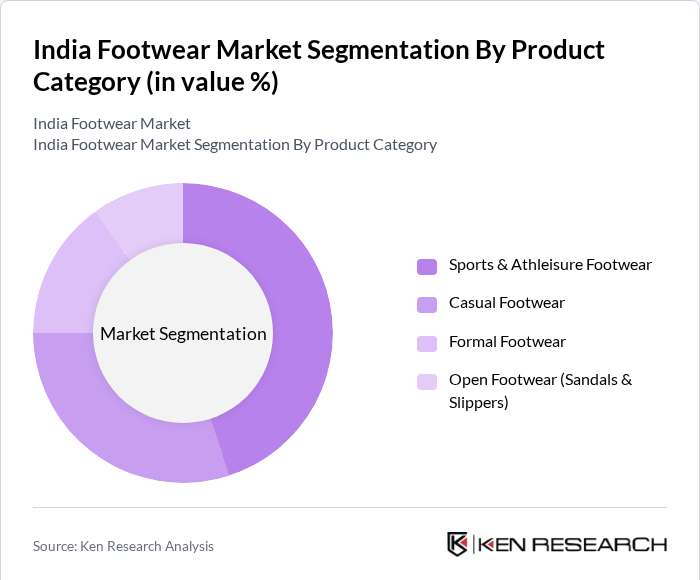
By Product Category: The footwear market is segmented into sports and athleisure footwear, casual footwear, formal footwear, and open footwear (such as sandals and slippers). Among these, sports and athleisure footwear have seen the fastest growth due to rising fitness and health consciousness, the popularity of hybrid work culture, and increasing participation in sports and outdoor activities. The influence of social media, celebrity endorsements, and the growing demand for comfort and performance-oriented products has further propelled the popularity of this segment, making it a preferred choice for consumers across various age groups.
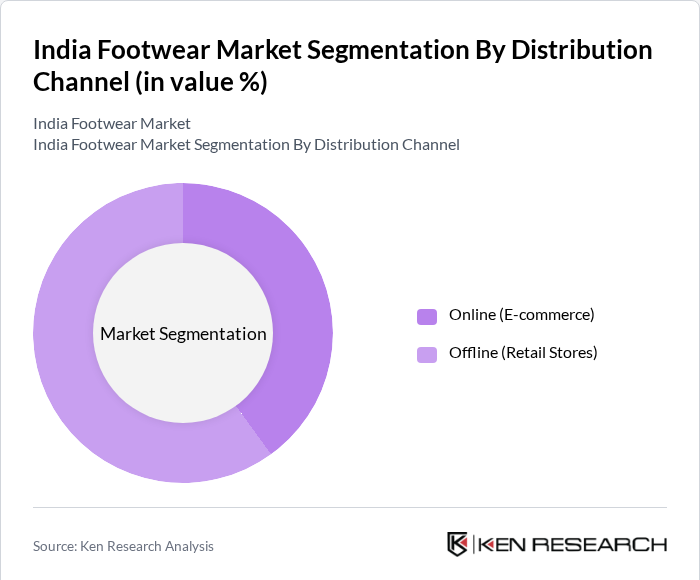
By Distribution Channel: The market is segmented into Offline (Retail Stores) and Online (E-commerce) channels. Offline retail continues to dominate, as a large portion of consumers prefer trying on footwear in-store for fit and comfort. Despite this, the online segment is experiencing rapid growth due to increasing internet penetration, digital convenience, and omnichannel retail strategies. E-commerce platforms attract consumers with wider selections, price transparency, and ease of access, making both channels essential for reaching varied consumer segments.
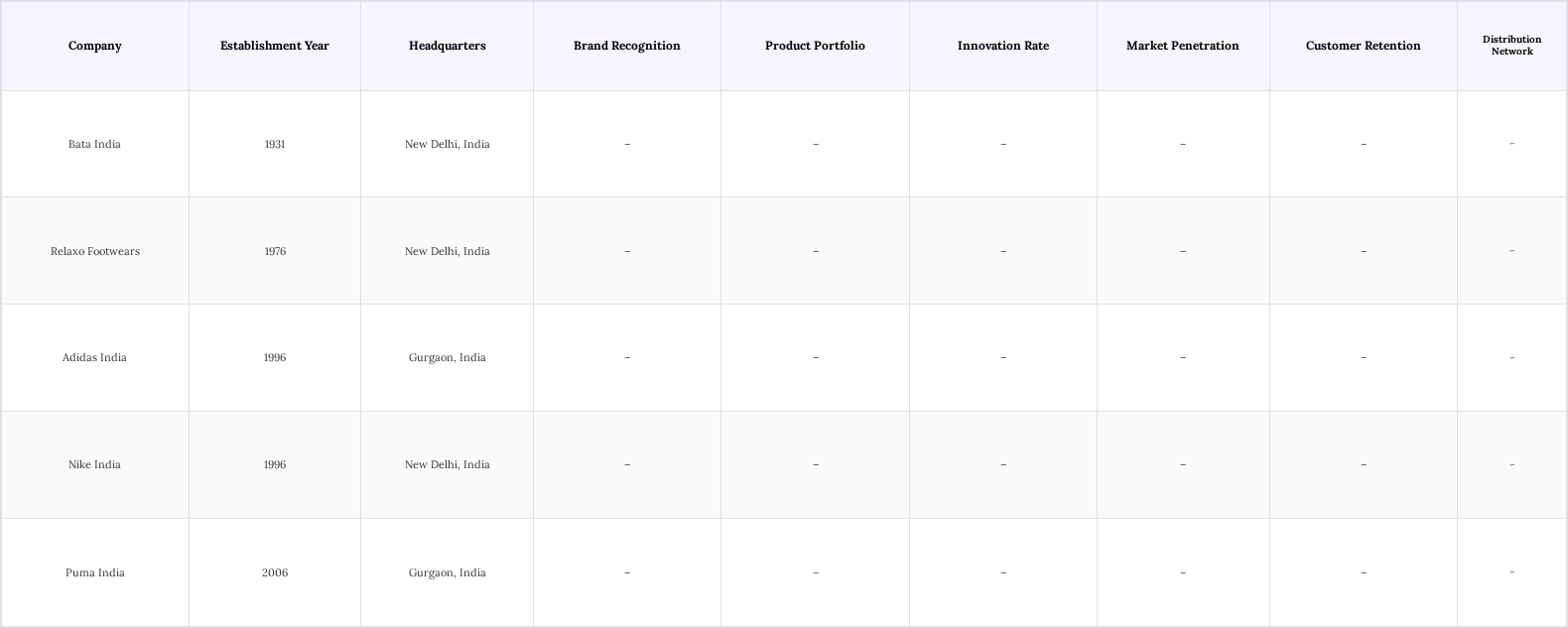
The India Footwear Market is characterized by a competitive landscape with several key players, including Bata India, Relaxo Footwears, Adidas India, Nike India, and Puma India. These companies are known for their strong brand recognition and extensive product portfolios, catering to various consumer segments. The market is marked by innovation, with companies focusing on sustainable practices (such as recycled materials and plant-based alternatives) and technological advancements (like virtual try-ons and AI-driven product recommendations) to enhance product offerings and meet evolving consumer demands.
The future of the India footwear market appears promising, driven by evolving consumer preferences and technological advancements. The integration of sustainable practices and eco-friendly materials is expected to gain traction, aligning with global trends towards environmental responsibility. Additionally, the expansion into tier II and tier III cities presents significant growth potential, as these regions are witnessing rising disposable incomes and changing lifestyles, further fueling demand for diverse footwear options.
| By Product Category |
Sports and athleisure footwear Casual footwear Formal footwear Open footwear (such as sandals and slippers) |
| By Distribution Channel |
Offline(Retail Stores) Online(E-commerce) |
| By Consumer Demographics |
Men Women Children |
| By Price Range |
Economy Mid-range Premium |
| By Material Type |
Leather Textile Rubber Others |
1.1. Definition and Scope
1.2. Market Taxonomy
1.3. Market Growth Rate
1.4. Market Segmentation Overview
2.1. Historical Market Size
2.2. Year-On-Year Growth Analysis
2.3. Key Market Developments and Milestones
3.1. Growth Drivers
3.1.1. Increasing disposable income among consumers
3.1.2. Rising demand for fashionable and trendy footwear
3.1.3. Expansion of e-commerce platforms facilitating online sales
3.2. Market Challenges
3.2.1. Intense competition among established and new players
3.2.2. Fluctuating raw material prices affecting production costs
3.2.3. Regulatory compliance and environmental concerns
3.3. Opportunities
3.3.1. Growing interest in sustainable and eco-friendly footwear
3.3.2. Expansion into tier II and tier III cities
3.3.3. Increasing popularity of athleisure and sports footwear
3.4. Trends
3.4.1. Shift towards online shopping and digital marketing strategies
3.4.2. Customization and personalization of footwear products
3.4.3. Integration of technology in footwear design and manufacturing
3.5. Government Regulation
3.5.1. Compliance with the Bureau of Indian Standards (BIS)
3.5.2. Environmental regulations regarding waste management
3.5.3. Labor laws affecting manufacturing practices
3.5.4. Import and export regulations impacting international trade
3.6. SWOT Analysis
3.7. Stake Ecosystem
3.8. Porter’s Five Forces
3.9. Competition Ecosystem
4.1. By Product Category
4.1.1. Sports and athleisure footwear
4.1.2. Casual footwear
4.1.3. Formal footwear
4.1.4. Open footwear (such as sandals and slippers)
4.2. By Distribution Channel
4.2.1. Offline
4.2.2. Online
4.3. By Consumer Demographics
4.3.1. Men
4.3.2. Women
4.3.3. Children
4.4. By Price Range
4.4.1. Economy
4.4.2. Mid-range
4.4.3. Premium
4.5. By Material Type
4.5.1. Leather
4.5.2. Textile
4.5.3. Rubber
4.5.4. Others
5.1. Detailed Profiles of Major Companies
5.1.1. Bata India
5.1.2. Relaxo Footwears
5.1.3. Adidas India
5.1.4. Nike India
5.1.5. Puma India
5.1.6. SoleMate India
5.1.7. TrendStep Footwear
5.1.8. EthnoWalks
5.1.9. UrbanStride
5.1.10. EcoFootprints
5.2. Cross-Comparison Parameters
5.2.1. Market Share
5.2.2. Revenue Growth Rate
5.2.3. Product Range Diversity
5.2.4. Brand Recognition
5.2.5. Customer Satisfaction Ratings
5.2.6. Distribution Network Efficiency
5.2.7. Innovation in Product Design
5.2.8. Sustainability Practices
6.1. Environmental Standards
6.2. Compliance Requirements
6.3. Certification Processes
7.1. Future Market Size Projections
7.2. Key Factors Driving Future Market Growth
8.1. By Product Category
8.1.1. Sports and athleisure footwear
8.1.2. Casual footwear
8.1.3. Formal footwear
8.1.4. Open footwear (such as sandals and slippers)
8.2. By Distribution Channel
8.2.1. Offline
8.2.2. Online
8.3. By Consumer Demographics
8.3.1. Men
8.3.2. Women
8.3.3. Children
8.4. By Price Range
8.4.1. Economy
8.4.2. Mid-range
8.4.3. Premium
8.5. By Material Type
8.5.1. Leather
8.5.2. Textile
8.5.3. Rubber
8.5.4. Others
9.1. TAM/SAM/SOM Analysis
9.2. Customer Cohort Analysis
9.3. Marketing Initiatives
9.4. White Space Opportunity Analysis
The initial phase involves constructing an ecosystem map encompassing all major stakeholders within the India Footwear Market. This step is underpinned by extensive desk research, utilizing a combination of secondary and proprietary databases to gather comprehensive industry-level information. The primary objective is to identify and define the critical variables that influence market dynamics.
In this phase, we will compile and analyze historical data pertaining to the India Footwear Market. This includes assessing market penetration, the ratio of marketplaces to service providers, and the resultant revenue generation. Furthermore, an evaluation of service quality statistics will be conducted to ensure the reliability and accuracy of the revenue estimates.
Market hypotheses will be developed and subsequently validated through computer-assisted telephone interviews (CATIs) with industry experts representing a diverse array of companies. These consultations will provide valuable operational and financial insights directly from industry practitioners, which will be instrumental in refining and corroborating the market data.
The final phase involves direct engagement with multiple manufacturers to acquire detailed insights into product segments, sales performance, consumer preferences, and other pertinent factors. This interaction will serve to verify and complement the statistics derived from the bottom-up approach, thereby ensuring a comprehensive, accurate, and validated analysis of the India Footwear Market.
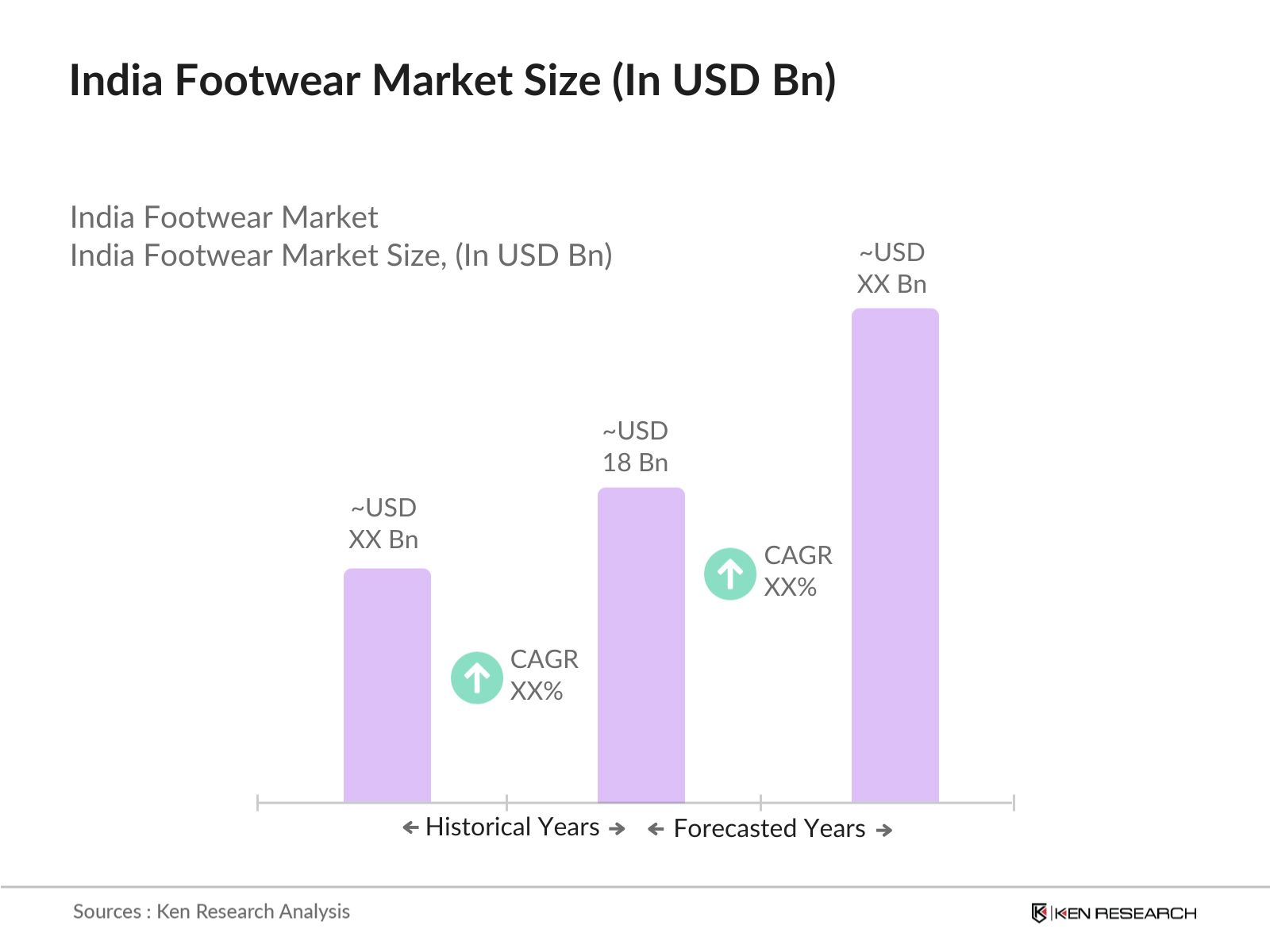
The India Footwear Market is valued at USD 18 billion, driven by factors such as increasing demand, technological advancements, and supportive government initiatives.
Key challenges in the India Footwear Market include intense competition, regulatory complexities, and infrastructure limitations affecting market dynamics.
Major players in the India Footwear Market include Bata India, Relaxo Footwears, Adidas India, Nike India, Puma India, among others.
The primary growth drivers for the India Footwear Market are increasing consumer demand, favorable policies, innovation, and substantial investment inflows.

What makes us stand out is that our consultants follows Robust, Refine and Result (RRR) methodology. i.e. Robust for clear definitions, approaches and sanity checking, Refine for differentiating respondents facts and opinions and Result for presenting data with story

We have set a benchmark in the industry by offering our clients with syndicated and customized market research reports featuring coverage of entire market as well as meticulous research and analyst insights.

While we don't replace traditional research, we flip the method upside down. Our dual approach of Top Bottom & Bottom Top ensures quality deliverable by not just verifying company fundamentals but also looking at the sector and macroeconomic factors.

With one step in the future, our research team constantly tries to show you the bigger picture. We help with some of the tough questions you may encounter along the way: How is the industry positioned? Best marketing channel? KPI's of competitors? By aligning every element, we help maximize success.

Our report gives you instant access to the answers and sources that other companies might choose to hide. We elaborate each steps of research methodology we have used and showcase you the sample size to earn your trust.

If you need any support, we are here! We pride ourselves on universe strength, data quality, and quick, friendly, and professional service.