
India Gaming Market Outlook to 2030
Region:India
Author(s):Samanyu
Product Code:KROD5158
Region:India
Author(s):Samanyu
Product Code:KROD5158
October 2024
80
Listen to the audio summary
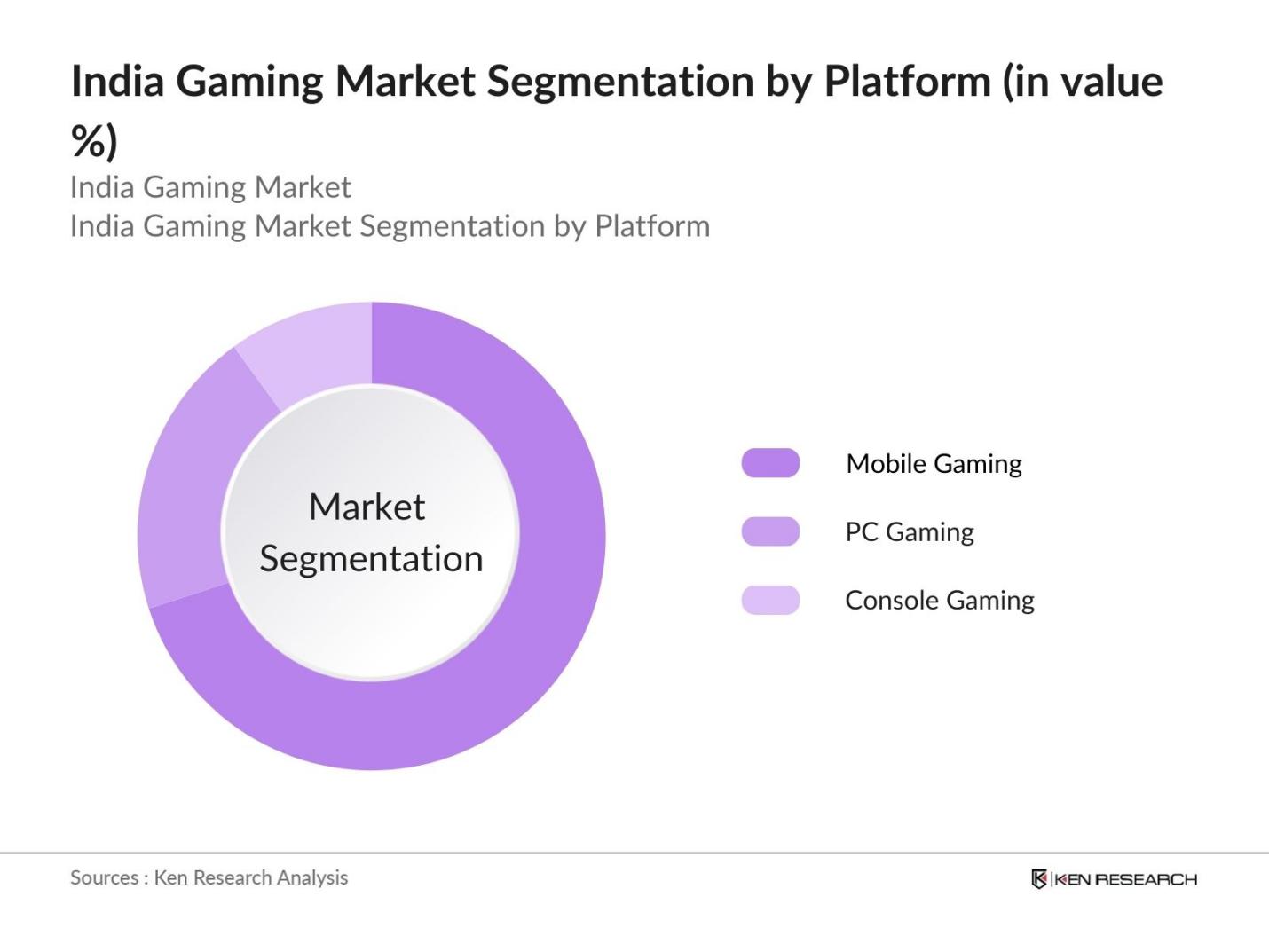
By Platform: The market is segmented by platform into mobile gaming, PC gaming, and console gaming. Mobile gaming has a dominant market share due to its accessibility and affordability. The rise in smartphone penetration and availability of budget devices have fueled mobile gaming's dominance. Popular mobile games such as "PUBG Mobile" and "Free Fire" have garnered massive user bases, primarily driven by their free-to-play models combined with microtransactions. Additionally, mobile gaming appeals to a broad demographic, including casual and hardcore gamers.
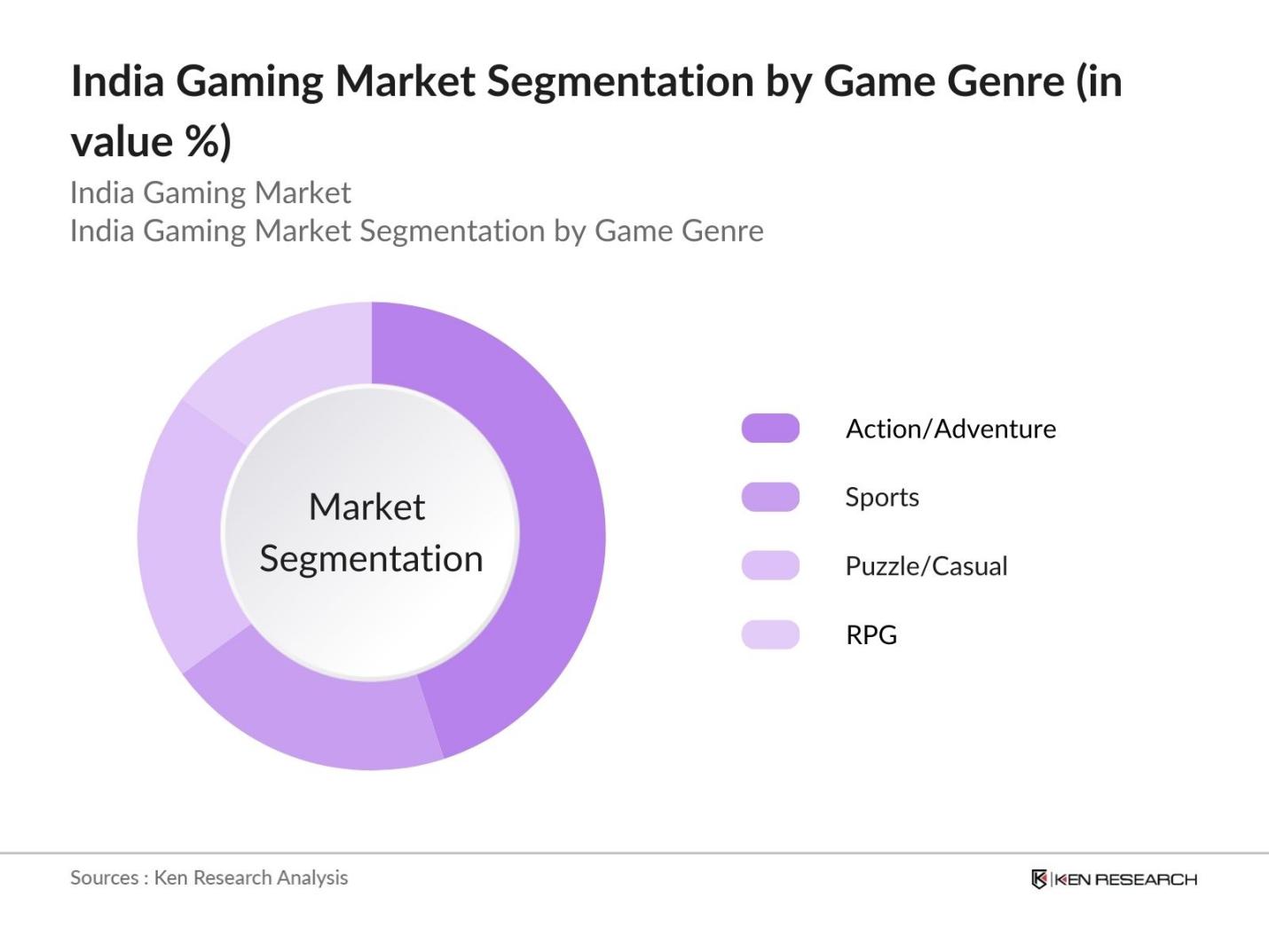
By Game Genre: Market is also segmented by game genre into action/adventure, sports, role-playing games (RPGs), and puzzle/casual games. The action/adventure genre dominates due to its immersive experiences and engaging gameplay. Popular titles like "Call of Duty: Mobile" and "BGMI" have significantly contributed to the growth of this segment. Indian gamers are drawn to high-octane action games that offer multi-player options and frequent updates, keeping them engaged over time.
The India gaming market is dominated by a few major players such as Nazara Technologies and Dream11, alongside international companies like Ubisoft and EA Sports. These players benefit from significant capital investments, strategic partnerships, and the ability to adapt to local consumer preferences, leading to a competitive and rapidly evolving market.
|
Company Name |
Establishment Year |
Headquarters |
Revenue (2023) |
Employees |
Key Game Titles |
Key Technology |
Mobile Gaming Focus |
E-sports Presence |
|
Nazara Technologies |
2000 |
Mumbai, India |
||||||
|
Dream11 |
2008 |
Mumbai, India |
||||||
|
Ubisoft India |
2008 |
Pune, India |
||||||
|
Electronic Arts (EA) India |
1991 |
Hyderabad, India |
||||||
|
Mobile Premier League (MPL) |
2018 |
Bangalore, India |
Rise in Smartphone Penetration: India has witnessed an exponential increase in smartphone users, driven by a robust macroeconomic environment. As of 2024, India has over 700 million smartphone users, according to Telecom Regulatory Authority of India (TRAI) data. This surge provides a significant user base for mobile gaming platforms. The affordability of smartphones, with models available under INR 10,000, has led to increased accessibility. With rising income levels and urbanization, a younger demographic, comprising 50% of the population under the age of 25, is increasingly using smartphones for entertainment, including gaming.
High Competition from International Markets: Despite Indias strong domestic gaming ecosystem, the market faces competition from well-established international gaming companies like Tencent and Sony. Games developed abroad dominate app stores, with foreign games accounting for over 60% of Indias top mobile games in 2024. Local developers struggle to compete in terms of resources, global appeal, and marketing. The country imports significant amounts of high-end gaming hardware, which further increases reliance on international brands. The weak intellectual property protections for domestic developers in the gaming space exacerbate this competition, leading to lower revenue retention within the country.
The India gaming market is poised for significant growth over the next five years, fueled by rising internet connectivity, increasing mobile penetration, and growing consumer spending on entertainment. With government initiatives aimed at boosting digital infrastructure and the development of new gaming technologies, India is expected to emerge as one of the leading gaming markets globally. Cloud gaming, esports, and regional language content will be pivotal in driving future growth, while gaming startups and established players will continue to innovate to capture the expanding market.
AR and VR Adoption: Augmented Reality (AR) and Virtual Reality (VR) are emerging opportunities in the Indian gaming market. The Indian governments push for AR/VR in education and entertainment, including initiatives under the Ministry of Skill Development and Entrepreneurship, has encouraged startups to explore AR/VR gaming. By 2024, there are over 500 AR/VR gaming developers in India. Affordable VR headsets from brands like Oculus and Sony PlayStation are driving consumer adoption. With over 10 million VR headsets sold in the country as of 2024, AR/VR gaming experiences are becoming increasingly accessible.
|
By Platform |
Mobile Gaming PC Gaming Console Gaming |
|
By Game Genre |
Action/Adventure Sports and Racing Role-Playing Games Simulation Puzzle/Casual |
|
By Business Model |
Freemium Pay-to-Play Subscription-based In-game Purchases |
|
By Device Type |
Smartphones PCs/Laptops Consoles AR/VR Devices |
|
By Region |
North South East West |
1.1. Definition and Scope (Gaming platforms, gaming devices, online and offline modes)
1.2. Market Taxonomy (PC games, Console games, Mobile games, AR/VR games)
1.3. Market Growth Rate (CAGR analysis, Market revenue)
1.4. Market Segmentation Overview (Gaming segments, Player demographics, Game genres)
2.1. Historical Market Size (Revenue growth, Consumer spending trends)
2.2. Year-On-Year Growth Analysis (Growth drivers, market disruptions)
2.3. Key Market Developments and Milestones (Launch of major gaming platforms, E-sports growth, Government policy impacts)
3.1. Growth Drivers
3.1.1. Rise in Smartphone Penetration
3.1.2. Affordable Internet Connectivity
3.1.3. Increasing Interest in E-sports
3.1.4. Government Initiatives (e.g., Skill Development in Gaming)
3.2. Restraints
3.2.1. High Competition from International Markets
3.2.2. Regulatory Hurdles (e.g., online betting and gambling restrictions)
3.2.3. Limited Infrastructure for High-End Gaming
3.3. Opportunities
3.3.1. AR and VR Adoption
3.3.2. Expansion of Cloud Gaming Services
3.3.3. Growing Demand for Regional Language Games
3.4. Trends
3.4.1. Increase in Hyper-casual Gaming
3.4.2. Growth of Blockchain and NFT-based Games
3.4.3. Integration of AI in Game Development
3.5. Government Regulation
3.5.1. Online Gaming Licensing Regulations
3.5.2. E-sports Recognition and Policy Framework
3.5.3. Digital India and Gaming Industry Synergies
3.6. SWOT Analysis (Strengths, Weaknesses, Opportunities, Threats)
3.7. Stakeholder Ecosystem (Developers, Publishers, Distribution Platforms, Payment Gateways)
3.8. Porters Five Forces
3.8.1. Threat of New Entrants
3.8.2. Bargaining Power of Suppliers
3.8.3. Bargaining Power of Buyers
3.8.4. Threat of Substitutes
3.8.5. Industry Rivalry
3.9. Competition Ecosystem (Top competitors, Market positioning)
4.1. By Platform (In Value %)
4.1.1. Mobile Gaming
4.1.2. PC Gaming
4.1.3. Console Gaming
4.2. By Game Genre (In Value %)
4.2.1. Action/Adventure
4.2.2. Sports and Racing
4.2.3. Role-Playing Games (RPG)
4.2.4. Puzzle/Casual
4.3. By Business Model (In Value %)
4.3.1. Freemium
4.3.2. Pay-to-Play
4.3.3. Subscription-based
4.3.4. In-game Purchases (Microtransactions)
4.4. By Device Type (In Value %)
4.4.1. Smartphones
4.4.2. PCs/Laptops
4.4.3. Consoles
4.4.4. AR/VR Devices
4.5. By Region (In Value %)
4.5.1. North
4.5.2. South
4.5.3. East
4.5.4. West
5.1 Detailed Profiles of Major Companies
5.1.1. Nazara Technologies
5.1.2. Mobile Premier League (MPL)
5.1.3. Paytm First Games
5.1.4. Dream11
5.1.5. Games2win
5.1.6. JetSynthesys
5.1.7. Moonfrog Labs
5.1.8. SuperGaming
5.1.9. nCore Games
5.1.10. Gametion
5.1.11. Octro
5.1.12. WinZO Games
5.1.13. Ubisoft India
5.1.14. Rockstar India
5.1.15. EA Sports India
5.2 Cross Comparison Parameters(No. of Employees, Headquarters, Revenue, Games Portfolio, Market Share)
5.3 Market Share Analysis
5.4 Strategic Initiatives (Partnerships, Expansions, Collaborations)
5.5 Mergers and Acquisitions
5.6 Investment Analysis
5.7 Venture Capital Funding
5.8 Government Grants
5.9 Private Equity Investments
6.1 Online Gaming Laws and Regulations
6.2 Taxation Policies on Gaming Revenue
6.3 Compliance with Advertising Standards
7.1 Future Market Size Projections
7.2 Key Factors Driving Future Market Growth
8.1 By Platform (In Value %)
8.2 By Game Genre (In Value %)
8.3 By Business Model (In Value %)
8.4 By Device Type (In Value %)
8.5 By Region (In Value %)
9.1 TAM/SAM/SOM Analysis
9.2 Customer Cohort Analysis
9.3 Marketing Initiatives
9.4 White Space Opportunity Analysis
Disclaimer Contact UsIn the first phase, we developed an ecosystem map of the India gaming market, identifying all critical stakeholders such as game developers, publishers, telecom operators, and government bodies. This step involved extensive secondary research from proprietary databases and industry reports to highlight key market variables like revenue streams, user base, and technology adoption rates.
Using historical data, we analyzed revenue patterns, market trends, and the penetration of mobile gaming platforms across various regions. The market size was constructed using industry benchmarks and growth projections based on past performance. This phase also included evaluating the number of active gamers and their gaming preferences.
To validate our market hypotheses, we conducted expert consultations with stakeholders including gaming developers, publishers, and technology service providers. These interviews helped refine our estimates and provided insights into future technological innovations, investment trends, and regulatory impacts.
Finally, we synthesized data from multiple sources, combining bottom-up and top-down approaches to estimate the India gaming market's future outlook. Detailed segmentation analysis was carried out to forecast growth in various gaming genres and platforms.
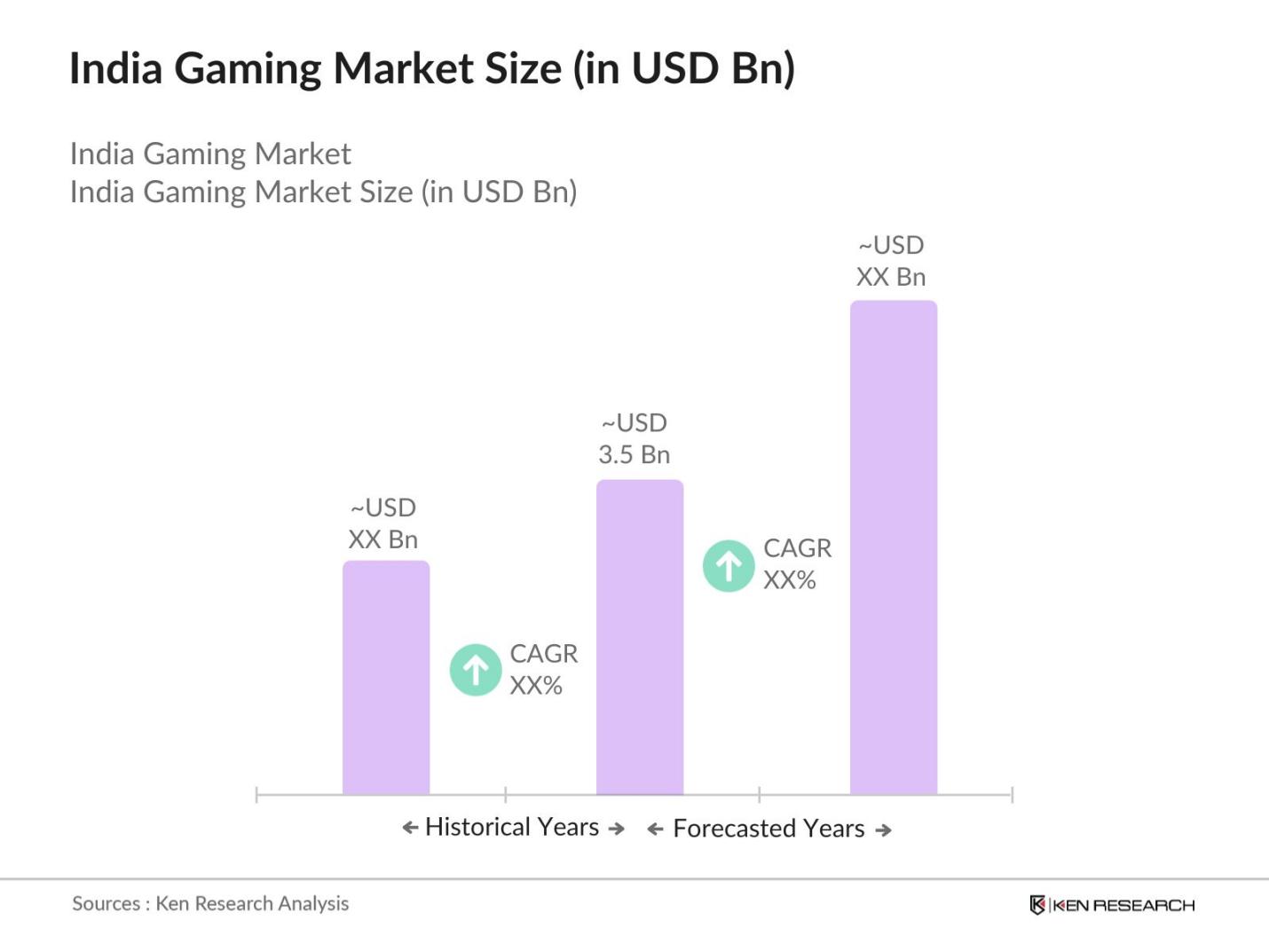
The India gaming market is valued at USD 3.5 Bn, driven by widespread smartphone adoption, affordable data rates, and the emergence of mobile gaming platforms.
Challenges in India gaming market include regulatory uncertainty, especially around online betting, and the high cost of game development. Additionally, the lack of infrastructure for high-end gaming limits the markets potential in certain segments.
Key players in India gaming market include Nazara Technologies, Dream11, Mobile Premier League (MPL), Ubisoft India, and Electronic Arts (EA) India. These companies have built strong consumer bases and are investing heavily in the Indian gaming ecosystem.
Growth drivers in India gaming market include the increasing penetration of smartphones, growing interest in esports, and rising disposable income among the younger population. The introduction of 5G and cloud gaming is also expected to contribute to future growth.

What makes us stand out is that our consultants follows Robust, Refine and Result (RRR) methodology. i.e. Robust for clear definitions, approaches and sanity checking, Refine for differentiating respondents facts and opinions and Result for presenting data with story

We have set a benchmark in the industry by offering our clients with syndicated and customized market research reports featuring coverage of entire market as well as meticulous research and analyst insights.

While we don't replace traditional research, we flip the method upside down. Our dual approach of Top Bottom & Bottom Top ensures quality deliverable by not just verifying company fundamentals but also looking at the sector and macroeconomic factors.

With one step in the future, our research team constantly tries to show you the bigger picture. We help with some of the tough questions you may encounter along the way: How is the industry positioned? Best marketing channel? KPI's of competitors? By aligning every element, we help maximize success.

Our report gives you instant access to the answers and sources that other companies might choose to hide. We elaborate each steps of research methodology we have used and showcase you the sample size to earn your trust.

If you need any support, we are here! We pride ourselves on universe strength, data quality, and quick, friendly, and professional service.