
India Geospatial Analytics Market Outlook to 2030
Region:India
Author(s):Meenakshi Bisht
Product Code:KROD6973
Region:India
Author(s):Meenakshi Bisht
Product Code:KROD6973
December 2024
89
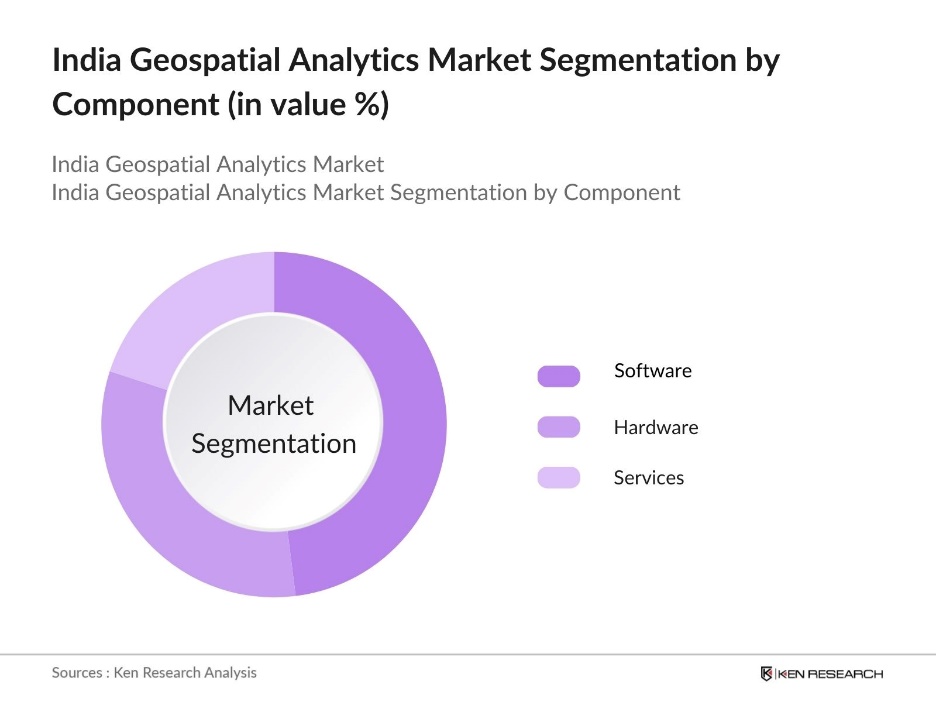
By Component: The India Geospatial Analytics Market is segmented by component into software, hardware, and services. The software segment has a dominant market share due to increasing demand for GIS software applications across industries. Custom software solutions, primarily in urban planning, defense, and environmental monitoring, drive this segment. The trend toward integrating artificial intelligence and machine learning in software analytics enhances the software segment's appeal, enabling complex data interpretations.
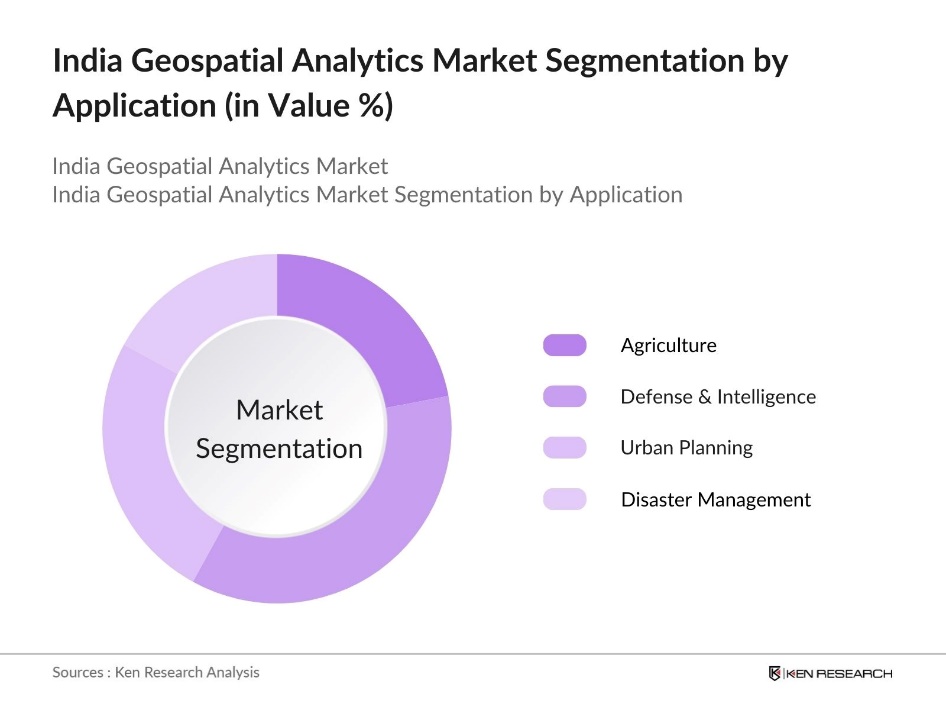
By Application: The market is segmented by application, the market includes agriculture, defense and intelligence, urban planning, and disaster management. The Defense and Intelligence holds a dominant share due to the increased use of geospatial analytics for surveillance, reconnaissance, and strategic planning. The defense sector invests heavily in geospatial tools to enhance national security, manage data for terrain analysis, and track movements with high accuracy, establishing it as a leading application.
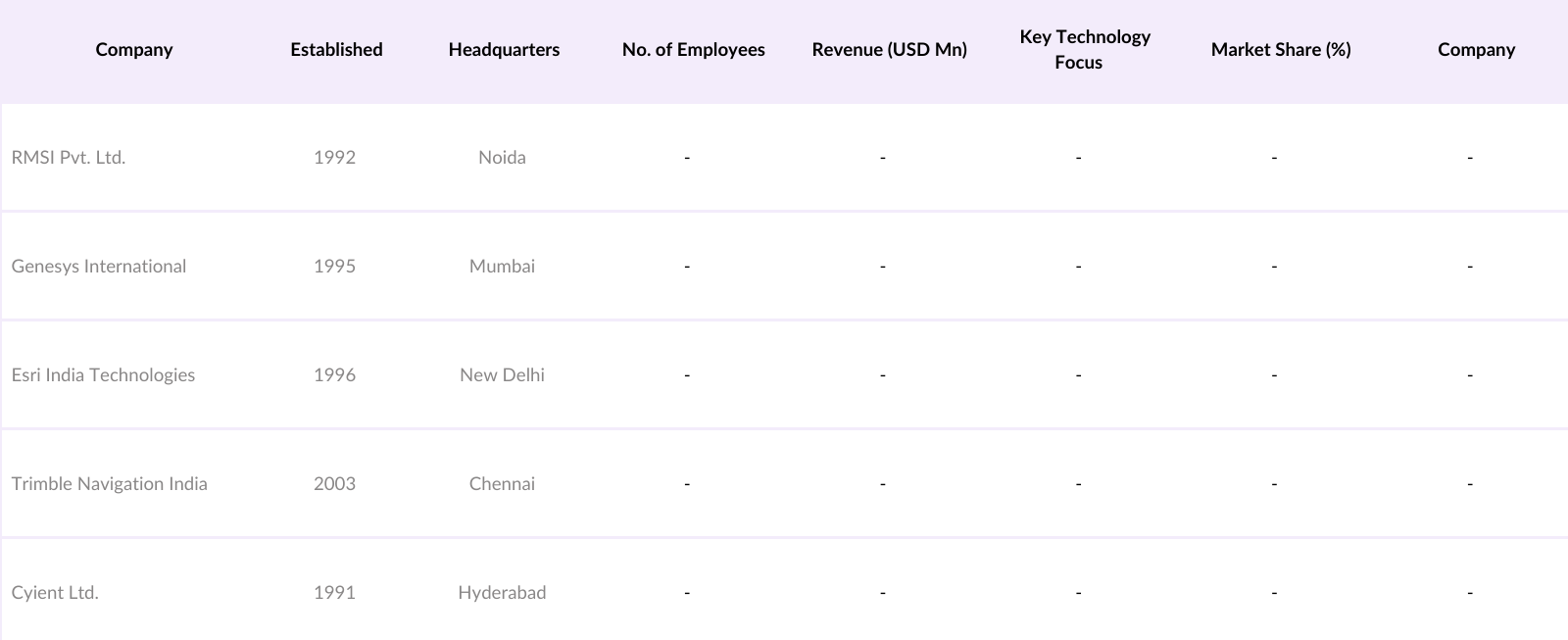
The India Geospatial Analytics Market is characterized by several key players, including domestic companies and multinational corporations. These firms actively compete on technological innovation, partnerships, and sector-specific solutions.
In the coming years, the India Geospatial Analytics Market is poised for substantial development as sectors across agriculture, urban development, and national defense continue to adopt geospatial technologies. Increased government initiatives for digital transformation, combined with technological advancements in AI and big data, are expected to fuel market growth, with enhanced focus on infrastructure, environmental monitoring, and smart city projects.
|
Component |
Software Hardware Services |
|
Application |
Agriculture Defense Urban Planning Disaster Management |
|
Technology |
GPS and GNSS Remote Sensing GIS Mapping |
|
Deployment Mode |
On-Premise Cloud-Based |
|
Region |
North South East West |
1.1 Definition and Scope
1.2 Market Taxonomy
1.3 Growth Dynamics
1.4 Market Segmentation Overview
2.1 Historical Market Size
2.2 Key Developments and Innovations
2.3 Market Structure and Distribution
3.1 Growth Drivers
3.1.1 Technological Advancements in GIS
3.1.2 Government Initiatives and Investments
3.1.3 Infrastructure Development and Urban Planning
3.1.4 Adoption Across Key Sectors (Agriculture, Mining, etc.)
3.2 Market Challenges
3.2.1 High Implementation and Maintenance Costs
3.2.2 Privacy and Data Security Concerns
3.2.3 Limited Skilled Workforce
3.3 Opportunities
3.3.1 Integration of AI and Big Data
3.3.2 Collaboration with IoT for Smart Cities
3.3.3 Expansion into Rural Development and Agricultural Planning
3.4 Trends
3.4.1 Increased Use of UAVs and Drones
3.4.2 Growth in Satellite Imagery Applications
3.4.3 Cloud-based Geospatial Solutions
3.5 Government Regulation
3.5.1 National Policy on Remote Sensing
3.5.2 Data Licensing and Compliance
3.5.3 Indigenous GIS Standards
3.6 SWOT Analysis
3.7 Stakeholder Ecosystem
3.8 Porters Five Forces Analysis
3.9 Competitive Landscape
4.1 By Component (In Value %)
4.1.1 Software
4.1.2 Hardware
4.1.3 Services
4.2 By Application (In Value %)
4.2.1 Agriculture
4.2.2 Defense and Intelligence
4.2.3 Urban Planning
4.2.4 Disaster Management
4.3 By Technology (In Value %)
4.3.1 GPS and GNSS
4.3.2 Remote Sensing
4.3.3 GIS Mapping
4.4 By Deployment Mode (In Value %)
4.4.1 On-Premise
4.4.2 Cloud-Based
4.5 By Rgion (In Value %)
4.5.1 North
4.5.2 South
4.5.3 East
4.5.4. West
5.1 Detailed Profiles of Major Companies
5.1.1 RMSI Pvt. Ltd.
5.1.2 Genesys International Corporation
5.1.3 Esri India Technologies Ltd.
5.1.4 Trimble Navigation India Pvt. Ltd.
5.1.5 Hexagon Geosystems
5.1.6 Cyient Ltd.
5.1.7 Spatial Decisions
5.1.8 MapmyIndia
5.1.9 Rolta India Ltd.
5.1.10 Geospatial Media and Communications
5.1.11 Tata Consultancy Services (TCS)
5.1.12 Leica Geosystems
5.1.13 NIIT Technologies Ltd.
5.1.14 DigitalGlobe India Pvt. Ltd.
5.1.15 RMSI Pvt. Ltd.
5.2 Cross Comparison Parameters (Revenue, Product Offerings, Regional Presence, Technology Adoption, Employee Count, Revenue by Application, Partnerships, Mergers and Acquisitions)
5.3 Market Share Analysis
5.4 Strategic Initiatives
5.5 Mergers and Acquisitions
5.6 Investment Analysis
5.7 Venture Capital Funding
5.8 Government Grants
5.9 Private Equity Investments
6.1 Data Protection Policies
6.2 Licensing Requirements
6.3 Compliance Standards
6.4 Regional Data Collection Guidelines
7.1 By Component
7.2 By Application
7.3 By Technology
7.4 By Deployment Mode
7.5 By Region
8.1 TAM/SAM/SOM Analysis
8.2 Customer Cohort Analysis
8.3 Targeted Marketing Initiatives
8.4 White Space Opportunity Identification
Disclaimer Contact UsThe research begins with mapping all major stakeholders and influencers within the India Geospatial Analytics Market. Primary focus is on analyzing GIS, defense, agriculture, and urban sectors, drawing from a variety of proprietary and open data sources to establish key variables shaping market trends.
At this stage, we compile and analyze data across components, applications, and other market aspects. Historical data on market growth, adoption rates, and cross-sector applications help quantify market characteristics, while technology-driven statistics improve data accuracy.
This phase includes validating data-driven assumptions through structured interviews with industry experts. Primary consultations help refine insights on consumer behavior, technology integration, and investment patterns, offering a comprehensive view of market dynamics.
The research synthesis involves integrating insights from multiple stakeholders, validating with independent sources, and cross-referencing to ensure a balanced, data-driven perspective. This is followed by report structuring and finalization, delivering actionable insights into Indias geospatial analytics landscape.
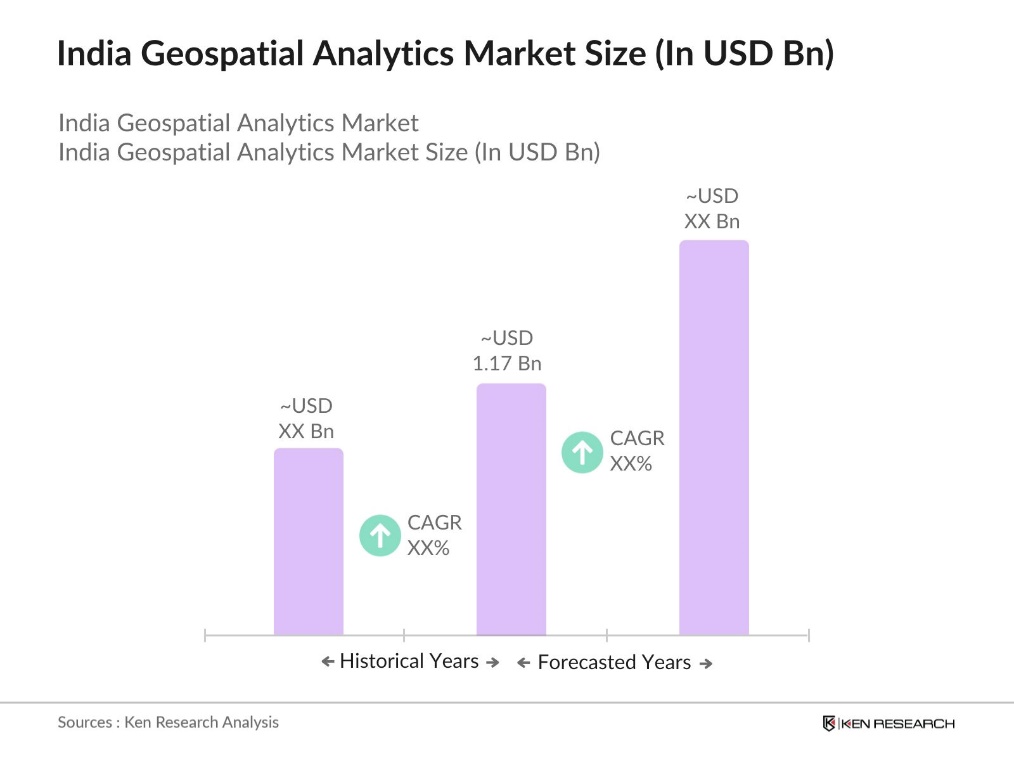
The India Geospatial Analytics Market is valued at USD 1.17 billion, reflecting its broad application across sectors like defense, agriculture, and urban development.
Key challenges in India Geospatial Analytics Market include high implementation costs, data privacy concerns, and a shortage of skilled professionals with geospatial technology expertise.
Leading companies in India Geospatial Analytics Market include RMSI Pvt. Ltd., Genesys International, Esri India, Trimble Navigation India, and Cyient Ltd., who dominate through advanced technology and strong client networks.
The India Geospatial Analytics Market is driven by government investment in infrastructure and digitalization, coupled with sector-specific demand from defense, agriculture, and urban planning.

What makes us stand out is that our consultants follows Robust, Refine and Result (RRR) methodology. i.e. Robust for clear definitions, approaches and sanity checking, Refine for differentiating respondents facts and opinions and Result for presenting data with story

We have set a benchmark in the industry by offering our clients with syndicated and customized market research reports featuring coverage of entire market as well as meticulous research and analyst insights.

While we don't replace traditional research, we flip the method upside down. Our dual approach of Top Bottom & Bottom Top ensures quality deliverable by not just verifying company fundamentals but also looking at the sector and macroeconomic factors.

With one step in the future, our research team constantly tries to show you the bigger picture. We help with some of the tough questions you may encounter along the way: How is the industry positioned? Best marketing channel? KPI's of competitors? By aligning every element, we help maximize success.

Our report gives you instant access to the answers and sources that other companies might choose to hide. We elaborate each steps of research methodology we have used and showcase you the sample size to earn your trust.

If you need any support, we are here! We pride ourselves on universe strength, data quality, and quick, friendly, and professional service.