















India Health Imaging Market Outlook to 2030
Region:Asia
Author(s):Shreya Garg
Product Code:KROD4102
November 2024
91
About the Report
India Health Imaging Market Overview
- The India Health Imaging Market is valued at USD 1 billion, based on a five-year historical analysis. The growth of the market is driven by several factors including an increase in the prevalence of chronic diseases like cardiovascular disorders, cancer, and neurological conditions, coupled with an aging population that requires diagnostic imaging services. Furthermore, the expansion of healthcare infrastructure, rising disposable incomes, and government initiatives such as the Ayushman Bharat scheme are contributing to the markets growth.
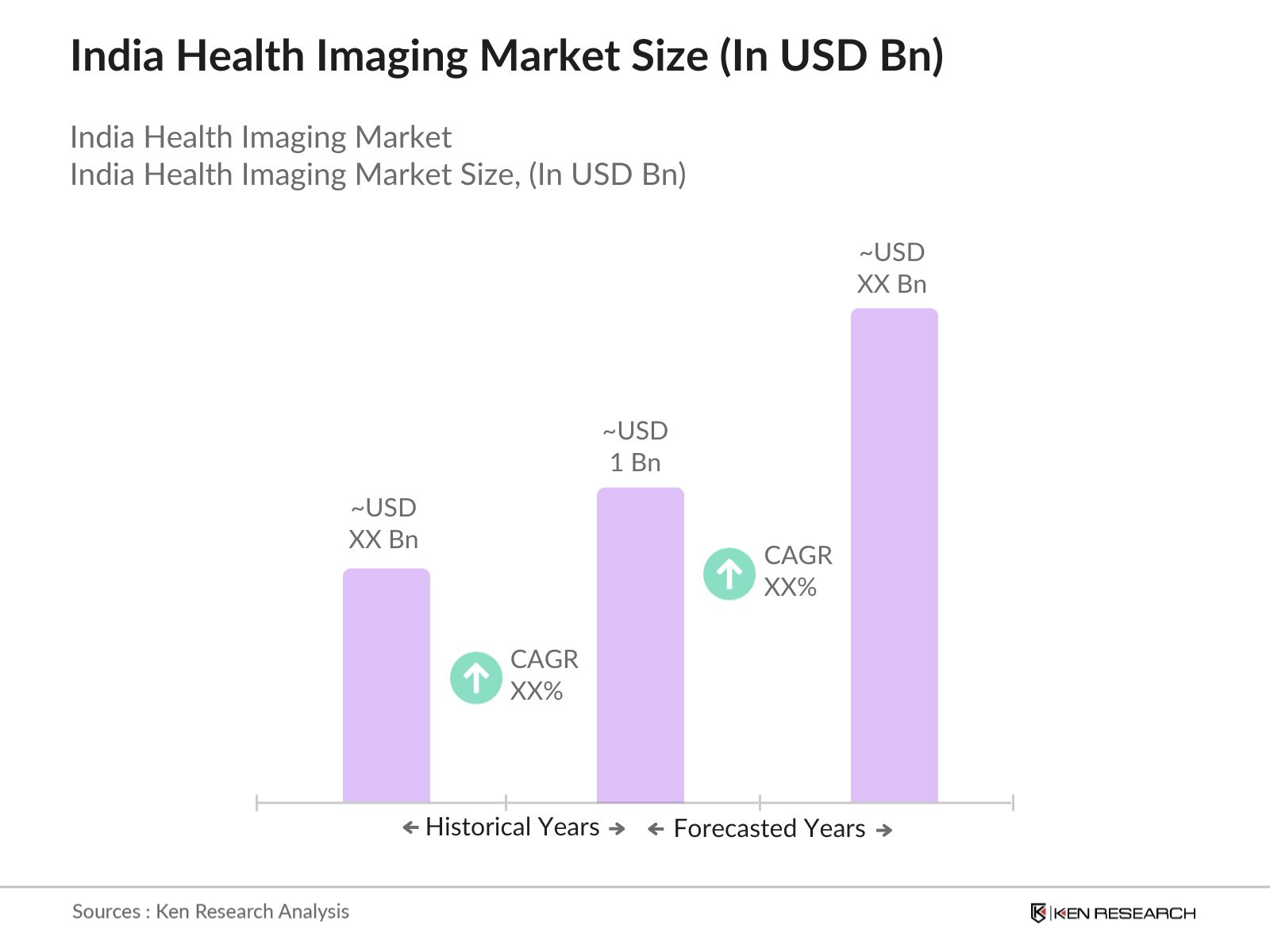
- The market is dominated by cities like Mumbai, Delhi, and Bengaluru due to their advanced healthcare infrastructure, high patient inflow, and the presence of leading healthcare providers. These cities have seen significant investments in diagnostic centers and hospitals, which are driving demand for cutting-edge imaging technologies. Moreover, Tier 1 cities have better access to skilled radiologists and healthcare professionals, making them the key hubs for the American Health Imaging market in India.
- India has strict regulations regarding the import of medical imaging equipment, overseen by the Ministry of Health. In 2023, the ministry introduced new guidelines for the import of radiology equipment, requiring certifications for safety, efficacy, and compliance with Indian standards. These regulations aim to ensure the quality of imaging equipment while also promoting domestic manufacturing through the Make in India initiative. Imported equipment must undergo rigorous testing, which can delay deployment in healthcare facilities
India Health Imaging Market Segmentation
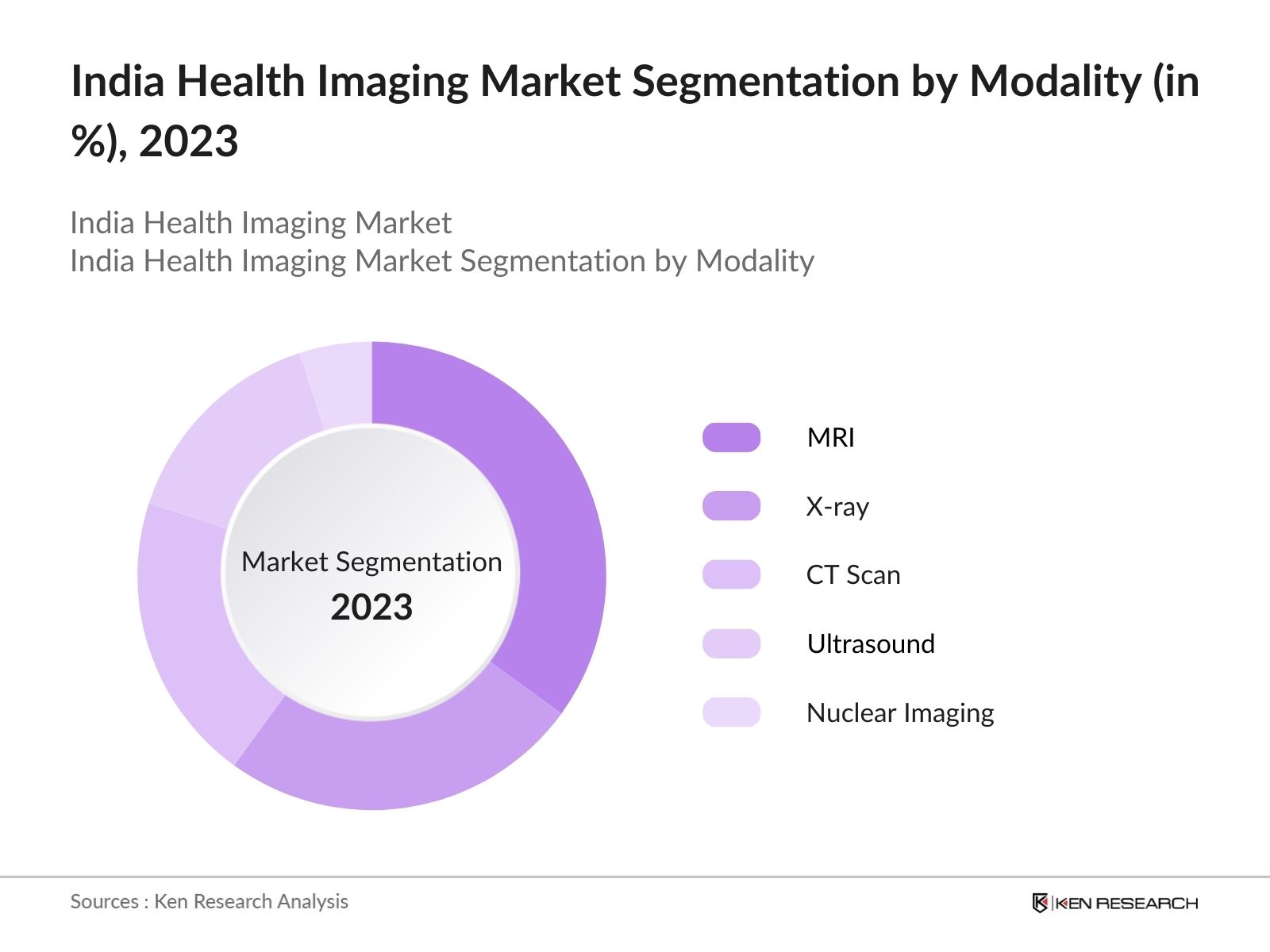
By Modality: The market is segmented by modality into X-ray, MRI, CT scan, Ultrasound, and Nuclear Imaging. Among these, MRI has a dominant market share in India due to its widespread use in diagnosing neurological disorders and musculoskeletal conditions. MRI's non-invasive nature and its ability to provide detailed images without radiation exposure have made it the preferred choice for complex diagnostic procedures. Furthermore, advancements in AI-assisted MRI have also contributed to its dominance in the market.
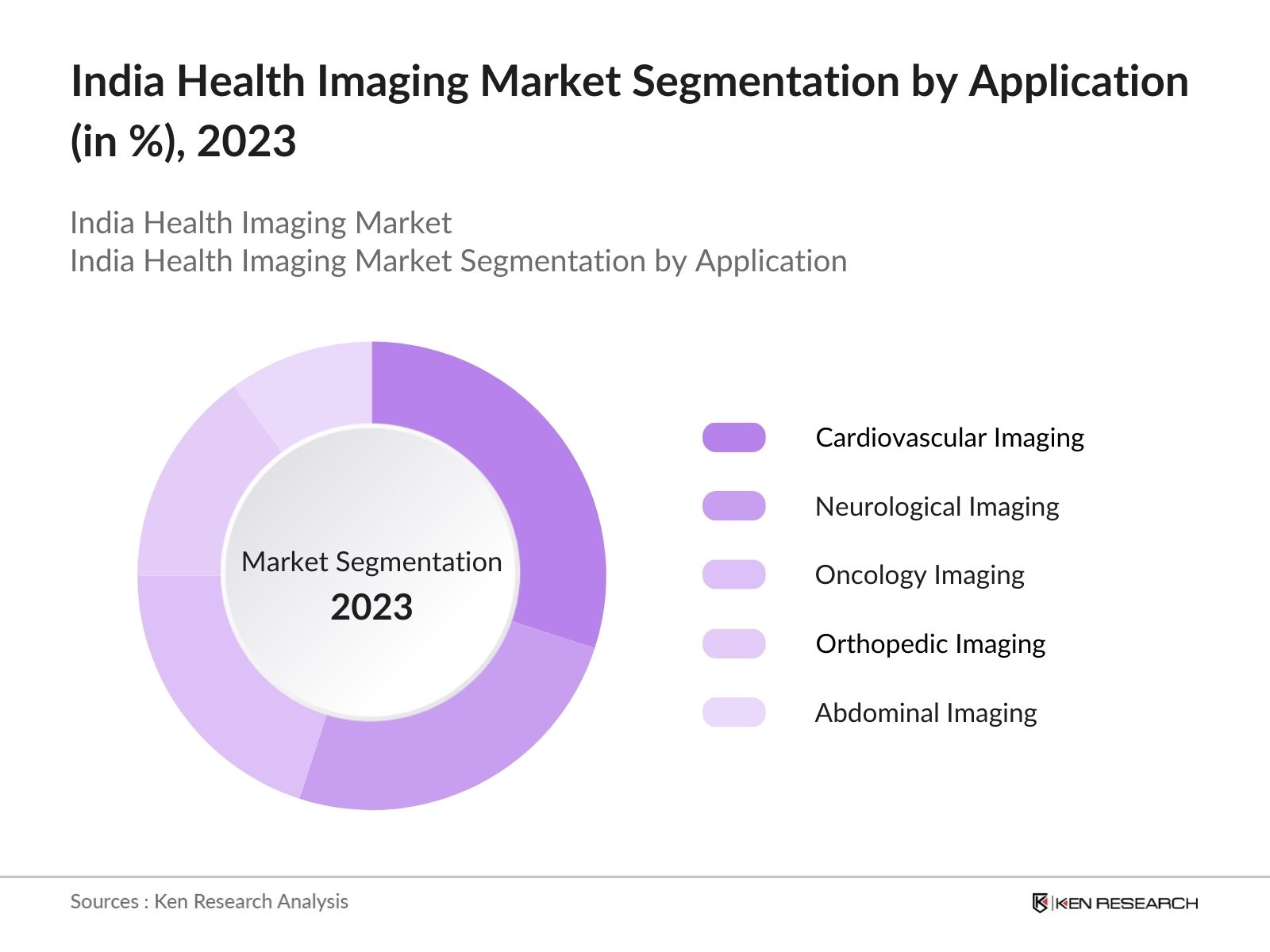
 By Application: The market is further segmented by application into Cardiovascular Imaging, Neurological Imaging, Oncology Imaging, Orthopedic Imaging, and Abdominal Imaging. Cardiovascular imaging holds the largest share due to the increasing prevalence of heart diseases, which is a leading cause of mortality in India. Technological advancements in cardiac MRI and CT have also boosted the demand for cardiovascular imaging, making it a dominant segment.
 India Health Imaging Market Competitive Landscape
The India Health Imaging Market is dominated by a few key players, who are continuously innovating to maintain a competitive edge. The presence of both international and domestic companies has led to market consolidation, with players focusing on enhancing product portfolios, investing in R&D, and strategic partnerships. The competitive landscape demonstrates that global players such as GE Healthcare, Siemens Healthineers, and Philips Healthcare dominate the market with their extensive product portfolios, R&D investments, and strategic partnerships with Indian healthcare providers.
|
Company |
Establishment Year |
Headquarters |
Revenue (USD Bn) |
No. of Employees |
Product Portfolio |
R&D Investment |
Strategic Partnerships |
Patents Filed |
Market Share |
|
GE Healthcare |
1892 |
Chicago, USA |
|||||||
|
Siemens Healthineers |
1847 |
Erlangen, Germany |
|||||||
|
Philips Healthcare |
1891 |
Amsterdam, Netherlands |
|||||||
|
Allengers Medical Systems |
1987 |
Chandigarh, India |
|||||||
|
Canon Medical Systems |
1930 |
tawara, Japan |
India Health Imaging Market Outlook to 2028
Growth Drivers
- Rise in Chronic Diseases: The increasing prevalence of chronic diseases like cardiovascular diseases and neurological disorders in India has driven the demand for advanced medical imaging technologies. In 2022, the Indian Ministry of Health reported over 17 million cases of cardiovascular diseases, significantly contributing to hospital admissions and diagnostic imaging procedures. Neurological disorders such as strokes and dementia affected approximately 30 million people. These rising numbers have led to a greater demand for imaging services, as timely diagnosis is essential for effective treatment. Sources: Ministry of Health.
- Technological Advancements: Technological advancements in the Indian medical imaging sector, such as the use of Artificial Intelligence (AI) and 3D/4D imaging, have revolutionized diagnostic accuracy. AI in imaging enables faster interpretation of medical images, reducing the time taken for diagnosis. In 2024, around 1,000 imaging centers across India have implemented AI-driven solutions, especially in metropolitan areas. The introduction of 3D and 4D imaging technologies has improved the precision of diagnosing complex medical conditions, especially in cardiology and oncology. These technologies are primarily driven by global partnerships with Indian medical institutions.
- Growing Geriatric Population: India's geriatric population, aged 60 and above, stood at over 140 million in 2022, according to the Ministry of Statistics and Programme Implementation. This demographic is more prone to chronic diseases requiring diagnostic imaging services, such as MRI and CT scans. Hospitals across Tier 1 and Tier 2 cities are increasingly investing in imaging technologies to cater to the healthcare needs of the elderly. The growing geriatric population is expected to continue to drive demand for advanced medical imaging, especially in cardiology and orthopedics.
Market Challenges
- Limited Access to Imaging Services in Rural Areas: Approximately 65% of Indias population resides in rural areas, where access to advanced imaging services remains limited. In 2023, only about 20% of rural hospitals were equipped with advanced imaging technologies like MRI or CT scan machines, according to the Ministry of Rural Development. Additionally, logistical challenges, including inadequate electricity supply and trained professionals, further exacerbate the limited access. These challenges hinder early diagnosis and treatment of chronic conditions for a large segment of the population.
- Stringent Regulatory Compliance: The medical imaging market in India faces stringent regulatory hurdles, including approval processes by the Medical Council of India (MCI) and foreign direct investment (FDI) regulations. Imaging equipment imports require multiple certifications from the Ministry of Health, causing delays in adoption. In 2023, only 65% of imaging centers in India met the necessary regulatory requirements for operating advanced imaging equipment, making it difficult for providers to maintain compliance. Additionally, FDI caps in healthcare infrastructure have posed barriers to foreign investment in rural imaging services.
India Health Imaging Market Future Outlook
Over the next five years, the India Health Imaging Market is expected to witness robust growth driven by technological advancements, increasing investments in healthcare infrastructure, and rising awareness of early disease detection. Government support through initiatives like Ayushman Bharat will play a critical role in expanding access to advanced imaging services in rural and underserved areas. Additionally, growing healthcare demand from Tier 2 and Tier 3 cities, coupled with a rising geriatric population, will continue to push the market forward.
Future Market Opportunities
- Expansion of Healthcare Services in Tier 2 & Tier 3 Cities: The expansion of healthcare services, including imaging centers, into Tier 2 and Tier 3 cities represents a significant growth opportunity. In 2023, over 200 new diagnostic centers were established in these regions, focusing on advanced imaging services. Government initiatives, such as the Pradhan Mantri Jan Arogya Yojana (PMJAY), have facilitated the expansion by providing financial support to healthcare providers in underserved areas. This has helped to address the shortage of diagnostic services in regions with a rising middle class and an increasing demand for healthcare.
- Integration of Telemedicine with Imaging Services: Telemedicine integration with medical imaging has grown substantially in 2024, especially in remote regions where access to specialists is limited. More than 700 telemedicine hubs in India now provide imaging consultations, where images are transmitted to urban centers for analysis by experts. This has reduced the time for diagnostic results from weeks to just a few days. Telemedicine is also proving cost-effective, with diagnostic consultations costing 30% less compared to in-person visits. The government's focus on improving digital health infrastructure is accelerating this trend.
Scope of the Report
|
Modality |
X-ray, MRI CT scan Ultrasound Nuclear Imaging |
|
Application |
Cardiovascular Imaging Neurological Imaging Oncology Imaging Orthopedic Imaging Abdominal Imaging |
|
End-User |
Hospitals Diagnostic Centers Ambulatory Surgery Centers Research Laboratories |
|
Technology |
Digital Imaging 3D/4D Imaging AI-Assisted Imaging Contrast-Enhanced Imaging |
|
Region |
North South West East |
Products
Key Target Audience
Hospital Administrators
Diagnostic Center Chains
Medical Equipment Distributors
Healthcare Investors
Banks and Financial Institutes
Government and Regulatory Bodies (Ministry of Health and Family Welfare, NABH)
Private Hospitals (Fortis, Apollo, Manipal Hospitals)
Investments and Venture Capitalist Firms
Medical Device Manufacturers
Companies
Major Players
GE Healthcare
Siemens Healthineers
Philips Healthcare
Canon Medical Systems
Carestream Health
Fujifilm Holdings
Hitachi Medical Systems
Allengers Medical Systems
Trivitron Healthcare
Wipro GE Healthcare
Samsung Medison
Hologic Inc.
Medtronic Plc
Agfa-Gevaert N.V.
Mindray Medical International
Table of Contents
1. India Health Imaging Market Overview
1.1. Definition and Scope
1.2. Market Taxonomy
1.3. Market Growth Rate
1.4. Market Segmentation Overview
2. India Health Imaging Market Size (In USD Bn)
2.1. Historical Market Size
2.2. Year-On-Year Growth Analysis
2.3. Key Market Developments and Milestones
3. India Health Imaging Market Analysis
3.1. Growth Drivers
3.1.1. Rise in Chronic Diseases (Market Specific: Rise in Cardiovascular Diseases, Neurological Disorders)
3.1.2. Technological Advancements (Market Specific: AI in Imaging, 3D/4D Imaging)
3.1.3. Government Initiatives (Market Specific: Ayushman Bharat Health Scheme, National Digital Health Mission)
3.1.4. Growing Geriatric Population
3.2. Market Challenges
3.2.1. High Initial Investments (Market Specific: Equipment and Infrastructure Costs)
3.2.2. Limited Access to Imaging Services in Rural Areas
3.2.3. Stringent Regulatory Compliance (Market Specific: FDI Regulations, Approvals from Medical Council)
3.3. Opportunities
3.3.1. Expansion of Healthcare Services in Tier 2 & Tier 3 Cities (Market Specific: Imaging Centers Expansion)
3.3.2. Integration of Telemedicine with Imaging Services
3.3.3. Increased Government Spending on Healthcare Infrastructure
3.4. Trends
3.4.1. Adoption of AI and Machine Learning in Imaging (Market Specific: AI in Image Interpretation)
3.4.2. Cloud-Based Imaging Platforms
3.4.3. Increasing Use of Mobile Imaging Units
3.5. Government Regulation
3.5.1. Regulations on Medical Imaging Equipment Imports (Market Specific: Ministry of Health Guidelines)
3.5.2. Accreditation Requirements (Market Specific: NABH Accreditation)
3.5.3. Government Funding for Imaging Centers
3.6. SWOT Analysis
3.7. Stakeholder Ecosystem
3.8. Porters Five Forces
3.9. Competition Ecosystem
4. India Health Imaging Market Segmentation
4.1. By Modality (In Value %)
4.1.1. X-ray
4.1.2. MRI
4.1.3. CT scan
4.1.4. Ultrasound
4.1.5. Nuclear Imaging
4.2. By Application (In Value %)
4.2.1. Cardiovascular Imaging
4.2.2. Neurological Imaging
4.2.3. Oncology Imaging
4.2.4. Orthopedic Imaging
4.2.5. Abdominal Imaging
4.3. By End-User (In Value %)
4.3.1. Hospitals
4.3.2. Diagnostic Centers
4.3.3. Ambulatory Surgery Centers
4.3.4. Research Laboratories
4.4. By Technology (In Value %)
4.4.1. Digital Imaging
4.4.2. 3D/4D Imaging
4.4.3. AI-Assisted Imaging
4.4.4. Contrast-Enhanced Imaging
4.5. By Region (In Value %)
4.5.1. North
4.5.2. South
4.5.3. West
4.5.4. East
5. India Health Imaging Market Competitive Analysis
5.1. Detailed Profiles of Major Companies
5.1.1. GE Healthcare
5.1.2. Siemens Healthineers
5.1.3. Philips Healthcare
5.1.4. Canon Medical Systems
5.1.5. Carestream Health
5.1.6. Fujifilm Holdings
5.1.7. Hitachi Medical Systems
5.1.8. Wipro GE Healthcare
5.1.9. Allengers Medical Systems
5.1.10. Trivitron Healthcare
5.1.11. Samsung Medison
5.1.12. Agfa-Gevaert N.V.
5.1.13. Hologic Inc.
5.1.14. Medtronic Plc
5.1.15. Mindray Medical International
5.2. Cross Comparison Parameters (Revenue, Product Portfolio, Inception Year, Headquarters, Market Share, Strategic Partnerships, R&D Investments, Patents Filed)
5.3. Market Share Analysis
5.4. Strategic Initiatives
5.5. Mergers and Acquisitions
5.6. Investment Analysis
5.7. Government Grants and Schemes
5.8. Private Equity Investments
6. India Health Imaging Market Regulatory Framework
6.1. Medical Device Regulations (Market Specific: CDSCO Approvals)
6.2. Compliance Requirements (Market Specific: AERB Certification)
6.3. Licensing Procedures (Market Specific: Licensing from Ministry of Health and Family Welfare)
7. India Health Imaging Future Market Size (In USD Bn)
7.1. Future Market Size Projections
7.2. Key Factors Driving Future Market Growth
8. India Health Imaging Future Market Segmentation
8.1. By Modality (In Value %)
8.2. By Application (In Value %)
8.3. By End-User (In Value %)
8.4. By Technology (In Value %)
8.5. By Region (In Value %)
9. India Health Imaging Market Analysts Recommendations
9.1. TAM/SAM/SOM Analysis
9.2. White Space Opportunity Analysis
9.3. Product Differentiation Strategies
9.4. Go-To-Market Strategies
Disclaimer
Contact Us
Research Methodology
Step 1: Identification of Key Variables
The initial phase involved creating an ecosystem map of all major stakeholders in the India Health Imaging Market. A combination of desk research and proprietary databases was utilized to gather detailed market information, aiming to identify key variables influencing the market.
Step 2: Market Analysis and Construction
In this step, historical data was compiled and analyzed, covering market penetration, imaging technology adoption rates, and revenue generated from imaging services. Quality statistics from hospitals and diagnostic centers were also reviewed to ensure accuracy.
Step 3: Hypothesis Validation and Expert Consultation
Market hypotheses were tested and validated through consultations with industry experts from key companies via CATI (Computer-Assisted Telephone Interviews). These experts provided crucial insights, which helped refine market assumptions.
Step 4: Research Synthesis and Final Output
The final phase of research involved engaging with multiple diagnostic centers and hospitals to gain insights into product segment performance, user preferences, and technological trends. These interactions ensured the comprehensive validation of the research data.
Frequently Asked Questions
01 How big is the India Health Imaging Market?
The India Health Imaging Market is valued at USD 1 billion, driven by the growing demand for advanced diagnostic imaging technologies and government healthcare initiatives.
02 What are the challenges in the India Health Imaging Market?
Challenges in the India Health Imaging Market include the high cost of advanced imaging technologies, regulatory compliance, and limited access to imaging services in rural areas, which restrict market penetration.
03 Who are the major players in the India Health Imaging Market?
Key players in the India Health Imaging Market include GE Healthcare, Siemens Healthineers, Philips Healthcare, Canon Medical Systems, and Allengers Medical Systems. These companies dominate due to their innovative product portfolios and strategic partnerships with hospitals.
04 What are the growth drivers of the India Health Imaging Market?
Key drivers in the India Health Imaging Market include an increasing prevalence of chronic diseases, advancements in imaging technologies such as AI and 3D imaging, and government healthcare reforms expanding access to diagnostic services.
05 What is the future outlook for the India Health Imaging Market?
The future of the India Health Imaging Market looks promising, with expected growth in demand for diagnostic imaging services in Tier 2 and Tier 3 cities, driven by technological advancements and healthcare infrastructure improvements.
Why Buy From Us?

What makes us stand out is that our consultants follows Robust, Refine and Result (RRR) methodology. i.e. Robust for clear definitions, approaches and sanity checking, Refine for differentiating respondents facts and opinions and Result for presenting data with story

We have set a benchmark in the industry by offering our clients with syndicated and customized market research reports featuring coverage of entire market as well as meticulous research and analyst insights.

While we don't replace traditional research, we flip the method upside down. Our dual approach of Top Bottom & Bottom Top ensures quality deliverable by not just verifying company fundamentals but also looking at the sector and macroeconomic factors.

With one step in the future, our research team constantly tries to show you the bigger picture. We help with some of the tough questions you may encounter along the way: How is the industry positioned? Best marketing channel? KPI's of competitors? By aligning every element, we help maximize success.

Our report gives you instant access to the answers and sources that other companies might choose to hide. We elaborate each steps of research methodology we have used and showcase you the sample size to earn your trust.

If you need any support, we are here! We pride ourselves on universe strength, data quality, and quick, friendly, and professional service.