















India ISO Tank Container Market Outlook to 2030
Region:Asia
Author(s):Naman Rohilla
Product Code:KROD10389
December 2024
85
About the Report
India ISO Tank Container Market Overview
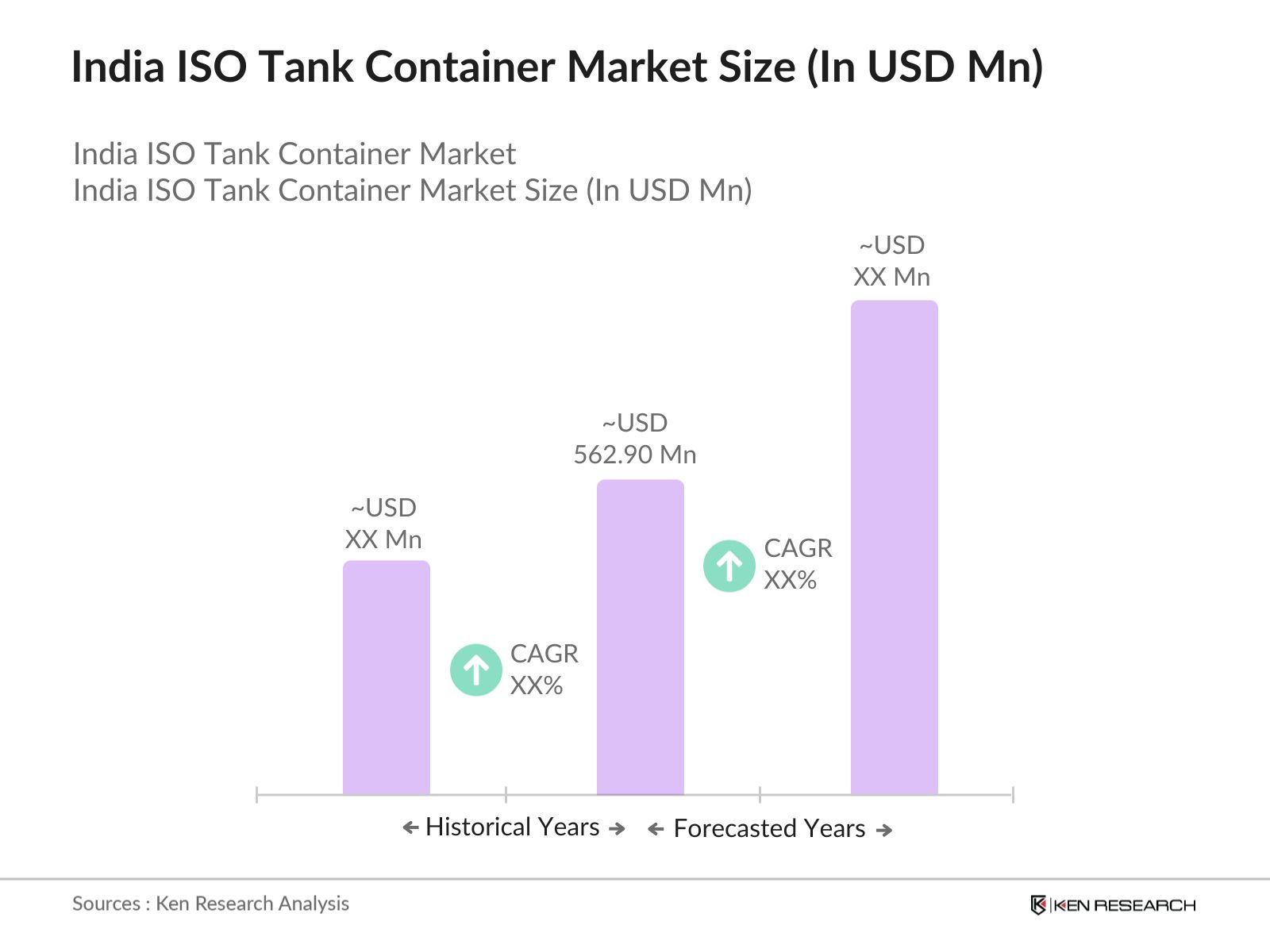
- The India ISO tank container market, valued at USD 562.90 million, is driven by the expanding chemical and petrochemical industries, which require efficient and safe transportation solutions for bulk liquids and gases. The adoption of ISO tank containers ensures compliance with international safety standards, facilitating seamless domestic and international trade.
- Major industrial hubs such as Mumbai, Chennai, and Kolkata dominate the market due to their strategic locations with access to major ports and well-developed infrastructure. These cities serve as key nodes in the supply chain, enabling efficient distribution and transportation of goods across the country and to international markets.
- The use of IoT devices in ISO tank containers is becoming increasingly prevalent, allowing for continuous monitoring of parameters such as temperature, pressure, and location. This real-time data enables logistics providers to ensure the integrity of the cargo, comply with safety regulations, and provide transparency to clients regarding shipment status.
India ISO Tank Container Market Segmentation
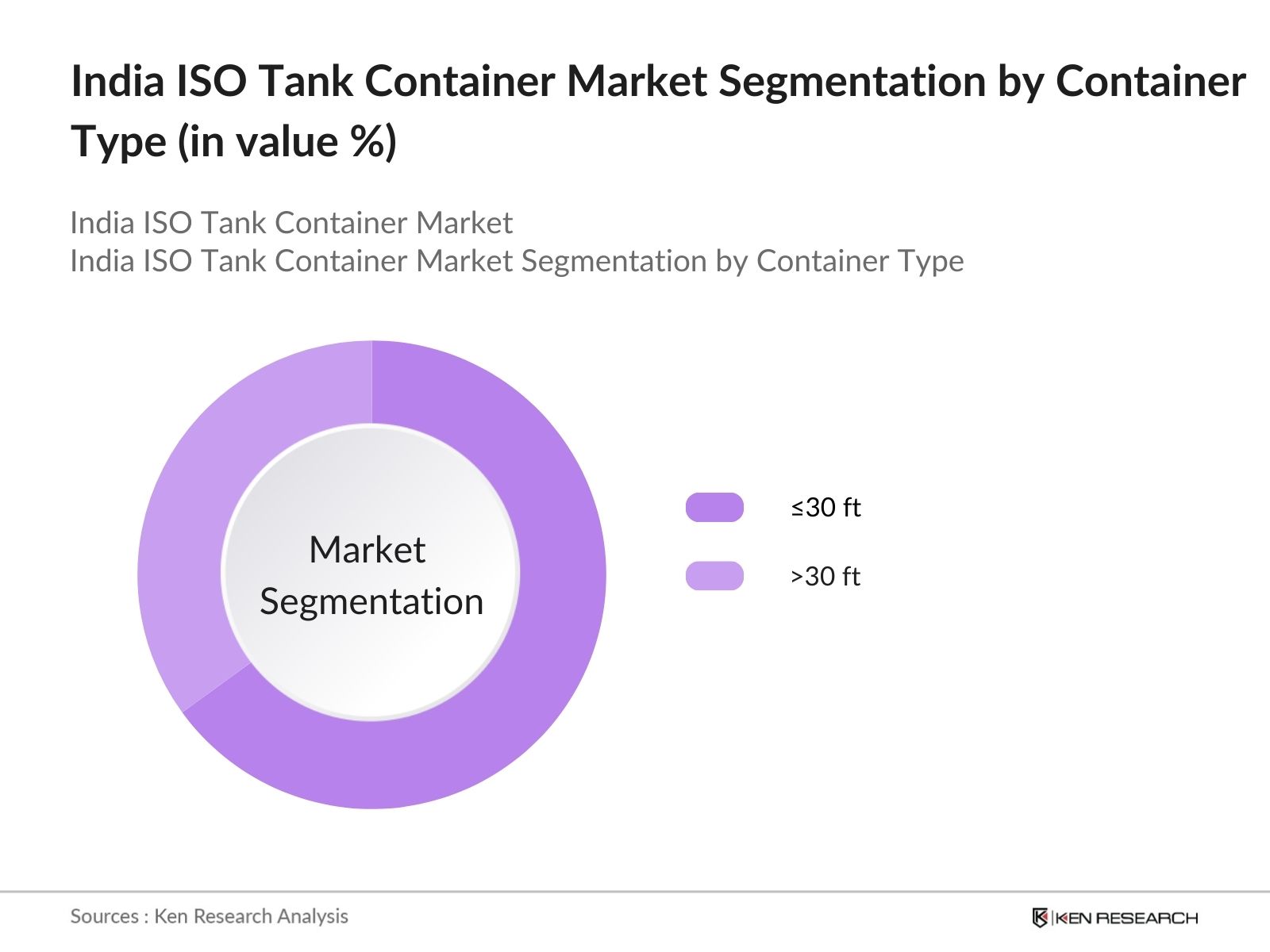
- By Container Type: The market is segmented by container type into 30 ft and >30 ft. The 30 ft segment holds a dominant market share due to its versatility and compatibility with various transportation modes, including road, rail, and marine. These containers are preferred for their ease of handling and suitability for transporting a wide range of liquids and gases, making them a popular choice among industries.
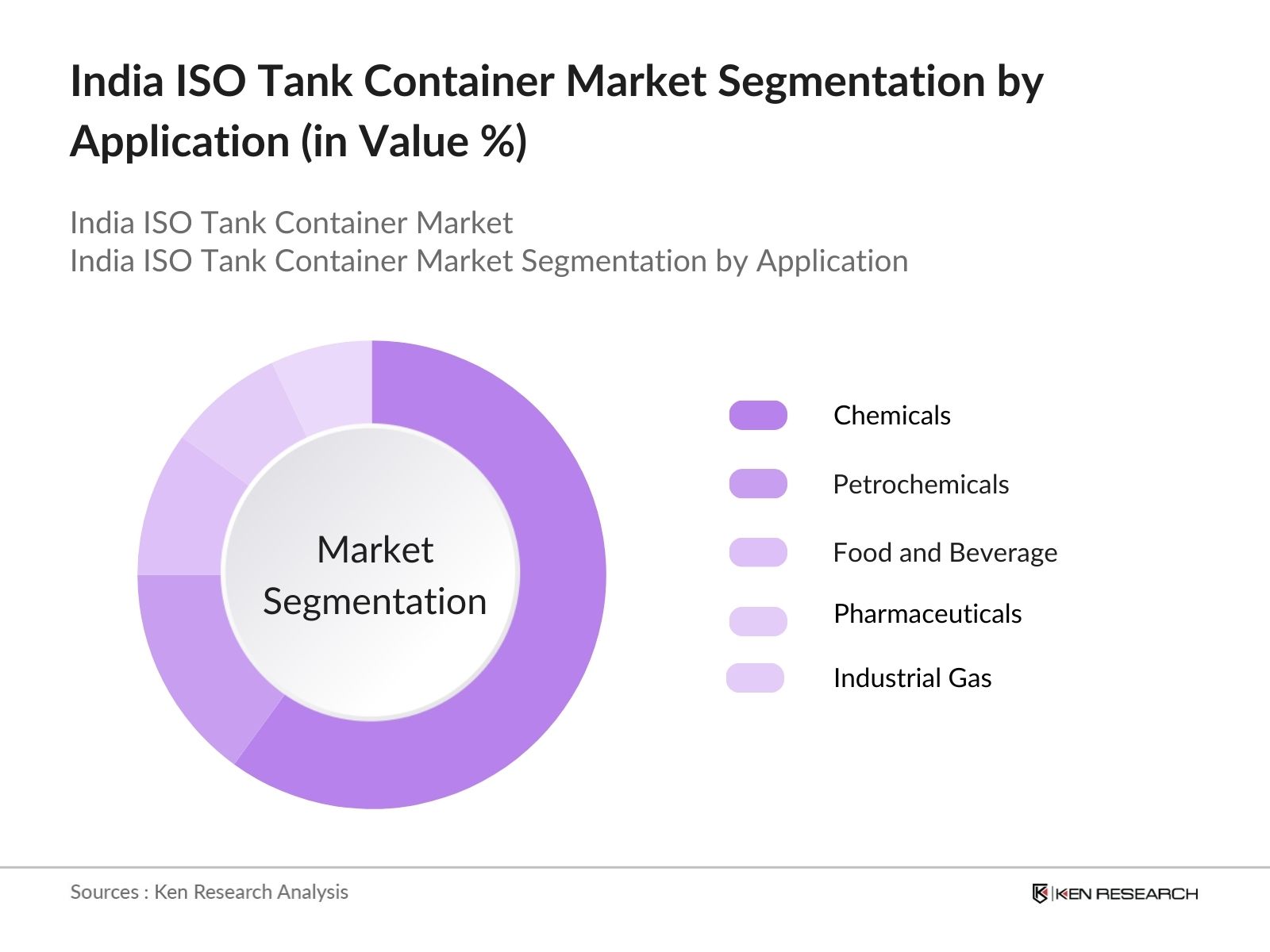
- By Application: The market is further segmented by application into chemicals, petrochemicals, food and beverage, pharmaceuticals, and industrial gas. The chemicals segment leads the market, driven by the substantial production and export of chemical products in India. The need for safe and efficient transportation of hazardous and non-hazardous chemicals has propelled the demand for ISO tank containers in this segment.
India ISO Tank Container Market Competitive Landscape
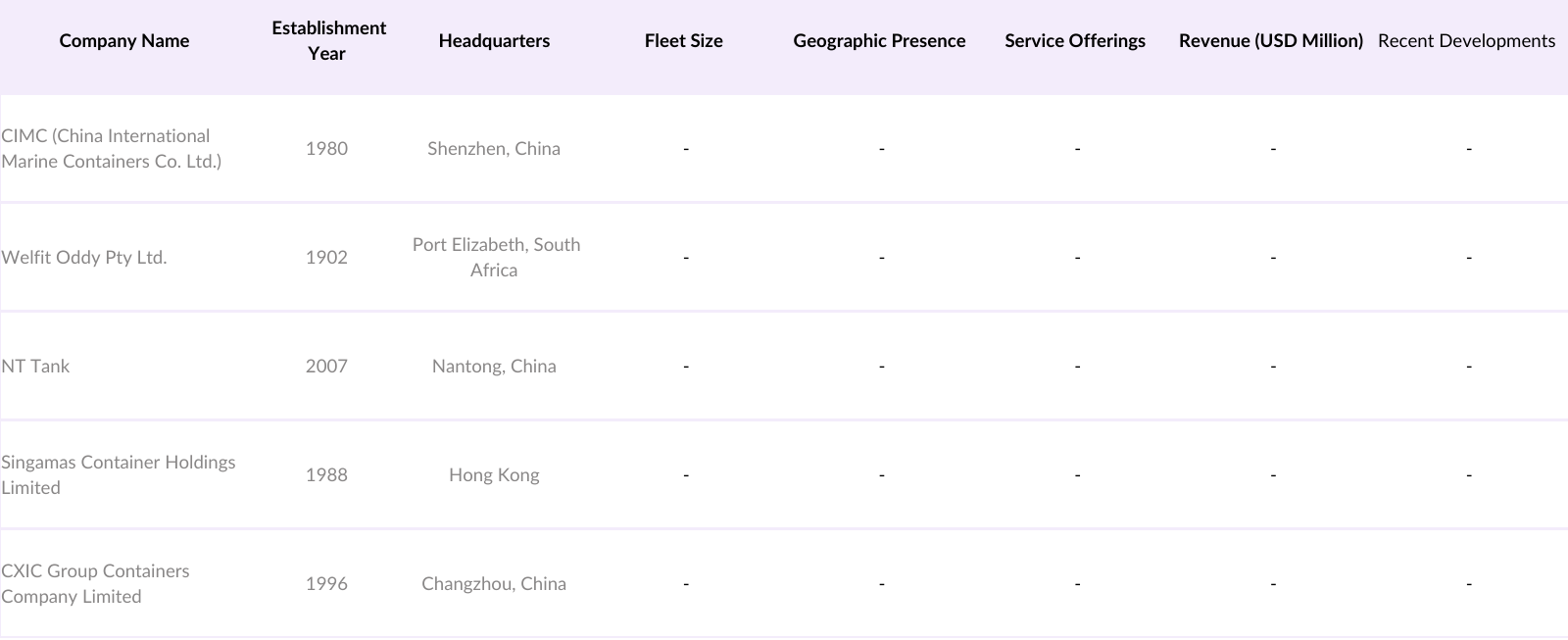
The India ISO tank container market is characterized by the presence of both domestic and international players, contributing to a competitive environment. Key companies focus on expanding their fleet size, enhancing service offerings, and adopting advanced technologies to maintain a competitive edge.
India ISO Tank Container Market Analysis
Market Growth Drivers
- Expansion of Chemical and Petrochemical Industries: India's chemical industry is a significant contributor to the national economy, producing over 80,000 products and ranking as the sixth-largest producer globally. In 2023, the production volume of major chemicals across India was over 13 million metric tons, reflecting a steady increase from previous years. This expansion necessitates efficient transportation solutions, such as ISO tank containers, to handle the increased output of liquid chemicals.
- Increase in Bulk Liquid Transportation: The demand for bulk liquid transportation in India has risen due to the growth of industries like chemicals, petrochemicals, and food and beverages. ISO tank containers, with capacities ranging between 28,000 to 39,000 liters, offer a safe and efficient means to transport these liquids. Their standardized design ensures compatibility with various modes of transport, facilitating seamless logistics operations.
- Advancements in Container Technology: Technological advancements have led to the development of ISO tank containers that are more durable, safer, and capable of transporting a wider range of liquids, including hazardous materials. The integration of Internet of Things (IoT) devices allows for real-time monitoring of factors like temperature and pressure, ensuring the safe transport of sensitive cargo. These innovations enhance operational efficiency and safety standards in bulk liquid transportation.
Market Challenges
- High Initial Investment Costs: The acquisition and maintenance of ISO tank containers involve substantial capital expenditure. The cost of manufacturing these containers is high due to the need for specialized materials and compliance with stringent safety standards. Additionally, regular maintenance and periodic inspections are required to ensure safety and compliance, adding to the overall operational costs.
- Regulatory Compliance and Safety Standards: Transporting hazardous materials in ISO tank containers requires adherence to various national and international regulations. In India, the Petroleum and Explosives Safety Organisation (PESO) oversees the approval and regulation of ISO tank containers for transporting hazardous substances. Compliance with these regulations necessitates thorough documentation, regular inspections, and certifications, which can be resource-intensive for companies.
India ISO Tank Container Market Future Outlook
Over the next five years, the India ISO tank container market is expected to experience growth, driven by the expansion of the chemical and petrochemical industries, increased international trade, and the adoption of advanced container technologies. Government initiatives aimed at improving infrastructure and promoting exports are also anticipated to contribute to market growth.
Market Opportunities
- Growth in Pharmaceutical and Food & Beverage Sectors: India's pharmaceutical industry is a global leader, supplying a significant portion of the world's generic medicines. The food and beverage sector is also expanding, driven by a growing population and changing consumer preferences. Both industries require the transportation of bulk liquids, such as pharmaceutical ingredients and edible oils, presenting opportunities for the increased use of ISO tank containers.
- Development of Multimodal Transportation Infrastructure: The Indian government is investing in the development of multimodal transportation infrastructure to enhance connectivity and reduce logistics costs. Projects like the Dedicated Freight Corridors (DFCs) aim to create efficient rail networks for freight movement. Such infrastructure developments facilitate the seamless movement of ISO tank containers across different transport modes, improving efficiency and reducing transit times.
Scope of the Report
|
Segment |
Sub-Segments |
|
Container Type |
30 ft |
|
Transport Mode |
Road |
|
Application |
Chemicals |
|
Ownership |
Leasing |
|
Region |
North India |
Products
Key Target Audience
Chemical Manufacturers
Petrochemical Companies
Food and Beverage Producers
Pharmaceutical Firms
Industrial Gas Suppliers
Logistics and Transportation Companies
Government and Regulatory Bodies (e.g., Directorate General of Shipping)
Investors and Venture Capitalist Firms
Companies
Players Mentioned in the Report
CIMC (China International Marine Containers Co. Ltd.)
Welfit Oddy Pty Ltd.
NT Tank
Singamas Container Holdings Limited
CXIC Group Containers Company Limited
Stolt-Nielsen Limited
Bulkhaul Ltd.
Bertschi AG
HOYER GmbH
Den Hartogh Logistics
Table of Contents
1. India ISO Tank Container Market Overview
1.1. Definition and Scope
1.2. Market Taxonomy
1.3. Market Growth Rate
1.4. Market Segmentation Overview
2. India ISO Tank Container Market Size (In USD Bn)
2.1. Historical Market Size
2.2. Year-On-Year Growth Analysis
2.3. Key Market Developments and Milestones
3. India ISO Tank Container Market Analysis
3.1. Growth Drivers
3.1.1. Expansion of Chemical and Petrochemical Industries
3.1.2. Increase in Bulk Liquid Transportation
3.1.3. Government Initiatives Promoting Trade
3.1.4. Advancements in Container Technology
3.2. Market Challenges
3.2.1. High Initial Investment Costs
3.2.2. Regulatory Compliance and Safety Standards
3.2.3. Competition from Alternative Transport Methods
3.3. Opportunities
3.3.1. Growth in Pharmaceutical and Food & Beverage Sectors
3.3.2. Development of Multimodal Transportation Infrastructure
3.3.3. Adoption of Smart Container Technologies
3.4. Trends
3.4.1. Integration of IoT for Real-Time Monitoring
3.4.2. Shift Towards Sustainable and Eco-Friendly Containers
3.4.3. Leasing Services Gaining Popularity
3.5. Government Regulations
3.5.1. Directorate General of Shipping Guidelines
3.5.2. Hazardous Substances Management Rules
3.5.3. Customs and Excise Regulations
3.5.4. International Maritime Dangerous Goods (IMDG) Code Compliance
3.6. SWOT Analysis
3.7. Stakeholder Ecosystem
3.8. Porters Five Forces Analysis
3.9. Competitive Landscape
4. India ISO Tank Container Market Segmentation
4.1. By Container Type (In Value %)
4.1.1. 30 ft
4.1.2. >30 ft
4.2. By Transport Mode (In Value %)
4.2.1. Road
4.2.2. Rail
4.2.3. Marine
4.3. By Application (In Value %)
4.3.1. Chemicals
4.3.2. Petrochemicals
4.3.3. Food and Beverage
4.3.4. Pharmaceuticals
4.3.5. Industrial Gas
4.4. By Ownership (In Value %)
4.4.1. Leasing
4.4.2. Purchase
4.5. By Region (In Value %)
4.5.1. North India
4.5.2. South India
4.5.3. East India
4.5.4. West India
5. India ISO Tank Container Market Competitive Analysis
5.1. Detailed Profiles of Major Companies
5.1.1. CIMC (China International Marine Containers Co. Ltd.)
5.1.2. Welfit Oddy Pty Ltd.
5.1.3. NT Tank
5.1.4. Singamas Container Holdings Limited
5.1.5. CXIC Group Containers Company Limited
5.1.6. Stolt-Nielsen Limited
5.1.7. Bulkhaul Ltd.
5.1.8. Bertschi AG
5.1.9. HOYER GmbH
5.1.10. Den Hartogh Logistics
5.1.11. NewPort Tank Containers
5.1.12. Sinochem International Logistics
5.1.13. VTG Tanktainer GmbH
5.1.14. Intermodal Tank Transport
5.1.15. Gruber Liquid Logistics
5.2. Cross Comparison Parameters (Fleet Size, Geographic Presence, Service Offerings, Revenue)
5.3. Market Share Analysis
5.4. Strategic Initiatives
5.5. Mergers and Acquisitions
5.6. Investment Analysis
5.6.1. Venture Capital Funding
5.6.2. Government Grants
5.6.3. Private Equity Investments
6. India ISO Tank Container Market Regulatory Framework
6.1. Environmental Standards
6.2. Compliance Requirements
6.3. Certification Processes
7. India ISO Tank Container Future Market Size (In USD Bn)
7.1. Future Market Size Projections
7.2. Key Factors Driving Future Market Growth
8. India ISO Tank Container Future Market Segmentation
8.1. By Container Type (In Value %)
8.2. By Transport Mode (In Value %)
8.3. By Application (In Value %)
8.4. By Ownership (In Value %)
8.5. By Region (In Value %)
9. India ISO Tank Container Market Analysts Recommendations
9.1. Total Addressable Market (TAM), Serviceable Available Market (SAM), Serviceable Obtainable Market (SOM) Analysis
9.2. Customer Cohort Analysis
9.3. Marketing Initiatives
9.4. White Space Opportunity Analysis
Disclaimer Contact UsResearch Methodology
Step 1: Identification of Key Variables
The initial phase involves constructing an ecosystem map encompassing all major stakeholders within the India ISO Tank Container Market. This step is underpinned by extensive desk research, utilizing a combination of secondary and proprietary databases to gather comprehensive industry-level information. The primary objective is to identify and define the critical variables that influence market dynamics.
Step 2: Market Analysis and Construction
In this phase, we compile and analyze historical data pertaining to the India ISO Tank Container Market. This includes assessing market penetration, the ratio of marketplaces to service providers, and the resultant revenue generation. Furthermore, an evaluation of service quality statistics is conducted to ensure the reliability and accuracy of the revenue estimates.
Step 3: Hypothesis Validation and Expert Consultation
Market hypotheses are developed and subsequently validated through computer-assisted telephone interviews (CATIs) with industry experts representing a diverse array of companies. These consultations provide valuable operational and financial insights directly from industry practitioners, which are instrumental in refining and corroborating the market data.
Step 4: Research Synthesis and Final Output
The final phase involves direct engagement with multiple ISO tank container manufacturers to acquire detailed insights into product segments, sales performance, consumer preferences, and other pertinent factors. This interaction serves to verify and complement the statistics derived from the bottom-up approach, thereby ensuring a comprehensive, accurate, and validated analysis of the India ISO Tank Container market.
Frequently Asked Questions
01. How big is the India ISO Tank Container Market?
The India ISO tank container market is valued at USD 562.90 million, driven by the expanding chemical and petrochemical industries.
02. What are the challenges in the India ISO Tank Container Market?
Challenges include high initial investment costs, stringent regulatory compliance requirements, and competition from alternative transportation methods.
03. Who are the major players in the India ISO Tank Container Market?
Key players include CIMC, Welfit Oddy Pty Ltd., NT Tank, Singamas Container Holdings Limited, and CXIC Group Containers Company Limited.
04. What are the growth drivers of the India ISO Tank Container Market?
The growth of the India ISO tank container market is driven by increased demand in the chemical and petrochemical sectors, advancements in container technology, and supportive government policies promoting trade and logistics infrastructure.
Why Buy From Us?

What makes us stand out is that our consultants follows Robust, Refine and Result (RRR) methodology. i.e. Robust for clear definitions, approaches and sanity checking, Refine for differentiating respondents facts and opinions and Result for presenting data with story

We have set a benchmark in the industry by offering our clients with syndicated and customized market research reports featuring coverage of entire market as well as meticulous research and analyst insights.

While we don't replace traditional research, we flip the method upside down. Our dual approach of Top Bottom & Bottom Top ensures quality deliverable by not just verifying company fundamentals but also looking at the sector and macroeconomic factors.

With one step in the future, our research team constantly tries to show you the bigger picture. We help with some of the tough questions you may encounter along the way: How is the industry positioned? Best marketing channel? KPI's of competitors? By aligning every element, we help maximize success.

Our report gives you instant access to the answers and sources that other companies might choose to hide. We elaborate each steps of research methodology we have used and showcase you the sample size to earn your trust.

If you need any support, we are here! We pride ourselves on universe strength, data quality, and quick, friendly, and professional service.