
India Laundry Appliances Market Outlook to 2030
Region:India
Author(s):Abhinav kumar
Product Code:KROD7091
Region:India
Author(s):Abhinav kumar
Product Code:KROD7091
November 2024
81
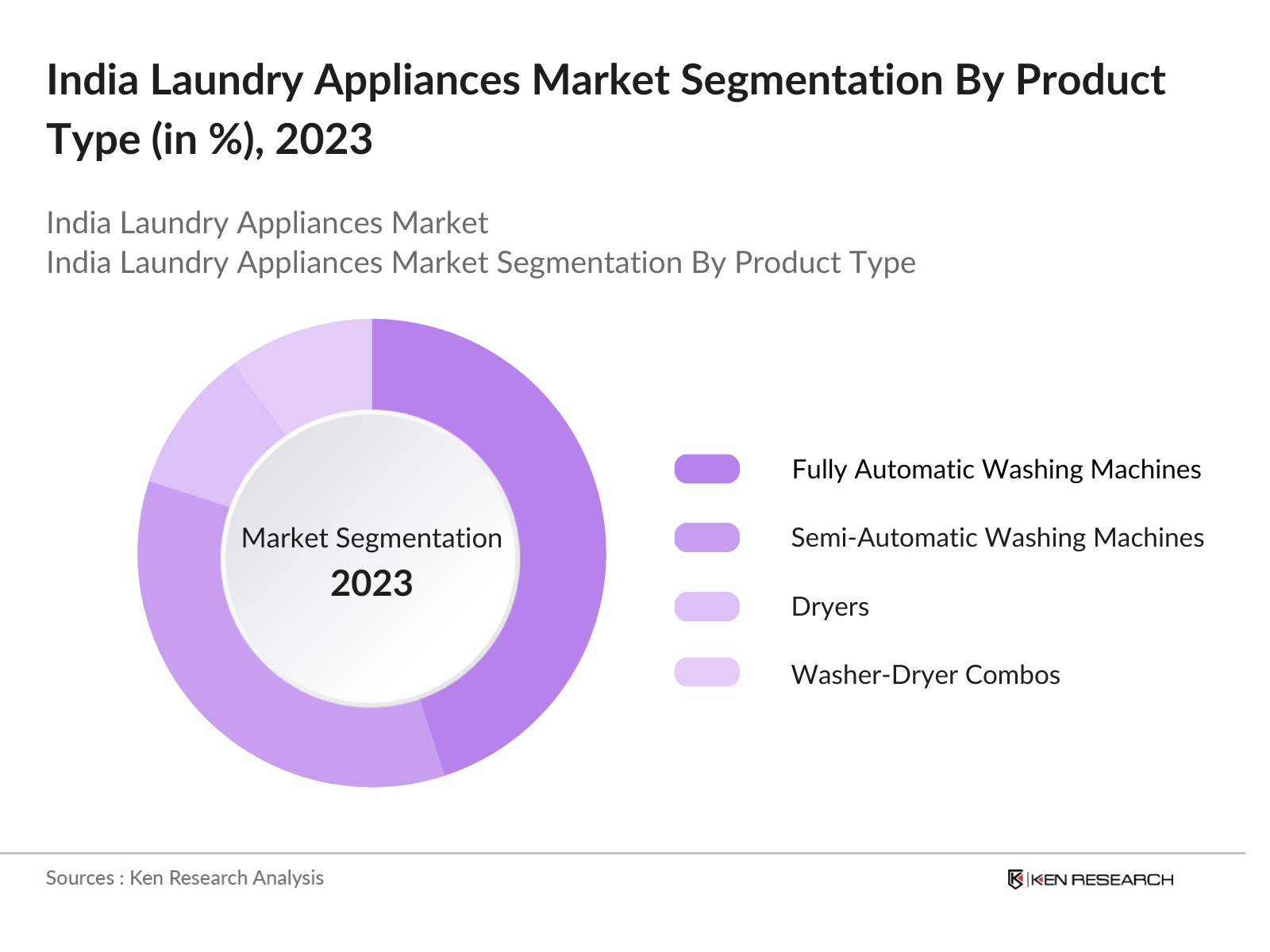
By Product Type: India's laundry appliance market is segmented by product type into fully automatic washing machines, semi-automatic washing machines, dryers, and washer-dryer combos. Fully automatic washing machines hold the largest market share, driven by their convenience and increasing consumer preference for products that save time and effort. Brands such as LG, Samsung, and Whirlpool have introduced a wide variety of models with advanced features like AI-powered wash cycles, adding to their appeal among middle and high-income households.
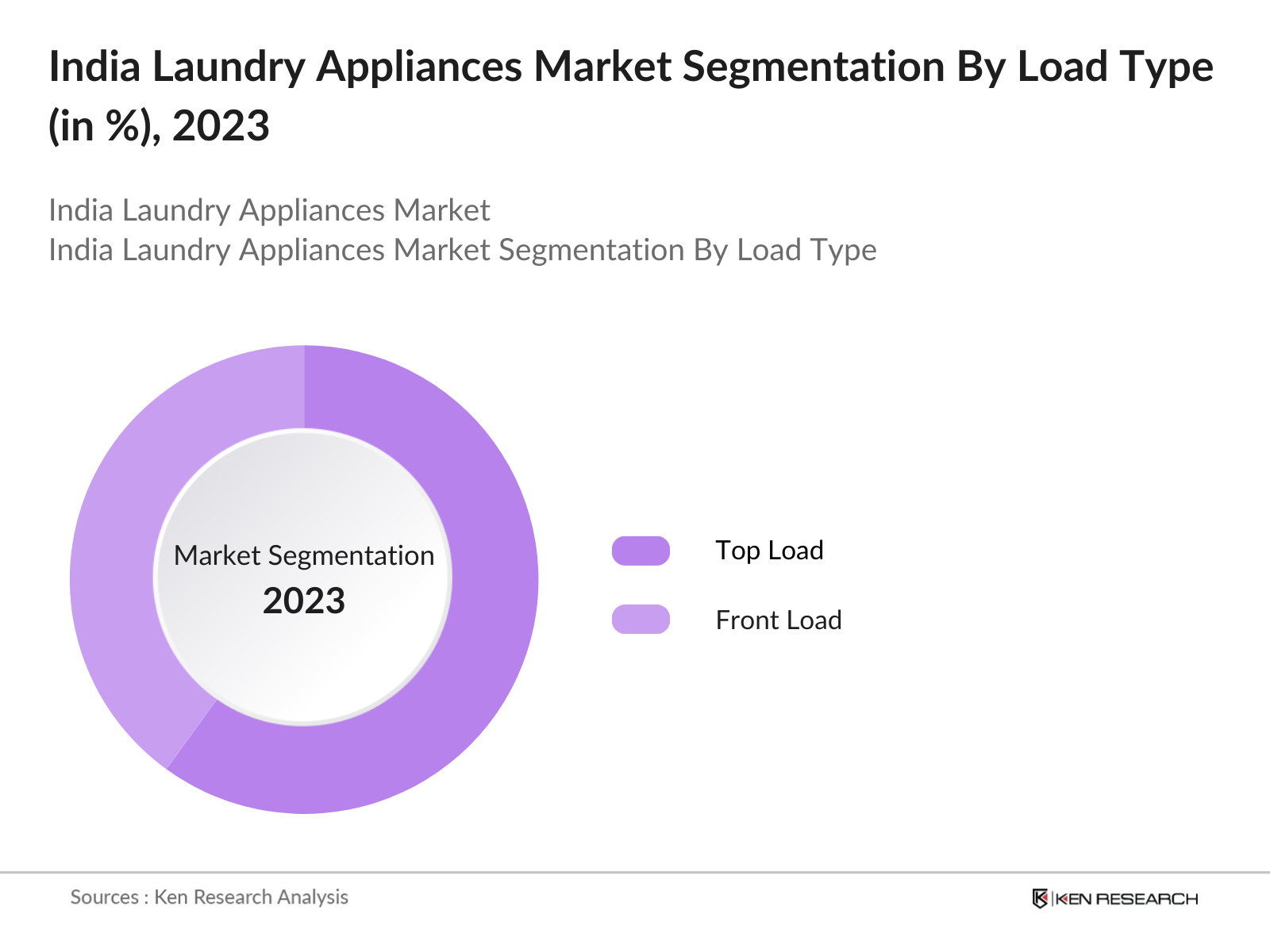
By Load Type: The market is segmented by load type into top load and front load washing machines. Top load washing machines have a higher market share due to their affordability and ease of use. Consumers in India prefer top load machines because they are generally cheaper, require less bending, and are more convenient in areas with water pressure issues. However, front load washing machines are growing in popularity due to their water and energy efficiency, especially in urban areas.
The India laundry appliances market is dominated by several major players, both domestic and international. These companies maintain strong distribution networks, offer a wide range of products, and invest heavily in marketing and product development to capture market share. The competition is particularly intense in the fully automatic washing machine segment, where innovation and pricing play a key role in brand differentiation. The market is dominated by companies like LG Electronics, Samsung, and Whirlpool, known for their strong product portfolios and innovation in smart laundry technology. Other notable players include Haier and IFB, which have established themselves in both urban and rural markets.
|
Company Name |
Establishment Year |
Headquarters |
Revenue (2023) |
No. of Employees |
Product Portfolio |
R&D Investment |
Energy Efficiency Rating |
Market Share |
|
LG Electronics |
1958 |
South Korea |
_ |
_ |
_ |
_ |
_ |
_ |
|
Samsung Electronics |
1969 |
South Korea |
_ |
_ |
_ |
_ |
_ |
_ |
|
Whirlpool Corporation |
1911 |
USA |
_ |
_ |
_ |
_ |
_ |
_ |
|
Haier India |
1984 |
China |
_ |
_ |
_ |
_ |
_ |
_ |
|
IFB Industries |
1974 |
India |
_ |
_ |
_ |
_ |
_ |
_ |
Over the next five years, the India laundry appliances market is expected to experience steady growth, driven by the increasing penetration of smart home technologies, rising consumer awareness around energy efficiency, and the expansion of the organized retail sector. As Indias middle-class population continues to grow, demand for mid-range and premium appliances is expected to rise. Additionally, the government's initiatives to promote energy-efficient appliances and the growing awareness of sustainability will push manufacturers to innovate and introduce more environmentally friendly products.
|
Product Type |
Fully Automatic Washing Machines Semi-Automatic Washing Machines Dryers Washer-Dryer Combos Others (Spin Dryers, Mini Washers) |
|
Load Type |
Top Load Front Load |
|
Capacity (In Kg) |
Below 6 Kg 6-8 Kg Above 8 Kg |
|
Technology |
Conventional Smart Laundry Appliances |
|
Region |
North India South India West India East India |
1.1. Definition and Scope
1.2. Market Taxonomy
1.3. Market Growth Rate
1.4. Market Segmentation Overview
2.1. Historical Market Size
2.2. Year-on-Year Growth Analysis
2.3. Key Market Developments and Milestones
3.1. Growth Drivers
3.1.1. Increasing Urbanization
3.1.2. Rising Disposable Income
3.1.3. Growing Demand for Energy-Efficient Appliances
3.1.4. Expansion of Organized Retail
3.2. Market Challenges
3.2.1. High Price Sensitivity of Consumers
3.2.2. Inconsistent Power Supply in Rural Areas
3.2.3. Low Penetration in Tier-III Cities
3.2.4. Competitive Pricing Pressures
3.3. Opportunities
3.3.1. Demand for Smart Laundry Appliances
3.3.2. Growth in E-commerce Sales
3.3.3. Untapped Rural Markets
3.3.4. Energy Conservation Initiatives
3.4. Trends
3.4.1. Integration of IoT and AI in Laundry Appliances
3.4.2. Rise in Demand for Compact and Portable Washing Machines
3.4.3. Environmentally Friendly and Energy-Saving Technologies
3.4.4. Increased Adoption of Inverter Technology
3.5. Government Regulations
3.5.1. Bureau of Energy Efficiency (BEE) Ratings for Energy-Efficient Appliances
3.5.2. Import Duties and Taxation Policies
3.5.3. Make in India and Local Manufacturing Policies
3.5.4. Guidelines for Disposal and Recycling of Electronic Appliances
3.6. SWOT Analysis
3.7. Stakeholder Ecosystem
3.8. Porters Five Forces Analysis
3.9. Competition Ecosystem
4.1. By Product Type
4.1.1. Fully Automatic Washing Machines
4.1.2. Semi-Automatic Washing Machines
4.1.3. Dryers
4.1.4. Washer-Dryer Combos
4.1.5. Others (Spin Dryers, Mini Washers)
4.2. By Load Type
4.2.1. Top Load
4.2.2. Front Load
4.3. By Capacity (In Kg)
4.3.1. Below 6 Kg
4.3.2. 6-8 Kg
4.3.3. Above 8 Kg
4.4. By Technology
4.4.1. Conventional
4.4.2. Smart Laundry Appliances
4.5. By Region (In Value %)
4.5.1. North India
4.5.2. South India
4.5.3. West India
4.5.4. East India
5.1. Detailed Profiles of Major Companies
5.1.1. LG Electronics
5.1.2. Samsung Electronics
5.1.3. Whirlpool Corporation
5.1.4. Haier India
5.1.5. Godrej & Boyce Mfg. Co. Ltd.
5.1.6. IFB Industries Ltd.
5.1.7. Panasonic India Pvt. Ltd.
5.1.8. Videocon Industries
5.1.9. Bosch Siemens Hausgerte (BSH)
5.1.10. Voltas Beko
5.1.11. AmazonBasics (Appliances Category)
5.1.12. Midea India
5.1.13. Lloyd (Havells)
5.1.14. Electrolux India
5.1.15. Sharp India Ltd.
5.2. Cross Comparison Parameters (No. of Employees, Manufacturing Facilities, Product Range, Energy Efficiency, Brand Positioning, Service Network, Revenue, Market Share)
5.3. Market Share Analysis
5.4. Strategic Initiatives
5.5. Mergers and Acquisitions
5.6. Investment Analysis
5.7. Venture Capital Funding
5.8. Private Equity Investments
6.1. Compliance with Energy Efficiency Standards
6.2. Certification Processes for Smart Appliances
6.3. Environmental Regulations on E-Waste Disposal
6.4. Industry-Specific Regulations on Import/Export
7.1. Future Market Size Projections
7.2. Key Factors Driving Future Market Growth
8.1. By Product Type (In Value %)
8.2. By Load Type (In Value %)
8.3. By Capacity (In Value %)
8.4. By Technology (In Value %)
8.5. By Region (In Value %)
9.1. TAM/SAM/SOM Analysis
9.2. Customer Cohort Analysis
9.3. Marketing Initiatives
9.4. White Space Opportunity Analysis
Disclaimer Contact UsThe research begins by identifying critical variables impacting the India laundry appliances market, including product innovation, energy efficiency regulations, and shifts in consumer purchasing behavior. Extensive desk research using proprietary databases and industry publications helps create a detailed ecosystem map of stakeholders.
In this phase, historical market data is collected and analyzed, evaluating market penetration, growth in urban and rural areas, and performance of key market segments. The focus is on accurate revenue estimation by examining trends in sales, product launches, and promotional activities.
Market hypotheses are validated through expert interviews with key stakeholders in the laundry appliances industry, including manufacturers, retailers, and regulatory bodies. These consultations provide practical insights into market dynamics, pricing strategies, and consumer preferences.
The final phase synthesizes data from multiple sources, ensuring an accurate representation of market conditions. Insights from key players are incorporated into the analysis to validate the research findings and project future market trends for the India laundry appliances market.
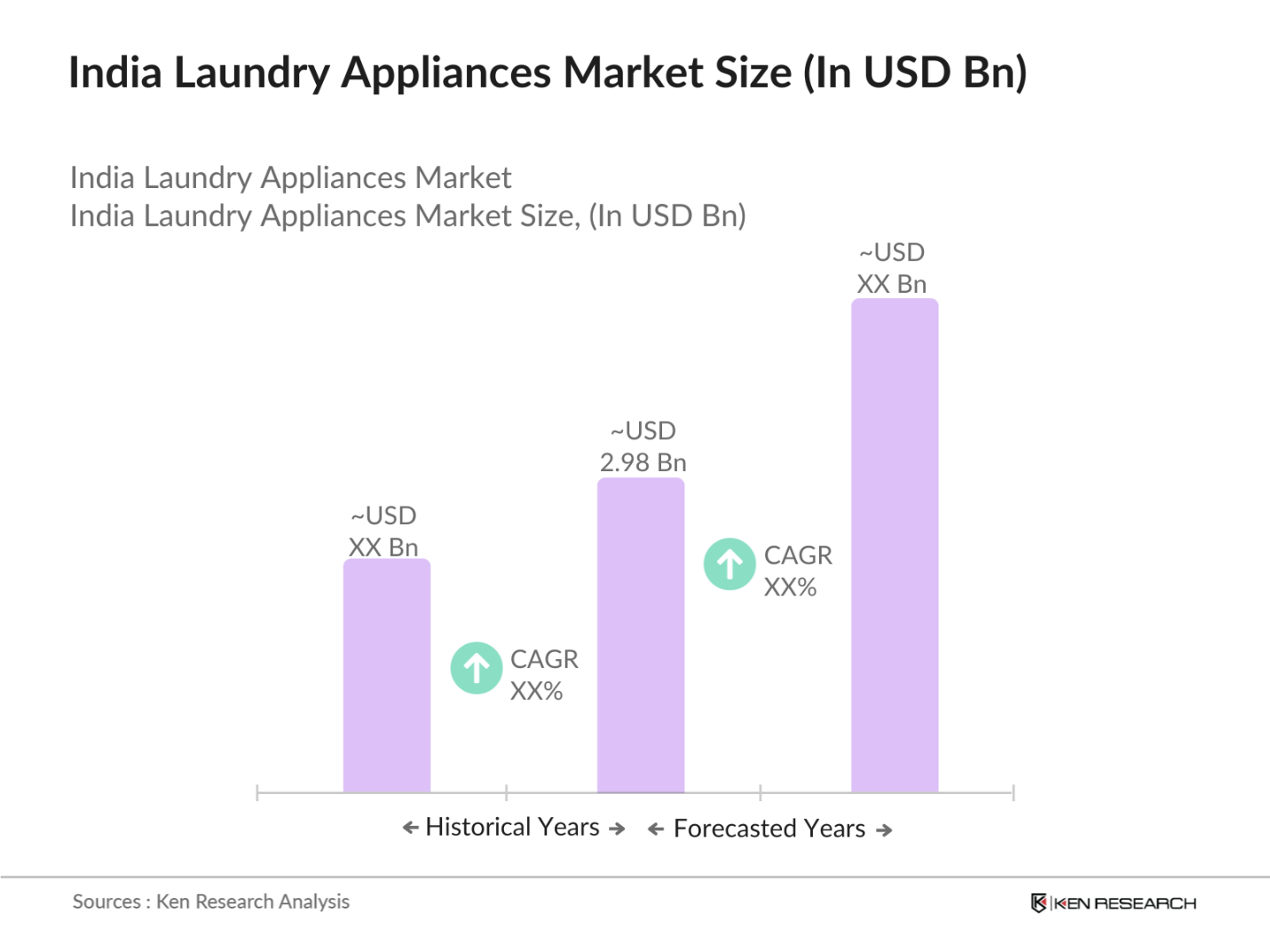
The India laundry appliances market is valued at USD 2.98 billion, driven by increasing urbanization, rising incomes, and growing demand for energy-efficient and smart appliances.
Challenges include high price sensitivity, low penetration in rural areas, and competition from unorganized players. Additionally, inconsistent power supply in rural areas hampers the adoption of advanced appliances.
Major players include LG Electronics, Samsung Electronics, Whirlpool Corporation, Haier India, and IFB Industries, all of which dominate due to their strong distribution networks, brand recognition, and technological innovation.
The market is propelled by urbanization, the rise of dual-income households, and increasing consumer preference for smart and energy-efficient appliances. The growing influence of organized retail and e-commerce platforms further drives market growth.
Key trends include the increasing adoption of smart appliances integrated with IoT, AI, and mobile control, along with the growing demand for compact, space-saving appliances in urban households.

What makes us stand out is that our consultants follows Robust, Refine and Result (RRR) methodology. i.e. Robust for clear definitions, approaches and sanity checking, Refine for differentiating respondents facts and opinions and Result for presenting data with story

We have set a benchmark in the industry by offering our clients with syndicated and customized market research reports featuring coverage of entire market as well as meticulous research and analyst insights.

While we don't replace traditional research, we flip the method upside down. Our dual approach of Top Bottom & Bottom Top ensures quality deliverable by not just verifying company fundamentals but also looking at the sector and macroeconomic factors.

With one step in the future, our research team constantly tries to show you the bigger picture. We help with some of the tough questions you may encounter along the way: How is the industry positioned? Best marketing channel? KPI's of competitors? By aligning every element, we help maximize success.

Our report gives you instant access to the answers and sources that other companies might choose to hide. We elaborate each steps of research methodology we have used and showcase you the sample size to earn your trust.

If you need any support, we are here! We pride ourselves on universe strength, data quality, and quick, friendly, and professional service.