
India Male Grooming Products Market Outlook to 2030
Region:India
Author(s):Naman Rohilla
Product Code:KROD5766
Region:India
Author(s):Naman Rohilla
Product Code:KROD5766
December 2024
84
The India Male Grooming Products Market is characterized by the presence of both domestic and international players who dominate through brand loyalty, innovation, and distribution reach. The top competitors offer a diverse product range across multiple segments, including premium grooming products, which appeal to urban men with higher disposable incomes. The market is dominated by key players like Emami Ltd., Gillette India Ltd., and Beardo. This consolidation highlights the influence of both legacy and digitally-native brands. These companies use extensive marketing campaigns, celebrity endorsements, and continuous innovation to maintain their competitive edge.
|
Company |
Established |
Headquarters |
Product Portfolio |
Distribution Channels |
Brand Recognition |
R&D Investment |
Celebrity Endorsements |
Market Penetration |
Consumer Loyalty Programs |
|
Emami Ltd. |
1974 |
Kolkata, India |
- |
- |
- |
- |
- |
- |
- |
|
Gillette India Ltd. |
1901 |
Mumbai, India |
- |
- |
- |
- |
- |
- |
- |
|
The Man Company |
2015 |
Gurugram, India |
- |
- |
- |
- |
- |
- |
- |
|
Beardo |
2016 |
Ahmedabad, India |
- |
- |
- |
- |
- |
- |
- |
|
Bombay Shaving Company |
2016 |
New Delhi, India |
- |
- |
- |
- |
- |
- |
- |
Over the next five years, the India Male Grooming Products Market is expected to witness growth driven by an increase in disposable incomes, changing consumer preferences, and the rise of premium grooming products. The market will also benefit from the expansion of e-commerce, with more men in Tier-II and Tier-III cities gaining access to a wider range of grooming products. Additionally, sustainability trends and the demand for eco-friendly packaging are expected to shape future market offerings.
|
By Product Type |
Shaving Products (Razors, Aftershave, Shaving Gels) Skincare Products (Moisturizers, Anti-aging Creams) Haircare Products (Shampoos, Beard Oils) Fragrances (Deodorants, Perfumes) Bath and Body Products (Soaps, Body Washes) |
|
By Distribution Channel |
Online Channels Offline Channels Salons D2C |
|
By End-User |
Teenagers Young Professionals Mature Consumers |
|
By Pricing Category |
Premium Segment Mid-Range Segment Economy Segment |
|
By Region |
North India South India East India West India |
Key Target Audience
1.1. Definition and Scope
1.2. Market Taxonomy
1.3. Market Growth Rate
1.4. Market Segmentation Overview
2.1. Historical Market Size
2.2. Year-On-Year Growth Analysis
2.3. Key Market Developments and Milestones
3.1. Growth Drivers (Consumer preferences, Rising disposable income, Urbanization, Increased Awareness of Personal Grooming)
3.1.1. Rising Demand for Organic and Natural Products
3.1.2. Influence of Western Culture and Media
3.1.3. Increase in Disposable Income and Spending Power
3.1.4. E-Commerce Expansion and Online Retail
3.2. Market Challenges (High Cost of Premium Products, Consumer Brand Loyalty, Regulatory Barriers)
3.2.1. High Competition from Unorganized Sector
3.2.2. Consumer Sensitivity to Price
3.2.3. Regulatory and Certification Hurdles
3.3. Opportunities (New Product Development, Expansion into Rural Markets, Growth in Salon and Beauty Service Industry)
3.3.1. Demand for Specialized Grooming Solutions (beard care, hair styling products)
3.3.2. Untapped Rural and Tier-II Markets
3.3.3. Digital Marketing and Direct-to-Consumer (D2C) Brands
3.4. Trends (Customization of Products, Male Grooming Subscription Models, Growing Popularity of Grooming Kits)
3.4.1. Subscription-based Grooming Services
3.4.2. Focus on Sustainable and Eco-friendly Packaging
3.4.3. Premiumization of Male Grooming Products
3.5. Government Regulation (Cosmetic Safety Regulations, Certification Standards, Import Duties on Grooming Products)
3.5.1. BIS (Bureau of Indian Standards) Regulations for Grooming Products
3.5.2. Compliance with Ayurvedic and Herbal Product Certifications
3.5.3. Taxation and Import Tariffs on Grooming Products
3.6. SWOT Analysis
3.7. Stakeholder Ecosystem
3.8. Porters Five Forces Analysis
3.9. Competition Ecosystem
4.1. By Product Type (In Value %)
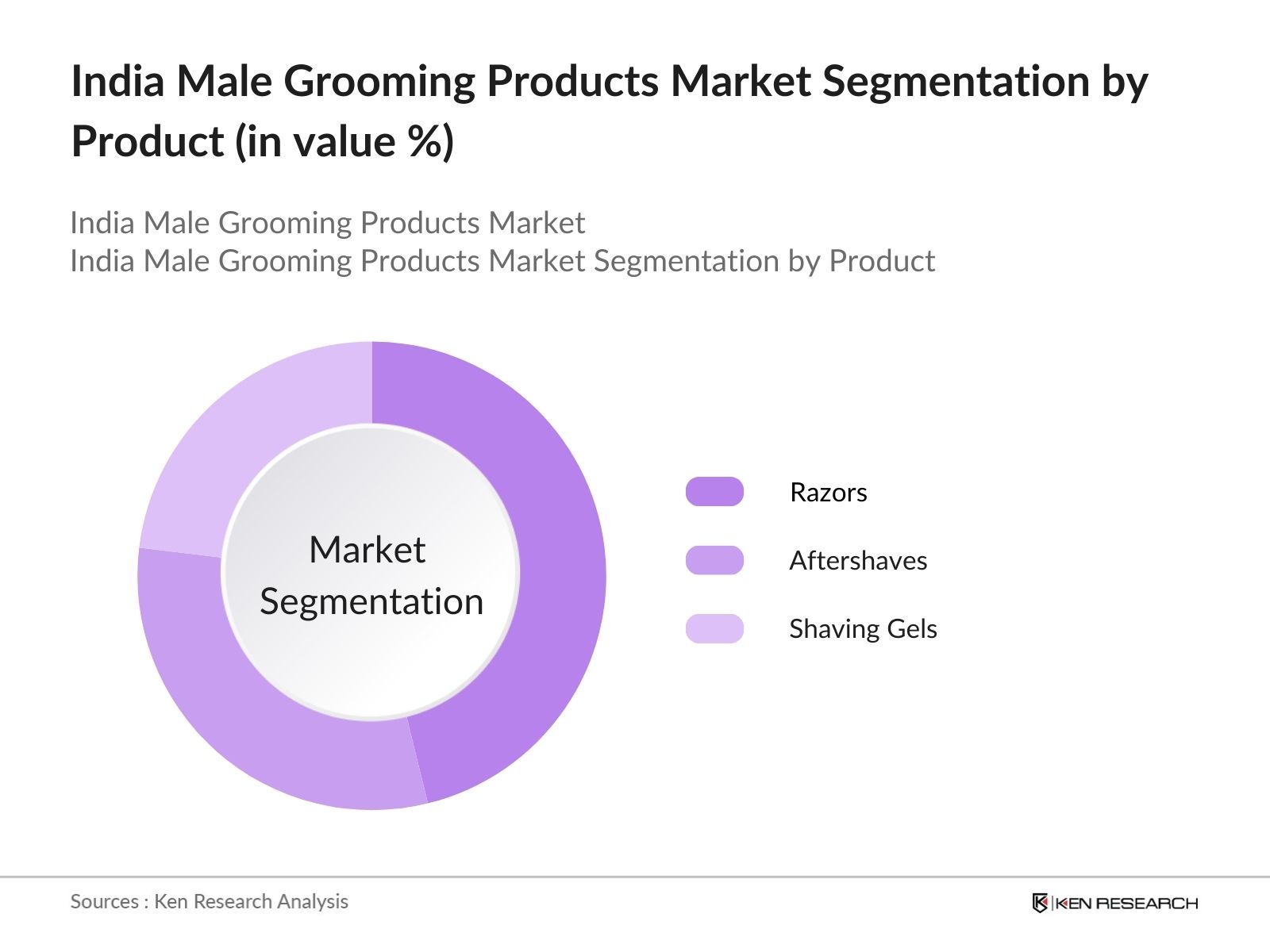
4.1.1. Shaving Products (Razors, Aftershave, Shaving Gels)
4.1.2. Skincare Products (Moisturizers, Anti-aging Creams, Sunscreen)
4.1.3. Haircare Products (Shampoos, Hair Styling Gels, Beard Oils)
4.1.4. Fragrances (Deodorants, Perfumes, Body Mists)
4.1.5. Bath and Body Products (Soaps, Body Washes, Scrubs)
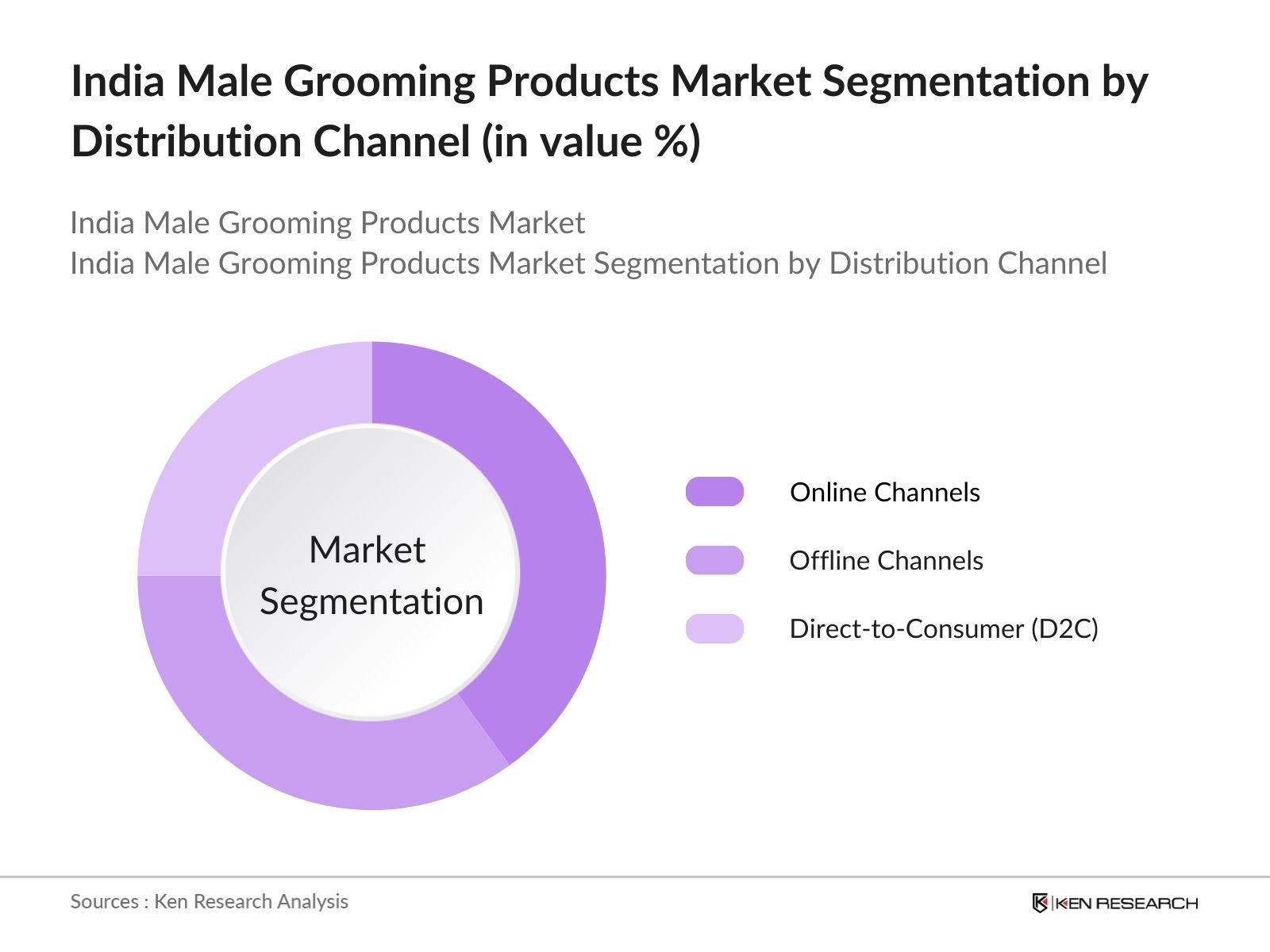
4.2. By Distribution Channel (In Value %)
4.2.1. Online Channels
4.2.2. Offline Channels (Supermarkets, Specialty Stores, Salons)
4.2.3. Direct-to-Consumer (D2C)
4.2.4. E-commerce Platforms
4.3. By End-User (In Value %)
4.3.1. Teenagers
4.3.2. Young Professionals
4.3.3. Mature Consumers
4.4. By Pricing Category (In Value %)
4.4.1. Premium Segment
4.4.2. Mid-Range Segment
4.4.3. Economy Segment
4.5. By Region (In Value %)
4.5.1. North India
4.5.2. South India
4.5.3. East India
4.5.4. West India
5.1 Detailed Profiles of Major Companies
5.1.1. Emami Ltd.
5.1.2. Procter & Gamble
5.1.3. Hindustan Unilever
5.1.4. Gillette India Ltd.
5.1.5. The Man Company
5.1.6. Beardo
5.1.7. Bombay Shaving Company
5.1.8. Nivea India Pvt. Ltd.
5.1.9. Loreal India Pvt. Ltd.
5.1.10. Marico Ltd.
5.1.11. McNROE Consumer Products Pvt. Ltd.
5.1.12. ITC Limited
5.1.13. Philips India Ltd.
5.1.14. Park Avenue
5.1.15. Ustraa (Happily Unmarried)
5.2 Cross Comparison Parameters (Product Portfolio, Distribution Channels, R&D Investment, Consumer Engagement Strategies, Pricing Models, Market Penetration, Brand Loyalty, Marketing Campaigns)
5.3. Market Share Analysis
5.4. Strategic Initiatives
5.5. Mergers and Acquisitions
5.6. Investment Analysis
5.7. Venture Capital Funding
5.8. Government Grants
5.9. Private Equity Investments
6.1. Cosmetic Industry Regulations (FDA, BIS)
6.2. Product Labelling Requirements
6.3. Licensing and Certification Processes
7.1. Future Market Size Projections
7.2. Key Factors Driving Future Market Growth
8.1. By Product Type (In Value %)
8.2. By Distribution Channel (In Value %)
8.3. By End-User (In Value %)
8.4. By Pricing Category (In Value %)
8.5. By Region (In Value %)
9.1. TAM/SAM/SOM Analysis
9.2. Customer Cohort Analysis
9.3. Marketing Initiatives
9.4. White Space Opportunity Analysis
The initial phase of research involved mapping the ecosystem of the India Male Grooming Products Market. This included identifying stakeholders such as manufacturers, distributors, and consumers. Extensive desk research was conducted using proprietary and secondary databases to define the variables influencing market dynamics.
Historical data on product penetration, sales channels, and revenue generation were compiled to assess market trends. We analyzed the distribution network across Tier-I, Tier-II, and Tier-III cities and evaluated the performance of major product categories to ensure reliable revenue estimations.
In this step, hypotheses were developed and validated through in-depth interviews with industry experts and company executives. These consultations provided valuable insights into consumer behaviour, distribution challenges, and market forecasts, which refined our data analysis.
In the final phase, direct engagement with manufacturers and distributors provided detailed insights into product sales and emerging trends. This bottom-up approach allowed us to cross-verify data and ensure a comprehensive and accurate analysis of the India Male Grooming Products Market.
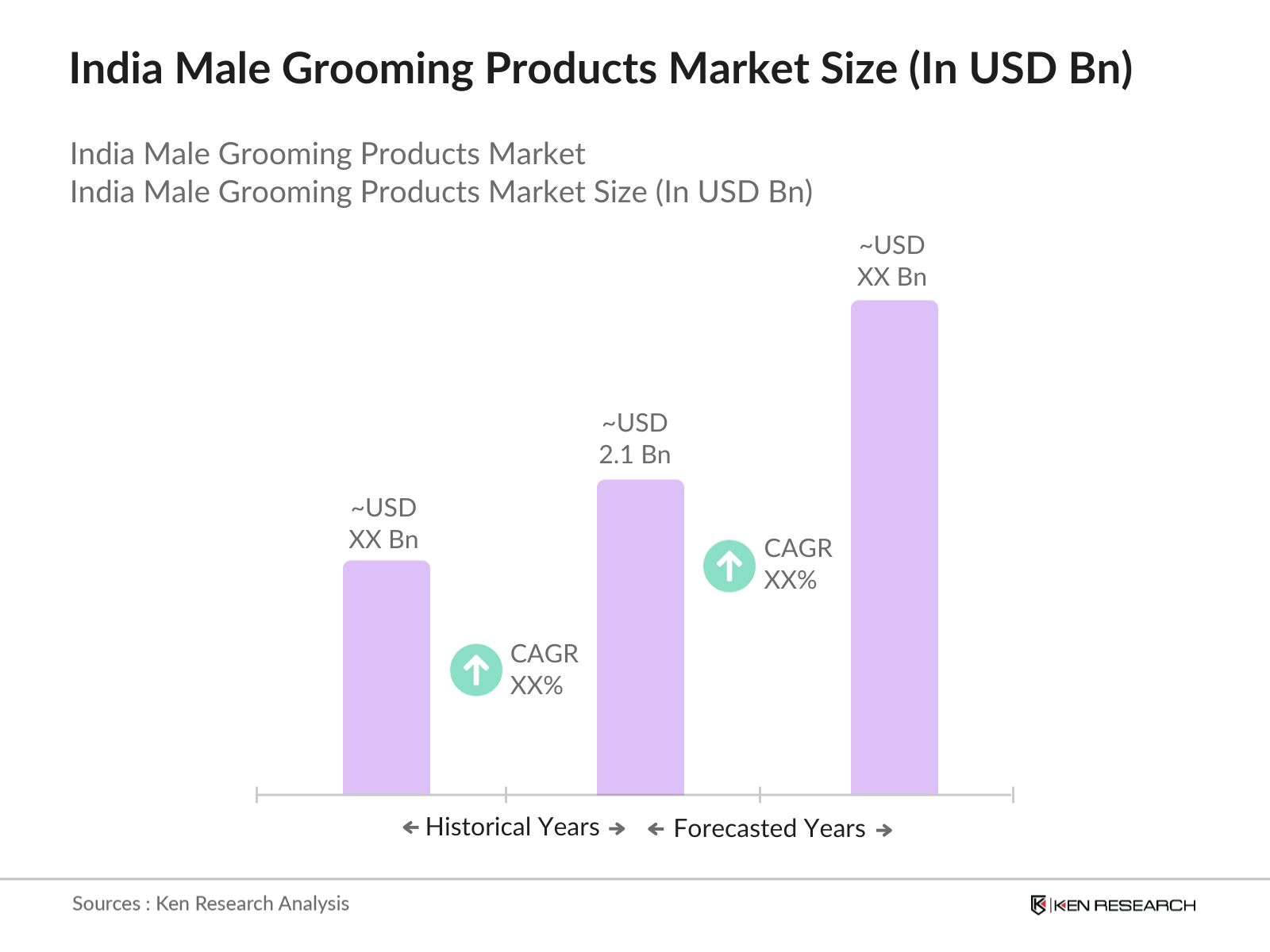
The India Male Grooming Products Market is valued at USD 2.1 billion, driven by increasing consumer demand for grooming and skincare products, particularly in urban areas.
Challenges in the India Male Grooming Products Market include intense competition, high price sensitivity among consumers, and regulatory hurdles related to the certification of grooming products.
The India Male Grooming Products Market Major players include Emami Ltd., Gillette India Ltd., Beardo, The Man Company, and Bombay Shaving Company, which dominate through brand recognition and distribution strength.
The India Male Grooming Products Market Growth drivers include rising disposable incomes, increasing digital penetration, and the growing popularity of personal grooming among men.

What makes us stand out is that our consultants follows Robust, Refine and Result (RRR) methodology. i.e. Robust for clear definitions, approaches and sanity checking, Refine for differentiating respondents facts and opinions and Result for presenting data with story

We have set a benchmark in the industry by offering our clients with syndicated and customized market research reports featuring coverage of entire market as well as meticulous research and analyst insights.

While we don't replace traditional research, we flip the method upside down. Our dual approach of Top Bottom & Bottom Top ensures quality deliverable by not just verifying company fundamentals but also looking at the sector and macroeconomic factors.

With one step in the future, our research team constantly tries to show you the bigger picture. We help with some of the tough questions you may encounter along the way: How is the industry positioned? Best marketing channel? KPI's of competitors? By aligning every element, we help maximize success.

Our report gives you instant access to the answers and sources that other companies might choose to hide. We elaborate each steps of research methodology we have used and showcase you the sample size to earn your trust.

If you need any support, we are here! We pride ourselves on universe strength, data quality, and quick, friendly, and professional service.