
India Medical Device Market Outlook to 2030
Region:Asia
Author(s):Samanyu
Product Code:KROD4525
October 2024
83
About the Report
India Medical Device Market Overview
-
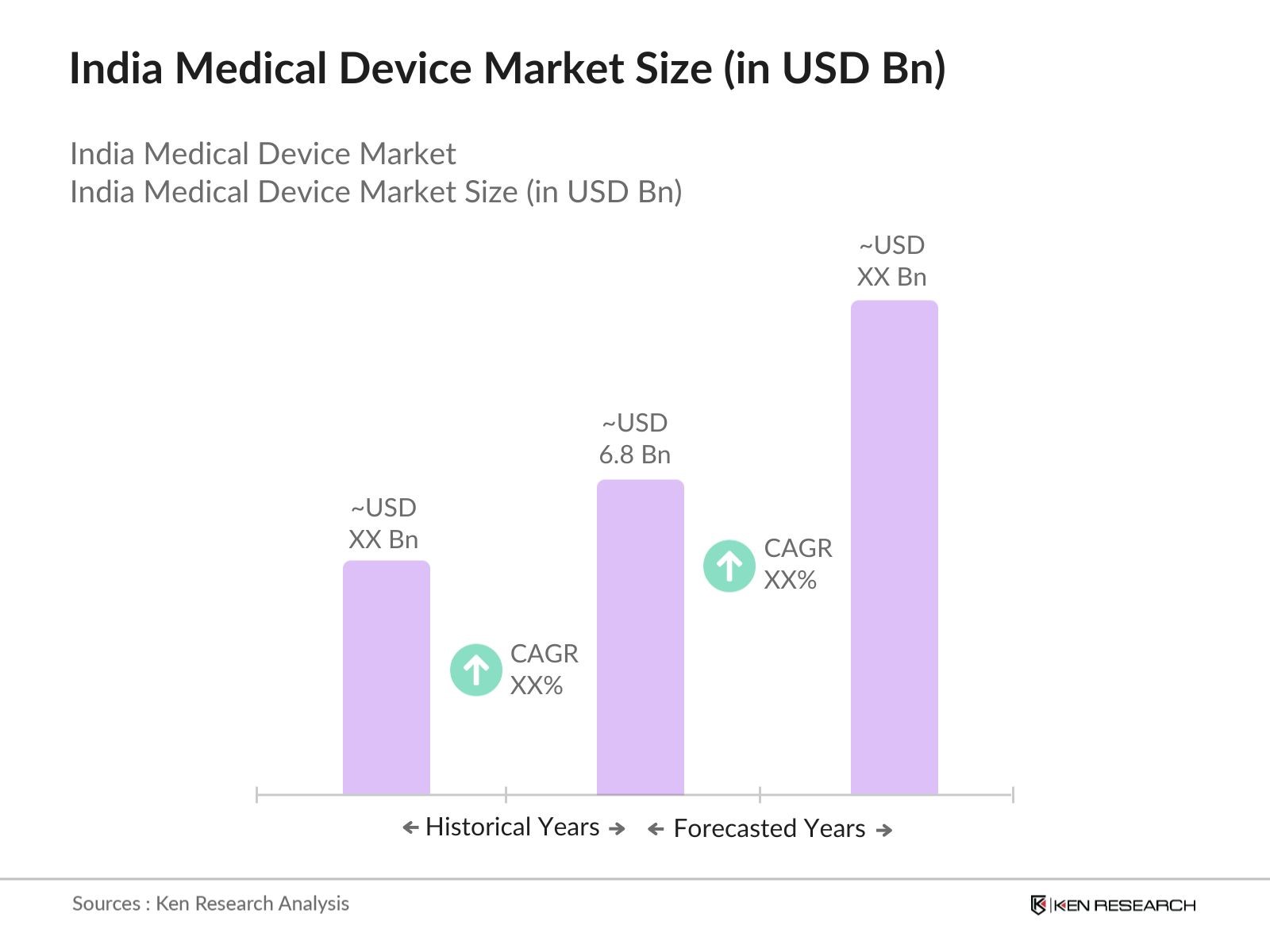
The India Medical Device market is valued at USD 6.8 Bn, reflecting a strong five-year historical growth, driven by increased healthcare expenditures and supportive government initiatives like the “Make in India” campaign, which encourages local manufacturing. Rising demand for advanced diagnostic equipment and the surge in chronic diseases have further accelerated market growth. The development of digital health solutions and telemedicine during the pandemic has also played a crucial role in driving the market upward.
-
India’s medical device market dominance is concentrated in metropolitan cities such as Delhi, Mumbai, and Bangalore. These cities host advanced healthcare facilities and research centers, offering substantial demand for sophisticated medical equipment. Additionally, the presence of top private hospitals and an increasing trend of medical tourism contribute to the market dominance of these cities. Bangalore stands out due to its growing status as a healthcare innovation hub, while Delhi and Mumbai lead in healthcare services and patient inflows.
-
Artificial Intelligence (AI) is rapidly being integrated into medical devices to enhance diagnostic accuracy and improve patient outcomes. Devices equipped with AI, such as automated radiology systems and AI-assisted robotic surgery tools, are gaining traction in Indian hospitals. In 2023, over 500 hospitals in India adopted AI-based diagnostic systems, with investments from private players like Apollo Hospitals. AI technology is being used to interpret large datasets, speed up diagnosis, and assist in personalized treatment planning. This trend is expected to revolutionize healthcare delivery and boost demand for AI-enabled medical devices.
India Medical Device Market Segmentation
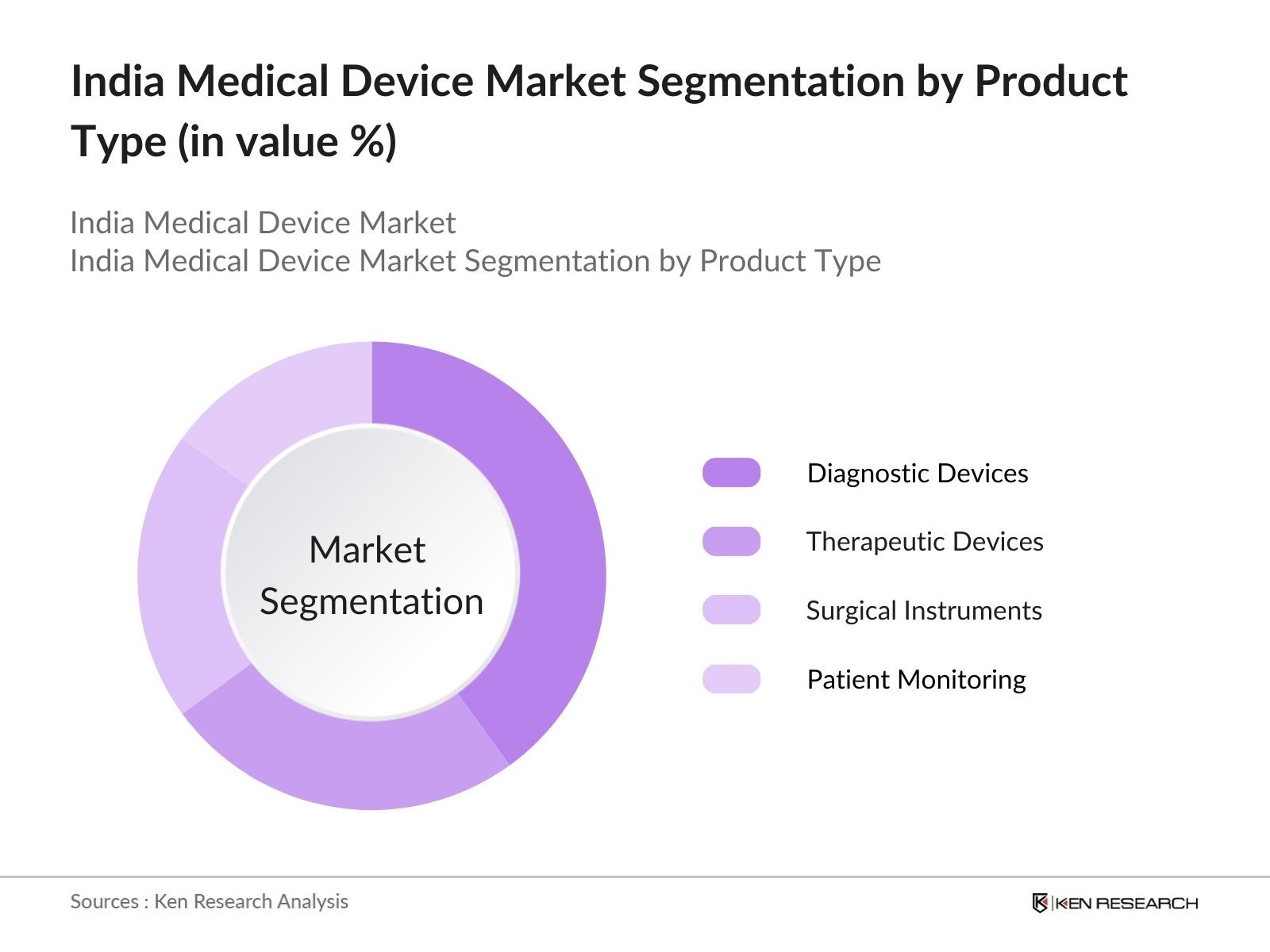
By Product Type: The market is segmented by product type into diagnostic devices, therapeutic devices, surgical instruments, and patient monitoring systems. Among these, diagnostic devices hold a dominant market share, attributed to the rising prevalence of chronic diseases and the increasing need for early disease detection. Medical imaging equipment, such as MRI and CT scanners, are in high demand due to their widespread use in identifying health issues ranging from cancer to neurological disorders.
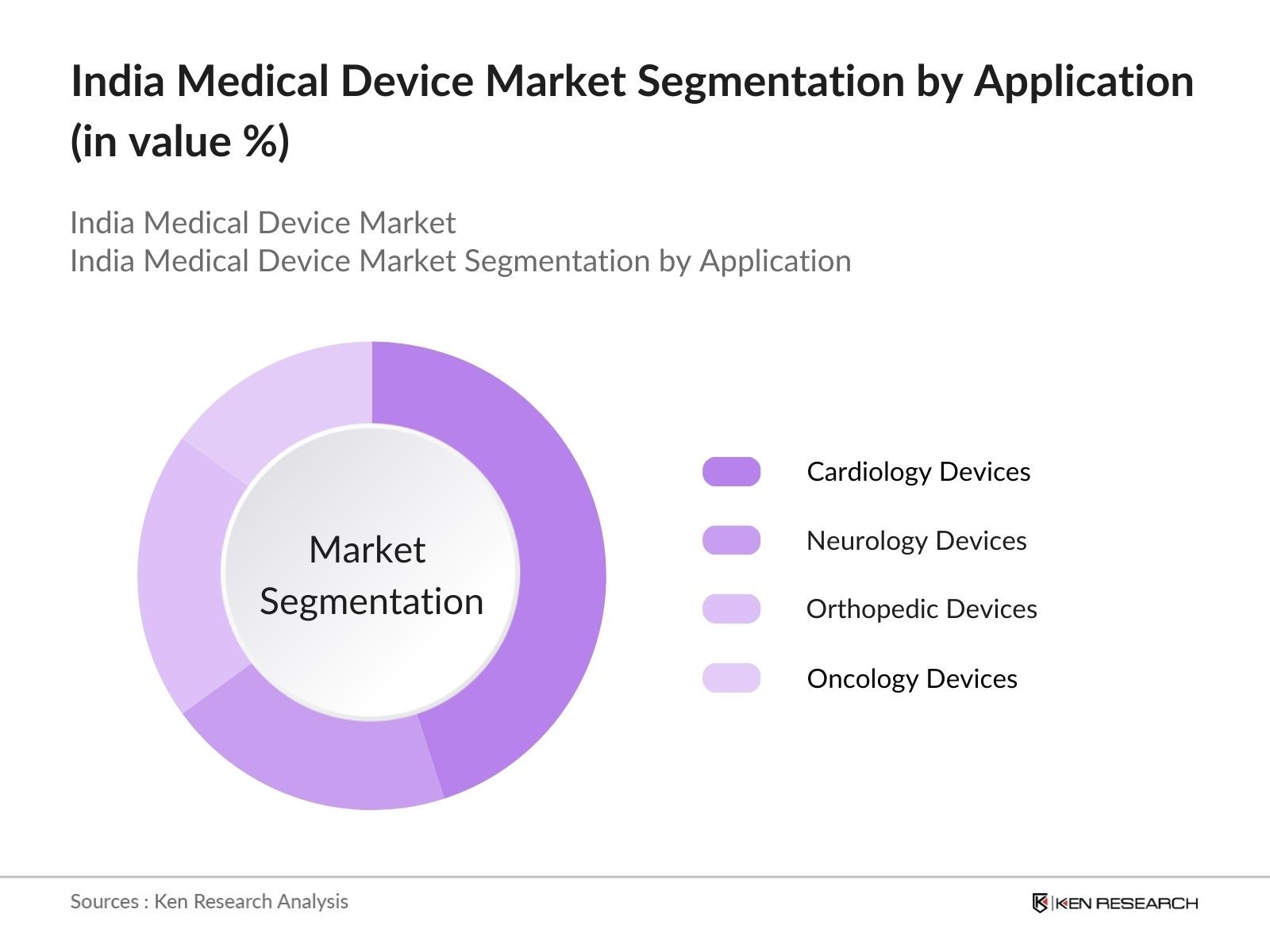
By Application: Market is also segmented by application into cardiology, neurology, orthopedics, and oncology. Cardiology devices dominate the application segment due to the increasing burden of cardiovascular diseases. The demand for pacemakers, stents, and defibrillators has risen sharply in India, with over 20 million cardiac patients annually, driving growth in this sub-segment.
India Medical Device Market Competitive Landscape
The market is dominated by both domestic and international players. Several global leaders have set up manufacturing units in India, while indigenous companies are also expanding their product offerings. The competition is highly consolidated, with established players focusing on R&D investments and strategic partnerships to maintain their market position.
|
Company Name |
Establishment Year |
Headquarters |
Revenue (2023) |
Employees |
Product Portfolio |
R&D Investment |
Manufacturing Facilities |
Partnerships |
|
Philips Healthcare |
1891 |
Netherlands |
- |
- |
- |
- |
- |
- |
|
Medtronic India |
1949 |
Ireland |
- |
- |
- |
- |
- |
- |
|
GE Healthcare |
1892 |
USA |
- |
- |
- |
- |
- |
- |
|
Abbott Laboratories |
1888 |
USA |
- |
- |
- |
- |
- |
- |
|
Siemens Healthineers |
1847 |
Germany |
- |
- |
- |
- |
- |
- |
India Medical Device Industry Analysis
Growth Drivers
-
Rising Healthcare Spending: India's healthcare spending has consistently increased in recent years, with the government allocating ?86,200 crore for healthcare in the 2023 Union Budget, demonstrating a strong commitment to improving health services. Additionally, out-of-pocket expenditure in healthcare has also surged due to the rising prevalence of chronic diseases. According to the World Bank, India's healthcare expenditure as a percentage of GDP was around 3.6% in 2022. This growing financial commitment by both the public and private sectors is fueling demand for medical devices across the country, including diagnostic and therapeutic devices.
-
Increase in Medical Tourism: Medical tourism in India has grown rapidly, with the country being one of the leading destinations for affordable and high-quality medical treatments. In 2022, India welcomed over 1.4 million medical tourists, generating approximately ?70,000 crore in revenue, according to the Ministry of Health and Family Welfare. This influx is driven by the availability of cutting-edge medical devices and technology, which are critical in areas such as orthopedics, cardiology, and oncology. The growing number of international patients seeking advanced treatments is further boosting the demand for sophisticated medical devices.
-
Government Healthcare Programs: The "Make in India" initiative has significantly bolstered domestic manufacturing of medical devices, reducing dependency on imports. The sector is projected to benefit from policies like the Production Linked Incentive (PLI) scheme, which allocated ?3,420 crore to incentivize local manufacturing between 2020 and 2025. Additionally, Ayushman Bharat, the world’s largest government healthcare scheme, aims to cover over 500 million citizens, increasing the demand for affordable medical devices across the nation. This dual push is transforming India into a global hub for medical device production and innovation.
Market Challenges
-
High Import Dependency: India remains heavily dependent on imports for advanced medical devices, with around 75-80% of the medical devices in use being imported, as per data from the Department of Pharmaceuticals. This reliance results in high procurement costs and exposure to supply chain disruptions. Imports from countries like the USA, Germany, and China constitute a significant portion of the market, limiting the growth of domestic manufacturers. The Medical Technology Association of India (MTaI) highlights that devices like MRI scanners and pacemakers are predominantly sourced from abroad, impacting the local market's ability to scale quickly.
-
Regulatory Delays: India's medical device industry faces significant regulatory challenges, particularly concerning product approvals and compliance with standards. Delays in obtaining approvals from the Central Drugs Standard Control Organization (CDSCO) can slow down the entry of new devices into the market. According to a 2023 report by Invest India, it can take up to two years for certain devices to receive necessary clearances, hampering innovation and market penetration. Additionally, evolving regulations often create uncertainty for manufacturers, deterring potential investments in the sector and restricting the availability of cutting-edge medical technology.
India Medical Device Market Future Outlook
Over the next five years, the India medical device market is expected to demonstrate robust growth, propelled by increasing government support for healthcare infrastructure development, advancements in medical technologies, and the rising geriatric population. The shift toward digital health and remote patient monitoring will also drive market expansion, with innovations in AI-driven diagnostic tools expected to gain prominence. Moreover, growing private investments in the healthcare sector will further solidify India’s position as a key market for medical devices.
Future Market Opportunities
- Increasing Adoption of Digital Health Devices: Digital health devices, such as wearable fitness trackers and remote monitoring systems, are gaining popularity in India, driven by rising awareness and the need for better chronic disease management. According to NITI Aayog, the number of digital health device users in India exceeded 100 million by 2023, with a projected increase in demand for blood pressure monitors, glucometers, and portable ECG devices. The Indian government's push for telemedicine and digital health platforms through initiatives like the National Digital Health Mission (NDHM) further supports the adoption of these devices, opening new growth avenues for manufacturers.
- Public-Private Partnerships: Public-private partnerships (PPPs) in healthcare have emerged as a key driver for the medical device market in India. Recent collaborations between private players and state governments, such as the Andhra Pradesh Health City project, which attracted over ?1,200 crore in investments, have led to the establishment of advanced healthcare facilities. These partnerships foster innovation and facilitate access to high-end medical devices, especially in underserved regions. The involvement of the private sector ensures the deployment of cutting-edge technology, while the government provides regulatory support and infrastructure, creating a conducive environment for market growth.
Scope of the Report
|
By Product Type |
Diagnostic Devices Surgical Instruments Patient Monitoring Devices Therapeutic Devices |
|
By Application |
Cardiology Neurology Orthopedics Oncology |
|
By End-User |
Hospitals Ambulatory Surgery Centers Clinics Home Care Diagnostic Centers |
|
By Technology |
Digital Health Wearable Devices Minimally Invasive Technology Robotics-Assisted Surgery |
|
By Region |
North South West East |
Products
Key Target Audience
- Hospitals and Healthcare Institutions
- Medical Device Manufacturers
- Government and Regulatory Bodies (CDSCO, BIS)
- Research Institutes and Laboratories
- Distributors and Suppliers
- Healthcare Investment Firms and Venture Capitalists
- Private Equity Firms
- Banks and Financial Institutes
- Public Health Programs and Agencies
Companies
Major Players
- Philips Healthcare
- Medtronic India
- GE Healthcare
- Abbott Laboratories
- Siemens Healthineers
- Johnson & Johnson Medical Devices
- Boston Scientific
- Stryker India
- Zimmer Biomet
- Becton, Dickinson & Co.
- Wipro GE Healthcare
- Opto Circuits India Ltd.
- Transasia Bio-Medicals
- Poly Medicure
- 3M India
Table of Contents
1. India Medical Device Market Overview
1.1. Definition and Scope (Market Taxonomy, Device Classifications)
1.2. Market Structure (Public & Private Sector Contribution, Regional Contributions)
1.3. Market Growth Indicators (Key Indicators: Imports, Exports, Government Initiatives)
1.4. Market Segmentation Overview (Breakdown by Product, Application, End-Use)
2. India Medical Device Market Size (In USD Bn)
2.1. Historical Market Size (Segmented by Product Type)
2.2. Year-on-Year Growth Analysis (Market-Specific Growth Trends)
2.3. Key Market Developments and Milestones (Regulatory Approvals, Manufacturing Growth)
3. India Medical Device Market Dynamics
3.1. Growth Drivers
3.1.1. Rising Healthcare Spending
3.1.2. Increase in Medical Tourism
3.1.3. Government Healthcare Programs (Make in India, Ayushman Bharat)
3.1.4. Expansion of Private Hospitals
3.2. Restraints
3.2.1. High Import Dependency
3.2.2. Regulatory Delays
3.2.3. Lack of Skilled Workforce
3.3. Opportunities
3.3.1. Increasing Adoption of Digital Health Devices
3.3.2. Public-Private Partnerships
3.3.3. Research and Development Investments
3.4. Trends
3.4.1. Focus on Home Healthcare Devices
3.4.2. AI Integration in Medical Devices
3.4.3. Surge in Wearable Devices
3.4.4. Telemedicine and Remote Monitoring Solutions
3.5. Government Regulations
3.5.1. Medical Device Rules
3.5.2. National Medical Device Policy
3.5.3. Import and Export Regulations
3.5.4. Public Health Standards
3.6. SWOT Analysis
3.7. Stakeholder Ecosystem
3.8. Porter’s Five Forces Analysis
3.9. Competitive Landscape
4. India Medical Device Market Segmentation
4.1. By Product Type (In Value %)
4.1.1. Diagnostic Devices
4.1.2. Surgical Instruments
4.1.3. Patient Monitoring Devices
4.1.4. Therapeutic Devices
4.2. By Application (In Value %)
4.2.1. Cardiology
4.2.2. Neurology
4.2.3. Orthopedics
4.2.4. Oncology
4.3. By End-User (In Value %)
4.3.1. Hospitals
4.3.2. Ambulatory Surgery Centers
4.3.3. Clinics
4.3.4. Home Care
4.3.5. Diagnostic Centers
4.4. By Technology (In Value %)
4.4.1. Digital Health
4.4.2. Wearable Devices
4.4.3. Minimally Invasive Technology
4.4.4. Robotics-Assisted Surgery
4.5. By Region (In Value %)
4.5.1. North
4.5.2. South
4.5.3. West
4.5.4. East
5. India Medical Device Market Competitive Analysis
5.1. Detailed Profiles of Major Companies
5.1.1. Philips Healthcare
5.1.2. Medtronic India
5.1.3. GE Healthcare
5.1.4. Abbott Laboratories
5.1.5. Siemens Healthineers
5.1.6. Johnson & Johnson Medical Devices
5.1.7. Stryker India
5.1.8. Boston Scientific
5.1.9. Zimmer Biomet
5.1.10. Becton, Dickinson & Co.
5.1.11. 3M India
5.1.12. Wipro GE Healthcare
5.1.13. Opto Circuits India Ltd.
5.1.14. Transasia Bio-Medicals
5.1.15. Poly Medicure
5.2. Cross Comparison Parameters (R&D Investments, Market Share, Product Portfolio, Manufacturing Locations, Strategic Partnerships)
5.3. Market Share Analysis
5.4. Strategic Initiatives
5.5. Mergers & Acquisitions
5.6. Investment Analysis
5.7. Government Grants
5.8. Venture Capital Funding
6. India Medical Device Market Regulatory Framework
6.1. Regulatory Bodies (CDSCO, BIS)
6.2. Compliance Requirements (ISO Certification, CE Marking)
6.3. Approval Processes
6.4. Intellectual Property Regulations
6.5. Clinical Trial Regulations
7. India Medical Device Market Future Outlook (In USD Bn)
7.1. Projected Market Size
7.2. Key Factors Driving Future Growth
7.3. Future Market Opportunities
8. India Medical Device Market Future Segmentation
8.1. By Product Type (In Value %)
8.2. By Application (In Value %)
8.3. By End-User (In Value %)
8.4. By Technology (In Value %)
8.5. By Region (In Value %)
9. India Medical Device Market Analyst Recommendations
9.1. TAM/SAM/SOM Analysis
9.2. Growth Strategy Recommendations
9.3. White Space Analysis
9.4. Innovation Recommendations
Disclaimer
Contact Us
Research Methodology
Step 1: Identification of Key Variables
This phase involves mapping key players in the India Medical Device market and identifying crucial market parameters such as product adoption rates, healthcare infrastructure growth, and patient demographics. A combination of primary and secondary research is used to establish the variables influencing market dynamics.
Step 2: Market Analysis and Construction
In this step, we gather historical market data and conduct a thorough analysis of medical device penetration in both public and private healthcare sectors. This involves assessing usage patterns and sales data across different product segments.
Step 3: Hypothesis Validation and Expert Consultation
Our hypotheses regarding market trends and growth drivers are validated through consultations with industry experts, hospital administrators, and key medical device manufacturers, ensuring the accuracy of the market forecasts.
Step 4: Research Synthesis and Final Output
The final stage entails compiling and synthesizing the data to present a comprehensive report. The findings from various product segments are integrated into a unified analysis, offering a clear view of the market landscape and growth opportunities.
Frequently Asked Questions
How big is the India Medical Device Market?
The India medical device market was valued at USD 6.8 billion, driven by government support for healthcare infrastructure and the growing demand for advanced medical technology.
What are the major challenges in the India Medical Device Market?
Key challenges in India medical device market include high import dependency, regulatory hurdles in device approvals, and the lack of skilled technicians for advanced medical devices.
Who are the major players in the India Medical Device Market?
Major players in India medical device market include Philips Healthcare, Medtronic India, GE Healthcare, Abbott Laboratories, and Siemens Healthineers, which dominate due to their comprehensive product portfolios and strong partnerships with hospitals.
What is driving the growth of the India Medical Device Market?
The India medical device market growth is fueled by increasing healthcare spending, a rising geriatric population, and the demand for sophisticated diagnostic and therapeutic devices.
Why Buy From Us?

What makes us stand out is that our consultants follows Robust, Refine and Result (RRR) methodology. i.e. Robust for clear definitions, approaches and sanity checking, Refine for differentiating respondents facts and opinions and Result for presenting data with story

We have set a benchmark in the industry by offering our clients with syndicated and customized market research reports featuring coverage of entire market as well as meticulous research and analyst insights.

While we don't replace traditional research, we flip the method upside down. Our dual approach of Top Bottom & Bottom Top ensures quality deliverable by not just verifying company fundamentals but also looking at the sector and macroeconomic factors.

With one step in the future, our research team constantly tries to show you the bigger picture. We help with some of the tough questions you may encounter along the way: How is the industry positioned? Best marketing channel? KPI's of competitors? By aligning every element, we help maximize success.

Our report gives you instant access to the answers and sources that other companies might choose to hide. We elaborate each steps of research methodology we have used and showcase you the sample size to earn your trust.

If you need any support, we are here! We pride ourselves on universe strength, data quality, and quick, friendly, and professional service.