Ken Research Logo

India Microwave Oven Market Outlook to 2030

Region:Asia

Author(s):Shubham Kashyap

Product Code:KROD9044

Published On

December 2024

Total pages

81

About the Report

India Microwave Oven Market Overview

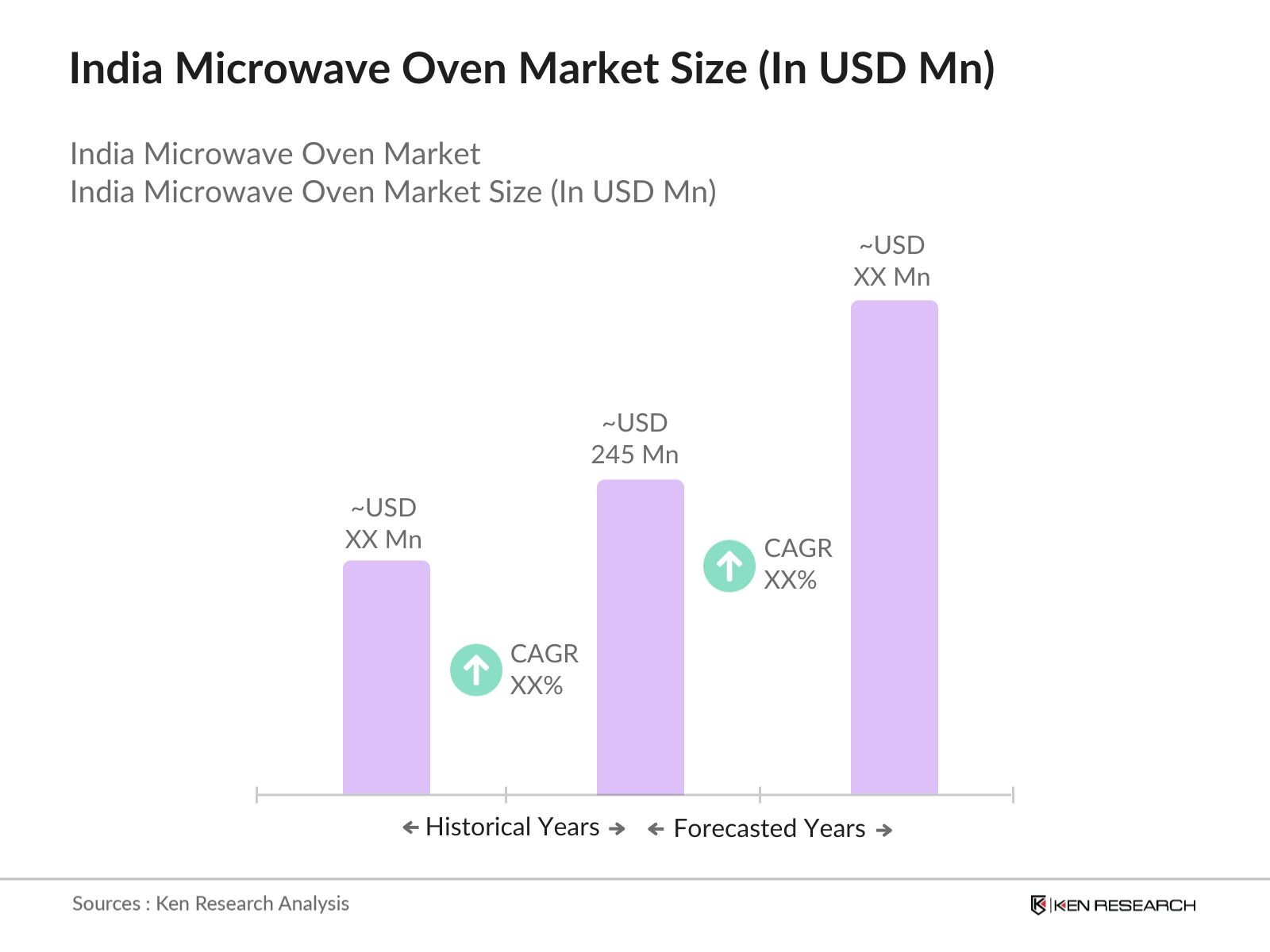
  • The India microwave oven market is valued at USD 245 million, primarily driven by rising disposable incomes, rapid urbanization, and a growing preference for convenient cooking solutions. The increasing demand for ready-to-eat meals and the expansion of the working population are significant contributors to this market's growth. With advancements in technology and an increasing focus on energy efficiency, the market continues to see a steady expansion as consumers seek modern kitchen appliances that enhance cooking efficiency and convenience. India Microwave Oven Market Size
  • Major demand centers for microwave ovens in India include metropolitan areas like Delhi, Mumbai, and Bangalore. These cities dominate the market due to higher disposable incomes, a lifestyle that favors quick and convenient cooking, and the rising trend of nuclear families. The urban population's inclination towards modern cooking appliances drives demand, as households look for multifunctional solutions that cater to their fast-paced lifestyles. The rapid growth in the e-commerce sector also facilitates increased accessibility to a variety of microwave oven brands and models in these urban markets.
  • The Indian government has established stringent energy efficiency standards for electrical appliances, including microwave ovens, to promote sustainability. As of 2022, the Bureau of Energy Efficiency (BEE) has mandated that all new microwave models must meet specific energy consumption benchmarks. The implementation of these standards is crucial, as energy-efficient appliances can significantly reduce electricity consumption, contributing to India's goal of enhancing energy sustainability.

India Microwave Oven Market Segmentation

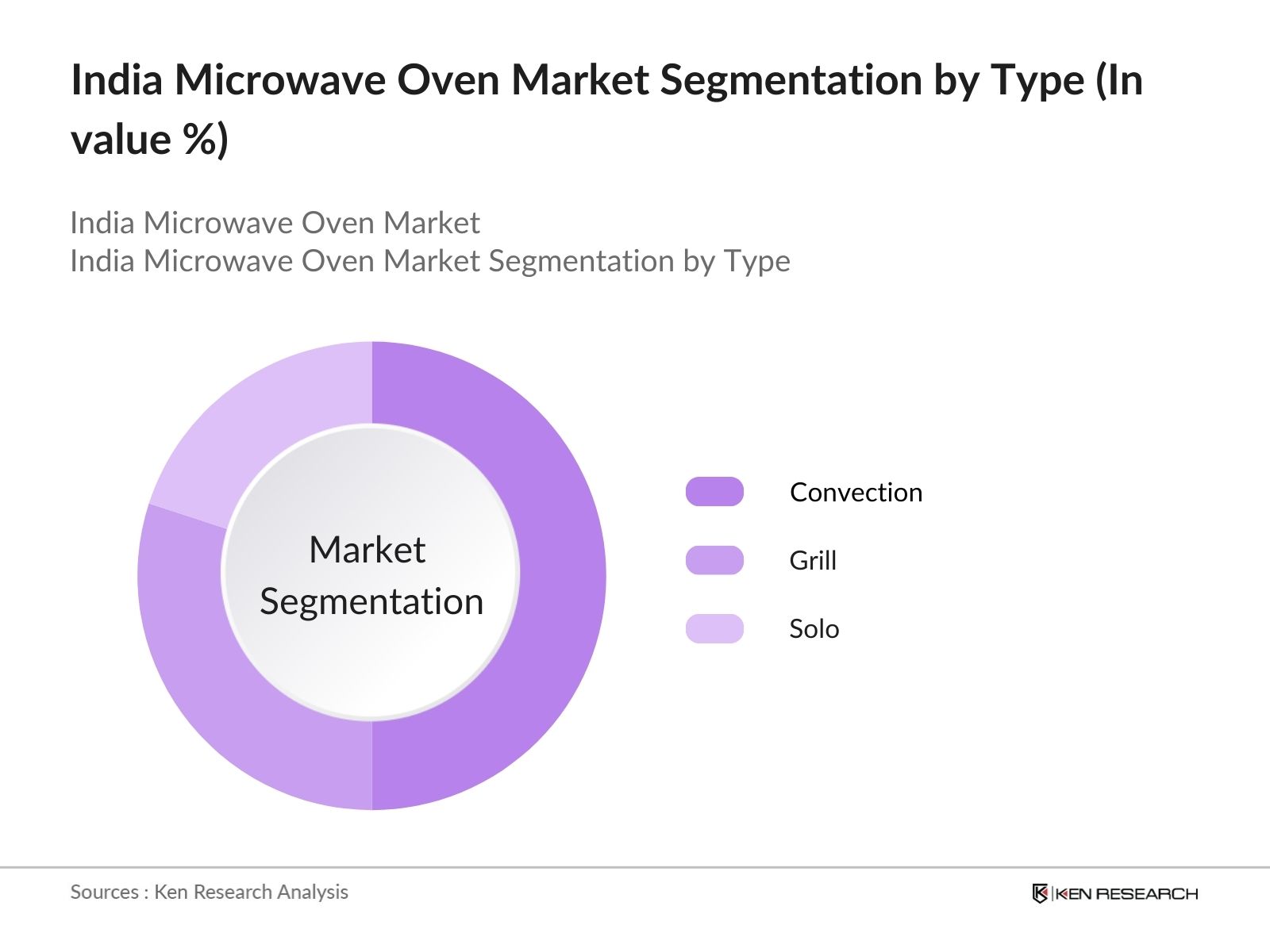
  • By Type: The market is segmented by type into convection, grill, and solo microwave ovens. Convection microwave ovens hold a dominant market share within this segmentation. This trend can be attributed to their multifunctionality, allowing users to bake, grill, and cook, which caters to diverse culinary preferences. As Indian households increasingly seek appliances that offer versatility, convection ovens become a preferred choice. The popularity of home baking, particularly during the pandemic, has further driven the demand for these ovens. India Microwave Oven Market Segmentation by type
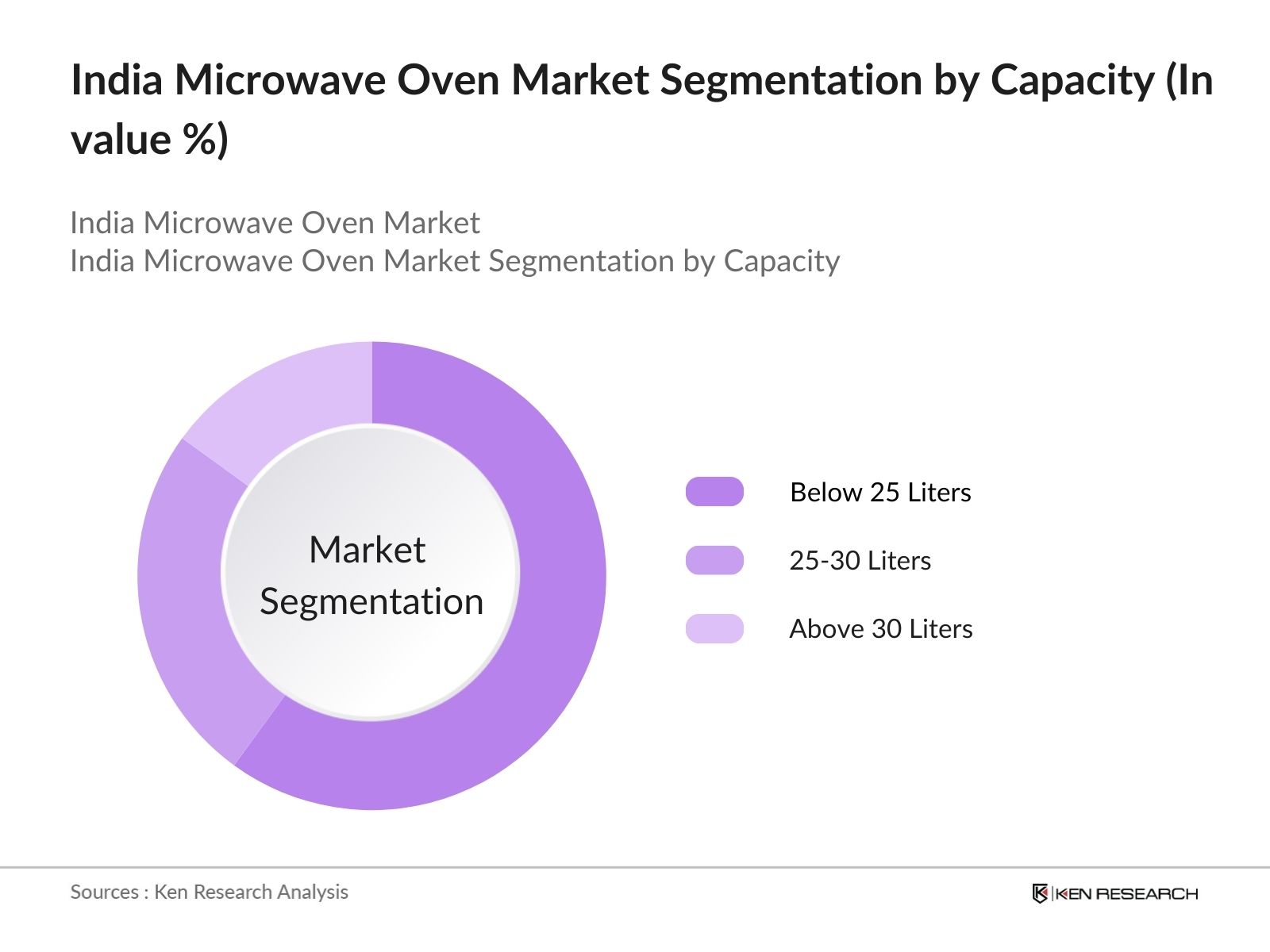
  • By Capacity: The market is also segmented by capacity into below 25 liters, 25-30 liters, and above 30 liters. Microwave ovens with a capacity of below 25 liters dominate this segmentation, primarily due to their suitability for small to medium-sized families and the compact kitchen spaces typical in urban Indian households. The affordability and adequate cooking capacity for daily needs make these models particularly appealing, leading to their significant market share in the residential segment. India Microwave Oven Market Segmentation by capacity

India Microwave Oven Market Competitive Landscape

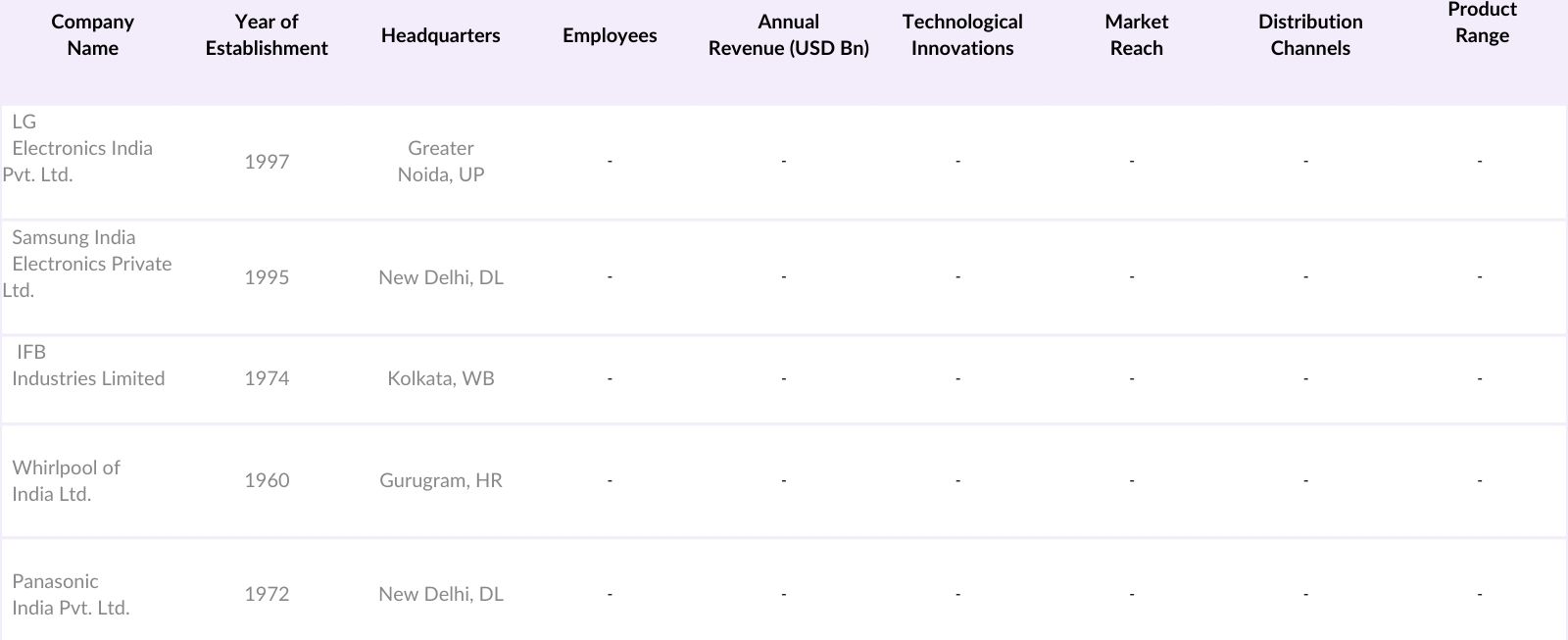
The India microwave oven market is dominated by several major players, including LG Electronics India Pvt. Ltd., Samsung India Electronics Private Ltd., IFB Industries Limited, Whirlpool of India Ltd., and Panasonic India Pvt. Ltd. These companies leverage strong brand recognition, extensive distribution networks, and continuous investment in technological innovations to maintain their leadership positions in the market. India Microwave Oven Market Competitive Landscape
India Microwave Oven Market Analysis

Growth Drivers

  • Urbanization and Changing Lifestyles: The urbanization rate in India is projected to rise from 34% in 2022 to 39% by 2025, leading to changes in lifestyle that prioritize convenience and speed in cooking. The increase in urban populations, estimated at over 540 million by 2025, correlates with a demand for ready-to-cook meals and kitchen appliances that facilitate quick meal preparation. Urban consumers, often leading busy lifestyles, are increasingly adopting microwave ovens for their time-saving benefits. This trend is evident in the growing preference for processed and ready-to-eat food products, with the market for ready-to-eat meals projected to surpass INR 1 trillion by 2025
  • Rising Disposable Income: India's disposable income has witnessed significant growth, driven by a robust economy, with an increase from approximately INR 1,50,906 per capita in 2023 to around 1,43,000 in 2025, as projected by the World Bank. This increase provides consumers with greater purchasing power, enabling them to invest in modern appliances, including microwave ovens. The growing middle class, estimated to reach 600 million by 2025, is increasingly inclined towards convenience in cooking solutions, further driving demand. As more households can afford advanced kitchen technologies, the microwave oven market is poised for substantial growth.
  • Technological Advancements in Microwave Ovens: The microwave oven industry is experiencing rapid technological advancements, enhancing efficiency and user experience. For instance, the introduction of inverter technology allows for more precise temperature control, which is increasingly sought after by consumers. By 2025, it is estimated that over 40% of new microwave ovens will feature smart technology, enabling connectivity with mobile apps for remote operation and energy monitoring. This shift towards smarter kitchen appliances is likely to attract tech-savvy consumers, further driving market growth.

Challenges

  • High Energy Consumption: Microwave ovens, while efficient in cooking time, often consume considerable energy, impacting consumer choice. As energy demand in India continues to grow, consumers are increasingly conscious of energy efficiency in their appliances. Rising electricity prices compel consumers to reconsider their energy usage, posing a challenge for microwave oven adoption in households with budget constraints. This awareness influences purchasing decisions, as consumers seek appliances that are not only convenient but also economical in terms of energy consumption.
  • Competition from Traditional Cooking Methods: Traditional cooking methods, such as gas stoves and pressure cookers, remain prevalent in India, providing competition for microwave ovens. Many households still rely primarily on gas stoves for cooking due to their lower operating costs and familiarity. The enduring preference for traditional cooking methods stems from cultural practices and the perceived economic benefits of using gas over electricity. This reliance on conventional cooking techniques can limit the growth potential of the microwave oven market, as consumers are often hesitant to transition to new cooking technologies.

India Microwave Oven Market Future Outlook

The India microwave oven market is poised for robust growth in the coming years, driven by the ongoing trends of urbanization and rising disposable incomes. As consumers increasingly prioritize convenience in their cooking processes, the demand for versatile kitchen appliances like microwave ovens is expected to surge. The growth of e-commerce platforms will further facilitate the penetration of various brands and models, enhancing accessibility for consumers. Additionally, the emphasis on energy efficiency and smart features in appliances will likely attract tech-savvy consumers, setting a positive trajectory for market expansion.

Future Market Opportunities

  • Expansion into Tier II and III Cities: The expansion into Tier II and Tier III cities presents a substantial growth opportunity for the microwave oven market. As of 2022, these cities collectively housed over 200 million people, many of whom are increasingly adopting modern cooking solutions. The rising urbanization in these regions, expected to see a population growth rate of 10% by 2025, indicates a growing middle class with increasing disposable income. Manufacturers are beginning to target these markets through localized marketing strategies, catering to the unique culinary preferences and needs of these consumers, which will likely lead to enhanced microwave adoption.
  • Development of Energy-Efficient Models: With rising awareness of energy consumption, there is a growing demand for energy-efficient microwave models. The Bureau of Energy Efficiency (BEE) in India has reported that energy-efficient appliances can save up to 20% more electricity compared to standard models. In 2023, a substantial portion of the microwave ovens sold were rated highly for energy efficiency, reflecting consumer preference for cost-effective and sustainable options. Manufacturers are increasingly innovating to create models that not only perform well but also meet stringent energy standards, positioning themselves favorably in a competitive market.

Scope of the Report

By Type

Convection
Grill
Solo

By Capacity

Below 25 Liters
25-30 Liters
Above 30 Liters

By End-Use

Residential
Commercial

By Distribution Channel

Multi-Branded Stores
Supermarkets/Hypermarkets
Exclusive Stores
Online
Others (Direct Sales, Wholesales, etc.)

By Region

North
South
East
West

Products

Key Target Audience

  • Investors and Venture Capitalist Firms

  • Banks and Financial Institutions

  • Government and Regulatory Bodies (e.g., Bureau of Indian Standards)

  • Microwave Oven Manufacturers

  • Home Appliance Retailers

  • E-commerce Platforms

  • Kitchen Appliance Distributors

  • Consumer Electronics Associations

Companies

Players Mentioned in the Report

  • LG Electronics India Pvt. Ltd.

  • Samsung India Electronics Private Ltd.

  • IFB Industries Limited

  • Whirlpool of India Ltd.

  • Panasonic India Pvt. Ltd.

  • Godrej & Boyce Manufacturing Company Limited

  • Haier Smart Home Co. Ltd.

  • Bajaj Electricals Ltd.

  • Ken Lifestyles Private Limited

  • Siemens Limited

  • Electrolux

  • GE Appliances

  • Sharp Corporation

  • Midea Group

  • Bosch

Table of Contents

India Microwave Oven Market Overview

1.1. Definition and Scope

1.2. Market Taxonomy

1.3. Market Growth Rate

1.4. Market Segmentation Overview

India Microwave Oven Market Size (In USD Million)

2.1. Historical Market Size

2.2. Year-On-Year Growth Analysis

2.3. Key Market Developments and Milestones

India Microwave Oven Market Analysis

3.1. Growth Drivers

3.1.1. Rising Disposable Income

3.1.2. Urbanization and Changing Lifestyles

3.1.3. Increasing Demand for Ready-to-Eat Meals

3.1.4. Technological Advancements in Microwave Ovens

3.2. Market Challenges

3.2.1. High Energy Consumption

3.2.2. Competition from Traditional Cooking Methods

3.2.3. Limited Penetration in Rural Areas

3.3. Opportunities

3.3.1. Expansion into Tier II and Tier III Cities

3.3.2. Development of Energy-Efficient Models

3.3.3. Integration with Smart Home Technologies

3.4. Trends

3.4.1. Preference for Convection Microwave Ovens

3.4.2. Growth of Online Sales Channels

3.4.3. Customization and Localization of Features

3.5. Government Regulations

3.5.1. Energy Efficiency Standards

3.5.2. Import Tariffs and Duties

3.5.3. Safety and Quality Certifications

3.6. SWOT Analysis

3.7. Stakeholder Ecosystem

3.8. Porters Five Forces Analysis

3.9. Competitive Landscape

India Microwave Oven Market Segmentation

4.1. By Type (In Value %)

4.1.1. Convection

4.1.2. Grill

4.1.3. Solo

4.2. By Capacity (In Value %)

4.2.1. Below 25 Liters

4.2.2. 25-30 Liters

4.2.3. Above 30 Liters

4.3. By End-Use (In Value %)

4.3.1. Residential

4.3.2. Commercial

4.4. By Distribution Channel (In Value %)

4.4.1. Multi-Branded Stores

4.4.2. Supermarkets/Hypermarkets

4.4.3. Exclusive Stores

4.4.4. Online

4.4.5. Others (Direct Sales, Wholesales, etc.)

4.5. By Region (In Value %)

4.5.1. North

4.5.2. South

4.5.3. East

4.5.4. West

India Microwave Oven Market Competitive Analysis

5.1. Detailed Profiles of Major Companies

5.1.1. LG Electronics India Pvt. Ltd.

5.1.2. Samsung India Electronics Private Ltd.

5.1.3. IFB Industries Limited

5.1.4. Whirlpool of India Ltd.

5.1.5. Panasonic India Pvt. Ltd.

5.1.6. Godrej & Boyce Manufacturing Company Limited

5.1.7. Haier Smart Home Co. Ltd.

5.1.8. Bajaj Electricals Ltd.

5.1.9. Ken Lifestyles Private Limited

5.1.10. Siemens Limited

5.1.11. Electrolux

5.1.12. GE Appliances

5.1.13. Sharp Corporation

5.1.14. Midea Group

5.1.15. Bosch

5.2. Cross Comparison Parameters (Revenue, Market Share, Product Portfolio, Distribution Network, Regional Presence, R&D Investment, Pricing Strategy, Brand Positioning)

5.3. Market Share Analysis

5.4. Strategic Initiatives

5.5. Mergers and Acquisitions

5.6. Investment Analysis

5.6.1. Venture Capital Funding

5.6.2. Government Grants

5.6.3. Private Equity Investments

India Microwave Oven Market Regulatory Framework

6.1. Energy Efficiency Standards

6.2. Compliance Requirements

6.3. Certification Processes

India Microwave Oven Future Market Size (In USD Million)

7.1. Future Market Size Projections

7.2. Key Factors Driving Future Market Growth

India Microwave Oven Future Market Segmentation

8.1. By Type (In Value %)

8.2. By Capacity (In Value %)

8.3. By End-Use (In Value %)

8.4. By Distribution Channel (In Value %)

8.5. By Region (In Value %)

India Microwave Oven Market Analysts Recommendations

9.1. Total Addressable Market (TAM), Serviceable Available Market (SAM), Serviceable Obtainable Market (SOM) Analysis

9.2. Customer Cohort Analysis

9.3. Marketing Initiatives

9.4. White Space Opportunity Analysis

Disclaimer Contact Us

Research Methodology


Step 1: Identification of Key Variables

The initial phase involves constructing an ecosystem map encompassing all major stakeholders within the India Microwave Oven Market. This step is underpinned by extensive desk research, utilizing a combination of secondary and proprietary databases to gather comprehensive industry-level information. The primary objective is to identify and define the critical variables that influence market dynamics.

Step 2: Market Analysis and Construction

In this phase, we compile and analyze historical data pertaining to the India Microwave Oven Market. This includes assessing market penetration, the ratio of marketplaces to service providers, and the resultant revenue generation. Furthermore, an evaluation of service quality statistics will be conducted to ensure the reliability and accuracy of the revenue estimates.

Step 3: Hypothesis Validation and Expert Consultation

Market hypotheses are developed and subsequently validated through computer-assisted telephone interviews (CATIs) with industry experts representing a diverse array of companies. These consultations provide valuable operational and financial insights directly from industry practitioners, which are instrumental in refining and corroborating the market data.

Step 4: Research Synthesis and Final Output

The final phase involves direct engagement with multiple microwave oven manufacturers to acquire detailed insights into product segments, sales performance, consumer preferences, and other pertinent factors. This interaction will serve to verify and complement the statistics derived from the bottom-up approach, thereby ensuring a comprehensive, accurate, and validated analysis of the India Microwave Oven Market.


Frequently Asked Questions

How big is the India Microwave Oven Market?

The India microwave oven market is valued at USD 245 million, driven by rising disposable incomes, urbanization, and an increasing preference for convenient cooking solutions.

What are the key growth drivers for the India Microwave Oven Market?

Key growth drivers for the India microwave oven market include rapid urbanization, rising disposable income among consumers, and a growing trend towards convenient and ready-to-eat meals.

Who are the major players in the India Microwave Oven Market?

Major players in the India microwave oven market include LG Electronics, Samsung, IFB Industries, Whirlpool, and Panasonic. These companies leverage strong brand recognition and extensive distribution networks to maintain market leadership.

What challenges does the India Microwave Oven Market face?

Challenges in the India microwave oven market include high energy consumption concerns among consumers and limited awareness about the benefits of microwave ovens in rural areas.

Why Buy From Us?

RRR
Refine Robust Result (RRR) Framework

What makes us stand out is that our consultants follows Robust, Refine and Result (RRR) methodology. i.e. Robust for clear definitions, approaches and sanity checking, Refine for differentiating respondents facts and opinions and Result for presenting data with story

Our Reach Is Unmatched

We have set a benchmark in the industry by offering our clients with syndicated and customized market research reports featuring coverage of entire market as well as meticulous research and analyst insights.

Research
Shifting the Research Paradigm

While we don't replace traditional research, we flip the method upside down. Our dual approach of Top Bottom & Bottom Top ensures quality deliverable by not just verifying company fundamentals but also looking at the sector and macroeconomic factors.

Insite
More Insights-Better Decisions

With one step in the future, our research team constantly tries to show you the bigger picture. We help with some of the tough questions you may encounter along the way: How is the industry positioned? Best marketing channel? KPI's of competitors? By aligning every element, we help maximize success.

Trust
Transparency and Trust

Our report gives you instant access to the answers and sources that other companies might choose to hide. We elaborate each steps of research methodology we have used and showcase you the sample size to earn your trust.

support
Round the Clock Support

If you need any support, we are here! We pride ourselves on universe strength, data quality, and quick, friendly, and professional service.

Why Client Choose Us?

400000+ Reports in repository
150+ Consulting project a year
100+ Analysts
8000+ Client Queries in 2022