Ken Research Logo

India Milk Market Outlook to 2030

Region:Asia

Author(s):Shreya Garg

Product Code:KROD5770

Published On

December 2024

Total pages

82

About the Report

Market Overview

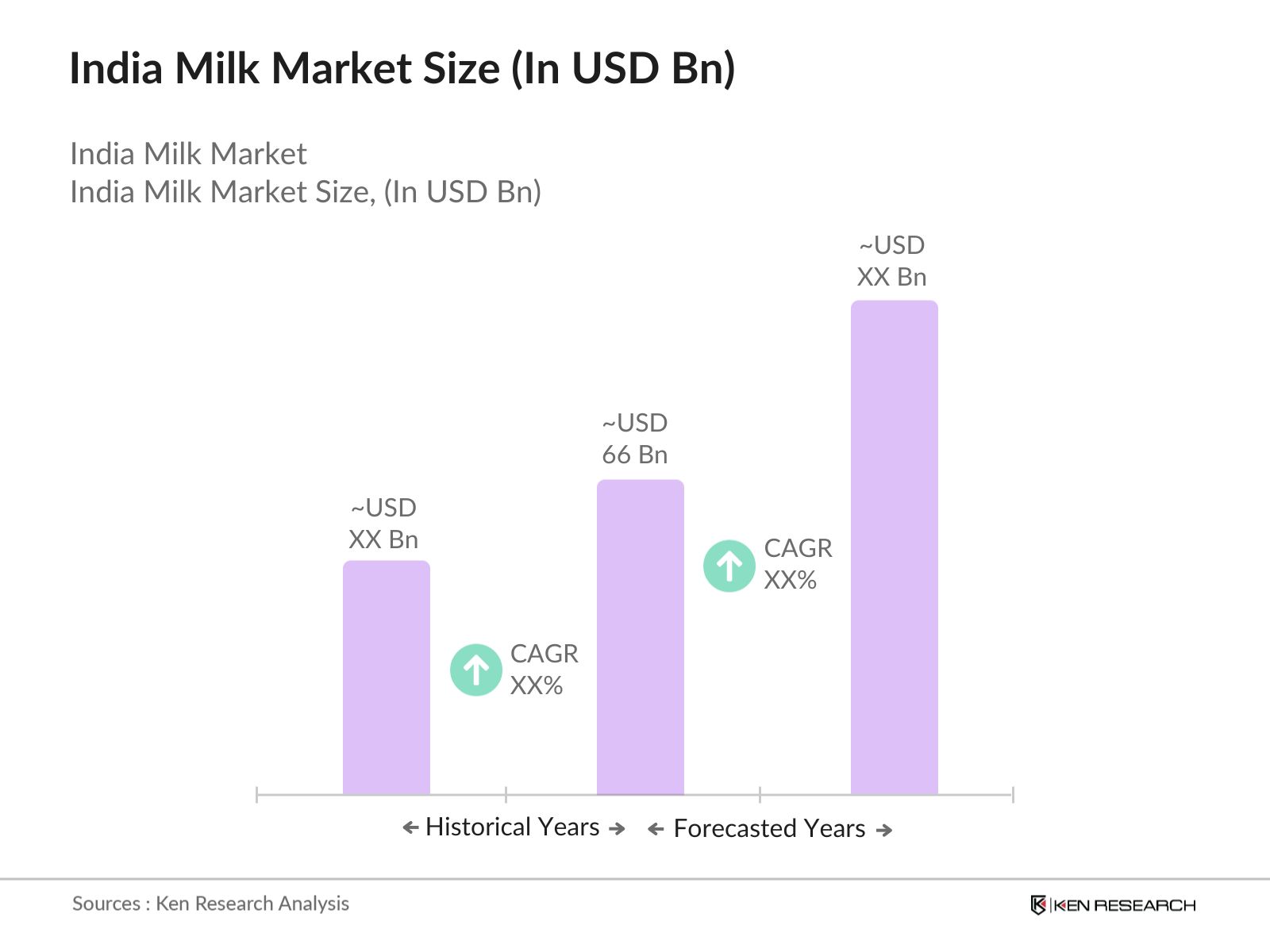
  • The India milk market is valued at USD 66 billion, following consistent growth driven by rising demand for dairy products, expanding middle-class income, and increased per capita milk consumption. The market is bolstered by government programs like the National Dairy Plan and schemes under the National Dairy Development Board (NDDB) to enhance milk productivity and rural infrastructure. Additionally, consumer awareness of the nutritional benefits of milk and dairy products continues to play a critical role in fueling market expansion.
  • India's milk market is dominated by key cities and states such as Gujarat, Uttar Pradesh, and Maharashtra, largely due to their strong cooperative dairy movements and advanced dairy farming infrastructure. Gujarat, home to Amul (Gujarat Cooperative Milk Marketing Federation), has one of the most efficient dairy supply chains in the world. The dominance of these regions is also driven by large-scale dairy cooperatives, favorable climatic conditions for cattle farming, and a strong presence of organized retail channels.
  • The Indian dairy sector is witnessing increased interest from international dairy giants aiming to enter the market. In 2024, multiple multinational dairy companies have expressed intentions to invest in Indias rapidly growing dairy market. These companies are expected to bring in advanced technologies, new product lines, and stringent quality standards, contributing to the sectors modernization and growth.

market overviews

Market Segmentation

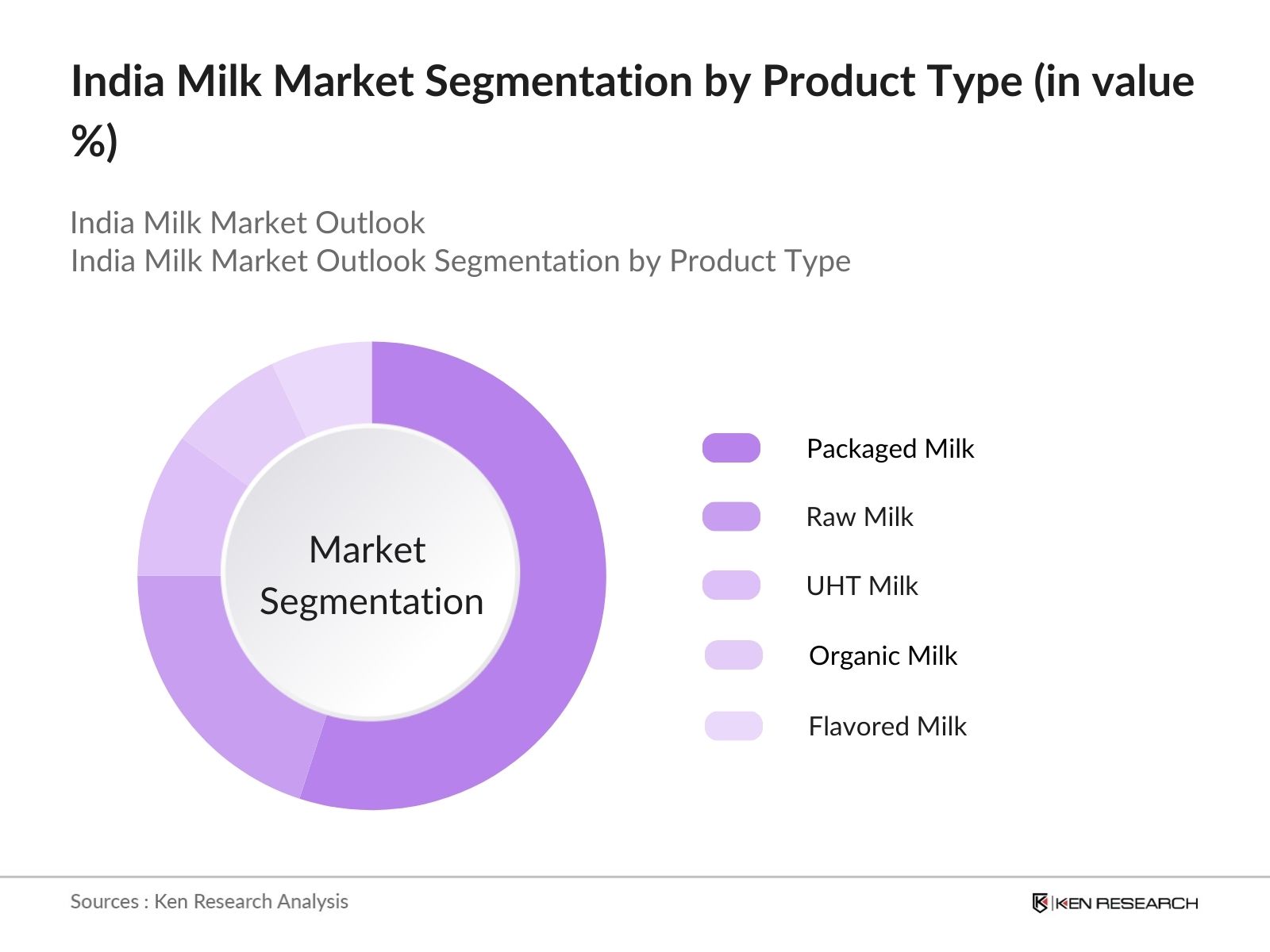
By Product Type: India's milk market is segmented by product type into packaged milk, raw milk, UHT milk, organic milk, and flavored milk. Packaged milk, particularly in urban areas, has gained significant traction due to concerns over hygiene, convenience, and longer shelf life. The dominance of packaged milk is attributed to its penetration into organized retail, with major brands ensuring consistent quality and availability. Additionally, the growth of e-commerce platforms has further supported the expansion of packaged milk in metropolitan cities.
market overviews

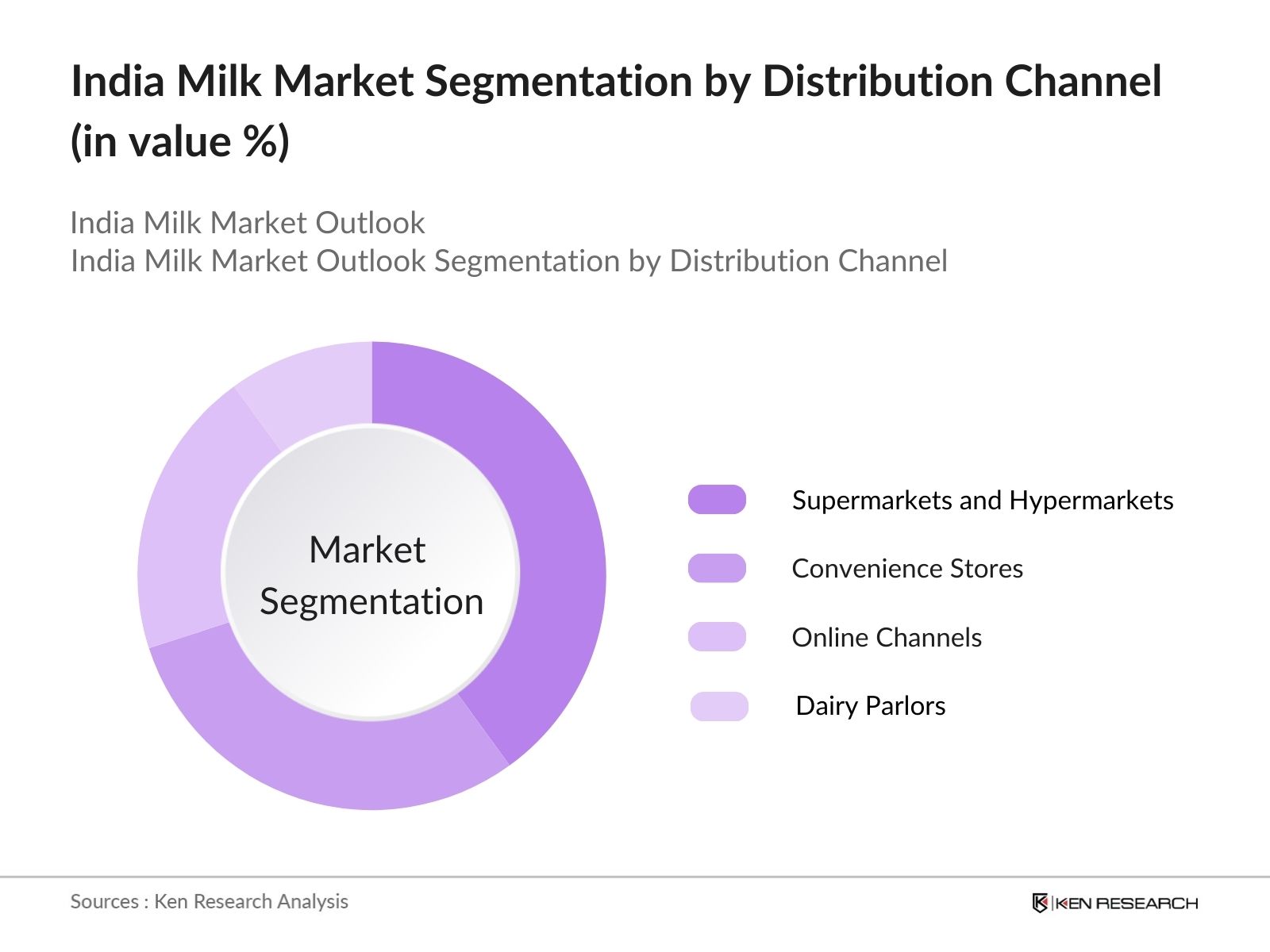
By Distribution Channel: The milk market is also segmented by distribution channel into supermarkets and hypermarkets, convenience stores, online channels, and dairy parlors. Supermarkets and hypermarkets dominate the distribution segment, holding a significant market share due to their large consumer base, wide product range, and convenience of purchasing. The increased preference for one-stop shopping experiences has further fueled growth in this segment, especially in urban areas. Dairy parlors, on the other hand, remain prominent in rural and semi-urban regions where they continue to serve as traditional supply points for consumers.
market overviews

Competitive Landscape

The India milk market is characterized by a mix of well-established cooperatives and large private players. The industry is led by Amul, which continues to dominate due to its extensive supply chain, innovation in dairy products, and cooperative structure that empowers farmers. Private players like Nestl and Britannia have made significant inroads through value-added products such as UHT milk and flavored dairy beverages.

Company

Establishment Year

Headquarters

Market Leadership

Supply Chain Efficiency

Product Diversification

Sustainability Initiatives

Brand Loyalty

Farmer Empowerment Programs

Investment in Technology

Amul (GCMMF)

1946

Anand, Gujarat

Mother Dairy

1974

New Delhi

Nestl India

1961

Gurgaon, Haryana

Britannia Industries

1892

Kolkata, West Bengal

Hatsun Agro Product Ltd.

1970

Chennai, Tamil Nadu

India Milk Market Analysis

Growth Drivers

  • Increasing per capita milk consumption: India's per capita milk consumption has been steadily rising, driven by population growth and changing dietary preferences. In 2024, per capita milk consumption in India is projected to exceed 430 grams per day, as compared to 427 grams per day in 2023. This surge is fueled by increasing demand for dairy products across urban and rural areas. The rising trend in per capita consumption is underpinned by Indias cultural reliance on dairy as a primary protein source, especially in vegetarian households.
  • Rising awareness of nutritional benefits: There is growing consumer awareness about the nutritional benefits of milk, including its protein, calcium, and vitamin content. The Indian governments National Dairy Development Board (NDDB) emphasizes milk as a crucial component for fighting malnutrition. According to reports from 2024, milk remains a vital source of nutrition for over 800 million Indian households, with various campaigns encouraging the consumption of milk and dairy products for improved public health.
  • Expanding middle-class population: Indias middle-class population, estimated at 400 million individuals in 2024, is driving demand for high-quality milk products. With rising disposable income, middle-class households are increasingly purchasing premium dairy products like UHT milk, organic milk, and value-added products such as paneer and curd. The expansion of the middle class has resulted in higher spending on health-conscious and nutritional food items, including milk and its derivatives.

Market Challenges

  • Price volatility in feed: The cost of cattle feed, a crucial input for milk production, has experienced fluctuations due to supply chain disruptions and increased demand for agricultural commodities. In 2024, feed prices have risen by INR 500-600 per metric ton compared to 2023, straining the profitability of dairy farmers. The volatility in input prices makes it challenging for small-scale farmers to sustain operations without government intervention.
  • Lack of cold chain infrastructure: India faces a significant deficit in cold chain infrastructure, which hinders the efficient distribution of milk, especially in rural areas. In 2024, only about 20% of India's milk production is transported through cold chains, resulting in high wastage rates. Without adequate refrigeration and storage facilities, dairy farmers and processors encounter losses, particularly in the peak production season.

Future Outlook

Over the next five years, the India milk market is expected to witness steady growth, driven by increasing urbanization, rising disposable incomes, and evolving consumer preferences toward value-added dairy products. The governments continued support through schemes like the National Programme for Dairy Development (NPDD) will enhance the production capabilities of small-scale farmers, improving the overall supply chain.

Advancements in dairy processing technologies and the growing trend towards organic and lactose-free milk are likely to shape the market dynamics. Furthermore, investments in improving cold chain logistics and storage infrastructure will help mitigate losses, enhance product quality, and extend the reach of dairy products into semi-urban and rural areas.

Opportunities

  • Expansion of dairy product categories (UHT, flavored milk, A2 milk): There is significant potential for the growth of value-added dairy products such as UHT milk, flavored milk, and A2 milk. As of 2024, UHT milk has penetrated over 60 million households in urban areas, indicating robust demand for shelf-stable milk. Additionally, the increasing popularity of A2 milk, due to its perceived health benefits, offers opportunities for diversification within the milk market.
  • Growing export potential to neighboring countries: Indias milk exports have witnessed an upward trend, with demand from neighboring countries such as Bangladesh, Nepal, and Bhutan. In 2024, India exported over 150,000 metric tons of milk and dairy products to these markets, capitalizing on its status as the worlds largest milk producer. The governments focus on expanding dairy exports, supported by competitive pricing and quality control measures, could further enhance export figures in the coming years.

Scope of the Report

Segments

Sub-segments

By Product Type

Packaged Milk, Raw Milk, UHT Milk, Organic Milk, Flavored Milk

By Distribution Channel

Supermarkets and Hypermarkets, Convenience Stores, Online Channels, Dairy Parlors

By Packaging

Plastic Pouches, Tetra Packs, Glass Bottles, Cans

By Fat Content

Full Cream Milk, Toned Milk, Double Toned Milk, Skimmed Milk

By Region

North India, South India, East India, West India

Major Players

  1. Amul (GCMMF)
  2. Mother Dairy
  3. Nestl India
  4. Britannia Industries
  5. Hatsun Agro Product Ltd.
  6. Parag Milk Foods Ltd.
  7. Tirumala Milk Products Pvt Ltd
  8. Heritage Foods Ltd.
  9. Dodla Dairy Ltd.
  10. Kwality Dairy

Products

Key Target Audience

  • Dairy Cooperatives

  • Milk Producers and Farmers

  • Dairy Product Manufacturers

  • Retailers and Distributors

  • Investors and Venture Capitalist Firms

  • Government and Regulatory Bodies (FSSAI, NDDB)

  • Cold Chain Logistics Providers

  • Packaging Companies

Table of Contents

1. India Milk Market Overview

1.1. Definition and Scope

1.2. Market Taxonomy

1.3. Market Growth Rate

1.4. Market Segmentation Overview

2. India Milk Market Size (In INR Bn)

2.1. Historical Market Size

2.2. Year-On-Year Growth Analysis

2.3. Key Market Developments and Milestones

3. India Milk Market Analysis

3.1. Growth Drivers

Increasing per capita milk consumption

Rising awareness of nutritional benefits

Expanding middle-class population

Government support (Subsidies, Dairy Development Programs)

3.2. Market Challenges

Price volatility in feed

Lack of cold chain infrastructure

Regulatory hurdles (FSSAI guidelines)

Low adoption of modern farming techniques

3.3. Opportunities

Expansion of dairy product categories (UHT, flavored milk, A2 milk)

Growing export potential to neighboring countries

Entry of international players

Investments in dairy farm technology

3.4. Trends

Adoption of organic and premium milk

Focus on sustainability and eco-friendly packaging

Increasing private label brands in milk

Rise in lactose-free and fortified milk products

3.5. Government Regulations

National Dairy Development Board (NDDB) initiatives

Dairy processing infrastructure development (Dairy Infrastructure Development Fund)

Quality standards (FSSAI milk quality regulations)

GST impact on dairy product pricing

3.6. SWOT Analysis

3.7. Stakeholder Ecosystem

3.8. Porters Five Forces Analysis

3.9. Competition Ecosystem

4. India Milk Market Segmentation

4.1. By Product Type (In Value %)

4.1.1. Packaged Milk

4.1.2. Raw Milk

4.1.3. UHT Milk

4.1.4. Organic Milk

4.1.5. Flavored Milk

4.2. By Distribution Channel (In Value %)

4.2.1. Supermarkets and Hypermarkets

4.2.2. Convenience Stores

4.2.3. Online Channels

4.2.4. Dairy Parlors

4.3. By Packaging (In Value %)

4.3.1. Plastic Pouches

4.3.2. Tetra Packs

4.3.3. Glass Bottles

4.3.4. Cans

4.4. By Fat Content (In Value %)

4.4.1. Full Cream Milk

4.4.2. Toned Milk

4.4.3. Double Toned Milk

4.4.4. Skimmed Milk

4.5. By Region (In Value %)

4.5.1. North India

4.5.2. South India

4.5.3. East India

4.5.4. West India

5. India Milk Market Competitive Analysis

5.1. Detailed Profiles of Major Competitors

5.1.1. Amul (Gujarat Cooperative Milk Marketing Federation)

5.1.2. Mother Dairy

5.1.3. Nestl India

5.1.4. Britannia Industries

5.1.5. Hatsun Agro Product Ltd.

5.1.6. Parag Milk Foods Ltd.

5.1.7. Tirumala Milk Products Pvt Ltd

5.1.8. Kwality Dairy

5.1.9. Heritage Foods Ltd

5.1.10. Dodla Dairy Ltd.

5.1.11. Creamline Dairy Products Ltd.

5.1.12. Milma (Kerala Cooperative Milk Marketing Federation)

5.1.13. KMF (Karnataka Cooperative Milk Federation)

5.1.14. Aavin Milk (Tamil Nadu Cooperative Milk Producers Federation)

5.1.15. Nandini Milk (Karnataka Milk Federation)

5.2. Cross Comparison Parameters (Revenue, Processing Capacity, Market Penetration, Product Portfolio, R&D Investment, Sustainability Initiatives, Regional Dominance, Marketing & Brand Positioning)

5.3. Market Share Analysis

5.4. Strategic Initiatives

5.5. Mergers and Acquisitions

5.6. Investment Analysis

5.7 Venture Capital Funding

5.8. Government Grants

5.9. Private Equity Investments

6. India Milk Market Regulatory Framework

6.1. FSSAI Standards

6.2. Dairy Plant Licensing Requirements

6.3. Environmental Standards for Dairy Farms

6.4. Milk Price Control Mechanism

7. India Milk Future Market Size (In INR Bn)

7.1. Future Market Size Projections

7.2. Key Factors Driving Future Market Growth

8. India Milk Future Market Segmentation

8.1. By Product Type (In Value %)

8.2. By Distribution Channel (In Value %)

8.3. By Packaging (In Value %)

8.4. By Fat Content (In Value %)

8.5. By Region (In Value %)

9. India Milk Market Analyst Recommendations

9.1. TAM/SAM/SOM Analysis

9.2. Consumer Behavior Analysis

9.3. Market Expansion Strategies

9.4. White Space Opportunity Analysis

DisclaimerContact Us

Research Methodology

Step 1: Identification of Key Variables


In the first step, an ecosystem map of the India milk market was constructed to identify all key stakeholders. Desk research was conducted using secondary sources like government publications, industry databases, and proprietary reports to define the critical variables that influence market trends and dynamics.

Step 2: Market Analysis and Construction


Historical data on milk production, distribution, and consumption patterns were gathered. This step involved evaluating product demand and regional consumption trends. The compiled data was analyzed to provide a detailed breakdown of the market across various segments.

Step 3: Hypothesis Validation and Expert Consultation


Industry experts were consulted to validate the market hypothesis and provide insights into production trends, challenges in milk supply chains, and consumer behavior. This process ensured that all data points were accurate and reflected current industry realities.

Step 4: Research Synthesis and Final Output


In the final stage, information from dairy cooperatives, private companies, and government organizations was synthesized. The research output includes verified market data, growth trends, and projections for future market development based on validated findings.

Frequently Asked Questions

  1. How big is the India Milk Market?

    The India milk market is valued at USD 66 Billion, driven by increasing demand for dairy products, expanding middle-class income, and rising per capita consumption across urban and rural areas.
  2. What are the challenges in the India Milk Market?

    Challenges in the India milk market include the volatility of feed prices, a lack of cold chain infrastructure, and regulatory hurdles around quality standards. Additionally, the adoption of modern dairy farming techniques remains low in certain regions.
  3. Who are the major players in the India Milk Market?

    Key players in the India milk market include Amul, Mother Dairy, Nestl India, Britannia Industries, and Hatsun Agro Product Ltd. These companies dominate due to their strong distribution networks, product innovation, and market reach.
  4. What are the growth drivers of the India Milk Market?

    The India milk market is propelled by rising demand for value-added products such as UHT milk, organic milk, and flavored milk. Additionally, government support through dairy development programs and the increasing urbanization of the population are key growth drivers.

Why Buy From Us?

RRR
Refine Robust Result (RRR) Framework

What makes us stand out is that our consultants follows Robust, Refine and Result (RRR) methodology. i.e. Robust for clear definitions, approaches and sanity checking, Refine for differentiating respondents facts and opinions and Result for presenting data with story

Our Reach Is Unmatched

We have set a benchmark in the industry by offering our clients with syndicated and customized market research reports featuring coverage of entire market as well as meticulous research and analyst insights.

Research
Shifting the Research Paradigm

While we don't replace traditional research, we flip the method upside down. Our dual approach of Top Bottom & Bottom Top ensures quality deliverable by not just verifying company fundamentals but also looking at the sector and macroeconomic factors.

Insite
More Insights-Better Decisions

With one step in the future, our research team constantly tries to show you the bigger picture. We help with some of the tough questions you may encounter along the way: How is the industry positioned? Best marketing channel? KPI's of competitors? By aligning every element, we help maximize success.

Trust
Transparency and Trust

Our report gives you instant access to the answers and sources that other companies might choose to hide. We elaborate each steps of research methodology we have used and showcase you the sample size to earn your trust.

support
Round the Clock Support

If you need any support, we are here! We pride ourselves on universe strength, data quality, and quick, friendly, and professional service.

Why Client Choose Us?

400000+ Reports in repository
150+ Consulting project a year
100+ Analysts
8000+ Client Queries in 2022