
India Mobile Payments Market Outlook to 2030
Region:India
Author(s):Mukul
Product Code:KROD7326
Region:India
Author(s):Mukul
Product Code:KROD7326
October 2024
98
The India Mobile Payments Market is characterized by a few key players who dominate the market through their extensive networks, technological innovations, and customer-focused solutions. UPI-based platforms like Google Pay and PhonePe have gained a massive user base, while Paytm has capitalized on its early-mover advantage and diverse service offerings, including mobile wallets and digital banking.
|
Company |
Establishment Year |
Headquarters |
Total Transactions (Billion) |
No. of Active Users |
UPI Integration |
Wallet Service |
Transaction Success Rate |
Revenue Model |
Security Features |
|
Paytm |
2010 |
Noida |
|||||||
|
PhonePe |
2015 |
Bangalore |
|||||||
|
Google Pay |
2018 |
Hyderabad |
|||||||
|
Amazon Pay |
2016 |
Bangalore |
|||||||
|
BharatPe |
2018 |
New Delhi |
Growth Drivers
Market Restraints
Over the next five years, the India Mobile Payments Market is expected to see substantial growth, fueled by increasing consumer preference for digital payments, the expansion of internet access, and rising smartphone penetration across both urban and rural areas. The government's continuous efforts toward building a cashless economy through initiatives like Digital India and BharatNet will further strengthen the market. Additionally, advancements in payment technologies, such as AI-driven fraud detection systems and the integration of blockchain, are anticipated to shape the future landscape of mobile payments in India, creating new opportunities for market players.
Market Opportunities
|
By Payment Mode |
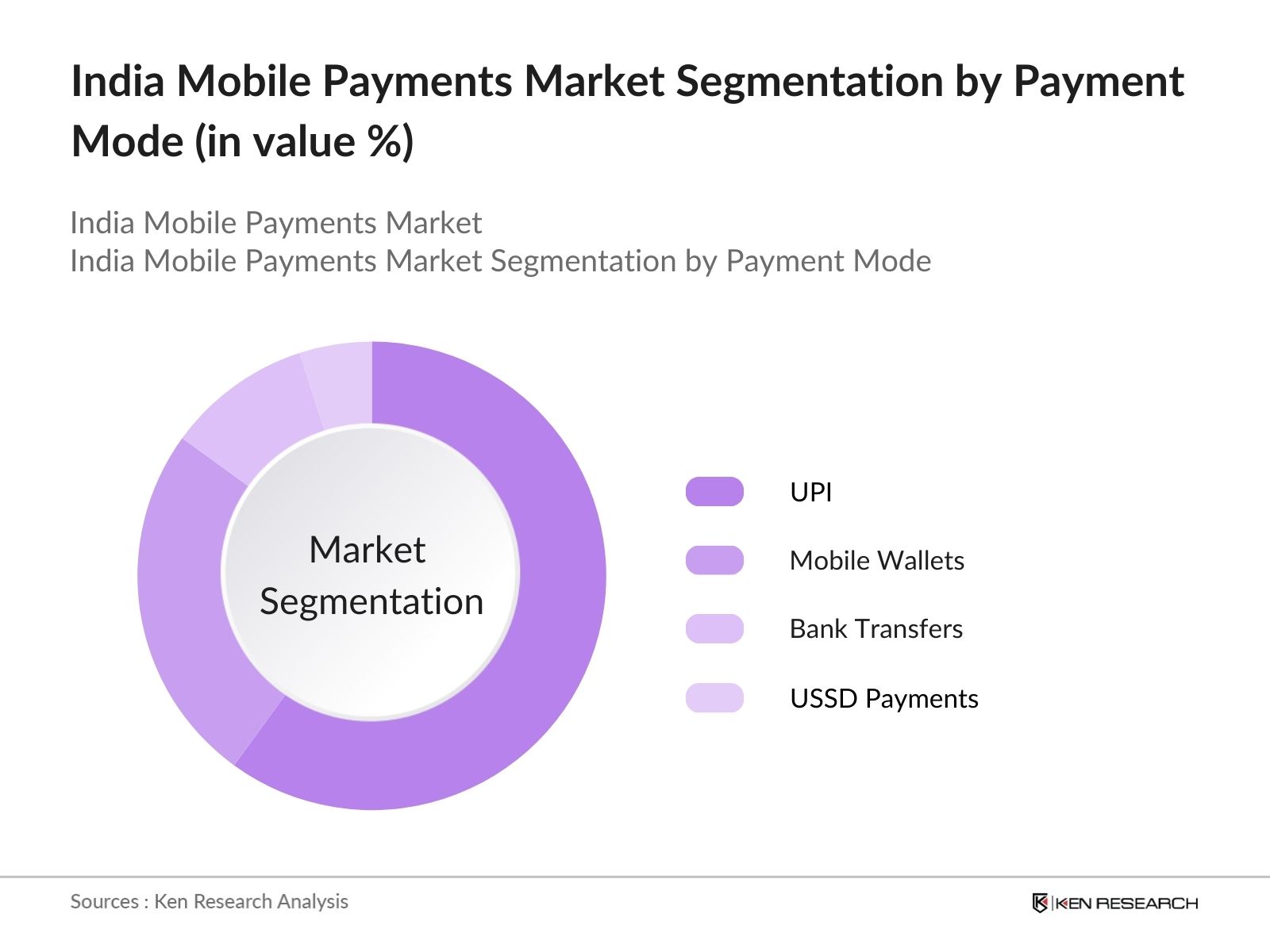
Unified Payments Interface (UPI), Mobile Wallets, Bank Transfers, USSD Payments, Credit/Debit Card Payments |
|
By End-User |
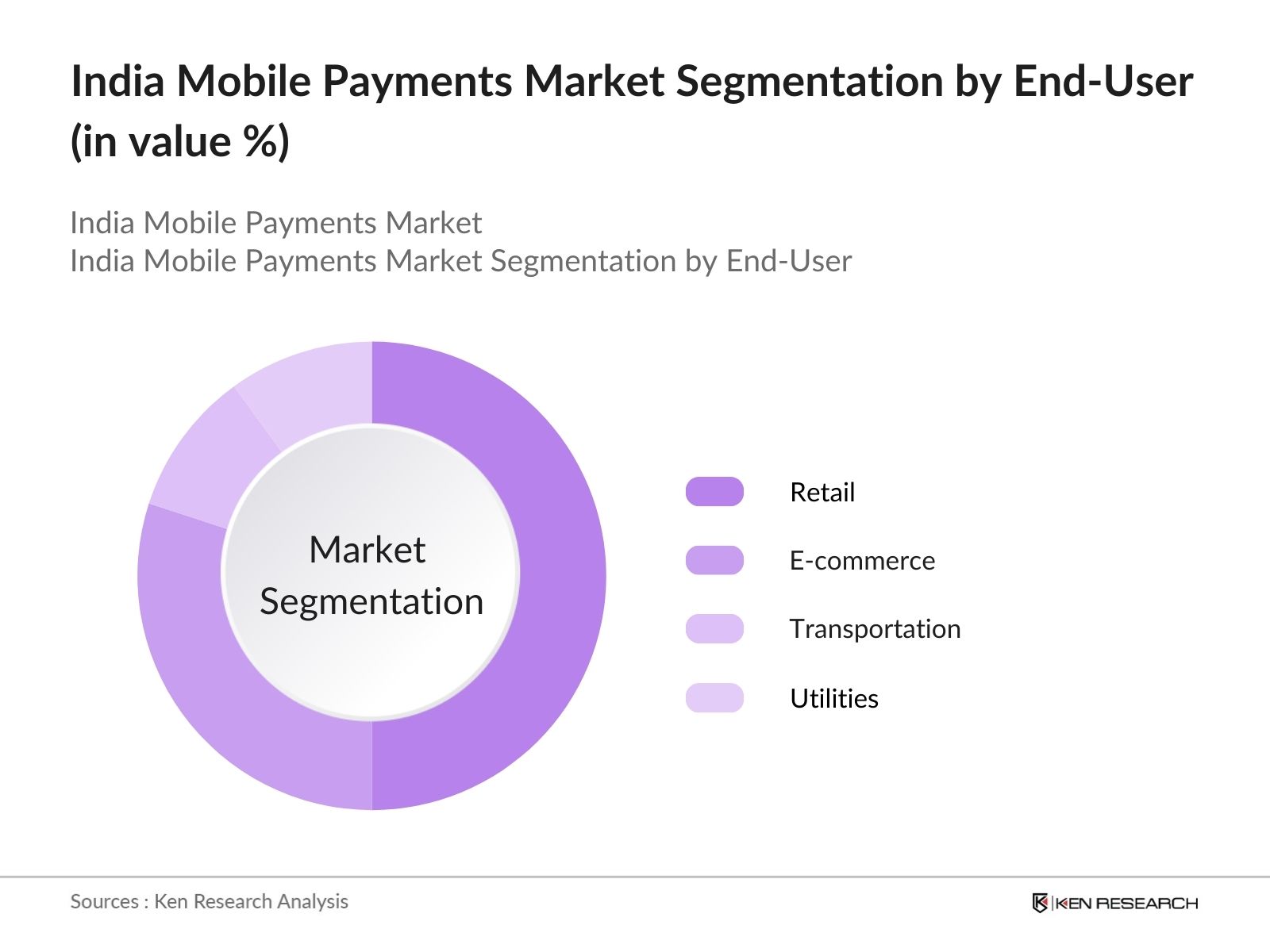
Retail, E-commerce, Transportation, Utilities, Education |
|
By Application |
Peer-to-Peer (P2P) Payments, Consumer-to-Business (C2B) Payments, Government Payments, Cross-border Transactions |
|
By Technology |
NFC-Based Payments, QR Code-Based Payments, Biometric Authentication, AI-Based Fraud Detection |
|
By Region |
North India, West India, South India, East India, Central India |
1.1. Definition and Scope
1.2. Market Taxonomy
1.3. Market Growth Rate (Transaction volume, user adoption rate, mobile penetration, banking penetration)
1.4. Market Segmentation Overview
2.1. Historical Market Size
2.2. Year-On-Year Growth Analysis
2.3. Key Market Developments and Milestones (Launch of UPI, digital wallet integrations, demonetization impact, fintech ecosystem growth)
3.1. Growth Drivers
3.1.1. UPI Adoption
3.1.2. Government Push for Digital India
3.1.3. Smartphone Penetration
3.1.4. Banking Infrastructure Expansion
3.2. Market Challenges
3.2.1. Cybersecurity Threats
3.2.2. Rural Penetration Issues
3.2.3. Regulatory Compliance
3.3. Opportunities
3.3.1. Expansion into Rural Markets
3.3.2. Partnerships with E-commerce
3.3.3. Cross-border Payment Integration
3.4. Trends
3.4.1. QR Code Payments
3.4.2. AI-Driven Payment Solutions
3.4.3. Integration of Blockchain
3.5. Government Regulation
3.5.1. RBI Regulations on Payment Systems
3.5.2. Data Localization Laws
3.5.3. NPCI Initiatives (e.g., UPI 2.0)
3.6. SWOT Analysis
3.7. Stakeholder Ecosystem (Banks, Fintech companies, Government, Payment Service Providers)
3.8. Porters Five Forces Analysis
3.9. Competition Ecosystem
4.1. By Payment Mode (In Value %)
4.1.1. Unified Payments Interface (UPI)
4.1.2. Mobile Wallets
4.1.3. Bank Transfers (NEFT, IMPS)
4.1.4. USSD Payments
4.1.5. Credit/Debit Card Payments
4.2. By End-User (In Value %)
4.2.1. Retail
4.2.2. E-commerce
4.2.3. Transportation
4.2.4. Utilities
4.2.5. Education
4.3. By Application (In Value %)
4.3.1. Peer-to-Peer (P2P) Payments
4.3.2. Consumer-to-Business (C2B) Payments
4.3.3. Government Payments
4.3.4. Cross-border Transactions
4.4. By Technology (In Value %)
4.4.1. NFC-Based Payments
4.4.2. QR Code-Based Payments
4.4.3. Biometric Authentication
4.4.4. AI-Based Fraud Detection
4.5. By Region (In Value %)
4.5.1. North India
4.5.2. West India
4.5.3. South India
4.5.4. East India
4.5.5. Central India
5.1. Detailed Profiles of Major Companies
5.1.1. Paytm
5.1.2. PhonePe
5.1.3. Google Pay
5.1.4. Amazon Pay
5.1.5. BharatPe
5.1.6. MobiKwik
5.1.7. Airtel Payments Bank
5.1.8. JioMoney
5.1.9. Razorpay
5.1.10. CRED
5.1.11. Pine Labs
5.1.12. Freecharge
5.1.13. NPCI
5.1.14. BankBazaar
5.1.15. Zeta
5.2. Cross Comparison Parameters
Number of Transactions
Total Payment Volume
Market Share
Geographical Presence
Transaction Success Rate
Revenue Model
Active Users
Security Features
5.3. Market Share Analysis
5.4. Strategic Initiatives
5.5. Mergers and Acquisitions
5.6. Investment Analysis
5.7. Venture Capital Funding
5.8. Government Grants
5.9. Private Equity Investments
6.1. RBI Guidelines for Payment Systems
6.2. Compliance Requirements (KYC, AML)
6.3. Data Privacy Laws (IT Act, 2000)
6.4. Digital Payments Guidelines (RBI Payments Vision)
7.1. Future Market Size Projections
7.2. Key Factors Driving Future Market Growth
8.1. By Payment Mode (In Value %)
8.2. By End-User (In Value %)
8.3. By Application (In Value %)
8.4. By Technology (In Value %)
8.5. By Region (In Value %)
9.1. TAM/SAM/SOM Analysis
9.2. Customer Cohort Analysis
9.3. Marketing Initiatives
9.4. White Space Opportunity Analysis
The initial phase involves mapping the mobile payments ecosystem in India, focusing on all major stakeholders such as banks, fintech companies, and regulatory bodies. Data was gathered through secondary research from credible sources like RBI reports and proprietary databases, aimed at identifying the key factors driving market growth.
This step includes analyzing historical data on mobile payment transactions, adoption rates, and consumer behavior. The analysis covered market drivers, such as UPI growth and smartphone penetration, along with a detailed examination of the competitive landscape and user experience metrics.
Market assumptions were validated through in-depth interviews with industry experts, including representatives from top fintech firms and banks. These consultations helped refine our understanding of the market's future trajectory and provided insights into transaction success rates and user engagement.
In the final step, the data was synthesized into a comprehensive report, incorporating insights from both qualitative and quantitative research. The final report includes detailed market segmentation, competitive analysis, and future outlooks, verified through expert consultations and secondary data.
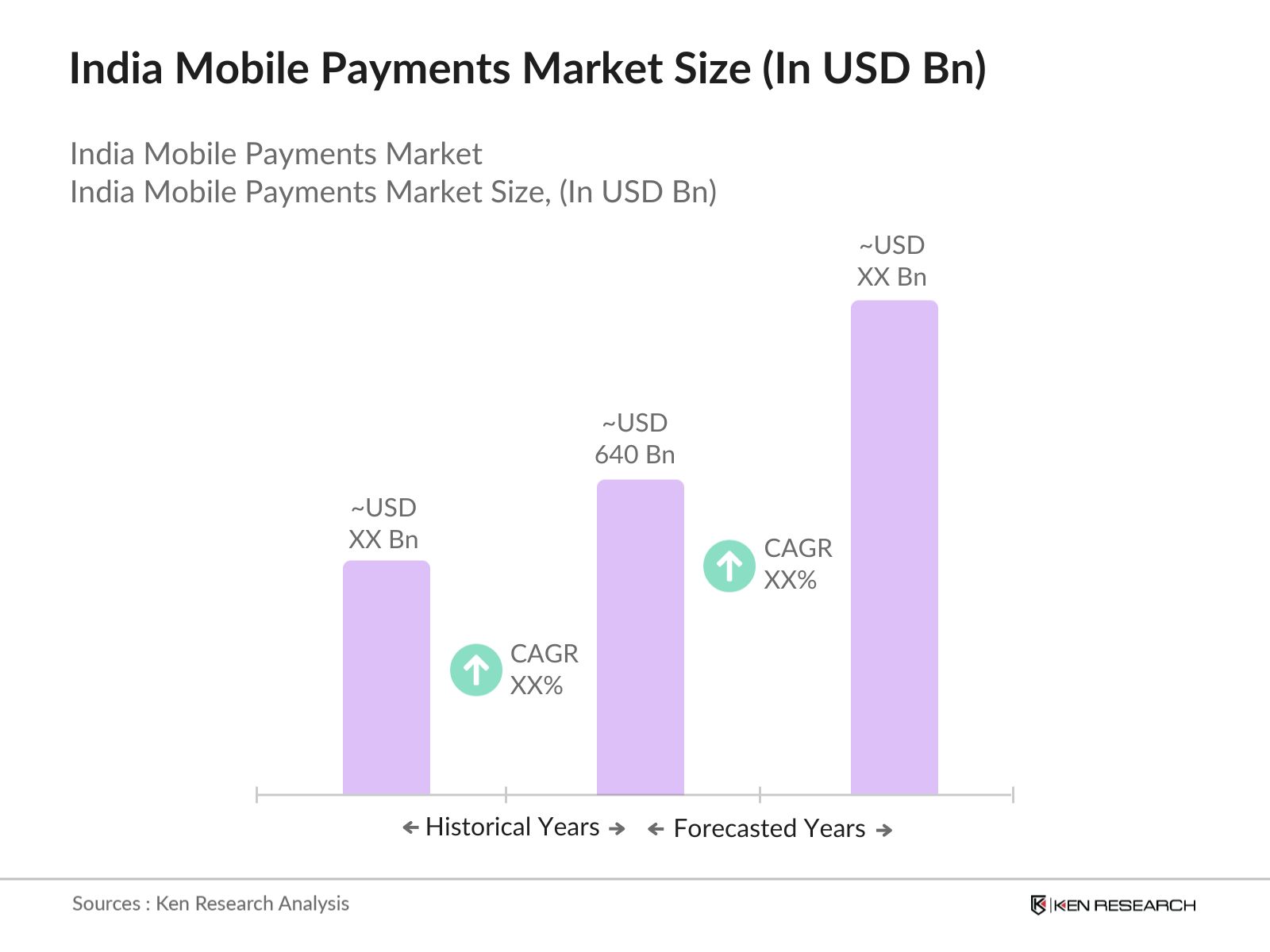
The India Mobile Payments Market is valued at USD 640 billion based on a five-year historical analysis., primarily driven by the growing adoption of UPI and mobile wallets across the country.
Challenges in this market include cybersecurity risks, rural penetration barriers, and regulatory compliance, which continue to affect the adoption of mobile payment solutions across diverse user segments.
Key players in the market include Paytm, PhonePe, Google Pay, Amazon Pay, and BharatPe. These companies dominate due to their extensive user base, technological innovations, and integration with banking systems.
The market is primarily driven by government initiatives like Digital India, the introduction of UPI, increasing smartphone penetration, and the growing preference for contactless payment solutions among consumers.

What makes us stand out is that our consultants follows Robust, Refine and Result (RRR) methodology. i.e. Robust for clear definitions, approaches and sanity checking, Refine for differentiating respondents facts and opinions and Result for presenting data with story

We have set a benchmark in the industry by offering our clients with syndicated and customized market research reports featuring coverage of entire market as well as meticulous research and analyst insights.

While we don't replace traditional research, we flip the method upside down. Our dual approach of Top Bottom & Bottom Top ensures quality deliverable by not just verifying company fundamentals but also looking at the sector and macroeconomic factors.

With one step in the future, our research team constantly tries to show you the bigger picture. We help with some of the tough questions you may encounter along the way: How is the industry positioned? Best marketing channel? KPI's of competitors? By aligning every element, we help maximize success.

Our report gives you instant access to the answers and sources that other companies might choose to hide. We elaborate each steps of research methodology we have used and showcase you the sample size to earn your trust.

If you need any support, we are here! We pride ourselves on universe strength, data quality, and quick, friendly, and professional service.