
India Motorbike Market Outlook to 2030
Region:Asia
Author(s):Sanjna
Product Code:KROD3467
Region:Asia
Author(s):Sanjna
Product Code:KROD3467
December 2024
92
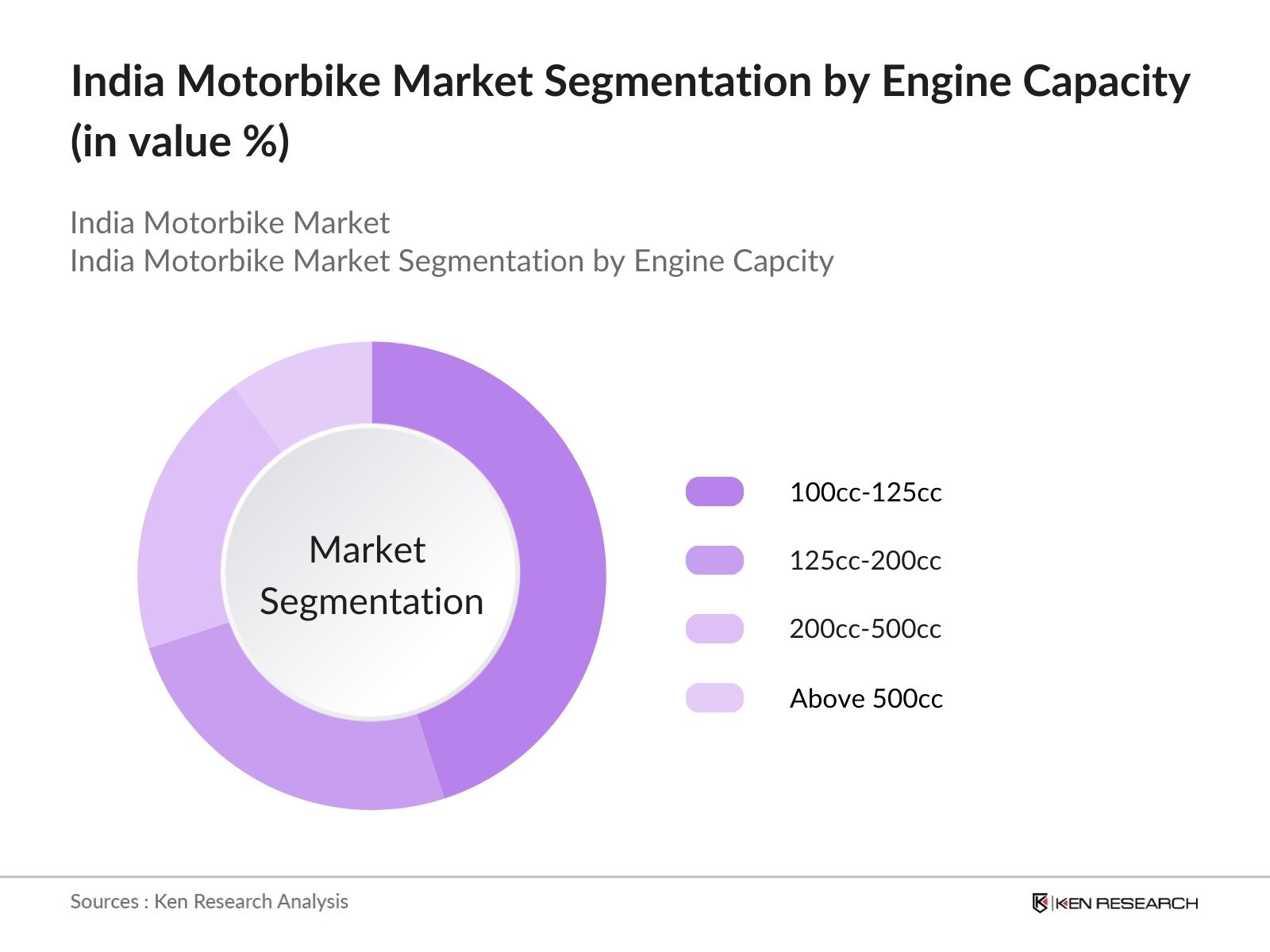
By Engine Capacity: The India motorbike market is segmented by engine capacity into 100cc-125cc, 125cc-200cc, 200cc-500cc, and above 500cc. The 100cc-125cc segment holds a dominant position in the market, driven by its widespread use among daily commuters. These motorbikes offer an ideal balance between fuel efficiency and cost-effectiveness, making them highly popular among middle-income consumers. Brands like Hero MotoCorp and Honda dominate this segment, owing to their affordable and reliable products. The growing need for economical transportation in rural and semi-urban areas further strengthens the dominance of this segment.
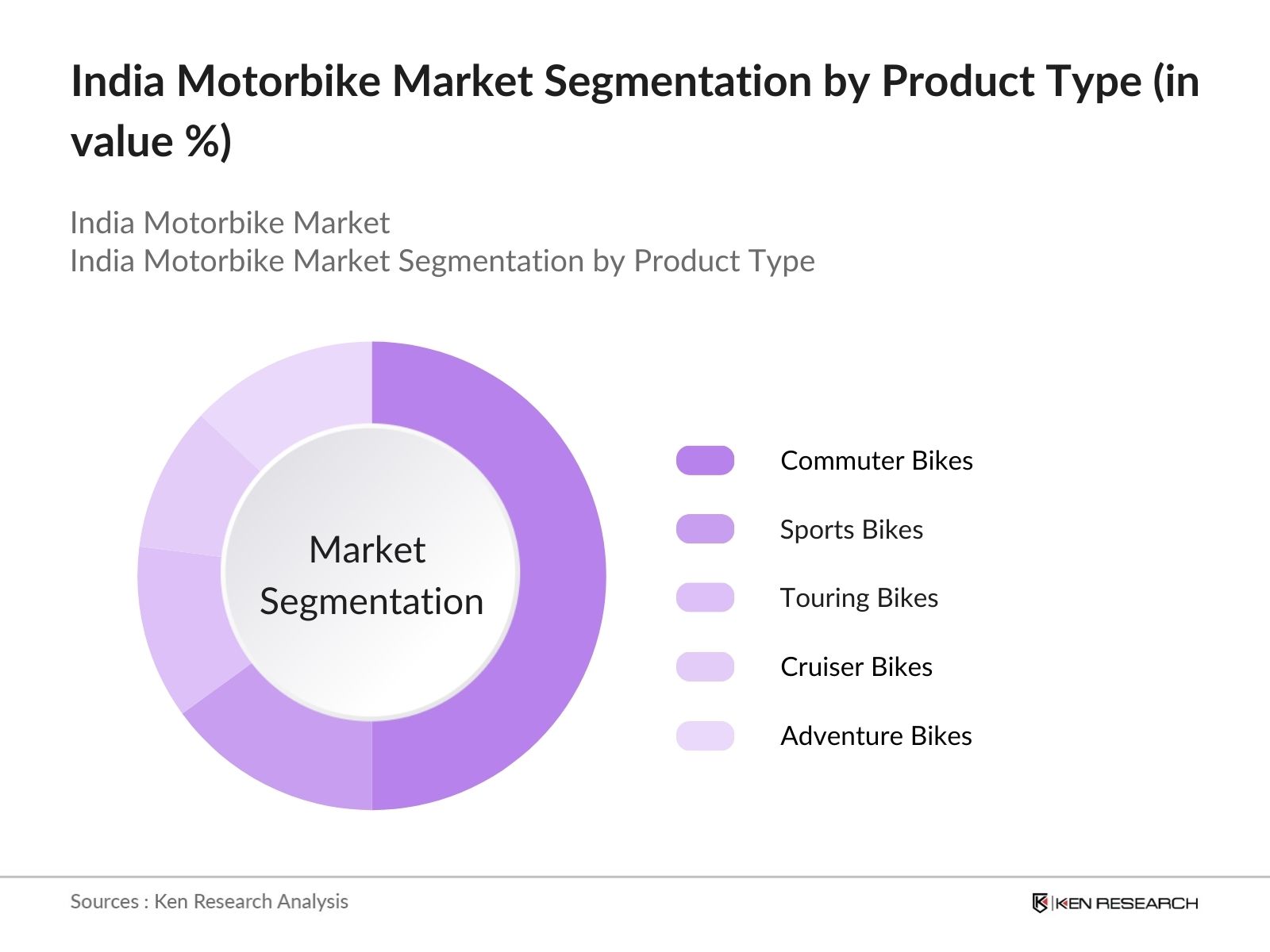
By Product Type: The India motorbike market is also segmented by product type into commuter bikes, sports bikes, touring bikes, cruiser bikes, and adventure bikes. Commuter bikes dominate this segmentation, accounting for the highest market share. Their dominance is attributed to their affordability, durability, and fuel efficiency, which cater to the mass market's demand for cost-effective daily transportation.
The India motorbike market is dominated by a combination of local manufacturers and international players. Leading companies such as Hero MotoCorp, Bajaj Auto, and TVS Motor Company have solidified their market position through strong brand loyalty and extensive distribution networks. Additionally, international players like Honda and Yamaha have a significant presence due to their high-quality products and innovation.
|
Company Name |
Establishment Year |
Headquarters |
Market Share |
R&D Investments |
Distribution Network |
Product Portfolio |
Electric Bike Offerings |
Customer Base |
|---|---|---|---|---|---|---|---|---|
|
Hero MotoCorp |
1984 |
New Delhi, India |
- | - | - | - | - | - |
|
Bajaj Auto |
1945 |
Pune, India |
- | - | - | - | - | - |
|
TVS Motor Company |
1978 |
Chennai, India |
- | - | - | - | - | - |
|
Honda Motorcycle & Scooter India |
1999 |
Gurgaon, India |
- | - | - | - | - | - |
|
Yamaha Motor India |
1955 |
Surajpur, India |
- | - | - | - | - | - |
Growth Drivers
Market Challenges
The India motorbike market is expected to experience substantial growth over the next five years, driven by continuous government incentives for electric mobility, increased urbanization, and the growing demand for affordable transportation solutions. The expansion of motorbike financing options and the emergence of connected technologies in motorbikes are expected to further drive market demand. Additionally, the shift towards environmentally sustainable transport solutions will accelerate the adoption of electric motorbikes, particularly in urban centers, positioning India as a growing market for electric vehicles.
Market Opportunities
|
By Engine Capacity |
100cc-125cc 125cc-200cc 200cc-500cc Above 500cc |
|
By Product Type |
Commuter Bikes Sports Bikes Touring Bikes Cruiser Bikes Adventure Bikes |
|
By Fuel Type |
Petrol Electric Hybrid |
|
By Application |
Personal Commuting Commercial Use Recreational |
|
By Region |
North India South India East India West India |
1.1 Definition and Scope
1.2 Market Taxonomy
1.3 Market Growth Rate
1.4 Market Segmentation Overview
2.1 Historical Market Size
2.2 Year-on-Year Growth Analysis
2.3 Key Market Developments and Milestones
3.1 Growth Drivers
3.1.1 Rising Urbanization and Income Levels
3.1.2 Increased Demand for Affordable Mobility Solutions
3.1.3 Expanding Middle-Class Segment
3.1.4 Growth in Motorcycle Financing
3.2 Market Challenges
3.2.1 Regulatory Emission Norms
3.2.2 Volatility in Raw Material Prices
3.2.3 High Competition from Electric Vehicles
3.2.4 High Cost of Advanced Motorbike Models
3.3 Opportunities
3.3.1 Surge in Electric Motorbike Demand
3.3.2 Expansion into Rural Markets
3.3.3 Product Customization and Lifestyle Biking
3.3.4 Rising Popularity of Premium Motorbikes
3.4 Trends
3.4.1 Shift Towards Electric Mobility
3.4.2 Introduction of Connected Motorbike Technology
3.4.3 Increasing Focus on Safety Features
3.4.4 Rise of Online and Digital Sales Channels
3.5 Government Regulation
3.5.1 Bharat Stage (BS) Emission Standards
3.5.2 EV Incentives Under FAME II Scheme
3.5.3 Road Safety and Helmet Mandates
3.5.4 Import and Export Regulations
3.6 SWOT Analysis
3.7 Stakeholder Ecosystem
3.8 Porters Five Forces Analysis
3.9 Competition Ecosystem
4.1 By Engine Capacity (In Value %)
4.1.1 100cc-125cc
4.1.2 125cc-200cc
4.1.3 200cc-500cc
4.1.4 Above 500cc
4.2 By Product Type (In Value %)
4.2.1 Commuter Bikes
4.2.2 Sports Bikes
4.2.3 Touring Bikes
4.2.4 Cruiser Bikes
4.2.5 Adventure Bikes
4.3 By Fuel Type (In Value %)
4.3.1 Petrol
4.3.2 Electric
4.3.3 Hybrid
4.4 By Application (In Value %)
4.4.1 Personal Commuting
4.4.2 Commercial Use (Delivery, Ride-hailing, etc.)
4.4.3 Recreational
4.5 By Region (In Value %)
4.5.1 North
4.5.2 South
4.5.3 East
4.5.4 West
5.1 Detailed Profiles of Major Companies
5.1.1 Hero MotoCorp
5.1.2 Bajaj Auto
5.1.3 TVS Motor Company
5.1.4 Royal Enfield
5.1.5 Honda Motorcycle & Scooter India
5.1.6 Suzuki Motorcycle India
5.1.7 Yamaha Motor India
5.1.8 KTM India
5.1.9 Jawa Motorcycles
5.1.10 Harley-Davidson India
5.1.11 Triumph Motorcycles India
5.1.12 BMW Motorrad India
5.1.13 Kawasaki Motors India
5.1.14 Ducati India
5.1.15 Mahindra Two Wheelers
5.2 Cross Comparison Parameters (Market Share, Revenue, Product Range, Distribution Network, Strategic Initiatives, R&D Investments, Sustainability Initiatives, Customer Base)
5.3 Market Share Analysis
5.4 Strategic Initiatives
5.5 Mergers and Acquisitions
5.6 Investment Analysis
5.7 Venture Capital Funding
5.8 Private Equity Investments
6.1 Emission Standards Compliance
6.2 Safety Regulations
6.3 Certification Processes
6.4 Import and Export Regulations
7.1 Future Market Size Projections
7.2 Key Factors Driving Future Market Growth
8.1 By Engine Capacity
8.2 By Product Type
8.3 By Fuel Type
8.4 By Application
8.5 By Region
9.1 TAM/SAM/SOM Analysis
9.2 Customer Cohort Analysis
9.3 Marketing Initiatives
9.4 White Space Opportunity Analysis
Disclaimer Contact Us
The initial step involves mapping the entire motorbike ecosystem in India. Comprehensive desk research and proprietary databases were utilized to identify critical variables affecting the market, including motorbike manufacturing, distribution networks, and regulatory factors.
In this phase, historical data on market growth, revenue generation, and production volumes was analyzed. Market penetration and service statistics were compiled to estimate the market's current size and trends.
To validate market data, consultations were conducted with industry experts, including senior executives from leading motorbike companies. These discussions provided valuable insights into market performance, competition, and future growth areas.
The final synthesis involved collecting data from major market players and compiling a comprehensive report. Bottom-up analysis was employed to ensure accuracy, and findings were validated through further interactions with motorbike manufacturers and industry analysts.
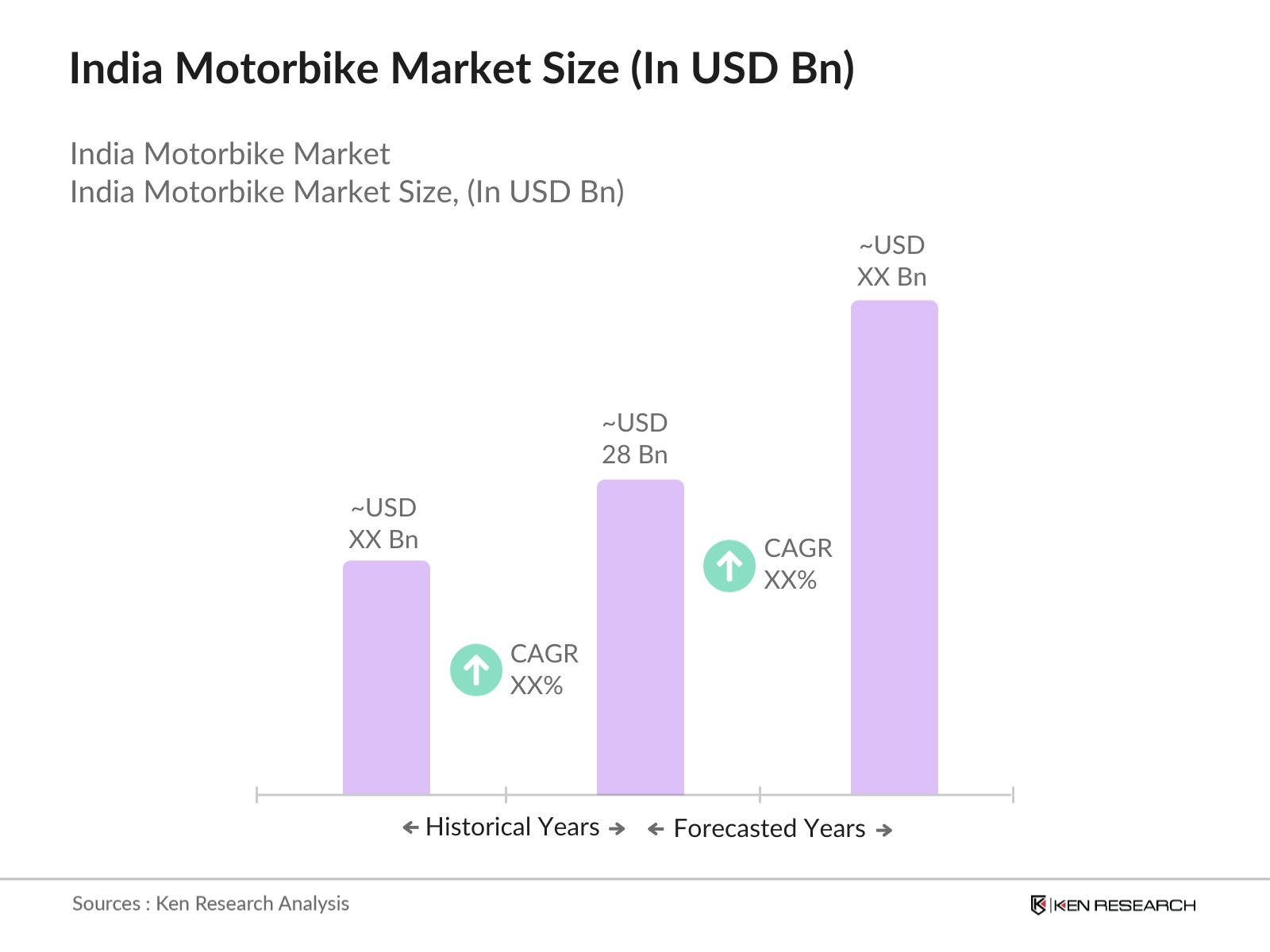
The India motorbike market is valued at USD 28 billion, driven by rising demand for affordable transportation options, especially in urban and semi-urban regions.
Challenges include strict emission regulations, rising raw material costs, and competition from electric vehicles. Additionally, volatility in fuel prices affects the market's overall profitability.
Key players in the market include Hero MotoCorp, Bajaj Auto, TVS Motor Company, Honda Motorcycle & Scooter India, and Yamaha Motor India, which dominate due to their strong brand presence and extensive product portfolios.
Growth drivers include increasing urbanization, rising disposable incomes, expanding middle-class demand for affordable transport, and the introduction of premium motorbike models.

What makes us stand out is that our consultants follows Robust, Refine and Result (RRR) methodology. i.e. Robust for clear definitions, approaches and sanity checking, Refine for differentiating respondents facts and opinions and Result for presenting data with story

We have set a benchmark in the industry by offering our clients with syndicated and customized market research reports featuring coverage of entire market as well as meticulous research and analyst insights.

While we don't replace traditional research, we flip the method upside down. Our dual approach of Top Bottom & Bottom Top ensures quality deliverable by not just verifying company fundamentals but also looking at the sector and macroeconomic factors.

With one step in the future, our research team constantly tries to show you the bigger picture. We help with some of the tough questions you may encounter along the way: How is the industry positioned? Best marketing channel? KPI's of competitors? By aligning every element, we help maximize success.

Our report gives you instant access to the answers and sources that other companies might choose to hide. We elaborate each steps of research methodology we have used and showcase you the sample size to earn your trust.

If you need any support, we are here! We pride ourselves on universe strength, data quality, and quick, friendly, and professional service.