
India Natural Gas Market Outlook to 2030
Region:India
Author(s):Shambhavi
Product Code:KROD10541
Region:India
Author(s):Shambhavi
Product Code:KROD10541
December 2024
97
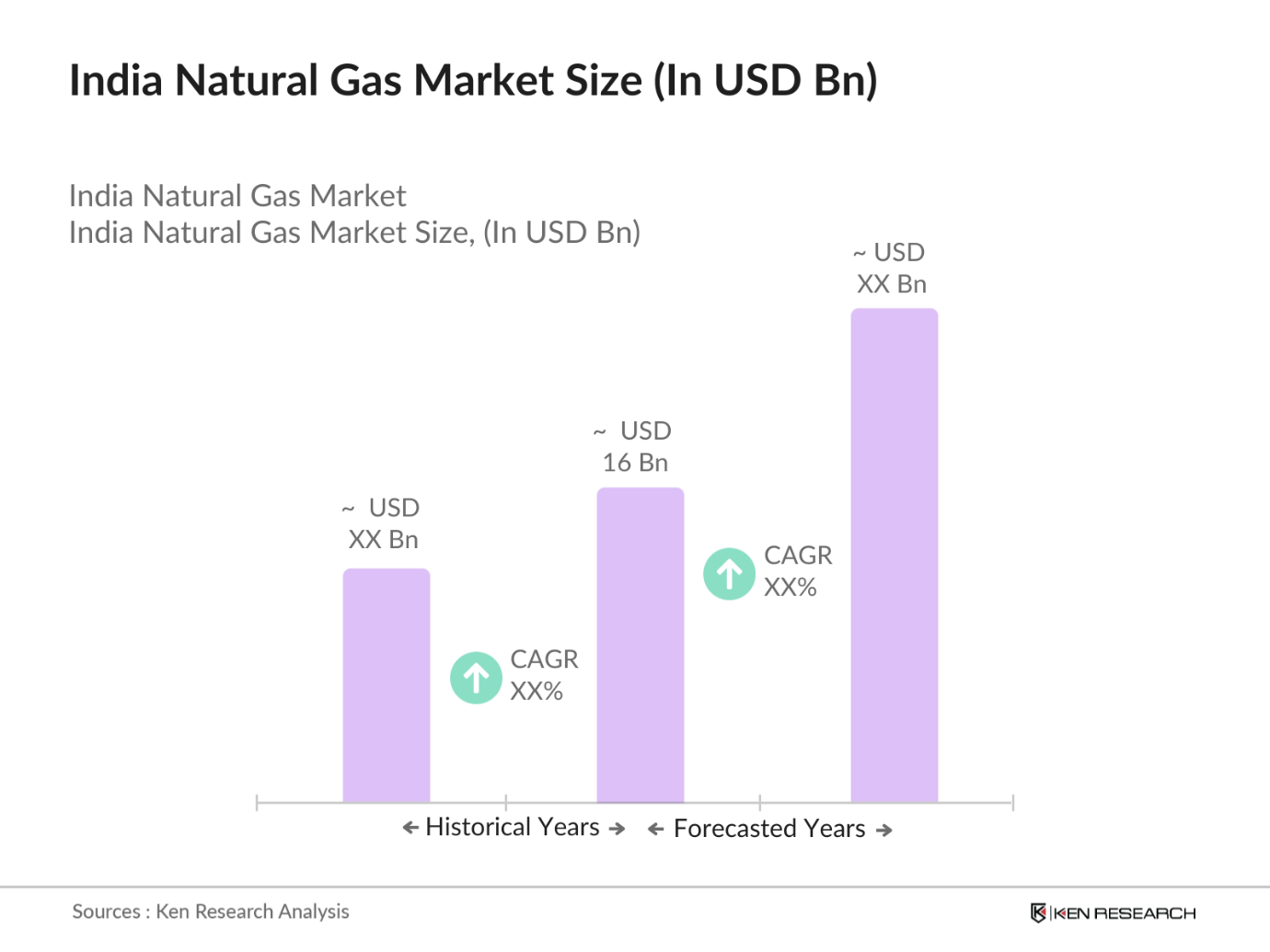


The India natural gas market is dominated by key players who hold substantial market influence due to their extensive distribution networks and established supply chains. Companies such as GAIL, Reliance Industries, and Bharat Petroleum lead the market, benefiting from longstanding operations, reliable infrastructure, and strong relationships with domestic and international suppliers.

Over the next five years, the India natural gas market is expected to witness substantial growth driven by government initiatives, infrastructure enhancements, and growing industrial energy needs. The governments commitment to increasing the share of natural gas in Indias energy mix from the current level to approximately 15% by 2030 signifies long-term growth prospects. This growth trajectory is further supported by ongoing investments in pipeline infrastructure and LNG import facilities, positioning the market for increased accessibility and broader adoption.
|
Segment |
Sub-Segments |
|
Source |
Domestic Production |
|
Application |
Industrial |
|
End-User |
Manufacturing |
|
Infrastructure |
Pipeline Network |
|
Region |
North India |
1.1 Definition and Scope
1.2 Market Taxonomy
1.3 Market Structure and Dynamics
1.4 Key Regulatory and Policy Framework
1.5 Market Growth Rate and Trajectory
2.1 Historical Market Size
2.2 Year-On-Year Growth Analysis
2.3 Key Market Developments and Milestones
3.1 Growth Drivers (Industrial Demand, Urbanization)
3.1.1 Expansion of Domestic Manufacturing
3.1.2 Increased Demand from Power Generation
3.1.3 Urban Population Growth and Energy Needs
3.1.4 Government Initiatives on Clean Energy Transition
3.2 Market Challenges (Infrastructure, Cost)
3.2.1 Limited Pipeline Infrastructure
3.2.2 High Capital and Operational Costs
3.2.3 Import Dependency and Supply Vulnerability
3.2.4 Environmental and Safety Regulations
3.3 Opportunities (Policy Reforms, Technological Integration)
3.3.1 Policy Support for LNG Terminals
3.3.2 Digitalization in Supply Chain Management
3.3.3 Expansion of CNG and PNG Distribution Networks
3.3.4 Strategic Partnerships for Upstream Exploration
3.4 Trends (LNG, CNG Penetration)
3.4.1 Rise of Liquefied Natural Gas (LNG) Imports
3.4.2 Increasing Usage in Transportation (CNG)
3.4.3 Technological Innovations in Extraction
3.4.4 Development of Renewable Hybrid Solutions
3.5 Government Regulations (Energy Policy, Emission Standards)
3.5.1 National Energy Policy on Gas Utilization
3.5.2 Emission Reduction Mandates
3.5.3 State-Level Regulations on Distribution
3.5.4 Subsidies and Incentives for Natural Gas Projects
3.6 SWOT Analysis
3.7 Stakeholder Ecosystem and Value Chain Analysis
3.8 Porters Five Forces Analysis
3.9 Competition Ecosystem
4.1 By Source (In Volume)
4.1.1 Domestic Production
4.1.2 Imported LNG
4.2 By Application (In Volume)
4.2.1 Industrial
4.2.2 Power Generation
4.2.3 Residential
4.2.4 Transportation
4.2.5 Commercial
4.3 By End-User (In Volume)
4.3.1 Manufacturing
4.3.2 Automotive
4.3.3 Chemicals and Fertilizers
4.3.4 Utilities
4.4 By Infrastructure (In Value)
4.4.1 Pipeline Network
4.4.2 LNG Terminals
4.4.3 Storage Facilities
4.5 By Region (In Volume)
4.5.1 North India
4.5.2 South India
4.5.3 East India
4.5.4 West India
5.1 Detailed Profiles of Major Companies
5.1.1 Reliance Industries
5.1.2 Oil and Natural Gas Corporation (ONGC)
5.1.3 GAIL India
5.1.4 Indian Oil Corporation (IOC)
5.1.5 Bharat Petroleum Corporation Limited (BPCL)
5.1.6 Petronet LNG
5.1.7 Hindustan Petroleum Corporation Limited (HPCL)
5.1.8 Gujarat State Petroleum Corporation (GSPC)
5.1.9 Shell India
5.1.10 Adani Total Gas
5.1.11 Essar Oil and Gas
5.1.12 Cairn India
5.1.13 ExxonMobil India
5.1.14 TotalEnergies India
5.1.15 Greenko Energy Holdings
5.2 Cross-Comparison Parameters (Revenue, Assets, Market Cap, Market Reach, Operational Efficiency, Product Portfolio, Investment Capacity, R&D Focus)
5.3 Market Share Analysis
5.4 Strategic Initiatives
5.5 Mergers and Acquisitions
5.6 Investment Analysis
5.7 Venture Capital Funding
5.8 Government Subsidies and Grants
5.9 Private Equity Investments
6.1 Environmental Standards
6.2 Compliance Requirements
6.3 Certification Processes
6.4 Energy Safety Standards
7.1 Future Market Size Projections
7.2 Key Factors Driving Future Market Growth
8.1 By Source (In Volume)
8.2 By Application (In Volume)
8.3 By Infrastructure (In Value)
8.4 By End-User (In Volume)
8.5 By Region (In Volume)
9.1 TAM/SAM/SOM Analysis
9.2 Customer Cohort Analysis
9.3 Marketing Initiatives
9.4 White Space Opportunity Analysis
Disclaimer Contact UsThe first phase involves mapping all significant stakeholders within the India natural gas market. This step uses extensive desk research, incorporating secondary and proprietary databases to gain a comprehensive industry overview. The main objective is to identify and define key market dynamics and variables.
This stage involves compiling historical data relevant to the India natural gas market, including market penetration, energy demand, and supply dynamics. The data is analyzed to provide reliable market projections and evaluate the balance between supply sources and end-user sectors.
Hypotheses regarding market trends and future outlooks are validated through consultations with industry experts from various firms. These interviews are conducted via computer-assisted telephone interviews (CATIs), providing insights into operational and financial factors directly impacting the market.
The last phase integrates insights from natural gas suppliers and distributors to verify and supplement the data collected, ensuring an accurate and comprehensive analysis of the India natural gas market.
The India natural gas market is valued at approximately USD 16 billion, driven by rising industrial energy needs and government incentives promoting natural gas as a cleaner fuel alternative.
Challenges include insufficient domestic production, reliance on imports, and the need for substantial infrastructure investment. High import dependence makes the market vulnerable to global price fluctuations.
Key players include GAIL, Reliance Industries, Bharat Petroleum, and Indian Oil Corporation. These companies dominate due to their extensive infrastructure and established supply chains.
Growth is driven by increasing demand in industrial sectors, government policies favoring clean energy, and infrastructure expansion, especially in high-demand regions.
Imports play a critical role, constituting over half of the total market supply due to limited domestic production, with LNG imports being essential to meeting the rising consumption.

What makes us stand out is that our consultants follows Robust, Refine and Result (RRR) methodology. i.e. Robust for clear definitions, approaches and sanity checking, Refine for differentiating respondents facts and opinions and Result for presenting data with story

We have set a benchmark in the industry by offering our clients with syndicated and customized market research reports featuring coverage of entire market as well as meticulous research and analyst insights.

While we don't replace traditional research, we flip the method upside down. Our dual approach of Top Bottom & Bottom Top ensures quality deliverable by not just verifying company fundamentals but also looking at the sector and macroeconomic factors.

With one step in the future, our research team constantly tries to show you the bigger picture. We help with some of the tough questions you may encounter along the way: How is the industry positioned? Best marketing channel? KPI's of competitors? By aligning every element, we help maximize success.

Our report gives you instant access to the answers and sources that other companies might choose to hide. We elaborate each steps of research methodology we have used and showcase you the sample size to earn your trust.

If you need any support, we are here! We pride ourselves on universe strength, data quality, and quick, friendly, and professional service.