
India Next Generation Sequencing Market Outlook to 2030
Region:Asia
Author(s):Shubham Kashyap
Product Code:KROD2841
October 2024
89
About the Report
India Next Generation Sequencing Market Overview
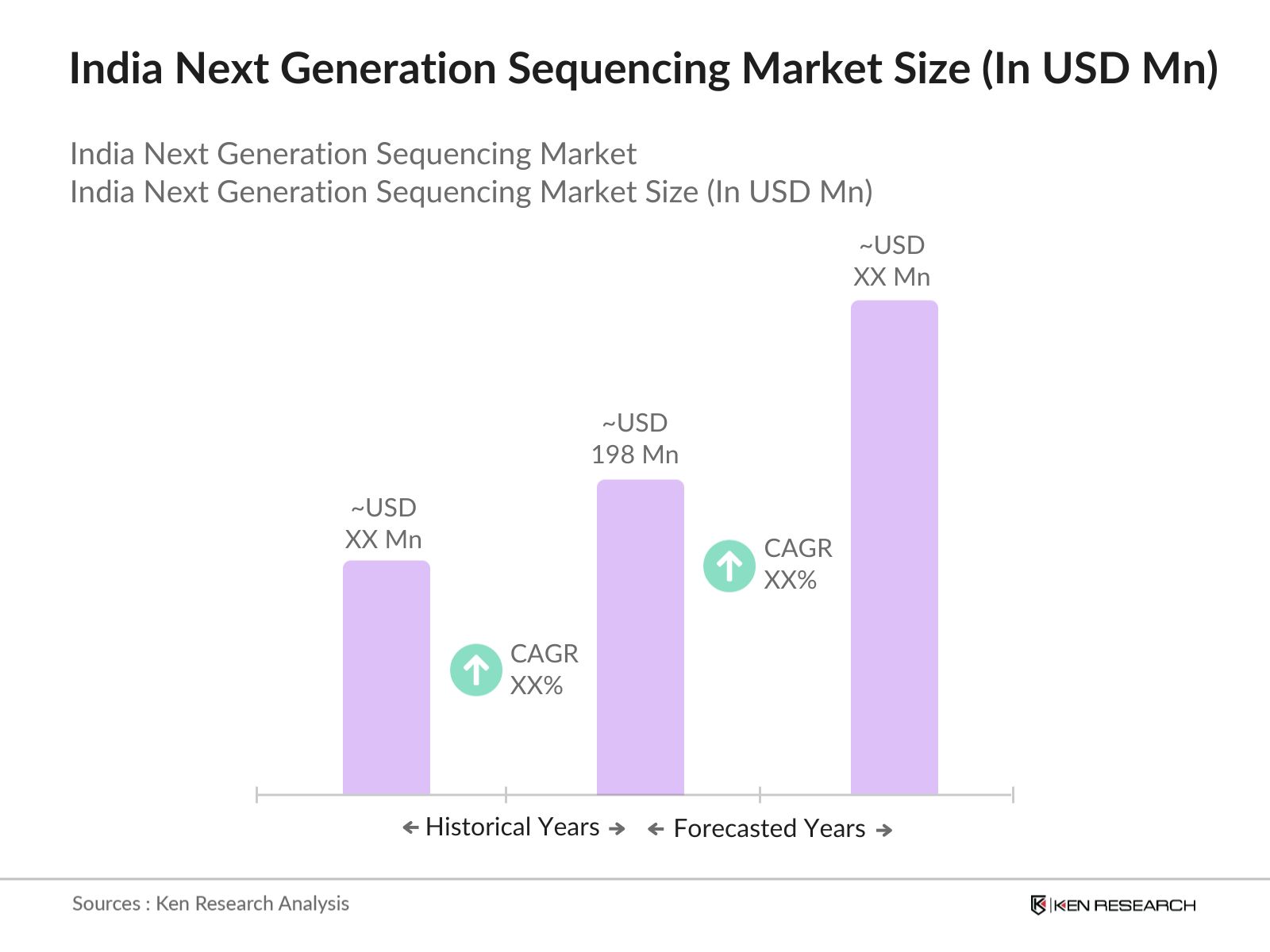
- The India Next Generation Sequencing Market is valued at USD 720 million and is driven by rising investments in personalized medicine, genomic research, and the adoption of NGS technologies across various medical and non-medical applications. The India Next Generation Sequencing (NGS) market is poised for rapid growth, driven by increasing demand for advanced genetic analysis technologies in sectors such as healthcare, pharmaceuticals, and research.
- Major hubs for NGS technology development in India include cities like Bengaluru, Hyderabad, and Pune, which host prominent research institutions and biotechnology companies. These cities have attracted significant investments from global pharmaceutical giants and academic institutions, contributing to India's position as a growing center for genomic and biotech research. The collaboration between academia and the private sector is a key factor boosting the NGS market.
- The Indian government's initiatives to improve healthcare infrastructure and promote the adoption of precision medicine, along with the increasing awareness of genetic disorders and cancer research, have accelerated the use of NGS technologies. Furthermore, the COVID-19 pandemic has highlighted the importance of genomic sequencing for tracking and understanding virus mutations, further stimulating market growth.
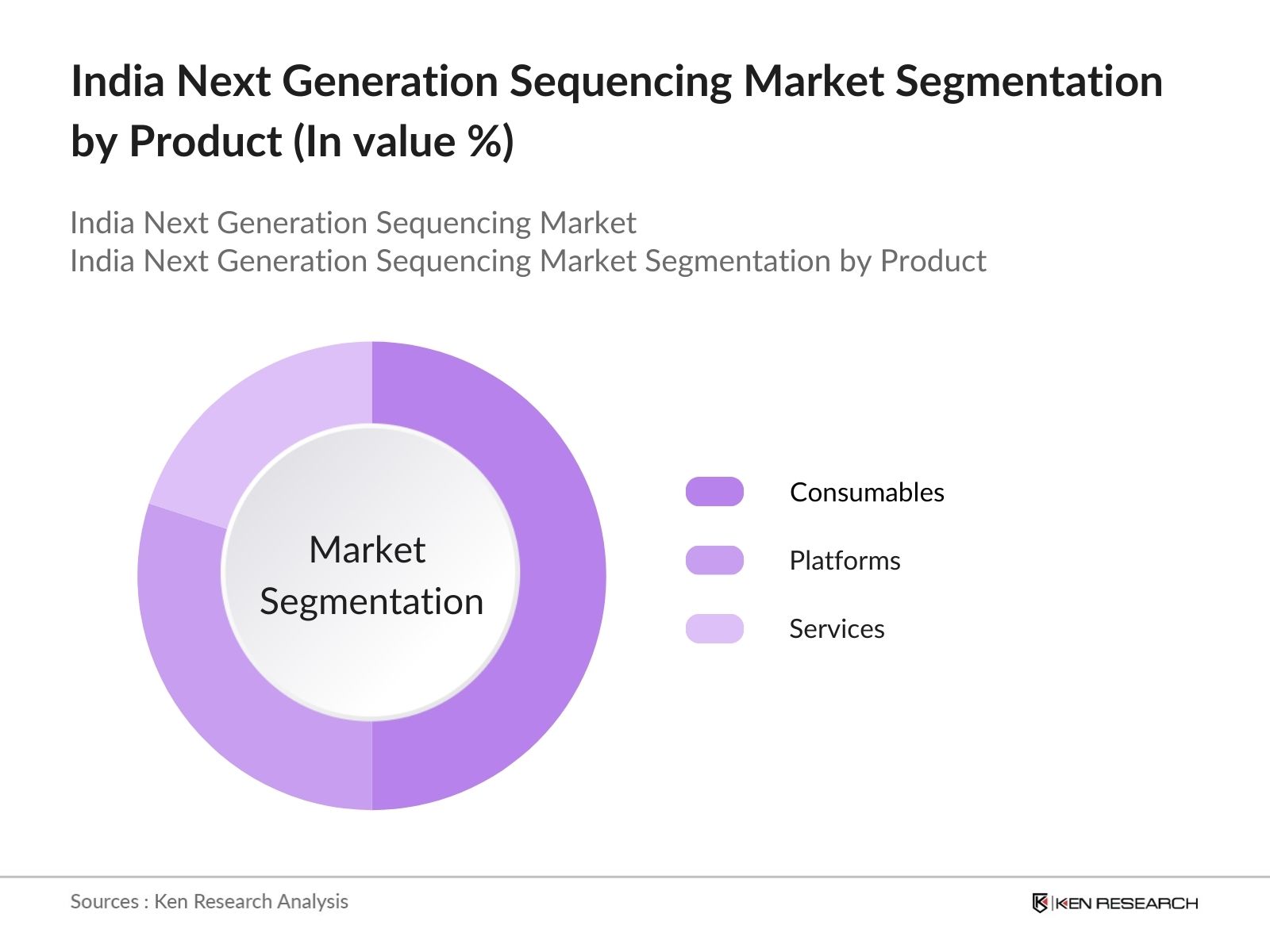
India Next Generation Sequencing Market Segmentation
- By Product Type: The market is segmented into consumables, platforms, and services. The consumables segment holds the largest share due to the continuous demand for reagents, kits, and other consumables required in NGS workflows. Platforms, including sequencers and associated hardware, are gaining traction as technological advancements lead to the development of faster and more accurate sequencing systems. Services, which include bioinformatics, data analysis, and storage solutions, are also expanding due to the need for efficient management of large-scale genomic data.
- By Application: The market is segmented by application into clinical diagnostics, drug discovery, agriculture & animal research, and others. Clinical diagnostics holds the largest share, driven by the growing use of NGS in cancer diagnostics, hereditary disease screening, and infectious disease research. Drug discovery is also a significant application, as pharmaceutical companies utilize NGS to identify novel drug targets and biomarkers. Agriculture & animal research applications are gaining attention due to the role of NGS in improving crop yield and livestock breeding through genomic analysis.

India Next Generation Sequencing Market Competitive Landscape
The India NGS market is highly competitive, with a mix of domestic and international players driving innovation and adoption. Key companies such as Illumina, Thermo Fisher Scientific, Agilent Technologies, BGI Group, and Oxford Nanopore Technologies are leading the market through strategic partnerships, advancements in sequencing technologies, and expansion of R&D capabilities.
|
Company Name |
Establishment Year |
Headquarters |
Revenue (2023) |
Employees |
Key Products |
R&D Investment |
Key Clients |
Partnerships |
|
Illumina |
1998 |
USA |
- |
- |
- |
- |
- |
- |
|
Thermo Fisher Scientific |
1956 |
USA |
- |
- |
- |
- |
- |
- |
|
Agilent Technologies |
1999 |
USA |
- |
- |
- |
- |
- |
- |
|
BGI Group |
1999 |
China |
- |
- |
- |
- |
- |
- |
|
Oxford Nanopore |
2005 |
UK |
- |
- |
- |
- |
- |
- |
India Next Generation Sequencing Market Analysis
Growth Drivers
- Growing Adoption of Personalized Medicine: The adoption of personalized medicine in India is rapidly increasing as healthcare providers look for more targeted treatments based on individual genetic profiles. In 2023, India saw a sharp rise in healthcare expenditure, which includes investments in advanced medical technologies like NGS. Personalized medicine has gained significant attention due to its role in oncology, with 1.46 million cancer cases being recorded in India, driving the demand for NGS to aid in early detection and customized treatment plans. The Indian government has increased funding for genomic studies, allocating $120 million toward precision medicine initiatives.
- Increasing Demand for Genomic Research and Precision Medicine: Genomic research in India is experiencing substantial growth, with an increasing number of research institutes focusing on precision medicine. The establishment of the Genome India Project by the government aims to map the genetic diversity of the country. This project supports NGS by expanding research capabilities, enhancing disease prevention, and developing new drugs. Furthermore, India spends over USD 470 million annually on biomedical research, highlighting the expanding interest in genomic research, positioning NGS as an essential tool in this growth.
- Expanding Use of NGS in Agriculture and Animal Research: India’s agriculture and animal research sector is increasingly adopting NGS for genetic studies, with a focus on improving crop yields and livestock. As of 2024, India is home to over 250 agricultural research institutes. NGS is applied in studies concerning drought-resistant crops and livestock disease mitigation, with the government investing nearly USD 15 million annually in agricultural genomics. This aligns with India’s agricultural GDP of $480 billion, reflecting the growing relevance of NGS technology in enhancing the country's agricultural productivity and resilience to climate change.
Market Challenges
- Limited Access to Trained Workforce in Bioinformatics: India faces a shortage of bioinformatics professionals capable of handling the complex data generated by NGS technologies. In 2024, the country had only 3,500 professionals with expertise in bioinformatics, compared to the growing demand from over 200 genomic research centers. Although universities are expanding bioinformatics programs, the current supply of trained professionals is insufficient, which poses a challenge in fully leveraging the potential of NGS technologies. This gap in the workforce is a significant hurdle to the efficient use of genomic data in medical and agricultural research.
- Complex Regulatory Landscape in Genomic Data Handling: India’s regulatory framework for genomic data handling is fragmented and complicated. In 2023, India introduced a draft policy for data privacy and storage for genomic data, but its implementation remains unclear. Genomic data often falls under multiple regulatory bodies, including the Ministry of Health and Family Welfare and the Information Technology Act, creating regulatory hurdles. Lack of clarity on cross-border data transfer and privacy protections slows down research and collaboration with international institutions, affecting the widespread application of NGS in both healthcare and agriculture.
India Next Generation Sequencing Market Future Outlook
The India NGS market is expected to experience substantial growth through 2028, driven by advancements in genomic research, increasing adoption of personalized medicine, and expanding applications in agriculture and healthcare. Innovations in NGS technologies, particularly in sequencing speed, accuracy, and affordability, will further enhance the market's potential in both clinical and non-clinical applications.
Future Market Opportunities
- Development of Low-Cost NGS Platforms: The development of more affordable NGS platforms presents a significant opportunity for the Indian market. Currently, several Indian biotech firms are working on producing NGS platforms at lower costs, which could bring prices down to as low as $50,000 per unit. With government support, such as the 'Make in India' initiative, and foreign investments reaching millions in biotechnology in 2024, the local production of these platforms is set to boost accessibility for research institutions and hospitals across the country.
- Expansion into Rural and Underserved Areas: There is significant potential for NGS applications in rural and underserved areas of India, especially in healthcare and agriculture. The Indian government has announced initiative worth millions to support rural healthcare infrastructure, which includes integrating advanced diagnostics like NGS. In agriculture, rural genomics programs are being launched to improve crop yields and livestock health. This expansion opens new avenues for NGS adoption, not only in urban centers but also in rural parts of the country, where agriculture forms the backbone of the economy.
Scope of the Report
|
By Product |
Consumables Platforms Services |
|
By Application |
Clinical Diagnostics Drug Discovery Agriculture & Animal Research Non-Medical Applications |
|
By End-User |
Hospitals & Clinics Research Institutes Pharmaceutical & Biotechnology Companies |
|
By Sequencing |
Whole Genome Sequencing Whole Exome Sequencing Targeted Sequencing & Resequencing |
|
By Region |
North South East West |
Products
Key Target Audience
- Pharmaceutical & Biotechnology Companies
- Hospitals and Diagnostic Centers
- Research Institutes & Genomic Labs
- Government and Regulatory Bodies (Department of Biotechnology, Indian Council of Medical Research)
- NGS Platform Manufacturers and Suppliers
- Agriculture & Animal Research Institutions
- Venture Capital and Investment Firms
- Healthcare Providers & Organizations
Companies
Major Players
- Illumina
- Thermo Fisher Scientific
- Agilent Technologies
- BGI Group
- Oxford Nanopore Technologies
- PerkinElmer
- Qiagen N.V.
- Roche Diagnostics
- Macrogen Inc.
- Genewiz (Part of Brooks Automation)
- Bio-Rad Laboratories
- Pacific Biosciences
- Genotypic Technology Pvt. Ltd.
- HMGene
- Strand Life Sciences
Table of Contents
1. India Next Generation Sequencing (NGS) Market Overview
1.1. Definition and Scope
1.2. Market Taxonomy
1.3. Market Growth Rate
1.4. Market Segmentation Overview
2. India Next Generation Sequencing (NGS) Market Size (In USD Bn)
2.1. Historical Market Size
2.2. Year-On-Year Growth Analysis
2.3. Key Market Developments and Milestones
3. India Next Generation Sequencing (NGS) Market Analysis
3.1. Growth Drivers
3.1.1. Growing Adoption of Personalized Medicine
3.1.2. Increasing Demand for Genomic Research and Precision Medicine
3.1.3. Expanding Use of NGS in Agriculture and Animal Research
3.1.4. Rising Investment in Genomic Infrastructure
3.2. Market Challenges
3.2.1. High Costs Associated with NGS Platforms
3.2.2. Limited Access to Trained Workforce in Bioinformatics
3.2.3. Complex Regulatory Landscape in Genomic Data Handling
3.2.4. Challenges in Data Storage and Management
3.3. Opportunities
3.3.1. Development of Low-Cost NGS Platforms
3.3.2. Expansion into Rural and Underserved Areas
3.3.3. Collaboration Between Public and Private Sectors in Genomics
3.3.4. Increasing Demand for NGS in Non-Medical Applications
3.4. Trends
3.4.1. Emergence of Real-Time and Portable Sequencing Technologies
3.4.2. Integration of AI and Machine Learning in Genomic Data Analysis
3.4.3. Increasing Focus on Cancer Genomics and Hereditary Disease Research
3.4.4. Growing Use of NGS in Precision Agriculture
3.5. Government Regulation
3.5.1. Genomic Data Privacy Regulations
3.5.2. National Initiatives on Genomic Research
3.5.3. Government Support for Personalized Medicine
3.5.4. Public-Private Partnerships in Genomics
3.6. SWOT Analysis
3.7. Stake Ecosystem
3.8. Porter’s Five Forces
3.9. Competition Ecosystem
4. India Next Generation Sequencing (NGS) Market Segmentation
4.1. By Product Type (In Value %)
4.1.1. Consumables
4.1.2. Platforms
4.1.3. Services
4.2. By Application (In Value %)
4.2.1. Clinical Diagnostics
4.2.2. Drug Discovery
4.2.3. Agriculture & Animal Research
4.2.4. Non-Medical Applications
4.3. By End-User (In Value %)
4.3.1. Hospitals & Clinics
4.3.2. Research Institutes
4.3.3. Pharmaceutical & Biotechnology Companies
4.4. By Sequencing Type (In Value %)
4.4.1. Whole Genome Sequencing
4.4.2. Whole Exome Sequencing
4.4.3. Targeted Sequencing & Resequencing
4.5. By Technology (In Value %)
4.5.1. Sequencing by Synthesis (SBS)
4.5.2. Ion Semiconductor Sequencing
4.5.3. Nanopore Sequencing
5. India Next Generation Sequencing (NGS) Market Competitive Analysis
5.1. Detailed Profiles of Major Companies
5.1.1. Illumina
5.1.2. Thermo Fisher Scientific
5.1.3. Agilent Technologies
5.1.4. BGI Group
5.1.5. Oxford Nanopore Technologies
5.1.6. PerkinElmer
5.1.7. Qiagen N.V.
5.1.8. Roche Diagnostics
5.1.9. Macrogen Inc.
5.1.10. Genewiz (Part of Brooks Automation)
5.1.11. Bio-Rad Laboratories
5.1.12. Pacific Biosciences
5.1.13. Genotypic Technology Pvt. Ltd.
5.1.14. HMGene
5.1.15. Strand Life Sciences
5.2. Cross Comparison Parameters (Market Share, No. of Employees, Revenue, Headquarters, Partnerships, Key Clients, R&D Investment, Market Position)
5.3. Market Share Analysis
5.4. Strategic Initiatives
5.5. Mergers and Acquisitions
5.6. Investment Analysis
5.7. Venture Capital Funding
5.8. Government Grants
5.9. Private Equity Investments
6. India Next Generation Sequencing (NGS) Market Regulatory Framework
6.1. Regulatory Bodies Governing NGS Technologies
6.2. Genomic Data Storage and Compliance
6.3. Certifications for Clinical NGS Platforms
6.4. Bioethical Considerations and Legal Framework
7. India Next Generation Sequencing (NGS) Future Market Size (In USD Bn)
7.1. Future Market Size Projections
7.2. Key Factors Driving Future Market Growth
8. India Next Generation Sequencing (NGS) Future Market Segmentation
8.1. By Product Type (In Value %)
8.2. By Application (In Value %)
8.3. By End-User (In Value %)
8.4. By Sequencing Type (In Value %)
8.5. By Technology (In Value %)
9. India Next Generation Sequencing (NGS) Market Analysts’ Recommendations
9.1. TAM/SAM/SOM Analysis
9.2. Customer Cohort Analysis
9.3. Marketing Initiatives
9.4. White Space Opportunity Analysis
Disclaimer
Contact Us
Research Methodology
Step 1: Identification of Key Variables
In this phase, we conduct an extensive desk research exercise to map out the ecosystem of the India Next Generation Sequencing market. This involves collecting industry-level data from various proprietary databases and secondary research sources. The goal is to identify the most critical variables, such as key market drivers, technological advancements, and regulatory influences.
Step 2: Market Analysis and Construction
We analyze historical data from multiple sources to construct the market size and growth trends. This includes evaluating factors such as the penetration of NGS technology, revenue generation in different segments, and key trends in customer demand. Data from NGS technology providers, healthcare institutions, and academic publications are crucial in this phase.
Step 3: Hypothesis Validation and Expert Consultation
Market hypotheses are formulated based on desk research and are validated through interviews with key stakeholders in the NGS ecosystem. These interviews include discussions with experts from hospitals, pharmaceutical companies, and research institutions, providing first-hand insights into market trends, challenges, and future opportunities.
Step 4: Research Synthesis and Final Output
Finally, we engage with NGS manufacturers and key players in the market to verify and synthesize the data collected. This ensures the final market report is comprehensive, accurate, and validated through a bottom-up approach
Frequently Asked Questions
01. How big is India Next Generation Sequencing Market?
The India Next Generation Sequencing market is valued at USD 198 million and is driven by advances in personalized medicine, genomic research, and clinical diagnostics.
02. What are the challenges in India Next Generation Sequencing Market?
Key challenges in the India Next Generation Sequencing market include high platform costs, a shortage of skilled bioinformatics professionals, and regulatory complexities in handling genomic data.
03. Who are the major players in the India Next Generation Sequencing Market?
The major players in the India Next Generation Sequencing market include Illumina, Thermo Fisher Scientific, Agilent Technologies, BGI Group, and Oxford Nanopore Technologies, all of which hold a strong market presence due to their technological capabilities and innovation in sequencing platforms.
04. What are the growth drivers of India Next Generation Sequencing Market?
The India Next Generation Sequencing market is driven by factors such as the increasing adoption of personalized medicine, advances in genomic research, and the growing applications of NGS in agricultural genomics and precision medicine.
Why Buy From Us?

What makes us stand out is that our consultants follows Robust, Refine and Result (RRR) methodology. i.e. Robust for clear definitions, approaches and sanity checking, Refine for differentiating respondents facts and opinions and Result for presenting data with story

We have set a benchmark in the industry by offering our clients with syndicated and customized market research reports featuring coverage of entire market as well as meticulous research and analyst insights.

While we don't replace traditional research, we flip the method upside down. Our dual approach of Top Bottom & Bottom Top ensures quality deliverable by not just verifying company fundamentals but also looking at the sector and macroeconomic factors.

With one step in the future, our research team constantly tries to show you the bigger picture. We help with some of the tough questions you may encounter along the way: How is the industry positioned? Best marketing channel? KPI's of competitors? By aligning every element, we help maximize success.

Our report gives you instant access to the answers and sources that other companies might choose to hide. We elaborate each steps of research methodology we have used and showcase you the sample size to earn your trust.

If you need any support, we are here! We pride ourselves on universe strength, data quality, and quick, friendly, and professional service.