
India Noodles Market Outlook to 2030
Region:Asia
Author(s):Paribhasha Tiwari
Product Code:KROD10561
November 2024
89
About the Report
India Noodles Market Overview
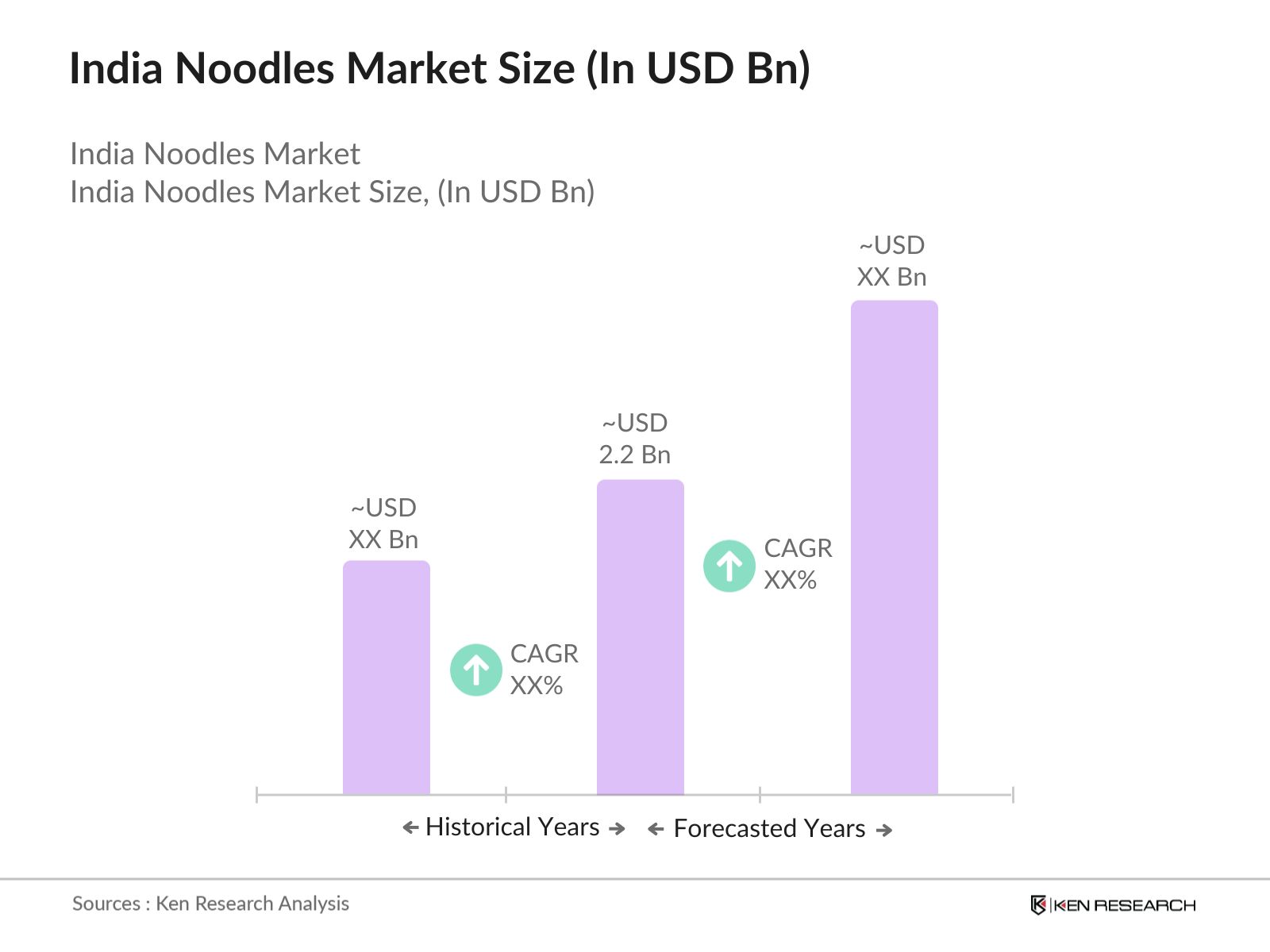
- The India noodles market is valued at USD 2.2 billion, based on a five-year historical analysis. This market is primarily driven by urbanization, rising disposable income, and the demand for convenient, ready-to-eat meals. The expanding middle class, combined with the increasing number of working professionals, has fueled the growth of instant and ready-to-eat noodles. Major factors such as shifting consumer preferences towards quick, affordable meals and the rise of modern retail channels, including e-commerce, have amplified the demand for various noodle types across India.
- Delhi, Mumbai, and Bengaluru dominate the India noodles market due to their higher population density, stronger purchasing power, and greater influence of urbanization. These cities have a large base of working professionals who seek quick, on-the-go meal solutions. Additionally, their infrastructure and extensive distribution networks make them ideal hubs for both local and international noodle brands. Their dominance is further supported by a rapidly growing e-commerce sector, enhancing availability and delivery options.
- In early 2024, Nestl India launched a new range of noodles made with millet and other high-fiber ingredients, tapping into the growing demand for healthier food products. This product line aims to capture health-conscious consumers in metro cities.
India Noodles Market Segmentation
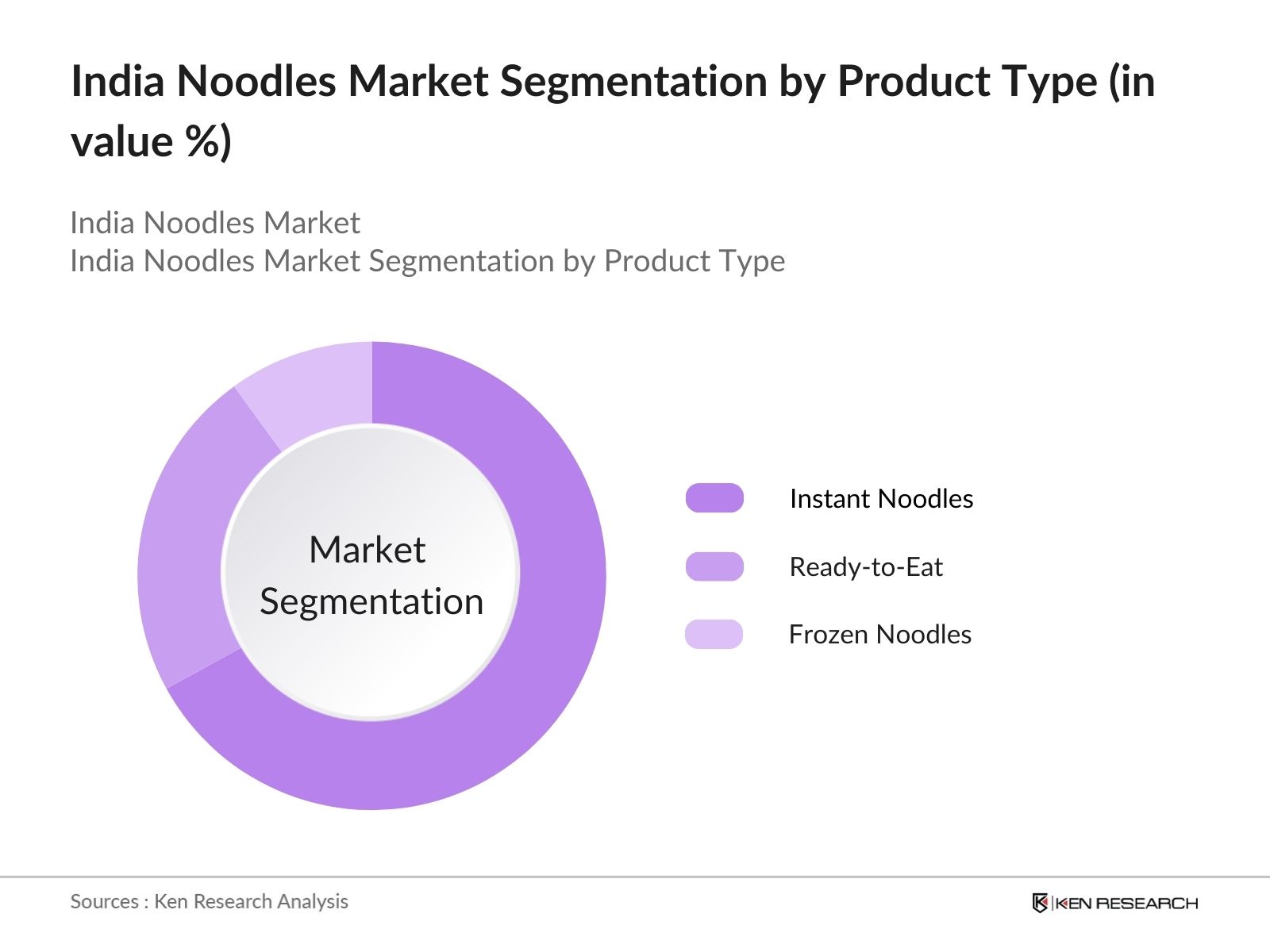
By Product Type: The India noodles market is segmented by product type into instant noodles, ready-to-eat noodles, and frozen noodles. Recently, instant noodles have dominated the market under this segmentation due to their affordability and the convenience they offer. The ingrained presence of brands like Maggi and Top Ramen contributes significantly to this dominance. These brands have established strong brand loyalty among Indian consumers. Additionally, their wide availability across local stores and online platforms ensures that they remain the most accessible noodle option for the vast majority of the population.
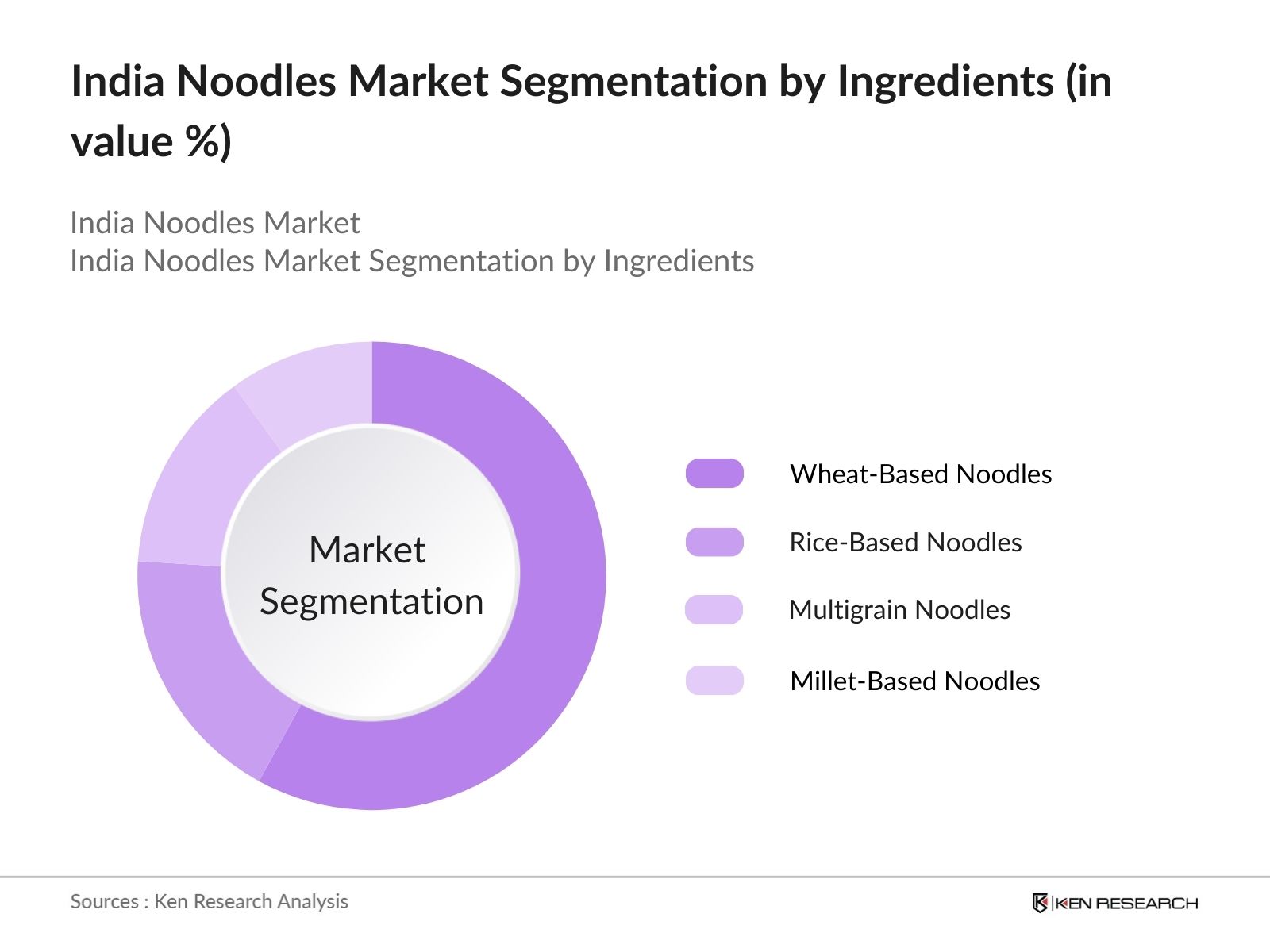
By Ingredients: The India noodles market is further segmented by ingredients into wheat-based noodles, rice-based noodles, multigrain noodles, and millet-based noodles. Wheat-based noodles dominate the market share due to their low production cost and versatility in different cuisines. Their wide consumption is driven by cultural preferences, ease of preparation, and their compatibility with traditional Indian flavors. Wheat noodles are also more affordable compared to healthier alternatives, making them a go-to choice for both urban and rural consumers.
India Noodles Market Competitive Landscape
The India noodles market is dominated by both local and international brands. Companies like Nestl India and ITC Limited have a significant influence in shaping market dynamics. The competitive landscape of the noodles market is driven by factors such as product innovation, strong distribution networks, and aggressive marketing strategies.

India Noodles Market Analysis
Growth Drivers
- Rising Demand for Quick Meals in Urban Areas: In 2024, with an estimated 600 million people living in urban India, consumption patterns have shifted significantly towards convenient and ready-to-eat food products like noodles. This demand for quick meals is driven by the busy lifestyles of urban consumers, who prioritize convenience. According to industry sources, urban consumers are increasingly opting for noodles due to their fast preparation time and wide availability in supermarkets and online platforms.
- Expansion of Organized Retail Channels: The expansion of organized retail, with over 10,000 hypermarkets and supermarkets operating across India, has improved the availability and distribution of noodles. Organized retail allows brands to penetrate deeper into both metro and Tier-II cities, increasing the accessibility of branded noodles. The governments "National Food Processing Policy" in 2024 has also provided subsidies and financial support for the food retail sector, encouraging expansion.
- Increasing E-commerce Penetration: Indias e-commerce market has experienced a robust increase, with over 150 million online shoppers in 2024. This growing trend has provided a significant boost to noodle manufacturers, allowing them to reach consumers more effectively. E-commerce giants such as Amazon and Flipkart have enhanced their food and grocery sections, making noodles a key product in the quick meal category.
Market Challenges
- Fluctuating Raw Material Costs: Wheat and spice prices, which are crucial components in noodle production, have experienced volatility in 2024. For instance, wheat prices rose by 800 per quintal in early 2024 due to unfavorable monsoons. These price fluctuations create challenges for noodle manufacturers, who rely on consistent ingredient costs to maintain pricing strategies.
- Intense Market Competition: In 2024, the Indian noodles market has over 200 players, including dominant local brands and international companies. Competition is fierce, with new entrants consistently trying to capture market share. Major brands such as ITCs Yippee! and Nestls Maggi face competition from smaller, regional players that offer products at lower prices, challenging their market position.
India Noodles Market Future Outlook
Over the next five years, the India noodles market is expected to witness significant growth, driven by the rising demand for convenient food options among urban consumers. Continuous product innovations, including healthier and organic noodle options, and the expansion of e-commerce platforms will play a pivotal role in shaping the markets trajectory. Furthermore, collaborations between manufacturers and online retailers will enhance accessibility in both urban and rural areas. With growing consumer interest in healthier alternatives, the market is likely to see increased adoption of multigrain and millet-based noodles.
Market Opportunities
- Health-Oriented Product Variants: With more than 50 million consumers in India actively seeking health-conscious alternatives, there is a growing market for whole wheat, multigrain, and protein-enriched noodles. Health awareness campaigns by the Indian government in 2024 have supported this trend, leading to a steady demand for products that cater to dietary restrictions, driving innovation in the segment.
- Flavor Innovation and Regional Preferences: Indias diverse food culture allows noodle manufacturers to tap into regional preferences. In 2024, there is a rising demand for noodles flavored with ethnic spices and ingredients like turmeric, curry leaves, and masala. Over 40 new flavor variants have been introduced by companies to cater to local tastes, creating an opportunity for brands to diversify and capture niche markets.
Scope of the Report
|
By Product Type |
Instant Noodles Ready-to-Eat Noodles Frozen Noodles Healthy and Functional Noodles |
|
By Ingredients |
Wheat-based Rice-based Multigrain Millet-based |
|
By Packaging Type |
Packaged (Bags, Boxes) Cup/Bowl Noodles Frozen Packaging |
|
By Sales Channel |
Hypermarkets/Supermarkets Convenience Stores Online Retail Local/Kirana Stores |
|
By Region |
North South East West |
Products
Key Target Audience
Noodle Manufacturers
Food and Beverage Retailers
Quick Service Restaurants (QSR)
E-commerce Platforms (Flipkart, Amazon)
Investors and Venture Capitalist Firms
Government and Regulatory Bodies (FSSAI)
Packaging Solution Providers
Ingredient Suppliers (Wheat, Spices)
Companies
Players Mentioned in the Report:
Nestl India (Maggi)
ITC Limited (Sunfeast Yippee!)
Patanjali Ayurved Ltd.
Nissin Foods (Top Ramen)
Hindustan Unilever (Knorr)
Capital Foods (Ching's Secret)
CG Foods (Wai Wai)
Indo Nissin Foods Pvt Ltd.
Bambino Agro Industries Ltd.
Kohinoor Foods Ltd.
Table of Contents
1. India Noodles Market Overview
1.1 Definition and Scope
1.2 Market Taxonomy
1.3 Market Growth Rate
1.4 Market Segmentation Overview
2. India Noodles Market Size (In USD Bn)
2.1 Historical Market Size
2.2 Year-On-Year Growth Analysis
2.3 Key Market Developments and Milestones (Market Penetration, Expansion of Local Brands)
3. India Noodles Market Analysis
3.1 Growth Drivers
3.1.1 Rising Urbanization (Urban Consumption Patterns)
3.1.2 Changing Consumer Preferences (Shift Towards Quick Meals)
3.1.3 Expansion of Organized Retail (Distribution and Availability)
3.1.4 Increasing Adoption of E-commerce (Online Delivery Penetration)
3.2 Market Challenges
3.2.1 Fluctuating Raw Material Costs (Wheat, Spices)
3.2.2 Intense Competition from Local and International Players
3.2.3 Regulatory Compliance (FSSAI Guidelines, Labeling Requirements)
3.2.4 Supply Chain Disruptions (Seasonality, Logistics)
3.3 Opportunities
3.3.1 Rising Health Consciousness (Demand for Whole Wheat and Multigrain Noodles)
3.3.2 Innovations in Product Flavors and Varieties (Spices, Ingredients, Ethnic Flavors)
3.3.3 Untapped Rural Markets (Rural Distribution Networks)
3.3.4 Expanding Frozen and Ready-to-Eat (RTE) Segment
3.4 Trends
3.4.1 Introduction of Healthier Noodle Alternatives (Gluten-Free, Vegan Options)
3.4.2 Strategic Collaborations with Celebrity Endorsements and Digital Marketing
3.4.3 Adoption of Premium and Gourmet Noodles (Organic, High-Quality Ingredients)
3.4.4 Sustainable Packaging Solutions (Eco-friendly and Biodegradable Packaging)
3.5 Government Regulations
3.5.1 FSSAI Standards on Food Additives
3.5.2 Food Fortification Requirements (Mandatory Fortification of Noodles)
3.5.3 Packaging and Labeling Regulations (Nutritional Labeling)
3.5.4 Import Tariffs and Taxation Policies (Impact on International Brands)
3.6 SWOT Analysis
3.7 Stakeholder Ecosystem (Farmers, Distributors, Retail Chains, E-commerce Platforms)
3.8 Porters Five Forces
3.9 Competition Ecosystem
4. India Noodles Market Segmentation
4.1 By Product Type (In Value %)
4.1.1 Instant Noodles
4.1.2 Ready-to-Eat Noodles
4.1.3 Frozen Noodles
4.1.4 Healthy and Functional Noodles (Organic, Multigrain)
4.2 By Ingredients (In Value %)
4.2.1 Wheat-based Noodles
4.2.2 Rice-based Noodles
4.2.3 Multigrain Noodles
4.2.4 Millet-based Noodles
4.3 By Packaging Type (In Value %)
4.3.1 Packaged Noodles (Bags, Boxes)
4.3.2 Cup/Bowl Noodles
4.3.3 Frozen Packaging
4.4 By Sales Channel (In Value %)
4.4.1 Hypermarkets/Supermarkets
4.4.2 Convenience Stores
4.4.3 Online Retail
4.4.4 Local/Kirana Stores
4.5 By Region (In Value %)
4.5.1 North
4.5.2 South
4.5.3 East
4.5.4 West
5. India Noodles Market Competitive Analysis
5.1 Detailed Profiles of Major Companies
5.1.1 ITC Limited
5.1.2 Nestl India (Maggi)
5.1.3 Patanjali Ayurved Ltd.
5.1.4 Hindustan Unilever Limited
5.1.5 CG Foods (Wai Wai)
5.1.6 Bambino Agro Industries Ltd.
5.1.7 Capital Foods (Chings Secret)
5.1.8 Nissin Foods
5.1.9 Indo Nissin Foods Pvt Ltd.
5.1.10 Top Ramen
5.1.11 MTR Foods
5.1.12 Gits Food Products Pvt Ltd.
5.1.13 Marico Limited
5.1.14 Bikanervala Foods Pvt Ltd.
5.1.15 Kohinoor Foods Ltd.
5.2 Cross Comparison Parameters (No. of Employees, Headquarters, Inception Year, Revenue, Distribution Network, Product Portfolio, Manufacturing Capacity, Supply Chain Efficiency)
5.3 Market Share Analysis
5.4 Strategic Initiatives (New Product Launches, Market Expansion Strategies, Partnerships)
5.5 Mergers and Acquisitions
5.6 Investment Analysis
5.7 Venture Capital Funding
5.8 Government Grants
5.9 Private Equity Investments
6. India Noodles Market Regulatory Framework
6.1 FSSAI Compliance
6.2 Import and Export Regulations
6.3 Certification Processes for Food Safety
6.4 Environmental Standards (Sustainable Sourcing, Plastic Use in Packaging)
7. India Noodles Future Market Size (In INR Bn)
7.1 Future Market Size Projections
7.2 Key Factors Driving Future Market Growth (Rising Health Awareness, Expansion of Quick Service Restaurants)
8. India Noodles Future Market Segmentation
8.1 By Product Type (In Value %)
8.2 By Ingredients (In Value %)
8.3 By Packaging Type (In Value %)
8.4 By Sales Channel (In Value %)
8.5 By Region (In Value %)
9. India Noodles Market Analysts' Recommendations
9.1 TAM/SAM/SOM Analysis
9.2 Customer Cohort Analysis (Urban Youth, Working Professionals, Health-Conscious Consumers)
9.3 Marketing Initiatives (Digital Advertising, Influencer Collaborations)
9.4 White Space Opportunity Analysis
Research Methodology
Step 1: Identification of Key Variables
This initial phase involved mapping the ecosystem of the India noodles market. Extensive desk research was carried out using secondary data sources to define key variables like consumer preferences, regional consumption, and pricing trends.
Step 2: Market Analysis and Construction
Historical data was compiled from proprietary databases to assess noodle consumption patterns, market penetration, and revenue generation. A bottom-up approach was used to evaluate the market share of each segment.
Step 3: Hypothesis Validation and Expert Consultation
Hypotheses regarding market trends were validated through interviews with industry experts, ensuring a robust understanding of operational challenges and growth opportunities in the India noodles market.
Step 4: Research Synthesis and Final Output
Engagement with leading noodle manufacturers helped gather insights into sales performance, product innovation, and consumer preferences. This information was integrated with our analysis to ensure accuracy in the final market assessment.
Frequently Asked Questions
01. How big is India Noodles Market?
The India noodles market is valued at USD 2.2 billion, driven by growing urbanization, a busy lifestyle, and the increasing demand for convenient and affordable meal options.
02. What are the challenges in India Noodles Market?
Challenges include fluctuating raw material costs, regulatory hurdles imposed by FSSAI, and rising competition from both local and international players, all of which affect market dynamics.
03. Who are the major players in India Noodles Market?
Key players in the India noodles market include Nestl India (Maggi), ITC Limited (Sunfeast Yippee!), Patanjali Ayurved, and Nissin Foods. These companies dominate due to their strong distribution networks and brand loyalty.
04. What are the growth drivers of India Noodles Market?
Key growth drivers in the India noodles market include increasing disposable incomes, a fast-paced lifestyle, and the growth of online retail platforms that facilitate greater accessibility to a variety of noodle brands.
Why Buy From Us?

What makes us stand out is that our consultants follows Robust, Refine and Result (RRR) methodology. i.e. Robust for clear definitions, approaches and sanity checking, Refine for differentiating respondents facts and opinions and Result for presenting data with story

We have set a benchmark in the industry by offering our clients with syndicated and customized market research reports featuring coverage of entire market as well as meticulous research and analyst insights.

While we don't replace traditional research, we flip the method upside down. Our dual approach of Top Bottom & Bottom Top ensures quality deliverable by not just verifying company fundamentals but also looking at the sector and macroeconomic factors.

With one step in the future, our research team constantly tries to show you the bigger picture. We help with some of the tough questions you may encounter along the way: How is the industry positioned? Best marketing channel? KPI's of competitors? By aligning every element, we help maximize success.

Our report gives you instant access to the answers and sources that other companies might choose to hide. We elaborate each steps of research methodology we have used and showcase you the sample size to earn your trust.

If you need any support, we are here! We pride ourselves on universe strength, data quality, and quick, friendly, and professional service.