
India Nootropics Market Outlook to 2030
Region:Asia
Author(s):Yogita Sahu
Product Code:KROD4090
Region:Asia
Author(s):Yogita Sahu
Product Code:KROD4090
October 2024
83
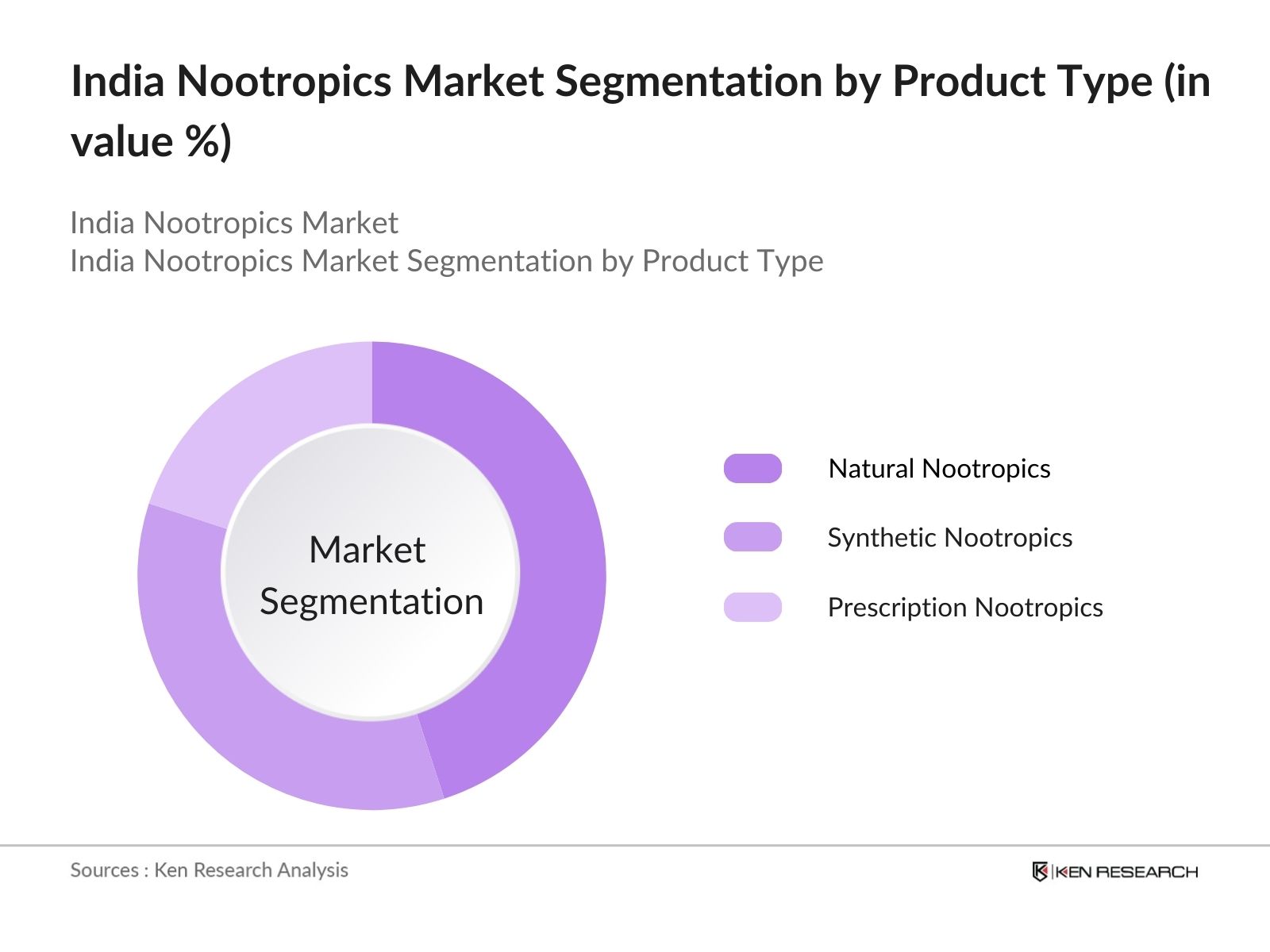
By Product Type: The market is segmented by product type into natural nootropics, synthetic nootropics, and prescription nootropics. Natural nootropics have a dominant market share in the product type segment, as they are perceived as safer alternatives to synthetic products. With ingredients derived from natural sources such as herbs and botanicals, products like Ashwagandha and Brahmi are favored among health-conscious consumers who prefer organic options.
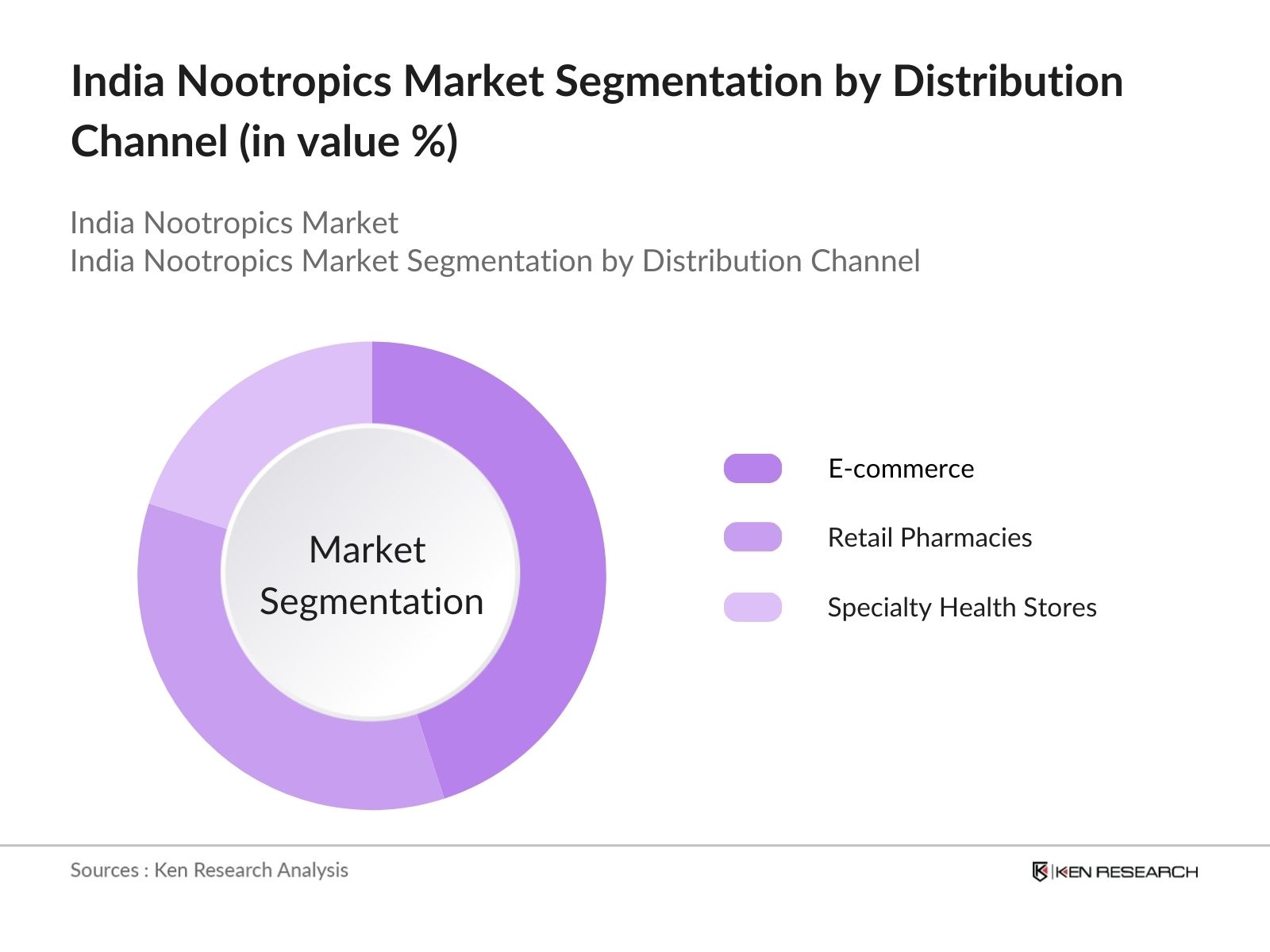
By Distribution Channel: The market is segmented by distribution channels into e-commerce, retail pharmacies, and specialty health stores. E-commerce dominates the distribution channel segment, accounting for the highest market share. The convenience of online purchasing, coupled with the availability of a wider range of products and discounts, has driven this growth. Moreover, the rise in digital health platforms and e-commerce giants such as Amazon and Flipkart offering nootropics has made it easier for consumers to access these products without visiting physical stores.
The market is competitive, with both domestic and international players striving for market leadership. Major players such as Himalaya Drug Company and NeuCube Healthcare have established themselves in the natural nootropics segment, while global brands like Neurohacker Collective and Nutraceutical Corporation are actively expanding their presence in India.
|
Company |
Established |
Headquarters |
No. of Employees |
R&D Investment |
Revenue |
Product Portfolio |
Manufacturing Capacity |
Distribution Network |
Market Presence |
|
Himalaya Drug Company |
1930 |
Bengaluru, India |
|||||||
|
Cipla Ltd. |
1935 |
Mumbai, India |
|||||||
|
NeuCube Healthcare |
2000 |
Hyderabad, India |
|||||||
|
Neurohacker Collective |
2015 |
USA |
|||||||
|
Nutraceutical Corporation |
1932 |
USA |
Over the next five years, the India Nootropics industry is expected to show growth, driven by increasing consumer awareness about mental health, advancements in product formulations, and the adoption of nootropics in sports and fitness industries. The rising popularity of e-commerce and the shift toward natural and organic ingredients will also play a pivotal role in shaping the market landscape.
|
By Product Type |
Natural Nootropics |
|
Synthetic Nootropics |
|
|
Prescription Nootropics |
|
|
By Distribution Channel |
E-commerce |
|
Retail Pharmacies |
|
|
Specialty Health Stores |
|
|
By Application |
Cognitive Enhancement |
|
Memory and Learning |
|
|
Mood and Emotional Support |
|
|
Sleep and Relaxation |
|
|
By Form |
Capsules |
|
Tablets |
|
|
Powders |
|
|
Liquid |
|
|
By End-User |
Students |
|
Working Professionals |
|
|
Athletes |
|
|
By Region |
North |
|
East |
|
|
West |
|
|
South |
1.1. Definition and Scope
1.2. Market Taxonomy
1.3. Growth Rate & Trajectory
1.4. Market Segmentation Overview
2.1. Historical Market Size
2.2. Year-on-Year Growth Analysis
2.3. Key Market Developments and Milestones
3.1. Growth Drivers
3.1.1. Increasing Awareness of Cognitive Health
3.1.2. Expanding Supplement Industry (Market Volume, Consumer Base)
3.1.3. Increased Demand in Educational Institutions (Consumption Per Capita, Market Density)
3.1.4. Adoption in Sports and Fitness (Usage in Competitive Sports, Nutritional Advancements)
3.2. Market Challenges
3.2.1. Regulatory Roadblocks (Compliance Cost, Product Bans)
3.2.2. Skepticism About Efficacy (Consumer Feedback, Scientific Scrutiny)
3.2.3. Product Formulation Constraints (Raw Material Supply, Production Cost)
3.2.4. Competitive Market Saturation (Entry Barriers, Market Share Volatility)
3.3. Opportunities
3.3.1. Penetration into Urban and Semi-Urban Regions (Geographical Expansion)
3.3.2. R&D for Natural Nootropics (Research Investments, New Product Pipelines)
3.3.3. Synergy with Digital Health Platforms (Market Integration, AI-driven Sales)
3.3.4. Partnership with Educational and Corporate Sectors
3.4. Trends
3.4.1. Growing Demand for Organic and Plant-based Nootropics (Consumer Preferences)
3.4.2. Rising Popularity of Personalized Nutrition (Customization in Product Offerings)
3.4.3. Collaboration with Fitness Industry for Performance Enhancement (Fitness Market Influence)
3.4.4. E-commerce as the Key Distribution Channel (Online Market Share, Consumer Behavior)
3.5. Government Regulation
3.5.1. Guidelines by FSSAI (Approval Processes, Certification Needs)
3.5.2. Regulatory Approvals for Ingredients and Claims (Ingredient Listings)
3.5.3. Restrictions on Advertising Claims (Marketing Compliance)
3.5.4. Export Regulations for Nutraceuticals
4.1. By Product Type (In Value %)
4.1.1. Natural Nootropics
4.1.2. Synthetic Nootropics
4.1.3. Prescription Nootropics
4.2. By Distribution Channel (In Value %)
4.2.1. E-commerce
4.2.2. Retail Pharmacies
4.2.3. Specialty Health Stores
4.3. By Application (In Value %)
4.3.1. Cognitive Enhancement
4.3.2. Memory and Learning Improvement
4.3.3. Mood and Emotional Support
4.3.4. Sleep and Relaxation
4.4. By Form (In Value %)
4.4.1. Capsules
4.4.2. Tablets
4.4.3. Powders
4.4.4. Liquid
4.5. By End-User (In Value %)
4.5.1. Students
4.5.2. Working Professionals
4.5.3. Athletes
4.6. By Region (In Value %)
4.6.1 North
4.6.2 East
4.6.3 West
4.6.4 South
5.1. Detailed Profiles of Major Companies
5.1.1. Himalaya Drug Company
5.1.2. Lupin Pharmaceuticals
5.1.3. Cipla Limited
5.1.4. NeuCube Healthcare
5.1.5. Dr. Reddy's Laboratories
5.1.6. Emami Limited
5.1.7. Sun Pharmaceuticals
5.1.8. Piramal Group
5.1.9. Zydus Cadila
5.1.10. Neurohacker Collective
5.1.11. Nutraceutical Corporation
5.1.12. Patanjali Ayurved
5.1.13. TrueBasics
5.1.14. Organic India
5.1.15. GNC India
5.2. Cross Comparison Parameters
5.3. Market Share Analysis
5.4. Strategic Initiatives
5.5. Investment Analysis
6.1. FSSAI Guidelines and Standards
6.2. Certifications Required for Nootropics
6.3. Advertising Guidelines
6.4. Ingredient Regulations
7.1. Future Market Size Projections
7.2. Key Factors Driving Future Growth
8.1. By Product Type
8.2. By Distribution Channel
8.3. By Application
8.4. By Form
8.5. By End-User
8.6. By Region
9.1. TAM/SAM/SOM Analysis
9.2. Consumer Preferences Analysis
9.3. Marketing and Brand Positioning Strategies
9.4. Opportunities in Untapped Markets
The first step involved mapping the nootropics ecosystem in India, covering all major stakeholders including manufacturers, distributors, and consumers. This phase relied on secondary research, reviewing industry reports, proprietary databases, and government sources. Key variables such as market demand, consumer preferences, and regulatory influences were identified to ensure a robust analysis.
In this phase, we gathered and analyzed historical data on market size, product trends, and distribution networks. The ratio of consumer demand to product supply was assessed, alongside a detailed analysis of product innovation and the role of e-commerce in market expansion.
Key industry experts were consulted via phone interviews and surveys to validate our findings. These professionals provided insights into market dynamics, consumer behavior, and regulatory challenges, allowing us to refine our market hypotheses.
This final phase involved synthesizing data from manufacturers and distributors. The bottom-up approach was used to validate revenue and sales projections, ensuring the final output reflected an accurate picture of the India Nootropics market.
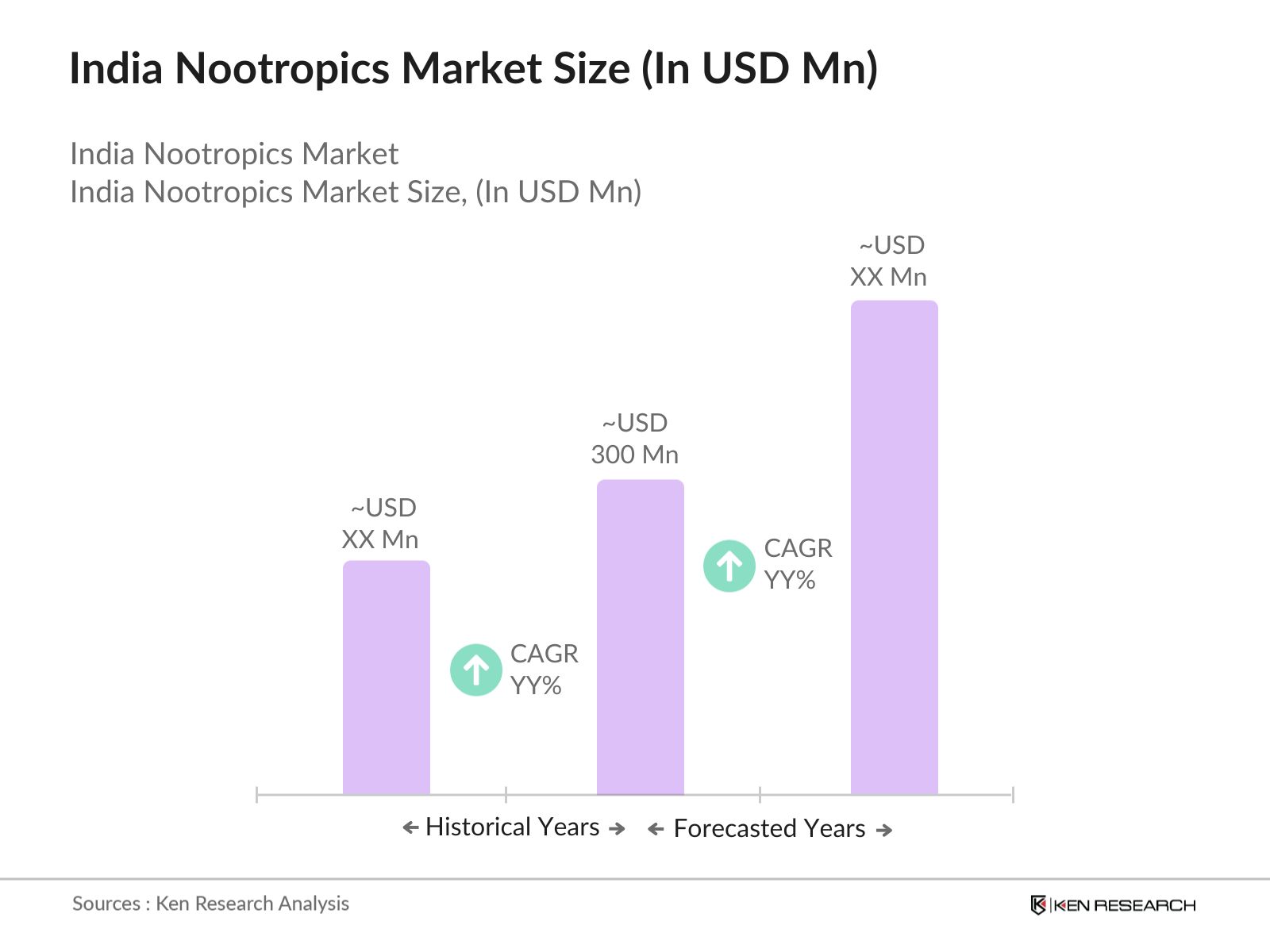
The India Nootropics market is valued at USD 300 million, driven by a rising consumer focus on cognitive health and well-being.
Challenges in the India Nootropics market include regulatory hurdles, skepticism regarding product efficacy, and high competition among both domestic and international brands.
Major players in the India Nootropics market include Himalaya Drug Company, Cipla Ltd., NeuCube Healthcare, Dr. Reddys Laboratories, and Sun Pharmaceuticals, all of which have a strong market presence and diversified product portfolios.
Growth drivers in the India Nootropics market include the increasing adoption of cognitive-enhancing supplements among young professionals, students, and athletes, as well as the rising popularity of natural ingredients in product formulations.
Future trends in the India Nootropics market suggest a focus on plant-based, organic nootropics, increasing collaboration with digital health platforms, and the growing role of e-commerce in product distribution.

What makes us stand out is that our consultants follows Robust, Refine and Result (RRR) methodology. i.e. Robust for clear definitions, approaches and sanity checking, Refine for differentiating respondents facts and opinions and Result for presenting data with story

We have set a benchmark in the industry by offering our clients with syndicated and customized market research reports featuring coverage of entire market as well as meticulous research and analyst insights.

While we don't replace traditional research, we flip the method upside down. Our dual approach of Top Bottom & Bottom Top ensures quality deliverable by not just verifying company fundamentals but also looking at the sector and macroeconomic factors.

With one step in the future, our research team constantly tries to show you the bigger picture. We help with some of the tough questions you may encounter along the way: How is the industry positioned? Best marketing channel? KPI's of competitors? By aligning every element, we help maximize success.

Our report gives you instant access to the answers and sources that other companies might choose to hide. We elaborate each steps of research methodology we have used and showcase you the sample size to earn your trust.

If you need any support, we are here! We pride ourselves on universe strength, data quality, and quick, friendly, and professional service.