
India Oxygen Therapy Market Outlook to 2030
Region:Asia
Author(s):Yogita Sahu
Product Code:KROD7136
November 2024
86
About the Report
India Oxygen Therapy Market Overview
- The India Oxygen Therapy market is valued at USD 2.1 billion, driven primarily by the increasing prevalence of respiratory diseases such as Chronic Obstructive Pulmonary Disease (COPD) and asthma. The market growth is also supported by a rising demand for home-based oxygen therapy solutions, especially in response to the increased healthcare needs during and after the pandemic.
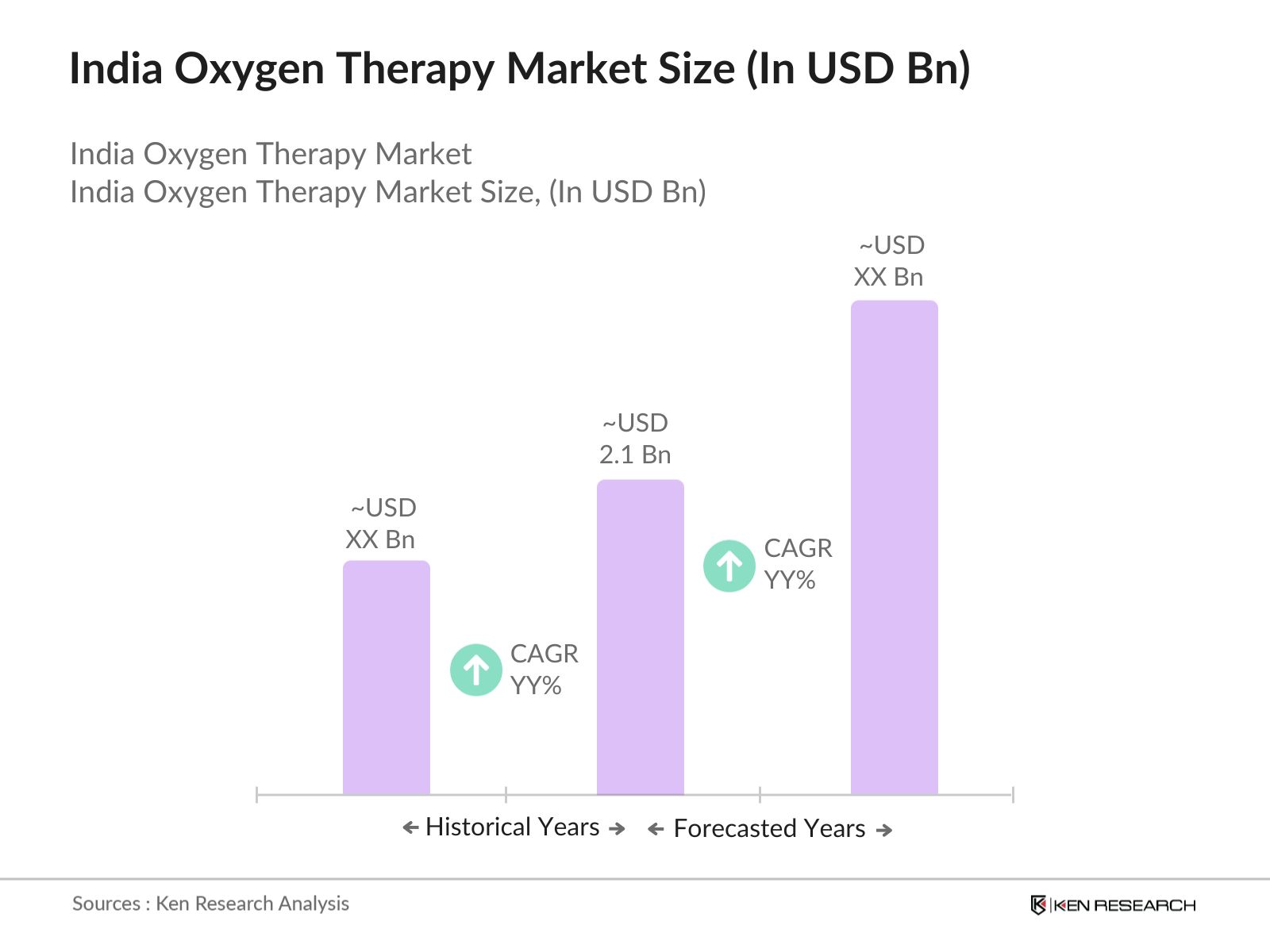
- The dominant regions in the market include metropolitan cities like Delhi, Mumbai, and Bangalore, where there is a higher prevalence of respiratory conditions due to pollution and dense populations. Additionally, these cities benefit from advanced healthcare infrastructure and higher purchasing power, allowing for greater adoption of oxygen therapy solutions.
- The Indian governments PMBJP scheme, aimed at providing affordable medicines and medical devices, has extended its support to include oxygen therapy devices in 2024. Under this initiative, the government plans to subsidize the cost of oxygen concentrators and cylinders by INR 10 billion, focusing on providing these devices to lower-income households and public hospitals.
India Oxygen Therapy Market Segmentation
By Product Type: The market is segmented by product type into oxygen concentrators, oxygen cylinders, and liquid oxygen devices. Recently, oxygen concentrators have held a dominant market share due to their portability and ease of use, making them the preferred choice for both hospitals and home healthcare settings. The shift toward home-based healthcare has further propelled the demand for oxygen concentrators, particularly in urban areas where healthcare services are more advanced.

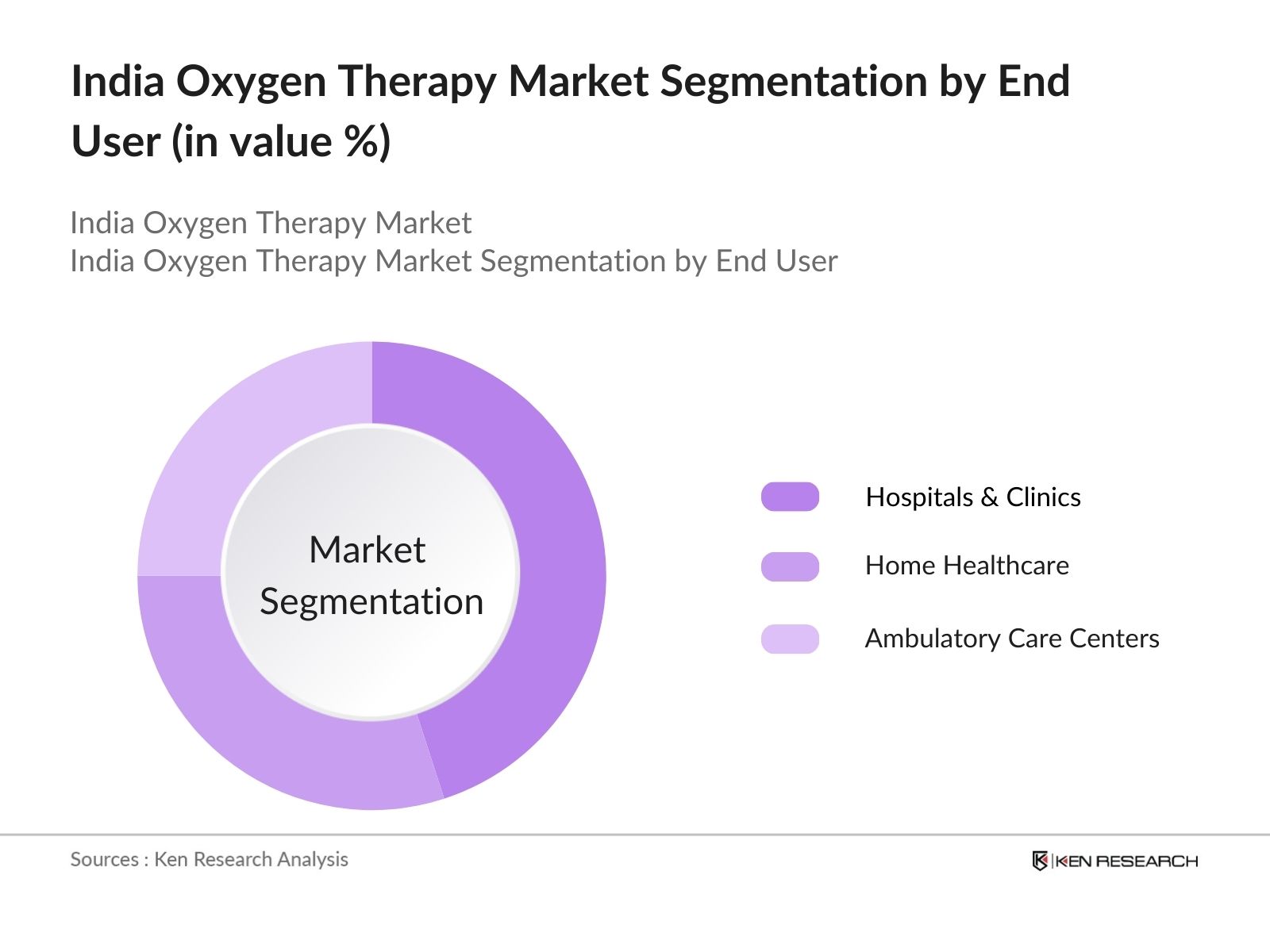
By End User: The market is also segmented by end user into hospitals & clinics, home healthcare, and ambulatory care centers. Hospitals & clinics dominate the market, accounting for the largest share due to the increasing number of patients requiring oxygen therapy for both acute and chronic respiratory conditions. Hospitals have a greater demand for oxygen cylinders and liquid oxygen devices, especially for critical care units where high-flow oxygen is required. Home healthcare settings are experiencing rapid growth as well, driven by the increasing adoption of home oxygen therapy for long-term care of patients.
India Oxygen Therapy Market Competitive Landscape
The market is dominated by both global and local players, with a few key companies holding significant market shares. The competition is driven by product innovation, pricing strategies, and distribution networks. Local manufacturers have been able to establish a presence by offering affordable products that cater to domestic demand, while global players like Philips and ResMed continue to dominate with advanced technology and brand reputation.
|
Company |
Year Established |
Headquarters |
Market Presence |
Product Innovation |
No. of Employees |
Product Portfolio |
R&D Investments |
Geographical Reach |
End-User Focus |
|
Philips Healthcare |
1891 |
Netherlands |
|||||||
|
ResMed Inc. |
1989 |
USA |
|||||||
|
Invacare Corporation |
1885 |
USA |
|||||||
|
Drive DeVilbiss Healthcare |
2000 |
USA |
|||||||
|
Linde Healthcare |
1879 |
Germany |
India Oxygen Therapy Market Analysis
Market Growth Drivers
- Rising Incidence of Respiratory Diseases: India is experiencing an increase in respiratory conditions like chronic obstructive pulmonary disease (COPD) and asthma, which are driving demand for oxygen therapy devices. According to the Indian Chest Society, over 30 million Indians suffer from asthma, while nearly 55 million people are affected by COPD. These figures represent a growing pool of patients who require oxygen therapy, particularly as air pollution worsens across the country.
- Growing Geriatric Population: India's aging population is another factor bolstering the demand for oxygen therapy. By 2024, it is estimated that the number of people over the age of 60 will exceed 180 million, creating higher demand for medical interventions related to respiratory health. This demographic shift is leading to a surge in chronic respiratory conditions that require long-term oxygen therapy as part of patient management.
- Expansion of Home Healthcare Services: Indias home healthcare sector is expanding rapidly due to rising healthcare costs and the need for long-term care, particularly for respiratory conditions. By 2024, the home healthcare market in India is projected to treat nearly 5 million chronic patients, many of whom require oxygen therapy as a core treatment. The demand for oxygen concentrators and cylinder-based systems is surging, especially in urban areas where patients prefer home care solutions to hospital-based treatments due to convenience and cost savings.
Market Challenges
- Limited Awareness and Training Among Healthcare Providers: Despite the rising demand for oxygen therapy, there is still limited awareness among healthcare providers about the proper use and benefits of these devices, particularly in rural areas. In 2024, a survey by the Indian Medical Association revealed that over 40% of doctors in Tier-II and Tier-III cities are not fully trained in prescribing or managing oxygen therapy effectively, which can result in suboptimal care for patients requiring respiratory support.
- Regulatory Hurdles and Compliance: The Indian medical device regulatory framework has been evolving, but oxygen therapy devices still face a slow and complex approval process. The Central Drugs Standard Control Organization (CDSCO) has reported that in 2024, only about 60% of oxygen therapy devices on the market are fully compliant with national regulations, which can lead to quality control issues.
India Oxygen Therapy Market Future Outlook
Over the next five years, the India Oxygen Therapy industry is expected to witness substantial growth, driven by rising incidences of respiratory diseases, increasing adoption of home-based healthcare, and advancements in oxygen therapy technologies.
Future Market Opportunities
- Government-Funded Expansion of Oxygen Therapy in Rural Areas: Over the next five years, the Indian government will likely continue its efforts to expand access to oxygen therapy in rural areas. Through continued investments in healthcare infrastructure, including setting up oxygen production plants and subsidizing oxygen therapy devices, access to medical oxygen is projected to improve dramatically by 2029.
- Integration of AI for Monitoring Oxygen Therapy Devices: In the future, we will see an increased integration of artificial intelligence (AI) and remote monitoring systems in oxygen therapy devices. By 2029, AI-driven oxygen therapy systems are expected to be commonplace in Indias urban hospitals, allowing healthcare professionals to remotely monitor patients oxygen levels and adjust treatments in real-time.
Scope of the Report
|
By Product Type |
Oxygen Concentrators Oxygen Cylinders Liquid Oxygen Devices |
|
By Application |
COPD Asthma Pneumonia |
|
By Technology |
Continuous Flow Pulse Dose |
|
By End User |
Hospitals & Clinics Home Healthcare Ambulatory Care Centers |
|
By Region |
North India South India East India West India |
Products
Key Target Audience Organizations and Entities Who Can Benefit by Subscribing This Report:
Healthcare Companies
Home Healthcare Providers
Banks and Financial Institution
Oxygen Therapy Equipment Manufacturers
Government and Regulatory Bodies (Ministry of Health & Family Welfare, Central Drugs Standard Control Organization)
Medical Device Distributors
Investor and Venture Capitalist Firms
Companies
Players Mentioned in the Report:
Philips Healthcare
ResMed Inc.
Invacare Corporation
Linde Healthcare
Drive DeVilbiss Healthcare
Teleflex Incorporated
Fisher & Paykel Healthcare
BOC Healthcare
Air Liquide Healthcare
Chart Industries
Table of Contents
India Oxygen Therapy Market Overview
1.1. Definition and Scope
1.2. Market Taxonomy
1.3. Market Growth Rate
1.4. Market Segmentation Overview
India Oxygen Therapy Market Size (In USD Bn)
2.1. Historical Market Size
2.2. Year-On-Year Growth Analysis
2.3. Key Market Developments and Milestones
India Oxygen Therapy Market Analysis
3.1. Growth Drivers
3.1.1. Rising Prevalence of Respiratory Diseases
3.1.2. Increasing Geriatric Population
3.1.3. Home-based Oxygen Therapy Demand
3.1.4. Expanding Healthcare Infrastructure
3.2. Market Challenges
3.2.1. High Cost of Equipment
3.2.2. Limited Accessibility in Rural Areas
3.2.3. Lack of Skilled Healthcare Providers
3.3. Opportunities
3.3.1. Innovations in Portable Oxygen Devices
3.3.2. Integration with Telemedicine
3.3.3. Public-Private Healthcare Partnerships
3.4. Trends
3.4.1. Adoption of Pulse Oximeters for Monitoring
3.4.2. Shift to Home Care Solutions
3.4.3. Use of Wearable Oxygen Devices
3.5. Government Regulation
3.5.1. National Healthcare Policies
3.5.2. Oxygen Supply Standards
3.5.3. Medical Device Regulation and Compliance
3.6. SWOT Analysis
3.7. Stakeholder Ecosystem
3.8. Porters Five Forces
3.9. Competition Ecosystem
India Oxygen Therapy Market Segmentation
4.1. By Product Type (In Value %)
4.1.1. Oxygen Concentrators
4.1.2. Oxygen Cylinders
4.1.3. Liquid Oxygen Devices
4.2. By Application (In Value %)
4.2.1. Chronic Obstructive Pulmonary Disease (COPD)
4.2.2. Asthma
4.2.3. Pneumonia
4.3. By Technology (In Value %)
4.3.1. Continuous Flow
4.3.2. Pulse Dose
4.4. By End User (In Value %)
4.4.1. Hospitals & Clinics
4.4.2. Home Healthcare
4.4.3. Ambulatory Care Centers
4.5. By Region (In Value %)
4.5.1. North India
4.5.2. South India
4.5.3. East India
4.5.4. West India
India Oxygen Therapy Market Competitive Analysis
5.1 Detailed Profiles of Major Companies
5.1.1. Philips Healthcare
5.1.2. ResMed Inc.
5.1.3. Invacare Corporation
5.1.4. Linde Healthcare
5.1.5. Drive DeVilbiss Healthcare
5.1.6. Teleflex Incorporated
5.1.7. BOC Healthcare
5.1.8. Air Liquide Healthcare
5.1.9. Fisher & Paykel Healthcare
5.1.10. Inogen, Inc.
5.1.11. Chart Industries
5.1.12. Heinen & Lwenstein
5.1.13. GCE Group
5.1.14. OxyGo
5.1.15. Yuwell Jiangsu Yuyue Medical Equipment
5.2 Cross Comparison Parameters (Revenue, Market Presence, No. of Employees, Product Portfolio, Product Innovation, Geographical Reach, End-User Focus, R&D Investments)
5.3. Market Share Analysis
5.4. Strategic Initiatives
5.5. Mergers and Acquisitions
5.6. Investment Analysis
5.7. Government Grants
India Oxygen Therapy Market Regulatory Framework
6.1. Compliance with Medical Device Regulations
6.2. Certification and Licensing Requirements
6.3. Import-Export Regulations
India Oxygen Therapy Future Market Size (In USD Bn)
7.1. Future Market Size Projections
7.2. Key Factors Driving Future Market Growth
India Oxygen Therapy Future Market Segmentation
8.1. By Product Type (In Value %)
8.2. By Application (In Value %)
8.3. By Technology (In Value %)
8.4. By End User (In Value %)
8.5. By Region (In Value %)
India Oxygen Therapy Market Analysts Recommendations
9.1. TAM/SAM/SOM Analysis
9.2. Customer Segmentation and Insights
9.3. Marketing Strategies
9.4. Market Penetration Opportunities
Research Methodology
Step 1: Identification of Key Variables
The first step involves mapping the key stakeholders in the India Oxygen Therapy market. We conducted extensive desk research using a combination of secondary and proprietary databases to gather industry-specific data. This phase focused on identifying the critical variables influencing market trends, including product demand and supply chain dynamics.
Step 2: Market Analysis and Construction
In this phase, we gathered and analyzed historical data related to the India Oxygen Therapy market. We assessed market penetration, key players, and the revenue generated from different product types. The goal was to develop a comprehensive understanding of the markets growth trajectory, which included evaluating product demand across hospitals and home healthcare segments.
Step 3: Hypothesis Validation and Expert Consultation
We validated our market hypotheses through direct consultations with industry experts. These consultations, conducted via phone interviews, provided in-depth operational and financial insights from professionals working in leading oxygen therapy companies. This feedback was critical in refining our analysis of the market.
Step 4: Research Synthesis and Final Output
The final stage of the research process involved synthesizing the data gathered from both primary and secondary sources. This phase also included obtaining detailed product insights from manufacturers and distributors, which helped verify the accuracy of the market data. The result is a well-rounded, validated report on the India Oxygen Therapy market.
Frequently Asked Questions
01. How big is the India Oxygen Therapy Market?
The India Oxygen Therapy market is valued at USD 2.1 billion, driven by increasing healthcare demand, especially in home healthcare settings, and rising prevalence of respiratory diseases.
02. What are the challenges in the India Oxygen Therapy Market?
The main challenges in the India Oxygen Therapy market include high equipment costs, lack of skilled healthcare professionals in rural areas, and logistical challenges related to oxygen supply.
03. Who are the major players in the India Oxygen Therapy Market?
Key players in the India Oxygen Therapy market include Philips Healthcare, ResMed Inc., Invacare Corporation, and Linde Healthcare, known for their advanced technologies and extensive product portfolios.
04. What are the growth drivers of the India Oxygen Therapy Market?
The India Oxygen Therapy market is driven by rising incidences of respiratory conditions like COPD and asthma, increased demand for home-based oxygen therapy, and advancements in portable oxygen devices.
05. How is the India Oxygen Therapy Market expected to grow in the future?
The India Oxygen Therapy market is expected to experience steady growth, driven by government initiatives to improve healthcare infrastructure and the adoption of innovative oxygen therapy technologies in both hospitals and home healthcare settings.
Why Buy From Us?

What makes us stand out is that our consultants follows Robust, Refine and Result (RRR) methodology. i.e. Robust for clear definitions, approaches and sanity checking, Refine for differentiating respondents facts and opinions and Result for presenting data with story

We have set a benchmark in the industry by offering our clients with syndicated and customized market research reports featuring coverage of entire market as well as meticulous research and analyst insights.

While we don't replace traditional research, we flip the method upside down. Our dual approach of Top Bottom & Bottom Top ensures quality deliverable by not just verifying company fundamentals but also looking at the sector and macroeconomic factors.

With one step in the future, our research team constantly tries to show you the bigger picture. We help with some of the tough questions you may encounter along the way: How is the industry positioned? Best marketing channel? KPI's of competitors? By aligning every element, we help maximize success.

Our report gives you instant access to the answers and sources that other companies might choose to hide. We elaborate each steps of research methodology we have used and showcase you the sample size to earn your trust.

If you need any support, we are here! We pride ourselves on universe strength, data quality, and quick, friendly, and professional service.