
India Passenger Car Air Conditioners Market Outlook to 2030
Region:India
Author(s):Paribhasha Tiwari
Product Code:KROD9538
Region:India
Author(s):Paribhasha Tiwari
Product Code:KROD9538
December 2024
99
Listen to the audio summary
By Vehicle Type: India's passenger car air conditioner market is segmented into hatchbacks, sedans, MUVs, and CUVs. Hatchbacks hold a dominant market share of 45% due to their affordability and suitability for urban driving. The growing middle-class population opts for hatchbacks as their first vehicle, ensuring sustained demand for air conditioning systems in this segment.

By Technology: The market is segmented by technology into manual/semi-automatic and automatic systems. Manual/semi-automatic air conditioning systems lead the market with a 55% share, attributed to their lower cost and prevalence in entry-level vehicles. However, rising consumer preference for convenience and premium features is driving significant growth in the automatic air conditioner segment.

The India Passenger Car Air Conditioners Market is dominated by a mix of local and international players, leveraging their expertise in technology and distribution.
Over the next five years, the India Passenger Car Air Conditioners Market is expected to witness robust growth, driven by increasing vehicle production, adoption of advanced HVAC technologies, and rising demand for electric and hybrid vehicles. Innovations in energy-efficient systems and stringent environmental regulations are likely to reshape the market dynamics, fostering sustainable growth.
|
By Vehicle Type |
Hatchback Multi-Utility Vehicle (MUV) Sedan Compact Utility Vehicle (CUV) |
|
By Technology |
Automatic Manual/Semi-Automatic |
|
By Compressor Type |
Variable Displacement Fixed Displacement |
|
By Component |
Compressor Condenser Evaporator Expansion Valve Receiver/Drier |
|
By Region |
North East West South |
1.1. Definition and Scope
1.2. Market Taxonomy
1.3. Market Growth Rate
1.4. Market Segmentation Overview
2.1. Historical Market Size
2.2. Year-On-Year Growth Analysis
2.3. Key Market Developments and Milestones
3.1. Growth Drivers
3.1.1. Rising Vehicle Production and Sales
3.1.2. Increasing Consumer Demand for Thermal Comfort
3.1.3. Technological Advancements in HVAC Systems
3.1.4. Government Initiatives Promoting Automotive Sector Growth
3.2. Market Challenges
3.2.1. High Installation and Maintenance Costs
3.2.2. Fluctuating Raw Material Prices
3.2.3. Environmental Concerns Related to Refrigerants
3.3. Market Opportunities
3.3.1. Adoption of Eco-Friendly Refrigerants
3.3.2. Expansion of Aftermarket Services
3.3.3. Integration with Electric and Hybrid Vehicles
3.4. Market Trends
3.4.1. Shift Towards Automatic Climate Control Systems
3.4.2. Miniaturization and Weight Reduction of Components
3.4.3. Use of Advanced Materials for Enhanced Efficiency
3.5. Government Regulations
3.5.1. Emission Norms and Standards
3.5.2. Policies on Refrigerant Usage
3.5.3. Incentives for Electric Vehicles
3.6. SWOT Analysis
3.7. Stakeholder Ecosystem
3.8. Porter's Five Forces Analysis
3.9. Competitive Landscape
4.1. By Vehicle Type (In Value %)
4.1.1. Hatchback
4.1.2. Multi-Utility Vehicle (MUV)
4.1.3. Sedan
4.1.4. Compact Utility Vehicle (CUV)
4.2. By Technology (In Value %)
4.2.1. Automatic
4.2.2. Manual/Semi-Automatic
4.3. By Compressor Type (In Value %)
4.3.1. Variable Displacement
4.3.2. Fixed Displacement
4.4. By Component (In Value %)
4.4.1. Compressor
4.4.2. Condenser
4.4.3. Evaporator
4.4.4. Expansion Valve
4.4.5. Receiver/Drier
4.5. By Region (In Value %)
4.5.1. North India
4.5.2. East India
4.5.3. West India
4.5.4. South India
5.1. Detailed Profiles of Major Companies
5.1.1. Subros Limited
5.1.2. Hanon Automotive Systems India Private Limited
5.1.3. MAHLE Behr India Pvt. Ltd.
5.1.4. Sanden Vikas (India) Ltd.
5.1.5. DENSO Thermal Systems Pune Private Limited
5.1.6. TATA AutoComp Systems Limited
5.1.7. Mitsubishi Heavy Industries India Pvt. Ltd.
5.1.8. Samvardhana Motherson Group (SMG)
5.1.9. Aptiv PLC
5.1.10. Valeo Service
5.1.11. Keihin Corporation
5.1.12. Johnson Electric Holdings Limited
5.1.13. Sensata Technologies
5.1.14. Calsonic Kansei Corporation
5.1.15. Visteon Corporation
5.2. Cross Comparison Parameters
5.2.1 Revenue
5.2.2 Market Share
5.2.3 Product Portfolio
5.2.4 R&D Investment
5.2.5 Regional Presence
5.2.6 Strategic Initiatives
5.2.7 Employee Strength
5.2.8 Year of Establishment
5.3. Market Share Analysis
5.4. Strategic Initiatives
5.5. Mergers and Acquisitions
5.6. Investment Analysis
5.7. Venture Capital Funding
5.8. Government Grants
5.9. Private Equity Investments
6.1. Environmental Standards
6.2. Compliance Requirements
6.3. Certification Processes
7.1. Future Market Size Projections
7.2. Key Factors Driving Future Market Growth
8.1. By Vehicle Type (In Value %)
8.2. By Technology (In Value %)
8.3. By Compressor Type (In Value %)
8.4. By Component (In Value %)
8.5. By Region (In Value %)
9.1. TAM/SAM/SOM Analysis
9.2. Customer Cohort Analysis
9.3. Marketing Initiatives
9.4. White Space Opportunity Analysis
The research began with mapping the entire automotive air conditioning ecosystem in India, utilizing secondary research sources like industry reports and proprietary databases. Key variables such as vehicle type, technology adoption, and regional demand patterns were identified.
Historical data on market size, segment performance, and technological advancements were analyzed to construct a reliable market framework. This phase also involved studying the relationship between automotive production trends and air conditioner adoption rates.
Hypotheses were validated through interviews with industry experts from automotive OEMs and HVAC component manufacturers. This step ensured accuracy in understanding technological and consumer trends.
Primary data from manufacturers and distributors was synthesized with secondary research findings to create a comprehensive and validated market report, ensuring actionable insights for stakeholders.
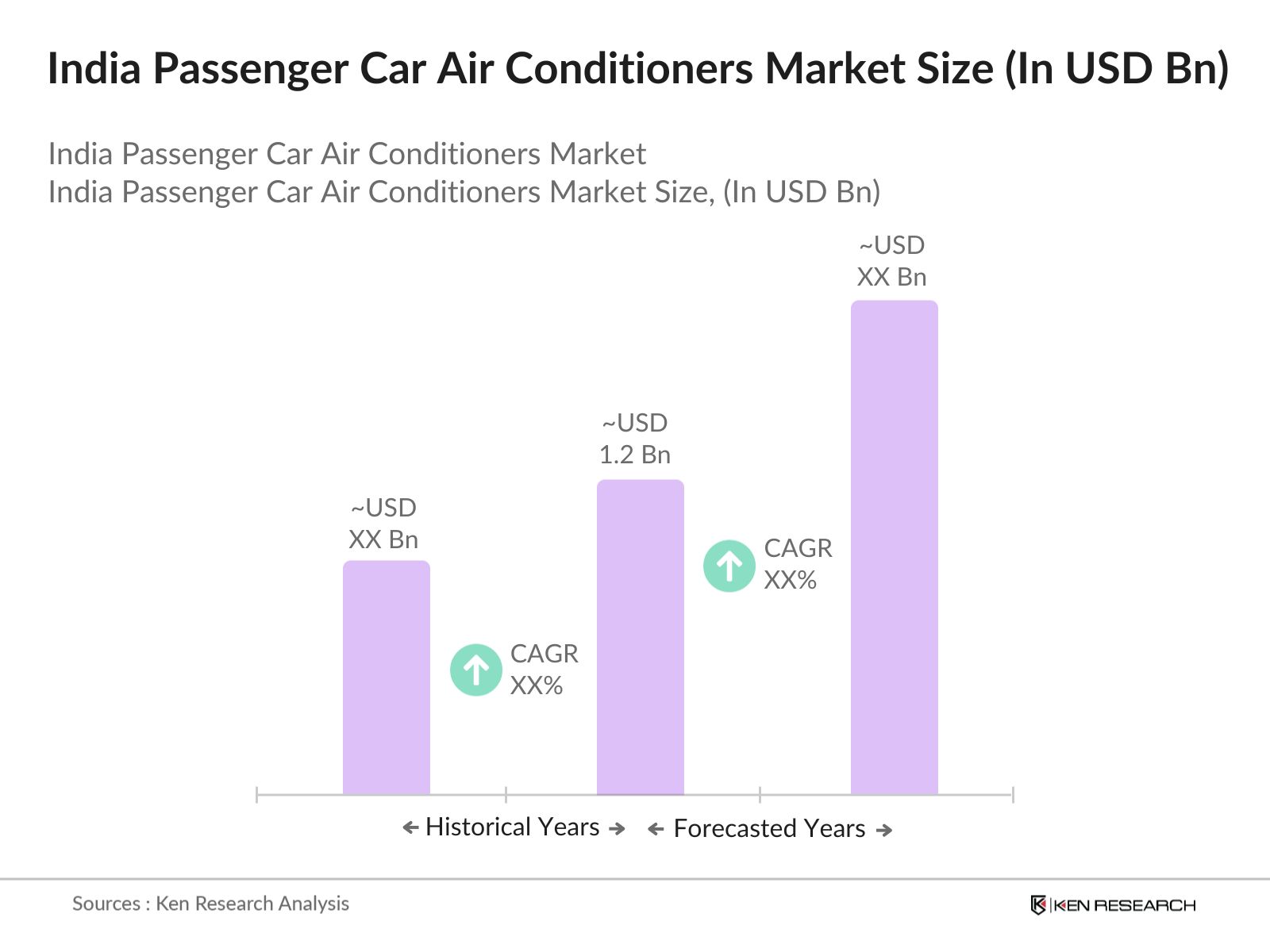
The India Passenger Car Air Conditioners Market is valued at USD 1.2 billion, driven by increasing vehicle production and technological advancements in HVAC systems.
The key challenges in the India Passenger Car Air Conditioners Market include high costs of advanced HVAC systems, environmental concerns about refrigerants, and fluctuating raw material prices, which impact production costs and affordability.
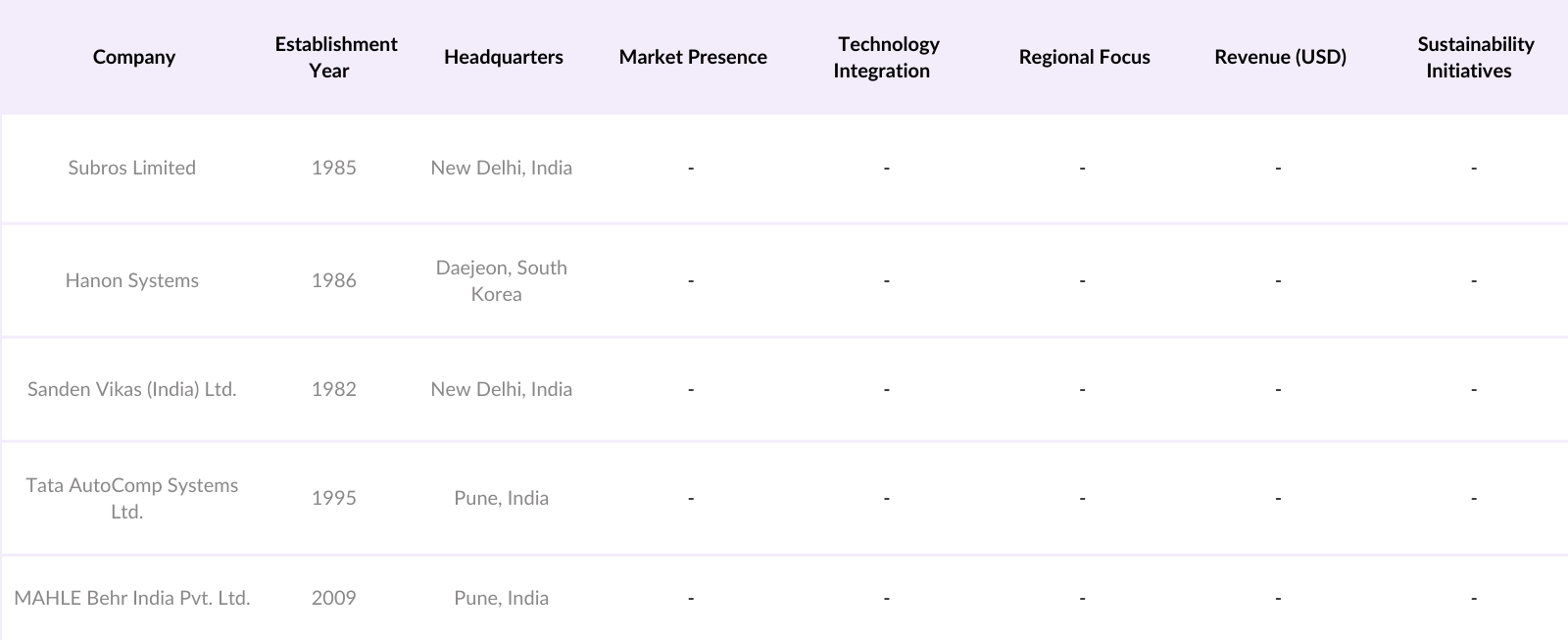
Major players in the India Passenger Car Air Conditioners Market include Subros Limited, Hanon Systems, Sanden Vikas (India) Ltd., Tata AutoComp Systems Ltd., and MAHLE Behr India Pvt. Ltd., known for their strong technological expertise and extensive supplier networks.
Growth of India Passenger Car Air Conditioners Market is driven by increasing consumer demand for comfort features, advancements in air conditioning technology, and government initiatives supporting automotive sector development.

What makes us stand out is that our consultants follows Robust, Refine and Result (RRR) methodology. i.e. Robust for clear definitions, approaches and sanity checking, Refine for differentiating respondents facts and opinions and Result for presenting data with story

We have set a benchmark in the industry by offering our clients with syndicated and customized market research reports featuring coverage of entire market as well as meticulous research and analyst insights.

While we don't replace traditional research, we flip the method upside down. Our dual approach of Top Bottom & Bottom Top ensures quality deliverable by not just verifying company fundamentals but also looking at the sector and macroeconomic factors.

With one step in the future, our research team constantly tries to show you the bigger picture. We help with some of the tough questions you may encounter along the way: How is the industry positioned? Best marketing channel? KPI's of competitors? By aligning every element, we help maximize success.

Our report gives you instant access to the answers and sources that other companies might choose to hide. We elaborate each steps of research methodology we have used and showcase you the sample size to earn your trust.

If you need any support, we are here! We pride ourselves on universe strength, data quality, and quick, friendly, and professional service.