
India Pigment Industry Market Outlook 2030
Region:Global
Author(s):Shivani Mehra
Product Code:KROD3292
December 2024
86
About the Report
India Pigment Industry Market Overview
- The India Pigment Industry is valued at USD 2.75 billion based on a five-year historical analysis, driven by rising demand across sectors like paints and coatings, plastics, and cosmetics. The expansion of the construction and automotive sectors has bolstered the demand for pigments, particularly in industrial applications. The governments focus on boosting domestic manufacturing under initiatives like "Make in India" further supports this market growth by encouraging local production and reducing reliance on imports.

- The India Pigment Industry is dominated by key cities like Mumbai, Chennai, and Kolkata, which serve as major manufacturing hubs. These cities benefit from established infrastructure, access to raw materials, and well-developed supply chains. Additionally, their proximity to industrial sectors like textiles and packaging drives pigment production. With access to major ports, these cities are also critical for both domestic distribution and exports, further solidifying their leading role in the pigment market.
- The Bureau of Indian Standards (BIS) mandates strict quality standards for pigments used in industries such as cosmetics, plastics, and paints. As of 2023, over 80 pigment manufacturers in India have been certified under BIS standards, ensuring the quality, safety, and performance of their products in both domestic and international markets. This regulation is helping Indian pigment manufacturers to align with global quality benchmarks.
India Pigment Industry Market Segmentation
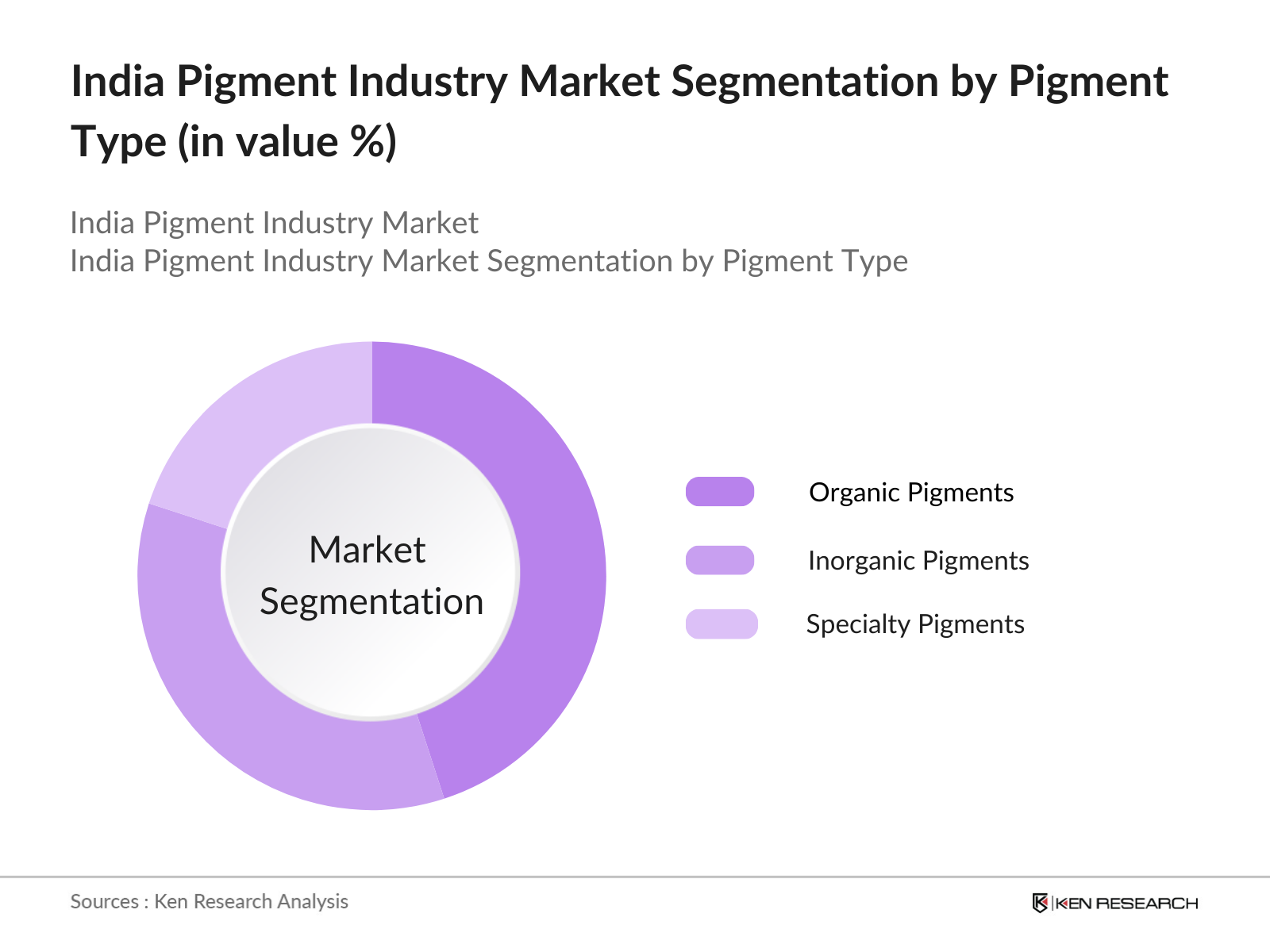
By Pigment Type: The India Pigment market is segmented by pigment type into organic pigments, inorganic pigments, and specialty pigments. Currently, organic pigments hold the largest market share due to their increasing demand in the cosmetics and packaging sectors. Derived from natural sources, organic pigments align with the growing consumer preference for eco-friendly and sustainable products. Their widespread use in high-end consumer goods, coupled with their ability to deliver vibrant and durable colors, has further solidified their market leadership. Key players in this segment are driving innovation, contributing to the segments prominence.
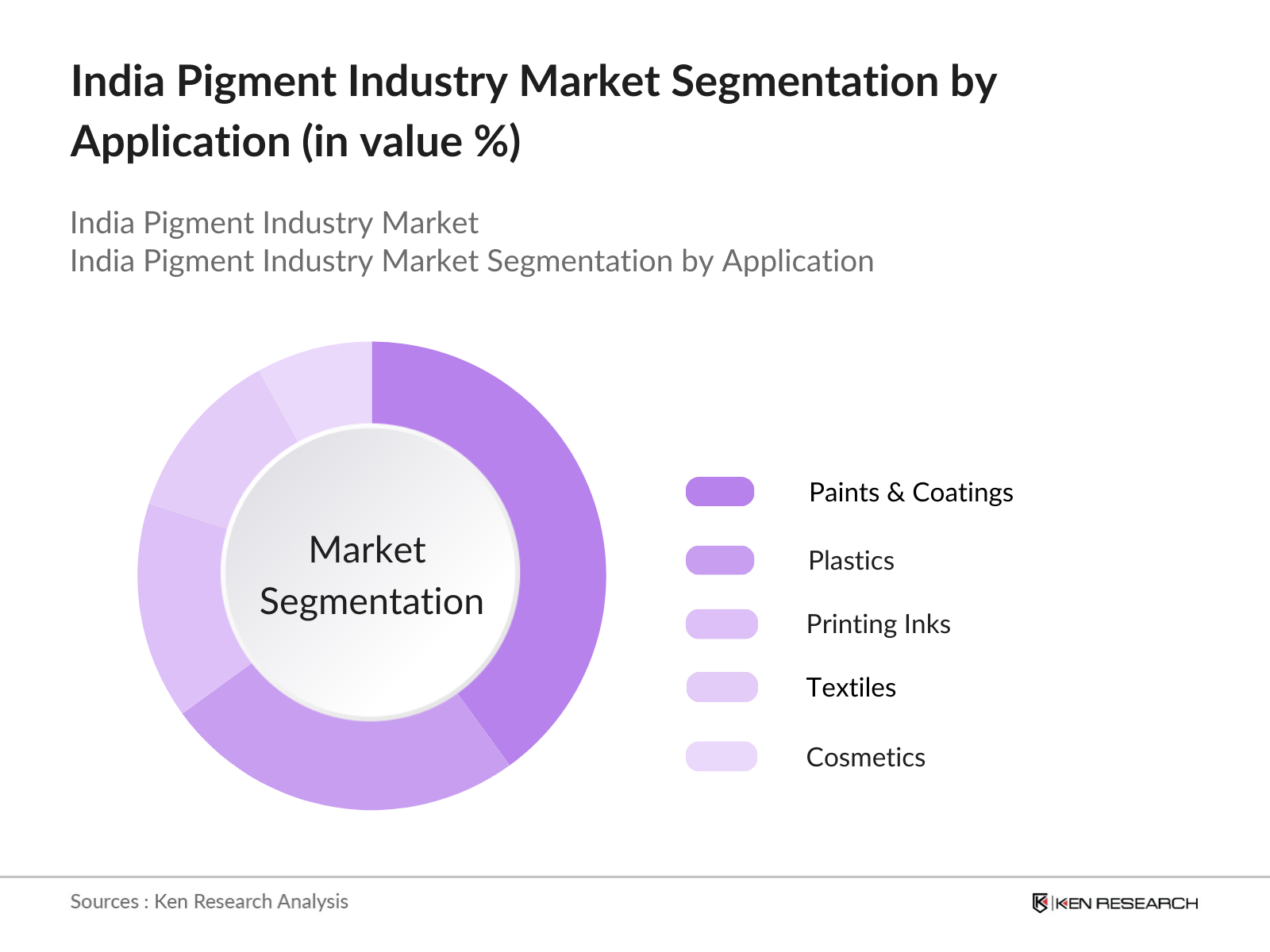
By Application: The India Pigment market is segmented by application into paints & coatings, plastics, printing inks, textiles, and cosmetics. The paints and coatings sector holds the largest share, as pigments are crucial in providing color, durability, and finish to surfaces. This dominance is largely driven by the growth of the construction and automotive industries, both of which require significant amounts of pigments for protective coatings, enhancing aesthetics, and increasing the longevity of materials.
India Pigment Industry Market Competitive Landscape
The India Pigment Industry is dominated by several global and domestic players that focus on providing high-quality pigments across different end-use industries. Major companies have strengthened their foothold by investing in research and development, sustainable pigment technologies, and enhancing their product portfolios to meet the growing demand for eco-friendly pigments.
|
Company |
Establishment Year |
Headquarters |
Key Parameters |
|
BASF SE |
1865 |
Germany |
|
|
Sudarshan Chemical Industries |
1952 |
India |
|
|
Clariant AG |
1995 |
Switzerland |
|
|
DIC Corporation |
1908 |
Japan |
|
|
Heubach GmbH |
1806 |
Germany |
India Pigment Industry Market Analysis
Market Growth Drivers
- Increasing Demand from Paints & Coatings Industry: The Indian pigment industry is experiencing heightened demand from the paints and coatings sector, primarily due to the expansion of the construction and automotive industries. India is expected to complete over 1.7 million housing units in urban areas, spurring the demand for paints. Additionally, the Indian automobile industry manufactured 3.5 million vehicles in 2023, further driving the need for coatings. Pigments, being essential in these industries, are in greater demand due to their role in providing aesthetic and protective qualities. Government initiatives like Housing for All and increased vehicle production further support this growth.
- Growing Applications in Plastics and Cosmetics: The Indian pigment industry is seeing increased applications in plastics and cosmetics, driven by the expanding consumer base and increased urbanization. As of 2024, Indias plastic consumption has reached 20 million tonnes, primarily used in packaging and construction. Additionally, the cosmetics industry, valued at INR 800 billion in 2023, is growing due to higher disposable incomes and urban consumer demand. Pigments are essential in providing vibrant colors and UV protection to plastics and cosmetics, thus positioning the industry for further growth in these sectors.
- Government Policies Promoting Manufacturing: Indias pigment manufacturing has benefited from government policies such as the Production-Linked Incentive (PLI) scheme, which is expected to generate an incremental output worth INR 16,000 crore across various sectors in 2023. The "Make in India" initiative has also provided a boost to local pigment manufacturers by reducing import dependence and promoting domestic production. This regulatory framework is expected to enhance the competitiveness of Indian pigment producers on the global stage.
Market Challenges
- Volatile Raw Material Prices: The Indian pigment industry is highly dependent on raw materials like titanium dioxide and iron oxides, the prices of which have fluctuated significantly due to supply chain disruptions and geopolitical tensions. In 2023, titanium dioxide prices in India ranged between INR 180,000 to INR 220,000 per metric ton, a rise driven by global demand and restrictions from key suppliers like China. This volatility impacts the cost structure for pigment manufacturers, squeezing margins.
- Stringent Environmental Regulations: Stringent environmental regulations in India are posing challenges to pigment manufacturers, particularly those related to hazardous waste management and water pollution. The Central Pollution Control Board (CPCB) has imposed strict wastewater treatment standards, and violations can result in heavy penalties. Many pigment manufacturers have faced regulatory action due to non-compliance, necessitating increased investment in environmental technologies and compliance measures to meet these standards.
India Pigment Industry Market Future Outlook
Over the next five years, the India Pigment Industry is expected to experience robust growth driven by increasing demand from key sectors such as automotive, construction, and packaging. The market is projected to be propelled by the continuous advancements in pigment technology, particularly in sustainable and eco-friendly products. Additionally, government initiatives promoting domestic manufacturing and reducing import dependency will further support the market's expansion, especially with the growth of "Make in India" policies and infrastructure development.
Market Opportunities:
- Shift Toward Eco-Friendly Pigments: There is a noticeable shift toward eco-friendly pigments in India due to rising environmental awareness among consumers and stricter government regulations. This trend is supported by initiatives like the Swachh Bharat Mission, which promotes sustainable industrial practices. The move towards eco-friendly pigments is expected to reshape pigment usage in industries such as construction and automotive.
- Demand for Organic Pigments in Cosmetics: Organic pigments, free from harmful chemicals and toxins, are increasingly used in the Indian cosmetics industry. The market for organic personal care products grew to INR 15,000 crore in 2023, with a significant portion attributed to organic pigments. As more consumers demand natural and safe ingredients, cosmetic companies are shifting towards organic pigments to align with this preference, making this a vital trend for pigment manufacturers.
Scope of the Report
|
By Pigment Type |
Organic Pigments Inorganic Pigments Specialty Pigments |
|
By Application |
Paints & Coatings Plastics Printing Inks Textiles Cosmetics |
|
By End-User Industry |
Construction Automotive Packaging Personal Care |
|
By Product Form |
Powdered Pigments Liquid Pigments Granulated Pigments |
|
By Region |
North-East Midwest West Coast Southern States |
Products
Key Target Audience
Paints & Coatings Manufacturers
Cosmetics and Personal Care Companies
Plastics and Packaging Industry Stakeholders
Printing Ink Producers
Textile Manufacturers
Construction and Automotive Sector Companies
Government Bodies (Ministry of Chemicals and Fertilizers, Bureau of Indian Standards)
Raw Material Suppliers (Titanium Dioxide, Iron Oxides)
Environmental Regulatory Agencies (CPCB, Pollution Control Boards)
Research & Development Institutions
Table of Contents
01. India Pigment Industry Market Overview
1.1. Definition and Scope
1.2. Market Taxonomy
1.3. Industry Lifecycle Analysis
1.4. Market Segmentation Overview
1.5. Value Chain Analysis
02. India Pigment Industry Market Size (In USD Bn)
2.1. Historical Market Size
2.2. Market Share by Key Manufacturers
2.3. Market Concentration Ratio
2.4. Value-Based CAGR Analysis
03. India Pigment Industry Market Drivers, Challenges, and Opportunities
3.1. Growth Drivers
3.1.1. Demand from Paints & Coatings (Construction and Automotive Growth)
3.1.2. Increasing Demand from Plastics & Cosmetics
3.1.3. Government Support (PLI Scheme, "Make in India")
3.2. Market Challenges
3.2.1. Volatile Raw Material Prices (Titanium Dioxide, Iron Oxides)
3.2.2. Stringent Environmental Regulations (Wastewater, Emissions)
3.2.3. Import Dependency and Global Supply Chain Disruptions
3.3. Market Opportunities
3.3.1. Eco-Friendly and Sustainable Pigments
3.3.2. Organic Pigments in Cosmetics and Packaging
3.3.3. Technological Advancements in Pigment Production
3.4. Market Trends
3.4.1. Growth of Organic Pigments in Cosmetics
3.4.2. Increased Focus on Sustainability
3.4.3. Expansion in End-Use Industries
3.5. Regulatory Environment
3.5.1. Bureau of Indian Standards (BIS) Regulations
3.5.2. Environmental Compliance (Waste Management, Pollution Control)
04. India Pigment Industry Market Segmentation
4.1. By Pigment Type (In Value %)
4.1.1. Organic Pigments
4.1.2. Inorganic Pigments
4.1.3. Specialty Pigments
4.2. By Application (In Value %)
4.2.1. Paints & Coatings
4.2.2. Plastics
4.2.3. Printing Inks
4.2.4. Textiles
4.2.5. Cosmetics
4.3. By End-User Industry (In Value %)
4.3.1. Construction
4.3.2. Automotive
4.3.3. Packaging
4.3.4. Personal Care
4.4. By Product Form (In Value %)
4.4.1. Powdered Pigments
4.4.2. Liquid Pigments
4.4.3. Granulated Pigments
4.5. By Region (In Value %)
4.5.1. North India
4.5.2. South India
4.5.3. East India
4.5.4. West India
05. India Pigment Industry Competitive Landscape
5.1. Detailed Profiles of Major Companies
5.1.1. BASF SE
5.1.2. Sudarshan Chemical Industries
5.1.3. Clariant AG
5.1.4. DIC Corporation
5.1.5. Heubach GmbH
5.1.6. Lanxess AG
5.1.7. Shree Pushkar Chemicals & Fertilisers Ltd.
5.1.8. AkzoNobel N.V.
5.1.9. Tata Pigments Limited
5.1.10. PPG Industries, Inc.
5.1.11. Huntsman Corporation
5.1.12. Venator Materials PLC
5.1.13. Cabot Corporation
5.1.14. Asian Paints Limited
5.1.15. Greenstar Fertilizers Limited
5.2. Cross Comparison Parameters (Production Capacity, Market Share, R&D, Distribution Network)
5.3. Market Share Analysis
5.4. Strategic Initiatives by Key Players
5.5. Mergers and Acquisitions
5.6. Joint Ventures and Collaborations
5.7. Investment Analysis
5.8. Government Grants and Funding Programs
06. India Pigment Industry Regulatory Framework
6.1. Environmental Standards and Compliance
6.2. Government Regulations (Quality, Safety, Sustainability)
6.3. Certification Processes (BIS Standards, ISO Compliance)
07. India Pigment Industry Future Market Size (In USD Bn)
7.1. Future Market Size Projections
7.2. Key Factors Driving Future Market Growth (Demand from Key Sectors, Technological Advancements)
08. India Pigment Industry Analysts' Recommendations
8.1. TAM/SAM/SOM Analysis
8.2. Market Penetration Strategies
8.3. Technological Roadmap for Sustainability
8.4. Customer Segmentation and Positioning Strategies
8.5. White Space Opportunity Analysis
Disclaimer
Contact Us
Research Methodology
Step 1: Identification of Key Variables
The initial phase involves constructing an ecosystem map for the India Pigment Industry. Extensive desk research is conducted utilizing a combination of secondary and proprietary databases to gather comprehensive industry-level information. The primary objective is to define the critical variables influencing market dynamics, including demand from key sectors and government policies.
Step 2: Market Analysis and Construction
Historical data related to market size, segment penetration, and revenue generation is compiled and analyzed. This phase includes an evaluation of end-user industry trends, pigment manufacturing capabilities, and regional demand across the country.
Step 3: Hypothesis Validation and Expert Consultation
Industry hypotheses are developed and validated through in-depth consultations with industry practitioners. These expert insights provide detailed information on the operational challenges, product development trends, and competitive landscape, helping to refine the market model.
Step 4: Research Synthesis and Final Output
The final phase includes synthesizing all data and insights from pigment manufacturers and distributors. This engagement ensures the accuracy of the data, while a final report is produced, offering a comprehensive, validated market analysis of the India Pigment Industry.
Frequently Asked Questions
01. How big is the India Pigment Industry market?
The India Pigment Industry market was valued at USD 2.75 billion, driven by demand from sectors such as paints and coatings, plastics, and cosmetics.
02. What are the major growth drivers of the India Pigment Industry?
The market is driven by increasing demand from construction and automotive industries, government policies encouraging domestic production, and growing demand for eco-friendly pigments.
03. Who are the key players in the India Pigment Industry?
Key players include BASF SE, Sudarshan Chemical Industries, Clariant AG, DIC Corporation, and Heubach GmbH, with a focus on product innovation and sustainability.
04. What are the challenges in the India Pigment Industry?
Challenges include volatile raw material prices, environmental regulations, and competition from low-cost imports, which impact profitability and market expansion
Why Buy From Us?

What makes us stand out is that our consultants follows Robust, Refine and Result (RRR) methodology. i.e. Robust for clear definitions, approaches and sanity checking, Refine for differentiating respondents facts and opinions and Result for presenting data with story

We have set a benchmark in the industry by offering our clients with syndicated and customized market research reports featuring coverage of entire market as well as meticulous research and analyst insights.

While we don't replace traditional research, we flip the method upside down. Our dual approach of Top Bottom & Bottom Top ensures quality deliverable by not just verifying company fundamentals but also looking at the sector and macroeconomic factors.

With one step in the future, our research team constantly tries to show you the bigger picture. We help with some of the tough questions you may encounter along the way: How is the industry positioned? Best marketing channel? KPI's of competitors? By aligning every element, we help maximize success.

Our report gives you instant access to the answers and sources that other companies might choose to hide. We elaborate each steps of research methodology we have used and showcase you the sample size to earn your trust.

If you need any support, we are here! We pride ourselves on universe strength, data quality, and quick, friendly, and professional service.