
India Plant-Based Meats Market Outlook 2030
Region:Global
Author(s):Shivani Mehra
Product Code:KROD6405
Region:Global
Author(s):Shivani Mehra
Product Code:KROD6405
December 2024
95
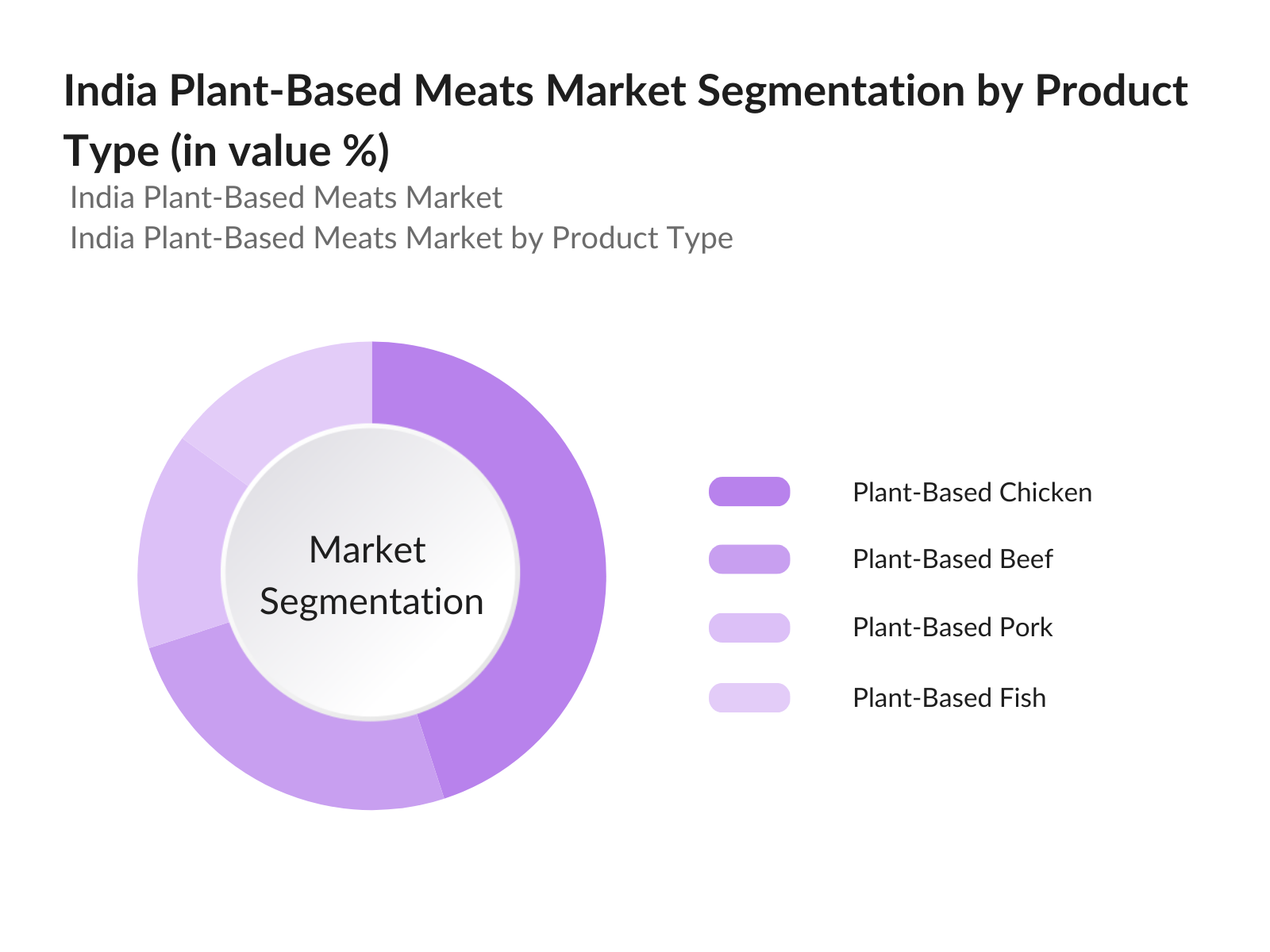
By Product Type: The Indias plant-based meats market is segmented by product type into plant-based chicken, plant-based beef, plant-based pork, and plant-based fish. Recently, plant-based chicken holds the dominant market share under the product type segmentation, largely due to its popularity and familiarity among Indian consumers. The chicken alternative is a key choice in the countrys foodservice and retail sectors, offering versatility in culinary applications and easy adoption in a traditionally meat-heavy culture.
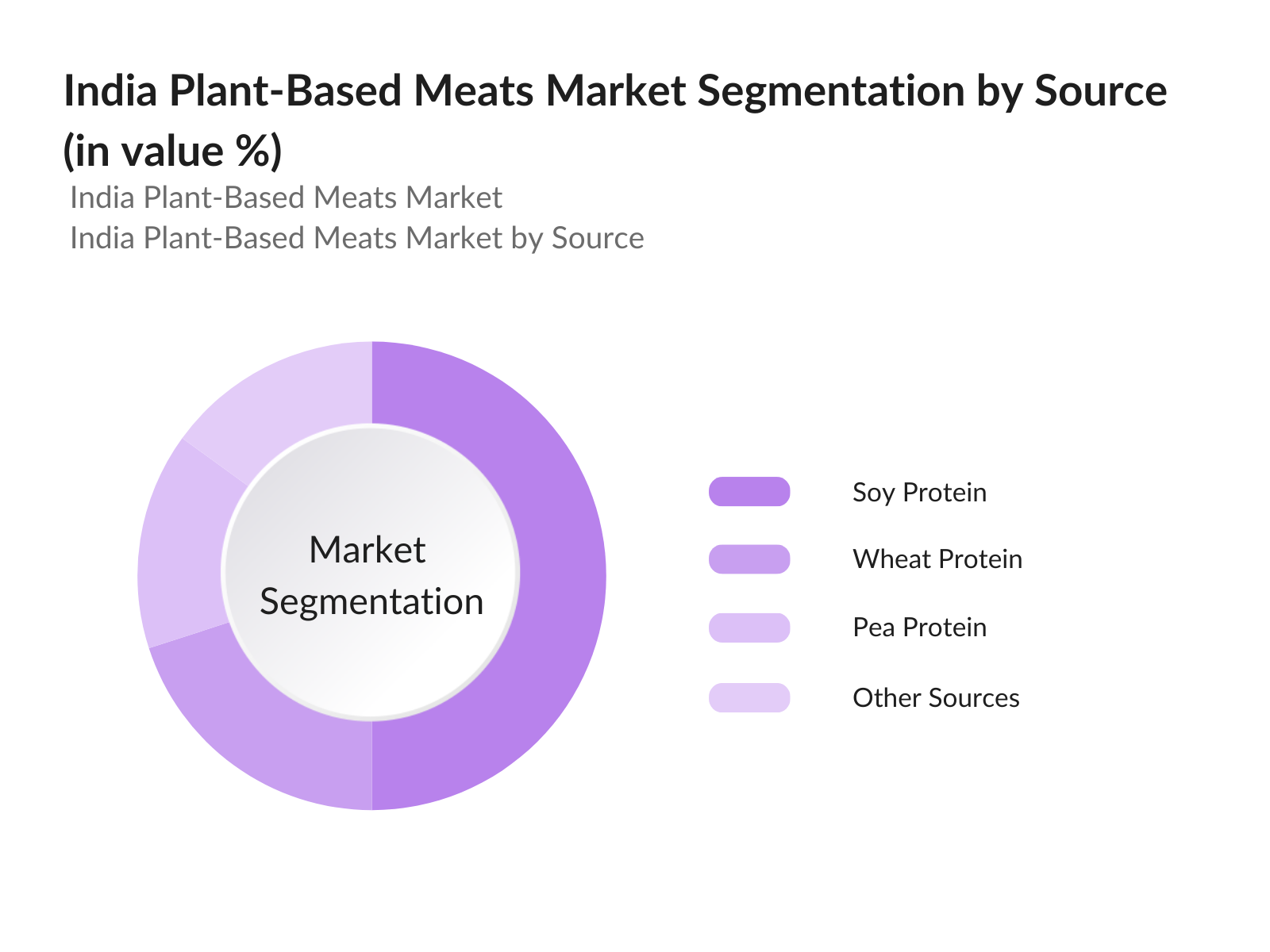
By Source: The Indias plant-based meats market is segmented by source into soy protein, wheat protein, pea protein, and other sources. Soy protein dominates the market share within this segment, primarily due to its wide availability, cost-effectiveness, and strong protein content. Moreover, soy proteins established usage in the food industry as a meat substitute adds to its growing presence in plant-based meat products across India.
The India plant-based meats market is witnessing consolidation, with both local and international players competing for market share. The competitive landscape is driven by product innovation, partnerships with foodservice chains, and increasing investment in research and development. Key companies in the market are offering a wide range of plant-based products, targeting various consumer demographics, especially younger and health-conscious populations.
|
Company |
Establishment Year |
Headquarters |
Product Portfolio |
Geographic Reach |
Sustainability Initiatives |
R&D Investments |
Revenue (USD Million) |
Key Partnerships |
|
Beyond Meat |
2009 |
California, USA |
||||||
|
Impossible Foods |
2011 |
California, USA |
||||||
|
Greenest Foods |
2018 |
Delhi, India |
||||||
|
GoodDot |
2016 |
Udaipur, India |
||||||
|
Vezlay Foods |
2010 |
Delhi, India |
Market Growth Drivers
Market Challenges
Over the next five years, the India plant-based meats market is expected to show significant growth, driven by increasing consumer demand for healthier food options and heightened awareness of environmental issues. The push for sustainability, coupled with growing government initiatives aimed at reducing the carbon footprint, is expected to propel market growth further. Additionally, advancements in food technology, especially in enhancing the texture and taste of plant-based meat products, are likely to attract a broader range of consumers.
Market Opportunities:
|
By Product Type |
Plant-Based Chicken Plant-Based Beef Plant-Based Pork Plant-Based Fish |
|
By Source |
Soy Protein Wheat Protein Pea Protein Other Sources |
|
By Distribution Channel |
Retail Foodservice E-Commerce |
|
By Application |
Snacks Ready-to-Eat Meals Bakery & Confectionery |
|
By Region |
North-East Midwest West Coast Southern States |
1.1. Definition and Scope
1.2. Market Taxonomy
1.3. Market Growth Rate
1.4. Market Segmentation Overview
2.1. Historical Market Size
2.2. Year-On-Year Growth Analysis
2.3. Key Market Developments and Milestones
3.1. Growth Drivers
3.1.1. Rising Health Consciousness
3.1.2. Growth of Vegan Population
3.1.3. Environmental Concerns
3.1.4. Technological Advancements in Food Processing
3.2. Market Challenges
3.2.1. High Production Costs
3.2.2. Limited Consumer Awareness
3.2.3. Supply Chain Issues
3.3. Opportunities
3.3.1. Expansion into Tier 2 & 3 Cities
3.3.2. Government Initiatives for Sustainability
3.3.3. New Product Developments
3.4. Trends
3.4.1. Introduction of Meat Analogs
3.4.2. Collaboration with Retail and E-commerce Platforms
3.4.3. Enhanced Nutritional Value
3.5. Government Regulation
3.5.1. Food Safety Regulations
3.5.2. Plant-Based Meat Labeling Norms
3.5.3. Tax and Subsidy Policies
3.6. SWOT Analysis
3.7. Stake Ecosystem
3.8. Porters Five Forces Analysis
3.9. Competition Ecosystem
4.1. By Product Type (In Value %)
4.1.1. Plant-Based Chicken
4.1.2. Plant-Based Beef
4.1.3. Plant-Based Pork
4.1.4. Plant-Based Fish
4.2. By Source (In Value %)
4.2.1. Soy Protein
4.2.2. Wheat Protein
4.2.3. Pea Protein
4.2.4. Other Sources
4.3. By Distribution Channel (In Value %)
4.3.1. Retail
4.3.2. Foodservice
4.3.3. E-Commerce
4.4. By Application (In Value %)
4.4.1. Snacks
4.4.2. Ready-to-Eat Meals
4.4.3. Bakery & Confectionery
4.5. By Region (In Value %)
4.5.1. North India
4.5.2. South India
4.5.3. East India
4.5.4. West India
5.1. Detailed Profiles of Major Companies
5.1.1. Beyond Meat
5.1.2. Impossible Foods
5.1.3. Greenest Foods
5.1.4. GoodDot
5.1.5. Vezlay Foods
5.1.6. Blue Tribe
5.1.7. Wakao Foods
5.1.8. Imagine Meats
5.1.9. Unilever (The Vegetarian Butcher)
5.1.10. Nestl (Garden Gourmet)
5.1.11. Tata Consumer Products
5.1.12. ITC (MasterChef Creations)
5.1.13. Veggie Champ
5.1.14. The Good Food Institute
5.1.15. Ahimsa Foods
5.2. Cross Comparison Parameters
(No. of Employees, Headquarters, Inception Year, Revenue, Product Portfolio, Geographic Presence, Sustainability Initiatives, Innovation Capabilities)
5.3. Market Share Analysis
5.4. Strategic Initiatives
5.5. Mergers and Acquisitions
5.6. Investment Analysis
5.7. Venture Capital Funding
5.8. Government Grants
5.9. Private Equity Investments
6.1. Food Safety Standards
6.2. Certification and Labeling Requirements
6.3. Compliance to Sustainability Guidelines
7.1. Future Market Size Projections
7.2. Key Factors Driving Future Market Growth
8.1. By Product Type (In Value %)
8.2. By Source (In Value %)
8.3. By Distribution Channel (In Value %)
8.4. By Application (In Value %)
8.5. By Region (In Value %)
9.1. TAM/SAM/SOM Analysis
9.2. Customer Cohort Analysis
9.3. Marketing Initiatives
9.4. White Space Opportunity Analysis
The first step involves creating a comprehensive ecosystem map, including all major stakeholders within the India Plant-Based Meats Market. Through extensive desk research and analysis of secondary and proprietary databases, critical variables influencing market trends, such as consumer demand, production costs, and distribution networks, are identified.
This step involves compiling and analyzing historical data related to the India plant-based meats market. The analysis includes assessing market penetration, evaluating the role of key players, and measuring revenue generation. Additionally, insights into service quality and consumer preferences are evaluated.
In this phase, market assumptions are validated through consultations with industry experts, such as product developers and retail managers, using structured interviews. These insights are crucial in refining the research hypotheses and enhancing the accuracy of the data.
The final phase includes synthesizing data gathered from primary and secondary sources. Direct engagement with manufacturers, distributors, and retailers ensures the data's accuracy and reliability, providing a comprehensive view of the India plant-based meats market.
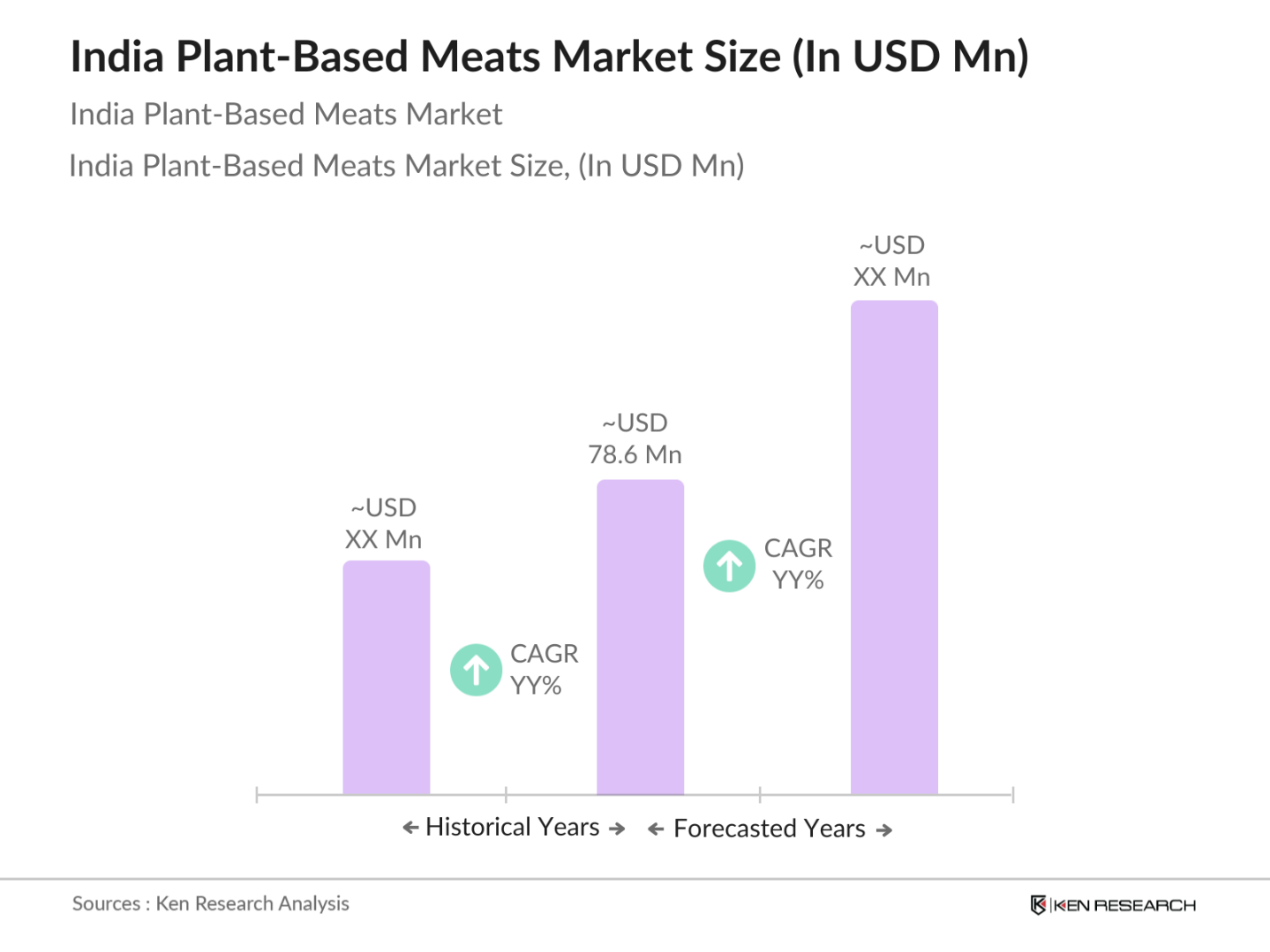
The India plant-based meats market is valued at USD 78.6 million, driven by increasing consumer awareness and the rising adoption of vegan and flexitarian diets.
Challenges in the market include high production costs, limited consumer awareness, and supply chain issues, especially concerning the sourcing of high-quality plant-based ingredients.
Key players in the market include Beyond Meat, Impossible Foods, Greenest Foods, GoodDot, and Vezlay Foods. These companies dominate through innovative product offerings and strong distribution networks.
The market is primarily driven by growing health consciousness, environmental concerns, and the increasing availability of plant-based alternatives across retail and e-commerce channels.

What makes us stand out is that our consultants follows Robust, Refine and Result (RRR) methodology. i.e. Robust for clear definitions, approaches and sanity checking, Refine for differentiating respondents facts and opinions and Result for presenting data with story

We have set a benchmark in the industry by offering our clients with syndicated and customized market research reports featuring coverage of entire market as well as meticulous research and analyst insights.

While we don't replace traditional research, we flip the method upside down. Our dual approach of Top Bottom & Bottom Top ensures quality deliverable by not just verifying company fundamentals but also looking at the sector and macroeconomic factors.

With one step in the future, our research team constantly tries to show you the bigger picture. We help with some of the tough questions you may encounter along the way: How is the industry positioned? Best marketing channel? KPI's of competitors? By aligning every element, we help maximize success.

Our report gives you instant access to the answers and sources that other companies might choose to hide. We elaborate each steps of research methodology we have used and showcase you the sample size to earn your trust.

If you need any support, we are here! We pride ourselves on universe strength, data quality, and quick, friendly, and professional service.