
India Robotic Process Automation (RPA) Market Outlook to 2030
Region:India
Author(s):Yogita Sahu
Product Code:KROD4496
Region:India
Author(s):Yogita Sahu
Product Code:KROD4496
October 2024
89
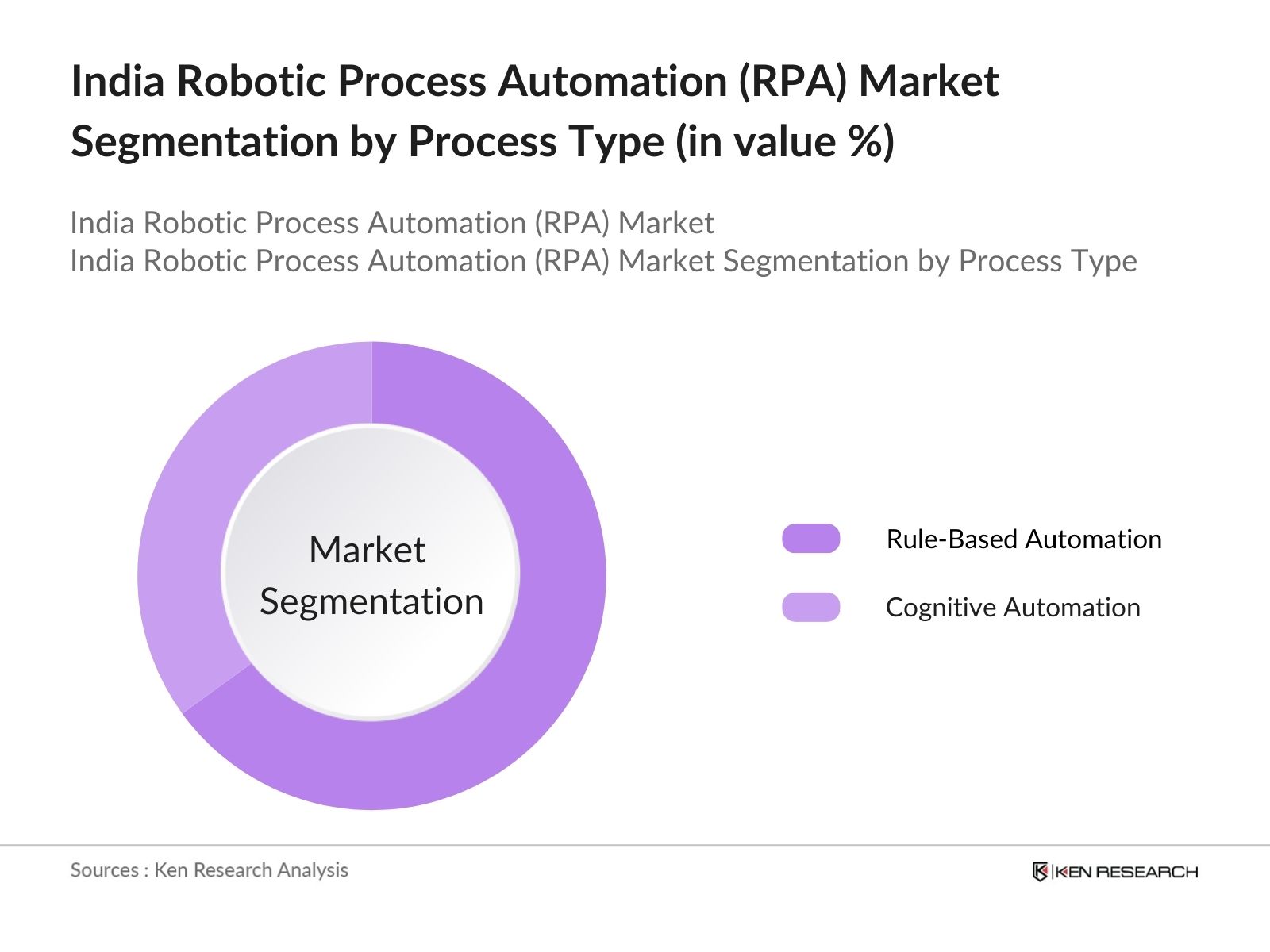
By Process Type: The market is segmented by process type into Rule-Based Automation and Cognitive Automation. Recently, Rule-Based Automation has dominated the market. This is due to its ability to automate repetitive, rule-driven tasks without the need for decision-making capabilities. Large enterprises, especially in sectors like banking, financial services, and insurance (BFSI), rely on rule-based RPA solutions for tasks like data entry, processing transactions, and generating reports. This ease of implementation and ROI potential has driven the adoption of rule-based solutions over cognitive automation.
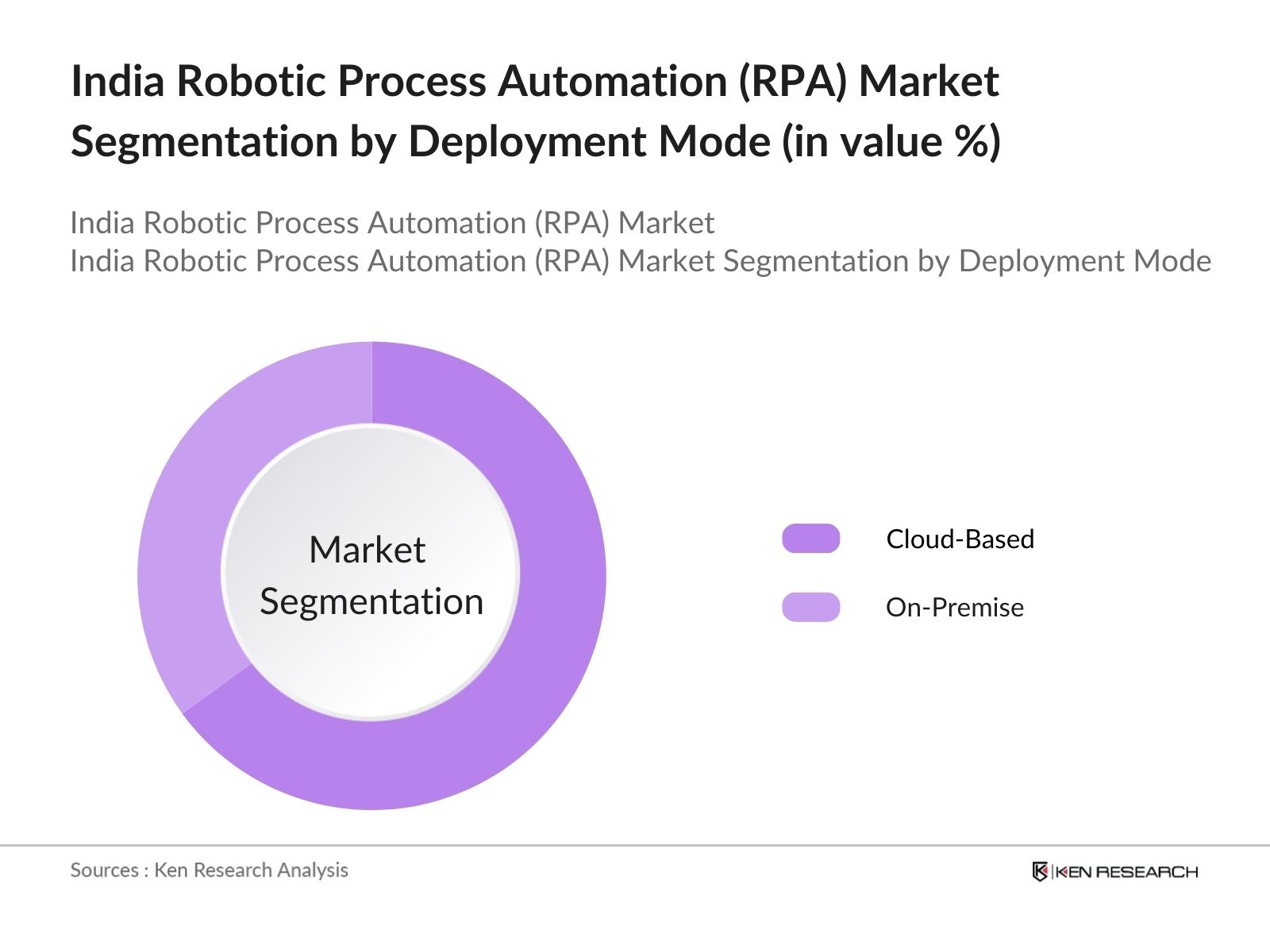
By Deployment Mode: The market is segmented by deployment mode into On-Premise and Cloud-Based. Cloud-Based RPA solutions hold the largest market share due to their scalability, flexibility, and lower upfront costs compared to on-premise solutions. Cloud-based solutions are particularly appealing to small and medium-sized enterprises (SMEs) that do not have the IT infrastructure to support on-premise systems. The increasing reliance on cloud services for business continuity during the COVID-19 pandemic accelerated the demand for cloud-based RPA solutions.
The market is dominated by a few key players, including global and local firms offering a wide range of automation solutions. These companies leverage their vast product portfolios, strong partnerships with IT firms, and constant innovations to remain competitive. For instance, companies like UiPath and Automation Anywhere dominate through their easy-to-use platforms, while Microsoft and IBM have integrated their RPA offerings with their broader AI and cloud platforms.
|
Company |
Establishment Year |
Headquarters |
Revenue in India |
No. of Patents Filed in India |
Customer Base |
Employee Strength (India) |
Regional Offices |
Partnerships |
|
UiPath |
2005 |
New York, USA |
||||||
|
Automation Anywhere |
2003 |
San Jose, USA |
||||||
|
Blue Prism |
2001 |
Warrington, UK |
||||||
|
Microsoft (Power Automate) |
1975 |
Redmond, USA |
||||||
|
IBM (Automation) |
1911 |
Armonk, USA |
Over the next five years, the India Robotic Process Automation (RPA) industry is expected to witness substantial growth, driven by the increasing adoption of cognitive automation and AI-driven solutions. Continuous government support for digital transformation initiatives and automation in public services will further accelerate this market.
|
By Process Type |
Rule-Based Automation Cognitive Automation |
|
By Deployment Mode |
On-Premise Cloud-Based |
|
By Industry Vertical |
BFSI Healthcare Manufacturing Retail and Consumer Goods Telecom |
|
By Solution Type |
Software Tools Services |
|
By Region |
North India South India East India West India |
1.1. Definition and Scope
1.2. Market Taxonomy
1.3. Market Growth Rate
1.4. Market Segmentation Overview
2.1. Historical Market Size
2.2. Year-On-Year Growth Analysis
2.3. Key Market Developments and Milestones
3.1. Growth Drivers
3.1.1. Demand for Digital Transformation
3.1.2. Rising Adoption of AI and Machine Learning
3.1.3. Compliance and Cost Efficiency in Operations
3.1.4. Workforce Augmentation in Shared Services
3.2. Market Challenges
3.2.1. Initial High Setup and Integration Costs
3.2.2. Security Concerns and Data Privacy
3.2.3. Low Awareness in Small and Medium Enterprises
3.2.4. Regulatory and Compliance Barriers
3.3. Opportunities
3.3.1. Growing Demand for Cloud-Based RPA
3.3.2. Increased Usage in BFSI, Telecom, and Healthcare
3.3.3. Government Initiatives for Automation and AI Development
3.3.4. Expanding Scope in SMEs and Startups
3.4. Trends
3.4.1. Integration of RPA with AI and Analytics
3.4.2. Rise in Cognitive RPA Adoption
3.4.3. Development of Low-Code/No-Code Platforms
3.4.4. Growing Use of RPA in Non-IT Departments (HR, Finance, etc.)
3.5. Government Regulation
3.5.1. Data Protection Laws (Data Security and Privacy Regulations)
3.5.2. Compliance with Industry Standards (e.g., GDPR, HIPAA)
3.5.3. Public-Private Partnerships in Automation Innovation
3.6. SWOT Analysis
3.6.1. Strengths
3.6.2. Weaknesses
3.6.3. Opportunities
3.6.4. Threats
3.7. Stakeholder Ecosystem
3.7.1. RPA Vendors
3.7.2. System Integrators
3.7.3. Managed Service Providers
3.7.4. End-Users (BFSI, Manufacturing, Healthcare, etc.)
3.8. Porters Five Forces Analysis
3.8.1. Threat of New Entrants
3.8.2. Bargaining Power of Buyers
3.8.3. Bargaining Power of Suppliers
3.8.4. Threat of Substitute Products
3.8.5. Competitive Rivalry
3.9. Competitive Ecosystem Analysis
4.1. By Process Type (In Value %)
4.1.1. Rule-Based Automation
4.1.2. Cognitive Automation
4.2. By Deployment Mode (In Value %)
4.2.1. On-Premise
4.2.2. Cloud-Based
4.3. By Industry Vertical (In Value %)
4.3.1. BFSI
4.3.2. Healthcare
4.3.3. Manufacturing
4.3.4. Retail and Consumer Goods
4.3.5. Telecom
4.4. By Solution Type (In Value %)
4.4.1. Software Tools
4.4.2. Services
4.5. By Region (In Value %)
4.5.1. North India
4.5.2. South India
4.5.3. East India
4.5.4. West India
5.1 Detailed Profiles of Major Companies
5.1.1. UiPath
5.1.2. Automation Anywhere
5.1.3. Blue Prism
5.1.4. Kofax
5.1.5. Pegasystems
5.1.6. IBM
5.1.7. Microsoft
5.1.8. NICE Systems
5.1.9. AntWorks
5.1.10. EdgeVerve (Infosys)
5.1.11. Softomotive (Microsoft)
5.1.12. Kryon Systems
5.1.13. WorkFusion
5.1.14. Servicetrace (SAP)
5.1.15. Redwood Software
5.2 Cross Comparison Parameters
5.2.1. Market Presence
5.2.2. Revenue in India
5.2.3. Number of Patents Filed in India
5.2.4. Customer Base in India
5.2.5. RPA Use Cases and Innovation in India
5.2.6. Employee Strength (India Specific)
5.2.7. Regional Offices in India
5.2.8. Partnerships with Local Firms
5.3 Market Share Analysis
5.4 Strategic Initiatives
5.5 Mergers and Acquisitions
5.6 Investment Analysis
5.7 Venture Capital Funding
5.8 Government Grants
5.9 Private Equity Investments
6.1. Automation Policy Guidelines
6.2. Data Security Compliance
6.3. Labor Laws and Automation in the Workplace
6.4. Certifications and Licensing for Automation Solutions
7.1. Future Market Size Projections
7.2. Key Factors Driving Future Market Growth
8.1. By Process Type (In Value %)
8.2. By Deployment Mode (In Value %)
8.3. By Industry Vertical (In Value %)
8.4. By Solution Type (In Value %)
8.5. By Region (In Value %)
9.1. TAM/SAM/SOM Analysis
9.2. Customer Cohort Analysis
9.3. Marketing Initiatives
9.4. White Space Opportunity Analysis
The first step in our research methodology involved mapping the entire RPA ecosystem in India, identifying major players, stakeholders, and key variables that affect market trends. Through a combination of desk research and database reviews, we collected valuable data on market dynamics, focusing on RPA implementations and advancements.
In the second step, we analyzed historical data and market penetration of RPA solutions in various industries, including BFSI, IT, and healthcare. Key indicators such as market revenues, growth rates, and technological advancements were used to construct a reliable market forecast.
Hypotheses about future market trends were formulated and tested through consultations with RPA vendors, system integrators, and industry experts. Interviews with key decision-makers and influencers within the RPA ecosystem provided valuable insights for validating our market forecasts.
The final step of our research methodology involved compiling the data, verifying it against bottom-up market assessments, and preparing a comprehensive report. This report includes validated insights, ensuring that businesses receive accurate and actionable information about the India RPA market.
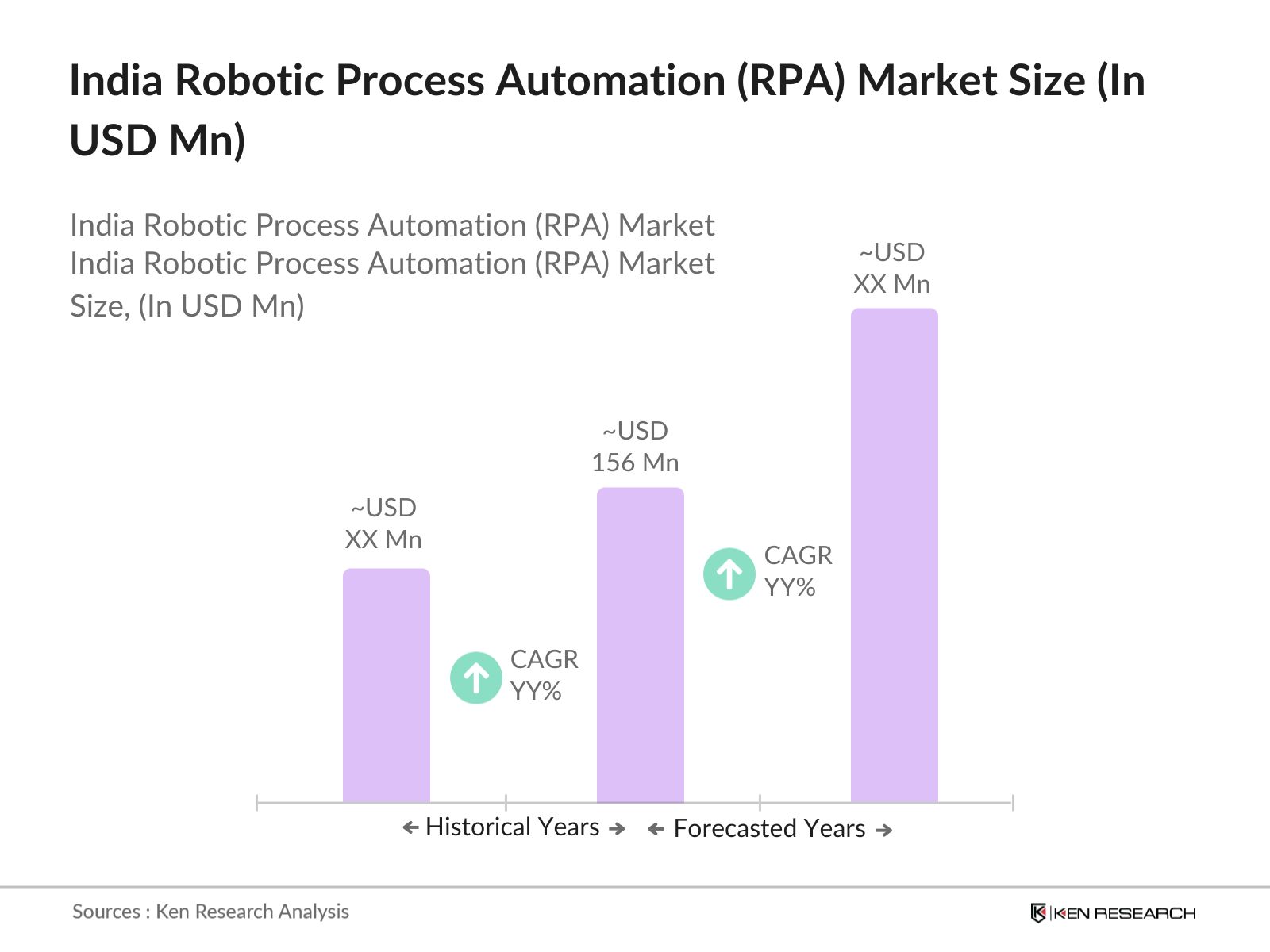
The India Robotic Process Automation (RPA) market is valued at USD 156 million, driven by the increasing demand for operational efficiency and digital transformation across multiple industries.
Challenges in the India RPA market include high initial setup costs, security and data privacy concerns, and a lack of skilled workforce to manage and implement RPA solutions effectively.
Major players in the market include UiPath, Automation Anywhere, Blue Prism, Microsoft (Power Automate), and IBM (Automation). These companies dominate due to their comprehensive product offerings and strong partnerships with local IT service providers.
The RPA market in India is primarily driven by the growing need for cost reduction, operational efficiency, and compliance management. The integration of AI and ML technologies into RPA platforms has further boosted adoption across various sectors.
Opportunities in the India RPA market include the growing demand for cloud-based RPA solutions, the rise of cognitive automation, and the potential for expansion into untapped sectors like healthcare and manufacturing.

What makes us stand out is that our consultants follows Robust, Refine and Result (RRR) methodology. i.e. Robust for clear definitions, approaches and sanity checking, Refine for differentiating respondents facts and opinions and Result for presenting data with story

We have set a benchmark in the industry by offering our clients with syndicated and customized market research reports featuring coverage of entire market as well as meticulous research and analyst insights.

While we don't replace traditional research, we flip the method upside down. Our dual approach of Top Bottom & Bottom Top ensures quality deliverable by not just verifying company fundamentals but also looking at the sector and macroeconomic factors.

With one step in the future, our research team constantly tries to show you the bigger picture. We help with some of the tough questions you may encounter along the way: How is the industry positioned? Best marketing channel? KPI's of competitors? By aligning every element, we help maximize success.

Our report gives you instant access to the answers and sources that other companies might choose to hide. We elaborate each steps of research methodology we have used and showcase you the sample size to earn your trust.

If you need any support, we are here! We pride ourselves on universe strength, data quality, and quick, friendly, and professional service.