Ken Research Logo

India Smart Appliances Market Outlook to 2030

Region:Asia

Author(s):Shubham Kashyap

Product Code:KROD3059

Published On

November 2024

Total pages

85

About the Report

India Smart Appliances Market Overview

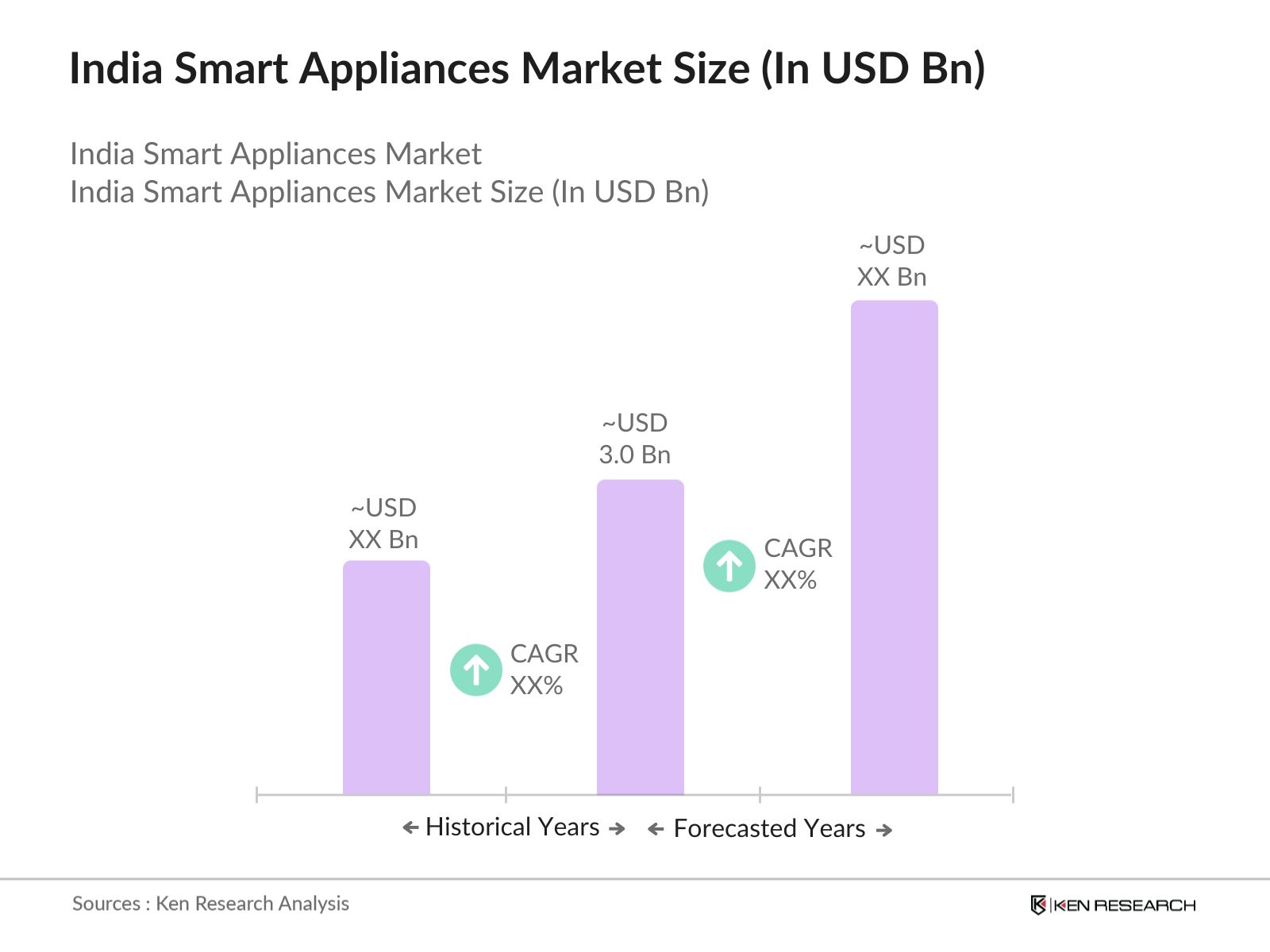
  • The India smart appliances market, valued at USD 3.0 billion, is expected to grow significantly over the forecast period from 2023 to 2028. The growth is driven by increasing urbanization, rising disposable incomes, and a surge in demand for energy-efficient, connected home devices. Indian consumers are increasingly adopting smart appliances such as refrigerators, washing machines, air conditioners, and kitchen appliances that offer convenience, energy savings, and integration with IoT platforms.

India Smart Appliances Market Size

  • Major metropolitan cities like Mumbai, Delhi, Bengaluru, and Hyderabad are leading the adoption of smart appliances, fueled by rapid urban development and an increasing number of tech-savvy consumers. The growing awareness of energy conservation, government initiatives promoting energy efficiency, and expanding e-commerce platforms have further accelerated the demand for smart home devices across the country.
  • The Bureau of Energy Efficiency (BEE) sets standards for energy efficiency in home appliances, which smart appliances must adhere to. By 2023, over 1,200 models of appliances had received the BEE Star Label for energy efficiency, encouraging consumers to opt for energy-saving devices. This regulatory framework has been crucial in promoting the adoption of smart appliances, as consumers are increasingly aware of energy costs and the environmental impact of their choices.

India Smart Appliances Market Segmentation

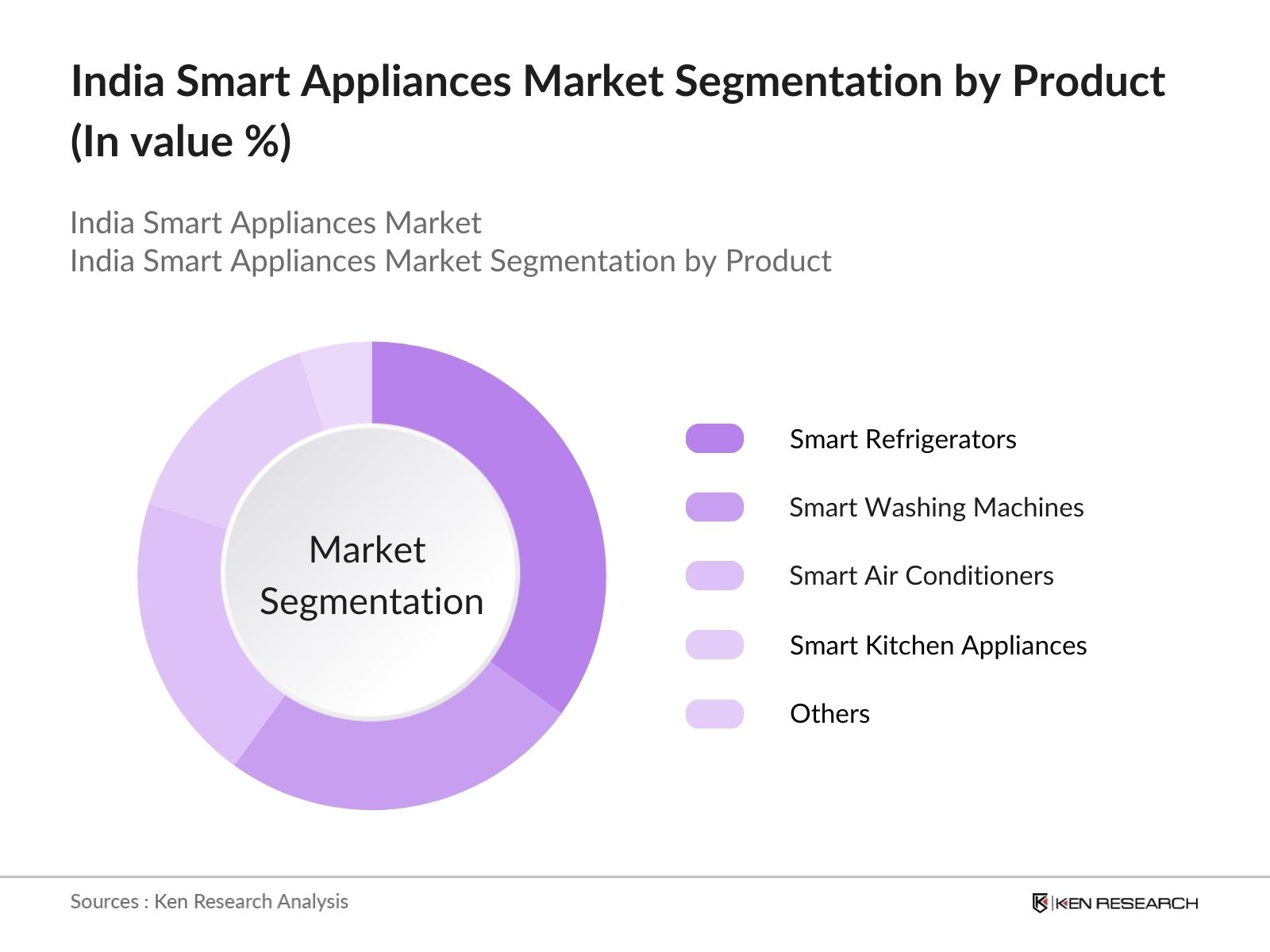
  • By Product Type: The market is segmented by product type into smart refrigerators, smart washing machines, smart air conditioners, smart kitchen appliances, and others. Smart refrigerators currently dominate the product type segmentation, owing to their ability to connect with home networks, manage energy consumption efficiently, and offer features like temperature control and food monitoring systems. The convenience and efficiency provided by smart refrigerators have made them a preferred choice for modern households.

India Smart Appliances Market Segmentation by Product

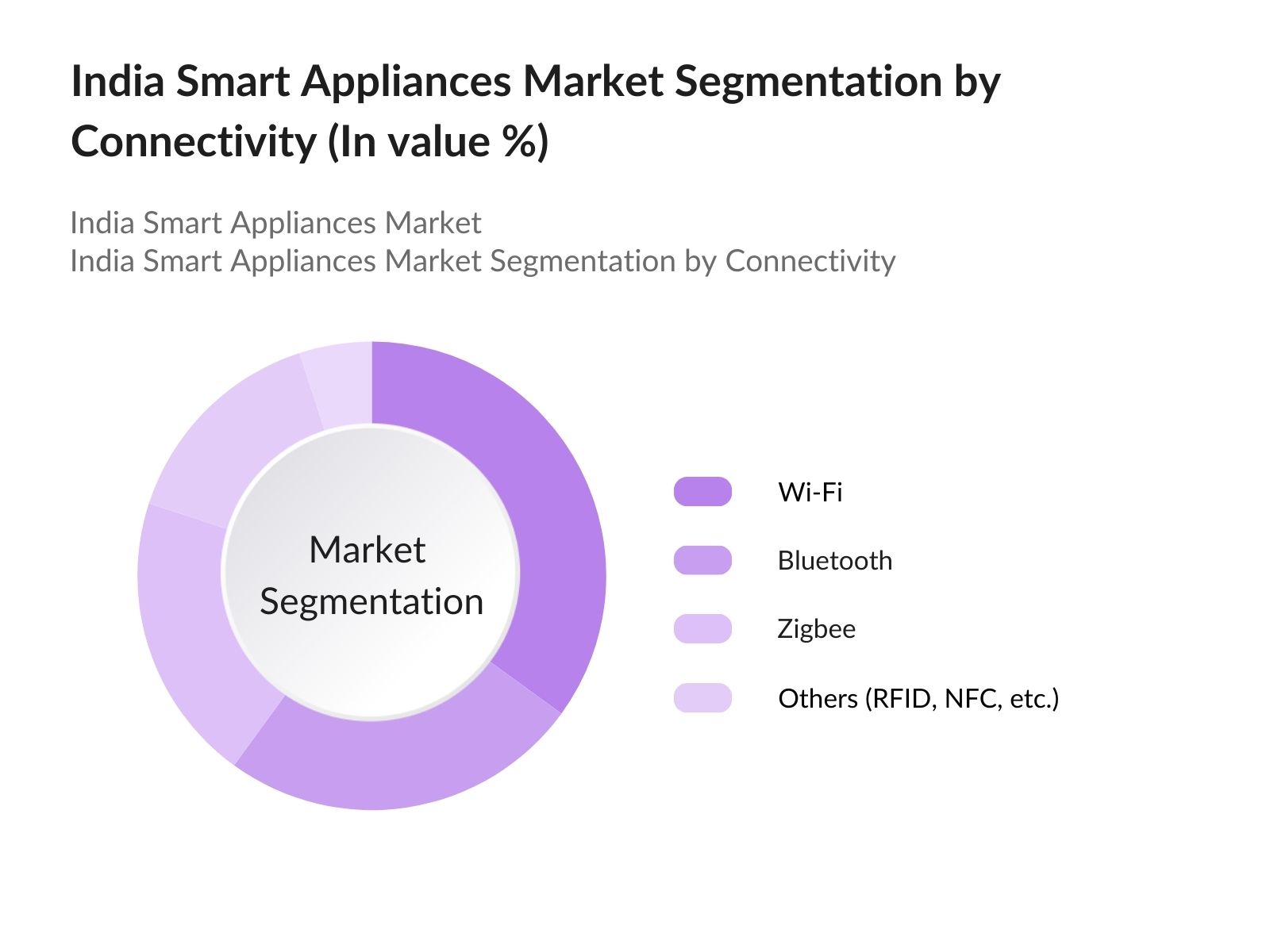
  • By Connectivity: The India smart appliances market is segmented into Wi-Fi, Bluetooth, Zigbee, and others. Wi-Fi-enabled smart appliances hold a significant market share, as they allow seamless integration with other devices, offer remote operation, and provide easy connectivity to home networks. Wi-Fi-connected appliances are widely adopted due to their superior performance and flexibility compared to other connectivity types.

India Smart Appliances Market Segmentation by Connectivity

India Smart Appliances Market Competitive Landscape

The India smart appliances market is highly competitive, with both domestic and international players vying for market share. Key players include Samsung, LG Electronics, Whirlpool, Godrej, and Xiaomi, among others. These companies are focusing on product innovations, energy efficiency, and smart features like voice control, AI-based suggestions, and app connectivity to differentiate their offerings in the market. Additionally, strategic partnerships with IoT and software companies have helped manufacturers enhance their product portfolios.

Company Name

Establishment Year

Headquarters

Revenue (2023)

Employees

Key Products

Key Clients

Partnerships

Samsung

1938

South Korea


LG Electronics

1958

South Korea


Whirlpool

1911

USA


Godrej

1897

India


Xiaomi

2010

China


India Smart Appliances Industry Analysis

Growth Drivers

  • Urbanization and Increasing Disposable Incomes: India's urban population has been growing steadily, reaching 530 million in 2023, according to the World Bank. This increase, combined with rising disposable incomes, has led to a surge in the demand for smart appliances. The average monthly income of Indian households increased to INR 8,000 to INR 27,300 in 2023, creating more purchasing power for high-tech household appliances. This shift is particularly evident in metropolitan areas, where convenience and technology integration drive consumer preferences. As urbanization expands, more households are opting for smart appliances to enhance daily living.
  • Rising Adoption of Energy-Efficient Appliances: India's energy consumption per capita rose to 1,331 kWh in 2023, underscoring the country's growing need for energy-efficient solutions. As consumers seek to lower their electricity bills, the demand for smart, energy-efficient appliances has increased significantly. These devices help monitor and reduce energy consumption in real time, contributing to energy savings. Government initiatives, like the UJALA scheme, have also promoted the adoption of energy-efficient appliances across the country, with over 368 million LED bulbs distributed by 2023, significantly reducing overall power consumption.
  • Government Initiatives Promoting Energy Efficiency: The Indian government has been proactive in encouraging energy efficiency across sectors. Under the Perform, Achieve, and Trade (PAT) scheme, industries and households are incentivized to adopt energy-efficient appliances. Additionally, The UJALA scheme has resulted in estimated annual energy savings of approximately 48.39 billion kWh, which translates to a substantial reduction in greenhouse gas emissions (about 39.30 million tonnes of CO2). This push aligns with Indias goal to reduce emissions and lower energy consumption, making energy-efficient smart appliances more attractive for consumers nationwide.

Market Challenges

  • High Costs of Smart Appliances: Smart appliances often come with a high upfront cost, making them less accessible to middle and low-income families. A smart refrigerator is significantly more expensive than traditional models. While long-term energy savings are notable, the initial investment can deter many potential buyers, especially in rural areas where income levels tend to be lower. This creates a significant barrier to mass adoption, particularly outside major urban centers where affordability remains a critical concern.
  • Lack of Awareness in Tier 2 and Tier 3 Cities: Although metropolitan areas have embraced smart appliances, there is still a knowledge gap in Tier 2 and Tier 3 cities. Many households in these regions remain unaware of the potential benefits of smart appliances, such as energy savings and convenience. This lack of awareness, combined with limited marketing efforts and distribution channels, has slowed adoption rates. Furthermore, the limited availability of reliable internet services, essential for the functioning of smart appliances, further complicates their widespread adoption in these areas.

India Smart Appliances Market Future Outlook

The India smart appliances market is poised for strong growth, driven by rising consumer awareness, technological advancements, and increasing energy conservation initiatives. The market will likely witness significant innovations in product features, such as AI-based customization and integration with smart home ecosystems. Manufacturers that focus on affordability, security, and smart connectivity will thrive in this competitive landscape.

Future Market Opportunities

  • Voice-Enabled Appliances: The popularity of voice-enabled smart appliances has surged in India, driven by the increasing adoption of smart speakers like Amazon Echo and Google Home, which recorded over 5 million users in 2023. These devices can now control a wide range of appliances, from lighting to kitchen devices, making voice-enabled technology a key trend. Consumers are increasingly looking for convenience, and voice-activated functionalities are making smart appliances more appealing. This integration is expected to drive the market further, particularly among tech-savvy consumers.
  • AI and Machine Learning Integration in Appliances: Artificial Intelligence (AI) and Machine Learning (ML) are becoming integral features of modern smart appliances. By 2023, 22% of new smart appliances in India came equipped with AI functionalities, allowing them to learn user preferences and optimize performance. Smart refrigerators can now track food consumption patterns and suggest grocery lists based on AI predictions. These innovations are driving efficiency and convenience, appealing to consumers who value personalized technology. As AI continues to evolve, its integration into smart appliances will likely intensify, creating new market dynamics.

Scope of the Report

By Product Type

Smart Refrigerators

Smart Washing Machines

Smart Air Conditioners

Smart Kitchen Appliances

Others (Smart Vacuum Cleaners, Smart Water Purifiers)

By Connectivity

Wi-Fi

Zigbee

Others (RFID, NFC)

By Distribution Channel

Online Retail

Offline Retail

By End-User

Residential

Commercial

Industrial

By Region

North

South

East

West

Products

Key Target Audience

  • Home Appliance Manufacturers

  • Government and Regulatory Bodies (Bureau of Energy Efficiency, Ministry of Electronics and IT)

  • Retailers and E-commerce Platforms

  • Smart Home System Integrators

  • Technology Providers (IoT, AI)

  • Banks and Financial Institutes

  • Utility Companies

  • Real Estate Developers

  • Banks and Financial Institutions

Companies

Players Mention in India Smart Appliances Market

  • Samsung

  • LG Electronics

  • Whirlpool

  • Xiaomi

  • Godrej

  • Panasonic

  • Haier

  • Voltas

  • Bosch

  • IFB

  • Electrolux

  • Sony

  • Hitachi

  • Amazon (Smart Devices)

  • Philips

Table of Contents

01 India Smart Appliances Market Overview

1.1. Definition and Scope
1.2. Market Taxonomy
1.3. Market Growth Rate
1.4. Market Segmentation Overview

02 India Smart Appliances Market Size (In USD Bn)

2.1. Historical Market Size
2.2. Year-On-Year Growth Analysis
2.3. Key Market Developments and Milestones

03 India Smart Appliances Market Analysis

3.1. Growth Drivers
3.1.1. Urbanization and Increasing Disposable Incomes
3.1.2. Rising Adoption of Energy-Efficient Appliances
3.1.3. Government Initiatives Promoting Energy Efficiency
3.1.4. Expansion of IoT and Smart Home Ecosystem

3.2. Market Challenges
3.2.1. High Initial Cost of Smart Appliances
3.2.2. Lack of Awareness in Tier 2 and Tier 3 Cities
3.2.3. Cybersecurity and Data Privacy Concerns

3.3. Opportunities
3.3.1. Expansion into Tier 2 and Tier 3 Markets
3.3.2. Integration with Renewable Energy Solutions
3.3.3. Growth of Smart Cities Initiatives

3.4. Trends
3.4.1. Voice-Enabled Appliances
3.4.2. AI and Machine Learning Integration in Appliances
3.4.3. Development of Eco-Friendly and Sustainable Smart Appliances

3.5. Government Regulation
3.5.1. Energy Efficiency Standards (Bureau of Energy Efficiency, BEE)
3.5.2. Smart City Mission
3.5.3. FDI Policies and Subsidies for Energy-Efficient Appliances

3.6. SWOT Analysis
3.7. Stake Ecosystem
3.8. Porters Five Forces
3.9. Competition Ecosystem

04 India Smart Appliances Market Segmentation

4.1. By Product Type (In Value %)


4.1.1. Smart Refrigerators
4.1.2. Smart Washing Machines
4.1.3. Smart Air Conditioners
4.1.4. Smart Kitchen Appliances
4.1.5. Others (Smart Vacuum Cleaners, Smart Water Purifiers)

4.2. By Connectivity (In Value %)
4.2.1. Wi-Fi
4.2.2. Bluetooth
4.2.3. Zigbee
4.2.4. Others (RFID, NFC)

4.3. By Distribution Channel (In Value %)
4.3.1. Online Retail
4.3.2. Offline Retail

4.4. By End-User (In Value %)
4.4.1. Residential
4.4.2. Commercial
4.4.3. Industrial

4.5. By Region (In Value %)
4.5.1. North
4.5.2. South
4.5.3. East
4.5.4. West

05 India Smart Appliances Market Competitive Analysis 

5.1 Detailed Profiles of Major Companies
5.1.1. Samsung
5.1.2. LG Electronics
5.1.3. Whirlpool
5.1.4. Xiaomi
5.1.5. Godrej
5.1.6. Panasonic
5.1.7. Haier
5.1.8. Voltas
5.1.9. Bosch
5.1.10. IFB
5.1.11. Electrolux
5.1.12. Sony
5.1.13. Hitachi
5.1.14. Amazon (Smart Speakers and Smart Devices)
5.1.15. Philips

5.2 Cross Comparison Parameters (No. of Employees, Headquarters, Inception Year, Revenue, Market Share, Product Portfolio, Product Innovations, Sustainability Initiatives)
5.3. Market Share Analysis
5.4. Strategic Initiatives
5.5. Mergers and Acquisitions
5.6. Investment Analysis
5.7. Venture Capital Funding
5.8. Government Grants
5.9. Private Equity Investments

06 India Smart Appliances Market Regulatory Framework

6.1. Energy Efficiency Standards and Compliance (BEE, EESL)
6.2. IoT and Data Privacy Regulations
6.3. FDI Policies in Consumer Electronics
6.4. Import Duties and Tariffs on Smart Appliances

07 India Smart Appliances Future Market Size (In USD Bn)

7.1. Future Market Size Projections
7.2. Key Factors Driving Future Market Growth

08 India Smart Appliances Future Market Segmentation

8.1. By Product Type (In Value %)
8.2. By Connectivity (In Value %)
8.3. By Distribution Channel (In Value %)
8.4. By End-User (In Value %)
8.5. By Region (In Value %)

09 India Smart Appliances Market Analysts Recommendations

9.1. TAM/SAM/SOM Analysis
9.2. Customer Cohort Analysis
9.3. Marketing Initiatives
9.4. White Space Opportunity Analysis

Disclaimer Contact Us

Research Methodology

Step 1: Identification of Key Variables


The first step involves mapping out the entire India smart appliances market ecosystem. Extensive desk research is conducted using both secondary and proprietary databases to understand the key variables influencing the market, such as product innovations, energy efficiency standards, and connectivity trends.

Step 2: Market Analysis and Construction


In this stage, historical data on the India smart appliances market is gathered and analyzed to determine market growth, product penetration, and consumer adoption rates. This involves evaluating various product categories and assessing demand trends across key urban and semi-urban regions.

Step 3: Hypothesis Validation and Expert Consultation


Key market hypotheses are tested and validated through consultations with industry experts. This process includes conducting computer-assisted telephone interviews (CATIs) with executives from leading smart appliance manufacturers to gather insights into market performance and industry developments.

Step 4: Research Synthesis and Final Output


The final phase includes comprehensive engagement with leading players in the smart appliances industry to obtain detailed data on product sales, consumer preferences, and product-specific insights. The collected data is verified using the bottom-up approach, ensuring an accurate and validated report for the India smart appliances market.

Frequently Asked Questions

01. How big is India Smart Appliances Market?

The India smart appliances market was valued at USD 3.0 billion, driven by increasing consumer demand for connected devices and government initiatives promoting energy efficiency.

02. What are the challenges in India Smart Appliances Market?

Key challenges in the India smart appliances market include the high cost of smart appliances, limited consumer awareness in rural areas, and concerns related to cybersecurity and data privacy for connected devices.

03. Who are the major players in the India Smart Appliances Market?

Key players in the India smart appliances market include Samsung, LG Electronics, Whirlpool, Xiaomi, and Godrej. These companies dominate the market through product innovation, energy efficiency, and integration with IoT platforms.

04. What are the growth drivers of India Smart Appliances Market?

The India smart appliances market is propelled by factors such as rising urbanization, increased disposable incomes, and growing awareness of energy-efficient solutions. The expansion of IoT networks is also a major contributor to market growth.

Why Buy From Us?

RRR
Refine Robust Result (RRR) Framework

What makes us stand out is that our consultants follows Robust, Refine and Result (RRR) methodology. i.e. Robust for clear definitions, approaches and sanity checking, Refine for differentiating respondents facts and opinions and Result for presenting data with story

Our Reach Is Unmatched

We have set a benchmark in the industry by offering our clients with syndicated and customized market research reports featuring coverage of entire market as well as meticulous research and analyst insights.

Research
Shifting the Research Paradigm

While we don't replace traditional research, we flip the method upside down. Our dual approach of Top Bottom & Bottom Top ensures quality deliverable by not just verifying company fundamentals but also looking at the sector and macroeconomic factors.

Insite
More Insights-Better Decisions

With one step in the future, our research team constantly tries to show you the bigger picture. We help with some of the tough questions you may encounter along the way: How is the industry positioned? Best marketing channel? KPI's of competitors? By aligning every element, we help maximize success.

Trust
Transparency and Trust

Our report gives you instant access to the answers and sources that other companies might choose to hide. We elaborate each steps of research methodology we have used and showcase you the sample size to earn your trust.

support
Round the Clock Support

If you need any support, we are here! We pride ourselves on universe strength, data quality, and quick, friendly, and professional service.

Why Client Choose Us?

400000+ Reports in repository
150+ Consulting project a year
100+ Analysts
8000+ Client Queries in 2022