
India Smart Bathroom Market Outlook to 2030
Region:India
Author(s):Yogita Sahu
Product Code:KROD9213
Region:India
Author(s):Yogita Sahu
Product Code:KROD9213
November 2024
98
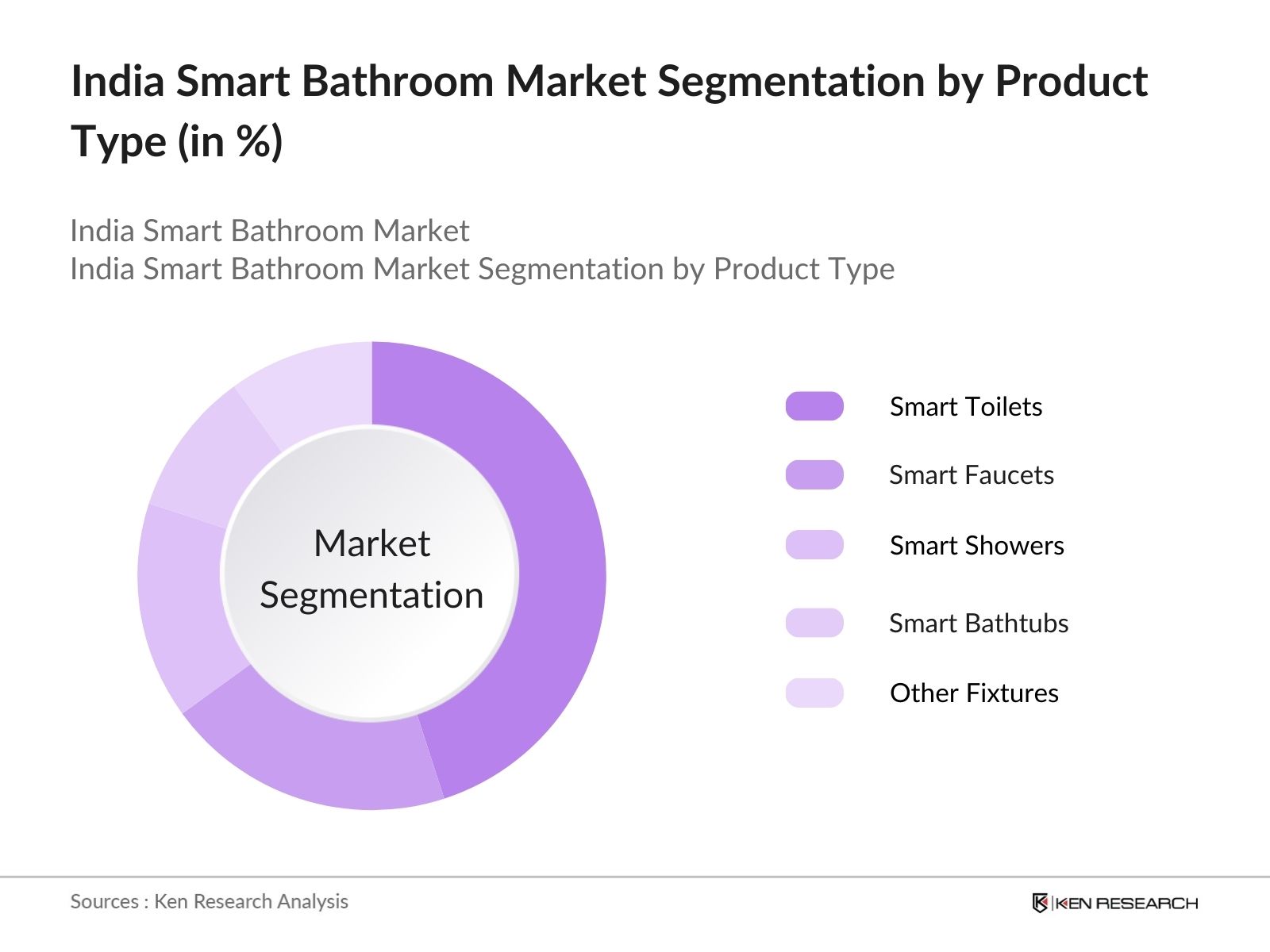
By Product Type: The market is segmented by product type into smart toilets, smart faucets, smart showers, smart bathtubs, and other fixtures (e.g., mirrors, sensors). Smart Toilets dominates the market due to the high demand for touchless and water-saving features, especially in urban areas. Growing health and hygiene awareness has made smart toilets a preferred choice in premium segments, where features like automated flushing, bidets, and self-cleaning functionalities are in demand.
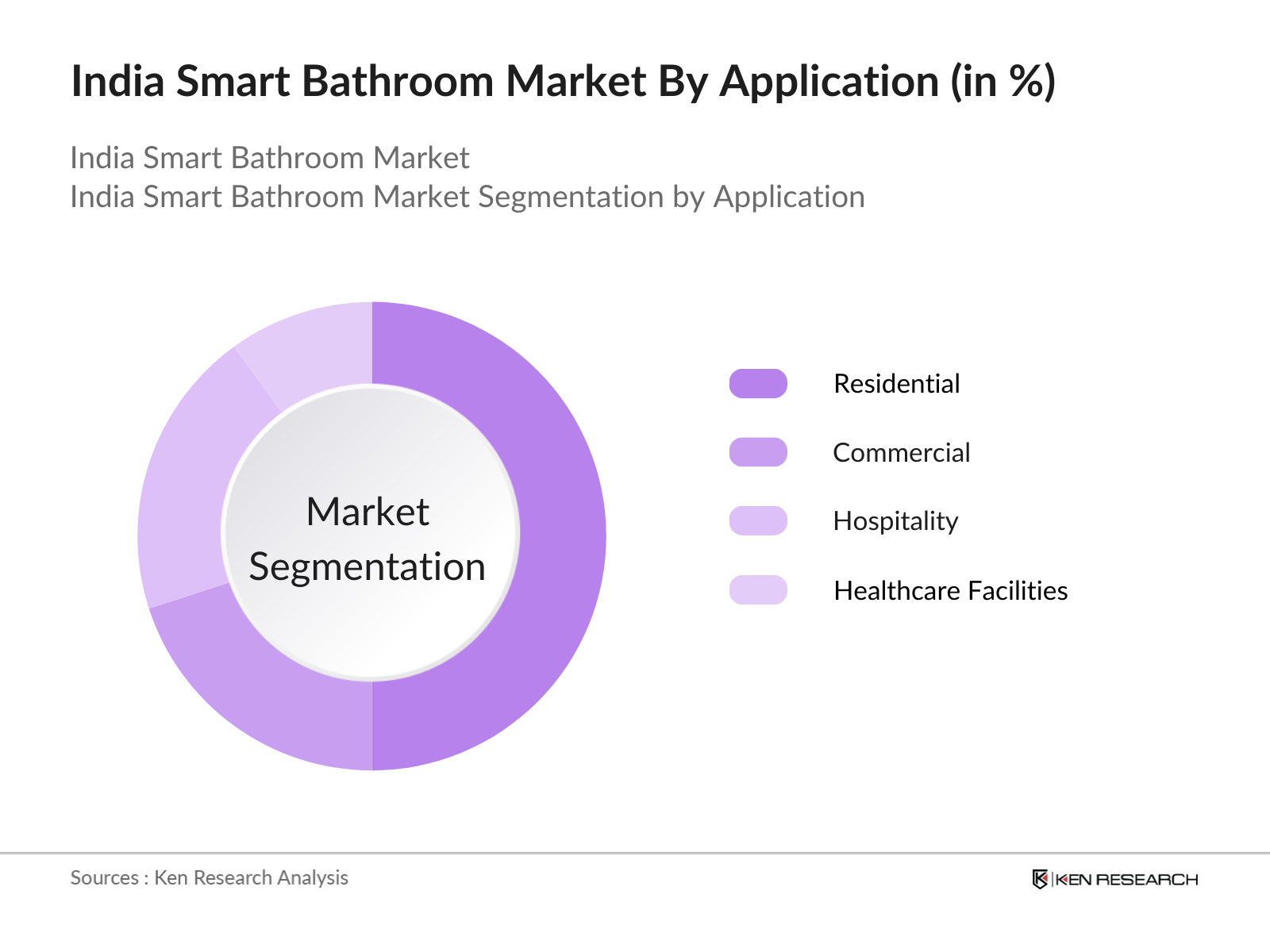
By Application: The market is also segmented by application into residential, commercial, hospitality, and healthcare facilities. The residential sector leads this segment, as individual homeowners increasingly adopt smart bathroom solutions for convenience, luxury, and water efficiency. With the rise in smart home ecosystems, residential consumers seek out products that seamlessly integrate with existing IoT systems, making this sub-segment dominant.
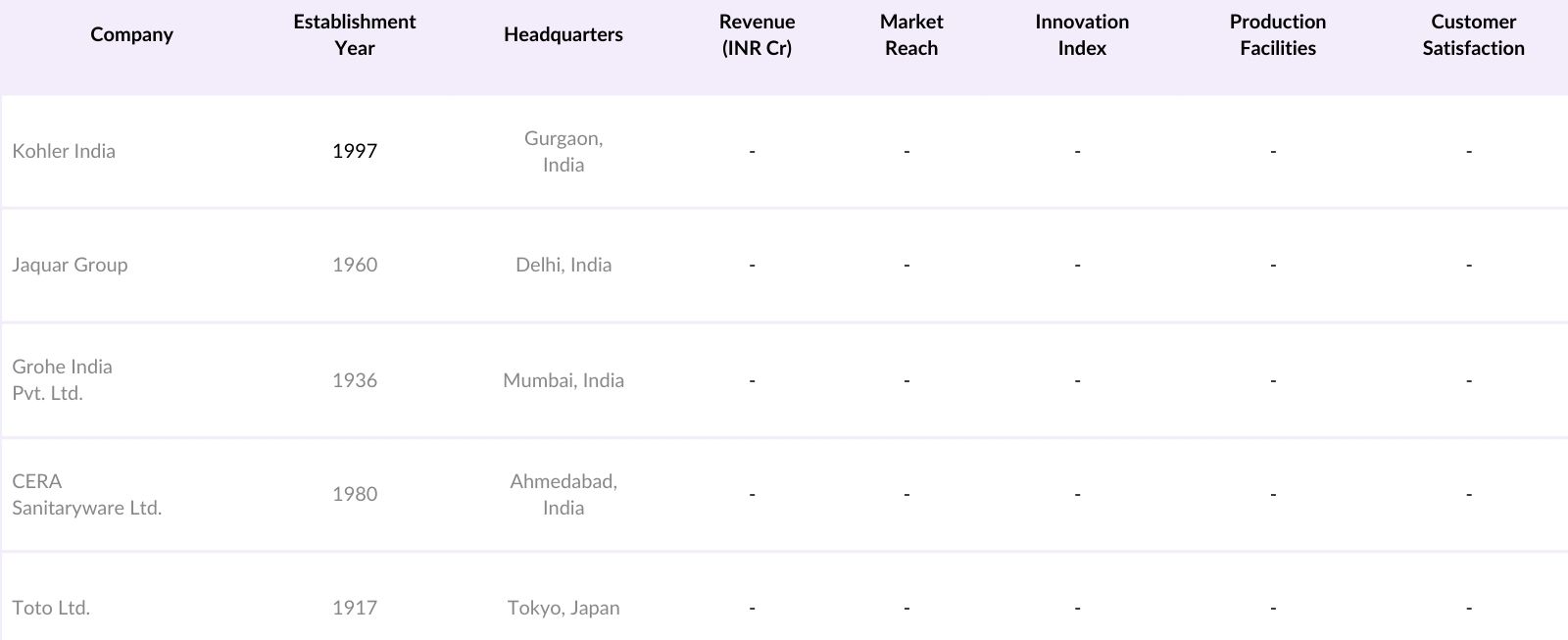
The competitive landscape in the market is led by a mix of international and domestic players, who leverage technological advancements and strategic partnerships to strengthen their market position.
Over the next five years, the India Smart Bathroom industry is poised to grow, driven by increased consumer demand for sustainable solutions, government-backed smart city initiatives, and advancements in IoT-enabled home technologies.
|
Product Type |
Smart Toilets Smart Faucets Smart Showers Smart Bathtubs Other Fixtures (Mirrors, Sensors) |
|
Application |
Residential Commercial Hospitality Healthcare Facilities |
|
Connectivity Type |
Wi-Fi Enabled Bluetooth Enabled Remote/Cloud-based Control |
|
Component |
Hardware Software Services (Installation, Maintenance) |
|
Region |
North India South India East India West India |
1.1 Definition and Scope
1.2 Market Taxonomy
1.3 Market Growth Rate
1.4 Market Segmentation Overview
2.1 Historical Market Size
2.2 Year-On-Year Growth Analysis
2.3 Key Market Developments and Milestones
3.1 Growth Drivers
3.1.1 Increased Urbanization and Smart City Initiatives
3.1.2 Technological Advancements in IoT and AI
3.1.3 Rising Consumer Disposable Income
3.1.4 Growing Demand for Eco-Friendly Solutions
3.2 Market Challenges
3.2.1 High Initial Setup Costs
3.2.2 Limited Skilled Workforce for Installation
3.2.3 Low Penetration in Tier-2 and Tier-3 Cities
3.3 Opportunities
3.3.1 Expansion into Residential Real Estate Sector
3.3.2 Government Incentives for Sustainable Products
3.3.3 Partnerships with Smart Home Technology Providers
3.4 Trends
3.4.1 Adoption of AI-Integrated Fixtures
3.4.2 Water Conservation Technologies
3.4.3 Customizable and Connected User Interfaces
3.5 Government Regulations
3.5.1 Bureau of Indian Standards Compliance
3.5.2 Smart City Mission Guidelines
3.5.3 Water Efficiency Standards
3.6 SWOT Analysis
3.7 Stakeholder Ecosystem
3.8 Porters Five Forces
3.9 Competitive Landscape Overview
4.1 By Product Type (in Value %)
4.1.1 Smart Toilets
4.1.2 Smart Faucets
4.1.3 Smart Showers
4.1.4 Smart Bathtubs
4.1.5 Other Fixtures (Mirrors, Sensors)
4.2 By Application (in Value %)
4.2.1 Residential
4.2.2 Commercial
4.2.3 Hospitality
4.2.4 Healthcare Facilities
4.3 By Connectivity Type (in Value %)
4.3.1 Wi-Fi Enabled
4.3.2 Bluetooth Enabled
4.3.3 Remote/Cloud-based Control
4.4 By Component (in Value %)
4.4.1 Hardware
4.4.2 Software
4.4.3 Services (Installation, Maintenance)
4.5 By Region (in Value %)
4.5.1 North India
4.5.2 South India
4.5.3 East India
4.5.4 West India
5.1 Detailed Profiles of Major Companies
5.1.1 Kohler India
5.1.2 Jaquar Group
5.1.3 CERA Sanitaryware Ltd.
5.1.4 Hindware Homes
5.1.5 Grohe India Pvt. Ltd.
5.1.6 Roca India
5.1.7 VitrA by Eczacba
5.1.8 Toto Ltd.
5.1.9 Delta Faucet Company
5.1.10 Hansgrohe Group
5.1.11 Parryware
5.1.12 Kohinoor Sanitaryware
5.1.13 American Standard
5.1.14 Aquant India
5.1.15 Sloan Valve India Pvt. Ltd.
5.2 Cross Comparison Parameters (Annual Revenue, Employee Count, Market Share, Core Competency, Smart Tech Integrations, Brand Reach, Production Units, Customer Satisfaction Index)
5.3 Market Share Analysis
5.4 Strategic Initiatives (Partnerships and Alliances)
5.5 Mergers and Acquisitions
5.6 Investment Analysis
5.7 Venture Capital Funding
5.8 Government Grants
5.9 Private Equity Investments
6.1 Environmental Compliance Standards
6.2 Certification Processes
6.3 National and Local Standards
7.1 Future Market Size Projections
7.2 Key Factors Driving Future Market Growth
8.1 By Product Type (in Value %)
8.2 By Application (in Value %)
8.3 By Connectivity Type (in Value %)
8.4 By Component (in Value %)
8.5 By Region (in Value %)
9.1 TAM/SAM/SOM Analysis
9.2 Customer Cohort Analysis
9.3 Marketing Initiatives
9.4 White Space Opportunity Analysis
The initial phase involves building an industry ecosystem model covering all major stakeholders in the India Smart Bathroom Market. Key market variables were identified through comprehensive desk research, utilizing proprietary databases and published reports.
In this phase, historical data was analyzed to determine penetration rates and revenue trends within the smart bathroom sector. Additionally, customer satisfaction indexes were evaluated to validate the reliability of revenue projections.
Market hypotheses were formed based on secondary research and then validated through interviews with industry professionals. These insights were gathered from industry experts to ensure the credibility and precision of market estimates.
In the final step, primary research with product manufacturers provided additional insights into sales dynamics and consumer trends, complementing data from the previous phases. This process ensures a well-rounded, verified analysis of the India Smart Bathroom Market.
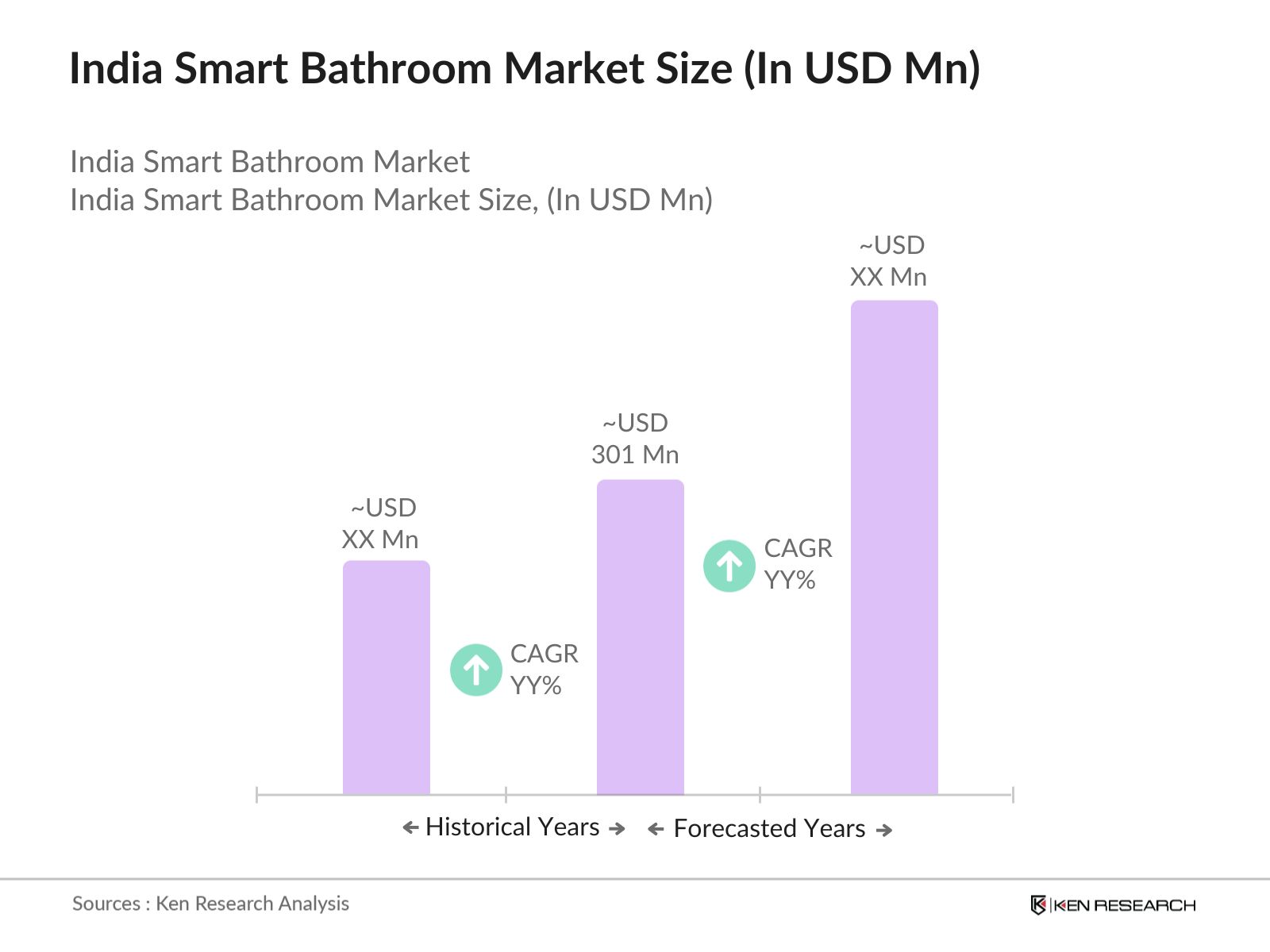
The India Smart Bathroom Market, valued at USD 301 million, is driven by the increasing adoption of IoT technology in home fittings and heightened environmental consciousness.
Challenges in the India Smart Bathroom Market include high installation costs and limited consumer awareness in semi-urban regions, which affects overall market penetration.
Key players in this India Smart Bathroom Market include Kohler India, Jaquar Group, CERA Sanitaryware Ltd., and Grohe India Pvt. Ltd., which dominate due to their strong brand reputation and advanced product offerings.
The India Smart Bathroom Market is fueled by the rising demand for eco-friendly and water-saving technologies, alongside government initiatives for smart city development

What makes us stand out is that our consultants follows Robust, Refine and Result (RRR) methodology. i.e. Robust for clear definitions, approaches and sanity checking, Refine for differentiating respondents facts and opinions and Result for presenting data with story

We have set a benchmark in the industry by offering our clients with syndicated and customized market research reports featuring coverage of entire market as well as meticulous research and analyst insights.

While we don't replace traditional research, we flip the method upside down. Our dual approach of Top Bottom & Bottom Top ensures quality deliverable by not just verifying company fundamentals but also looking at the sector and macroeconomic factors.

With one step in the future, our research team constantly tries to show you the bigger picture. We help with some of the tough questions you may encounter along the way: How is the industry positioned? Best marketing channel? KPI's of competitors? By aligning every element, we help maximize success.

Our report gives you instant access to the answers and sources that other companies might choose to hide. We elaborate each steps of research methodology we have used and showcase you the sample size to earn your trust.

If you need any support, we are here! We pride ourselves on universe strength, data quality, and quick, friendly, and professional service.