
India Smart Pole Market Outlook to 2030
Region:Asia
Author(s):Sanjeev
Product Code:KROD4768
November 2024
91
About the Report
India Smart Pole Market Overview
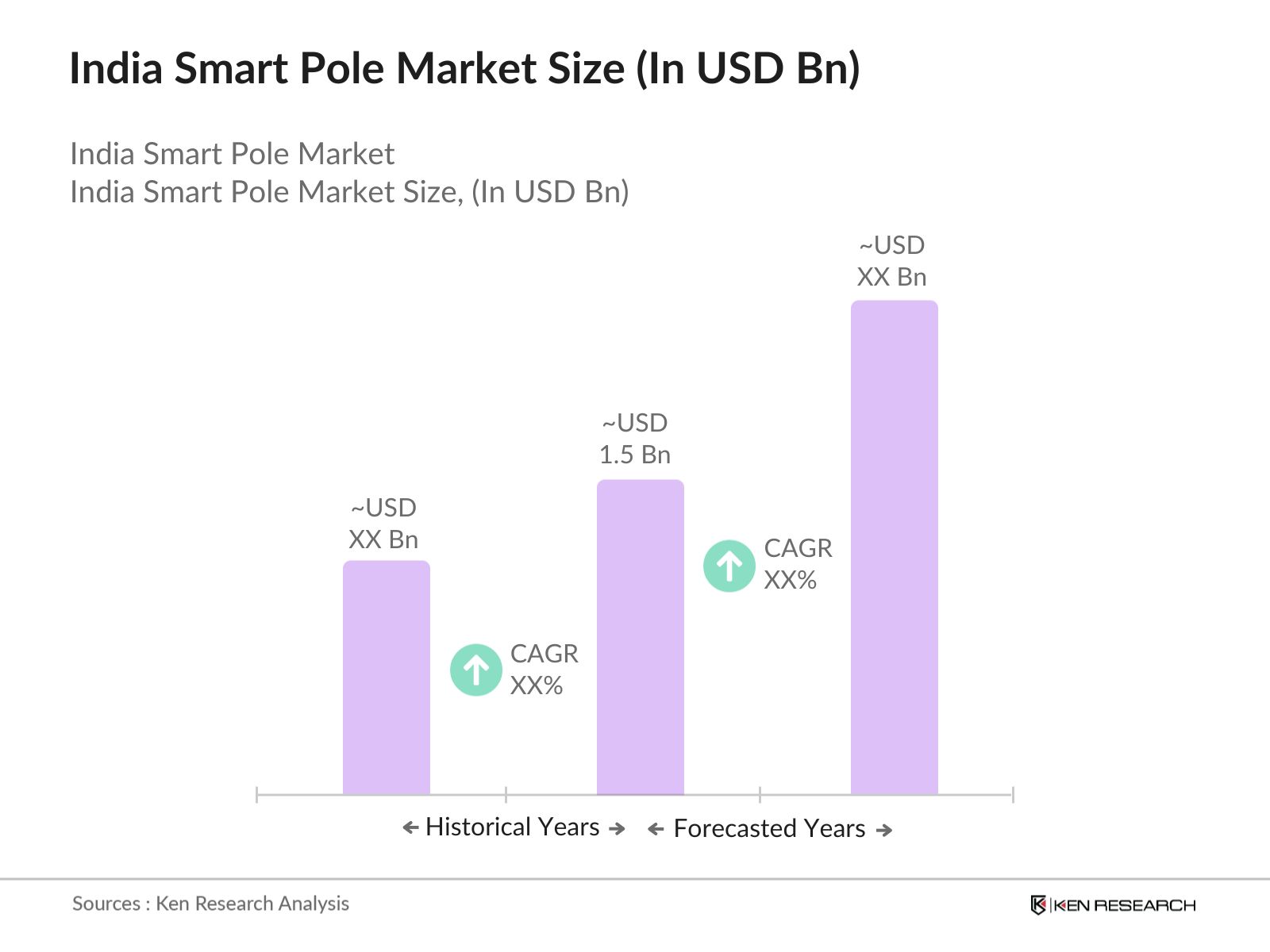
- The India Smart Pole market, valued at USD 1.5 Billion, has seen rapid growth driven by an increase in government initiatives such as the Smart Cities Mission, which aims to create more sustainable and digitally connected urban environments. The growing adoption of IoT technology and renewable energy sources has also boosted market expansion, alongside rising investments in urban infrastructure and digitalization projects. Additionally, the deployment of smart poles as part of integrated city solutions, including smart lighting, Wi-Fi hotspots, and surveillance, has been pivotal in driving this market.
- Cities such as Delhi, Mumbai, and Bengaluru dominate the India Smart Pole market. This is due to these cities early adoption of smart city technologies and the high demand for advanced infrastructure solutions, backed by strong government support and public-private partnerships. These cities have significant urbanization challenges, which create an opportunity for smart poles to enhance urban management, reduce energy consumption, and improve public safety.
- The Smart City Mission guidelines provide a comprehensive framework for the development of smart infrastructure, including smart poles. The government has set specific benchmarks for urban utilities such as adaptive lighting, surveillance, and digital communication systems, which smart poles are designed to address. By 2023, over 7,000 smart poles have been installed across 100 cities, in line with these guidelines. The mission is focused on reducing energy consumption and enhancing public safety, positioning smart poles as a key component of urban development.
India Smart Pole Market Segmentation
By Component: The market is segmented by component into Lighting Solutions, Communication Devices, Cameras & Surveillance Systems, EV Charging Units, and Environmental Monitoring Sensors.
Recently, Lighting Solutions have held a dominant market share due to their integration with energy-efficient LED technology and their ability to reduce municipal energy consumption significantly. Cities are increasingly replacing traditional streetlights with smart lighting systems that can adjust brightness based on pedestrian activity and traffic conditions, which also contributes to significant cost savings for municipalities.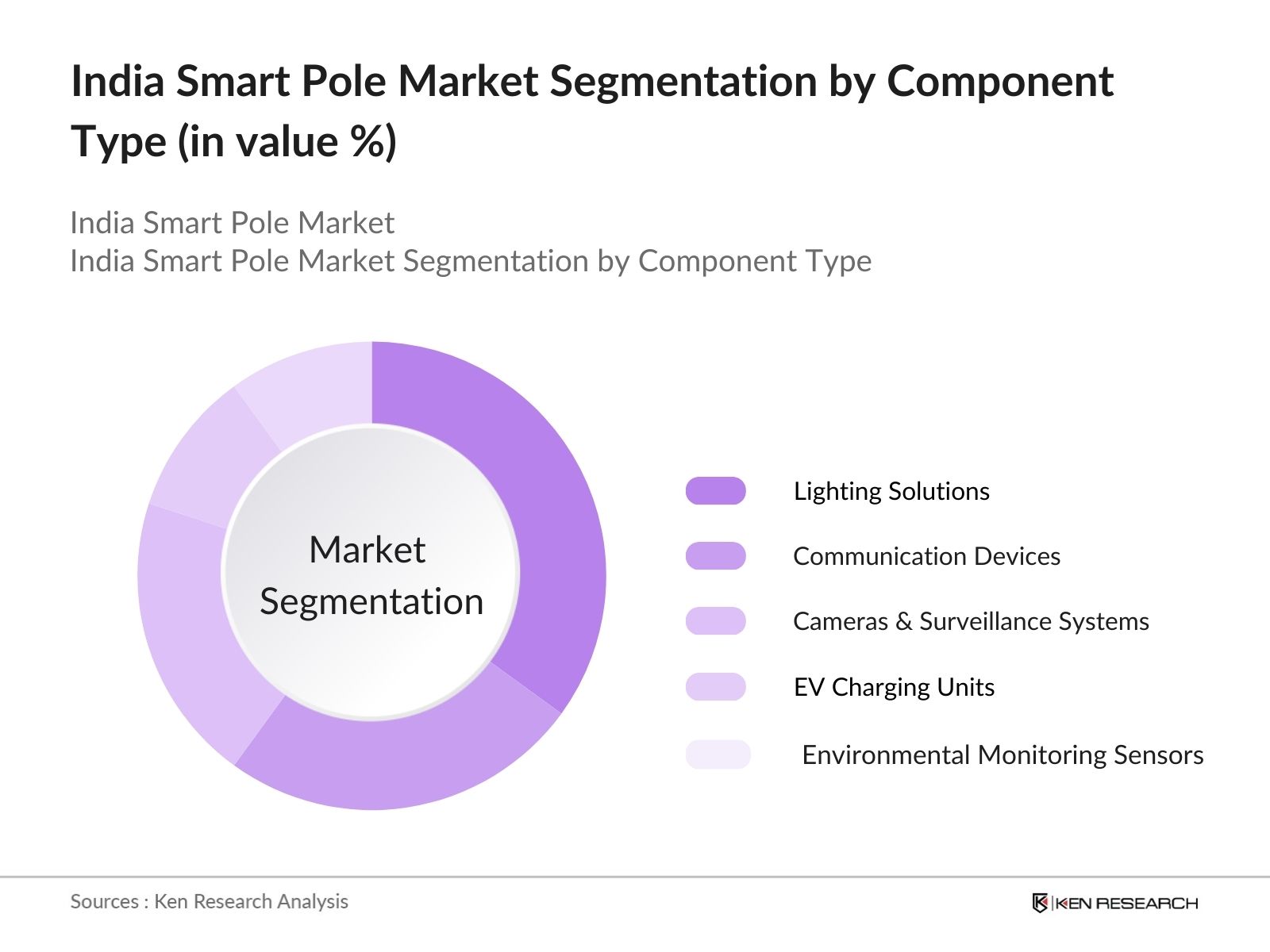
By Installation Type: The market is also segmented by installation type into New Installation and Retrofit Installation.
New Installations have led the market due to the growing demand for smart infrastructure projects across urban areas. Cities, under government-backed initiatives like Smart City Mission, are looking for complete overhauls of their existing infrastructure, leading to a higher market share for new installations. These projects offer better opportunities to integrate smart technology from the ground up, rather than adapting outdated infrastructure, which is often more costly.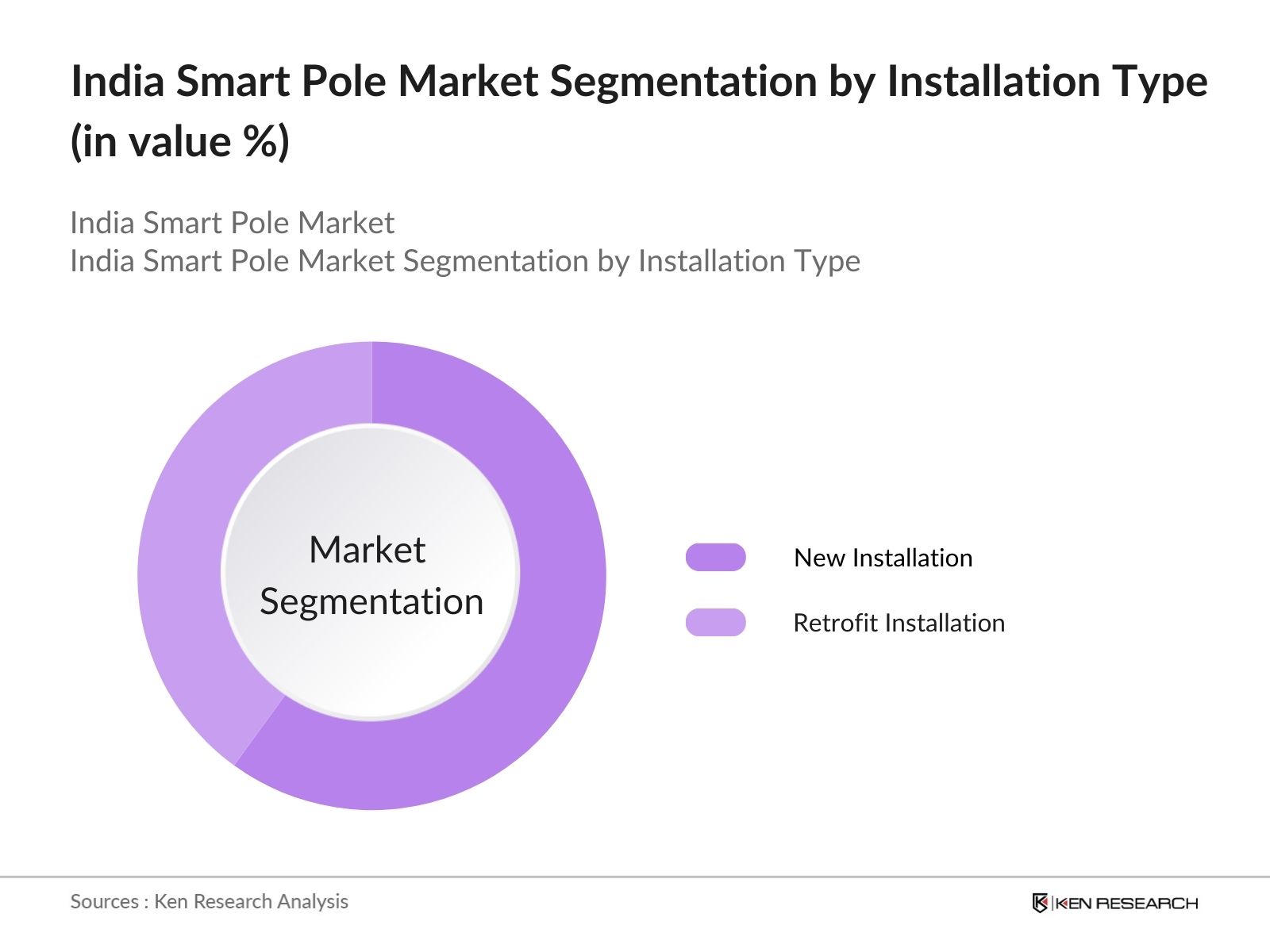
India Smart Pole Market Competitive Landscape
The India Smart Pole market is dominated by both domestic and international players. Companies are capitalizing on the growing demand for smart city solutions, integrating IoT devices, energy-efficient systems, and urban infrastructure technologies. The market is characterized by a few key players with extensive distribution networks and a strong focus on R&D to develop advanced smart poles equipped with surveillance systems, renewable energy sources, and communication solutions.
|
Company |
Established |
Headquarters |
No. of Employees |
Revenue (2023) |
Technological Innovations |
Partnerships |
R&D Spend (2023) |
Global Presence |
Key Clients |
|
Bharat Electronics Limited |
1954 |
Bengaluru, India |
|||||||
|
Larsen & Toubro |
1938 |
Mumbai, India |
|||||||
|
Wipro Enterprises |
1945 |
Bengaluru, India |
|||||||
|
Philips Lighting India |
1930 |
Gurgaon, India |
|||||||
|
Honeywell Automation India |
1984 |
Pune, India |
India Smart Pole Industry Analysis
Market Growth Drivers
- Urbanization and Infrastructure Development: India's urban population is witnessing substantial growth, reaching 472 million in 2022, as reported by the World Bank. This growth is catalyzing demand for smart urban infrastructure such as smart poles. The influx of rural populations to cities such as Delhi, Mumbai, and Bengaluru are further accelerating the need for improved public utilities. By 2025, projections indicate that more than 525 million people will live in urban areas. Smart poles, which provide efficient energy use, traffic management, and connectivity, are becoming increasingly essential in modern city planning as urban centers become more densely populated and technologically integrated.
- Smart City Initiatives (Smart City Mission, AMRUT): The Smart City Mission, launched by the Government of India, is at the core of urban modernization. Under this program, INR 205,018 crore has been allocated for the development of 100 smart cities. As of 2023, the implementation of smart infrastructure, including smart poles, has seen significant progress. Moreover, the AMRUT (Atal Mission for Rejuvenation and Urban Transformation) scheme is enhancing urban living standards in approximately 500 smaller cities. This push toward smart infrastructure development is integral to Indias transition toward smarter cities, where smart poles will be vital for intelligent traffic management, surveillance, and public services.
- Government Support (100 Smart Cities Program, NITI Aayog Guidelines): The 100 Smart Cities initiative, backed by the Ministry of Urban Development, has provided a structured approach to the deployment of smart infrastructure, including smart poles. As of 2024, the government continues to invest in the program with an emphasis on technological upgrades that align with NITI Aayog's digital infrastructure guidelines. Over INR 48,000 crore has been earmarked for projects supporting smart poles, energy-efficient lighting, and urban surveillance networks. The integration of smart poles in urban landscapes under these guidelines aims to boost public safety and reduce energy consumption.
Market Challenges
- High Installation and Maintenance Costs: The high cost of installing and maintaining smart poles remains a significant challenge. Initial setup costs for smart poles, which integrate LED lighting, surveillance, and communication systems, range between INR 3-5 lakh per unit depending on the complexity of the system. Additionally, the costs of maintaining these poles, which include regular software updates, network management, and physical repairs, add to operational expenses. Despite these challenges, government incentives under the Smart City Mission aim to mitigate some financial hurdles through subsidies and public-private partnerships (PPPs).
- Lack of Skilled Workforce in IoT Implementation: India faces a shortage of skilled professionals adept at implementing IoT technology, a critical component of smart pole systems. As of 2023, reports from the Ministry of Skill Development and Entrepreneurship indicate that while over 350 million people were trained in various sectors, the IoT workforce remains limited, especially in Tier 2 and Tier 3 cities. This skills gap affects the speed and efficiency of smart pole deployment. Training programs focused on IoT and smart infrastructure development are gradually addressing this gap, but it remains a considerable barrier for nationwide implementation.
India Smart Pole Industry Future Outlook
The market is also expected to expand into smaller cities and towns, as urbanization spreads beyond major metropolitan areas. The growing demand for energy-efficient solutions, alongside public and private investments, will provide further opportunities for market growth.
Future Market Opportunities
- Technological Advancements in LED Lighting: Advancements in LED lighting technology are creating new opportunities for smart poles in India. By 2024, the Ministry of Power's UJALA scheme reported that over 367 million LED bulbs were distributed nationwide, significantly reducing energy consumption. Smart poles equipped with LED lights not only offer energy efficiency but also allow for adaptive lighting based on real-time environmental data. This shift towards energy-saving solutions is enhancing the appeal of smart poles in both urban and rural settings, where reducing electricity costs is a high priority.
- Expansion in Rural Areas: Although the smart pole market is concentrated in urban areas, rural expansion presents untapped potential. The BharatNet project, which aims to provide high-speed internet to over 600,000 villages by 2025, is creating a foundation for smart infrastructure in rural India. Smart poles, equipped with communication devices and solar panels, are increasingly seen as a viable solution for rural electrification, connectivity, and public safety. These poles can provide Wi-Fi hotspots and enhance rural surveillance, helping bridge the digital divide between rural and urban India.
Scope of the Report
|
By Component |
Lighting Solutions Communication Devices Cameras, EV Charging Units Environmental Monitoring Sensors |
|
By Installation Type |
New Installation Retrofit Installation |
|
By Application |
Commercial, Public Spaces Industrial Zones Residential Areas |
|
By End User |
Municipalities Private Sector Transportation Authorities Utility Providers |
|
By Region |
North East West South |
Products
Key Target Audience
Municipalities and Local Governments (Smart City Mission)
Utility Providers (Telecom, Electric Utilities)
Infrastructure and Urban Development Companies
Energy Companies (Renewable Energy Suppliers)
Technology Providers (IoT and Smart Infrastructure)
Transportation Authorities
Banks and Financial Institutes
Private Sector (Commercial Enterprises, Malls, Industrial Parks)
Investment and Venture Capitalist Firms (Sequoia Capital, SoftBank)
Government and Regulatory Bodies (Ministry of Housing and Urban Affairs, NITI Aayog)
Companies
India Smart Pole Market Major Players
Bharat Electronics Limited (BEL)
Larsen & Toubro (L&T)
Wipro Enterprises Ltd.
Philips Lighting India (Signify Innovations)
Honeywell Automation India Ltd.
Bajaj Electricals Limited
Siemens Limited
Cisco Systems India Pvt Ltd.
ABB India Ltd.
Panasonic India Pvt Ltd.
Havells India Limited
Schrder India Pvt. Ltd.
Crompton Greaves Consumer Electricals Ltd.
Tata Communications Ltd.
Infosys Limited
Table of Contents
1. India Smart Pole Market Overview
1.1. Definition and Scope
1.2. Market Taxonomy
1.3. Market Growth Rate
1.4. Market Segmentation Overview
2. India Smart Pole Market Size (In INR Bn)
2.1. Historical Market Size
2.2. Year-On-Year Growth Analysis
2.3. Key Market Developments and Milestones
3. India Smart Pole Market Analysis
3.1. Growth Drivers
3.1.1. Integration with Smart City Projects (100 Smart Cities Mission)
3.1.2. Rising Adoption of IoT and 5G Technologies
3.1.3. Government Initiatives on Urban Infrastructure (AMRUT, Digital India)
3.1.4. Demand for Sustainable and Renewable Energy Solutions (Solar Power)
3.2. Market Challenges
3.2.1. High Installation and Maintenance Costs
3.2.2. Limited Technological Awareness in Tier 2 and Tier 3 Cities
3.2.3. Regulatory Barriers for IoT Device Integration
3.3. Opportunities
3.3.1. Growing Need for Smart Traffic Solutions
3.3.2. Increased Demand for Energy-Efficient Lighting Systems
3.3.3. Potential for Expansion in Semi-Urban Areas
3.4. Trends
3.4.1. Increasing Deployment of AI-Powered Traffic Systems
3.4.2. Rising Use of Solar-Powered Smart Poles
3.4.3. Enhanced Security Surveillance Using Smart Cameras
3.5. Government Regulation
3.5.1. Ministry of Housing and Urban Affairs Guidelines for Smart Cities
3.5.2. Telecom Regulatory Authority of India (TRAI) for 5G and IoT Integration
3.5.3. Energy Efficiency Norms from Bureau of Energy Efficiency (BEE)
3.6. SWOT Analysis
3.7. Stakeholder Ecosystem
3.8. Porters Five Forces Analysis
3.9. Competitive Landscape
4. India Smart Pole Market Segmentation
4.1. By Component (In Value %)
4.1.1. Lighting Solutions
4.1.2. Communication Devices (Wi-Fi, IoT Sensors, 5G Infrastructure)
4.1.3. Cameras and Surveillance Systems
4.1.4. EV Charging Units
4.1.5. Environmental Monitoring Sensors
4.2. By Installation Type (In Value %)
4.2.1. New Installation
4.2.2. Retrofit Installation
4.3. By Application (In Value %)
4.3.1. Commercial
4.3.2. Public Spaces
4.3.3. Industrial Zones
4.3.4. Residential Areas
4.4. By End User (In Value %)
4.4.1. Municipalities and Local Governments
4.4.2. Private Sector (Enterprises, Malls, Industrial Parks)
4.4.3. Utility Providers (Telecom, Electric Utilities)
4.4.4. Transportation and Traffic Management Authorities
4.5. By Region (In Value %)
4.5.1. North
4.5.2. South
4.5.3. West
4.5.4. East
5. India Smart Pole Market Competitive Analysis
5.1. Detailed Profiles of Major Companies
5.1.1. Bharat Electronics Limited (BEL)
5.1.2. Larsen & Toubro (L&T)
5.1.3. Wipro Enterprises Ltd.
5.1.4. Philips Lighting India (Signify Innovations)
5.1.5. Honeywell Automation India Ltd.
5.1.6. Bajaj Electricals Limited
5.1.7. Siemens Limited
5.1.8. Crompton Greaves Consumer Electricals Ltd.
5.1.9. ABB India Ltd.
5.1.10. Tata Communications Ltd.
5.1.11. Infosys Limited
5.1.12. Cisco Systems India Pvt Ltd.
5.1.13. Schrder India Pvt. Ltd.
5.1.14. Panasonic India Pvt Ltd.
5.1.15. Havells India Limited
5.2. Cross Comparison Parameters (Revenue, Market Share, Headquarters, No. of Employees, Product Range, Technological Innovations, R&D Spend, Key Clients)
5.3. Market Share Analysis
5.4. Strategic Initiatives
5.5. Mergers and Acquisitions
5.6. Investment Analysis
5.7. Government Tenders and Contracts
5.8. Private Equity and Venture Capital Funding
6. India Smart Pole Market Regulatory Framework
6.1. Smart City Guidelines (Ministry of Housing and Urban Affairs)
6.2. Renewable Energy Standards (Ministry of New and Renewable Energy)
6.3. Telecom and IoT Regulations (TRAI Guidelines)
6.4. Certification and Compliance Processes (BIS Standards, IEC Standards)
7. India Smart Pole Future Market Size (In INR Bn)
7.1. Future Market Size Projections
7.2. Key Factors Driving Future Growth
8. India Smart Pole Market Analysts Recommendations
8.1. Total Addressable Market (TAM)/Serviceable Addressable Market (SAM)/Serviceable Obtainable Market (SOM) Analysis
8.2. Key Customer Segment Analysis (Local Governments, Smart City Projects, Infrastructure Providers)
8.3. White Space Opportunity Analysis
8.4. Marketing Initiatives
Research Methodology
Step 1: Identification of Key Variables
The initial phase involves mapping out the ecosystem of the India Smart Pole market, identifying key stakeholders like manufacturers, government bodies, and technology providers. Extensive secondary research is conducted using proprietary databases and government sources to define the market variables influencing growth.
Step 2: Market Analysis and Construction
Historical data is gathered and analyzed, focusing on the penetration of smart poles in Indian cities, the adoption of IoT technologies, and the market size. The evaluation includes an in-depth assessment of revenue generation and market saturation levels across major metropolitan areas.
Step 3: Hypothesis Validation and Expert Consultation
Industry experts from major companies, including infrastructure developers and technology providers, are consulted through phone interviews. These experts provide insights on operational challenges, market trends, and financial performance, which are validated through primary and secondary research.
Step 4: Research Synthesis and Final Output
The final analysis is conducted by integrating expert insights and market data, ensuring accurate forecasts for market growth. The data is verified with government agencies involved in smart city planning, ensuring a reliable bottom-up analysis.
Frequently Asked Questions
01. How big is the India Smart Pole Market?
The India Smart Pole market was valued at USD 1.5 billion, driven by rapid urbanization, government initiatives like the Smart Cities Mission, and advancements in IoT-based smart infrastructure solutions.
02. What are the challenges in the India Smart Pole Market?
The market faces challenges in India Smart Pole market such as high initial installation costs, lack of skilled workforce in IoT and AI technologies, and limited awareness in non-metropolitan regions, which hinder market growth.
03. Who are the major players in the India Smart Pole Market?
Key players in the India Smart Pole market include Bharat Electronics Limited, Larsen & Toubro, Wipro Enterprises, Philips Lighting India, and Honeywell Automation India, driven by their strong distribution networks and innovative technologies.
04. What are the growth drivers of the India Smart Pole Market?
Growth drivers in India Smart Pole market include government-backed smart city initiatives, increased demand for energy-efficient lighting solutions, and advancements in IoT and communication technologies integrated into urban infrastructure.
05. What are the opportunities in the India Smart Pole Market?
Opportunities in India Smart Pole market lie in the expansion of smart infrastructure into smaller cities and towns, integration of 5G technologies, and the adoption of renewable energy solutions for powering smart poles.
Why Buy From Us?

What makes us stand out is that our consultants follows Robust, Refine and Result (RRR) methodology. i.e. Robust for clear definitions, approaches and sanity checking, Refine for differentiating respondents facts and opinions and Result for presenting data with story

We have set a benchmark in the industry by offering our clients with syndicated and customized market research reports featuring coverage of entire market as well as meticulous research and analyst insights.

While we don't replace traditional research, we flip the method upside down. Our dual approach of Top Bottom & Bottom Top ensures quality deliverable by not just verifying company fundamentals but also looking at the sector and macroeconomic factors.

With one step in the future, our research team constantly tries to show you the bigger picture. We help with some of the tough questions you may encounter along the way: How is the industry positioned? Best marketing channel? KPI's of competitors? By aligning every element, we help maximize success.

Our report gives you instant access to the answers and sources that other companies might choose to hide. We elaborate each steps of research methodology we have used and showcase you the sample size to earn your trust.

If you need any support, we are here! We pride ourselves on universe strength, data quality, and quick, friendly, and professional service.