Ken Research Logo

India Vertical Farming Market Outlook to 2030

Region:Asia

Author(s):Shubham Kashyap

Product Code:KROD9396

Published On

December 2024

Total pages

91

About the Report

India Vertical Farming Market Overview

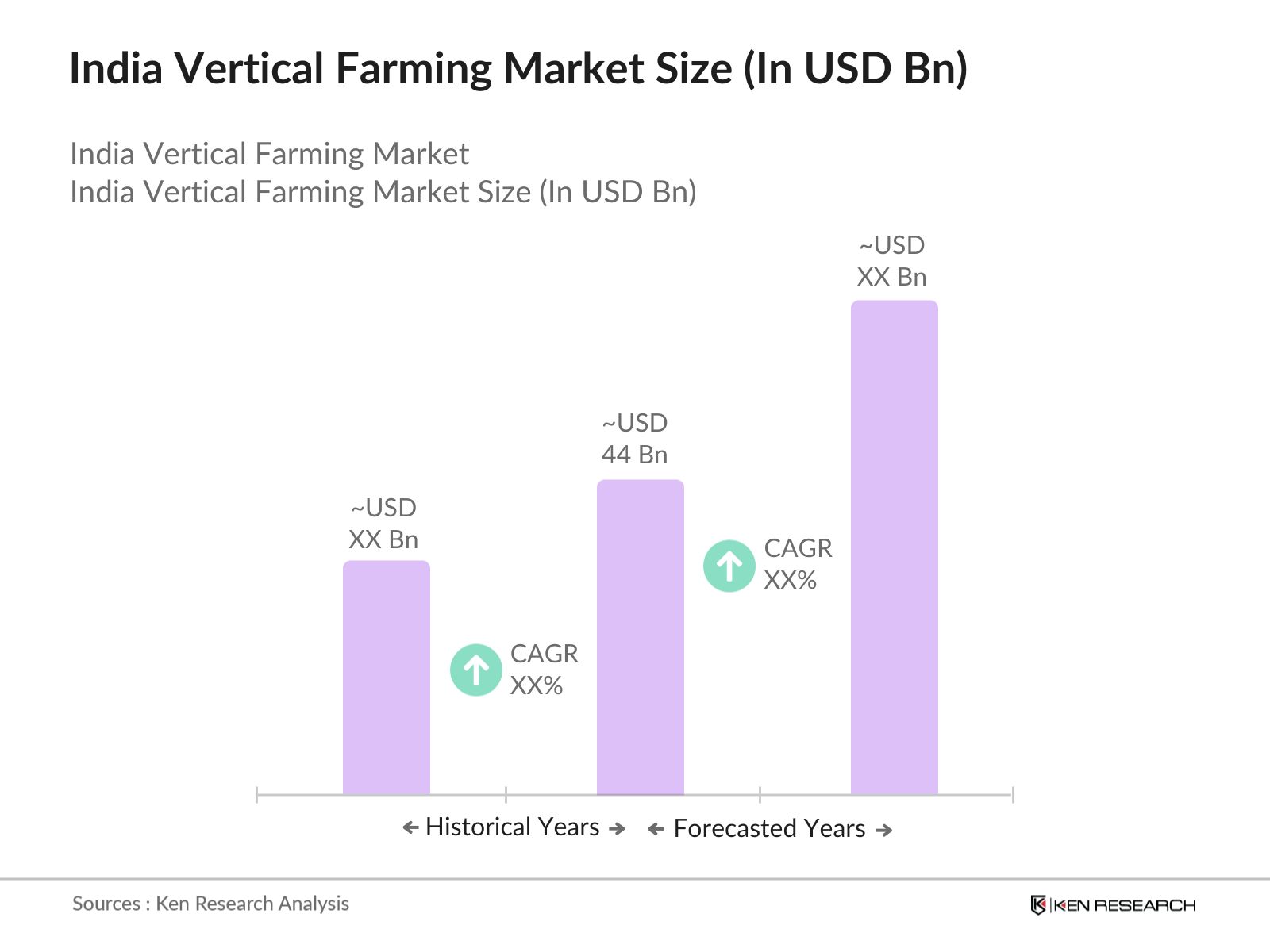
  • The India Vertical Farming market is valued at USD 44 billion, driven by the increasing need to address food security amidst rapid urbanization and limited arable land. Vertical farming provides a sustainable solution for food production by enabling controlled environment agriculture, which ensures consistent yields irrespective of external climate conditions. Innovations in hydroponics, aeroponics, and LED lighting have further facilitated market growth, making it a viable option for urban food production. India Vertical Farming Market Size
  • Key demand centers for vertical farming in India include major metropolitan cities like Delhi, Mumbai, and Bangalore. These cities lead due to high population densities, limited traditional farming space, and a growing demand for fresh, locally sourced produce. Government policies supporting technological advancements in agriculture and the drive for sustainable urban development have contributed to the increased adoption of vertical farming in these regions.
  • The Indian governments policies are increasingly supportive of high-tech farming solutions, including vertical farming. The Pradhan Mantri Krishi Sinchai Yojana, launched in 2022, encourages water-efficient farming methods such as hydroponics, promoting the adoption of vertical farms. This policy supports sustainable agricultural practices that align with limited water resources, particularly in urban areas where water availability is a concern.

India Vertical Farming Market Segmentation

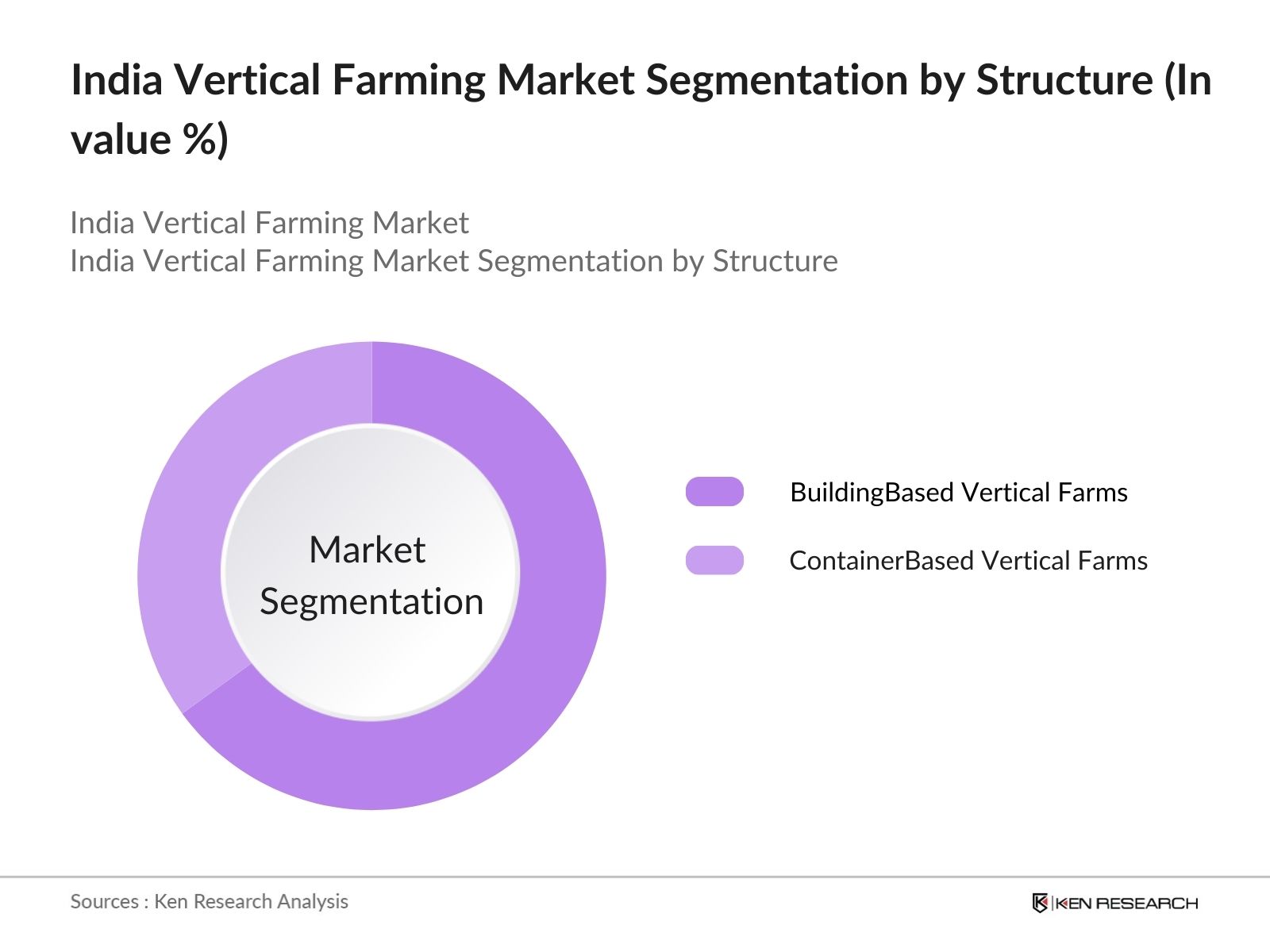
  • By Structure: The market is segmented by structure into building-based vertical farms and container-based vertical farms. Building-based vertical farms dominate due to their compatibility with urban infrastructures, allowing largescale cultivation within city limits. This structure is favourable for high rise buildings and underutilized spaces in densely populated cities, addressing the growing demand for fresh produce. India Vertical Farming Market Segmentation by structure
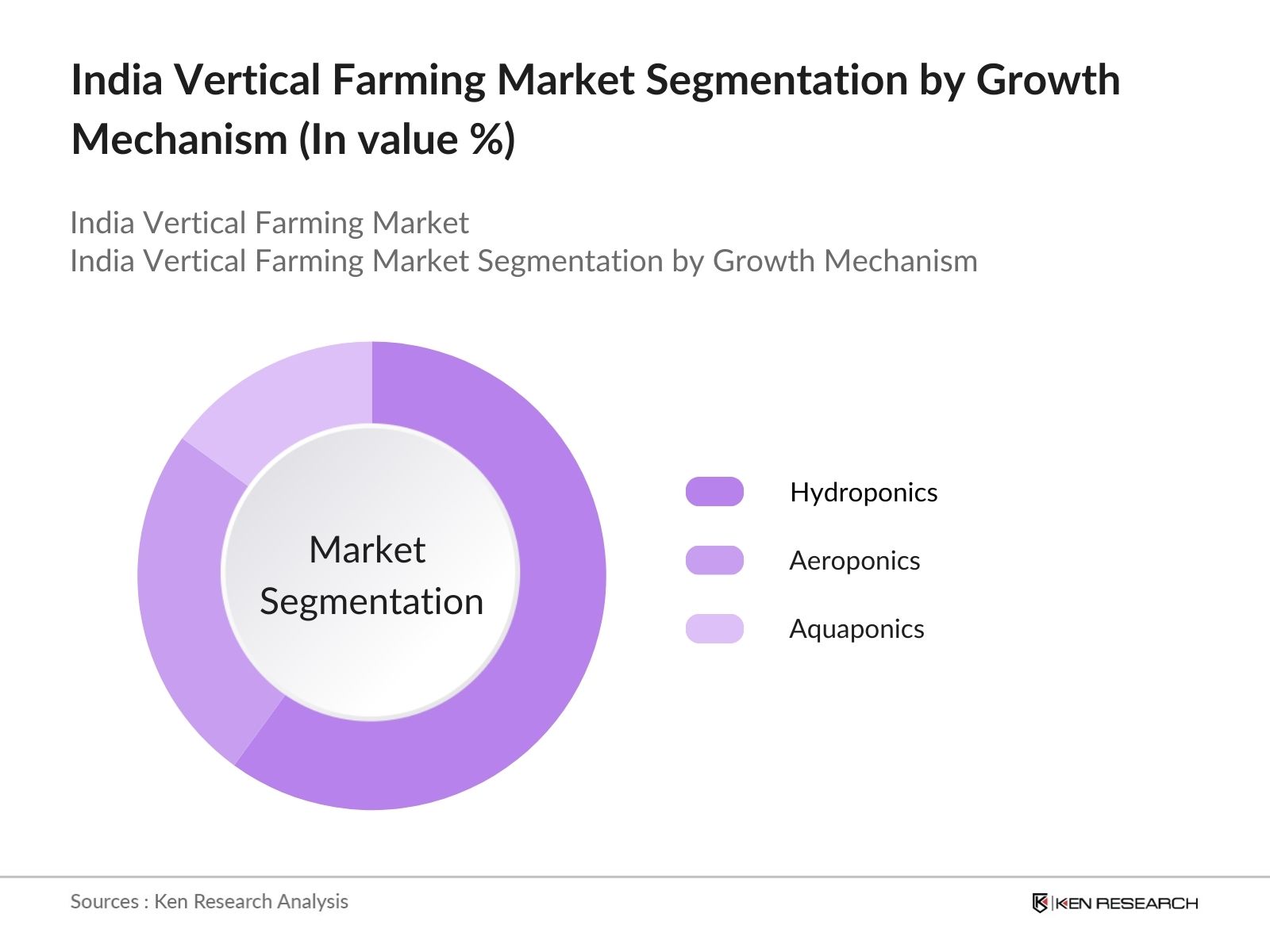
  • By Growth Mechanism: This segmentation includes hydroponics, aeroponics, and aquaponics. Hydroponics holds the largest market share, owing to its efficient water and nutrient usage, which results in faster crop growth and higher yields. This methods versatility in cultivating various crops and adaptability to different urban farming setups make it a preferred choice among Indian vertical farmers. India Vertical Farming Market Segmentation by growth

India Vertical Farming Market Competitive Landscape

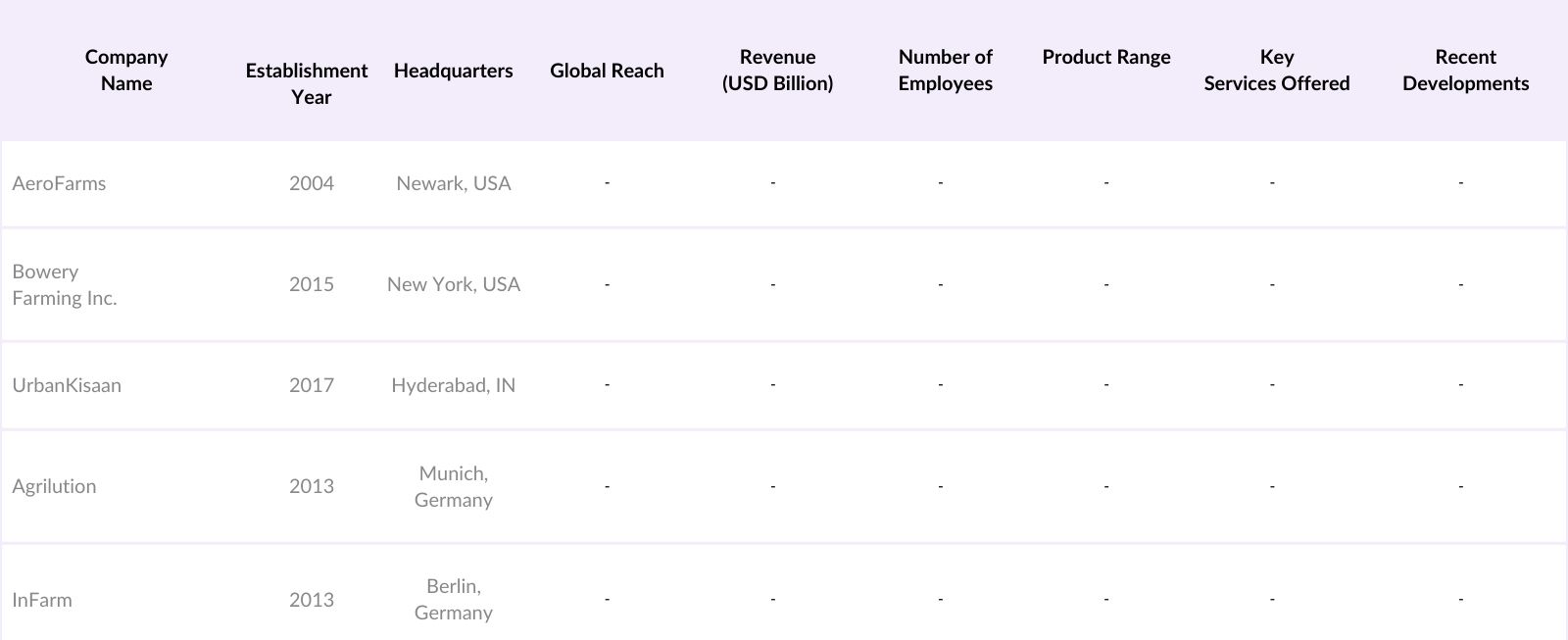
The India Vertical Farming market features a blend of established players and innovative startups driving the sector's growth. Key companies leverage advanced agricultural technologies, strategic partnerships, and strong distribution networks to maintain their market positions. India Vertical Farming Market Competitive Landscape
India Vertical Farming Market Analysis

Growth Drivers

  • Rising Demand for Fresh Produce in Urban Areas: The rapid growth of urbanization in India has significantly contributed to the adoption of vertical farming practices. According to the World Bank, Indias urban population increased by over 10 million between 2022 and 2023, reaching 519 million in 2023. This urban expansion has heightened demand for fresh produce within cities, creating opportunities for vertical farms to supply fresh food directly to urban consumers without the need for extensive transport. Urban areas like Mumbai, Delhi, and Bengaluru are increasingly incorporating vertical farms, which align with limited space constraints while meeting the rising demand for local produce.
  • Rising Population in the Country: Indias population reached approximately 1.43 billion in 2023, making it the worlds most populous country. The rising population has driven demand for sustainable agricultural solutions like vertical farming to meet food supply requirements. According to the United Nations, Indias urban centers are expected to house 40% of the population by 2025, requiring efficient food production methods to maintain supply chains within these densely populated areas. Vertical farming, with its ability to operate in smaller spaces, is becoming essential to address this demand surge.
  • Technological Advancements in Indoor Farming: Advanced agricultural technologies have catalyzed the growth of vertical farming in India. With the rise of controlled-environment agriculture, India has seen an influx of advanced hydroponic and aeroponic systems, as well as climate-controlled facilities that improve crop yields. As of 2024, over 2,500 vertical farming setups utilize smart sensors and automated lighting in major cities, supported by companies adopting AI and IoT-based solutions. These technologies help enhance productivity per square foot of space and ensure consistent crop quality.

Challenges

  • High Initial Investment: Vertical farming requires a substantial initial investment for infrastructure, technology, and controlled environment systems. The setup of a hydroponic vertical farm in urban India involves high land and equipment costs, creating a financial barrier for smaller enterprises. Consequently, market entry is often limited to larger companies or projects that benefit from government support. This investment-heavy requirement restricts broader adoption and scalability, impacting the market's overall expansion and accessibility for smaller or independent growers.
  • Energy Consumption: Vertical farming operations are energy-intensive, particularly for facilities that rely on artificial lighting and climate control systems. These farms face high operational costs due to the significant electricity consumption necessary to maintain optimal growth conditions, especially in urban areas where energy costs are higher. This reliance on substantial energy inputs affects the overall profitability of vertical farming, posing a challenge to the financial sustainability of these operations.

India Vertical Farming Market Future Outlook

The India Vertical Farming market is expected to witness substantial growth, supported by ongoing government initiatives, advancements in agricultural technologies, and rising consumer demand for sustainably produced food. Future developments in automation, artificial intelligence, and IoT are anticipated to drive operational efficiency and enable largerscale vertical farms in urban areas.

Future Market Opportunities

  • Integration with Smart Technologies: The integration of smart technologies presents significant growth potential for Indias vertical farming market. IoT and AI-driven farming solutions allow real-time monitoring of environmental factors, optimizing plant growth and reducing resource use. In 2024, a number of vertical farms in India have incorporated AI systems for crop management, supported by investments from tech-driven agriculture companies. The push for precision agriculture technology aligns well with Indias goal to enhance food security while reducing agricultural footprint.
  • Expansion in Urban Areas: With increasing urbanization, the demand for local and fresh produce is on the rise. According to the UN, Indias urban population is set to reach 600 million by 2030, driving the need for urban agriculture solutions like vertical farming. This shift provides ample opportunities for vertical farms to expand in cities such as Mumbai and Delhi, where land constraints make traditional farming impractical. The proximity to end consumers also reduces logistics costs, making vertical farming a feasible and sustainable urban solution.

Scope of the Report

By Structure

BuildingBased Vertical Farms
ContainerBased Vertical Farms

By Growth Mechanism

Hydroponics
Aeroponics
Aquaponics

By Component

Lighting Systems
Irrigation Components
Climate Control
Sensors
Building Materials

By Crop Type

Leafy Greens
Herbs
Fruits
Vegetables

By Region

North
South
East
West

Products

Key Target Audience

  • Urban Farmers and Agripreneurs

  • Agricultural Technology Providers

  • Food Retail Chains

  • Hospitality Industry

  • Government and Regulatory Bodies (Ministry of Agriculture & Farmers Welfare)

  • Investors and Venture Capitalist Firms

  • Banks and Financial Institutions

  • Environmental NGOs

Companies

Players Mentioned in the Report

  • AeroFarms

  • Bowery Farming Inc.

  • Plenty Unlimited Inc.

  • UrbanKisaan

  • Agrilution

  • InFarm

  • Sky Greens

  • Spread Co., Ltd.

  • Green Sense Farms

  • BrightFarms

  • Gotham Greens

  • Iron Ox

  • CropOne Holdings

  • Freight Farms

  • Vertical Harvest

Table of Contents

India Vertical Farming Market Overview

1.1 Definition and Scope

1.2 Market Taxonomy

1.3 Market Growth Rate

1.4 Market Segmentation Overview

India Vertical Farming Market Size (In USD Million)

2.1 Historical Market Size

2.2 Year-On-Year Growth Analysis

2.3 Key Market Developments and Milestones

India Vertical Farming Market Analysis

3.1 Growth Drivers

3.1.1 Urbanization

3.1.2 Population Growth

3.1.3 Technological Advancements

3.1.4 Government Initiatives

3.2 Market Challenges

3.2.1 High Initial Investment

3.2.2 Energy Consumption

3.2.3 Technical Expertise

3.3 Opportunities

3.3.1 Integration with Smart Technologies

3.3.2 Expansion in Urban Areas

3.3.3 Export Potential

3.4 Trends

3.4.1 Adoption of Hydroponics and Aeroponics

3.4.2 Use of LED Lighting Systems

3.4.3 Organic Produce Demand

3.5 Government Regulations

3.5.1 Agricultural Policies

3.5.2 Subsidies and Incentives

3.5.3 Environmental Standards

3.6 SWOT Analysis

3.7 Stakeholder Ecosystem

3.8 Porters Five Forces Analysis

3.9 Competitive Landscape

India Vertical Farming Market Segmentation

4.1 By Structure (In Value %)

4.1.1 Building-Based Vertical Farms

4.1.2 Container-Based Vertical Farms

4.2 By Growth Mechanism (In Value %)

4.2.1 Hydroponics

4.2.2 Aeroponics

4.2.3 Aquaponics

4.3 By Component (In Value %)

4.3.1 Lighting Systems

4.3.2 Irrigation Components

4.3.3 Climate Control

4.3.4 Sensors

4.3.5 Building Materials

4.4 By Crop Type (In Value %)

4.4.1 Leafy Greens

4.4.2 Herbs

4.4.3 Fruits

4.4.4 Vegetables

4.5 By Region (In Value %)

4.5.1 North

4.5.2 South

4.5.3 East

4.5.4 West

India Vertical Farming Market Competitive Analysis

5.1 Detailed Profiles of Major Companies

5.1.1 AeroFarms

5.1.2 Bowery Farming Inc.

5.1.3 Plenty Unlimited Inc.

5.1.4 UrbanKisaan

5.1.5 Agrilution

5.1.6 InFarm

5.1.7 Sky Greens

5.1.8 Spread Co., Ltd.

5.1.9 Green Sense Farms

5.1.10 BrightFarms

5.1.11 Gotham Greens

5.1.12 Iron Ox

5.1.13 CropOne Holdings

5.1.14 Freight Farms

5.1.15 Vertical Harvest

5.2 Cross Comparison Parameters (Revenue, Number of Employees, Headquarters, Inception Year, Product Portfolio, Market Presence, Technological Innovations, Strategic Initiatives)

5.3 Market Share Analysis

5.4 Strategic Initiatives

5.5 Mergers and Acquisitions

5.6 Investment Analysis

5.6.1 Venture Capital Funding

5.6.2 Government Grants

5.6.3 Private Equity Investments

India Vertical Farming Market Regulatory Framework

6.1 Environmental Standards

6.2 Compliance Requirements

6.3 Certification Processes

India Vertical Farming Future Market Size (In USD Million)

7.1 Future Market Size Projections

7.2 Key Factors Driving Future Market Growth

India Vertical Farming Future Market Segmentation

8.1 By Structure (In Value %)

8.2 By Growth Mechanism (In Value %)

8.3 By Component (In Value %)

8.4 By Crop Type (In Value %)

8.5 By Region (In Value %)

India Vertical Farming Market Analysts Recommendations

9.1 Total Addressable Market (TAM), Serviceable Available Market (SAM), and Serviceable Obtainable Market (SOM) Analysis

9.2 Customer Cohort Analysis

9.3 Marketing Initiatives

9.4 White Space Opportunity Analysis

Disclaimer Contact Us

Research Methodology


Step 1: Identification of Key Variables

The first step involves constructing a comprehensive ecosystem map for the India Vertical Farming Market. This phase is supported by extensive desk research and proprietary databases to gather detailed industry data. The objective is to identify key factors influencing market dynamics.

Step 2: Market Analysis and Construction

This phase involves compiling and analyzing historical data related to the India Vertical Farming Market. Key metrics like market penetration and revenue generation are assessed, along with an evaluation of technology adoption across various segments.

Step 3: Hypothesis Validation and Expert Consultation

Market hypotheses are validated through interviews with industry experts using computer assisted telephone interviews (CATIs). Insights from these consultations help refine data accuracy and enhance the report's reliability.

Step 4: Research Synthesis and Final Output

The final phase includes engaging with vertical farming companies to gather insights on product performance, sales trends, and consumer preferences. This ensures a comprehensive, validated analysis of the India Vertical Farming Market.


Frequently Asked Questions

How big is the India Vertical Farming Market?

The India Vertical Farming market is valued at USD 44 billion, driven by the increasing demand for sustainable and local food production in urban areas.

What are the challenges in the India Vertical Farming Market?

Key challenges in the India Vertical Farming market include high initial setup costs and the dependence on a stable energy supply to power climate control and lighting systems.

Who are the major players in the India Vertical Farming Market?

Leading players in the India Vertical Farming market include AeroFarms, Bowery Farming Inc., UrbanKisaan, Agrilution, and InFarm, who are recognized for their innovations and market reach.

What are the growth drivers of the India Vertical Farming Market?

Growth drivers in the India Vertical Farming market include urbanization, technological advancements in indoor farming, and increasing consumer demand for fresh, locally sourced produce.

Why Buy From Us?

RRR
Refine Robust Result (RRR) Framework

What makes us stand out is that our consultants follows Robust, Refine and Result (RRR) methodology. i.e. Robust for clear definitions, approaches and sanity checking, Refine for differentiating respondents facts and opinions and Result for presenting data with story

Our Reach Is Unmatched

We have set a benchmark in the industry by offering our clients with syndicated and customized market research reports featuring coverage of entire market as well as meticulous research and analyst insights.

Research
Shifting the Research Paradigm

While we don't replace traditional research, we flip the method upside down. Our dual approach of Top Bottom & Bottom Top ensures quality deliverable by not just verifying company fundamentals but also looking at the sector and macroeconomic factors.

Insite
More Insights-Better Decisions

With one step in the future, our research team constantly tries to show you the bigger picture. We help with some of the tough questions you may encounter along the way: How is the industry positioned? Best marketing channel? KPI's of competitors? By aligning every element, we help maximize success.

Trust
Transparency and Trust

Our report gives you instant access to the answers and sources that other companies might choose to hide. We elaborate each steps of research methodology we have used and showcase you the sample size to earn your trust.

support
Round the Clock Support

If you need any support, we are here! We pride ourselves on universe strength, data quality, and quick, friendly, and professional service.

Why Client Choose Us?

400000+ Reports in repository
150+ Consulting project a year
100+ Analysts
8000+ Client Queries in 2022